
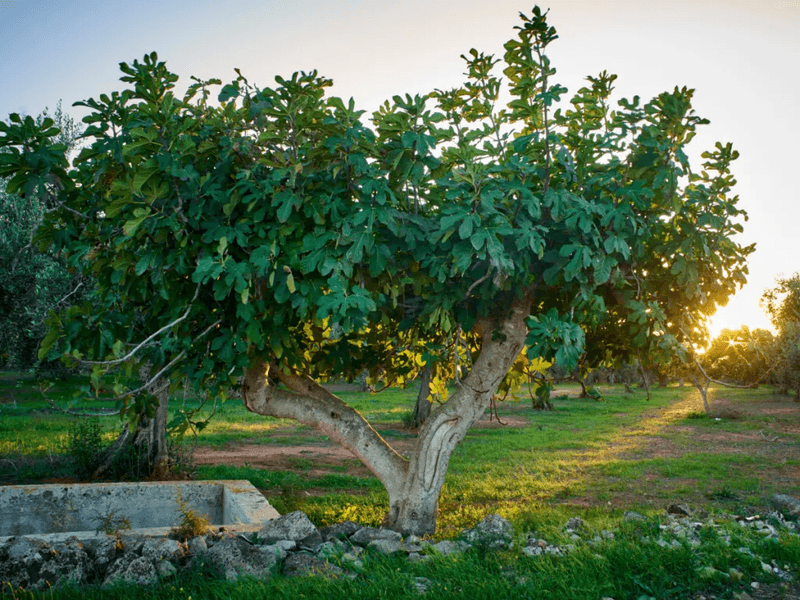
Growing figs in Texas sounds risky until you find a cultivar that actually suits the climate. Texas Everbearing, sold under several overlapping names at local nurseries, can deliver ripe fruit from early summer well into August when given the right conditions.
Understanding what this tree can and cannot do will save you from disappointment and help you get the most out of a genuinely productive long-season harvest.
Choose the verified common fig behind the long-season promise
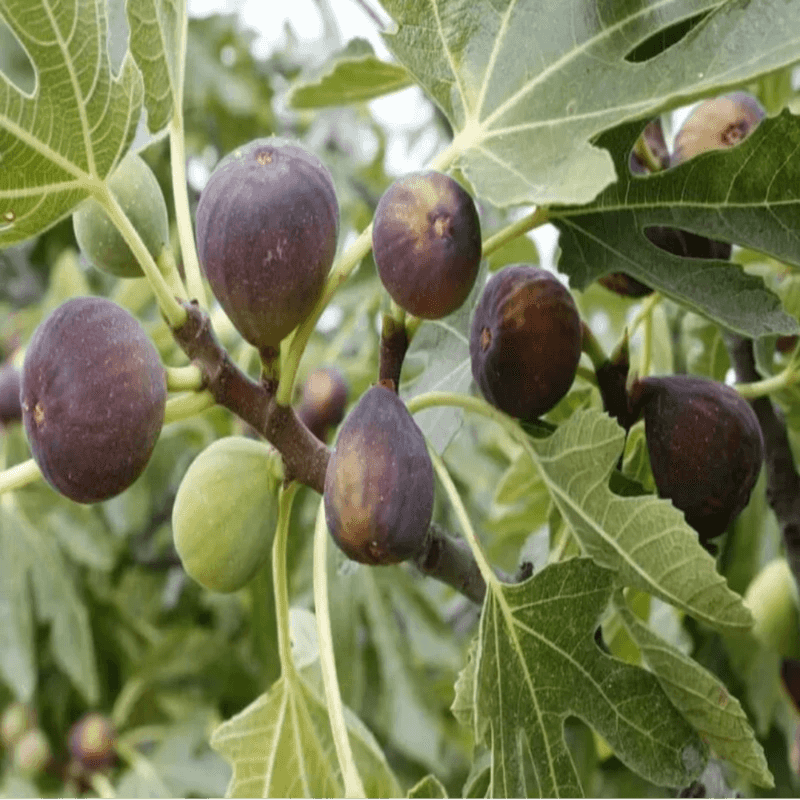
At most Texas nurseries, you will find fig trees labeled “Texas Everbearing,” “Brown Turkey,” “Ramsey,” or simply “Everbearing.” These names are used interchangeably in regional nursery trade, but as UGA Cooperative Extension’s home garden fig guide specifically warns, fig variety names are notoriously inconsistent, and plants sold under the same label are not guaranteed to be genetically identical or to behave identically in your garden. Buying on label alone is a gamble.
Before you purchase, ask the nursery staff which specific selection they carry, where it was propagated, and how it performs in your part of Texas. A reputable local nursery or Texas A&M AgriLife Extension office can point you toward a plant with a documented regional track record rather than a generic name on a tag.
That conversation is a practical first step that costs nothing and can prevent years of guesswork.
The broader category matters as much as the name. Texas Everbearing belongs to the common fig group, which sets fruit without any help from the fig wasp required by Smyrna types and certain San Pedro types.
UF/IFAS Extension’s fig publication explains that common figs are the appropriate choice for most home gardeners in Texas, Florida, and the Southeast precisely because they do not depend on a pollinating insect that is rarely present in home gardens. You get fruit reliably, without managing wasp habitat or hunting for a pollenizer tree.
The practical buying rule is straightforward: seek out a verified common-fig selection sold under the Texas Everbearing or related regional label, confirm its identity with the seller, and ask for honest regional performance information before you bring it home. A known plant from a trusted source is a far better investment than the cheapest tree on the lot with an appealing name.
Understand what “everbearing” means in this fig
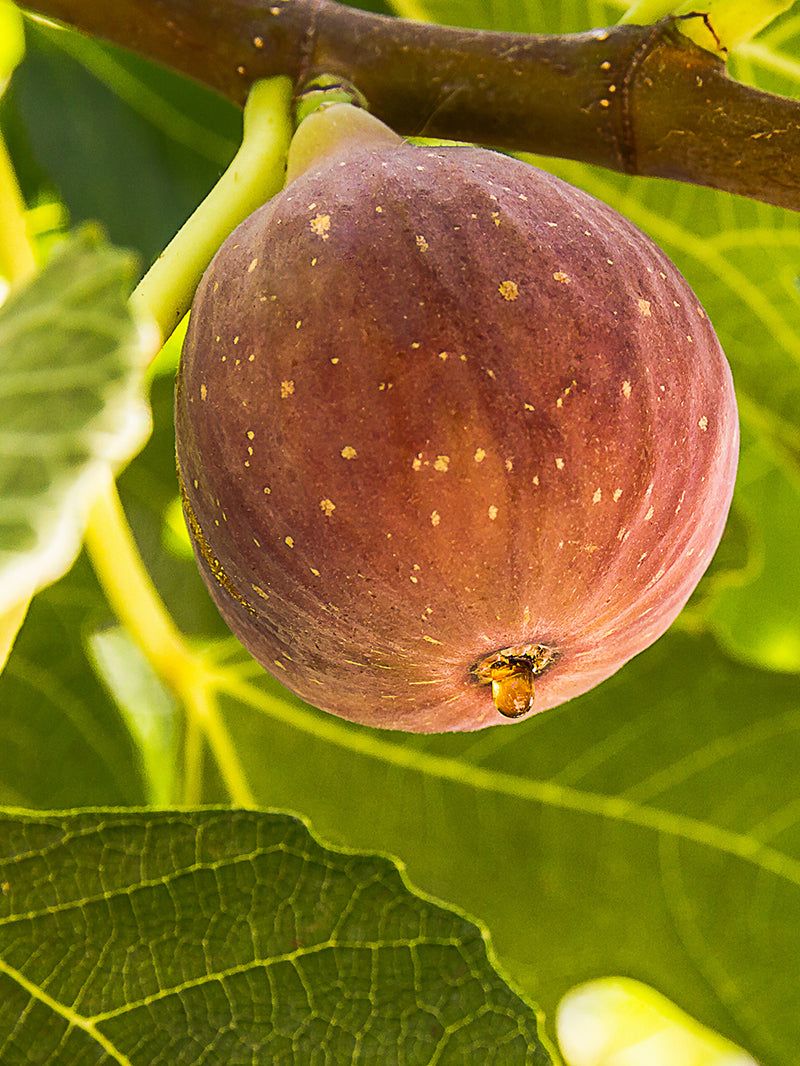
The word “everbearing” creates a mental picture of figs appearing every single day from spring through fall, but that is not what the name means in practice. Texas A&M AgriLife Extension’s fig variety guide describes Texas Everbearing as a reliable producer with a harvest window of approximately June through August, which represents a genuinely long ripening season by any reasonable standard.
That extended window, not daily production, is the real appeal.
The tree achieves this through two separate crop phases. The first, called the breba crop, develops on older wood that survived the previous winter.
Brebas typically ripen earlier in the season and can add welcome early-summer fruit before the main crop arrives. The main crop then forms on the current season’s new growth and carries the bulk of the harvest through midsummer and into August.
UF/IFAS Extension describes Brown Turkey’s breba crop as ripening in July, with the main crop following roughly a month later, a schedule that reflects the overlap between the two phases rather than a single uninterrupted flush.
Several factors shift this window in either direction. Tree age plays a meaningful role: younger trees produce less reliably than established ones.
A severe winter that kills older wood can eliminate or sharply reduce the breba crop while leaving the main crop intact on new growth. Moisture availability, local weather patterns, and the actual cultivar you planted all influence how many weeks the harvest runs and how heavy each phase turns out to be.
The fruit itself is medium to large, reddish-brown on the outside, and pink-fleshed with a mild sweetness that many gardeners find more nuanced than grocery-store figs. It is not the sweetest fig available, but its flavor, size, and extended ripening window make it a practical choice for home use, fresh eating, and preserving.
Match the planting site to Texas conditions
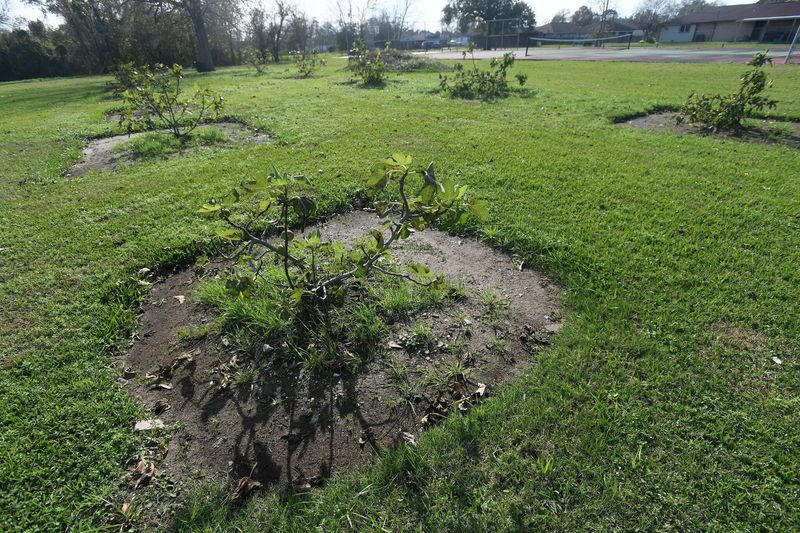
Full sun is non-negotiable for productive fig growing in Texas. A location that receives at least eight hours of direct sunlight daily gives the tree the energy it needs to ripen fruit through summer heat rather than producing lush foliage with little to show for it.
South- or west-facing spots near a wall or fence can also provide extra warmth that benefits the tree in marginal winter zones.
Soil drainage matters nearly as much as sunlight. Texas A&M’s fig variety guide notes that figs tolerate a broad range of soil types but perform poorly when roots sit in waterlogged ground.
Raised beds or sloped sites that shed excess water naturally are worth considering if your yard tends to hold standing water after heavy rain. Amending heavy clay with compost before planting can improve drainage enough to make a marginal site workable.
Regional suitability is an honest conversation worth having before you plant. The Texas A&M AgriLife Small Acreage Figs Crop Guide describes figs as adapted to most of Texas but does not broadly include the High and Rolling Plains in that recommendation.
Gardeners in those areas face a harder winter-injury calculus than those along the Gulf Coast or in Central Texas. Even in otherwise suitable zones, a severe freeze can damage or kill wood above the soil line, setting back production by a season or more.
Freeze recovery is a genuine advantage of Texas Everbearing, not a free pass on winter risk. The tree can push new growth from the roots or trunk base after being frozen back and may still bear a main crop on that new growth the same year.
Framing that resilience as freeze-proof, however, would set unrealistic expectations. Planting near a south-facing structure, mounding soil around the base before hard freezes, or wrapping the trunk in cold years are practical steps that reduce the odds of a damaging setback.
Water and feed for fruit, not just foliage
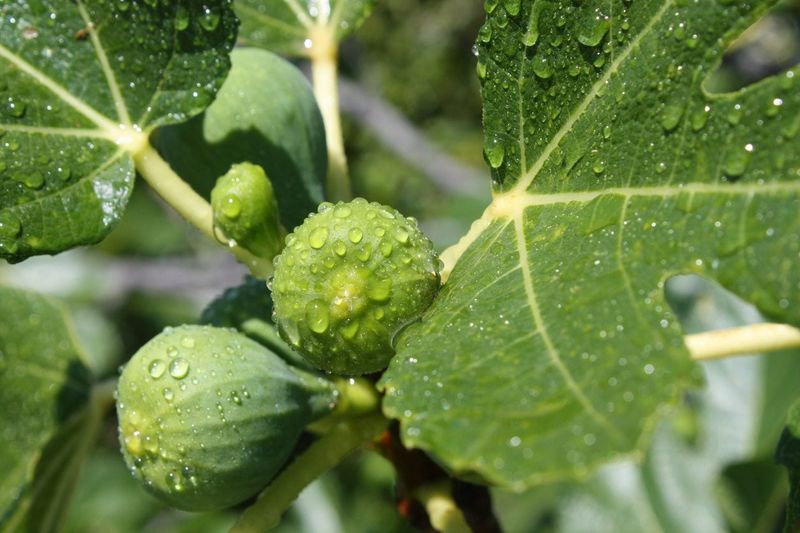
Heat tolerance is one of Texas Everbearing’s strengths, but heat tolerance is not the same as drought-proof performance. Figs growing through a Texas summer without consistent moisture will often produce smaller fruit, drop fruit prematurely, or crack when irrigation resumes after a dry spell.
Keeping the soil evenly moist during fruit development is the single most reliable way to protect fruit size and quality.
UGA Cooperative Extension’s home garden fig guide offers a general starting point of about 1 to 1.5 inches of water per week from rain or irrigation during summer. Treat that figure as a baseline rather than a fixed prescription.
Sandy soils in East Texas drain faster and may need more frequent watering; heavy clay in the Blackland Prairie holds moisture longer and can become waterlogged if irrigated on a rigid schedule regardless of rainfall. Checking soil moisture a few inches below the surface is a more reliable guide than following a calendar.
Mulch is one of the most practical tools available for summer fig care. A 3- to 4-inch layer of wood chips, shredded bark, or similar organic material spread around the base of the tree slows moisture evaporation, moderates soil temperature, and reduces the stress that shallow fig roots experience during peak summer heat.
UGA specifically recommends mulching for figs, and Mississippi State University Extension echoes that advice, noting that fig trees have shallow root systems that benefit from the protection mulch provides. Keep the mulch a few inches away from the trunk itself to discourage rot.
Fertilizer deserves a cautious hand. Young figs benefit from modest nitrogen applications to encourage establishment, but vigorous or overfertilized trees can push heavy leaf growth at the expense of fruit.
UGA warns that excessive nitrogen can delay ripening and contribute to premature fruit drop, two outcomes that undermine the long harvest window you are trying to protect. A soil test every few years, combined with light, targeted feeding, is a better approach than routine heavy applications of a general-purpose fertilizer.
Harvest figs at full maturity
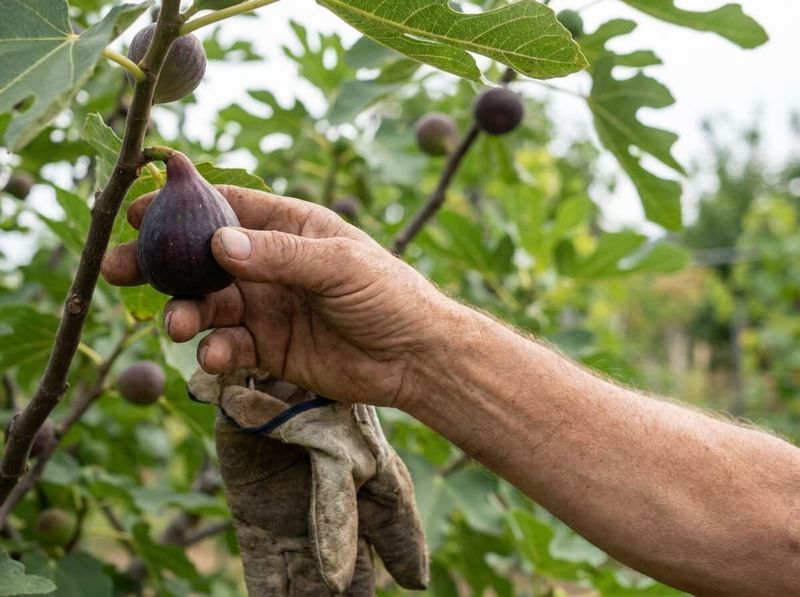
Figs announce their readiness with a combination of color, texture, and posture. A ripe Texas Everbearing fig will have developed its full reddish-brown skin color, begun to soften noticeably when pressed gently, and drooped or bent at the neck where it attaches to the branch.
All three signals together give you a reliable picture of a fruit that is ready to eat. Waiting for just one of them can lead to picking too early.
UC Agriculture and Natural Resources’ fig guide makes the key point plainly: figs do not ripen well after they are removed from the tree. A firm, green fig picked with the hope that it will sweeten on the kitchen counter will stay firm and green, or simply spoil.
Unlike tomatoes or bananas, figs have no meaningful post-harvest ripening process, so patience at the tree is the only path to good fruit.
Once picked, fresh figs are highly perishable. Expect them to hold for about two to three days under refrigeration before quality declines noticeably.
That short shelf life makes frequent checking a practical part of the extended-harvest routine. Walking the tree every day or two during peak season lets you catch fruit at its best rather than finding overripe or bird-damaged figs that have passed their window.
A handling caution worth remembering: the latex that oozes from pruning cuts and from the point where fruit is separated from the branch can irritate skin and eyes. UC ANR advises avoiding direct skin contact with fig latex, particularly for people with sensitive skin.
Wearing gloves during harvest and pruning is a simple precaution that takes no extra time and prevents an uncomfortable reaction.
Plan for the limits of heat and recovery
Patience is the most underrated requirement for growing figs. A rooted cutting or nursery transplant may establish quickly and put on impressive growth in the first season, but UC ANR’s fig growing guide notes that young trees can take roughly three to five years to settle into dependable, edible production.
Expecting a heavy harvest in year two is a reliable path to frustration. The tree is building root depth and branch structure during those early years, and that investment pays off in more consistent crops once the tree matures.
Winter injury reshapes the production calendar in ways that are worth understanding before a hard freeze arrives. Texas A&M’s fig variety guide confirms that Texas Everbearing can produce fruit on new growth even after being frozen back, which is genuinely useful.
However, that new growth carries only the main crop. The breba crop, which forms on older wood from the previous season, is lost when a severe freeze kills the upper branches.
A tree that was frozen to the ground and regrew from the roots will fruit again, but it will skip the early breba phase until it rebuilds enough mature wood.
Pruning decisions directly affect which crops you get. Heavy pruning removes the older wood that carries brebas, and UF/IFAS Extension and Texas A&M both caution that aggressive pruning of mature trees reduces overall production.
Light, targeted pruning to remove dead or crossing wood is usually sufficient. Timing matters too: pruning in late winter before new growth emerges is generally preferred, but removing large amounts of older wood at that point sacrifices any breba potential for that season.
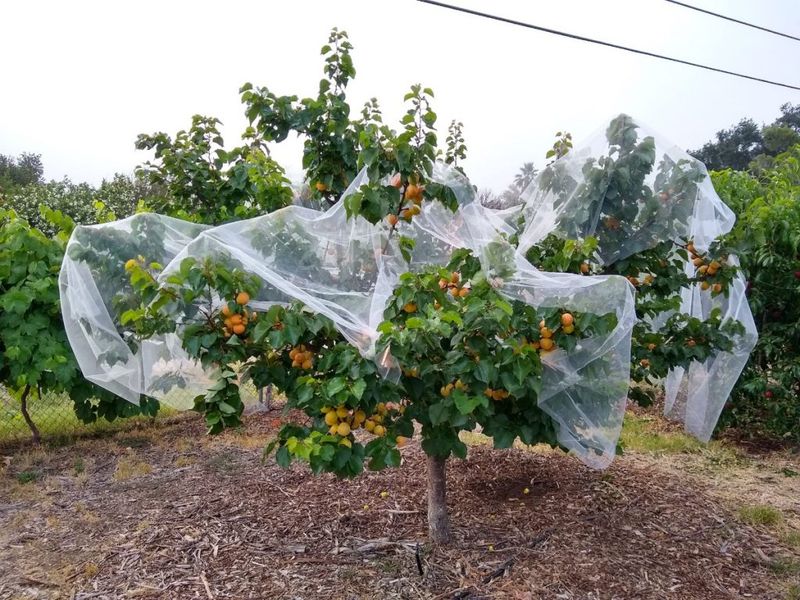
Ordinary management problems round out the picture. Birds can take a significant share of the crop from an unprotected tree, and UC ANR recommends netting young trees and accepting that large established trees will share some fruit with wildlife.
Fruit splitting after irregular watering, souring from insect entry, and premature fruit drop during heat stress are all common enough to plan around rather than treat as surprises. UGA’s fig guide notes that overfertilized or moisture-stressed plants are more prone to dropping fruit before maturity.
Gardeners in Florida and other humid parts of the South face a somewhat different pressure profile. Wet conditions and heavy insect activity increase the risk of fruit souring through the ostiole, the small opening at the base of the fig. Texas Everbearing has a moderately closed ostiole, which offers some protection in humid conditions, but Texas and Florida are not interchangeable growing environments.
Drainage, cultivar selection, and local weather patterns each require their own regional assessment rather than a one-size approach.
Decide whether this long-season fig fits your yard
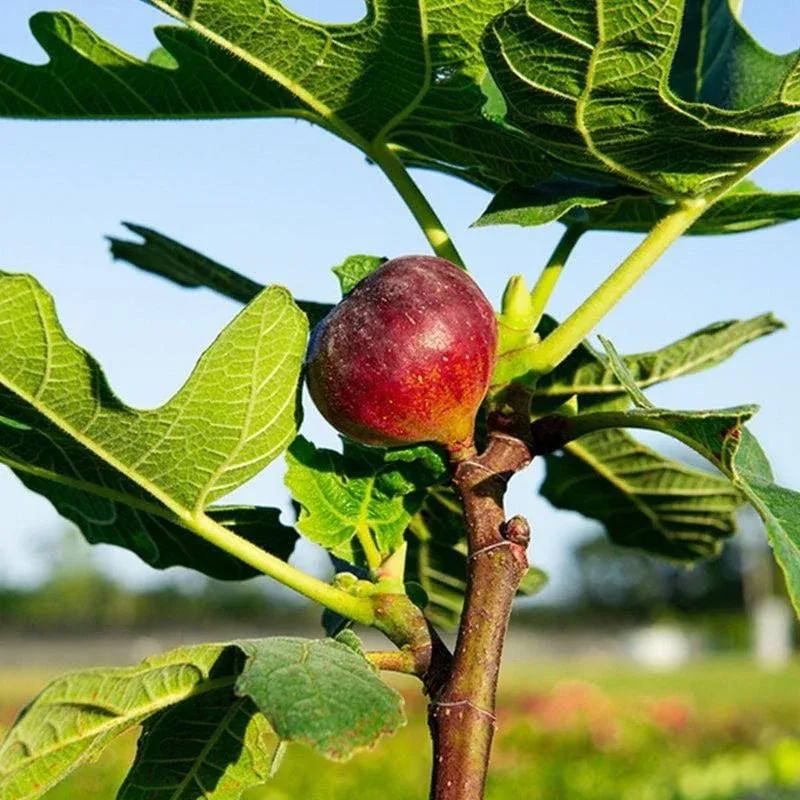
Choosing a fig tree should start with an honest checklist rather than a label on a pot. Texas A&M AgriLife Extension describes Texas Everbearing as a reliable producer for many Texas gardens, and that description holds up well when the conditions are right.
Full sun, well-drained soil, consistent summer moisture, and a location reasonably protected from the most severe freeze events give the tree its best chance to deliver a long ripening season from roughly June into August.
The payoff is real but not instant. Count on several years of establishment before the tree hits its stride, and verify the cultivar identity with your nursery before you buy.
The Texas A&M Figs Crop Guide and UGA’s home garden fig publication both reinforce that suitability depends on regional conditions, not just the cultivar name on the tag. If your site checks the basic boxes and you can commit to steady summer watering and reasonable cold protection, Texas Everbearing is a practical, well-supported option worth planting.
A fig that ripens across a genuine summer window, not a nonstop conveyor belt, is still one of the more rewarding fruit trees a Texas gardener can grow. The difference between an honest expectation and an inflated one is usually the difference between a tree you enjoy and one you eventually dig out.