
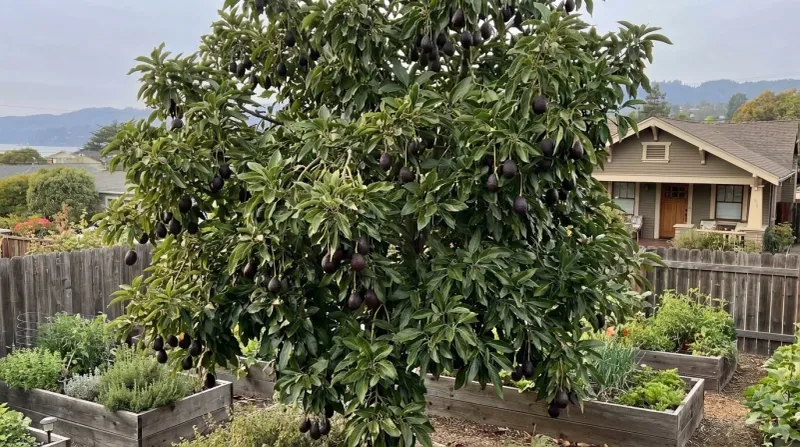
Most California homeowners with an avocado tree in the yard assume that if the tree is getting water on a regular schedule, it must be getting enough. What many don’t realize is that watering on a fixed calendar, especially with an automatic system that runs rain or shine, can quietly work against the tree’s root health and production.
Irrigation is only one piece of the harvest puzzle, but it’s a piece that’s easy to get wrong without ever knowing it. Understanding why that fixed schedule can cause problems, and what to do instead, is the first step toward a healthier tree.
A calendar habit that can limit avocado harvests
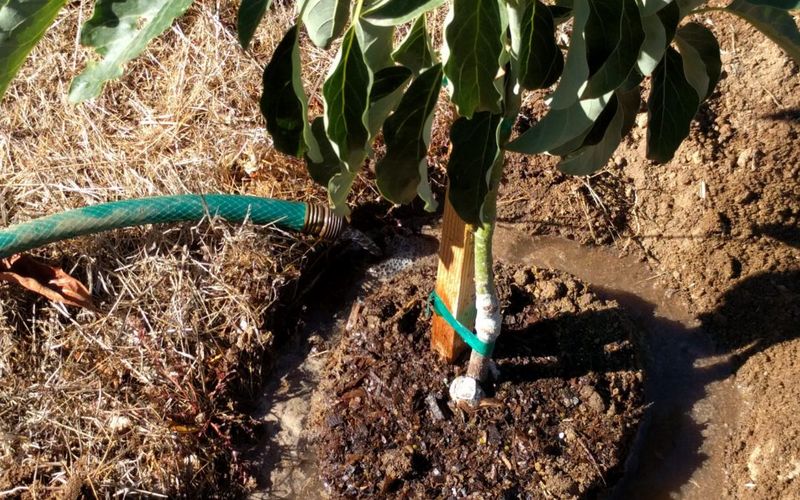
Fixed-schedule irrigation is one of the more common and least obvious ways a homeowner can unintentionally work against their avocado tree. Running the same timer every Tuesday and Friday, regardless of whether it rained last night or the soil is still damp from three days ago, keeps the root zone in a state the tree was never built to handle.
That doesn’t mean calendar watering explains every disappointing harvest, but it does mean the habit deserves a hard look when production seems lower than expected.
Avocado roots need consistent, dependable moisture, but they have limited tolerance for prolonged saturation. When water is applied again before the root zone has had a chance to use or drain what’s already there, oxygen gets pushed out of the soil and roots begin to struggle.
UC IPM identifies appropriate irrigation as the single most critical practice for preventing and managing avocado root rot, the most serious disease the tree faces. Root damage from chronically wet soil reduces the tree’s ability to take up both water and nutrients, which can mean weaker growth, smaller fruit, and lower yields over time.
The specific habit to break is watering again while the root zone is still wet, a pattern that automatic systems make especially easy to fall into. UC Cooperative Extension Ventura warns against using a fixed schedule that ignores changing conditions, because tree water needs shift with the season, the weather, the soil, and the tree’s own size and age.
The practical middle ground is not complicated: stop watering by habit and start responding to what the soil and weather are actually telling you. Other factors, including alternate bearing, pollination, variety, and tree age, can also limit a harvest, so irrigation is best understood as one important variable rather than the single cause of a small crop.
How extremes of wet and dry affect avocado roots
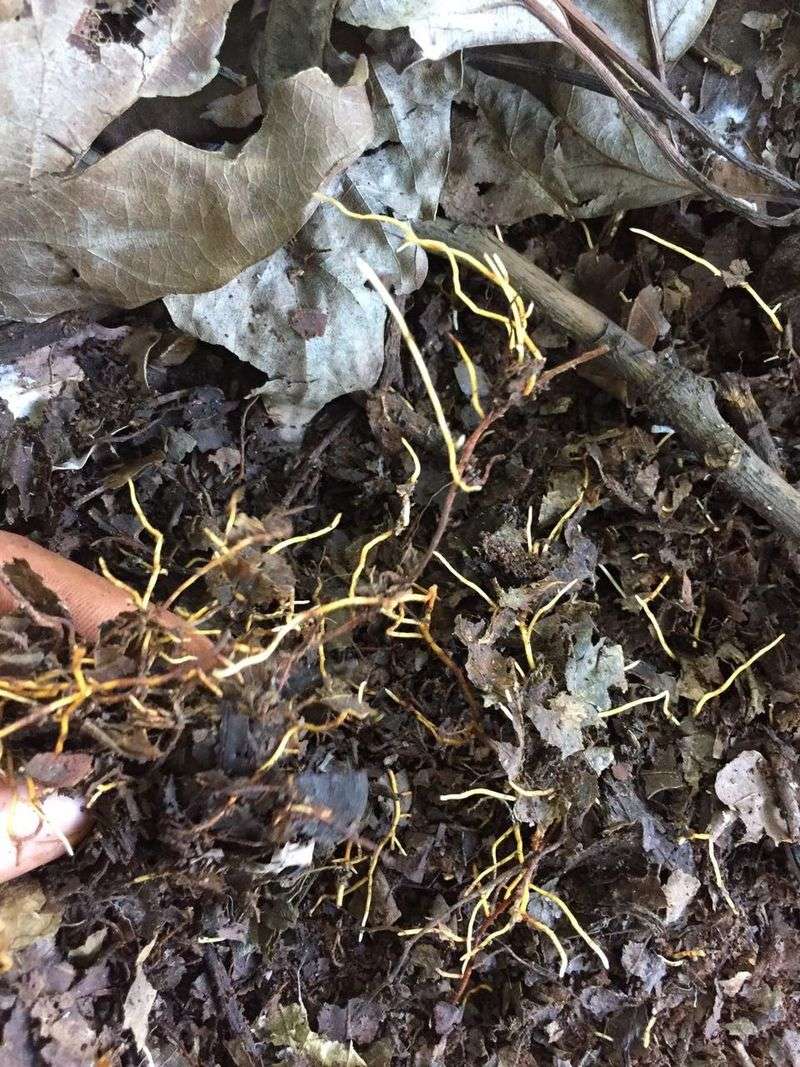
Avocado trees are not built like oaks or citrus. UC ANR notes that most avocado roots are concentrated in roughly the top 8 to 10 inches of soil, which means the tree depends almost entirely on moisture in a very shallow zone.
That shallow root system is both the tree’s strength and its vulnerability: it can absorb moisture efficiently when conditions are right, but it has nowhere to escape when the soil stays soggy.
Chronic overwatering or poorly drained soil creates conditions where Phytophthora cinnamomi, the water mold responsible for avocado root rot, thrives. Once established, this pathogen attacks the fine feeder roots that do most of the work of pulling water and nutrients into the tree.
The result is a tree that may look drought-stressed, with pale leaves, tip burn, or wilting, even when the surrounding soil is saturated. UC ANR’s guidance on signs of avocado root rot makes clear that damaged roots simply cannot do their job, no matter how much water is present in the soil around them.
Repeated or severe dryness creates a different but equally real problem. When the shallow root zone dries out too much, too often, the tree experiences stress that can reduce fruit size, cause fruitlets to drop early, and lower overall yield.
The key word is “repeated” or “severe” – a normal dry interval between irrigations is not the concern. What matters is avoiding both extremes: soil that stays waterlogged for days and soil that dries out so completely that roots are damaged.
The correct interval between waterings is not a fixed number of days. It depends on the soil type, drainage, canopy size, recent rainfall, temperature, and wind.
Adding water is not automatically the right answer when a tree looks stressed, and skipping water is not automatically the right answer when the calendar says it’s too soon. The soil itself holds the answer, and checking it is the only reliable way to know.
Check the root zone before you turn on irrigation
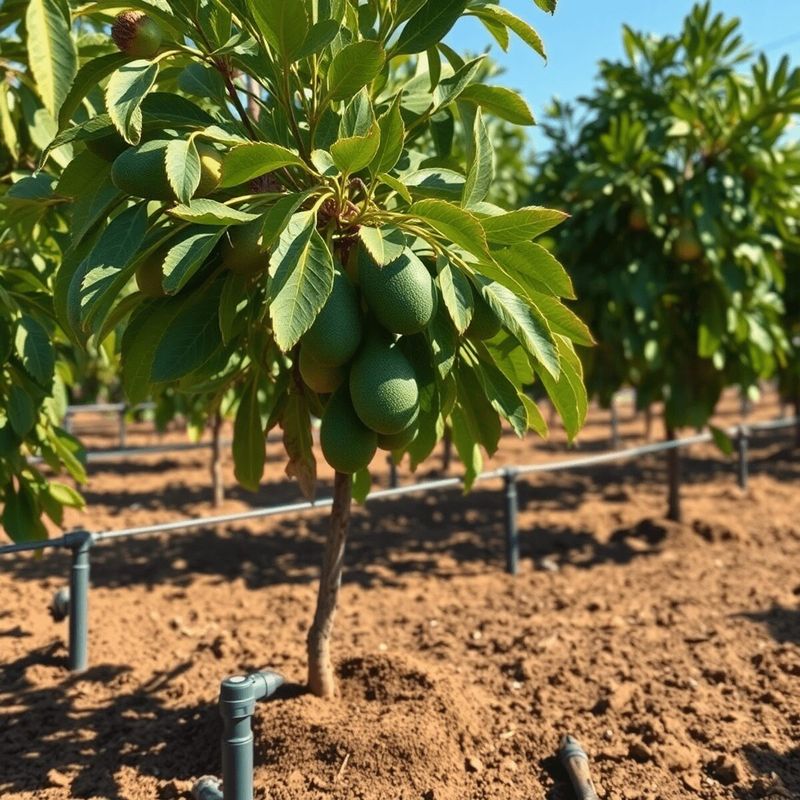
Before running the irrigation, go check the soil. That single step, done consistently, is the core replacement for calendar-based watering.
Dig or push a finger, a wooden dowel, or a thin probe about 6 inches into the soil beneath the outer edge of the canopy, where most of the feeder roots are active. If the soil feels moist, the tree doesn’t need water yet.
If it feels dry at that depth, it’s time to irrigate. This takes about two minutes and gives far more useful information than any timer.
UC IPM’s guidance on monitoring and managing avocado irrigation recommends soil-moisture monitoring, tensiometers, or evapotranspiration-based scheduling as more reliable approaches than a fixed calendar alone. For home gardeners, a tensiometer is a simple buried sensor that shows how hard the roots are working to pull moisture from the soil, and it takes the guesswork out of timing.
Evapotranspiration, or ET, data is available through California’s CIMIS network and gives a daily estimate of how much water the local climate is pulling from the soil and plant surfaces. Both tools are more accessible than they sound, and either one beats a timer set months ago.
The decision to water should also account for recent rainfall, current temperature, wind, soil texture, drainage, canopy size, tree age, and the type of irrigation system being used. A drip system that wets only a small area may need to run more often than a system that distributes water across a wider zone.
UC Cooperative Extension Ventura’s water conservation guidance emphasizes adjusting irrigation to match changing conditions rather than locking in a schedule that was set during one season and left unchanged.
The rule is straightforward: do not irrigate soil that is already wet, and do not maintain prolonged soggy conditions. If the soil in the root zone is still moist from the last watering or from recent rain, skip the cycle and check again in a day or two.
Automatic controllers should be treated as a convenience tool, not a substitute for actually observing the tree and soil.
Match the application to the tree and site
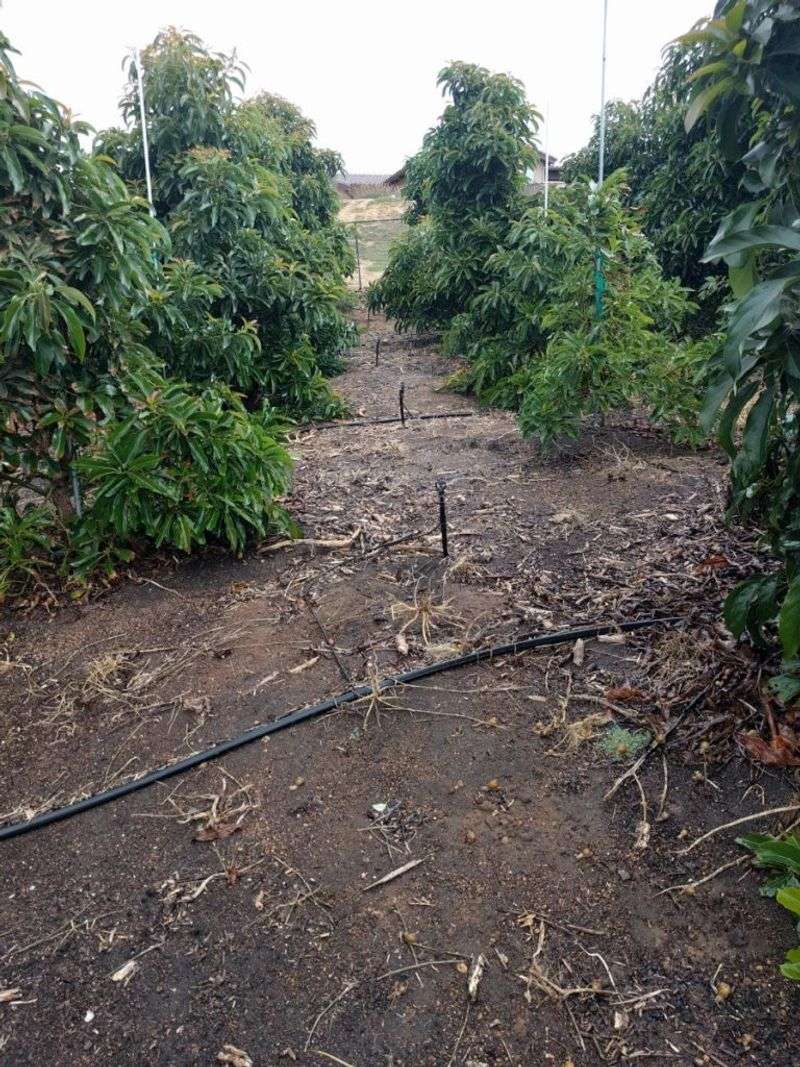
Knowing when to water is only half the equation. Where the water goes and how much is applied matters just as much, and both change as the tree grows and as conditions shift through the year.
Newly planted avocado trees need emitters positioned close to the root ball to keep that small root mass consistently moist while the tree establishes. As the tree grows and roots expand outward, emitters should move with them.
UC Cooperative Extension Ventura’s avocado planting guidance describes this outward progression clearly: water applied at the trunk of an established tree mostly misses the active root zone, which extends out toward and beyond the drip line of the canopy. Concentrating water near the trunk also raises the risk of trunk canker and crown rot, because UC IPM notes that directly wetting the trunk increases disease pressure at the most vulnerable part of the tree.
Young trees, sandy soils, high heat, and low-volume drip systems may all call for smaller, more frequent applications. An established tree in heavy clay soil with good drainage will hold moisture longer and may go several days between irrigations without stress.
The same tree in fast-draining sandy loam may need water more often. Neither schedule is universally correct; the soil and site determine the right rhythm.
UC IPM’s watering guide for avocados and citrus offers approximately 2 inches of water per week as a broad reference point for an established tree in a hot summer climate, and gives 45 to 60 gallons per day as an example for some mature trees under hot conditions. Use those figures as a rough starting point, not a prescription, because canopy size, soil type, emitter output, and wetted area all push the actual number up or down.
Keep water off the trunk, avoid runoff onto pavement or into areas without roots, and prevent pooling around the base. A well-placed, properly sized application protects roots and avoids wasting water on areas the tree can’t use.
Water stress during flowering and fruit set can affect harvest
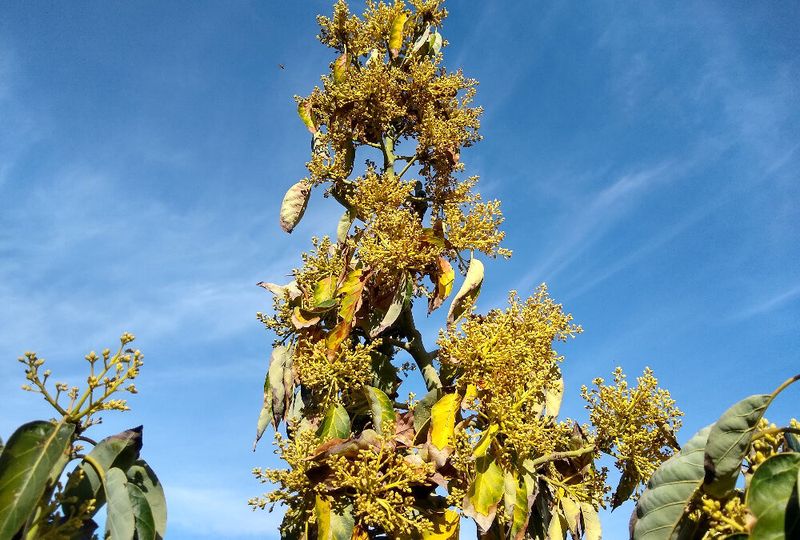
Irrigation management has a direct connection to how many fruit a tree carries to harvest, not just how the leaves look. Avocado trees flower prolifically, often producing a million or more individual flowers per tree, but only a small fraction of those flowers develop into harvestable fruit.
Water stress during flowering, fruit set, and the early weeks of fruit growth is associated with flower abortion, fruitlet drop, smaller final fruit size, and reduced total yield.
A published review of irrigation alternatives for avocado in Mediterranean subtropical regions links water stress during critical growth stages to measurable reductions in fruit retention and size, patterns that are directly relevant to California’s dry-summer climate. Keeping the root zone consistently moist, without tipping into saturation, during the months when flowers are opening and fruitlets are sizing up gives the tree better conditions for holding fruit through to harvest.
That said, fruit drop is a normal part of avocado biology. Every tree sheds a large portion of its flowers and early fruitlets regardless of irrigation, and heat spikes, cold snaps, wind, poor pollination, and alternate bearing can all trigger heavy drop that has nothing to do with soil moisture.
UC Cooperative Extension Ventura’s avocado fruit set guidance describes how multiple environmental and biological factors interact during this period. Irrigation is one contributor, not the only one, so a heavy drop year doesn’t automatically point to a watering problem.
The practical takeaway is to apply the moisture-checking routine with particular care from late winter through early summer, when California avocado varieties typically flower and begin setting fruit. Consistent, responsive watering during those months supports the tree’s best chance at retaining fruit, without guaranteeing any particular outcome.
Wet soil changes what the symptoms mean
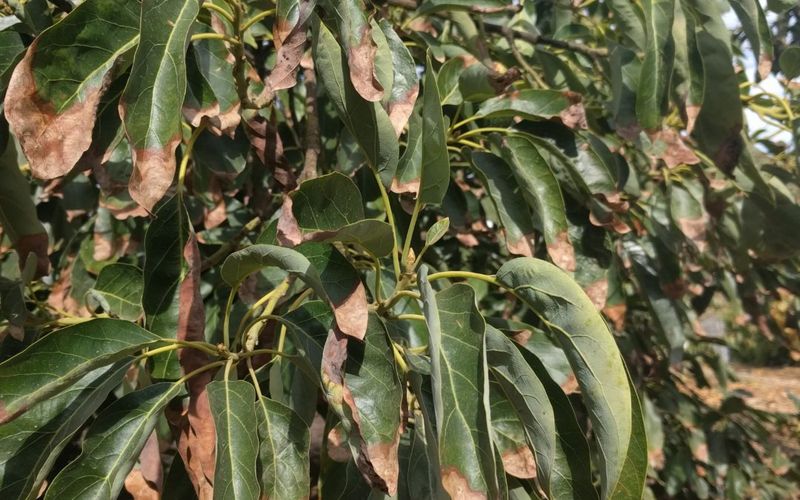
One of the more frustrating situations a homeowner can face is a tree that looks like it needs water even though the irrigation system has been running on schedule. Small, pale leaves, wilting, and brown leaf tips are easy to read as signs of drought, but those same symptoms can appear when roots are damaged and can no longer take up water normally, even in saturated soil.
UC ANR’s resource on signs of avocado root rot explains that this is exactly what Phytophthora root rot does: it destroys the fine feeder roots, leaving the canopy dehydrated no matter how wet the surrounding soil becomes. Watering more in response to these symptoms can make the problem significantly worse by giving the pathogen exactly the wet conditions it needs to spread further.
Before adding water to a tree that looks stressed, always check whether the soil is already wet.
Water quality is a separate concern that can produce similar-looking damage. Excess salinity, chloride, sodium, or boron in irrigation water can injure avocado roots and foliage and reduce productivity over time, even with a perfectly responsive watering schedule.
UC ANR’s guidance on salinity and avocados and UC Cooperative Extension Ventura’s overview of saline water as a growing problem both address how water quality affects tree health separately from irrigation frequency. If your water source is high in dissolved salts, that’s a problem watering less frequently won’t solve.
A 4 to 6 inch layer of coarse organic mulch spread beneath the canopy can improve soil moisture retention, moderate soil temperature, and support the biological conditions that help suppress root pathogens. Keep the mulch pulled several inches back from the trunk to avoid creating moist conditions right at the crown.
If a tree continues to show symptoms despite appropriate soil moisture and good irrigation placement, diagnosis rather than more water is the next step. Some root rot treatments require products that are restricted to licensed applicators, so check current labels and local rules before using any fungicide or phosphonate product.
A small harvest can have causes beyond irrigation
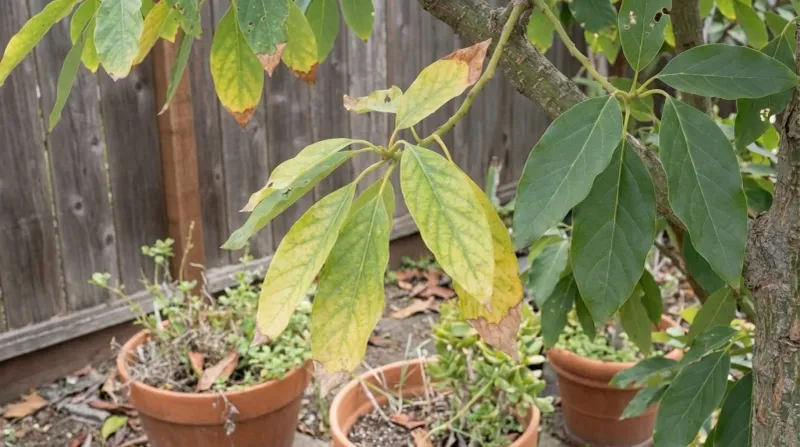
Better irrigation practices can protect a major part of what the tree needs to produce well, but they cannot fix every reason a harvest comes up short. Avocados are complicated producers, and a long list of factors beyond soil moisture can limit how much fruit a tree carries to harvest in any given year.
Alternate bearing is one of the most common reasons a tree yields heavily one year and lightly the next. Many avocado varieties have a built-in tendency to cycle between big and small crops, and no amount of irrigation adjustment will override that pattern.
UC Riverside’s introduction to avocados covers variety-specific production tendencies, including how some types are more prone to alternate bearing than others. If the tree had a banner year last season, a smaller harvest this year may simply be the natural cycle.
Bloom weather matters enormously. Avocado flowers are sensitive to heat, cold, and wind during the brief window when pollination occurs.
A warm spell or a cold snap at the wrong time can reduce fruit set regardless of how well the tree was watered. UC ANR’s guide to recommended avocados for home gardens notes that variety selection affects how reliably a tree performs across California’s varied microclimates.
Trees grown from seed, rather than grafted onto rootstock, are especially unpredictable producers and may never yield reliably no matter what the irrigation looks like, as UC Cooperative Extension Ventura’s notes on seed-grown avocados explain.
Excessive nitrogen, pruning that removes fruiting wood, pest pressure, tree age, and poor pollination can all contribute to a light harvest as well. Evaluate these factors honestly if the tree continues to underperform after irrigation becomes more responsive.
Responsive watering protects root health and supports production, but it is one tool, not a complete solution.
Replace the calendar with a moisture check
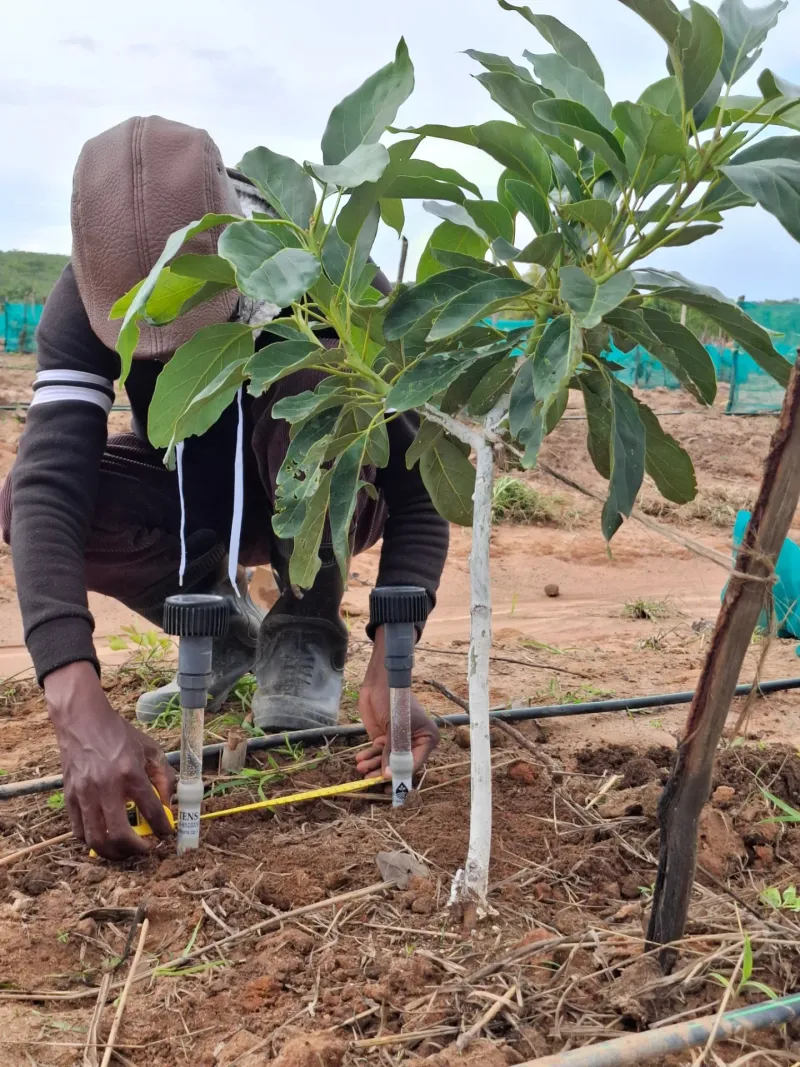
The routine that replaces calendar watering is straightforward. Before each irrigation cycle, check the soil moisture in the active root zone, roughly 6 inches deep beneath the canopy edge.
Factor in recent rainfall, current temperatures, and any wind. Water the area under the canopy rather than near the trunk, apply enough to wet the root zone without causing runoff or pooling, and then stop.
Reassess in a day or two rather than automatically repeating the same interval.
UC IPM’s irrigation monitoring guidance and UC IPM’s watering guidance for avocados both point toward the same conclusion: soil conditions and site factors should drive irrigation decisions, not the clock. Automatic controllers are useful for delivering water reliably, but they need a person behind them who is actually paying attention to the tree and the weather.
The goal is neither constant dryness nor constant saturation. A tree showing drought-like symptoms in wet soil calls for diagnosis, not more water.
Responsive watering won’t guarantee a record harvest, but it removes one of the most fixable obstacles between your tree and its best possible production. A healthy root system is where every good avocado season begins.