
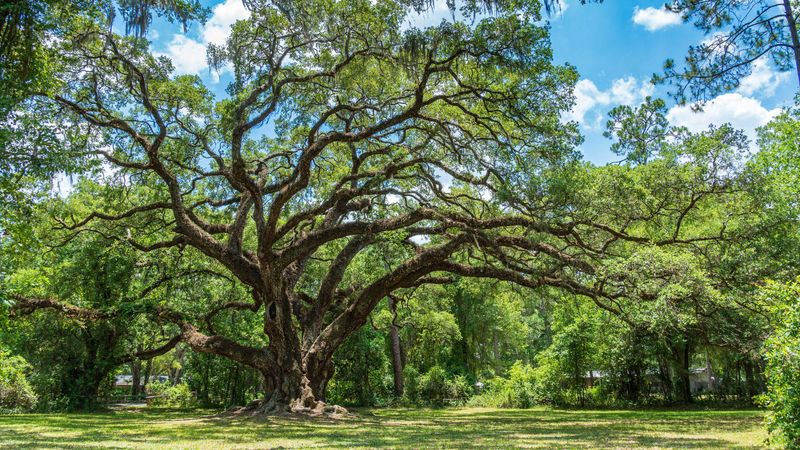
A Texas live oak planted at the right time of year has a better shot at surviving the brutal heat that follows. The cooler months between fall and early spring give new roots a chance to spread into surrounding soil before summer arrives.
Getting the timing, site, and aftercare right matters far more than picking a single calendar date. Here is what the evidence actually says about when and how to get a live oak in the ground.
September is a possibility, not a statewide planting rule
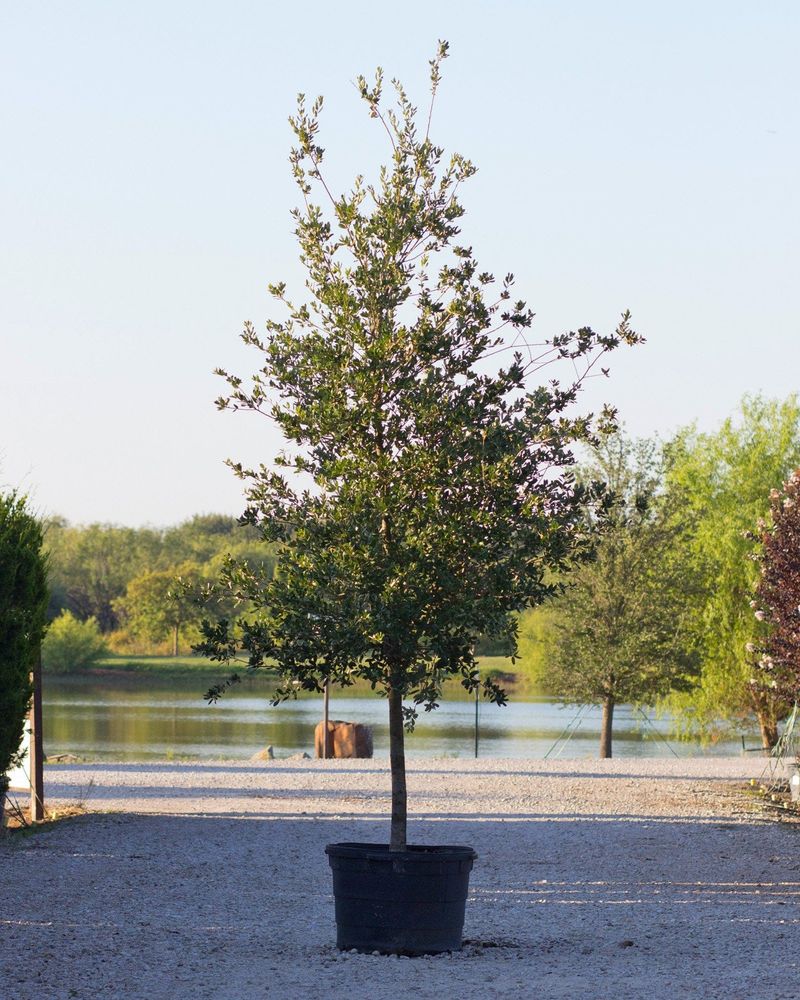
Fall planting for Texas live oaks is well-supported, but the idea that September is the single best month across the state does not hold up. Austin’s official tree-planting guidance defines the preferred season as October through March, because cooler temperatures allow roots to begin establishing before the next hot, dry stretch arrives.
A separate Central Texas guide recommends starting as early in that October-to-March window as practical.
Texas A&M Forest Service takes a similarly broad view, describing late fall through early spring as the ideal statewide tree-planting period because moderate temperatures support root development and help new trees acclimate. September can still be genuinely hot and dry across much of Texas, which raises transplant stress rather than reducing it.
That said, September is not automatically off the table everywhere. In parts of the state where temperatures moderate earlier, soil moisture is adequate, and the gardener can irrigate consistently, a late-September planting may be reasonable.
The key word is “may.” Local conditions decide whether September works, not the calendar alone.
Regional differences matter here. East Texas hardwood reforestation guidance from Texas A&M Forest Service recommends dormant bare-root planting between December and early March for specific forestry settings.
Copying that narrower window to a residential landscape in another part of the state, or using September as a statewide rule because it precedes those dates, gets the logic backwards.
The practical takeaway is straightforward: plan to plant during the cooler fall-to-early-spring window, aiming for October or later in Central Texas. If local conditions cool meaningfully in late September and you can commit to consistent irrigation, that month can serve as an entry point.
But no single date removes the work that follows.
A cooler planting window may give roots a head start
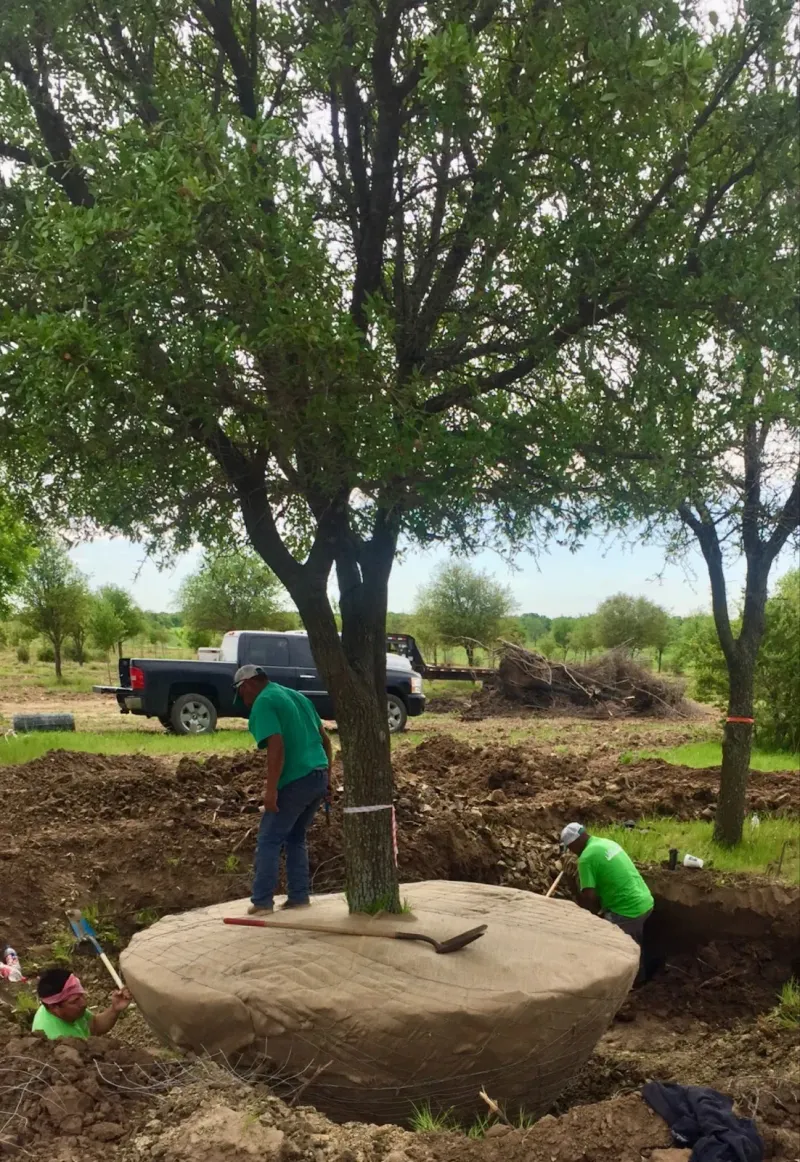
When a live oak goes in the ground during cooler weather, the air above it is asking less of the tree. Lower temperatures reduce the rate at which leaves lose water, so the root system does not face an immediate crisis while it is still adjusting to a new site.
That lower above-ground demand gives new roots more time to begin exploring the surrounding soil before the first triple-digit day arrives.
This reasoning is sound horticulture, but it comes with an honest qualifier. University of Florida IFAS live-oak irrigation research notes that the effect of planting season on establishment has not been adequately determined in its studies.
Cooler-season planting is a reasonable inference supported by general tree physiology, not a documented guarantee for every live oak, every soil type, or every planting date within the fall window.
What the research does confirm is that establishment takes time regardless of when you plant. A 2.5-inch-caliper live oak commonly needs roughly 12 months of regular irrigation to establish roots, and larger trees take longer.
Planting in October rather than the following May does not compress that timeline dramatically, but it does shift the hardest part of establishment away from the worst heat.
Texas A&M Forest Service planting guidance reinforces this point: cooler conditions allow root development and acclimation, but irrigation remains essential throughout. Fall timing may reduce heat and drought stress during the first growing season, but it does not eliminate either one.
A tree planted in November still needs water through the following August.
Match the live oak to the Texas yard
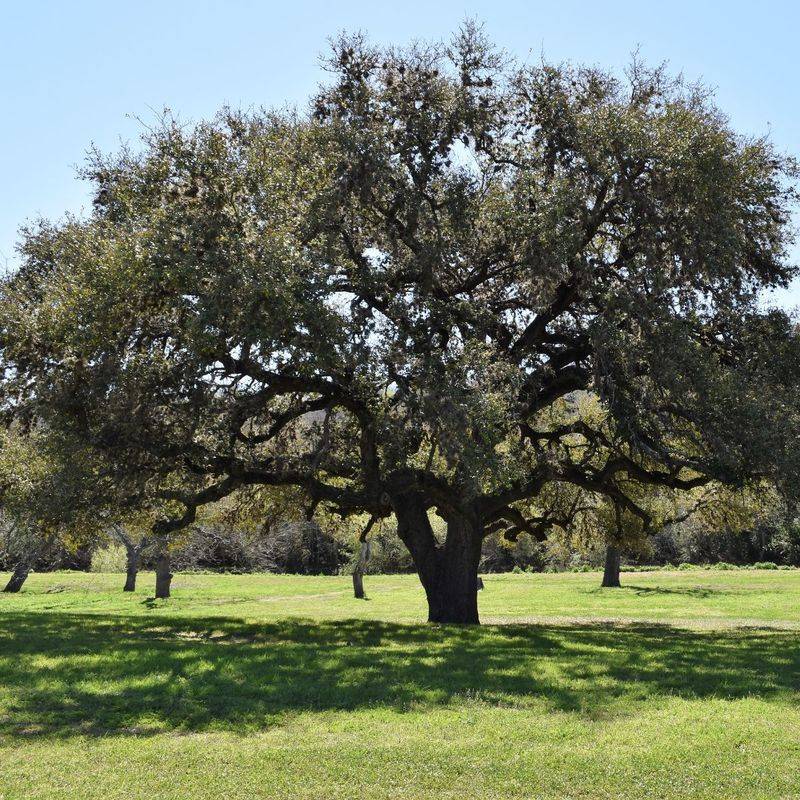
Southern live oak, Quercus virginiana, is not a small tree. Austin’s plant guide for southern live oak lists a mature height of roughly 40 to 60 feet or more and a canopy spread of about 50 feet or more.
That spread means the tree needs a generous patch of open space well away from structures, driveways, sidewalks, and overhead utility lines.
Soil depth is another variable that the nursery label will not tell you. In Central Texas especially, shallow limestone soils limit root expansion and water storage.
Austin’s guidance notes that escarpment live oak, Quercus fusiformis, may be more drought-tolerant and better suited to those shallow conditions than its southern cousin. Choosing the wrong species for a shallow site does not just limit growth; it sets the tree up for chronic stress.
Texas A&M Forest Service’s right-tree-right-place guidance warns that an incorrectly placed tree can cause sidewalk and utility damage, structural instability, and long-term decline. Large trees may need more than 1,200 cubic feet of usable soil volume at maturity to thrive.
A strip of soil between a driveway and a fence rarely provides that.
Before purchasing, measure the available space and check what is overhead and underground. Consider mature canopy spread, not just current tree height.
Ask whether the soil is deep enough to support a large root system and whether drainage is adequate. A live oak that fits the site from the start is far more likely to become the long-lived shade tree most homeowners picture.
Choose nursery stock that can establish well
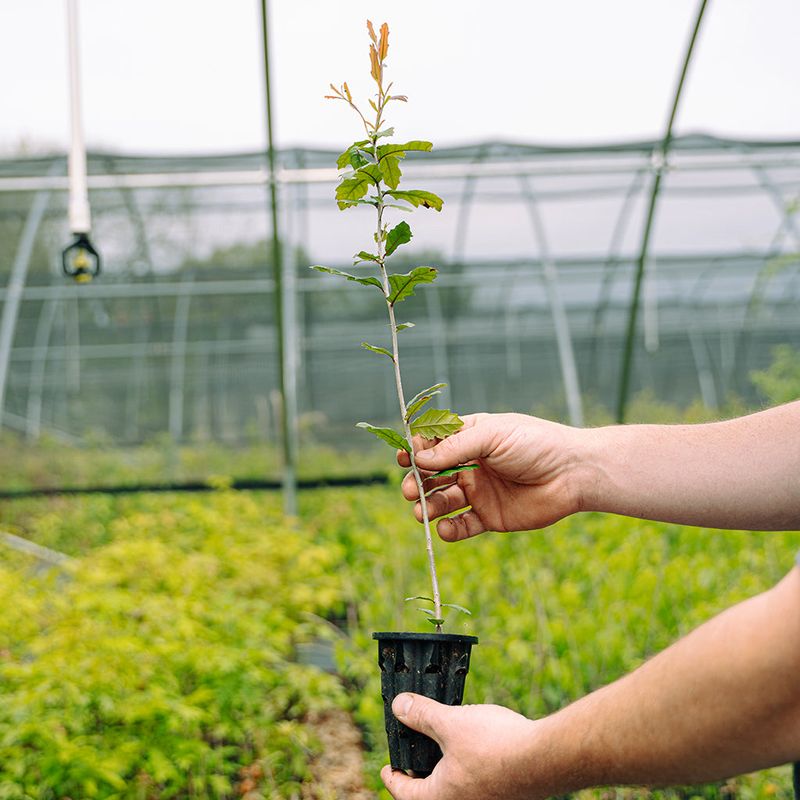
Picking a good planting date means little if the tree you bring home is already compromised. Before purchasing, pull the container aside or ask the nursery staff to expose the root ball so you can look for circling or girdling roots.
Roots that wrap tightly around the base of the trunk at planting will continue to do so as the tree grows, eventually cutting off the flow of water and nutrients. That kind of structural defect does not fix itself over time.
University of Florida IFAS guidance on selecting quality nursery trees makes clear that production method, root pruning history, tree size, and post-planting irrigation all affect how well a live oak establishes. A larger container tree is not automatically better than a smaller one; a well-rooted smaller tree frequently establishes faster than a root-bound specimen in a larger pot.
Look for a straight, well-tapered trunk with no visible wounds, cracks, or signs of pest damage. The root flare, where the trunk visibly widens at the base, should be at or near the soil surface in the container, not buried several inches below.
A tree with a buried flare has likely been sitting in the wrong soil depth for a while, which can cause problems that persist after planting.
Ask the nursery how long the tree has been in its current container and whether it has been root-pruned. A well-managed nursery can answer those questions.
Selecting structurally sound, healthy stock is one of the decisions most within a buyer’s control, and no amount of favorable fall weather compensates for a tree that was struggling before it left the lot.
Prepare a wide hole with reliable drainage
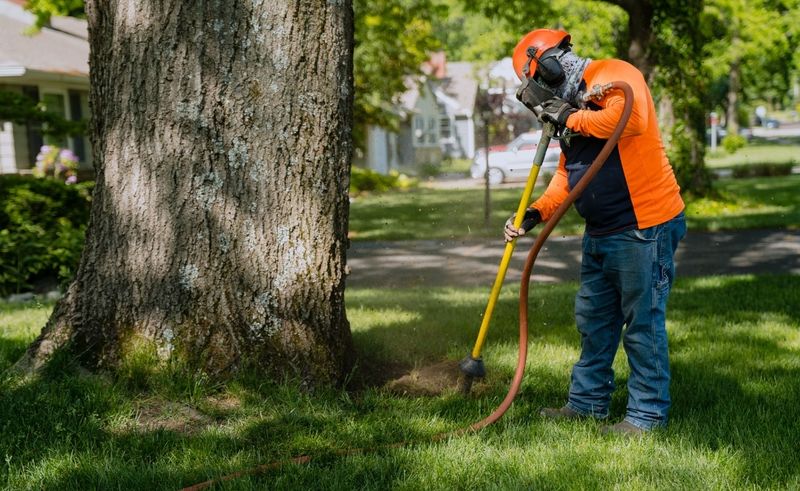
Getting the hole right protects the root system from the moment the tree goes in. The standard instruction to dig deep and add compost at the bottom is the wrong approach for live oaks.
Texas A&M Forest Service planting guidance specifies a hole at least twice as wide as the root ball but no deeper than the root ball itself. Width encourages roots to spread outward into loosened soil; excess depth invites the tree to sink and the root flare to end up buried.
Planting too deeply is one of the leading causes of mortality in newly planted trees, according to Texas A&M Forest Service. When the root flare sits below grade, the bark at the base of the trunk stays wet and poorly aerated, creating conditions for rot and disease.
Locate the root flare before you set the tree, and position it flush with or very slightly above the surrounding soil surface. If the flare is buried in the container, remove enough potting mix to expose it before setting the tree in the hole.
Drainage deserves its own check before any digging starts. Fill the proposed hole with water and watch what happens over the next 24 hours.
If standing water remains after a full day, the site has a drainage problem that planting will not solve. Texas A&M Forest Service advises choosing a different location in that situation, because prolonged root saturation can kill a live oak just as effectively as drought.
Once the tree is positioned correctly, check the flare height from multiple angles. Backfill from the edges inward, working in layers and firming the soil gently with water rather than by foot pressure.
Getting these dimensions right at installation costs nothing extra and prevents a long list of problems down the road.
Use native soil, shallow mulch, and consistent irrigation
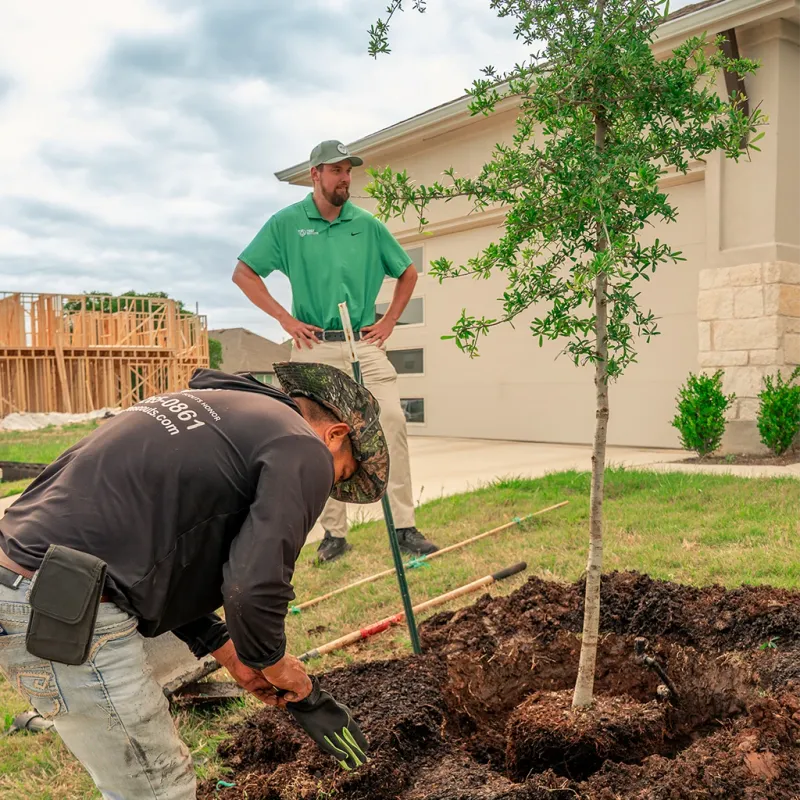
Once the tree is set at the correct depth, fill the hole with the soil that came out of it. Texas A&M Forest Service recommends native-soil backfill as the default, without automatic amendments such as compost.
Adding organic matter to the planting hole can actually discourage roots from moving into the surrounding native soil, since the amended zone becomes a comfortable pocket the roots have little reason to leave. If a soil test or a qualified professional identifies a specific deficiency, address it then; otherwise, use what you dug out.
Settle the backfill with water as you go rather than compacting it by foot. This removes air pockets without crushing the soil structure around new roots.
After backfilling, spread roughly 2 to 3 inches of organic mulch over the surrounding root zone. Keep the mulch several inches away from the trunk and completely clear of the root flare.
Research by Gilman and Grabosky on live oak establishment found that deep mulch placed directly over the root ball can intercept irrigation water and increase early stress, particularly when watering is infrequent. Shallow mulch over the surrounding soil, not the root ball, is the right approach.
Consistent irrigation is non-negotiable during establishment. Texas A&M Forest Service offers a general starting guideline of 6 to 8 gallons per inch of trunk diameter per week, but that number needs to be adjusted for rainfall, soil type, drainage, local water restrictions, and visible signs of stress.
UF/IFAS irrigation research on live oaks found that newly planted trees do not compensate for infrequent watering simply because larger volumes are applied occasionally. Regular, well-timed irrigation through the first two years matters more than any single large application.
Watch for signs of overwatering as well. Yellowing leaves, waterlogged soil, and standing water after irrigation all suggest the frequency or volume needs to come down.
Overwatering is as real a threat to a newly planted live oak as drought, especially in clay-heavy soils where water moves slowly.
Manage the first two years and protect against avoidable damage
Established live oaks are famously tough, but a newly planted tree is not yet established. UF/IFAS live oak research specifically cautions that native trees do not have lower post-transplant water requirements than nonnative trees, even species known for drought tolerance once mature.
Plan to irrigate consistently through at least the first two full growing seasons, and longer if the tree shows signs of stress or if the summer is unusually hot and dry.
Larger trees take more time to establish than smaller ones, and a tree planted from a 30-gallon container will not reach full independence as quickly as a 15-gallon specimen. Adjust your expectations to the actual tree in the ground, not an average.
Texas A&M Forest Service planting guidance warns against first-season fertilizer unless a qualified professional identifies a specific need, because excess nitrogen can burn young roots and slow the establishment process rather than speed it up.
Pruning should be minimal after planting. Remove dead, broken, diseased, crushed, or girdling material, and stop there unless a certified arborist advises otherwise.
Removing healthy canopy reduces the photosynthetic capacity the tree depends on to grow new roots. The urge to “balance” the top with the root loss from transplanting is understandable but generally counterproductive.
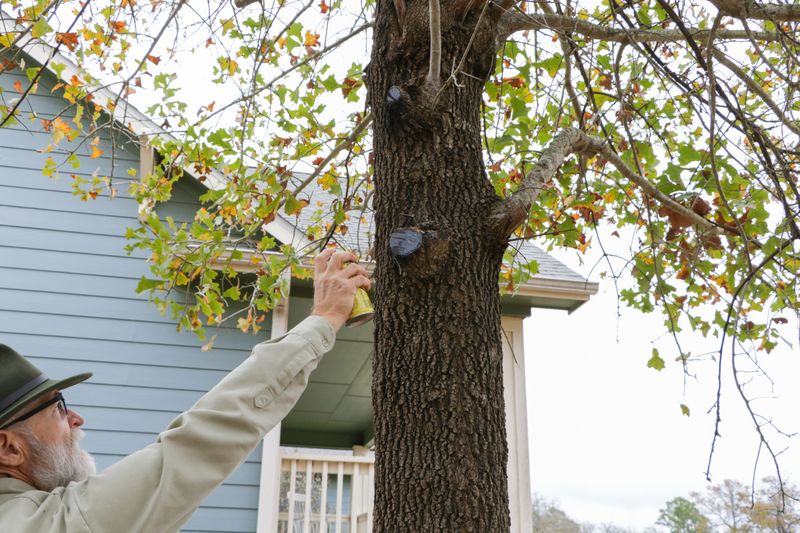
Central Texas homeowners also need to account for oak wilt, a serious fungal disease to which southern live oak is susceptible. Texas A&M AgriLife Extension oak wilt guidance recommends avoiding wounds during the high-risk period from February through June, painting fresh cuts and stumps with wound sealant, and consulting a trained arborist promptly when disease is suspected.
Lawn equipment strikes and construction damage near the root zone are also worth preventing; bark wounds and compacted soil around the base of a young tree can set back establishment significantly.
Choose the window your conditions can support
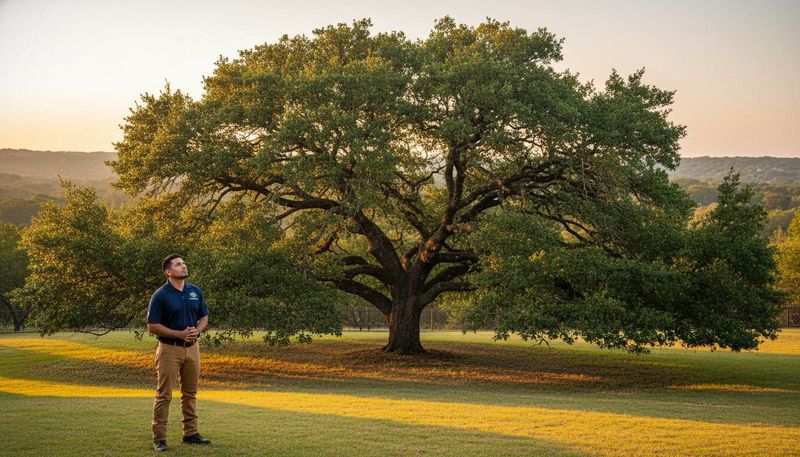
The most useful planting calendar is the one built around your specific site, not a single month printed on a general guide. For most of Central Texas, that means targeting October through March and starting as early in that window as conditions allow.
In other parts of the state, the best timing shifts based on local climate, soil type, and how reliably you can water. Austin’s 11-step planting guide anchors the Central Texas window clearly at October, and that guidance reflects real regional conditions rather than a generic national template.
September becomes a realistic option only when temperatures have genuinely moderated, the soil holds adequate moisture, and you can commit to regular irrigation from the day the tree goes in. Those conditions do occur in some Texas locations before October, but they are not guaranteed statewide, and the month itself carries no special advantage.
Texas A&M Forest Service frames the ideal window as late fall through early spring precisely because cooler conditions, not a specific date, drive better outcomes.
Appropriate timing, correct planting depth, well-chosen nursery stock, and consistent aftercare together improve the odds that a live oak will enter its first summer with enough root coverage to handle the heat. No calendar date guarantees that outcome, but giving the tree a cooler establishment window is one of the most practical advantages a Texas gardener can offer.
A live oak planted thoughtfully, at the right time and in the right place, has the best realistic chance of becoming the shade tree worth waiting for.