
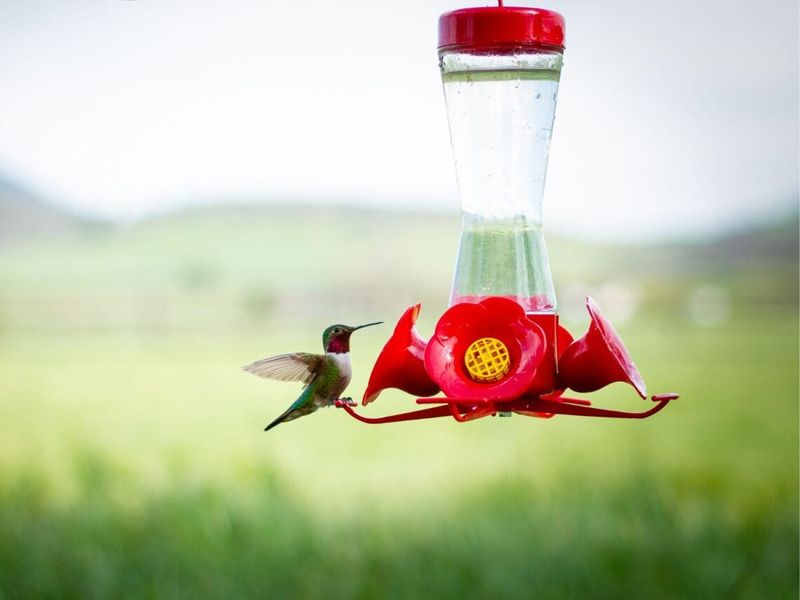
Watching ruby-throated hummingbirds zip around the backyard is one of the small pleasures of a North Carolina summer. But if your feeder has been sitting out in the heat with the same sugar water for days, the birds may simply start skipping it.
The fix is straightforward, and understanding what actually happens inside an aging feeder makes it easy to stay ahead of the problem.
The overlooked mistake is refilling old nectar
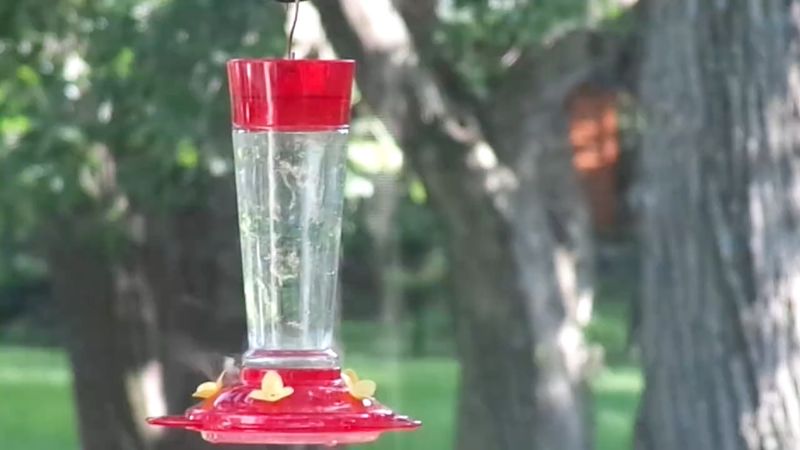
Sugar water is not shelf-stable once it goes into a feeder outdoors. A habit that quietly reduces visits to a feeder is adding fresh nectar on top of whatever is left over, skipping a real cleaning, and assuming the solution is still fine as long as the feeder is not empty.
That combination means old, increasingly degraded liquid stays in contact with every new batch.
No statewide survey has shown that a majority of North Carolina gardeners follow this pattern, so the article does not make that claim. What the evidence does support is a narrower but still useful finding: as feeder nectar ages, visits to that feeder tend to decline.
The problem is not that hummingbirds abandon an entire yard. Birds may still work nearby flowers and other food sources.
The specific concern is that an aging feeder becomes a less attractive stop.
North Carolina summers make this more pressing than in cooler climates. The Piedmont, Coastal Plain, and mountain regions all experience stretches of high heat and humidity that accelerate how quickly nectar breaks down.
NC Cooperative Extension guidance for Lee County specifically flags hot weather as the condition that demands more frequent nectar changes. A feeder sitting in direct afternoon sun can reach temperatures well above the surrounding air, speeding the process even further.
The practical correction is not complicated. Treat nectar as perishable, make small batches, replace it on a consistent schedule, and clean the feeder every time.
Peer-reviewed field research on hummingbird feeder microbiology found that visitation rose during the first two days a solution was out but declined as the solution continued to age, which gives a concrete reason to stay on top of the schedule rather than waiting until the feeder looks obviously bad.
What changes inside a feeder after the nectar sits
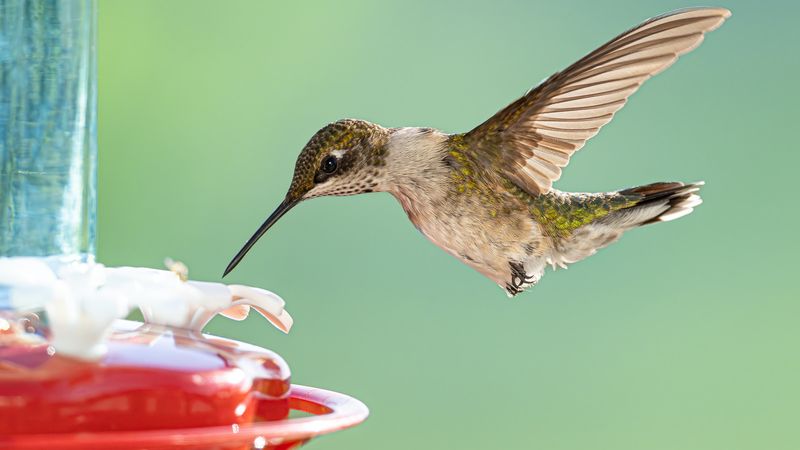
A published study on microbial communities in hummingbird feeders documented what actually happens as sugar water ages in an outdoor feeder. That research found that feeder solutions became more acidic over time, turned increasingly cloudy, and accumulated growing populations of bacteria and fungi.
Hummingbird visits to the feeder rose during the first two days the solution was out, then declined as the solution continued to age beyond that point.
The cloudiness itself is a useful signal. Clear nectar that has turned milky or hazy has already developed significant microbial activity.
By the time a solution looks that way, the window for easy correction has passed. The researchers noted that feeder microbial communities were distinct from what is found in natural flower nectar, and that bird visits influenced which microbes were present, meaning a well-visited feeder and a neglected one can develop very different microbial profiles.
What the study did not establish is equally worth knowing. The researchers did not directly measure whether birds became ill, experienced any measurable health effect, or permanently stopped visiting a yard.
The documented outcomes were changes in the nectar itself and changes in visit frequency to that feeder. Describing stale nectar as poisoning or killing hummingbirds goes beyond what the evidence shows.
The practical takeaway is more measured: older feeder solutions are less appealing to visiting birds, and the chemistry and biology of the liquid change in ways that are consistent with that reduced appeal.
Topping off a feeder without cleaning it means fresh sugar water mixes with an already-degraded solution and any residue clinging to the interior surfaces. The new nectar does not reset the clock.
It joins a solution that is already further along in the spoilage process, which is why skipping the cleaning step undermines the replacement schedule entirely.
North Carolina heat sets the replacement clock
The right replacement interval depends on conditions rather than a single fixed rule. For most of the North Carolina summer, replacing nectar every two to three days is a reasonable baseline.
During heat waves, when temperatures stay high overnight and the feeder gets direct afternoon sun, daily replacement is the safer call. NC Cooperative Extension recommends changing nectar more frequently in hot weather and placing feeders in shade to slow deterioration.
Shade genuinely helps. A feeder under a tree canopy or on a shaded porch stays cooler than one baking in full sun, and cooler temperatures slow microbial growth.
That said, shade does not make nectar last indefinitely. A shaded feeder in July still needs regular attention.
Audubon’s hummingbird habitat guidance also recommends shaded placement as part of responsible feeder management.
Some published guidance, including from NC State Extension’s urban bird habitat publication, mentions a three- to four-day interval under less stressful conditions. That range is not wrong for cooler stretches or well-shaded locations, but during the peak of a North Carolina summer, the two- to three-day window is a better fit for most of the state.
The Coastal Plain and Piedmont in particular can see extended runs of heat that push nectar toward the daily replacement threshold.
One practical adjustment that makes the schedule easier to keep is filling the feeder with less nectar at each change. The Southeastern Arizona Bird Observatory’s hummingbird FAQ notes that filling only what birds can consume within the maintenance interval reduces waste and makes consistent freshness more achievable.
A feeder that holds eight ounces does not need to be filled to eight ounces every time. Filling it halfway means less nectar goes bad before the next change, and the cleaning step takes less time.
Replace nectar immediately, regardless of schedule, if it turns cloudy, develops visible mold, smells fermented, or shows any other sign of obvious contamination. Those are signals the solution has already deteriorated past the point where a schedule adjustment helps.
A fresh batch needs only sugar and water
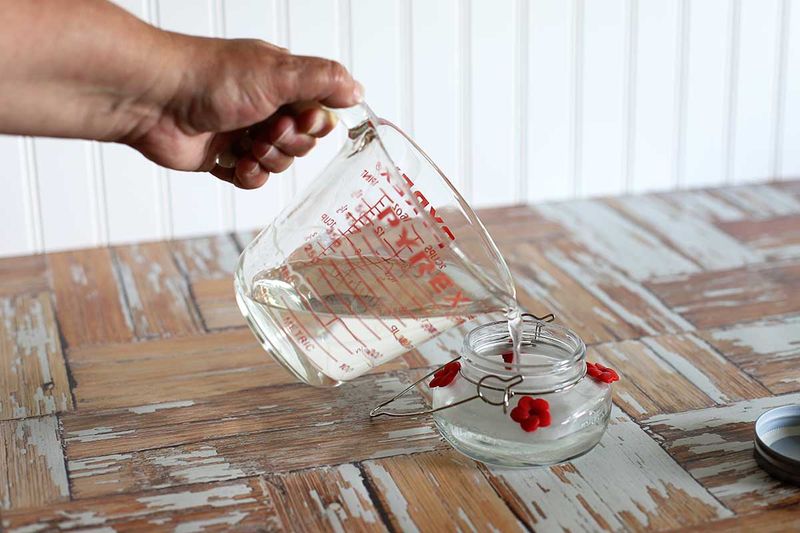
The recipe that matches natural flower nectar closely enough to attract and support hummingbirds is straightforward: one part plain refined white sugar dissolved in four parts water. That ratio produces a solution with a sugar concentration similar to the nectar in many of the flowers hummingbirds naturally visit.
NC State Extension’s bird habitat guide and Cornell Lab of Ornithology’s feeding guidance both specify this ratio as the standard recommendation.
Honey, brown sugar, molasses, artificial sweeteners, and fruit juice are not suitable substitutes. Honey can promote fungal growth more readily than white sugar and may introduce other compounds that are not appropriate for hummingbirds.
Artificial sweeteners provide no caloric energy, which defeats the purpose of the feeder entirely. Brown sugar and molasses contain molasses content that adds compounds not found in flower nectar.
Plain white sugar, dissolved completely in water, is the only version with consistent support from extension services and ornithological organizations.
Red dye is a separate question. Hummingbirds are drawn to red feeder parts, not to red liquid.
Natural flower nectar is clear. Cornell Lab advises against adding red food coloring, and both NC State Extension’s hummingbirds and butterflies publication and Audubon share that position.
Audubon notes that no scientific studies have directly tested artificial dyes on hummingbirds, so the recommendation to skip dye is precautionary rather than based on proven harm. The point is simply that dye adds no benefit and introduces an unnecessary variable, so there is no reason to use it.
Cleaning must happen at every nectar change
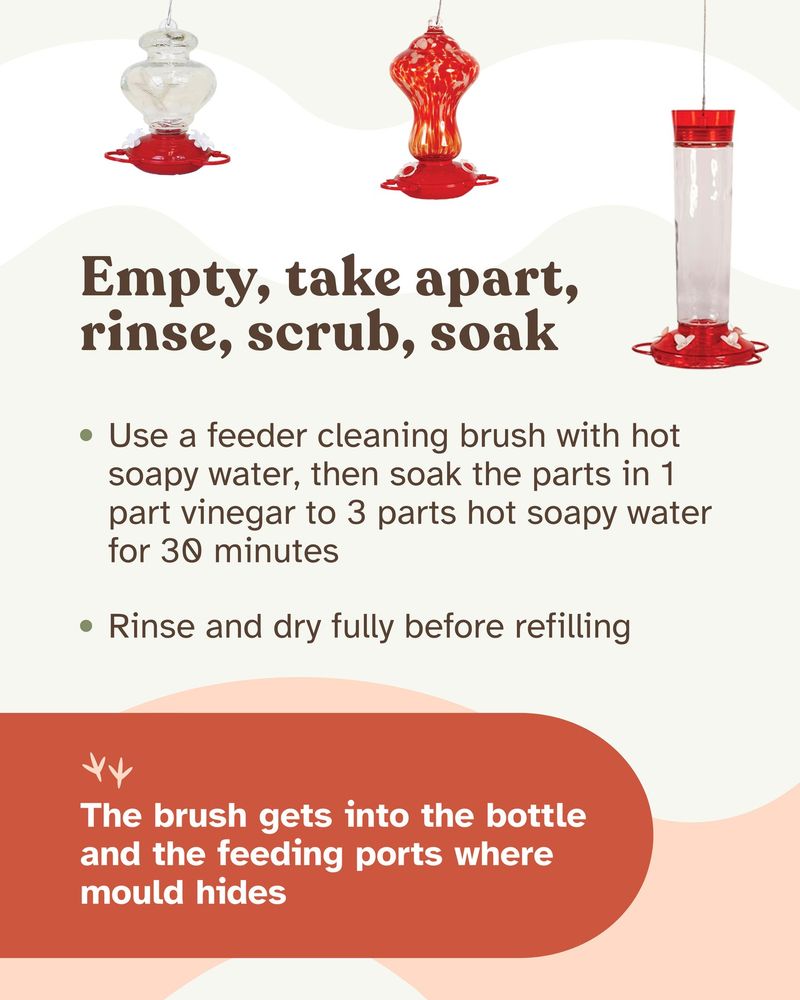
Replacing nectar without cleaning the feeder first is the step that undermines the whole routine. Any residue, biofilm, or microbial growth clinging to the interior surfaces, feeding ports, or reservoir walls stays in place and immediately contaminates the fresh batch.
A feeder that gets refilled but not cleaned is not actually being reset between cycles.
The cleaning process does not require special products. Empty the feeder completely, disassemble it as far as the design allows, and scrub all internal surfaces and feeding ports with hot water and a small bottle brush or toothbrush.
NC State Extension recommends choosing a feeder that can be taken apart for exactly this reason. Ports and corners that cannot be reached with a brush tend to accumulate residue that hot water alone cannot remove.
NC Cooperative Extension’s Lee County guidance recommends hot-water cleaning and advises against harsh detergents that could leave residue.
Rinse the feeder thoroughly before adding new nectar. Soap residue, even a small amount, is not something hummingbirds should ingest, and it can affect the surface tension of the liquid in ways that make the feeder less functional.
The goal after cleaning is a feeder that is completely free of residue, odor, and visible film before the fresh batch goes in.
Avoid bleach, pesticides, essential oils, and any commercial cleaning additives inside the feeder. Hot water and mechanical scrubbing handle the job.
If a feeder has developed stubborn black mold in ports or crevices that a toothbrush cannot reach, a dilute white vinegar soak followed by thorough rinsing is an option some extension resources mention, but the feeder must be completely rinsed and odor-free before use. A feeder with persistent mold in areas that cannot be cleaned effectively may simply need to be replaced.
Fewer visits do not always point to the feeder
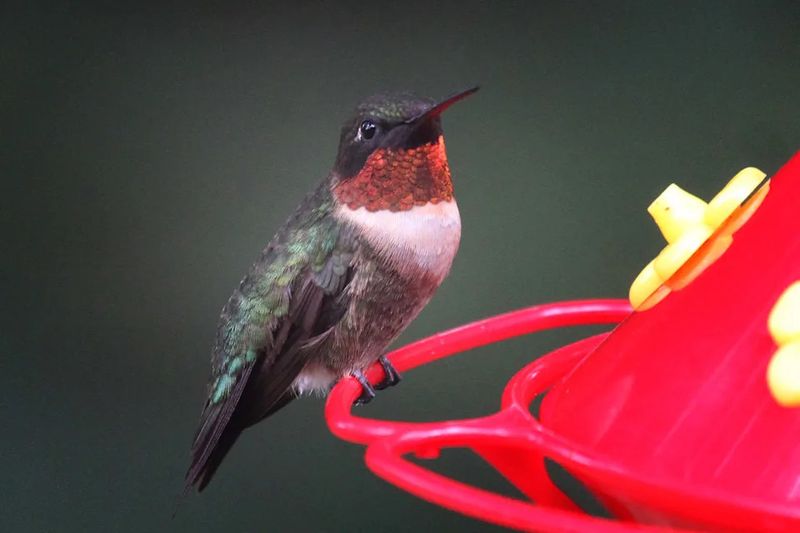
A well-maintained feeder with fresh nectar is not a guarantee of steady traffic. Hummingbird activity at any given feeder shifts for reasons that have nothing to do with nectar quality, and recognizing those reasons helps avoid unnecessary changes to a routine that is already working.
Migration is the most common explanation for a sudden drop in late summer or early fall. Ruby-throated hummingbirds move through and out of North Carolina on a predictable schedule, and NC State Extension notes that hummingbirds will migrate even when feeders remain available.
Leaving a feeder up does not stop migration, and a feeder that empties more slowly in September is not necessarily a sign of a problem.
Flower and insect availability also influence where birds spend their time. Hummingbirds feed on both nectar and small insects, and a yard with blooming native plants offers resources a feeder cannot replicate.
NC State Extension identifies coral honeysuckle, crossvine, cardinal flower, jewelweed, and trumpet vine as plants that attract and support hummingbirds. When nearby flowers are in peak bloom, birds may visit a feeder less simply because they have a richer natural source close by.
Territorial behavior is another factor. A single dominant hummingbird can monopolize a feeder and chase others away.
Cornell Lab suggests placing several smaller feeders at different locations around the yard, spaced apart enough that one bird cannot patrol all of them at once. That arrangement can allow more individuals to feed without a single bird controlling access.
Weather, predator presence, and changes elsewhere in the yard can all contribute to shifting patterns. The feeder’s nectar condition is worth checking first because it is the easiest variable to control.
But a feeder that is clean and stocked with fresh nectar, yet still seeing fewer visits, is probably responding to one of these other forces rather than to a problem with the nectar itself.
A simple refill routine keeps the feeder inviting
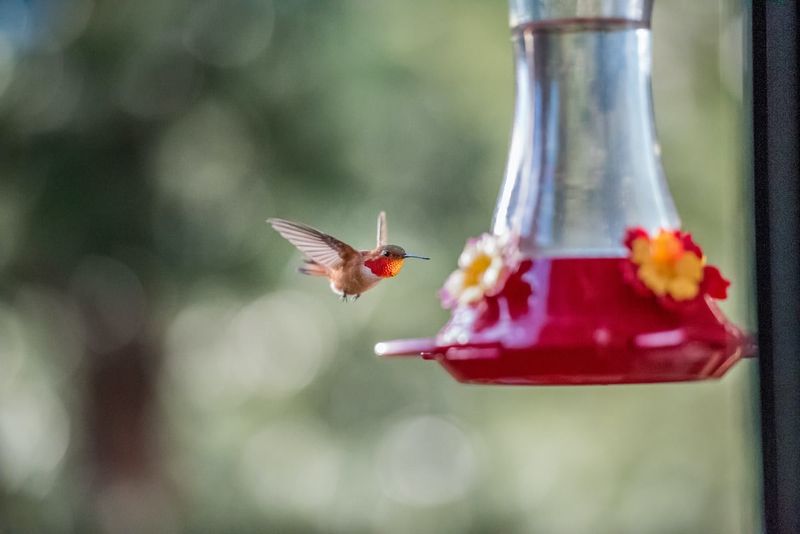
Putting the routine together does not take much time. Mix a small batch of one part plain white sugar to four parts water, fill the feeder to a level the birds can finish within the replacement window, and hang it in a shaded spot where cats cannot approach unseen.
NC Cooperative Extension and Audubon both recommend shaded placement to slow spoilage.
Check the nectar during hot stretches and replace it every two to three days in ordinary warm weather, or daily when temperatures are extreme or the feeder gets direct sun. Clean the feeder completely at every change.
Support the birds beyond the feeder by planting native species that provide natural nectar and by maintaining insect-friendly habitat, since hummingbirds rely on both. NC State Extension describes feeders as a supplement to natural food sources, not a replacement.
For window placement, Cornell Lab recommends positioning feeders within about three feet of windows rather than at an intermediate distance where birds can build up enough speed to cause serious injury on impact. A feeder that is clean, freshly stocked, and thoughtfully placed gives hummingbirds a reliable reason to stop.
Fresher nectar may help maintain visits to that feeder, even if it cannot control every shift in hummingbird activity across the yard.