
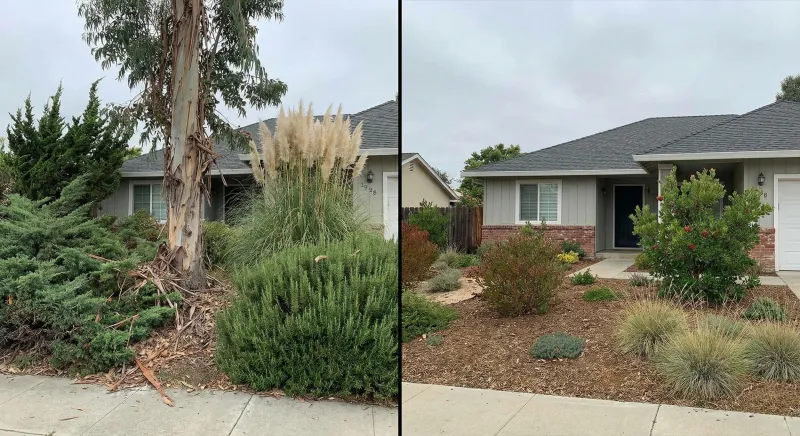
If you live in California, your yard could be doing more than looking pretty. Some common plants act like kindling once the long, dry summer arrives, and fire officials keep pointing to the same troublemakers year after year.
The good news is that swapping them out is easier than you think, and it can protect your home during peak fire season. Here are the plants worth rethinking, plus what makes each one such a risk close to your house.
1. Juniper Shrubs and Hedges
Firefighters have a nickname for juniper that says it all: gasoline plant. The dense foliage traps dead needles and holds oily resins that catch fast and burn hot.
Planted right against foundations and under windows, junipers give flames a direct ladder to your walls. In hillside and wildland-interface neighborhoods, that closeness is exactly what fire crews warn about.
If you love the tidy evergreen look, swap junipers for low, fleshy succulents or well-spaced native shrubs kept green with a little summer water. Clearing them from the first five feet around your house is one of the simplest defensible-space wins you can make this season.
2. Italian Cypress
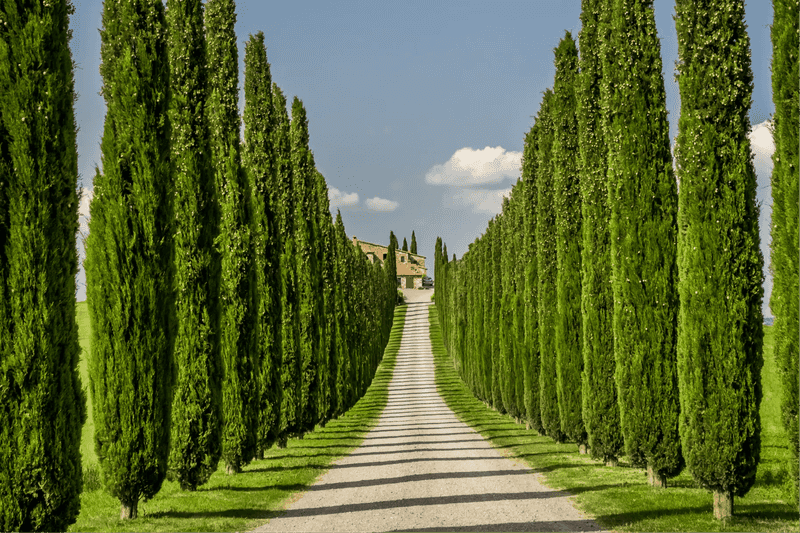
Those elegant, pencil-thin columns lining so many California driveways come with a hidden problem. Italian cypress collects dead needles inside its tight form, and once lit it can flare up like a torch.
Because the trees grow so tall and often sit close together, flames can leap from one to the next and toward your roofline. Fire officials call this vertical burning a major hazard near structures.
You do not have to give up that formal Mediterranean look entirely. Space specimens far apart, keep the interiors cleaned out, and plant them well away from the house rather than hugging the walls.
3. Pampas Grass
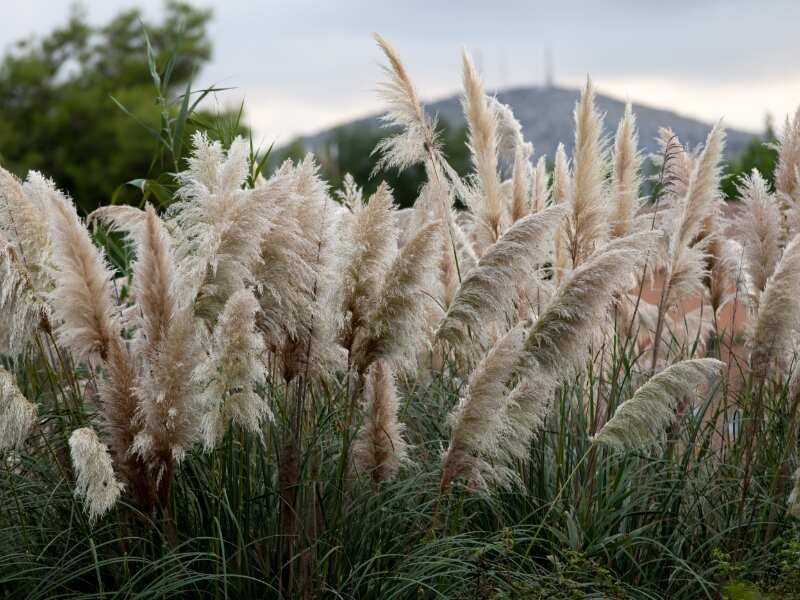
Pampas grass looks soft and dramatic waving in the breeze, but underneath those pretty plumes hides a mountain of dry, dead blades. That thatch is highly flammable and can send embers flying long distances.
On top of the fire danger, it is an invasive species in California that muscles out natives. Fire crews and habitat groups both wish it would disappear from home landscapes.
Pull it out and replace it with clumping native grasses like deergrass or California fescue. You keep the graceful movement without the fuel load or the invasion.
4. Eucalyptus Trees
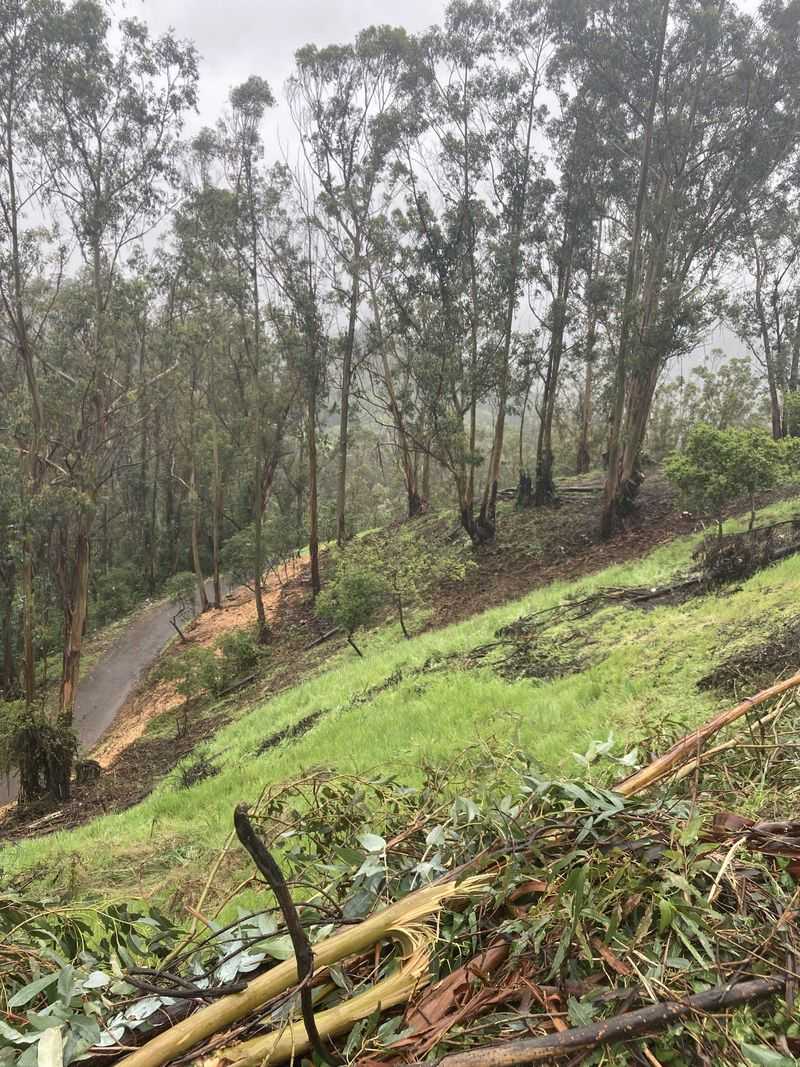
Eucalyptus practically sheds fuel for a living. The trees drop ribbons of peeling bark, oily leaves, and litter that pile up fast and ignite easily.
Those same oils make the canopy explosive in a wind-driven fire, and burning bark strips can carry embers far beyond the tree itself. During California’s big fire events, eucalyptus groves have repeatedly acted as accelerants.
Removing a mature tree is a bigger job, so start by clearing the litter constantly and keeping branches away from your roof. Over time, replacing them with lower-oil native oaks or other fire-smart trees pays off in safety.
5. Rosemary and Other Oily Herbs
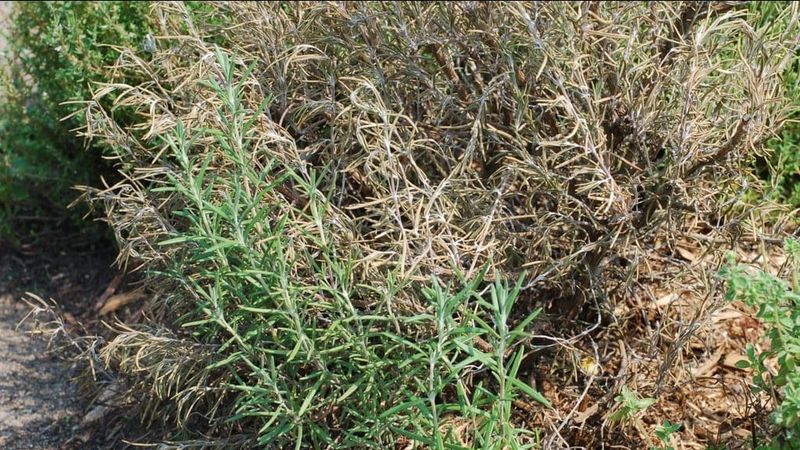
Here is a surprising one for the kitchen gardeners: rosemary. The aromatic oils that make it smell wonderful also make it burn readily, especially when the shrub grows old and woody with dead stems inside.
Sage, lavender, and other Mediterranean herbs share the same trait. A small potted rosemary is not a big deal, but a giant hedge of it pressed against the house is a different story.
Keep these herbs pruned, thin out the dead wood, and move large plantings out of that critical zone right beside your walls. You can still enjoy them, just not as a wall of fuel next to the siding.
6. Bamboo
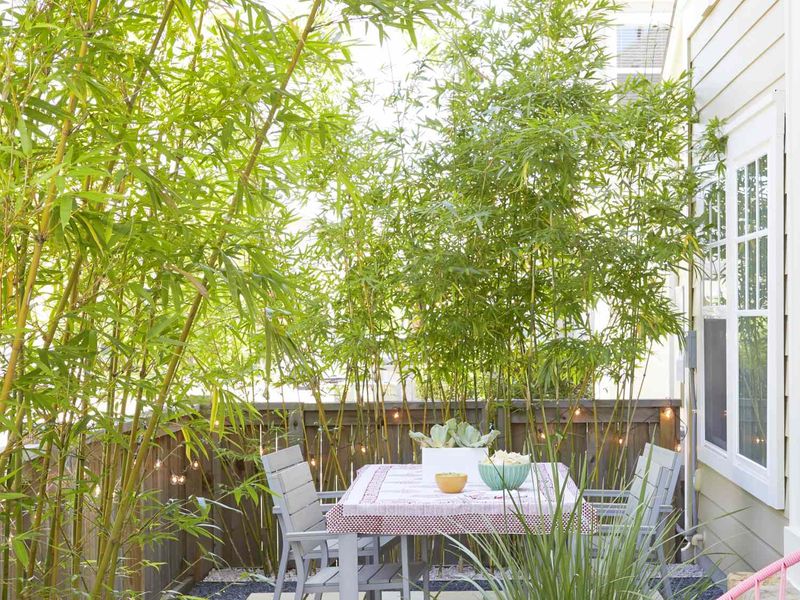
Homeowners plant bamboo for instant privacy, then discover it never knows when to stop. Beyond spreading aggressively, it forms thick stands full of dry leaves and papery sheaths that ignite in a hurry.
Once a bamboo grove catches, the packed canes burn fiercely and can throw embers around the property. Its height also lets fire climb toward structures.
For a screen that will not fuel a blaze, try a fire-resistant option like toyon or a well-watered hedge of native shrubs. You get the privacy without turning your fence line into a hazard.
7. Arborvitae
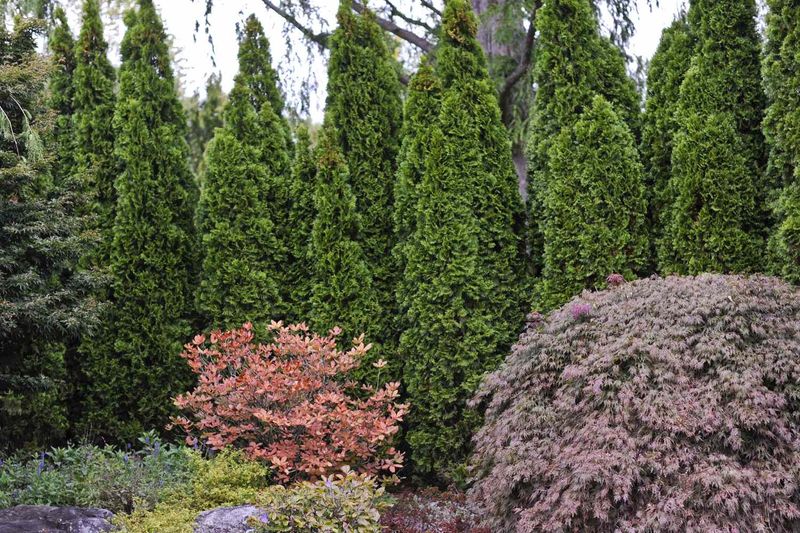
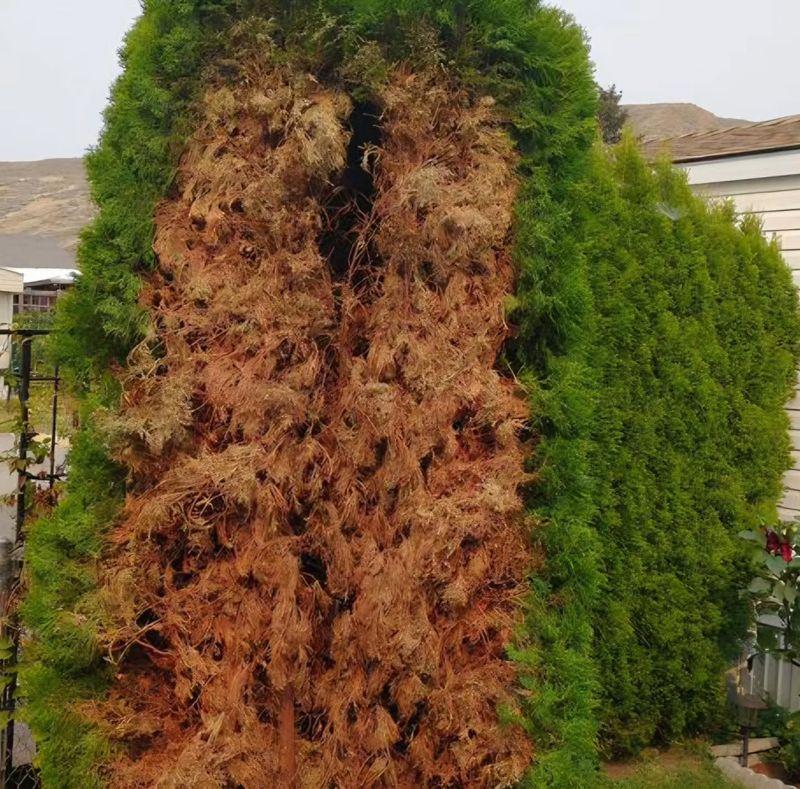
Arborvitae shows up in yard after yard because it makes a fast, dense green wall. Unfortunately, that thick interior fills with dead, dry foliage that fire officials rank among the worst near-home offenders.
The tight, resinous growth catches quickly and can carry flames straight up and into a neighboring structure. Lined up in a solid hedge, one plant lighting means the whole row goes.
Break up long hedges with spacing, clean out the dead material regularly, and keep them far from the house. Better yet, mix in lower-growing, higher-moisture plants that do not stack fuel against your walls.
Small choices like this add up to a yard that stands a far better chance when peak fire season arrives.