
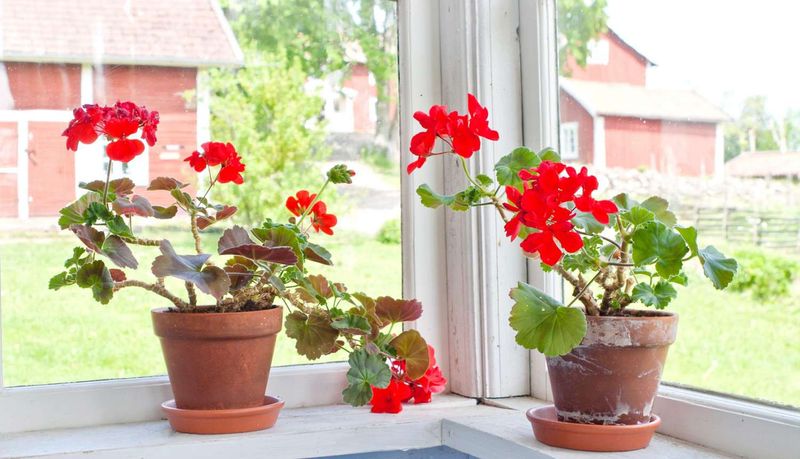
If your porch or balcony geranium looks more like a bare stick with a few leaves at the top than a full, colorful plant, you are not alone. Most container geraniums get leggy because of low light, heat stress, or simply never being cut back, and that stretched-out shape is hard to fix by watering or feeding alone.
One targeted pruning session, paired with the right growing conditions, can encourage the plant to branch out and fill in – giving you a better-shaped, more compact geranium that has a real chance at producing more blooms.
Identify the container geranium before you prune
Most container “geraniums” sold at garden centers across the South are not true geraniums at all. UC IPM guidance on Pelargonium makes clear that what most gardeners call a geranium is actually a tender Pelargonium hybrid – most commonly the zonal or common garden geranium, Pelargonium x hortorum.
Hardy plants in the genus Geranium are different plants with different needs, so confirming which one you have matters before you pick up the scissors.
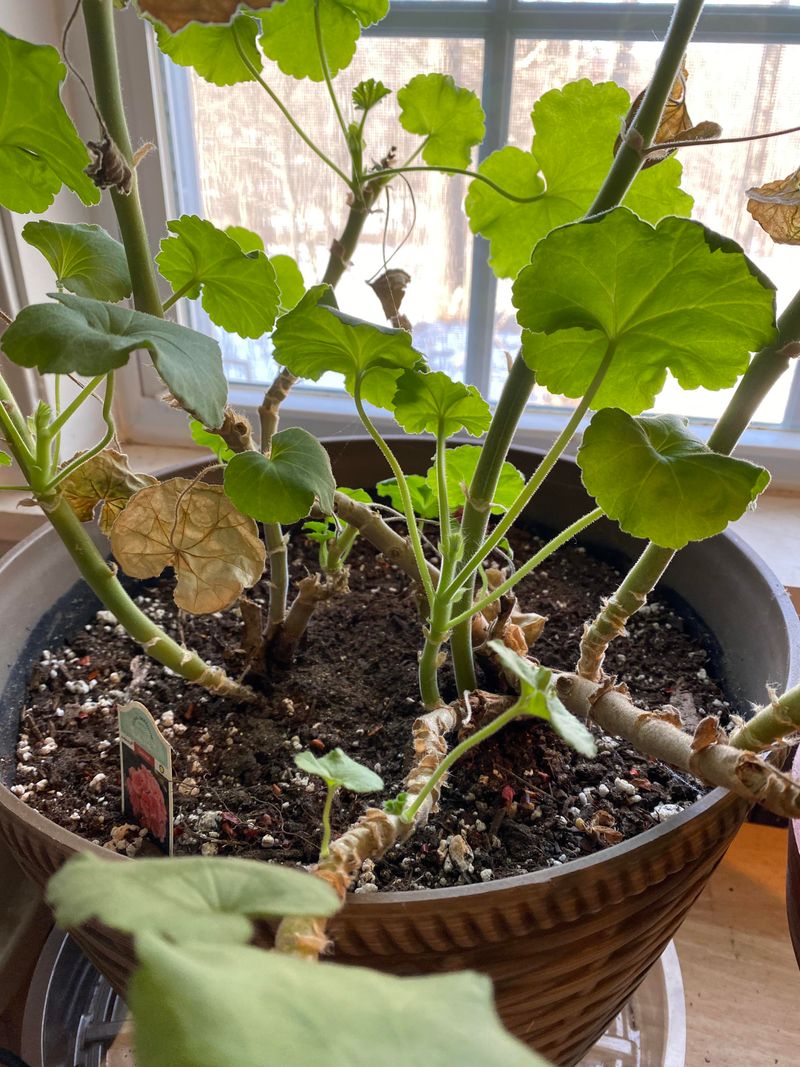
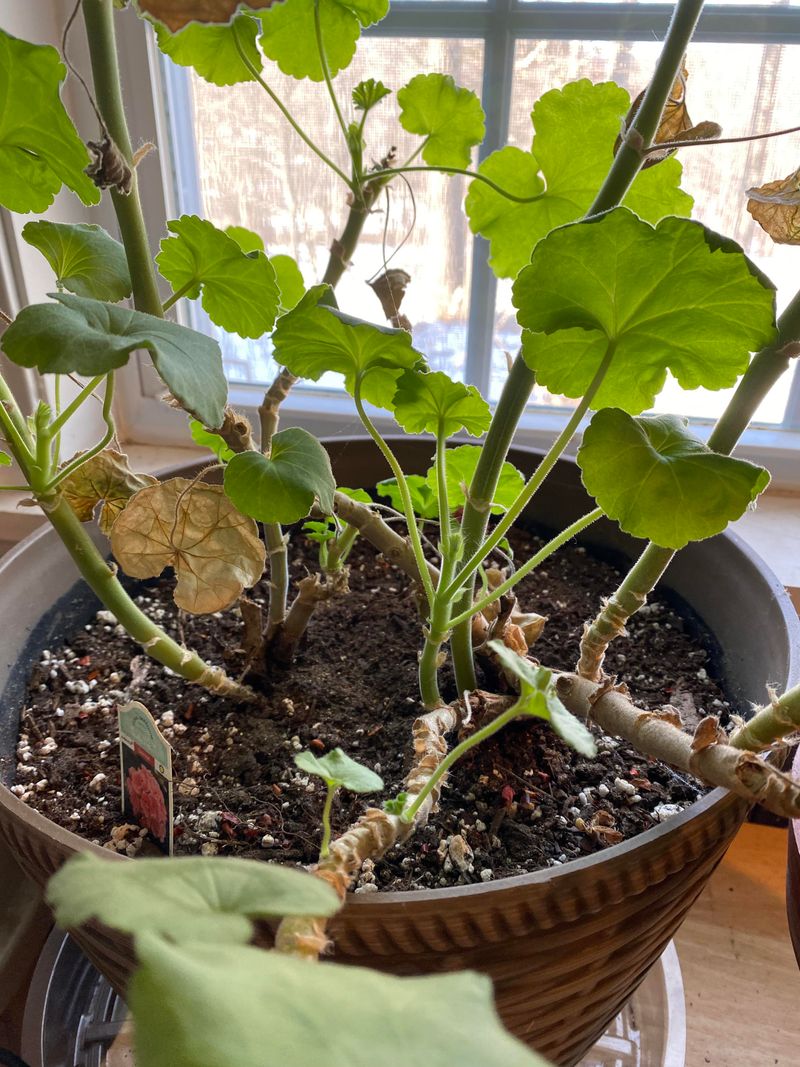
Legginess in a container Pelargonium looks specific: long, weak stems with little or no foliage along most of their length, and what growth remains clustered near the tips. NC State Extension’s Pelargonium profile connects this stretched growth pattern directly to insufficient light, and also notes that insects and disease can produce sparse foliage and weak stems.
Regal or Martha Washington geraniums behave differently from zonal types in heat and flowering, and ivy geraniums trail rather than mound, so identifying your plant type helps you set realistic expectations.
Before pruning, look closely at the stems and leaves. Soft, discolored, or water-soaked tissue, visible insects, or unusual spotting may signal a pest or disease problem that pruning alone will not correct.
University of Georgia Extension’s geranium guide notes that insects and disease can both produce symptoms that look like simple neglect. If the plant looks otherwise healthy but just stretched and bare, targeted pruning is the right next step.
Prune the longest stems just above healthy nodes
Clean tools matter more than most gardeners expect. Before making a single cut, wipe your scissors or pruners with rubbing alcohol or a dilute bleach solution so you are not moving disease from one stem to another.
Once your tools are ready, look at the plant and find the stems that are longest and barest – those are the ones to address first.
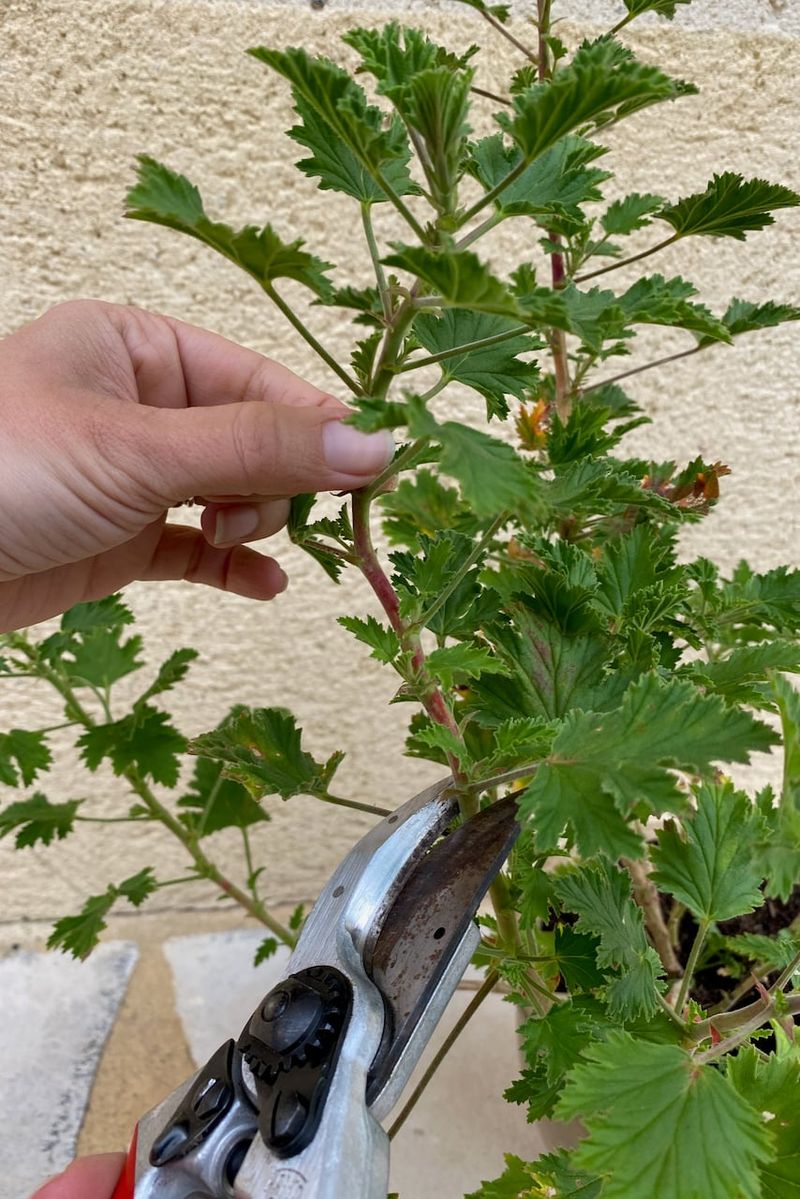
On each of those stems, work your way down from the tip until you find a node, which is the point where a leaf, a leaf scar, or a side shoot emerges from the stem. Wisconsin Extension’s overwintering guide and University of Alaska Fairbanks Extension both recommend cutting leggy geranium stems just above a node to stimulate new growth and branching.
Make your cut about a quarter inch above that node, angling slightly so water sheds away from the cut surface.
Leave several nodes on each stem after you cut. Penn State Extension recommends reducing a spindly annual to roughly three to five nodes so the plant retains enough active tissue to push new side shoots.
Removing the dominant terminal growing tip redirects energy toward those lower nodes, which is how one pruning session can begin to build a fuller framework – though how quickly that happens depends on light, temperature, and the plant’s overall health.
Shape every side of the pot with a targeted pruning session
Working around the entire pot rather than focusing on just one or two stems keeps the plant from becoming lopsided. Step back after every few cuts and look at the overall silhouette.
The goal is a balanced, compact shape where no single stem towers over the others.
Penn State Extension’s guide to pruning herbaceous plants advises pinching or cutting until the plant reaches the desired size and then stopping – because continued pinching prevents the plant from setting flower buds. That point is worth taking seriously: every time you remove a growing tip, you reset the clock on flowering for that stem.
A single, well-planned pruning session is more useful than repeated light snips spread across weeks.
Reserve harder cutbacks for plants that genuinely need renovation. Iowa State Extension recommends pruning overwintered geraniums by one-third to one-half, while University of Georgia Extension describes cutting back long growth by one-half to three-quarters when reviving badly neglected plants.
Those are recovery measures for extreme cases, not the standard cut for an actively growing container plant that has simply stretched. For most small-space gardeners dealing with a moderately leggy plant, a targeted session that shortens the longest stems while preserving several nodes is the right call.
Give the regrowth strong light without exposing it to punishing heat
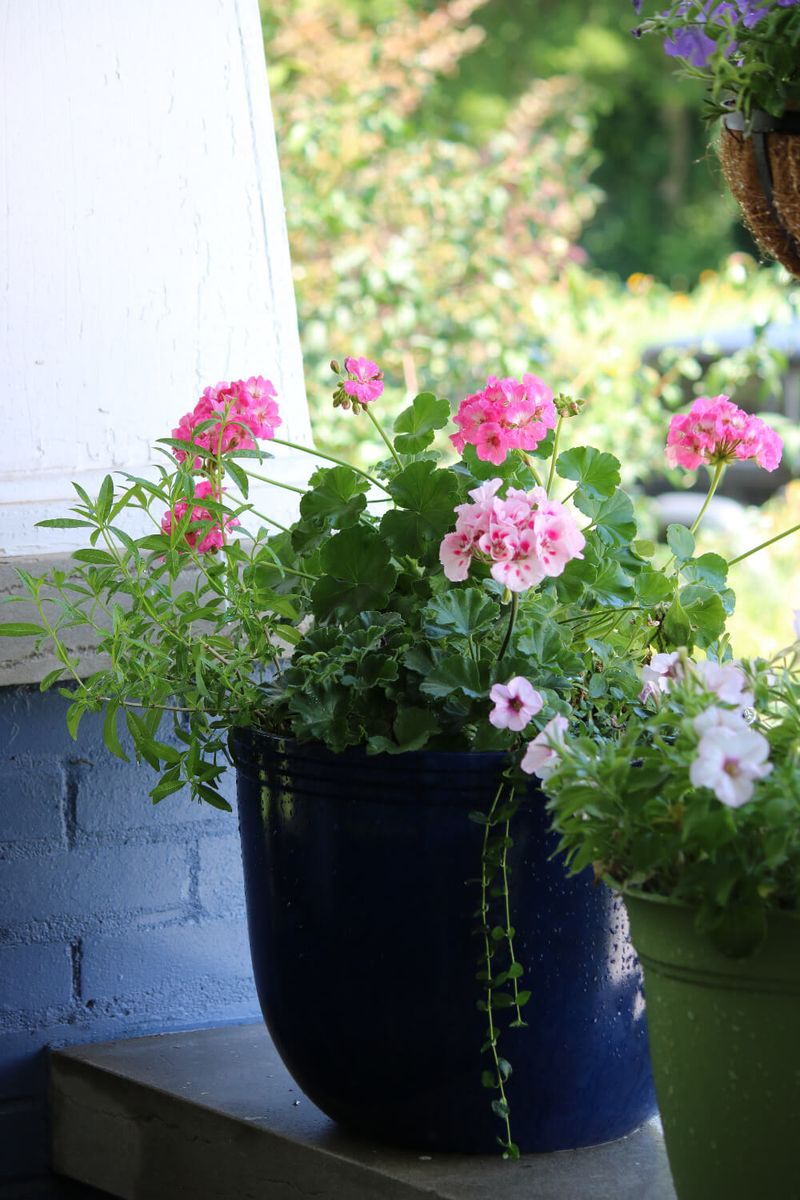
After pruning, where you place the pot matters as much as how you cut. New side shoots emerging from the nodes need strong light to grow compactly and eventually flower.
NC State Extension and Iowa State Extension’s geranium FAQ both connect several hours of direct light with good flowering, while noting that partial shade usually reduces bloom without eliminating foliage growth. A plant pushed back into a dim corner after pruning is likely to produce another round of stretched, weak stems.
Southern gardeners need to make a distinction between bright light and brutal heat. UF/IFAS notes that geraniums struggle with Florida’s intense summer heat and humidity, and are commonly grown as winter annuals in central and southern Florida rather than as summer plants.
In Texas, common zonal geraniums often behave as cool-season annuals in the hottest cities unless heat-tolerant selections are used. If your plant is leggy in July or August in Florida or South Texas, the cause may be seasonal heat stress rather than a simple lack of sun.
UC IPM confirms that geraniums grow well in warm, sunny weather but may need some shade during very hot temperatures. Practically, that means morning sun with protection from the hottest afternoon exposure is often a better position than a west-facing wall that bakes the pot for hours.
Move the container to take advantage of that pattern if your space allows it.
Keep moisture, drainage, and feeding in balance
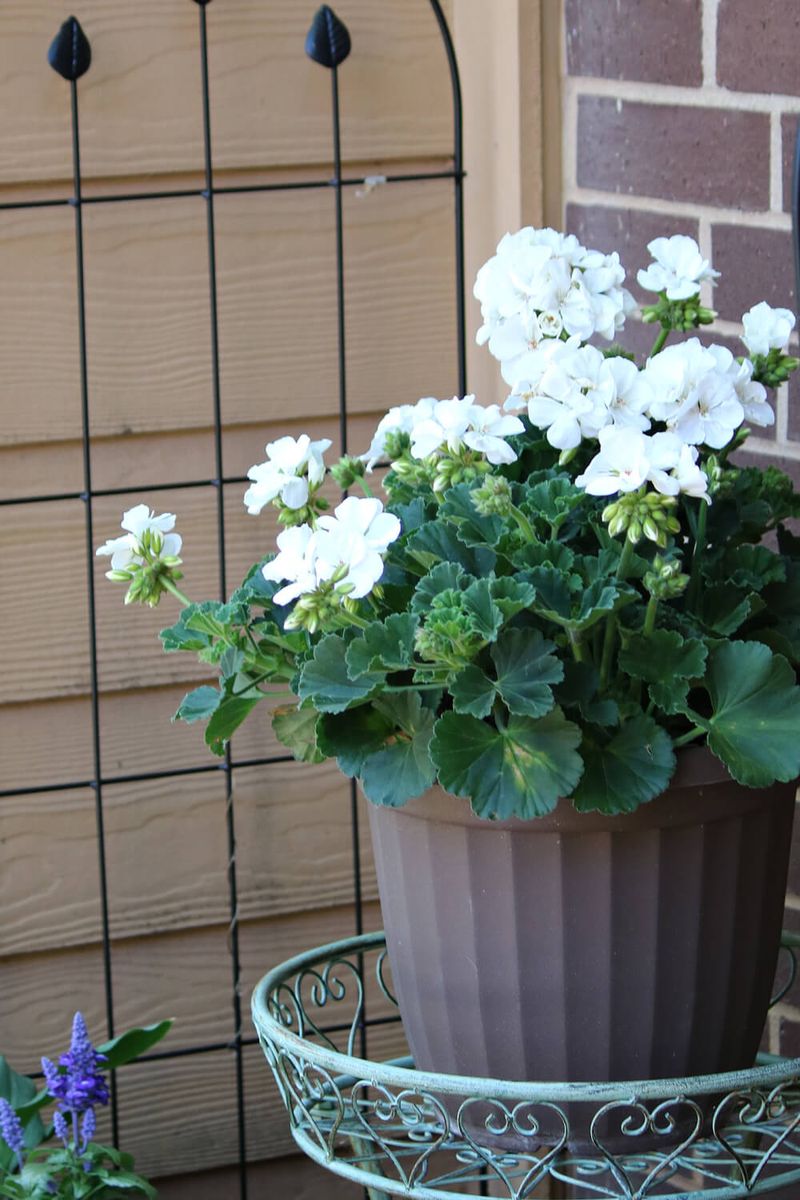
New shoots emerging after pruning need steady, even moisture – not a waterlogged root zone. Water the container thoroughly once the top inch or two of potting mix has begun to dry, then let excess drain freely.
Clemson Extension’s indoor geranium guide emphasizes well-drained soil as a basic requirement, noting that wet roots can contribute to root rot and related problems that no amount of pruning will fix.
Drainage starts with the container itself. University of Illinois Extension explains that drainage holes are the essential feature – a gravel layer placed at the bottom of a pot without holes does not improve drainage and can actually raise the level at which water saturates the mix.
If your container lacks drainage holes, moving the plant to one that has them is a straightforward fix worth doing before the next watering.
Fertilizer supports new growth but cannot substitute for adequate light and proper watering. Iowa State Extension and University of Georgia Extension both recommend dilute, regular feeding for container geraniums, while Purdue Extension cautions that excess fertilizer – especially when light is inadequate – can favor foliage over flowers and cause soluble-salt injury to roots.
Apply a dilute balanced or bloom-formula fertilizer on a regular schedule only after confirming the light and drainage situation is already sorted out.
Use deadheading or repotting only when the plant needs them
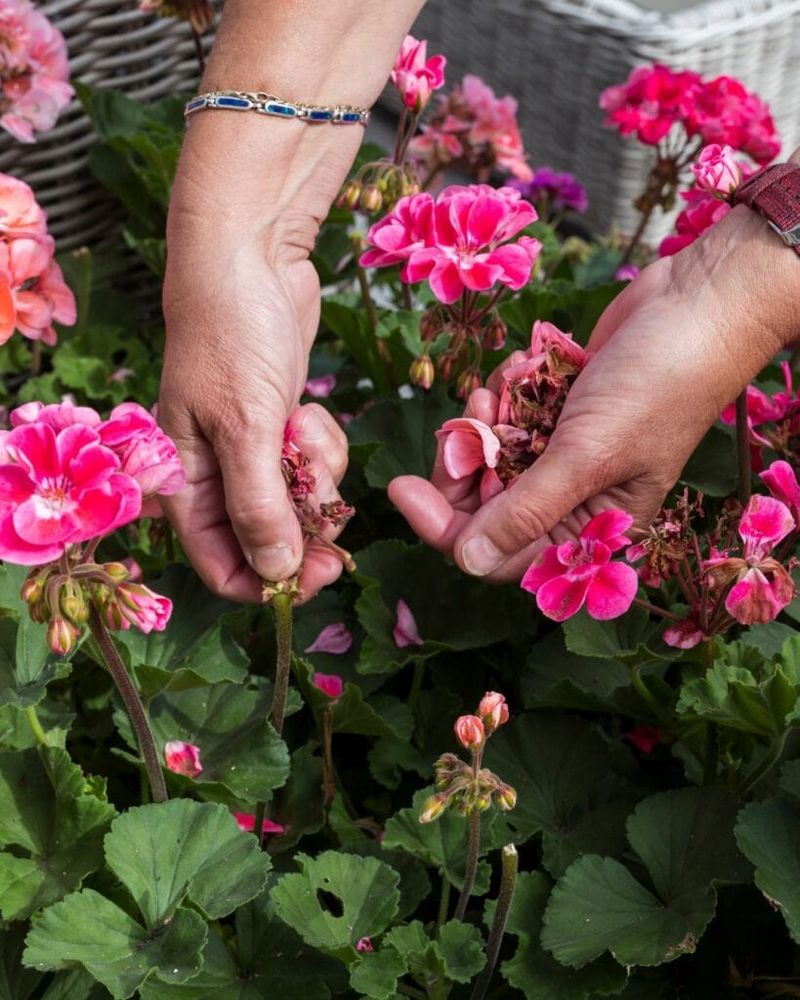
Removing spent flower clusters – called deadheading – keeps a blooming plant tidy and signals it to keep producing flowers rather than setting seed. Iowa State Extension’s deadheading guide confirms that removing faded blooms helps maintain flowering, but the same source makes clear that deadheading does not change stem structure.
If the framework is bare and elongated, snipping off old flower heads will not make the stems branch or fill in – that is pruning’s job, not deadheading’s.
Repotting is a separate question that deserves its own inspection. University of Georgia’s container gardening publication notes that restricted roots can limit top growth and flowering, and recommends roughly an 8-to-12-inch container for geraniums as a general guideline.
However, UC IPM and Texas A&M guidance both suggest that geraniums can perform adequately when somewhat root-bound, so legginess alone is not proof that repotting is needed. Slide the root ball out and look: tightly circling roots with little visible mix left is a genuine sign of restriction worth correcting.
Before repotting or pruning again, check for pests, disease, and persistent watering problems. UF/IFAS geranium guidance and University of Georgia Extension both identify insects and disease as causes of weak, sparse growth that can look identical to simple neglect.
Correcting the wrong problem repeatedly wastes time and stresses the plant further.
Let the plant rebuild before expecting a fuller bloom display
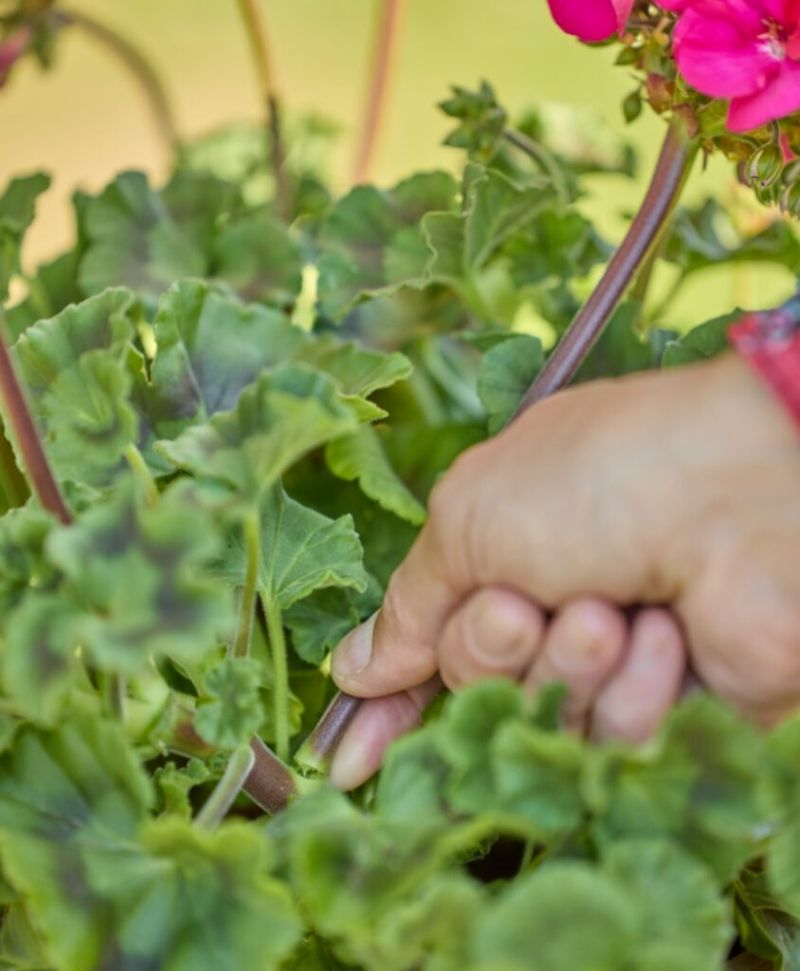
Pruning removes some of the stem that would otherwise carry flowers, so a short pause in blooming after you cut is normal and expected. Penn State Extension and Penn State’s annual transplanting guidance both connect pinching and pruning with a temporary delay while the plant redirects energy into side shoots.
Expecting a flush of blooms within days of cutting is likely to lead to frustration; expecting a fuller, more compact plant over several weeks is a realistic goal.
Maintain suitable light and even moisture throughout the recovery period. As new growth develops, remove faded flower clusters with consistent deadheading to encourage the plant to keep cycling toward new buds rather than seed production.
Stop pinching once the plant has reached the size and shape you want, because continued tip removal will keep resetting the flowering clock.
How quickly the plant fills in depends on its type, the season, ambient temperature, and whether the growing conditions – light, drainage, and moisture – are genuinely supporting new growth. NC State Extension’s Pelargonium profile ties strong flowering directly to adequate light, which is the condition most worth checking first.
One targeted pruning session can give a stretched container geranium a better framework to work from – what happens next is mostly up to the conditions you provide.