
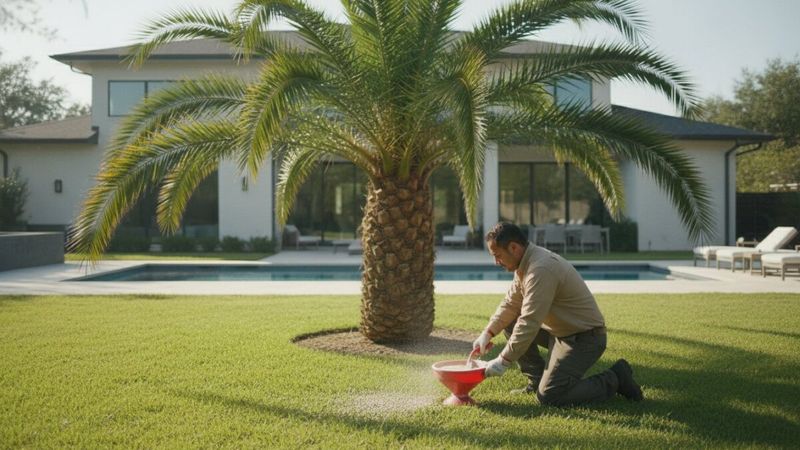
A palm can look fine through summer, then show yellow fronds as cooler weather arrives. Late October is a good time to check its nutrients, watering, and older leaves before growth slows.
The key is a well-timed palm fertilizer program, not a heavy dose meant to force winter growth. These seven steps will help you decide what your Florida palms need now and what should wait.
1. Check Your Local Fertilizer Window
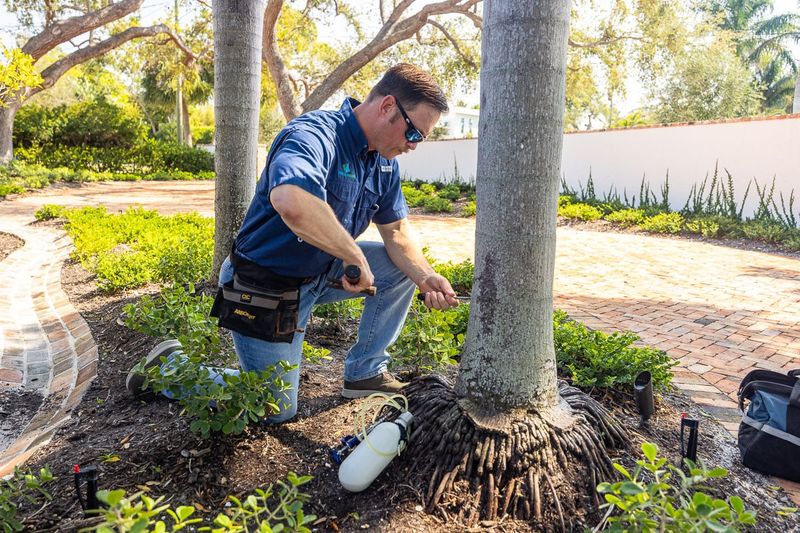
October does not mean the same thing in Jacksonville as it does in Miami. South Florida palms may keep growing through warm stretches, while palms farther north begin slowing as soil temperatures drop.
Before opening a fertilizer bag, check your county’s fertilizer ordinance and ask your UF/IFAS Extension office about local fall timing. Some communities restrict fertilizers containing nitrogen or phosphorus during certain months, and other rules cover application near water or before heavy rain.
In South Florida, a scheduled fall feeding may fit a year-round palm care program if the label and local rules allow it. In North Florida, late October may be too late for routine feeding, especially when cool weather has already arrived.
Central Florida gardeners should use local guidance rather than a fixed statewide date.
The goal is to support normal growth, not push tender new leaves before cold weather. If you already fertilized recently with a controlled-release product, another application may be unnecessary.
Check the previous application date and the product’s feeding interval before adding more.
2. Choose a Complete Palm Fertilizer
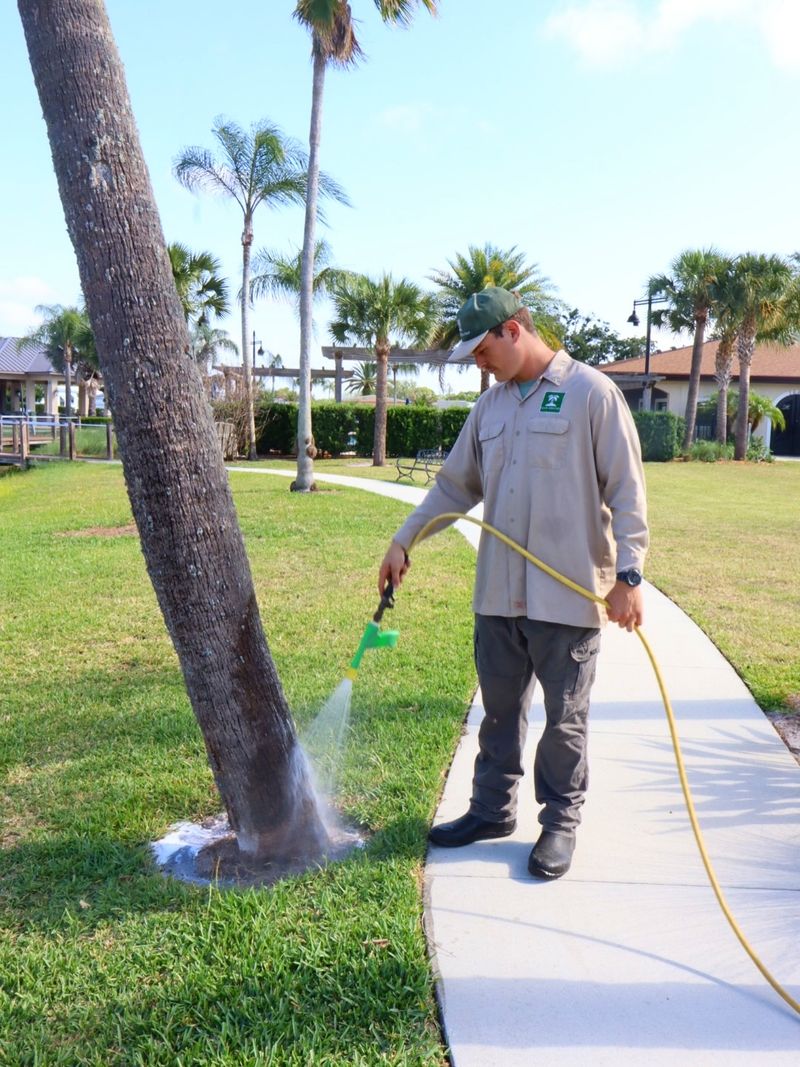
The numbers on the bag matter more than a palm picture on the front. Florida’s sandy soils hold nutrients poorly, so a suitable formula needs to supply more than a quick burst of nitrogen.
UF/IFAS commonly recommends an 8-2-12 fertilizer with 4 percent magnesium and added micronutrients for landscape palms. The three main numbers describe nitrogen, phosphate, and potash.
Magnesium and smaller amounts of nutrients such as manganese, iron, and boron also support healthy growth.
Look for a product that follows UF/IFAS guidance on controlled-release nitrogen, potassium, and magnesium. Release characteristics matter because rain can wash readily soluble nutrients through sandy soil before roots use them.
Where phosphorus is restricted or unnecessary, ask Extension about an appropriate alternative that meets local rules.
Avoid replacing palm fertilizer with a high-nitrogen lawn product. Extra nitrogen without enough potassium can worsen an existing nutrient imbalance.
Epsom salt is not a complete substitute either: it supplies magnesium, but no potassium or full micronutrient package. Choose the right blend first, then follow its labeled application rate and schedule.
3. Read the Yellowing Pattern
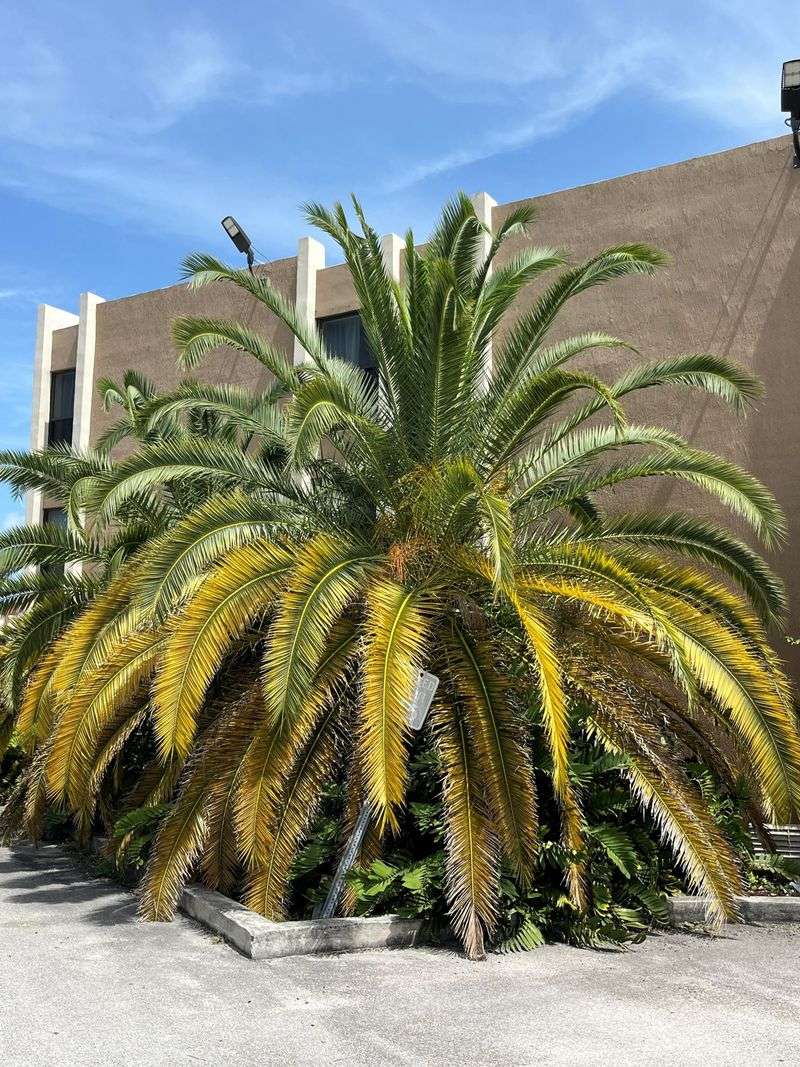
A yellow leaf is a clue, not a diagnosis. Which fronds change color first, and where the damage appears, can help separate a nutrient shortage from a root problem or disease.
Potassium deficiency often appears on older fronds as yellow-orange spots, followed by dead tips or frizzled leaflets. Magnesium deficiency commonly produces broad yellow bands along older leaf edges while the center stays green.
These problems can occur together, so symptoms are not always tidy.
New growth deserves a different kind of attention. Small, distorted, or badly frizzled emerging leaves can point to manganese deficiency or another serious problem.
A suddenly collapsing crown, loose center spear, or rapid browning should not be treated as a routine fertilizer issue.
Photograph the whole palm, the oldest affected frond, and the newest growth before asking your county Extension office for help. Include the palm species, watering schedule, recent flooding, and fertilizer history.
Soil testing can help assess pH and certain nutrient levels, while leaf testing may clarify nutrient status. Avoid adding individual supplements based on color alone.
4. Spread Nutrients Across the Root Area
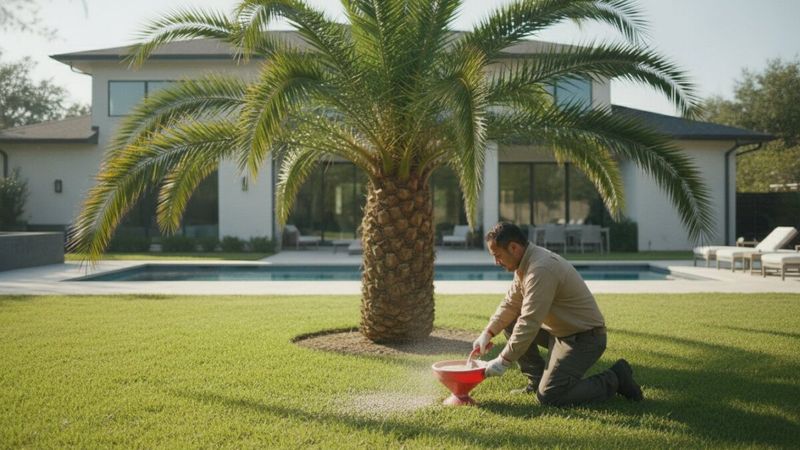
Piling fertilizer beside the trunk misses much of the working root system. Palm roots spread outward through the surrounding soil, often extending beyond the reach of the fronds.
When feeding is appropriate, distribute the labeled amount evenly over the recommended root-zone area rather than making a narrow ring at the base. UF/IFAS landscape guidance commonly uses 1.5 pounds of suitable palm fertilizer per 100 square feet, but your product label and local restrictions must guide the actual application.
Measure the area and the fertilizer instead of guessing by handfuls. Keep granules out of the crown, away from direct contact with the trunk, and off sidewalks and driveways.
Sweep stray material back onto the permitted treatment area so it cannot wash into a storm drain.
Also look beyond the palm bed. Lawn fertilizer applied over overlapping roots can affect the palm’s nutrient balance, even when the trunk sits in mulch.
Coordinate lawn and palm care rather than treating them as separate systems. Never double the dose to make up for a missed feeding.
5. Adjust Watering as the Weather Cools
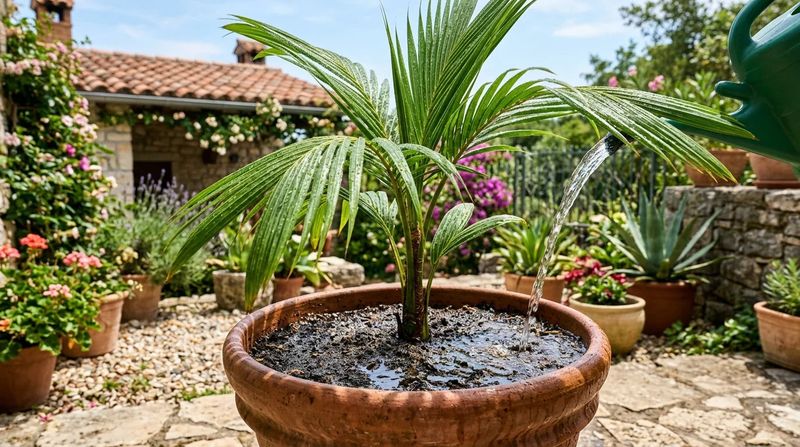
Your summer irrigation timer may be giving the yard more water than it needs now. Cooler days, shorter daylight, and changing rainfall can reduce water use, even while the soil surface looks dry.
Check moisture several inches down near the active root area before watering. Established palms generally need supplemental irrigation during dry spells, not constant soaking.
Newly planted palms need closer attention because their original root balls can dry out faster than the surrounding bed.
If the fertilizer label calls for watering after application, use the specified amount without creating runoff. Do not spread fertilizer onto saturated ground or just before a downpour.
Florida’s sandy soils can lose nutrients through leaching, while compacted or poorly drained sites may stay wet long enough to damage roots.
Maintain a roughly 2- to 3-inch mulch layer to help steady soil moisture, but leave several inches clear around the trunk. Avoid adding soil over exposed palm roots or burying the trunk base.
Better moisture management helps roots function; extra fertilizer cannot repair a site that stays waterlogged.
6. Keep Living Fronds on the Palm
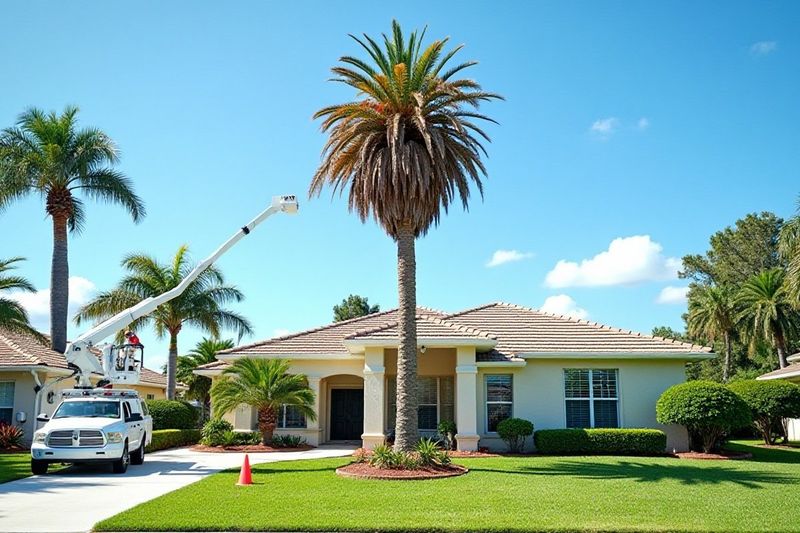
Put the pruning saw down if the lower leaves are still partly green. A palm can move nutrients from older fronds into newer growth, and removing those leaves too soon takes away a useful reserve.
That matters especially when potassium is in short supply. Repeatedly cutting off yellowing fronds can speed the decline by removing nutrients the palm could still reuse.
The tidy look may come at the cost of a thinner, weaker canopy.
For routine maintenance, focus on fully dead fronds and loose material that poses a safety risk. Avoid hurricane cuts, which strip away healthy foliage and do not make palms better prepared for storms.
Never cut the central growing point or remove emerging leaves to make the crown look neat.
Use a qualified arborist for tall palms, work near power lines, or uncertain symptoms. Ask that climbing spikes not be used for routine pruning because they wound the trunk.
If disease is suspected, seek a diagnosis and follow proper tool sanitation guidance. A full canopy is a health asset, not a maintenance mistake.
7. Track New Growth Through Winter
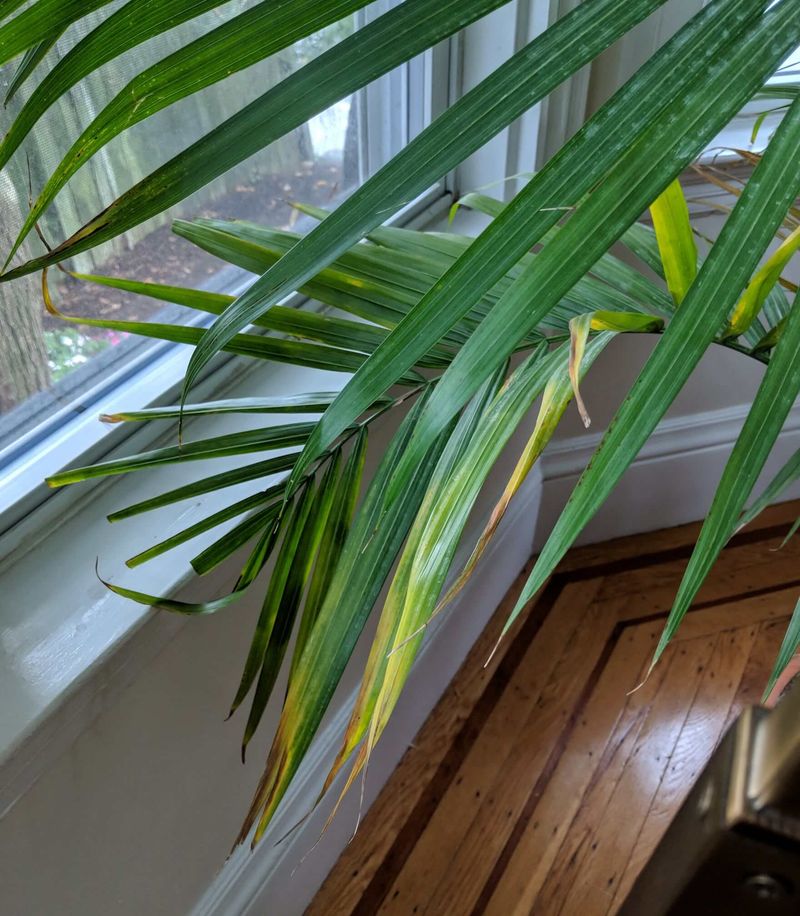
Recovery shows up in the next leaves, not as an overnight makeover. Fronds with dead tips or damaged tissue will not rebuild those areas, and nutrient-related yellowing may take months to improve.
Take a baseline photo in late October, then photograph the palm from the same spot about once a month. Record fertilizer dates, product names, irrigation changes, and unusual cold or flooding.
Watch whether newly opened fronds look stronger and whether damage continues to spread.
Growth naturally slows during cooler weather, particularly in North and Central Florida. That pause does not automatically mean the palm needs another feeding.
Keep to an appropriate schedule rather than adding fertilizer every time an older leaf turns yellow.
Protect cold-sensitive species when freezes threaten, using Extension guidance suited to the palm’s size and location. Fertilizer does not provide freeze protection.
If the newest leaves deteriorate, the canopy rapidly thins, or the center spear loosens, get professional help promptly. A well-chosen fertilizer program, sensible watering, and patient monitoring offer a better path than repeated rescue treatments.