
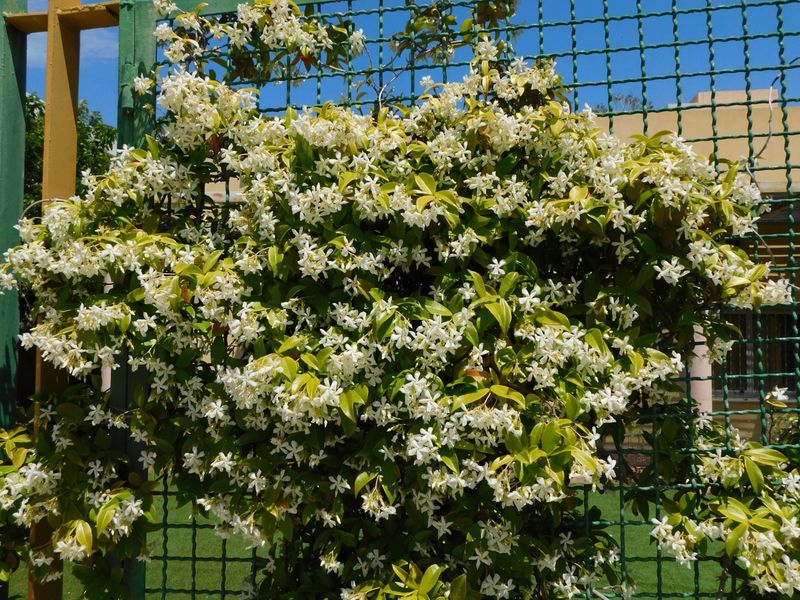
A bare chain-link fence can make a yard feel more like a parking lot than a garden. Star jasmine is an evergreen vine that can turn that wire into a leafy backdrop with sweet-smelling spring flowers.
In the Austin area, city guidance lists it as a low-water plant, but it still needs support, a little patience, and a plan. Here is how to choose a spot, guide the vine, and keep it in bounds.
Why star jasmine can suit a chain-link fence
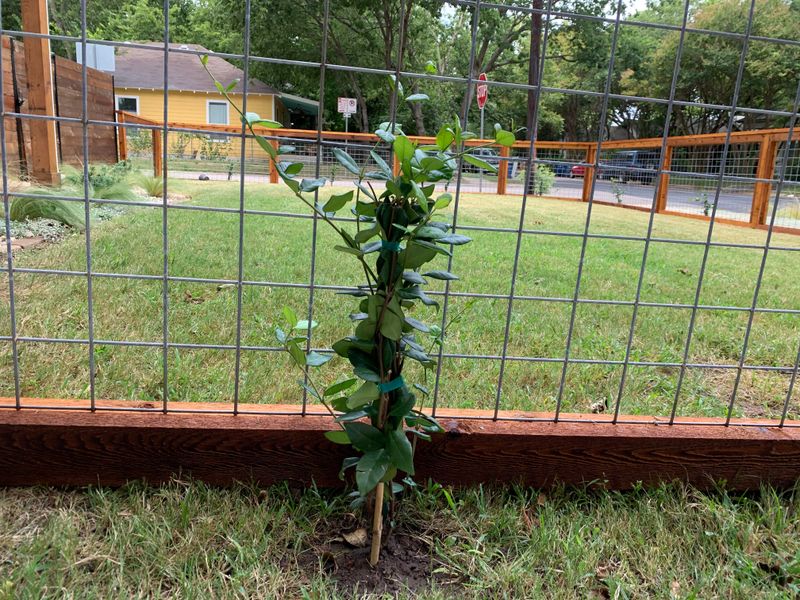
Chain-link does its job well, but it is not much to look at. A climbing evergreen can hide the wire, soften the lines, and give a plain property edge some texture all year long.
Star jasmine, Trachelospermum jasminoides, is a sensible candidate for that work.
The City of Austin plant guide lists star jasmine as an evergreen vine with fragrant blooms, low water needs, and a potential height of 10 to 20 feet. That makes it a workable choice for local fences, though the guide does not tell us how many Central Texas gardeners actually use it this way.
Think of it as a good option to try, not a guaranteed trend.
Outside Texas, North Carolina State Extension confirms that the vine can be trained on a fence and notes its fragrant white flowers and glossy foliage for screening. A fence gives the plant something to climb, and the plant gives the fence a softer face.
Set your expectations before you buy. Nothing in these sources promises a coverage timeline, so a fully green fence will come from seasons of training and care, not a single weekend of planting.
A small pot at the base of the wire is the start of a long project, and that slow build is part of the charm.
Evergreen foliage carries the display between blooms
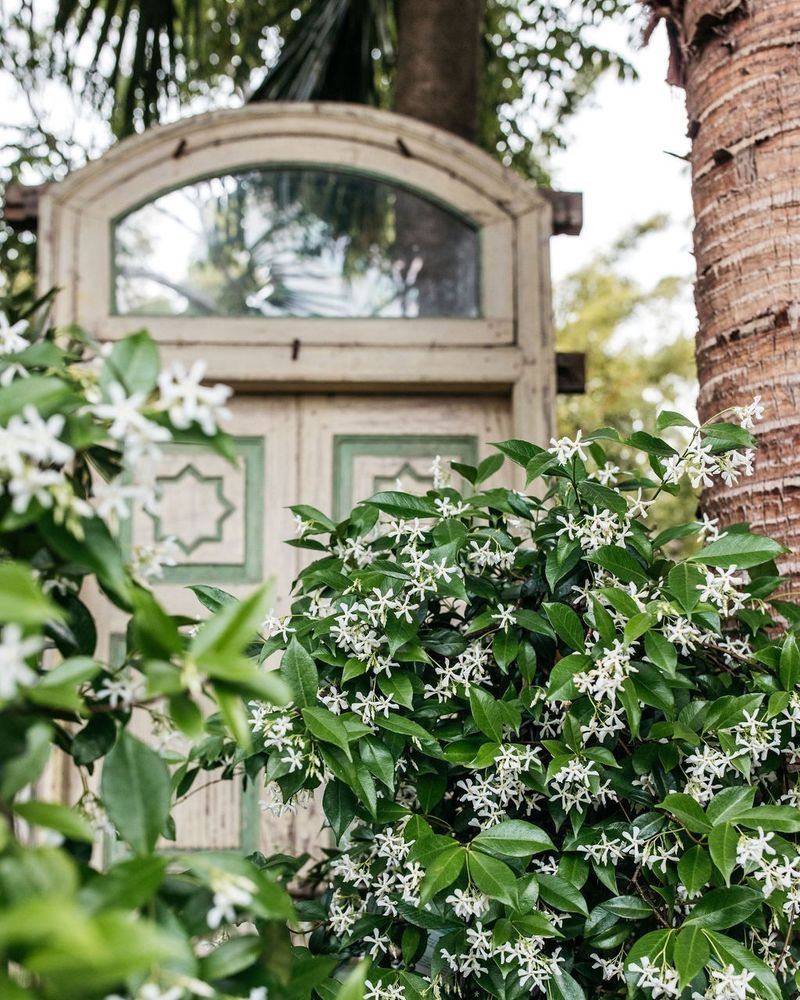
Spring is the showy season, but the leaves do most of the work the rest of the year. Star jasmine holds glossy green foliage through the seasons, so a fence stays dressed even when nothing is blooming.
Austin’s plant guide lists it as evergreen with fragrant blooms.
The flowers are small, white, and shaped like pinwheels. North Carolina State Extension describes them as fragrant, and the scent is a big reason people plant this vine near patios, gates, and walkways.
Put it where you will actually walk past it on a warm spring evening.
The sources do not say how long the blooms last or how heavy the flowering will be on any given fence, so treat the flowers as a seasonal bonus. The glossy leaves are the steady part of the show.
A quick note on the name: star jasmine, also called Confederate jasmine, is not a true jasmine. Its genus is Trachelospermum, not Jasminum.
Using the scientific name when you shop helps you avoid mix-ups with other plants sold as jasmine.
Guide young growth along the fence
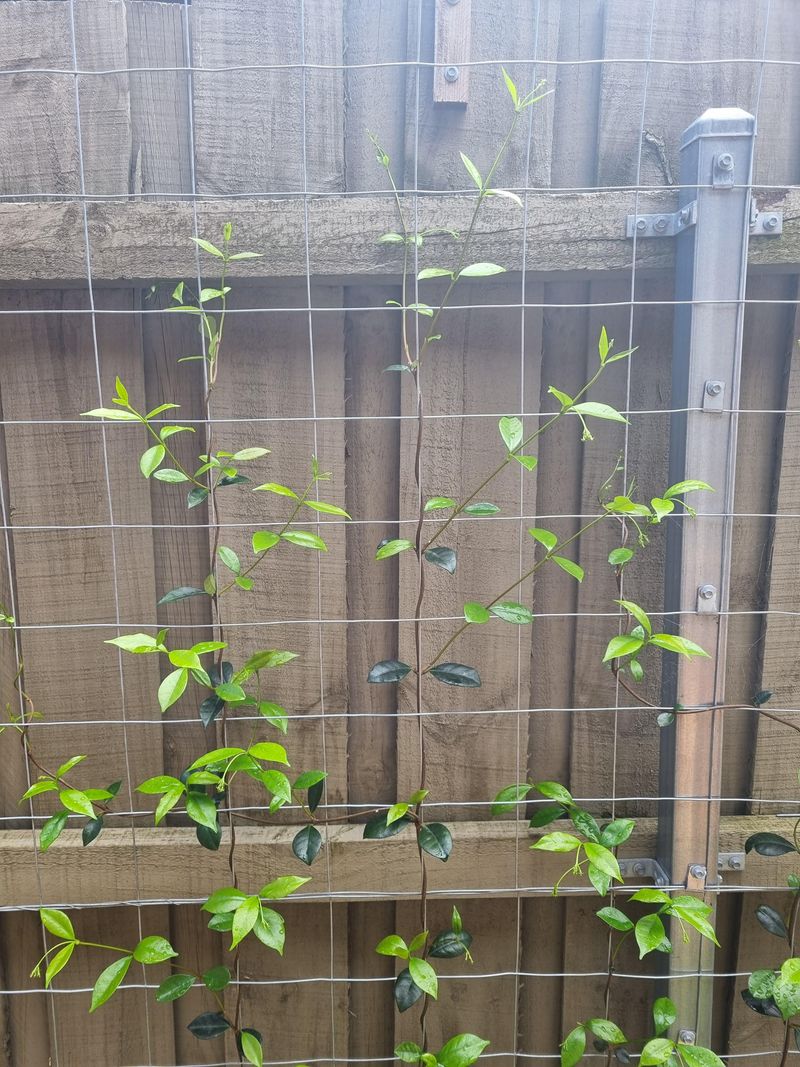
Star jasmine climbs by twining, which means its stems wrap around something rather than gluing themselves to it. North Carolina State Extension notes that it needs a support structure, and a chain-link fence can fill that role.
The fence is the ladder, but the vine still needs help finding the rungs.
Start by spreading the young stems toward the wire instead of letting them bunch at the base. Weave shoots through the links or fasten them loosely with soft ties.
The Royal Horticultural Society advises guiding and tying in young climbers as they grow.
Check the plant every couple of weeks during the growing season. Redirect wandering stems, loosen any tie that bites into a stem, and angle new growth sideways so it fills gaps.
Fanning shoots out tends to cover more fence than letting one stem race straight up.
Do not expect the vine to cling on its own right away or cover the wire on a set schedule. The sources give no timeline, so let the plant set the pace and keep guiding it.
Choose a spot that allows for mature growth
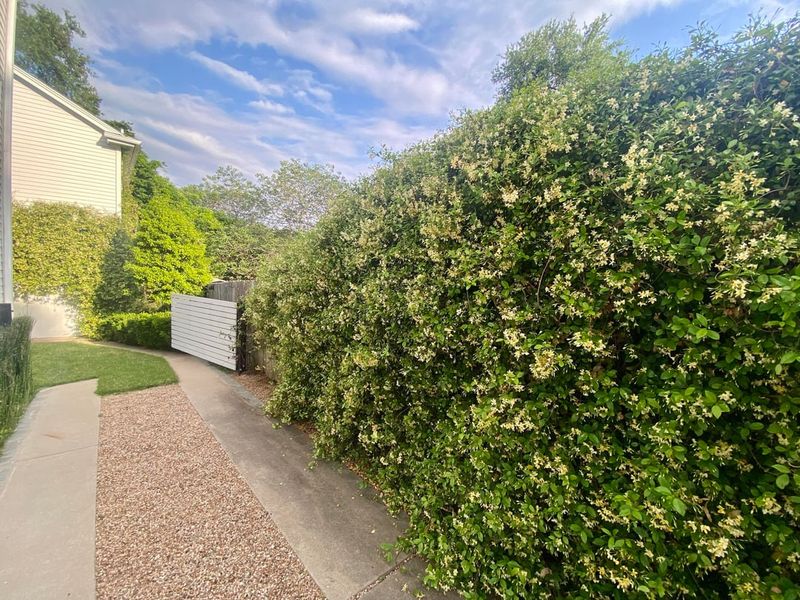
Before you dig, walk the fence line and look at the light. Austin’s plant guide lists star jasmine for sun or part shade, so both a bright western fence and a spot with some afternoon relief are reasonable candidates.
The same guide gives a potential height of 10 to 20 feet and a spread of 12 to 16 feet. Those are local plant-guide figures, not promises for every yard.
Soil, light, water, and winter weather all change how big a vine gets.
The takeaway is simple: do not plan for a skinny, fixed-width hedge. A vine with that kind of potential will want room, and a short fence or a narrow gap between a fence and a walkway may mean frequent trimming.
Leave space for the plant to widen, and keep it clear of gutters, meters, gates, and neighbors’ property.
Pick a stretch where you can reach both sides of the growth if possible. Easy access makes tying in and trimming much less of a chore, and it keeps the vine from tangling into things you would rather it left alone.
Low water needs do not mean drought-proof
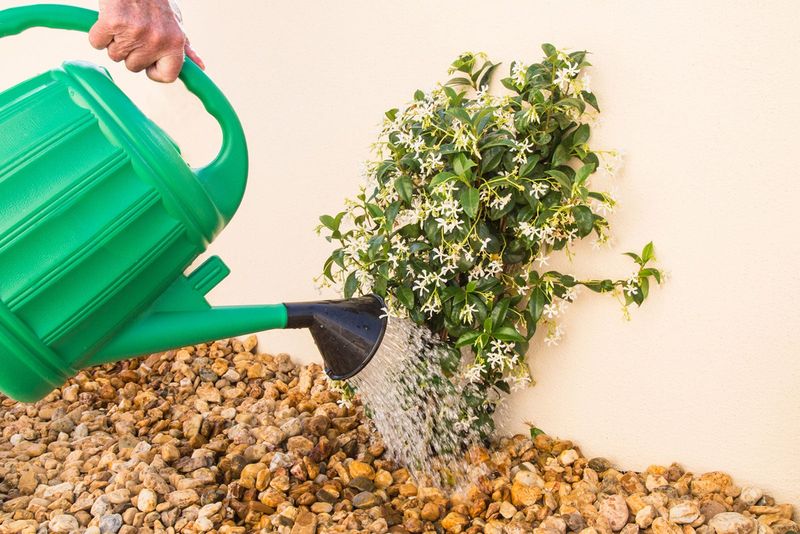
Plant labels love the word drought-tolerant, but the details matter. Austin’s guide rates star jasmine as low water.
A UF/IFAS fact sheet is more cautious, listing moderate water needs and moderate drought tolerance.
Put those two ratings together and you get a plant that should need less water than a thirsty annual bed, but not none. North Carolina State Extension ties its drought tolerance to the plant being established.
A new vine with a small root system is not there yet.
So water a new planting regularly through its first seasons, especially when triple-digit heat arrives. After it settles in, you can stretch the time between waterings, but watch the leaves.
Drooping, dull, or crisping foliage during a long dry spell is a sign to give it a deep soak.
Site and soil help too. The UF/IFAS sheet points to reasonably well-drained soil, so avoid low spots where water stands.
It also recommends mulch to help hold moisture, so spread a layer over the root zone and keep it a little back from the stems.
Do not count on the vine to ride out severe, prolonged Texas drought with no help. Austin’s rating is useful local guidance, not a survival guarantee.
Pruning and local caution help manage growth
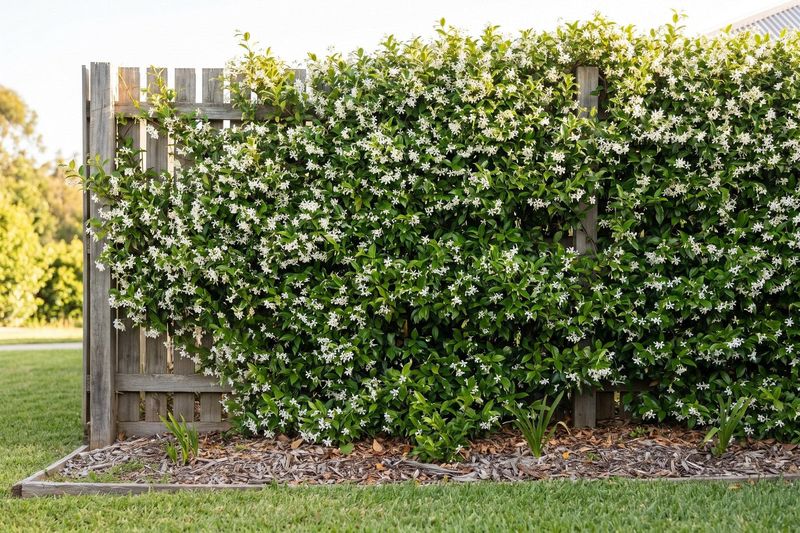
A vine that can reach 10 to 20 feet will not stay put without some direction. Austin’s plant guide advises pruning to direct and control growth, so plan on picking up the shears now and then.
North Carolina State Extension recommends pruning after flowering to keep the plant within its available space. Trimming right after the spring bloom is a handy rule, and it lets you shape the vine once the flowers have faded.
Cut back stems that lean over the fence top, reach into walkways, or head for nearby plants.
Local conditions matter here. Austin warns that star jasmine can grow aggressively in shady areas and advises against planting it near preserves.
If your fence borders a natural area or a heavily shaded stretch, think twice or plan on firm, regular control.
Elsewhere the picture differs. A UF/IFAS assessment labels it “not a problem species (documented)” in Florida’s natural areas.
That is a Florida finding, so it does not settle the question for Texas.
Both views are regional. Neither one says the plant is a menace everywhere or harmless everywhere.
Watch your own fence, and keep the vine where you want it.
A fragrant screen takes time and care
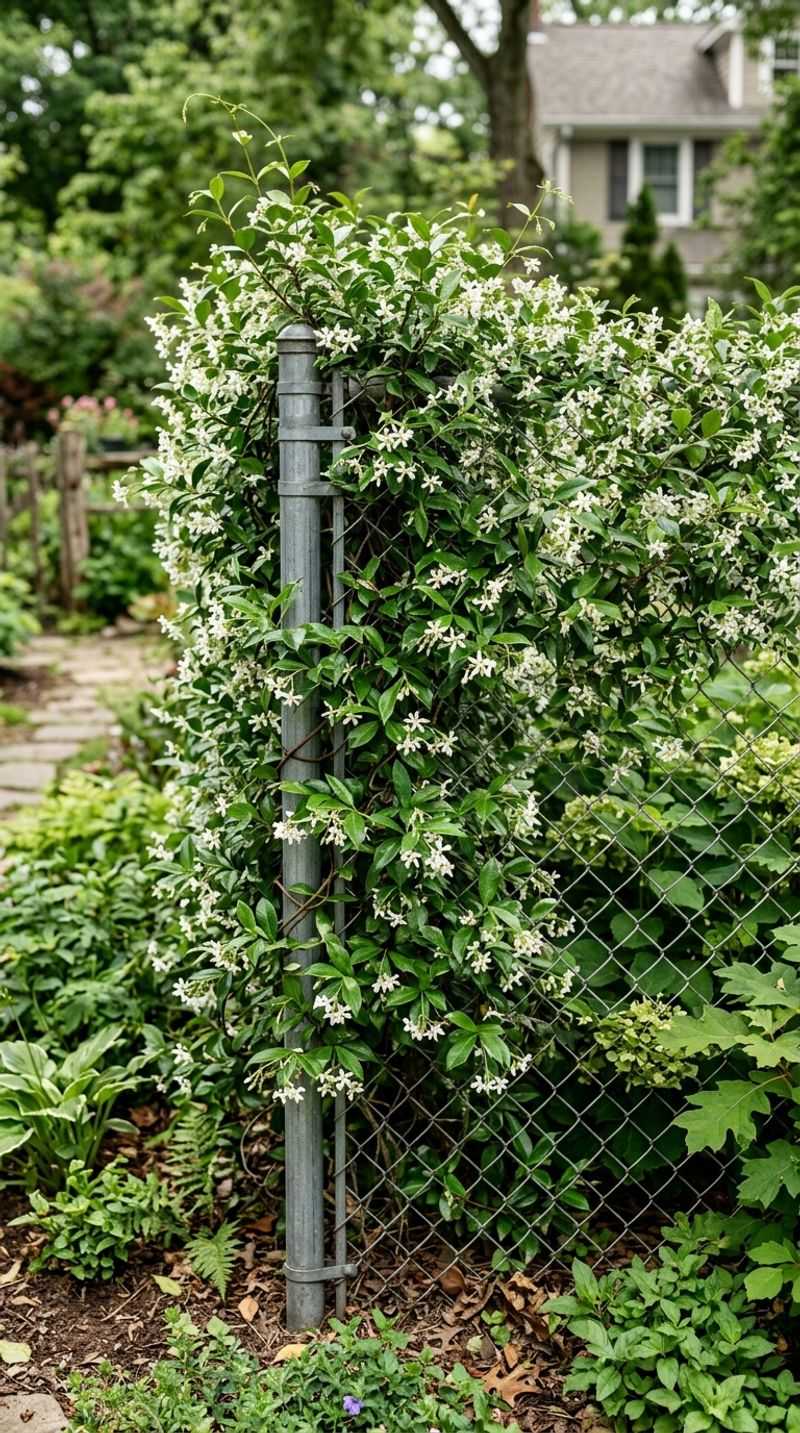
Star jasmine can suit an Austin-area fence when you give it something to climb, room to spread, and steady care while it settles in. Austin’s guide and extension guidance both back that up.
Expect to tie in stems, water through establishment, and prune now and then. In return, you can get an evergreen, fragrant screen, though not a fast or drought-proof wall.
Plant it, guide it, and the wire slowly disappears into leaves.