
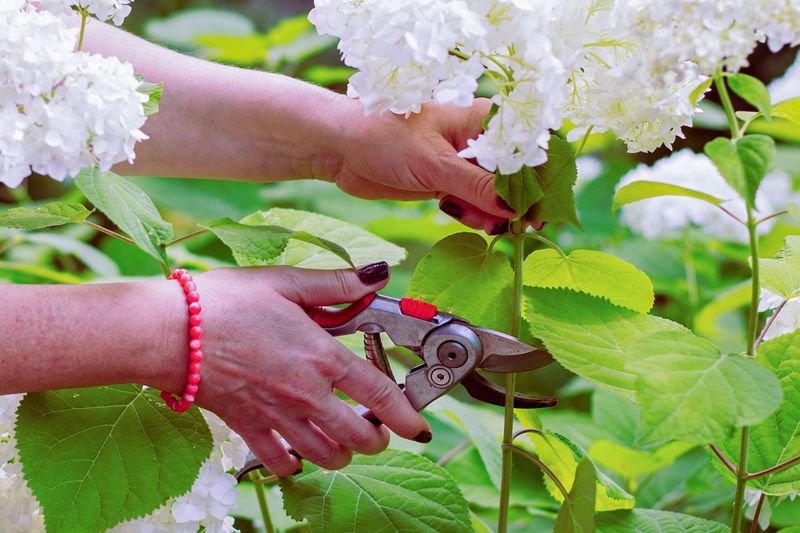
Every fall, California gardeners face a quiet decision about their hydrangeas that can shape the entire next season’s bloom. The catch is that the right move depends almost entirely on which type of hydrangea you have growing in your yard.
Cut the wrong stems at the wrong time, and you may be removing next year’s flowers before they ever get a chance to form. Knowing your plant before you reach for the pruners is the step that changes everything.
Identify the hydrangea before making an early-fall cut
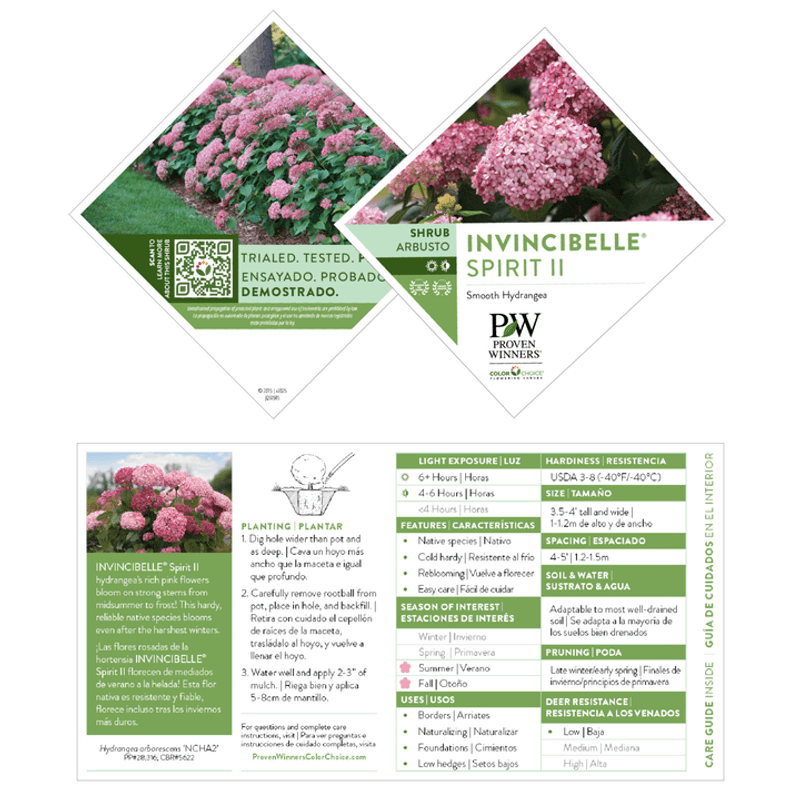
Grabbing pruners without knowing your hydrangea’s botanical name is the fastest way to accidentally cut off next year’s flowers. Common names can lead you astray. “Snowball,” for instance, can refer to several completely different plants, some of which flower on old wood and some on new, and treating them the same way can mean a season with no blooms at all.
Penn State Extension guidance on deciduous shrubs makes clear that correct identification before any cut is the foundation of smart pruning.
The two big pruning categories for hydrangeas hinge on flowering wood, not flower shape. Bigleaf hydrangeas (Hydrangea macrophylla), many H. serrata types, and oakleaf hydrangeas (H. quercifolia) bloom on old wood, meaning stems that grew during the previous season.
Smooth hydrangeas (H. arborescens) and panicle hydrangeas (H. paniculata) bloom on new wood, meaning stems that grow during the current season. Those two groups follow almost opposite pruning schedules, so getting this distinction right is non-negotiable.
Mophead and lacecap are terms you will hear constantly, but they describe flower-head shape, not separate botanical categories. A mophead has big, rounded clusters of showy florets, while a lacecap has a flatter, more open flower head with a ring of showy florets around smaller fertile ones.
Both forms appear among bigleaf and related hydrangeas, and both generally bloom on old wood. Penn State’s hydrangea pruning guide and UGA Extension’s identification resource both confirm that the pruning decision should follow species and flowering wood, not flower shape alone.
The most reliable way to sort this out is to check the plant tag, look up the cultivar name online, or contact your local UC Cooperative Extension office. UC Marin Master Gardeners’ pruning guide recommends using the botanical name rather than a common name when making any pruning decision.
A few minutes with a plant label or a clear photo can save an entire season’s worth of flowers.
Old-wood buds may already be forming for next year
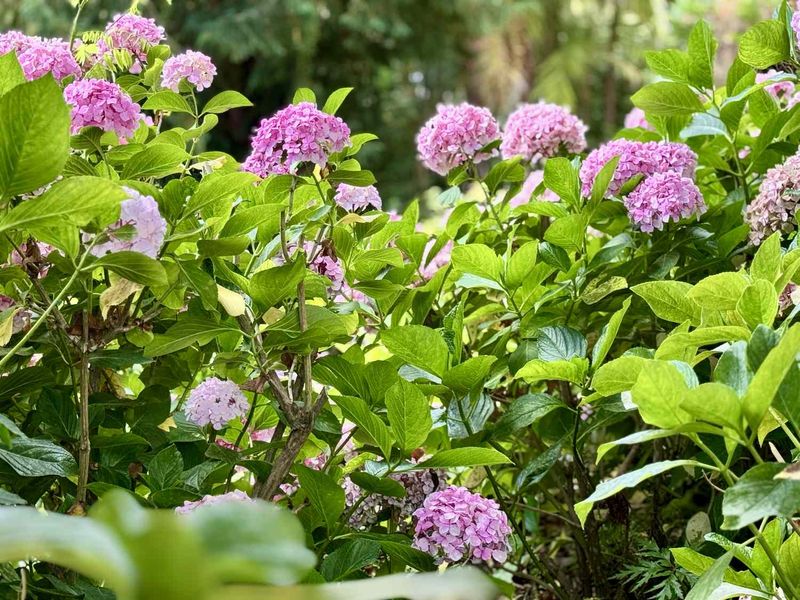
By the time early fall arrives in most California gardens, bigleaf, H. serrata, and oakleaf hydrangeas may already be quietly building next year’s flowers. These plants set their buds on stems from the previous growing season, and that bud development typically begins in late summer or early fall, well before any visible sign of change on the stem.
UC ANR’s hydrangea care publication places bud formation for old-wood types in roughly August and September for California conditions, though local timing can shift depending on your specific climate zone.
California’s geography makes a single calendar date unreliable. A coastal garden in Marin or Santa Barbara stays cooler longer and may follow a slightly different bud-setting schedule than an inland valley garden in Fresno or Riverside, where summer heat lingers well into September.
Mountain gardens above 3,000 feet and low-desert gardens near Palm Springs face their own distinct conditions. The smarter approach is to think about where your plant is in its seasonal cycle rather than watching the calendar.
UGA Extension’s comprehensive hydrangea guide explains that once bud development is underway, a stem that looks completely ordinary on the outside may already be carrying the tissue that will produce flowers the following spring and summer. Cutting that stem removes those potential flowers, and they will not regenerate on the same wood.
The plant may produce new stems, but those will not carry flowers until the season after that, assuming the species blooms on old wood.
This is why the safe early-fall position for old-wood hydrangeas is to leave healthy stems alone rather than assume the plant needs tidying. Penn State Extension’s species-by-species pruning breakdown confirms that for bigleaf and related types, cutting after bud set is the most common reason gardeners end up with a plant full of healthy foliage and no flowers the following year.
Pruning alone does not account for every bloom failure, but removing bud-bearing wood is a straightforward and preventable cause.
Leave healthy old wood alone in early fall
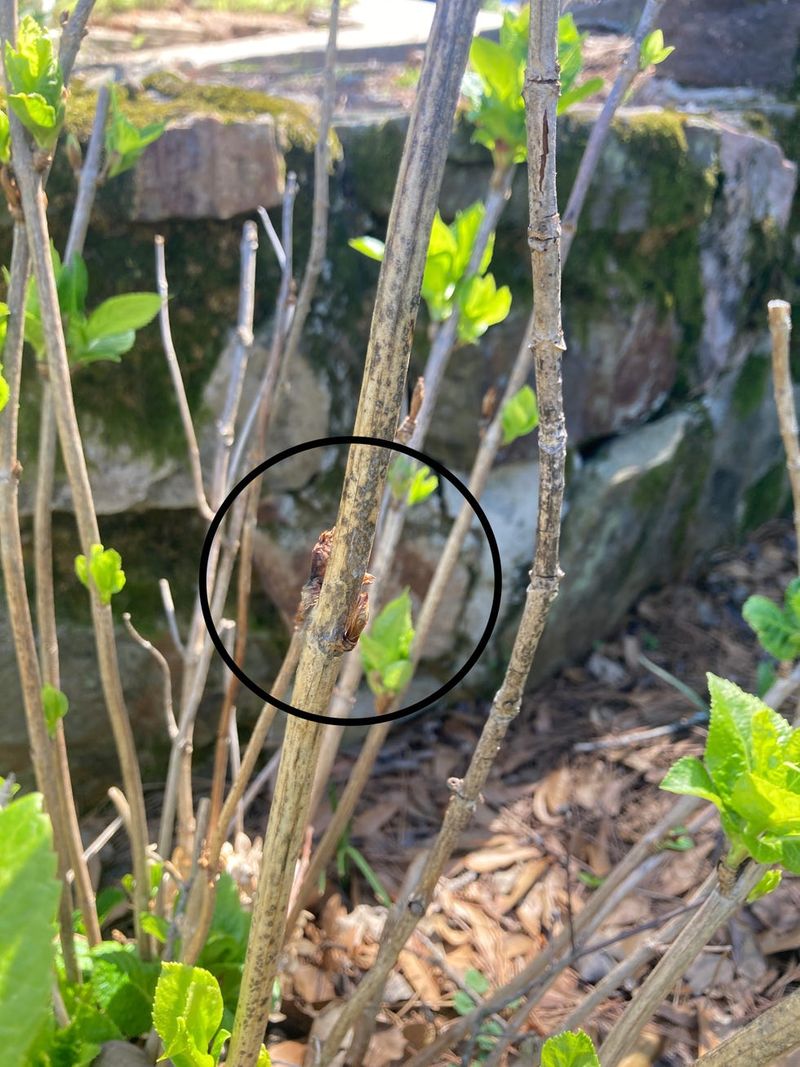
For old-wood hydrangeas in early fall, the most protective move is often the one that requires no tools at all: step back and leave healthy flowering stems where they are. Routine pruning or deep deadheading at this stage risks cutting into stems that are already building next year’s buds.
UC ANR guidance on hydrangeas advises that if the post-flowering pruning window has already passed, waiting until after next year’s bloom is safer than cutting into the plant in early fall.
Deadheading feels productive, but on old-wood types, a late-season cut that goes too far down the stem can disturb buds that have already started forming. UC guidance on hydrangea care specifically warns that late deadheading can interfere with developing buds.
If you want to remove spent flower heads for appearance, cut only the flower head itself with the shortest practical stem rather than making a longer cut down into the branch. Snipping just below the dead flower cluster is far safer than cutting back to a lower set of leaves or a branching point.
There are situations where some cleanup is appropriate even now. Dead, broken, diseased, or genuinely hazardous stems can be removed at any time without affecting next year’s flowers, since those stems are not contributing healthy buds anyway.
UC home garden guidance and UC Marin Master Gardeners’ pruning recommendations both support removing truly damaged material while preserving healthy older stems.
Keeping those healthy stems intact protects the plant’s potential to flower next season, but it does not guarantee a large rebloom or a specific number of blooms. Many other factors, including winter temperatures, light exposure, moisture, and cultivar hardiness, also influence how the plant performs.
Preserving old wood is a necessary condition, not a promise of a spectacular show.
Shape old-wood hydrangeas after flowering
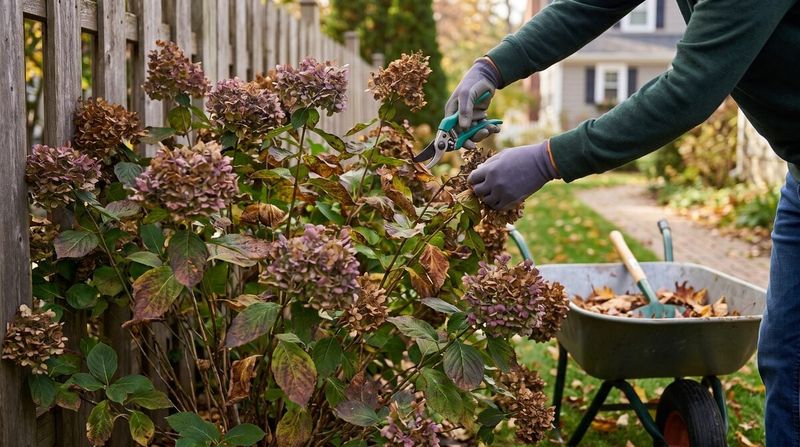
The correct pruning window for bigleaf and oakleaf hydrangeas is right after the flowers fade, before late-summer bud development begins. Shaping the plant during this narrow stretch lets you improve the structure without touching stems that are about to start forming next year’s buds.
UC ANR’s hydrangea publication places this post-flowering window as the appropriate time for any selective shaping on old-wood types and recommends completing cuts before bud set begins in late summer.
Many old-wood hydrangeas simply do not need annual pruning. A plant that is healthy, well-sized for its space, and flowering reliably can often go several seasons with nothing more than the removal of dead or broken wood.
Pruning every year without a clear reason can actually create more problems than it solves by repeatedly reducing the number of bud-bearing stems available. UC Marin Master Gardeners’ recommendations note that these plants may not need annual pruning at all.
When selective removal is warranted, focus on dead, broken, diseased, or crossing stems that are causing real problems. This kind of targeted cleanup can be done at almost any time without meaningfully reducing next year’s bloom potential, because those compromised stems are not carrying viable buds.
UGA Extension’s identification and pruning guide reinforces this distinction between maintenance removal and routine shaping.
If the plant has become genuinely overgrown and thinning is necessary, limit the work to about 30 percent of the total plant mass, or remove no more than one-third of the oldest stems during any single rejuvenation effort. These figures come directly from UC guidance and represent a ceiling on how much to take, not a target to reach every year.
Spreading rejuvenation over two or three seasons is gentler on the plant and keeps more bud-bearing wood in place at any given time.
New-wood and reblooming types change the pruning advice
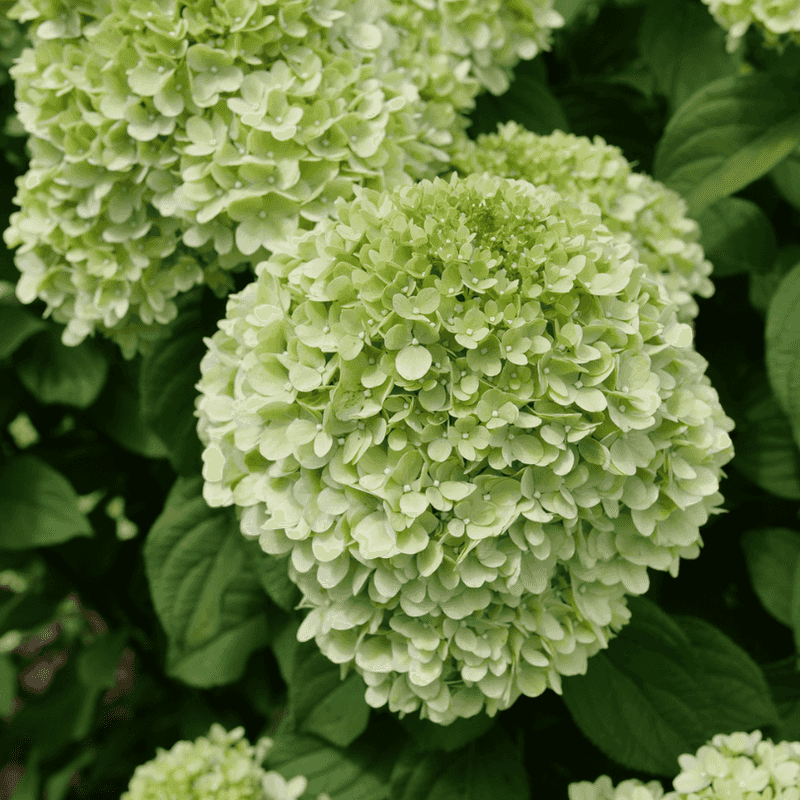
Smooth hydrangeas and panicle hydrangeas operate on a completely different schedule than old-wood types, so the “leave it alone in early fall” advice does not apply to them. Both species flower on current-season growth, meaning stems that emerge in spring carry that year’s blooms.
Penn State Extension’s species pruning guide confirms that smooth hydrangeas (H. arborescens) and panicle hydrangeas (H. paniculata) are generally pruned in late winter or very early spring, just before new growth begins.
Pruning these new-wood types in fall is usually unnecessary and may even cause problems in some climates. Cutting in fall can stimulate tender new growth that gets damaged by cold, and the plant has to spend energy recovering rather than preparing for spring.
In most California climates the frost risk is lower than in colder states, but the timing still makes more sense in late winter when the plant is about to push new growth anyway. UGA Extension’s identification guide notes that these types follow a distinctly different pruning calendar from old-wood species.
Reblooming or remontant bigleaf cultivars occupy a middle ground. Varieties such as Endless Summer, BloomStruck, and Twist-n-Shout can flower on both old wood and new wood, which makes them somewhat more forgiving when old buds are lost to a pruning mistake or a late frost.
However, “more forgiving” is not the same as “immune to damage.” Penn State Extension’s guide on bloom failures points out that fall cuts on reblooming cultivars can still remove the old-wood bloom potential, reducing the plant to only its new-wood flowering capacity.
The second flush that reblooming types can produce on new wood may also be smaller or later than the first, and it depends on adequate moisture, light, heat, cultivar vigor, and whether winter injury has affected the plant. Oregon State Extension’s hydrangea overview describes these cultivars as capable of flowering on both wood types without framing the second flush as a guaranteed equal performance.
Knowing whether you have a standard bigleaf, a remontant cultivar, a smooth, or a panicle type is the only way to apply the right pruning strategy.
Support flowering without forcing a fall treatment
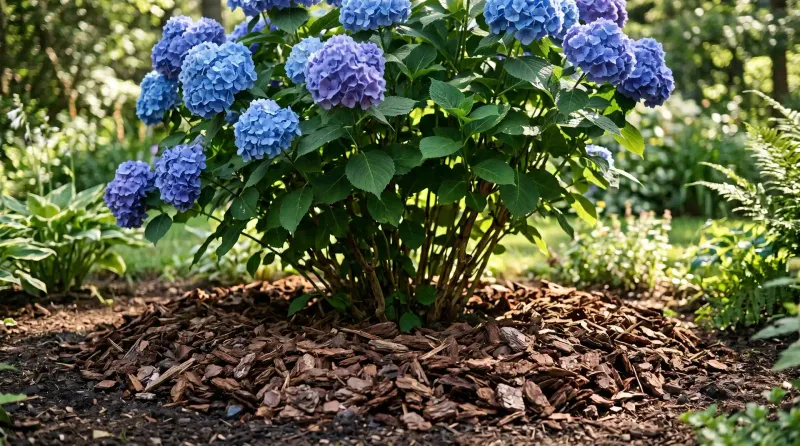
Protecting old wood is only part of the picture. The conditions you create around the plant between now and spring can also affect whether those preserved buds develop into healthy blooms.
Soil moisture is one of the most direct levers a California gardener can control, especially through the long dry stretch that often extends into October and sometimes November in inland and southern parts of the state.
Hydrangeas wilt dramatically in afternoon heat, and that visible droop can look alarming. However, wilting alone is not reliable proof that the plant needs water right now.
UGA Extension’s watering guidance recommends checking actual soil moisture before irrigating rather than responding to leaf appearance alone. Push a finger or a moisture probe two to three inches into the soil near the root zone.
If the soil is still damp at that depth, the plant likely does not need water yet. Overwatering can deprive roots of oxygen and create its own set of problems.
UGA Extension’s full hydrangea care guide emphasizes maintaining even moisture during hot, dry weather rather than irrigating on a fixed daily schedule.
Mulch is one of the most water-wise tools available to California gardeners. A two-to-three-inch layer of organic mulch over the root zone slows evaporation, moderates soil temperature, and reduces the frequency of watering needed during warm spells.
Texas SmartScape’s soil and mulch guidance highlights this temperature-moderating benefit as especially relevant in hot, dry garden sites. Keep mulch a few inches away from the main stems to avoid trapping moisture against the bark and encouraging rot.
Fertilizer in early fall is an area where restraint pays off. Heavy nitrogen applications at this time of year can push a flush of soft new foliage that has no time to harden before cooler weather arrives, and excess nitrogen can tilt the plant toward leafy growth at the expense of flowering.
Texas SmartScape’s perennial care recommendations caution against aggressive fall feeding, a point that applies equally in California gardens. If the plant looks healthy and has received modest balanced fertilizer during the growing season, additional fall feeding is generally unnecessary.
Check other causes when flowering disappoints
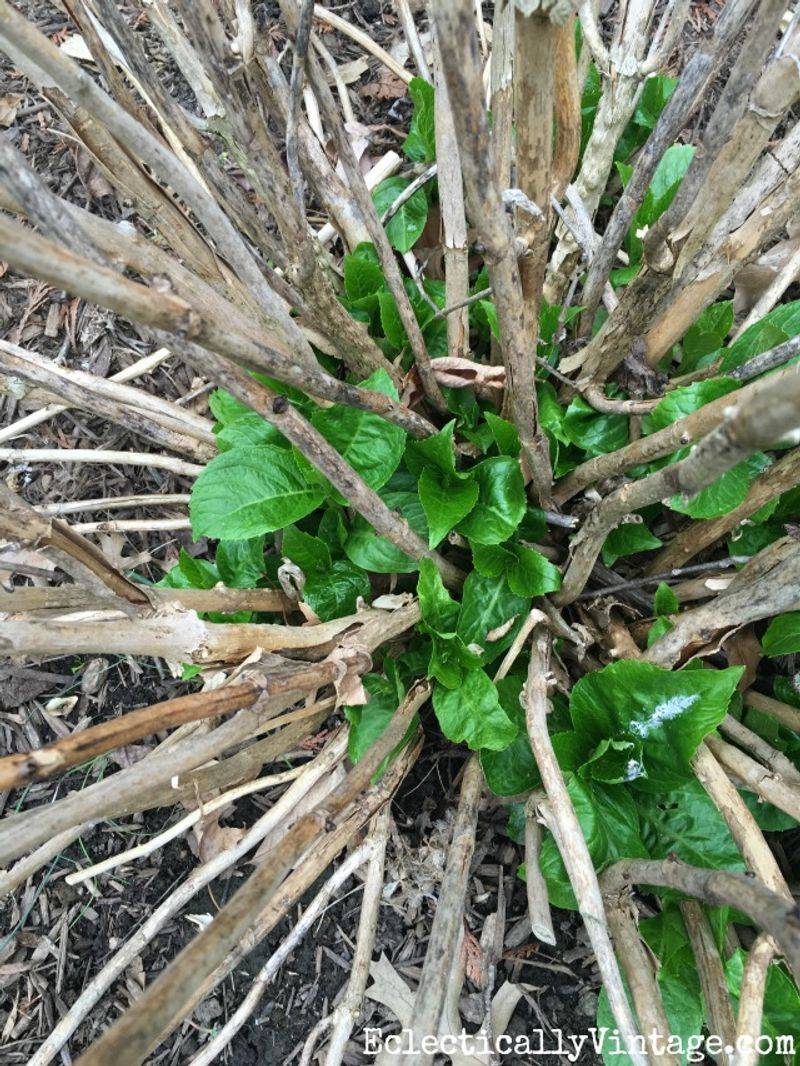
When a hydrangea produces few or no flowers, pruning at the wrong time is one possible explanation, but it is rarely the only one. Several other factors can interfere with bloom, and attributing every disappointing season to a fall pruning decision can send you down the wrong diagnostic path.
Penn State Extension’s guide on bloom failures lists winter or late-freeze injury, excessive shade, deer browsing, drought stress, cultivar-specific hardiness, and general plant health as documented causes of reduced or absent flowering.
In California, late frost events in inland valleys and foothill communities can damage buds that have already broken dormancy in late winter or early spring. Even a single cold night after bud swell can wipe out a season’s flowering on an old-wood plant, with no pruning involved at all.
Excessive shade is another underappreciated factor. Bigleaf and oakleaf hydrangeas generally perform best with morning sun and protection from intense afternoon heat, but they still need several hours of direct light to flower reliably.
A plant that has been gradually shaded out by a growing tree may bloom less each year regardless of how carefully you time your pruning. UGA Extension’s hydrangea publication confirms that light, moisture, and plant health all contribute to flowering performance.
Soil pH comes up frequently in hydrangea conversations, but it addresses a different question than bloom quantity. pH can shift the flower color of many pink or blue bigleaf cultivars, with more acidic soil tending to produce bluer tones and more alkaline soil tending toward pink. It does not repair a pruning mistake, compensate for bud damage, or guarantee more or larger flowers.
White-flowered cultivars generally do not change color in response to soil pH at all. UC ANR’s hydrangea publication keeps color management and bloom quantity as separate topics, and it is useful to think about them that way.
The practical diagnostic sequence is straightforward: identify the hydrangea type, check whether old wood was preserved through the previous fall and winter, assess light and moisture conditions, and consider whether any frost events or pest pressure could account for the missing blooms. Each factor has its own fix, and sorting them out one at a time leads to a clearer answer than assuming pruning is always the culprit.
Match the fall decision to the plant
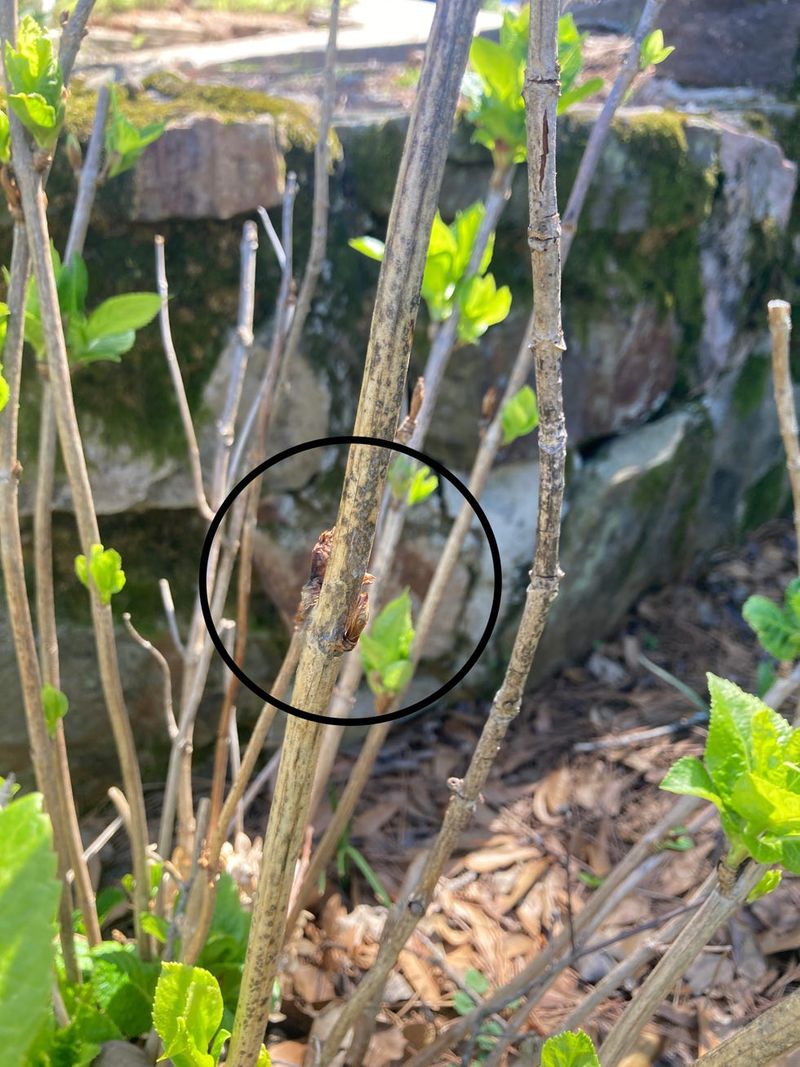
The early-fall decision for hydrangeas is not the same for every plant in your yard. For identified old-wood types, especially bigleaf, H. serrata, and oakleaf hydrangeas, the clearest action is to leave healthy older stems alone and skip routine pruning or deep deadheading until after next year’s flowers have finished.
UC ANR’s guidance reinforces that old-wood hydrangeas may not need annual pruning and that waiting is safer than cutting once bud development has begun.
Remove only dead, broken, or diseased material now, and save any shaping for the post-flowering window next summer. Smooth and panicle hydrangeas are the clear exception: they bloom on new wood and are generally pruned in late winter or early spring, so fall is not their moment either.
Penn State Extension’s pruning calendar lays out both schedules clearly for anyone who wants to verify their plant’s category.
Protecting old wood on the right hydrangea preserves the potential for flowers next season. That potential is worth protecting, but it is still just potential.
The plant’s performance will also depend on winter conditions, light, moisture, and cultivar, and none of those factors come with a guarantee. The best thing a California gardener can do right now is know the plant, respect its timing, and let the stems do their quiet work through the season ahead.