
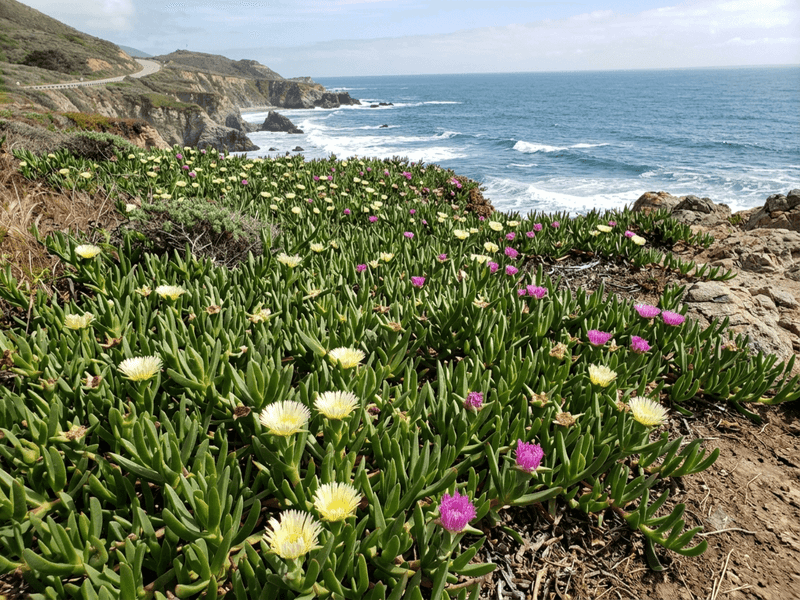
A familiar groundcover sold at nurseries across California is showing up on local invasive-plant lists, and some homeowners are realizing too late that their city or county has rules about it. The plant most often at the center of this conversation is Carpobrotus edulis, commonly called highway ice plant or Hottentot fig, though the common name “ice plant” actually covers several different species.
Rules vary widely by location, and an existing planting is not automatically a violation, but knowing what you have and where you stand can save you from a costly mistake.
The “ice plant” in your yard may be more than one plant
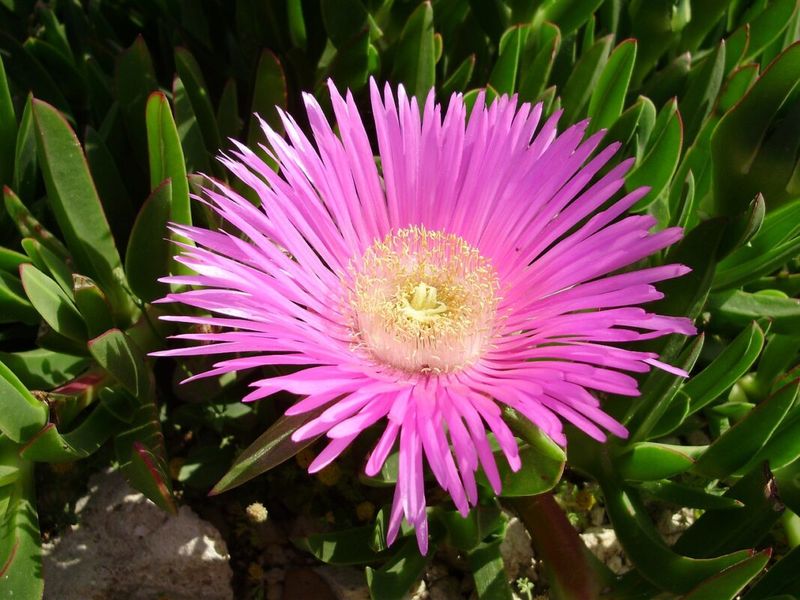
Walk into almost any California garden center and you will find something labeled “ice plant,” but that label can point to a surprising number of different plants. The name is a common one, not a botanical identity, and it gets applied to species across multiple genera including CarpobrotusMesembryanthemum, , and several others.
Before you interpret any local rule, the first job is figuring out exactly which plant you have.
The species drawing the most regulatory attention is Carpobrotus edulis, also called highway ice plant or Hottentot fig. The California Department of Fish and Wildlife identifies it as a nonnative plant native to South Africa that was introduced here for erosion control and roadside stabilization. It is now widespread along the California coast, where it has spread well beyond its original planting sites.
Carpobrotus chilensis, sometimes called sea fig, is a related species that also appears on California invasive-plant materials. Los Angeles County’s invasive-plant list names both Hottentot fig and sea fig, along with crystalline iceplant and slenderleaf iceplant, as plants prohibited in specific development and landscaping contexts.
A plant sold simply as “ice plant” at your local nursery might be one of these, or it might be a less problematic cultivar that does not appear on the same lists.
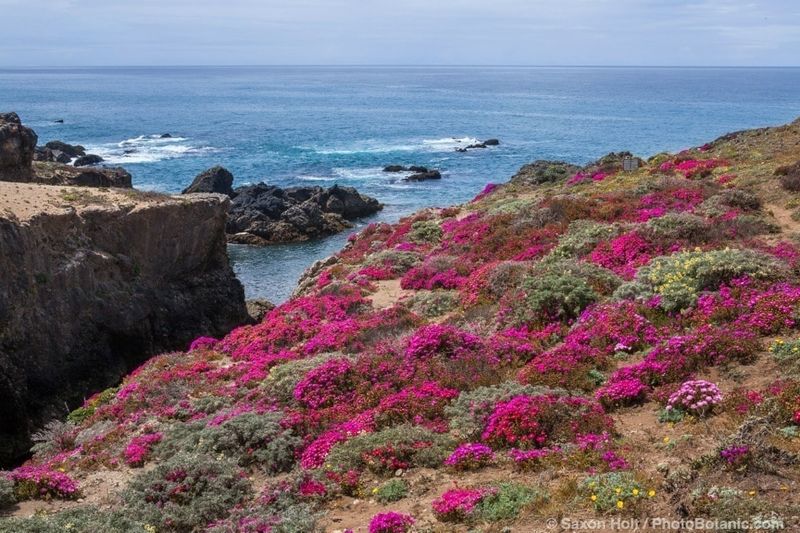
Visually, Carpobrotus edulis has thick, three-sided succulent leaves and produces large yellow or magenta flowers. UC Davis’s invasive species profile and the City of Carlsbad’s identification guide both include recognition details that can help you confirm whether you have the species of concern.
Getting the botanical name right is the necessary first step, because a rule that targets Carpobrotus edulis does not automatically apply to every plant sold under the ice plant label.
Why California agencies want invasive ice plant out of natural areas
The concern behind local restrictions is not primarily bureaucratic. Carpobrotus edulis creates a physical problem for native ecosystems that is hard to reverse once it takes hold.
The plant spreads by rooting at its nodes and can form dense, overlapping mats several feet thick in favorable conditions.
UC Davis’s invasive species profile for Carpobrotus edulis describes how these mats can outcompete native and rare plants by blocking light, capturing moisture, and altering soil chemistry beneath the mat. Coastal habitats, including dunes, bluffs, riparian corridors, and preserves, are especially vulnerable because many of the native plants in those areas are low-growing, slow to establish, and adapted to conditions that invasive ice plant disrupts.
The California Invasive Plant Council classifies plants according to their documented threat to natural areas and maintains an inventory that local governments can use when writing their own landscape codes. That inventory describes the problem and the relative severity of each species, but it does not itself create a universal prohibition on private residential plantings.
Local agencies decide whether and how to incorporate its findings into their own rules.
The ecological risk is most acute near natural areas. A bed of ice plant growing in a suburban backyard far from any coastal preserve or native habitat corridor presents a different level of concern than a planting that directly borders a dune system or a protected open-space corridor.
That distinction matters when you are evaluating whether your specific planting is contributing to the problem. The strongest documented rationale for restrictions focuses on competition with native vegetation, alteration of soil conditions, and the displacement of rare plants in coastal and natural-area settings, not on a uniform hazard that applies equally to every yard in California.
The rules depend on where and how the plant was installed
No single California law bans ice plant statewide. What exists instead is a patchwork of local codes, development standards, and project-specific requirements that vary by city, county, and land-use context.
Understanding the difference between those categories keeps homeowners from either ignoring a real rule or panicking over one that does not apply to them.
Los Angeles County’s Santa Monica Mountains area provides one of the clearest examples of how invasive-plant restrictions can work in a specified development context. The county’s community-wide development standards for the Santa Monica Mountains prohibit invasive plants in covered development and landscaping situations.
The associated invasive-plant list for that ordinance names Hottentot fig, sea fig, crystalline iceplant, and slenderleaf iceplant among the prohibited species. That rule applies within a specified geographic area and within the contexts described by the ordinance, not to every yard in Los Angeles County.
Palm Desert offers a different kind of example. The city’s municipal code includes direct private-property language stating that invasive, noxious, and nuisance plants may not be installed on private property, and new planting or replanting can trigger enforcement.
Palm Desert is a city, not a county, so its rule does not extend to surrounding communities or prove that an entire county has adopted the same prohibition.
Monterey County has published a document listing plants that are “prohibited or should not be planted,” including highway iceplant and crystalline iceplant. That Monterey County document uses both “prohibited” wording and advisory language, which means the list alone does not confirm that every existing residential planting is illegal or subject to enforcement.
Reading the specific language carefully, and understanding which part of the document applies to your situation, is essential before drawing any conclusions about compliance.
Taken together, these examples confirm that local restrictions on invasive ice plant do exist and are legally meaningful in specific contexts. They do not confirm identical rules across all of California, nor do they establish that every homeowner with an existing ice-plant bed is automatically in violation.
An existing bed is not automatically a violation
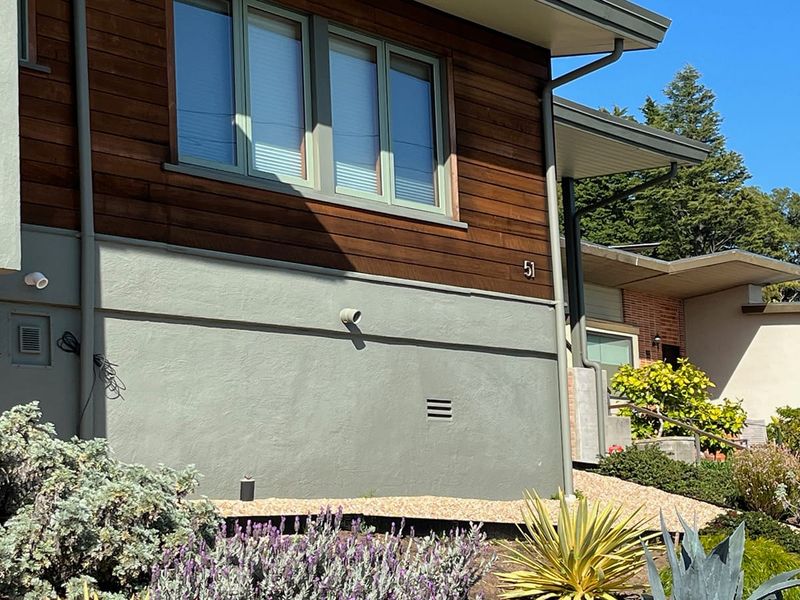
Many homeowners read a headline about ice plant restrictions and immediately assume their existing planting is illegal. That assumption is worth slowing down on.
Several of the rules found in public records focus on new installation, replanting, development approval, or landscape plans submitted as part of a permit application. They do not automatically require removal of plants that were in the ground before the rule took effect or that exist outside the specific development context the rule addresses.
A practical legal-check sequence starts with confirming the plant’s scientific name, because a rule that targets Carpobrotus edulis does not reach every species sold under the ice plant label. From there, check your city and county landscape codes directly, either through the city’s website or by calling the planning or code-enforcement department.
Next, look at whether your property falls within a coastal development zone, a habitat overlay, or a specific plan area that carries its own plant restrictions. Then review your HOA documents or any recorded conditions of approval attached to your property, because private rules may also apply even though the public sources reviewed here do not document those specifically.
Fire and weed-abatement requirements are a separate layer. CAL FIRE’s defensible-space guidance notes that counties and local agencies may impose stricter standards than the state minimum, so checking with your local fire authority is part of the full picture.
California law does give residential property owners some protection here. California Government Code section 53087.7 generally prevents cities and counties from prohibiting drought-tolerant landscaping using living plant material on residential property.
That protection is real, but it does not mean every drought-tolerant plant is automatically approved. It does not override rules aimed at invasive species, permit conditions attached to a specific property, coastal-development requirements, or wildfire-safety standards.
Knowing that protection exists is useful, but it is not a substitute for checking the specific rules that apply to your address.
Do not confuse an invasive-plant notice with a fire order
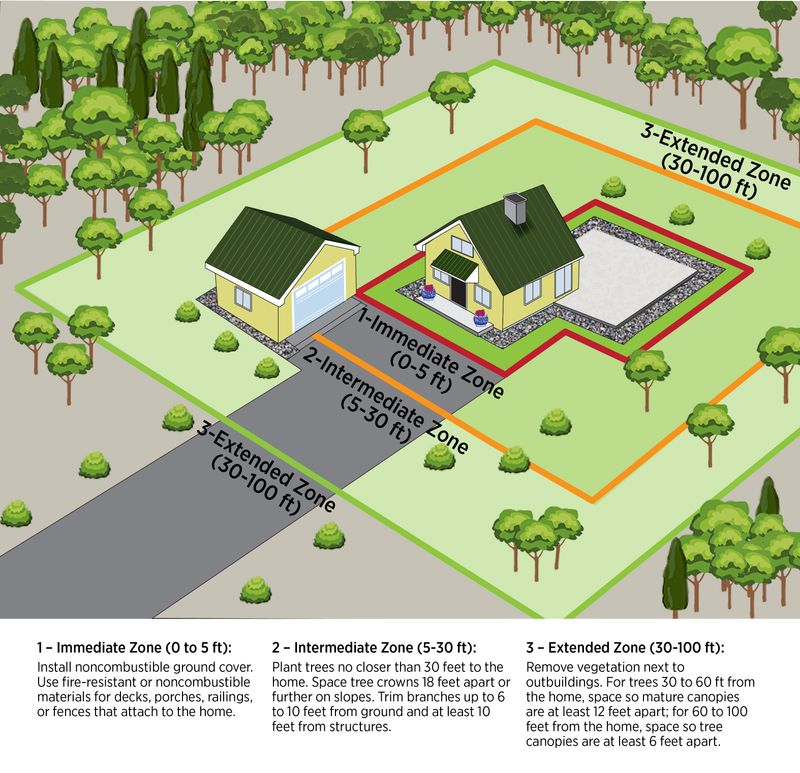
Two separate concerns sometimes get tangled together when homeowners hear about ice plant restrictions: ecological harm and fire risk. Keeping them distinct helps you respond to the right problem with the right action.
A plant can be listed as invasive without being the specific vegetation named in a fire-abatement or defensible-space notice. Conversely, a groundcover that is not on any invasive-plant list may still need maintenance under local fire requirements.
CAL FIRE’s defensible-space program focuses on removing dead and dying vegetation, maintaining appropriate spacing between plants, and eliminating fire-ladder connections that allow flames to climb from ground level to shrubs or trees. Those are condition-based and spacing-based requirements, not a blanket prohibition on any single groundcover species.
Live succulent ice plant is sometimes described as a fire hazard because of its water content, but that characterization is not straightforward. The fire-safety determination for any plant depends on its current condition, its placement relative to structures and other vegetation, and the specific requirements of your local fire district or weed-abatement program.
If you receive a notice from a fire agency, read it carefully to identify exactly what vegetation or condition is being flagged rather than assuming it applies to all groundcover on the property.
Removing slope-covering vegetation purely out of fire concern, without a replacement plan, can create a different problem. Bare soil on a slope is vulnerable to erosion, especially during California’s wet season.
Caltrans’s erosion-control design guidance illustrates how slope stability depends on continuous ground cover, and the California Department of Fish and Wildlife notes that bare soil left after ice-plant removal can allow the plant to re-establish or give other invasive weeds a foothold. Address fire requirements and invasive-plant concerns as related but distinct steps, and plan replacement planting before disturbing the existing bed.
Removal requires a site plan, not just a shovel
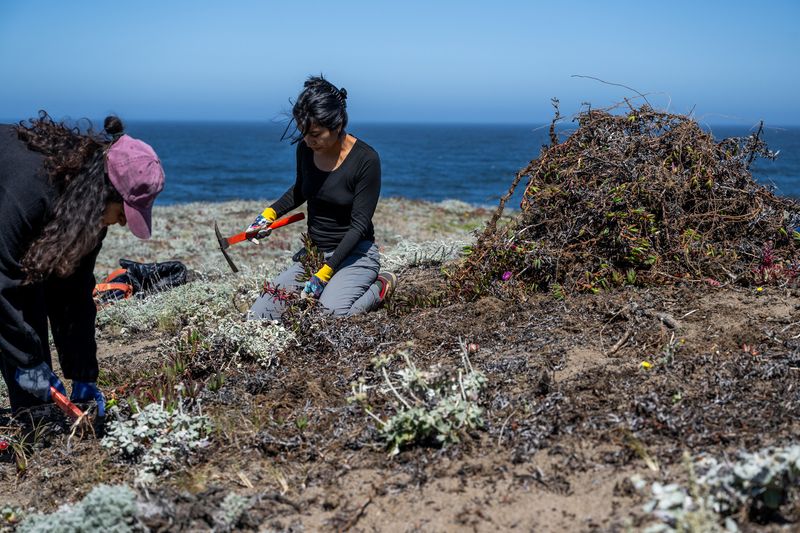
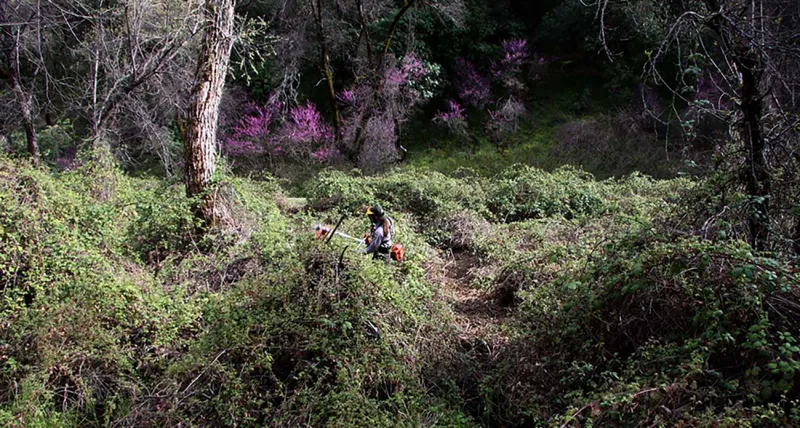
When removal is the right call, the method matters as much as the decision to remove. Carpobrotus edulis is shallow-rooted, which makes manual removal feasible for a small, manageable patch.
The roots do not run deep, so pulling or rolling the mat back by hand can be effective when the infestation is limited in size and the site is accessible.
Two details determine whether that approach succeeds. First, live fragments left behind can re-root, so the goal is complete removal of plant material rather than a rough clearing.
Bag and dispose of all pulled material rather than leaving it on-site. Second, the California Department of Fish and Wildlife specifically warns that removal must be followed by site rehabilitation, because bare soil is an open invitation for ice plant to re-establish from fragments or for other invasive weeds to move in.
Replacement planting is not optional – it is part of the removal process.
Steep slopes, coastal dunes, and sites near sensitive habitat are a different situation. Stripping those areas to bare soil can trigger erosion, expose protected plant communities, or destabilize a hillside.
Caltrans’s erosion-control design resources document how slope stability depends on continuous vegetative cover, and large or steep removal projects may require an erosion-control plan before work begins. For those sites, consulting a licensed landscape contractor or a restoration ecologist before pulling anything is a reasonable first step.
Chemical treatment is an option that professional restoration crews use for large infestations, but it carries significant safeguards. A California Coastal Commission restoration report describes professional treatment plans that involve licensed pest-control personnel, weather and runoff restrictions, buffer zones, and follow-up revegetation.
That level of planning is not a template for a homeowner to replicate independently. If your infestation is large, on a slope, or near a sensitive site, bring in a professional rather than selecting a herbicide on your own.
Choose a replacement that fits the yard and the rule
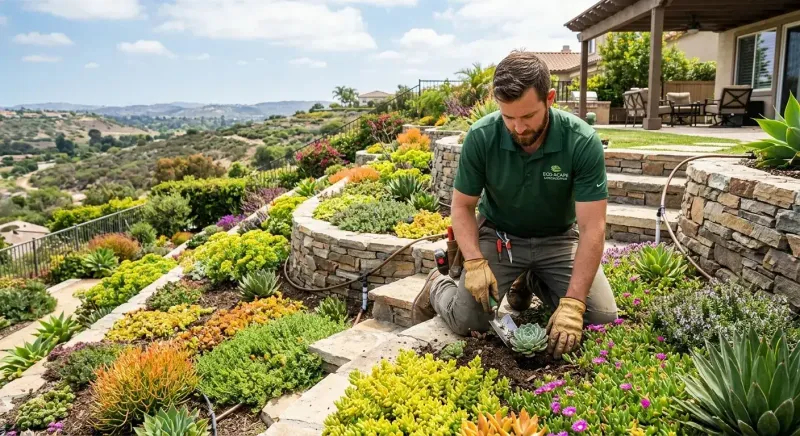
Replacing invasive ice plant with a native or low-water alternative is not as simple as picking any plant from a native nursery. The replacement has to fit the specific site, and it has to meet any local rules that govern what gets planted there.
A poor match can leave a slope bare, fail to establish, or create a second problem that requires another round of work.
The California Department of Fish and Wildlife’s ice plant page points homeowners toward native alternatives as a starting point. The California Native Plant Society’s lawn-alternative guide lists options including purple sage, California buckwheat, coyote brush, yerba buena, and native sedges and grasses.
Their slope-specific guide focuses on plants that can hold soil on hot, sunny hillsides, which is often the same situation where ice plant was originally installed.
None of those options are interchangeable. California lilac cultivars, for example, thrive in full sun with good drainage but may not tolerate heavy clay or consistent foot traffic.
Yarrow handles dry conditions well but needs room to spread and periodic cutting back. Coyote brush is tough and fast-growing on coastal slopes but can become large and shrubby without pruning.
UC Davis Arboretum’s native plant guidance emphasizes matching the plant to site conditions including sun exposure, shade, soil type, drainage, and water availability before committing to a species.
Coastal exposure adds another variable. Salt spray, wind, and sandy or rocky soils narrow the list of plants that will actually establish.
For hillside sites, check whether your local fire district has any requirements about plant spacing or height within defensible-space zones, because some native shrubs can grow tall enough to create the ladder-fuel connections that fire guidelines aim to prevent. Successful replacement also typically requires establishment irrigation during the first season or two, consistent weed control to prevent invasive species from moving into the disturbed soil, and a plan for erosion management until the new plants root in.
Check before you plant, replant, or remove
Invasive ice plant is a real ecological concern, and local restrictions on it are real in specific places and contexts. What is not real is a universal statewide ban or an automatic violation for every homeowner who has the plant in the ground.
The gap between those two things is where most of the confusion lives.
The sequence that protects you is straightforward. Identify the plant by its botanical name first, using resources like the California Department of Fish and Wildlife’s ice plant profile or your city’s identification materials.
Then contact your city or county planning or code-enforcement office and ask whether any rule applies to your property and your specific situation. Review any coastal-zone or habitat-overlay restrictions, your HOA documents, and any recorded conditions attached to your property.
Check with your local fire authority on defensible-space requirements separately. And remember that California’s drought-tolerant landscaping protection is a useful safeguard but not a blanket override of invasive-species or fire rules.
If removal turns out to be the right step, do not start until you have a replacement plan ready. A yard that trades an invasive mat for bare, eroding soil has not solved the problem.
The homeowners who navigate this most successfully treat identification, rule-checking, removal, and replanting as one connected process rather than four separate decisions made in sequence.