
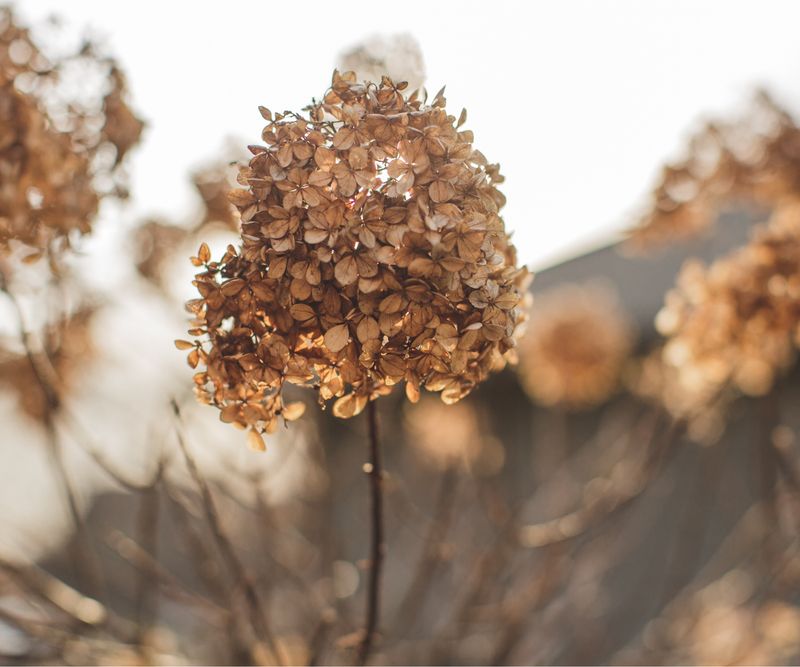
Seeing your hydrangea flowers turn brown while the leaves stay perfectly green can send a gardener into a quiet panic. Before you reach for the hose, the pruning shears, or a spray bottle, take a breath – your plant may actually be doing something completely normal.
Hydrangeas go through natural color changes as their blooms age, and brown flower heads with healthy green leaves tell a very different story than brown leaves do. Knowing how to read those two symptoms separately can save you from making changes your plant does not need.
Brown blooms often mean the flowers are finishing, not that the plant is failing
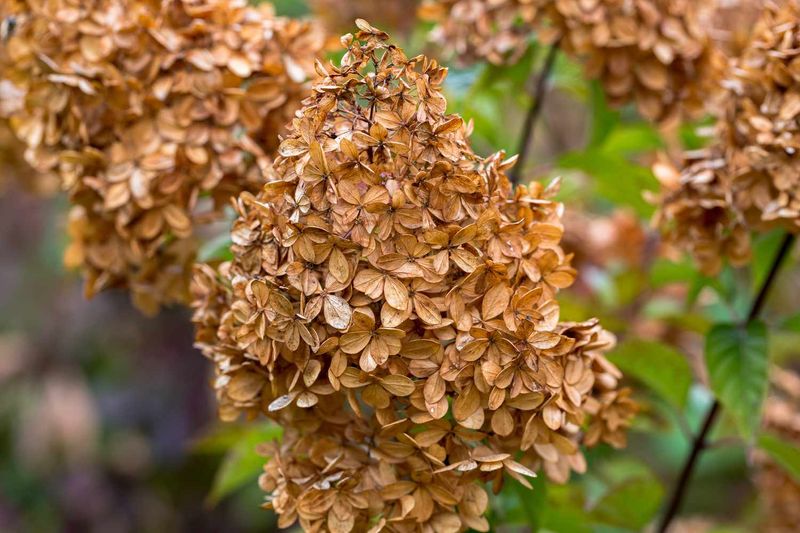
A flower head that gradually fades from its peak color to something tan, papery, or softly brown – while the leaves beneath it stay full and green – is one of the more common and least alarming sights in a hydrangea garden. What you are looking at is most often a bloom that has simply run its course.
Harvard’s Arnold Arboretum notes that hydrangea flower heads commonly shift color as they mature, eventually becoming green, tan, pink, rose, or brown, and many varieties remain visually appealing even as they dry on the shrub.
Species and cultivar make a real difference in what that color journey looks like. Panicle hydrangeas often move from white through green, then into shades of pink or red before settling into tan.
Oakleaf hydrangeas can shift from white to rose and eventually to a warm brown. Smooth hydrangeas may go from white to green and then dry to tan.
Many bigleaf hydrangeas simply fade to softer, muted tones once peak bloom has passed.
The detail that matters most is the progression, not the color itself. UGA Extension’s guidance on identifying hydrangeas reinforces that understanding your specific type helps set realistic expectations for how blooms age.
A gradual fade, intact flower structure, and dry or papery texture all point toward a spent bloom rather than a plant in trouble. Brown by itself is not a verdict – the pattern leading up to it is what tells the real story.
Heat, sun, drought, and frost can brown flowers before the leaves show obvious damage
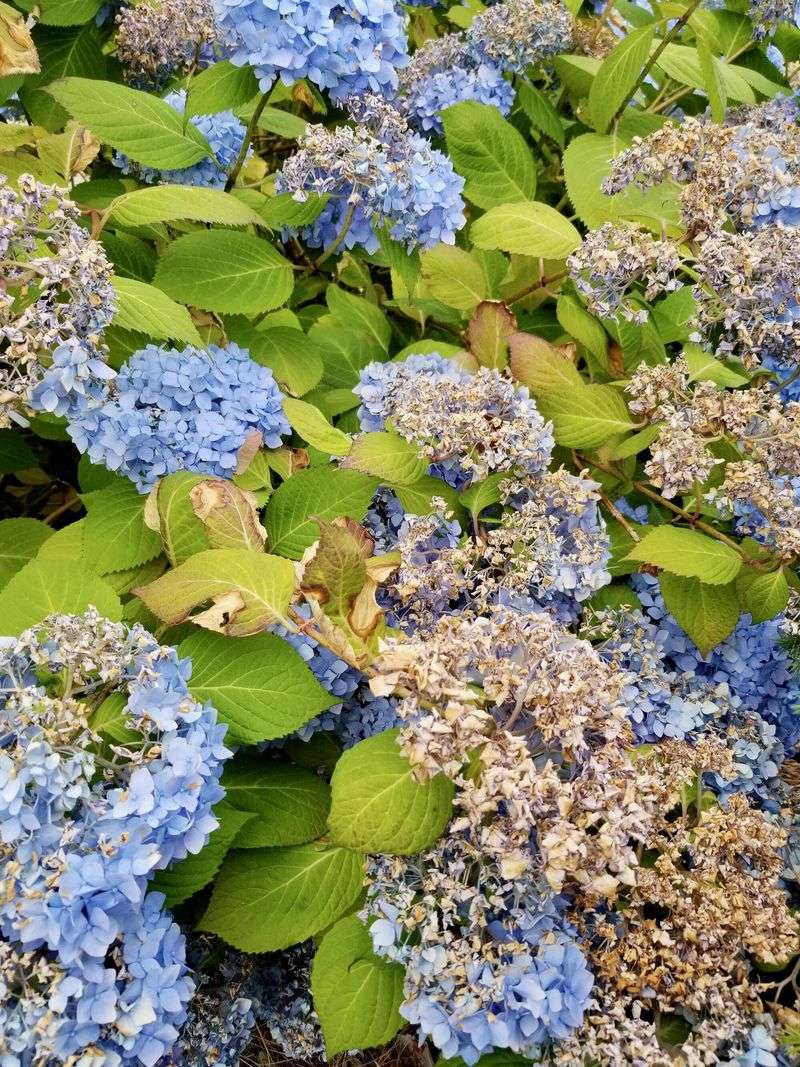
Not every case of brown blooms is a natural send-off. Sometimes the flowers are reacting to something in the environment, and the leaves may not show the same injury yet.
Flower tissue is more delicate than leaf tissue, which means heat, intense afternoon sun, dry soil, or a late frost can damage blooms first while the foliage still looks acceptable.
Southern gardeners – especially those in Florida and Texas – know that summer afternoons can push temperatures well past what hydrangea flowers can handle without some protection. UGA Extension’s bigleaf hydrangea guide recommends siting these plants where they receive morning sun and afternoon shade in hot climates, because prolonged exposure to direct afternoon heat can crisp and bleach flower heads even when the root zone still has some moisture.
This is not a rule that applies to every hydrangea species – panicle hydrangeas, for instance, tolerate more sun – but for bigleaf types in warm Southern locations, placement matters.
Frost is a separate but equally fast culprit. A late-season freeze can brown tender flower heads almost overnight, particularly on old-wood bloomers that were already in active growth.
UGA Lincoln County Extension’s notes on spring freezes describe how cold injury can damage flower buds and open blooms while leaving the rest of the plant looking relatively unaffected at first. If recent weather included a sharp temperature drop or several days of intense heat with no rain, that context belongs in your diagnosis before you draw any conclusions.
When the leaves turn brown, inspect a different symptom category
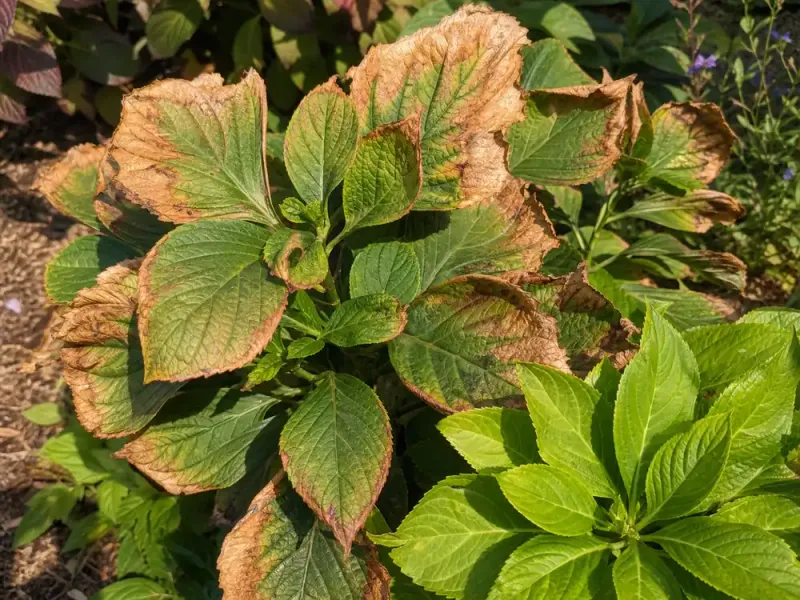
Brown flowers and brown leaves can happen on the same plant at the same time without sharing a single cause. Treating them as one problem is one of the easier diagnostic mistakes to make, and it can lead to the wrong response.
When the leaves start showing brown patches, margins, or tips alongside the browning blooms, that combination deserves its own inspection.
Leaf browning in hydrangeas can point toward drought, heat, sun scorch, salt injury, root problems, frost, spider mites, or foliar disease. University of Minnesota Extension’s hydrangea leaf discoloration diagnostic walks through how different patterns – margins versus patches, upper surface versus lower – can help narrow down the cause.
Where the damage starts on the leaf, how quickly it spreads, and whether it appears on older or newer growth all provide useful clues that flower browning alone cannot give you.
A hydrangea can have naturally aging blooms and a completely separate leaf problem developing at the same time. University of Arizona Extension’s guidance on drought and heat stress explains how plants under environmental pressure can show injury in foliage independently of what is happening in flower tissue.
Resist the pull to assign one universal explanation to everything you see. Inspect each symptom on its own terms, note what is different about its appearance and location, and then decide whether the two symptoms point to the same stressor or different ones.
Rapid, irregular browning calls for a closer disease check
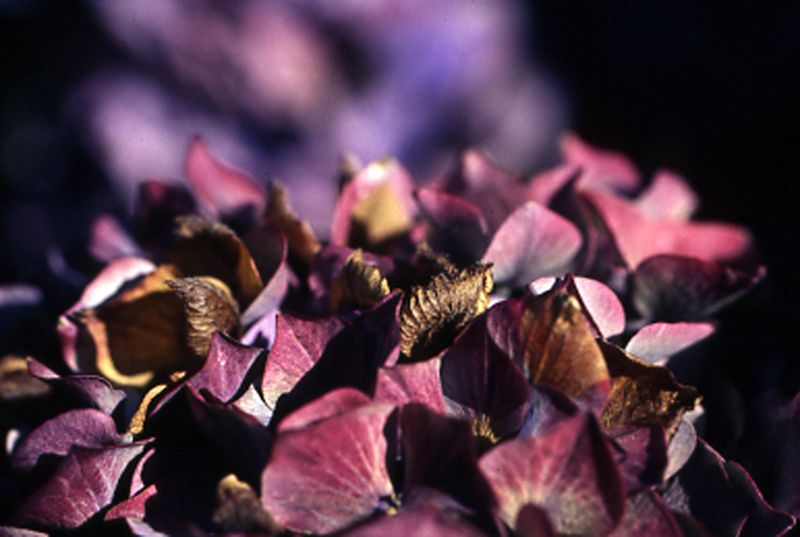
Green, healthy-looking leaves do lower the concern about a whole-plant disease problem, but they do not rule it out completely. Gray mold, caused by the fungus Botrytis cinerea, can begin in flower petals or flower buds and progress before the leaves show any clear involvement.
Knowing what to look for in the flowers themselves is what separates a reasonable reassurance from a missed diagnosis.
Ordinary bloom aging tends to be gradual and produces dry, papery flower heads that hold their structure. Penn State Extension’s hydrangea disease guide describes Botrytis symptoms as rapid or irregular browning, water-soaked tissue, and gray fuzzy growth on affected areas.
Flower buds that die before they open are another red flag. The pattern is the key distinction: slow and dry points toward senescence or environmental stress, while fast, wet, and irregular raises the possibility of disease.
Minnesota Extension’s hydrangea bud and petal discoloration resource notes that infected petals falling onto leaves can cause brown spots to develop on the foliage afterward, which is one way Botrytis moves from flowers to leaves over time. Minnesota Extension’s gray mold overview also points out that cool, wet, and humid conditions favor the disease, while hot and dry conditions make it less likely.
Brown flowers alone are not enough to justify reaching for a fungicide; the visual evidence needs to match the disease profile first.
Check the root zone before you change the watering routine
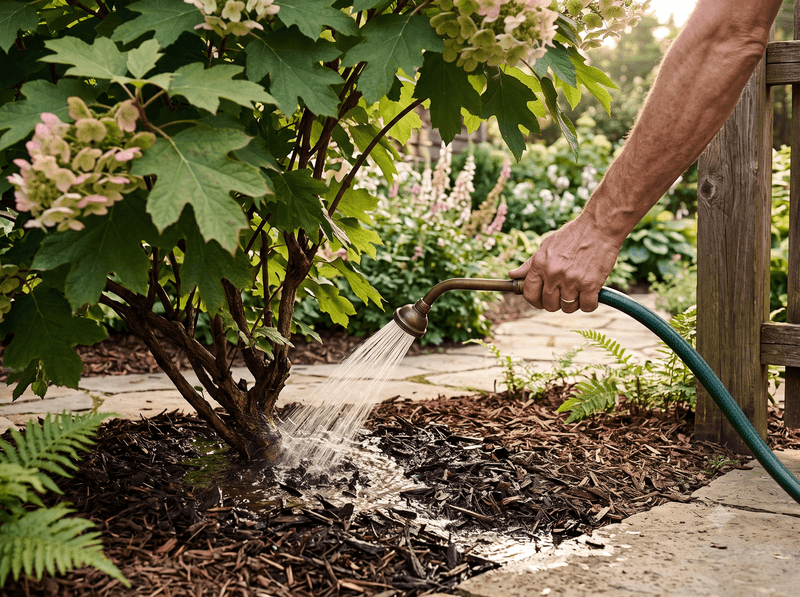
One of the most reliable diagnostic steps costs nothing and takes about thirty seconds: push your finger two inches into the soil at the base of the shrub and feel what is actually there. Hydrangeas, especially bigleaf types, do wilt visibly during hot afternoons, and that temporary droop can look alarming.
But afternoon wilting alone does not confirm a drought problem if the soil still holds reasonable moisture and the plant recovers by morning.
UGA Extension’s bigleaf hydrangea care publication explains that this species is relatively water-demanding but still needs well-drained soil rather than roots sitting in constant saturation. UGA Bartow County Extension’s watering guidance reinforces checking the root zone rather than making watering decisions based on how the plant looks in the afternoon heat.
Check the plant in the morning when temperatures are cooler; if it has recovered overnight and the soil has reasonable moisture, the plant is likely managing the heat rather than failing from it.
When the root zone is genuinely drying out and stress persists through the morning, a thorough, deep watering at the base of the plant is the right response. Wetting the flower heads and foliage routinely adds unnecessary moisture that can encourage disease.
Oklahoma State Extension’s heat and drought management tips recommend applying organic mulch to slow evaporation from the soil surface. UGA guidance specifically suggests a 3- to 5-inch layer of mulch kept back from direct contact with the plant base to protect roots without creating conditions that invite rot or pest problems near the crown.
Remove spent flowers without sacrificing next year’s buds
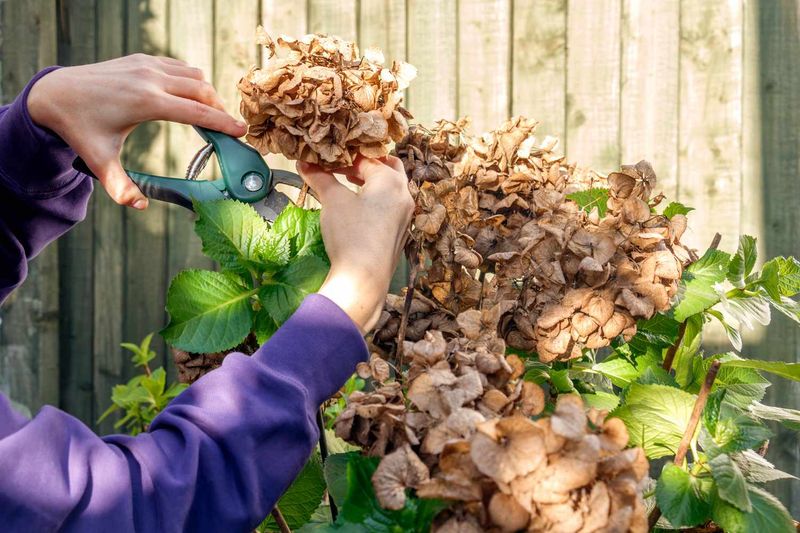
Removing brown flower heads is entirely optional. It tidies the plant and can make the garden look more intentional, but cutting off spent blooms will not reverse the browning, restore the flower’s color, or fix an underlying problem.
If the goal is a cleaner appearance, deadheading is a reasonable choice – just not a therapeutic one.
Where and when you cut matters far more than whether you cut. University of Minnesota Extension’s hydrangea pruning guide lays out the key distinction: bigleaf and oakleaf hydrangeas commonly produce next year’s flower buds on old wood, meaning the stems that grew this season.
Hard pruning those types after flowering, or cutting back into older wood in response to brown blooms, can remove the buds that would have produced flowers the following year. UGA Forsyth County Extension’s pruning identification resource emphasizes that knowing your hydrangea type is the essential first step before any cut.
Smooth and panicle hydrangeas bloom on new wood grown in the current season, so they can generally be pruned in late winter or early spring without sacrificing blooms. Oklahoma State Extension’s hydrangea column confirms this timing difference.
If disease is part of the picture, University of Florida IFAS guidance on ornamental disease management supports removing clearly infected flowers and leaves as a sanitation step, along with improving airflow through the plant, rather than recommending wholesale removal without a confirmed diagnosis.
The pattern tells you whether to watch, adjust, or investigate
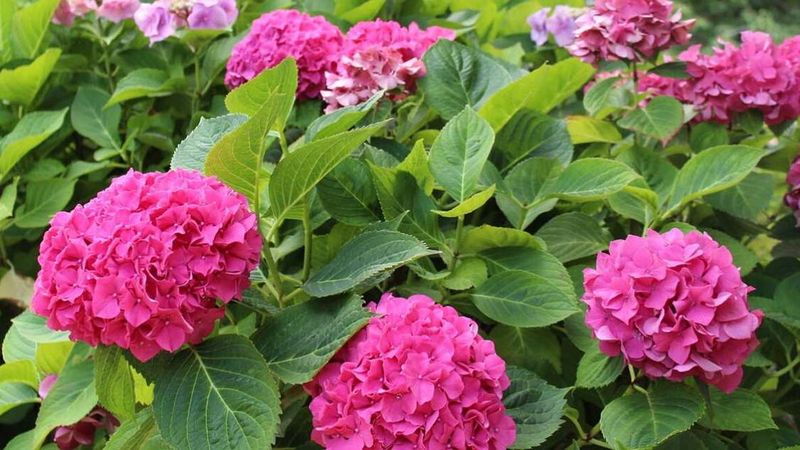
Reading your hydrangea comes down to three responses, and the pattern in front of you determines which one fits. Gradual color change, dry papery texture, intact flower heads, and green leaves that look normal all point toward watching rather than acting.
Harvard Arboretum’s overview of hydrangea seasonal beauty confirms that this kind of color progression is part of the plant’s natural cycle, not a warning sign.
Adjust your approach when recent heat, intense sun exposure, or dry soil conditions align with the browning. Move to deep root-zone watering, add mulch, and consider whether the plant’s location exposes it to afternoon conditions it cannot handle well.
UGA Extension’s bigleaf hydrangea recommendations provide a practical starting point for site and moisture adjustments specific to Southern conditions.
Investigate promptly when browning is fast, irregular, or wet-looking, or when gray fuzzy growth, dying buds, or leaf spots enter the picture alongside the flowers. Penn State Extension’s disease resource and Minnesota Extension’s bud and petal discoloration tool both give clear descriptions of what disease symptoms look like compared to environmental injury.
The best response always depends on how the browning developed, what the leaves are doing, what the weather has been, and which hydrangea you are growing – because the plant itself is always the most reliable source of information you have.