
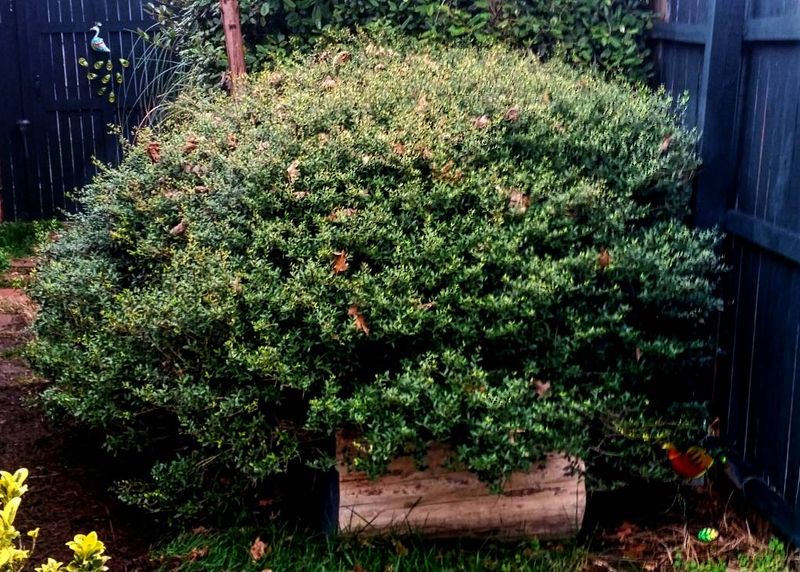
Finding a shrub that gives birds real shelter without eventually swallowing a fence corner is harder than it sounds. Dwarf yaupon holly is a strong native option for Texas homeowners who want year-round evergreen cover that stays manageable when you pick the right cultivar and give it room to spread.
The full-size species can become a large shrub or small tree, but named compact selections offer dense, bird-friendly foliage at a fraction of the scale. This article walks through which cultivar fits your goal, how to read the site before you plant, and what realistic wildlife value looks like from a single shrub.
A Strong Native Choice for a Bird-Friendly Corner
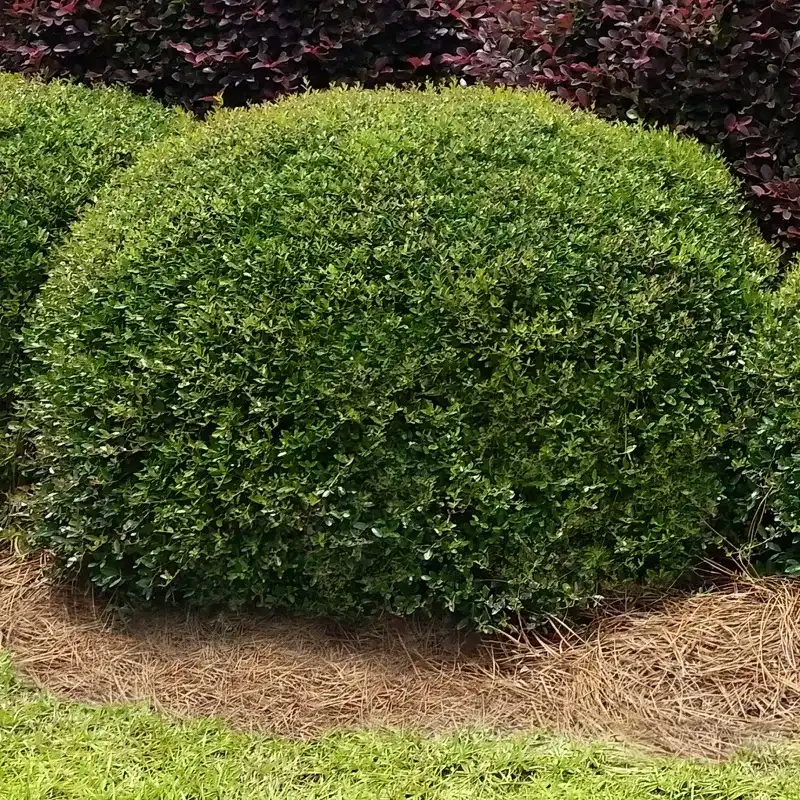
Yaupon holly (Ilex vomitoria) earns its place in a Texas corner planting because its growth habit does exactly what small birds need: dense, layered branching from the ground up, evergreen foliage that holds through winter, and a naturally multi-stemmed form that gives birds multiple entry points for shelter. Audubon’s native plant guide describes yaupon’s dense leaf growth as excellent bird shelter, and Texas Parks and Wildlife confirms that birds use it for nesting, roosting, and protective cover year-round.
The plant is native across a broad swath of the Southeast, including much of Texas. Texas A&M AgriLife’s range plant database places it across the Pineywoods, Gulf Prairies and Marshes, Post Oak Savannah, Blackland Prairies, Cross Timbers and Prairies, South Texas Plains, and Edwards Plateau.
That broad native distribution means it is adapted to conditions many Texas homeowners already deal with: variable rainfall, clay or sandy soils, and summer heat that discourages less-hardy shrubs.
That said, this article recommends a named compact cultivar, not the unrestricted species. The full-size yaupon can outgrow a small corner considerably, and the word “dwarf” on a plant tag does not automatically guarantee a small, tidy shrub.
The sections that follow explain which cultivars are documented at manageable sizes, which ones produce berries for birds and which do not, and how to read your site before committing to a plant. Yaupon is a well-supported choice for dense, regionally appropriate bird cover, and choosing the right selection makes all the difference between a useful corner planting and one that quietly takes over.
The Full Species Can Outgrow a Small Corner
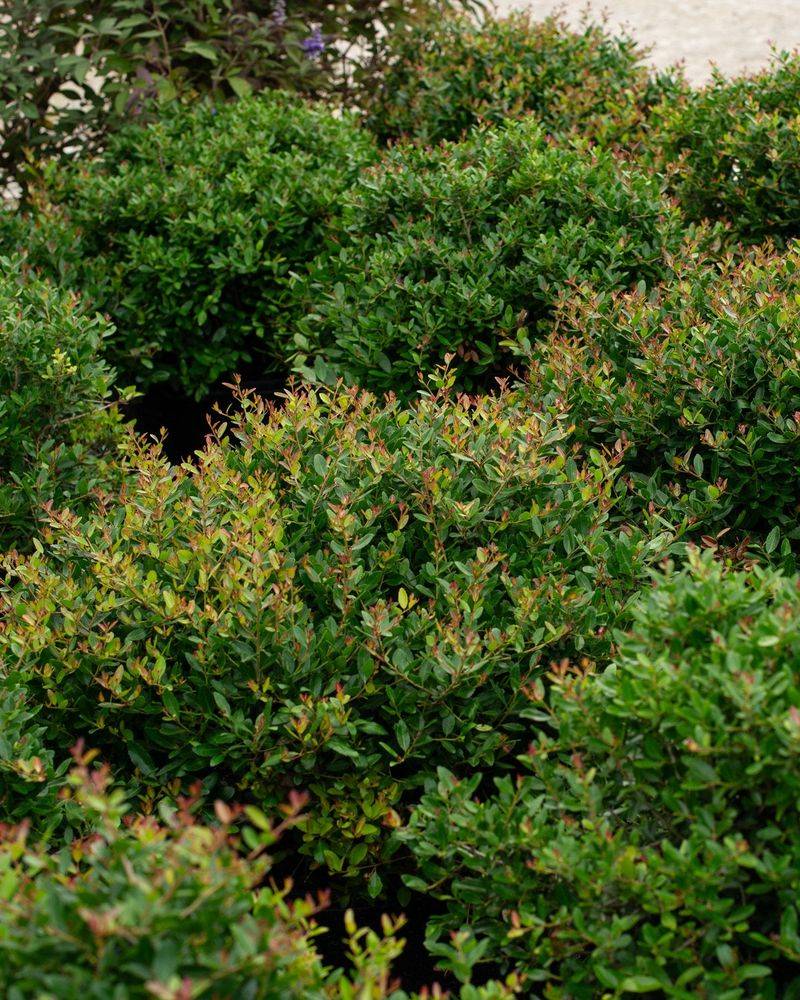
Before choosing any yaupon for a tight corner, it helps to understand how large the unrestricted species can actually get. University of Florida IFAS describes yaupon holly as a multi-stemmed shrub or small tree that commonly reaches 12 to 25 feet tall.
A plant that size is a landscape specimen, not a corner accent, and placing one in a tight foundation bed or small side yard without planning for its mature scale creates a maintenance problem within a few years.
The size issue goes beyond height. Texas Parks and Wildlife documents that unmanaged yaupon can reproduce from seed, roots, and basal crowns, and can form dense, impenetrable thickets under some conditions.
The U.S. Forest Service species review classifies yaupon as native and generally noninvasive, but that classification does not mean the unrestricted plant stays politely small.
It simply means the plant is not spreading aggressively into ecosystems where it does not belong.
The practical takeaway is that “yaupon holly” and “dwarf yaupon holly” are not interchangeable terms. A compact cultivar can remain manageable when the gardener selects it by documented mature dimensions, allows room for its natural spread, and maintains it with periodic pruning.
Texas A&M’s plant records reinforce this distinction, noting the species’ capacity for vigorous growth under favorable conditions. The word “dwarf” on a tag is a starting point for research, not a guarantee of containment.
Always look up the specific cultivar name and confirm both its mature height and width before deciding whether it fits the space you have in mind.
Match the Cultivar to Your Bird-Cover Goal
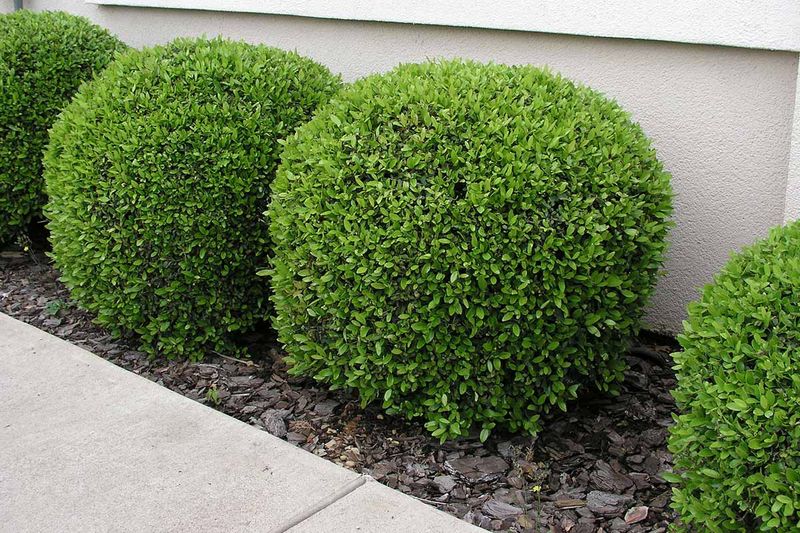
Three cultivars come up consistently in Texas and Southeast extension guidance, and each one serves a different corner-planting goal. Starting with the smallest documented option, ‘Nana’ is listed by the City of Austin’s plant guide at approximately 2 to 4 feet tall and wide, making it one of the most compact selections described here.
That size works well in a narrow foundation bed or low informal hedge where space is genuinely tight. The important caveat is that ‘Nana’ is a male cultivar.
It provides dense evergreen foliage and cover for birds, but it will not produce berries under any circumstances.
‘Schilling’s Dwarf’ is a different proposition. UF/IFAS documentation for Schilling’s Dwarf holly describes it as a dense, rounded mass that grows wider than it grows tall and can reach approximately 6 to 10 feet wide despite its relatively modest height.
That width is substantial, and gardeners who expect a tidy 3-foot mound based on the name “dwarf” will be surprised by its lateral reach. Like ‘Nana,’ it is a male selection, so it provides structure and cover but no fruit.
Its value is the tight, interlocking branching that gives birds excellent year-round refuge.
Gardeners who want fruit as part of the bird-cover plan need a female cultivar, and that means pairing it with a compatible male. NC State Extension’s profile of ‘Taylor’s Rudolph’ describes it as a dense, mounding evergreen shrub reaching approximately 3 to 5 feet with red berries.
A compatible male yaupon must be growing nearby for reliable fruit production, and local nursery availability should be confirmed before planning around this cultivar. UF/IFAS notes that male and female yaupon plants are separate, so a male-only planting will never produce fruit regardless of age or growing conditions.
The decision comes down to this: choose a compact male cultivar when dense evergreen cover is the primary goal and fruit is not required. Plan a compatible female-and-male combination when berries matter, and confirm that both cultivars are available locally before committing to that approach.
Test the Texas Corner Before You Plant
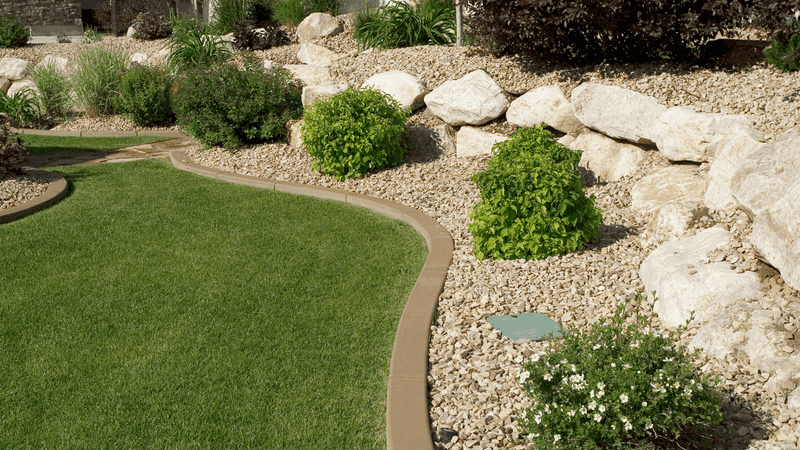
Yaupon’s reputation for toughness is well earned, but matching it to the right site still matters. Texas A&M’s range plant records note that yaupon tolerates drought and poor drainage, two conditions that eliminate many other shrubs from Texas corners.
UF/IFAS adds that the plant handles salt exposure and drought once established, which matters for homeowners near the Gulf Coast or in areas with salty municipal water supplies.
Light is the first variable to assess. Yaupon tolerates full sun to partial shade, but dense foliage cover develops best with at least a half-day of direct sun.
A deeply shaded corner under a large live oak will produce a thinner, more open plant that provides less of the tight branching structure birds rely on for refuge. If the corner gets four or more hours of direct sun, yaupon is a reasonable fit; if it is heavily shaded all day, other native understory shrubs may perform better.
Drainage deserves equal attention. While yaupon can handle occasional wet conditions and even brief flooding, consistently waterlogged soil slows establishment and can cause root problems over time.
Before planting, check whether the corner drains within a day or two after heavy rain. If standing water persists for three or more days, amending the soil or choosing a different location will serve the plant better than forcing it into a poorly drained spot.
Width is the third factor to plan for before buying. The U.S.
Forest Service species review reinforces that yaupon is broadly distributed but regionally variable in growth habit. Measure the available width of the corner at ground level, then compare that number against the documented mature width of the cultivar you are considering.
A corner that looks spacious at planting can feel crowded within five years if a cultivar’s natural spread was not factored into the plan from the start.
Plan for Width and Safe Bird Cover
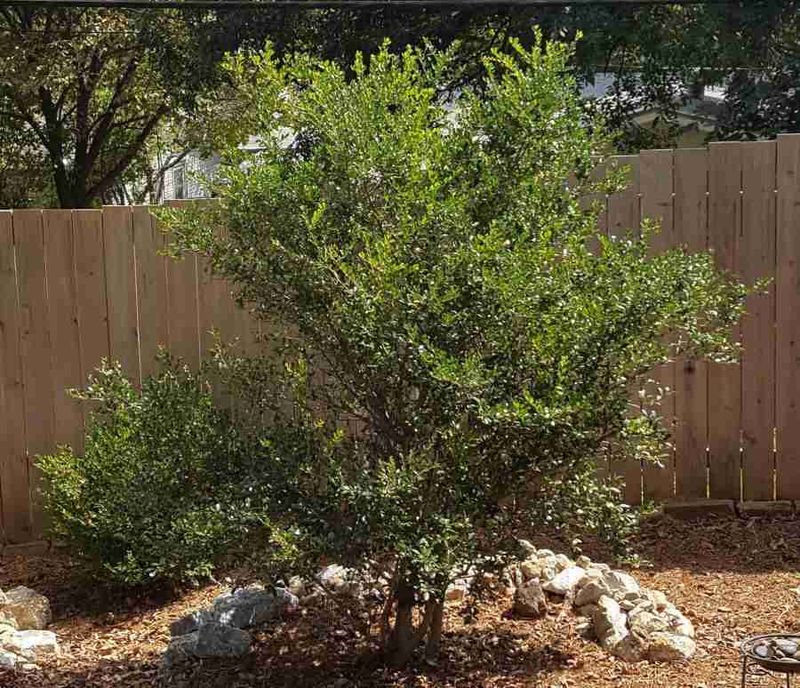
Width is where many compact yaupon plantings run into trouble. ‘Schilling’s Dwarf’ in particular can reach 6 to 10 feet wide, and UF/IFAS recommends spacing it 36 to 60 inches apart for mass planting, which signals how much lateral room individual plants need. A gardener who plants one of these against a fence and expects it to stay 3 feet wide will spend years cutting it back rather than letting it develop the natural, full-base density that makes it useful for birds.
Allowing the shrub room to reach its documented mature width from the start is the most effective way to keep it manageable without fighting its natural form.
Dense cover near a bird feeder can improve safety for visiting birds, but placement matters. NC State Extension’s winter wildlife habitat guidance recommends positioning feeders within about 10 feet of dense cover so birds can escape quickly if a predator appears, while also warning against placing feeders inside shrubbery where cats can hide and ambush birds at close range.
A feeder set just outside the yaupon’s canopy edge, with open ground between the feeder and the shrub, gives birds the escape route they need without creating an ambush spot.
Window collisions are a separate concern when placing feeders near structures. Feeders positioned either very close to a window (within about 3 feet) or far from it (more than 30 feet) reduce collision risk compared to middle-distance placement, because birds either cannot build enough speed to cause injury or have time to see the window as a barrier.
A yaupon planted in a corner away from large windows is a better backdrop for a nearby feeder than one positioned directly in front of a glass panel.
Leaving open ground around the shrub’s perimeter also keeps the planting from becoming an unmanaged thicket. Dense cover is most useful to birds when the gardener can see into and around it, notice new sprouts from root growth, and remove them before they expand the plant’s footprint beyond the planned space.
Prune for a Full Base Instead of a Sheared Shell
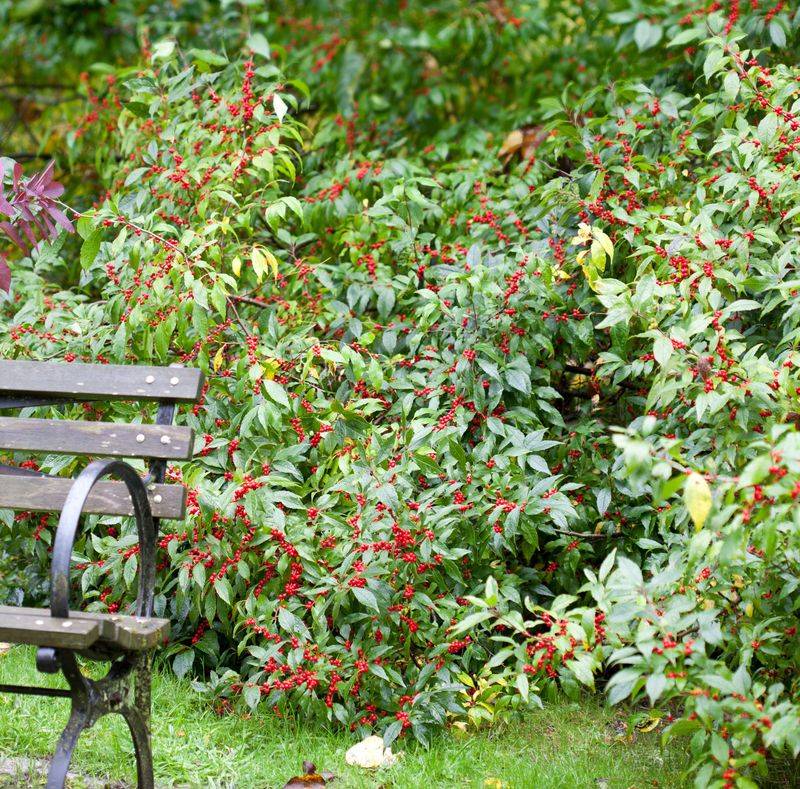
Repeated shearing is the most common mistake made with compact yaupon cultivars. Running hedge trimmers across the outside of the plant produces a tidy surface quickly, but over several seasons it creates a dense outer shell with a sparse, poorly lit interior.
University of Georgia Extension’s guide to pruning ornamental plants explains that routine shearing concentrates growth at the outer canopy and leaves the interior increasingly bare, which reduces the layered branching structure that makes the shrub useful as bird cover in the first place.
Selective thinning cuts are a better approach. Rather than trimming the surface, reach into the plant and remove individual stems at their origin point or at a healthy lateral branch.
This opens light into the interior without stripping the outer form, encourages growth throughout the plant instead of only at the tips, and preserves the natural density that birds use for shelter. UF/IFAS notes that ‘Schilling’s Dwarf’ requires relatively infrequent pruning when planted with adequate room, which reinforces the earlier point about giving the shrub space to spread naturally.
Keeping the base slightly wider than the top is a practical rule to follow during any pruning session. When the upper canopy shades out the lower branches, the plant loses its ground-level density, which is where small birds often enter and exit for cover.
A shrub that is wider at the base than at the crown allows sunlight to reach lower foliage and keeps the plant full from the ground up.
Compact yaupon is relatively manageable compared to the full-size species, but it is not maintenance-free. Formative pruning in the first few years helps establish the shape you want, and occasional thinning afterward keeps the interior open.
Pruning can guide the plant’s form over time, but it cannot eliminate the cultivar’s natural tendency to spread laterally, so it works best as a complement to adequate spacing rather than a substitute for it.
Use Yaupon as One Part of Bird Habitat
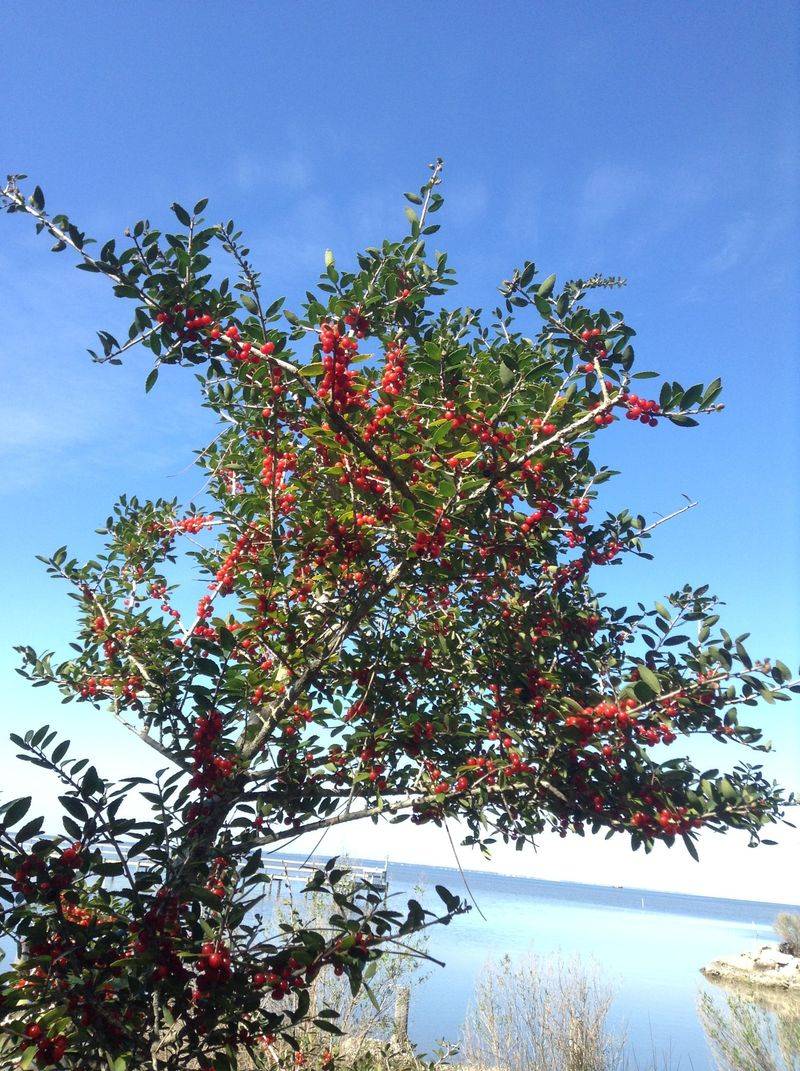
A single dwarf yaupon provides reliable evergreen cover and, if it is a fruiting female with a compatible male nearby, seasonal food for birds. What it cannot do on its own is supply every resource birds need to use a yard regularly.
Texas Audubon’s habitat guidance recommends combining evergreen and deciduous plants that together provide insects, nectar, fruit, seeds, and cover at different times of year, because no single shrub species covers all of those needs across all seasons.
Texas Parks and Wildlife’s Bird City Texas habitat resources reinforce that birds also need fresh water, nesting sites, and varied plant structure at different heights. A yaupon in the corner addresses the shelter and potential fruit layers, but adding a shallow birdbath, a taller native tree nearby, and a few flowering natives for insects rounds out the habitat considerably.
Bird use of any single planting also depends on local species populations, surrounding land cover, and plant maturity, so a newly installed shrub may see little activity until it fills in over two or three growing seasons.
The male-versus-female distinction is worth restating here because it shapes wildlife expectations. Audubon’s yaupon profile notes that the plant’s berries are an important food source for birds, but common compact male cultivars like ‘Nana’ and ‘Schilling’s Dwarf’ will never produce those berries regardless of age or growing conditions.
If fruit matters to the plan, a female cultivar with a compatible male is required.
On the topic of yaupon berries and human use: do not eat them. USDA plant materials guidance states that yaupon fruit is not edible for people.
Yaupon leaves have been used historically to make a caffeinated tea, but UF/IFAS cautions that collecting and consuming wild plants requires reliable identification and careful handling, so that use is well outside the scope of a corner planting for bird cover. The shrub’s strongest small-yard value is the dense, year-round refuge it provides, not a food source for people or a guaranteed draw for every bird in the neighborhood.
Choose the Cultivar Before You Choose the Corner
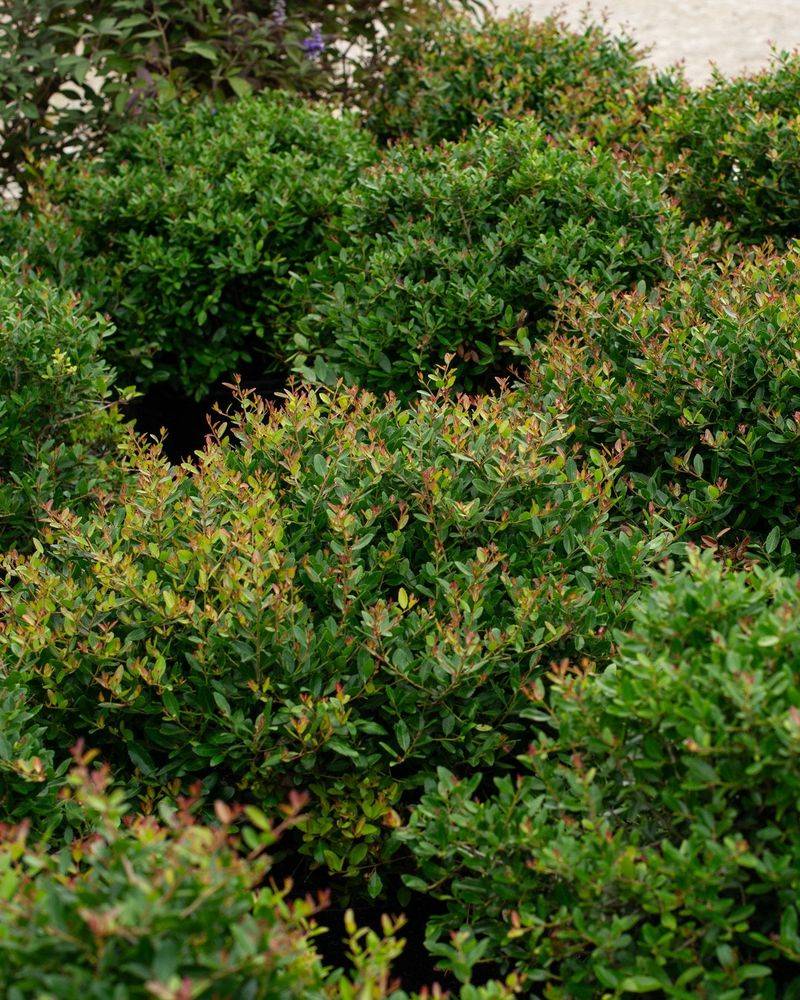
Picking the location before settling on a cultivar is the most common sequencing mistake with compact yaupon. Start with the plant’s documented mature height, width, and sex, then match those numbers to the available space and your bird-cover goal.
Austin’s plant guide lists ‘Nana’ at approximately 2 to 4 feet tall and wide, a foliage-only option for genuinely tight spaces. UF/IFAS documents ‘Schilling’s Dwarf’ at up to 6 to 10 feet wide, which requires a larger corner with room to spread.
A female cultivar like ‘Taylor’s Rudolph’ needs a compatible male yaupon nearby for reliable berries, so confirm that pairing is workable before committing.
Check light and drainage at the site, then measure the available width at ground level and compare it against the cultivar’s documented spread. Texas A&M’s yaupon records confirm that regional conditions vary across Texas, so local nursery staff familiar with your specific area can help confirm whether a cultivar performs as documented in your soil and climate.
A compact male cultivar delivers dependable evergreen cover; a female plant adds potential fruit but requires planning for pollination. Neither choice will stay perfectly contained forever without some maintenance, but either one, placed with room to grow and pruned thoughtfully, can hold a Texas corner with the kind of dense, quiet presence that small birds return to year after year.