
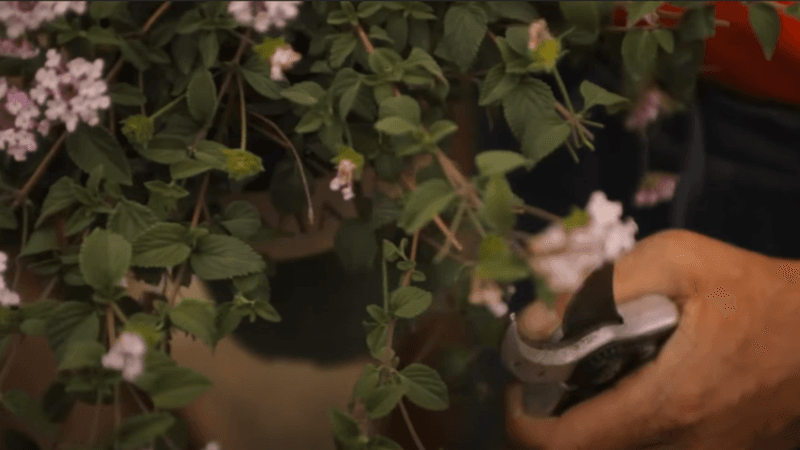
Lantana is one of the most reliable warm-season bloomers in North Carolina yards, but even the toughest plants hit a lull after that first big wave of flowers fades. When spent clusters pile up and the plant starts looking tired, a small, well-timed move can nudge it back into flowering mode.
The trick is knowing exactly what to cut, how much to take, and what to realistically expect afterward. This guide walks through the whole process so your lantana keeps earning its spot in the garden bed all season long.
Let the fading flower flush set the schedule
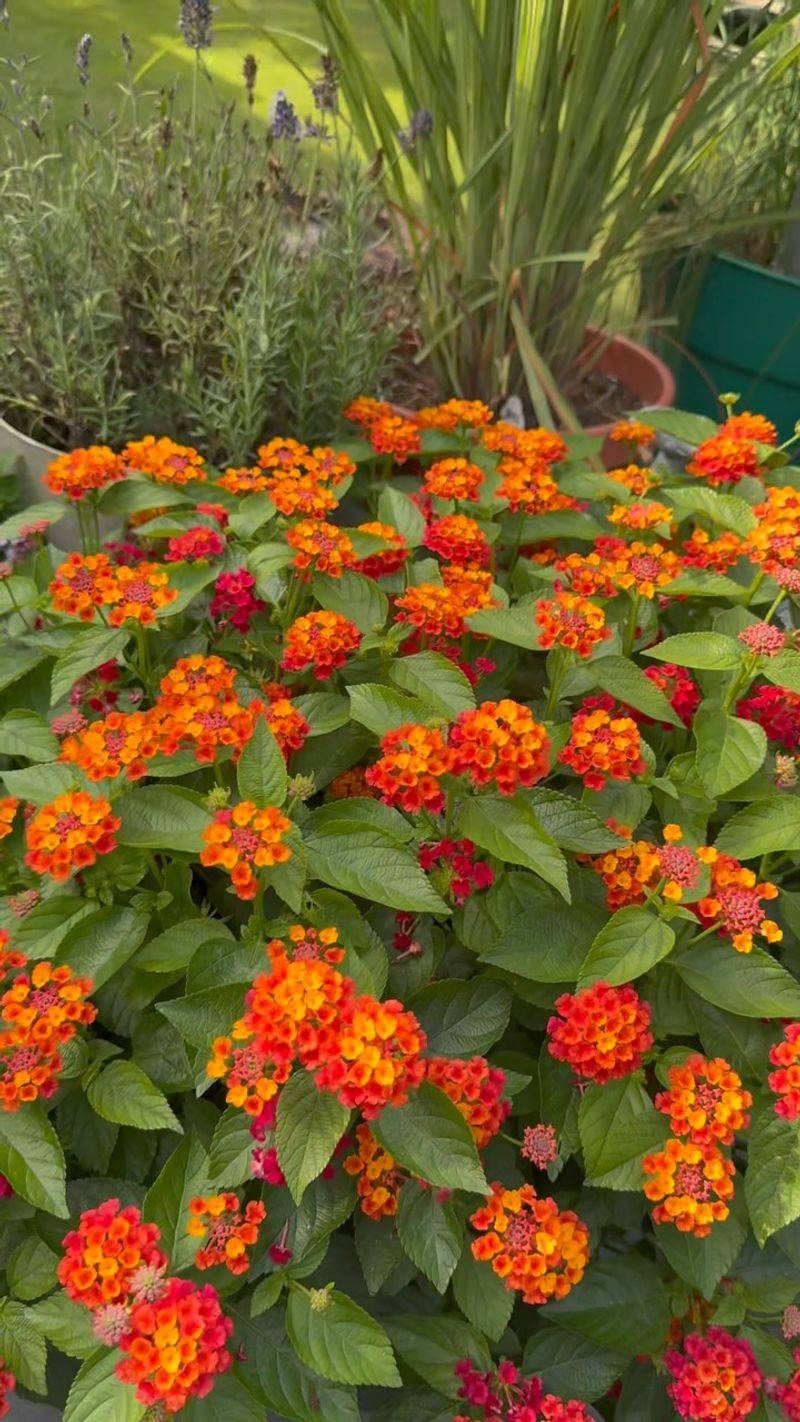
Forget the calendar. The right moment to act on lantana has nothing to do with a fixed date in July or August and everything to do with what the plant is telling you right now.
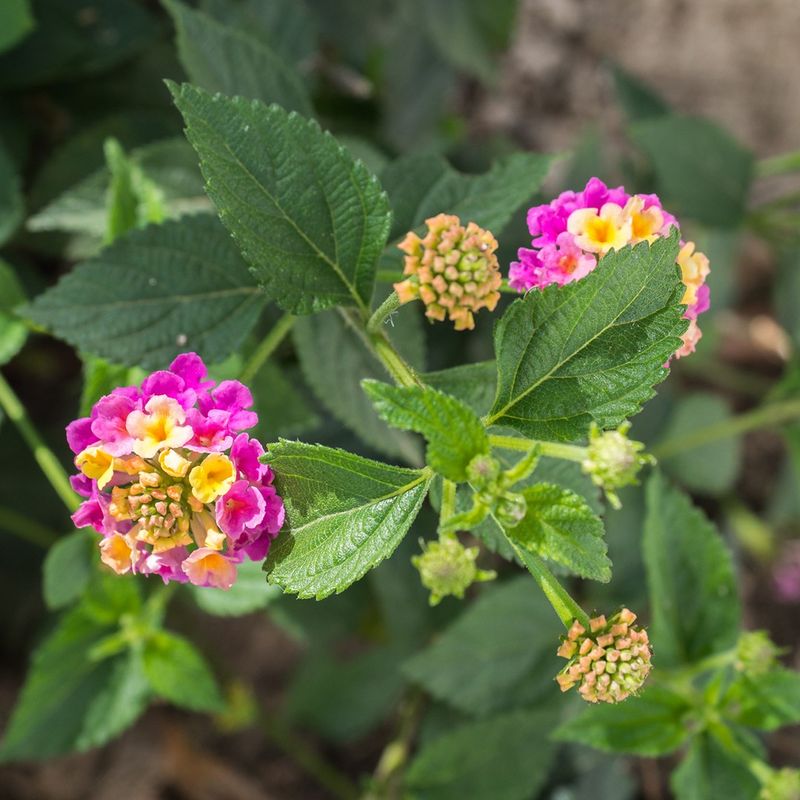
When a particular lantana’s first heavy wave of flowers fades visibly, spent clusters accumulate across the plant, and some of those clusters begin forming small green berries, that is the window. Acting at that stage, while the plant still has active summer growth ahead of it, gives you the best shot at a second flowering wave.
The headline on this article overstates the stakes. A light post-bloom trim can encourage another round of flowers, but missing the moment does not doom the plant to a completely flowerless season.
Lantana is resilient. What the trim does is remove the signal that says “seed production is underway” and replace it with fresh growing tips that can develop into new flower buds.
Clemson Cooperative Extension recommends periodically lightly shearing lantana’s summer tip growth to encourage repeat blooming, framing it as ongoing maintenance rather than a one-time rescue operation.
Timing varies from yard to yard. A container lantana on a hot south-facing porch may hit its first flush earlier than a landscape plant in partial shade.
A coastal North Carolina garden may see the flush come and go faster than a Piedmont bed that heats up more slowly. NC State Extension notes that lantana flowers generally appear from midsummer until first frost, but the pace of each flush depends on cultivar, sun exposure, planting date, and local conditions.
Watch the plant, not the month, and you will rarely miss your moment.
Remove spent clusters and trim only the outer tips
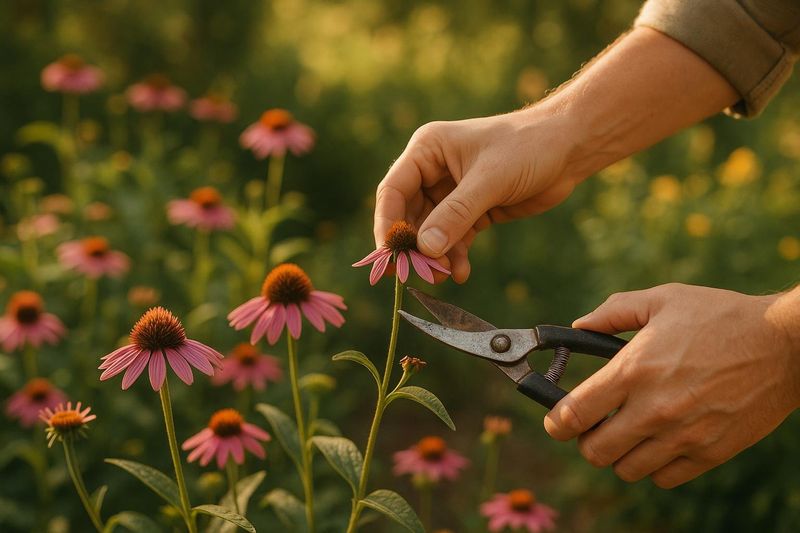
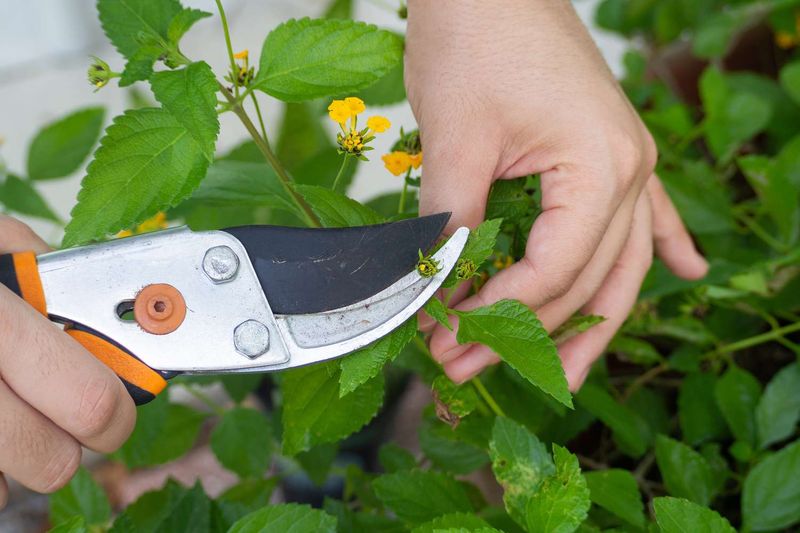
Good pruning shears and a pair of gloves are the only tools you need. Start by finding each spent flower cluster, the ones that have turned dull, papery, or begun forming small berries, and follow the short stem beneath that cluster down to the nearest healthy leaf set or lateral shoot.
Cut just above that point. You are removing the cluster and its supporting stem without taking out large sections of healthy growth.
Work across the whole plant this way before deciding whether any additional shaping is needed.
Extension guidance on lantana deadheading describes this same approach: remove the faded flower and the stem beneath it, cutting above a healthy node so the plant can redirect energy into new shoot growth rather than seed development. If the plant looks generally leggy or sprawling after you finish deadheading, a light shear of the outer shoot tips, roughly 1 to 3 inches, can tighten things up.
That range is a conservative practical guideline, not a fixed prescription. A compact cultivar in a container may need almost nothing beyond deadheading, while a vigorous landscape plant that has spread aggressively might benefit from trimming slightly closer to the 3-inch end of the range.
Do not cut deep into old woody stems during this summer pass. That kind of severe reduction belongs to a different season and a different purpose entirely.
The goal right now is a tidy, modest reset of the outer growth, not a dramatic renovation. A University of California pruning study on one lantana cultivar found that severe early-season cuts produced vigorous regrowth but did not create lower, more compact plants or better flowering, which reinforces keeping this summer trim light and targeted.
One safety note worth taking seriously: larger lantana plants have stiff, bristly hairs on their stems and leaves that can irritate bare skin. NC Cooperative Extension, Craven County specifically recommends wearing gloves and long sleeves when cutting lantana back.
A long-sleeved shirt and gardening gloves take ten seconds to put on and prevent an itchy afternoon.
A modest post-bloom trim can support another flowering wave
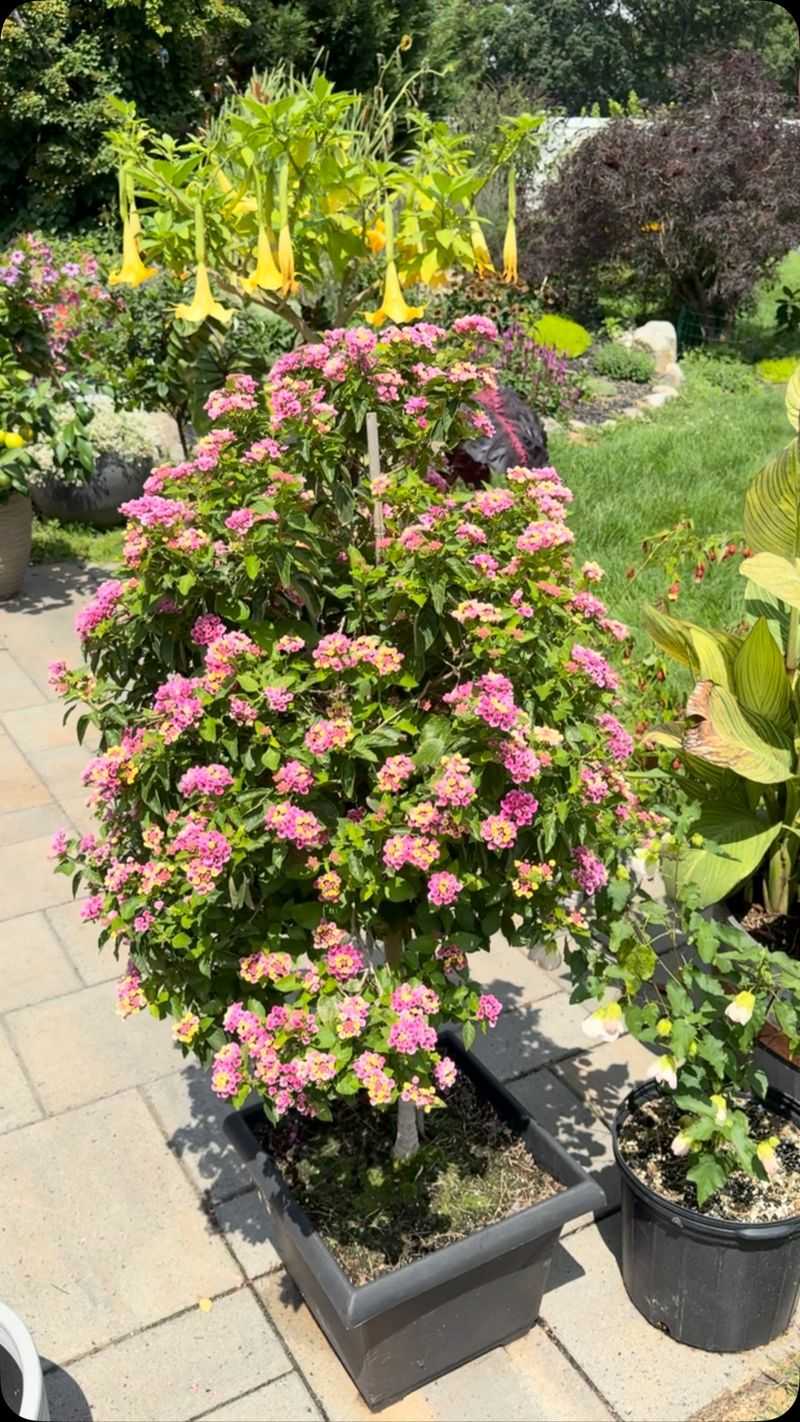
Removing faded flower clusters and early developing berries gives the plant a cleaner path toward fresh shoot growth. On seed-producing lantana types, those forming berries represent a real shift in the plant’s priorities.
Seeds take resources to develop, and redirecting the plant away from that process by removing the developing fruits can open the door to additional flowers. The key word, though, is “can.” A trim encourages rebloom rather than guaranteeing it, and the plant’s response depends heavily on what else is going on in the garden.
Active growth is the prerequisite. A lantana that is already slowing down because of heat stress, drought, or shortening days may not respond with the same enthusiasm as one that still has plenty of warm weeks ahead.
University of Arkansas Cooperative Extension notes that lantana often does not require deadheading, which is a useful reminder that the trim is a tool for encouraging more flowers rather than a rescue requirement the plant cannot survive without.
Full sun matters more than almost any pruning decision. A lantana in partial shade that receives a careful trim may still produce fewer flowers than an untrimmed plant in full sun.
Adequate moisture during the weeks after trimming also plays a role, as does the overall health of the root system. If the plant has been stressed by disease, root problems, or extended drought before the trim, a light shear is unlikely to overcome those underlying issues.
Think of the post-bloom trim as removing a barrier to rebloom rather than creating the conditions for it from scratch. The conditions themselves, sun, water, and healthy roots, still have to be in place.
Extension guidance on lantana care reinforces that point: the trim works best when the plant is actively growing and the environment supports continued development.
Use periodic light shearing as maintenance
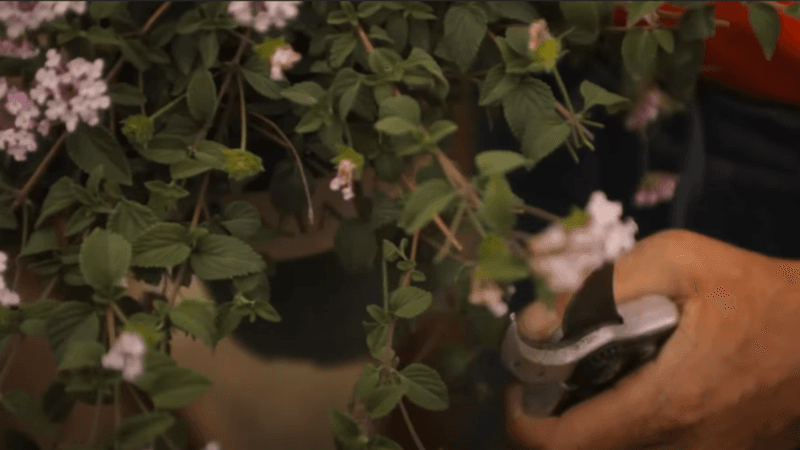
One trim is not a season-long strategy. Lantana keeps producing new growth and new flower clusters throughout the warm months, which means spent clusters keep accumulating.
Treating post-bloom care as a single annual event leaves the plant managing its own spent material for weeks at a time, which is exactly the scenario that allows seed development to compete with continued flowering. A better approach is returning to the plant every few weeks and removing what has faded.
Clemson Extension’s lantana guidance frames periodic light summer shearing as the recommended maintenance method, keeping cuts shallow and focused on spent clusters and the outer shoot tips rather than digging into older wood. Each pass is quick once you get the rhythm: scan for clusters that have turned dull or begun forming berries, snip them off above a healthy node, and do a light pass on any tips that have stretched out noticeably since the last trim.
Contrast that with the approach of a single severe cut, which the research does not support as a reliable path to better compactness or flowering. The UC study of one cultivar found vigorous regrowth after severe early-season pruning but no improvement in plant shape or flower production compared to lighter management.
That result applies specifically to the cultivar studied and does not mean severe pruning always fails across all lantana types, but it does caution against assuming that harder cuts produce better outcomes. The practical takeaway is straightforward: keep the cuts light, keep them frequent, and let the plant tell you when it needs attention rather than waiting for a dramatic intervention.
Support regrowth with water, sun, and restrained feeding
After trimming, the plant’s ability to push out new shoots and flower buds depends on what you give it in the days and weeks that follow. Water is the most immediate variable.
If rainfall has been scarce, water the plant thoroughly at the base after trimming. Clemson’s lantana care recommendations suggest approximately 1 inch of water per week during the blooming period when rain does not supply that amount.
Treat that as a flexible benchmark rather than a rigid prescription, because sandy coastal soils drain faster than Piedmont clay, container plants dry out more quickly than in-ground beds, and a stretch of overcast weather changes the math entirely.
Avoid frequent overhead watering. Wetting the foliage repeatedly increases the risk of fungal disease and can contribute to root rot in soils that do not drain well.
Watering at the base of the plant, either by hand or with drip irrigation, keeps moisture where the roots can use it without soaking the leaves. UF/IFAS Gardening Solutions notes that regular watering can improve flowering even on drought-tolerant lantana, which confirms that tolerating dry conditions is not the same as preferring them.
Sun is the other non-negotiable. Lantana performs best in full sun, meaning at least six hours of direct light per day.
A plant that receives less than that will generally flower less regardless of how carefully it is trimmed or watered. If a bed has grown shadier over the years as nearby trees matured, that shade may explain a disappointing second flush more accurately than any pruning decision.
Fertilizer deserves a cautious approach. NC State Extension’s plant profile and Clemson both note that lantana generally needs little supplemental feeding.
Applying excess fertilizer, particularly nitrogen-heavy products, when the plant is already in its flowering season tends to push leafy vegetative growth at the expense of flower production. If the plant is growing vigorously and the soil is reasonably fertile, hold off on feeding after the trim and let the plant channel its energy into flowers instead of foliage.
Reserve severe cutbacks for overwintered perennials
Summer deadheading and spring renovation pruning are two completely different operations, and mixing them up can set a plant back significantly. During the growing season, the goal is a light, targeted trim that removes spent material and nudges the plant toward fresh growth.
A hard cutback to near the ground in the middle of summer removes the very growth that would carry the next round of flowers and may delay blooming for weeks.
For lantana that has survived winter and is behaving as a perennial, Clemson Extension recommends cutting the plant back to approximately 6 to 12 inches in late winter or early spring, after the danger of hard frost has passed but before significant new growth begins. That timing allows the plant to push vigorous new shoots from a refreshed base without losing the cold protection that older stems can provide through winter.
Not every lantana in North Carolina reaches that spring moment. NC State Extension notes that lantana may behave as a perennial in warmer coastal areas and some Piedmont locations, but gardeners in colder parts of the state often lose plants to winter freezes and replace them annually.
If your lantana does not survive winter, there is no overwintered root system to cut back in spring, and the summer deadheading instructions are the only pruning that applies.
For an overgrown plant that has sprawled far beyond its intended space mid-season, a reduction of up to about one-third of its height and spread is an option. That is not the standard response after the first flowering flush, though.
Reserve that larger cut for a genuinely out-of-control plant, and keep the routine post-flush trim modest and focused on spent clusters and outer tips.
Cultivar and location determine how much pruning helps
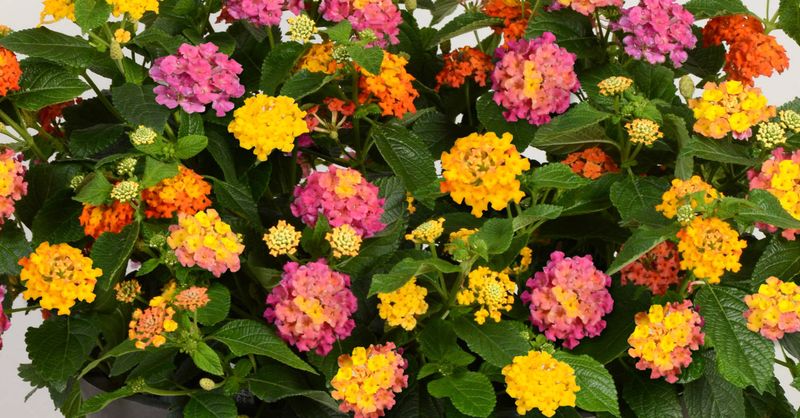
Lantana is not one uniform plant. Dozens of cultivars are available to North Carolina gardeners, and they differ meaningfully in growth habit, berry production, and how much they benefit from individual deadheading.
Sterile or nearly sterile cultivars, which have been bred to produce few or no viable seeds, set very little fruit. On those plants, hunting down and removing every spent cluster is a low-reward task.
A light overall shaping pass accomplishes more in less time, tidying the plant’s appearance without requiring you to inspect every flower head for developing berries.
Seed-producing cultivars are a different story. Those plants actively shift resources toward berry development once pollination occurs, and removing the spent clusters and early berries gives a clearer benefit.
The distinction matters for how you approach the post-flush trim: on a sterile cultivar, focus on shaping; on a seed-producing type, prioritize removing spent material before berries mature.
Location within North Carolina also shapes what you can expect. Coastal gardeners in the warmer, frost-light areas may see lantana persist as a woody perennial for several years, building a substantial root system that supports strong regrowth each season.
Piedmont gardeners often see the same, though winter hardiness depends on the specific cultivar and how cold a given winter gets. Mountain and colder Piedmont gardeners may find that lantana behaves more like an annual, dying back completely each winter.
UF/IFAS Gardening Solutions highlights that lantana tolerates heat, salt, and drought well, qualities that make it especially useful in warm, coastal landscapes.
One important clarification: common lantana is not native to North Carolina. NC State Extension identifies Lantana camara as native to tropical and subtropical regions of the Americas.
It attracts butterflies and other pollinators and has real value in the garden, but gardeners should not present it as an NC-native plant. On the invasive question, NC Cooperative Extension, Craven County notes that common lantana was not listed on the invasive-plant lists reviewed for the Carolinas as of June 2023, while UF/IFAS categorizes it as invasive in Florida.
Suitability is location-dependent, and sterile cultivars reduce but do not eliminate seed dispersal concerns.
Finish the trim with a realistic safety check
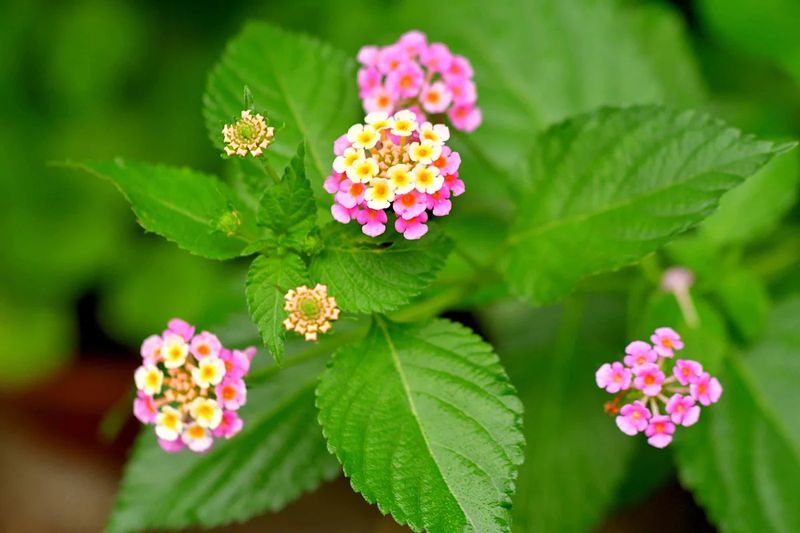
The practical sequence is straightforward: watch for the first flush to fade, remove spent clusters by cutting above a healthy node, lightly shape the outer tips if the plant has grown leggy, and water thoroughly at the base when rainfall has been short. Leave any hard renovation pruning for late winter or early spring, and only on plants that have actually survived winter as perennials.
A second flowering wave is a realistic possibility under good conditions, not a certainty. Sun, moisture, active growth, and cultivar all play a role, and a trim cannot compensate for a plant that is already stressed by shade, drought, or disease.
Clemson’s guidance frames the whole approach as periodic maintenance rather than a single dramatic intervention, which is the right way to think about it.
Before you walk away from the trimmed plant, handle the clippings carefully. The ASPCA lists Lantana camara as toxic to dogs, cats, and horses, and UF/IFAS reports that all plant parts are poisonous, particularly the berries, which can poison children who eat them.
Bag the prunings promptly, keep them out of reach of pets and kids, and do not add lantana clippings to a compost pile that animals can access. A plant this useful in the summer garden deserves a spot in the yard, but its risks deserve the same respect as its blooms.