
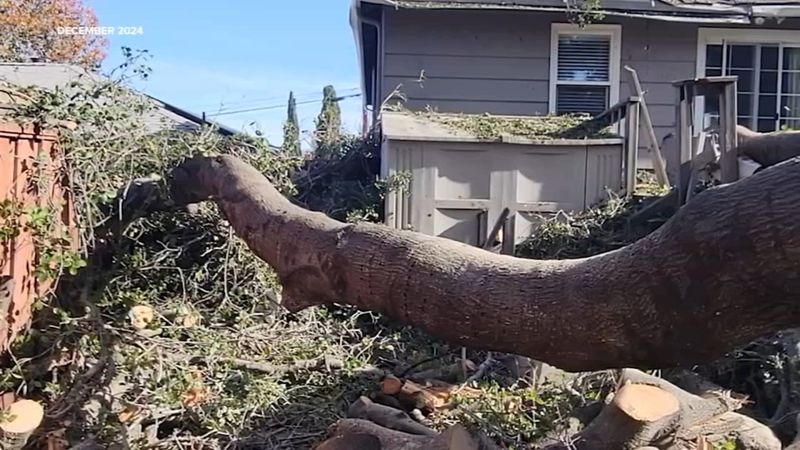
A tree from the yard next door crashes through your fence or lands on your car, and your first instinct is to assume your neighbor owes you every dollar of the repair bill. California law does not work that simply.
Who ends up paying depends on ownership, what the tree owner knew or reasonably should have known before the fall, and what your own insurance policy actually covers. Understanding those three pieces before a tree falls, or right after one does, can save you a lot of frustration and money.
The tree’s landing place does not decide who pays
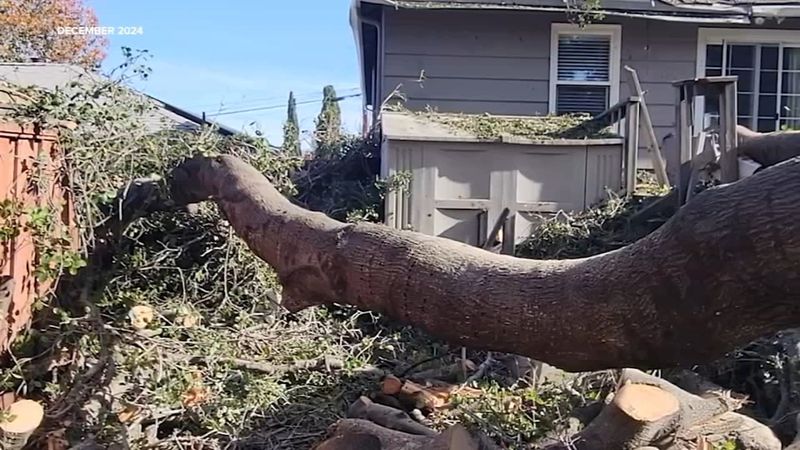
Many homeowners assume that wherever a tree lands is wherever the bill lands, too. California law takes a different approach.
The legal questions center on ownership, negligence, causation, and the extent of the damage, not on which yard the trunk came to rest in.
Ownership usually starts with the trunk. California Civil Code section 833 says a tree whose trunk stands wholly on one owner’s land belongs exclusively to that owner, even if roots or branches extend onto the neighboring parcel.
A tree growing directly on the boundary line is a different situation and may involve shared ownership, which adds a layer of complexity that a straightforward neighbor-versus-neighbor analysis does not capture.
Once ownership is clear, the next question is whether the owner acted with reasonable care. California Courts guidance on property damage frames a potential claim around negligence, meaning the injured homeowner generally needs to show that the tree owner failed to exercise ordinary care, that the failure caused the damage, and that actual damages resulted.
A tree landing in your yard is not, by itself, proof of any of those things.
Separate from legal responsibility, there is also the question of which insurance policy may respond first. The damaged homeowner’s own policy may cover a loss before anyone establishes who was at fault, while the neighbor’s liability coverage may become relevant only after negligence is investigated or admitted.
Keeping those two tracks distinct helps homeowners avoid surprises when the first check arrives, or does not.
Warning signs can make foreseeability the central issue
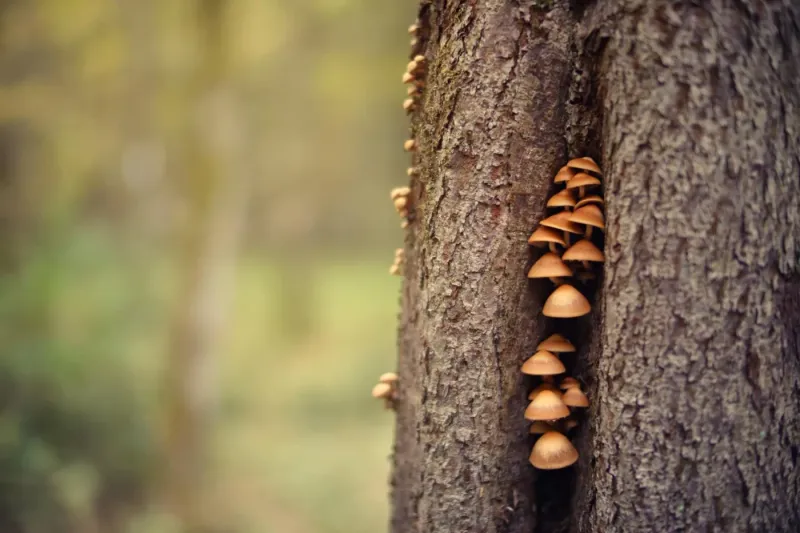
A tree does not have to be visibly dead for its condition to matter in a legal dispute. What matters most is whether a reasonable owner, paying ordinary attention, would have recognized that the tree presented a foreseeable danger and had time to do something about it.
UC IPM’s guide to recognizing hazardous trees identifies several warning signs worth knowing: fungal fruiting bodies at the base or on the trunk, cavities or hollows, cracks in the trunk or major limbs, dead or dying branches, soil fissures near the roots, and a noticeable lean or tilt. The same resource cautions that internal decay and root problems may not be visible at all, which is why professional inspection matters even when a tree looks reasonably healthy from the sidewalk.
California courts have looked closely at what owners knew or should have known before a tree fell. In Keenan v.
Smith, the court found that a tree’s visible appearance and lean had raised concerns before it fell and destroyed a neighboring house. The court held that a reasonable landowner could have discovered the dangerous condition and had a duty to investigate further.
That case illustrates why months of visible warning signs can shift the legal conversation well before a tree ever hits the ground.
In Bonde v. Bishop, the court found that overhanging branches combined with evidence of decay constituted a nuisance and an ongoing danger to neighboring property.
The takeaway for homeowners is that documented warning signs, prior complaints, previous limb failures, written notices, photographs, and arborist recommendations can all support a claim that the risk was foreseeable. None of those items automatically proves negligence, but together they build a picture of what the owner knew and when.
A storm can trigger the fall without erasing an earlier duty
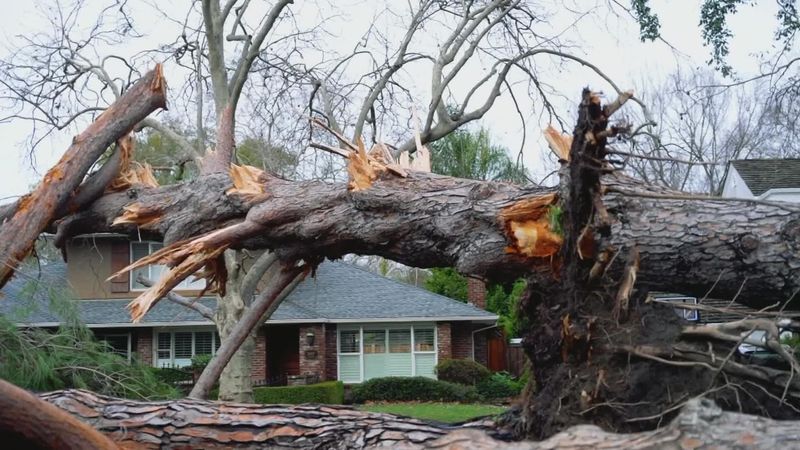
Storms get blamed for a lot of fallen trees, and sometimes that is entirely fair. When a structurally sound tree comes down in an unusually severe wind event with no prior warning signs, the storm may well be the full explanation.
The legal picture changes when a tree had a known or reasonably discoverable problem before the storm arrived.
Keenan v. Smith is the clearest California example of this distinction.
The tree in that case fell during a winter storm, but the court’s focus was not on the weather. The analysis turned on whether a reasonable landowner should have discovered the tree’s dangerous condition beforehand and taken action.
The storm was the immediate trigger; the pre-existing structural problem was the legal issue.
Balancing that point honestly matters. UC Cooperative Extension’s homeowner guide on tree hazards notes that many tree failures cannot be predicted or prevented, and that regular inspection can identify structural defects but does not guarantee that every failure will be caught in time.
UC IPM and ISA tree risk assessment guidance both acknowledge that some internal defects are simply not visible and that apparently sound trees can fail, particularly under storm loading.
The practical result is a sliding scale. A neighbor whose tree had a pronounced lean, visible cavity, or multiple dead limbs over a target area has a harder time using the storm as a complete defense.
A neighbor whose tree looked healthy and was professionally inspected recently is in a different position entirely. Responsibility usually depends on the relationship between what the storm did and what the tree’s condition already was, not on the storm alone.
Insurance may handle some losses before fault is resolved
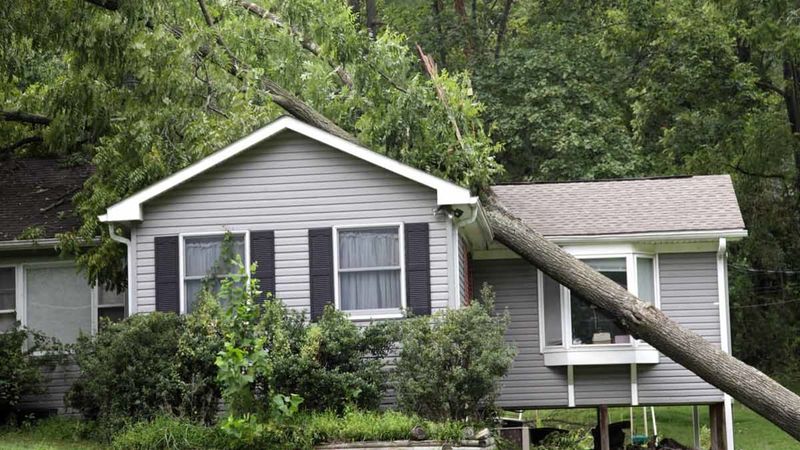
After a tree falls and the immediate shock wears off, most homeowners want to know two things: who pays, and how fast. The answer to the second question often comes from insurance, while the answer to the first may take considerably longer to sort out.
Coverage depends heavily on what was damaged and on the specific terms of the applicable policy. The California Department of Insurance advises that fallen-tree damage is generally covered under standard homeowners policies, subject to policy exceptions and deductibles.
That is a starting point, not a guarantee. Flood, mudslide, earth movement, maintenance, and neglect exclusions can affect related losses, and policyholders are advised to review their own policy language carefully.
Different categories of damaged property can carry different limits or require different insurance sources. Damage to the home structure itself is typically treated differently from damage to a detached garage, a fence, landscaping, or a vehicle.
Tree removal and debris removal may have separate sublimits that fall well short of the actual cost. A car damaged by a fallen tree is generally a comprehensive auto insurance claim rather than a homeowners claim.
Checking which policy applies to which category of loss before assuming one policy covers everything is a step many homeowners skip.
The sequence of payment also matters. California Courts guidance explains that a damaged homeowner’s insurer may cover a loss first and then pursue the responsible party through a process called subrogation.
If the neighbor was negligent, that insurer may seek reimbursement from the neighbor or the neighbor’s liability carrier. The damaged homeowner may still be responsible for the deductible or any amount that falls outside coverage.
The California Department of Insurance residential property claims guide and its residential insurance guide both recommend notifying the insurer promptly and waiting for an inspection before completing permanent repairs when feasible.
Preserve evidence that connects the condition to the loss
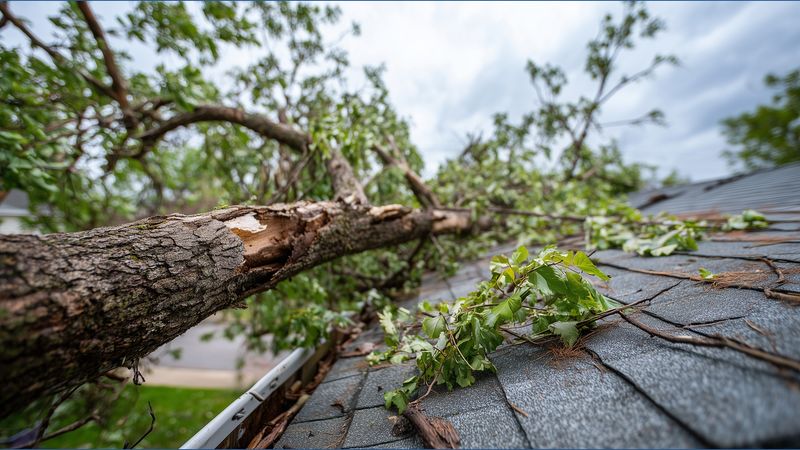
Evidence gathered in the hours after a tree falls can make a significant difference months later, whether a claim goes through insurance, small claims court, or a formal lawsuit. The time to collect it is before cleanup begins, assuming the area is safe to enter.
California Courts specifically recommends photographs, repair estimates, repair bills, witness statements, insurance records, and other documentation showing both the damage and who may be responsible. Applied to a tree fall, that means photographing the tree’s trunk, the exposed root plate, any broken limbs, visible cavities or decay, the direction of the lean if apparent, the full extent of property damage, and the surrounding conditions before anything is moved or cut.
Prior documentation is equally valuable. Old photographs showing the tree’s lean or dead limbs, written notices sent to the neighbor, responses or non-responses from the neighbor, earlier arborist reports, and records of previous limb failures all help establish what the owner knew and when.
A neighbor who received a written complaint six months before the fall and did nothing is in a very different position from one who had the tree professionally inspected and addressed concerns promptly.
The California Department of Insurance advises documenting damage and cleanup costs, making only temporary repairs necessary to prevent further damage, and holding off on permanent repairs until the insurer has had an opportunity to inspect. Keeping receipts for every expense, including emergency tarping, temporary fencing, or hotel stays if the home is uninhabitable, rounds out the record.
No single document wins a claim on its own, but a complete, organized file gives insurers and attorneys the material they need to evaluate what happened and why.
Protect people before investigating the tree
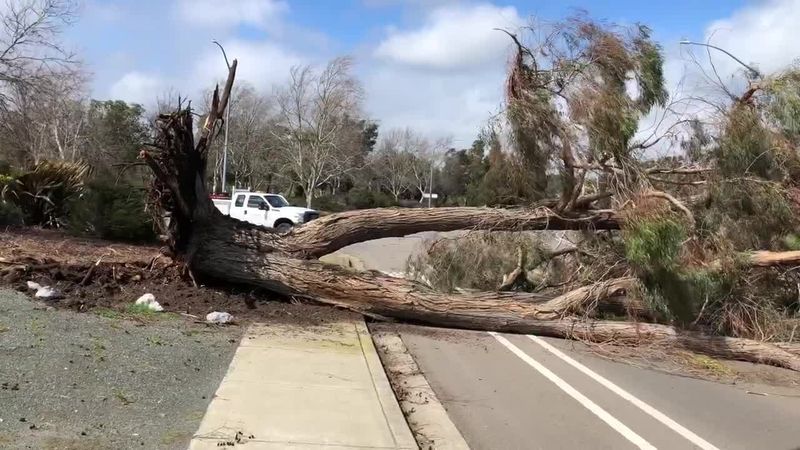
Before anyone photographs the damage, checks the policy, or calls the neighbor, the first priority is keeping people away from the hazard. A downed tree is not a stable object, and the risks around it are easy to underestimate.
Cal/OSHA tree work safety guidance identifies the specific dangers: falls from height, contact with falling branches, chainsaw injuries, chipper hazards, and electrical contact. Those hazards apply to trained professionals with proper equipment.
For a homeowner with a chainsaw and no rigging experience, the risk is substantially higher. Attempting to cut, climb, or remove a downed or unstable tree without professional help is not worth the risk, regardless of how urgent cleanup feels.
Cal/OSHA fire cleanup guidance reinforces the electrical hazard point: any tree or limb in contact with a power line should be treated as energized until the utility company confirms that the line is safe. Do not approach, touch, or attempt to move any part of the tree near a downed line, and keep others away until the utility has cleared the area.
Once the immediate danger is addressed, the California Department of Insurance recommends taking photographs from a safe distance, arranging qualified emergency work when necessary to prevent further damage, and making temporary repairs such as tarping a damaged roof rather than leaving it exposed. Temporary protective steps do not waive an insurance claim.
What matters is keeping the record intact: photograph before and after any temporary repair, save receipts, and wait for the insurer’s inspection before committing to permanent work.
Ownership and control can complicate the ordinary analysis
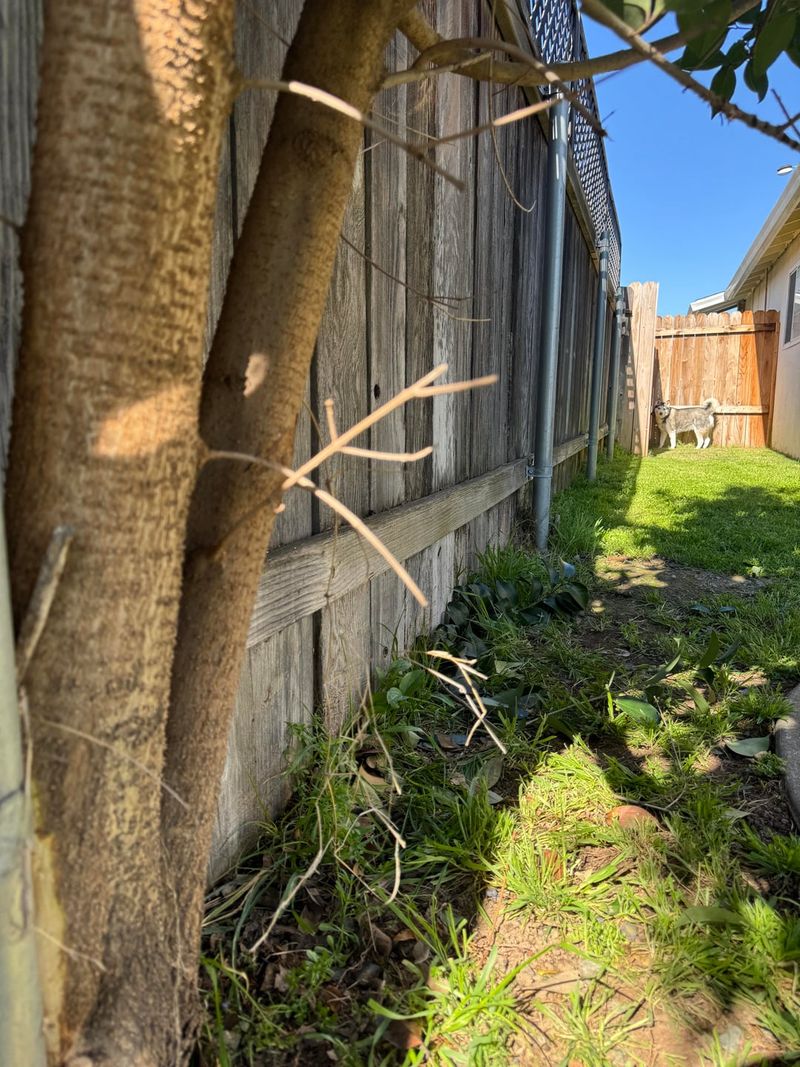
Most tree-fall scenarios involve one neighbor’s tree landing in another neighbor’s yard, and that is the version of events the ordinary negligence framework handles most cleanly. Real situations frequently involve additional parties or arrangements that make the analysis considerably more complicated.
Shared-boundary trees are the first complication. When a trunk straddles the property line, Civil Code section 833 does not resolve ownership the same way it does for a tree standing wholly on one parcel.
Responsibility for a boundary tree may be shared, and any decision about pruning or removal requires both owners’ agreement. Acting unilaterally on a shared tree can create a separate legal dispute.
Beyond ownership, control matters. A tenant, landlord, HOA, property manager, municipality, or tree-care contractor may each carry some responsibility depending on who controlled the property and what actions they took or failed to take.
California Courts guidance notes that the property owner, tenant, arborist, or another responsible party may need to be considered when evaluating who is liable for damage.
Damage to the tree itself is a separate legal category from damage to a house, fence, or vehicle. California Civil Code section 3346 addresses wrongful injury to trees and vegetation and can authorize enhanced damages in certain trespass cases involving specified wrongful conduct.
That statute does not apply automatically to an accidental fall and should not be read as a general triple-damages rule for tree disputes.
Overhanging branches create their own misconceptions. California law may allow an adjoining owner to address encroaching branches on their own property in some circumstances, but as Bonde v.
Bishop illustrates, abatement and removal are legally fact-dependent. Cutting too aggressively can damage or kill the tree and generate a new dispute.
Before removing or heavily pruning any standing tree, check with the applicable city, county, fire authority, HOA, or permit office. Local tree-preservation, heritage-tree, fire-safety, and HOA rules vary widely, and there is no single statewide permit rule that applies uniformly across California.
Use foreseeability, evidence, and coverage to frame the next step
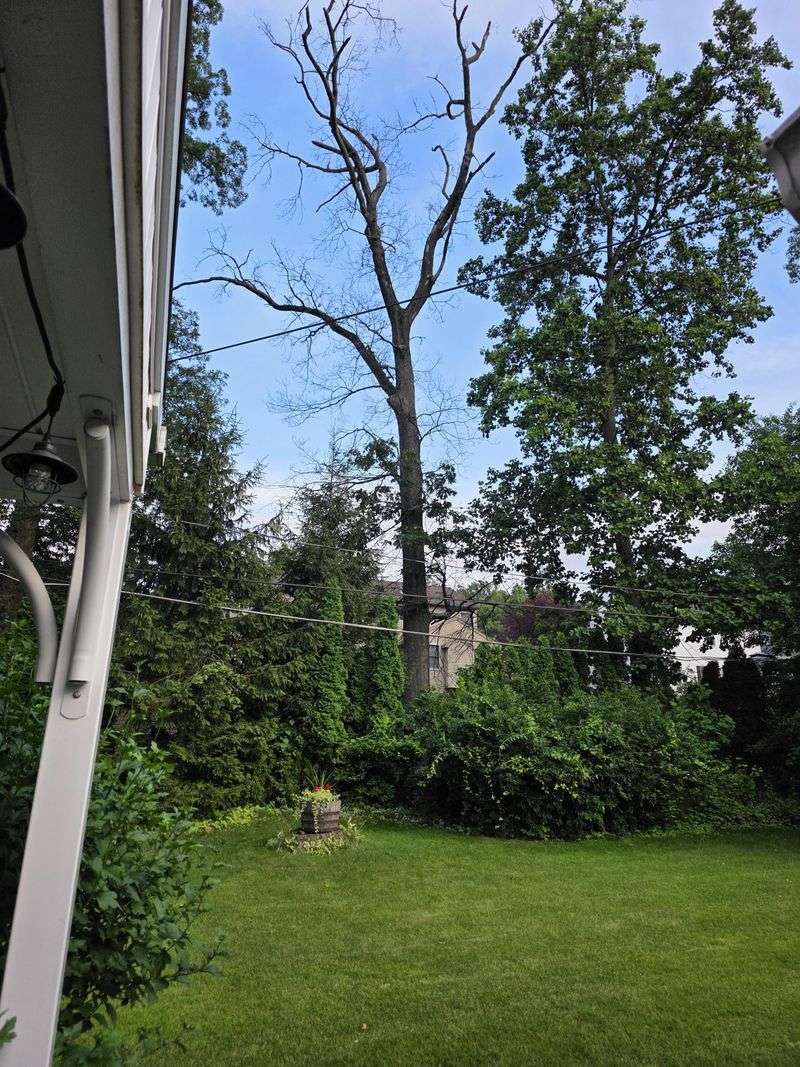
After a tree falls, the clearest path forward starts with four questions asked in order. Who owned or controlled the tree?
Was a dangerous condition reasonably discoverable before the fall? What evidence preserves that history?
And what does the applicable insurance actually cover for the specific property that was damaged?
Those questions map directly onto the legal framework. Keenan v.
Smith shows why foreseeability is often the central issue: a tree’s visible condition before the fall, and what a reasonable owner could have discovered, can matter more than the storm that finally brought it down. California Courts guidance reinforces that the injured homeowner needs evidence of responsibility, causation, and damages, not just a fallen trunk and a repair estimate.
On the coverage side, the California Department of Insurance advises homeowners to notify their insurer promptly, document everything, and review their policy for applicable limits, exclusions, and deductibles before assuming a bill will be paid in full. Legal responsibility and insurance coverage run on separate tracks, and one does not automatically determine the other.
When the damage is substantial, the safety situation is unresolved, or the question of responsibility is genuinely unclear, contacting a qualified arborist and an attorney sooner rather than later is the practical move. A tree’s visible decline may shift the conversation before anyone files a claim, but insurers, qualified professionals, and sometimes a court are the ones who ultimately decide where the final bill lands.