
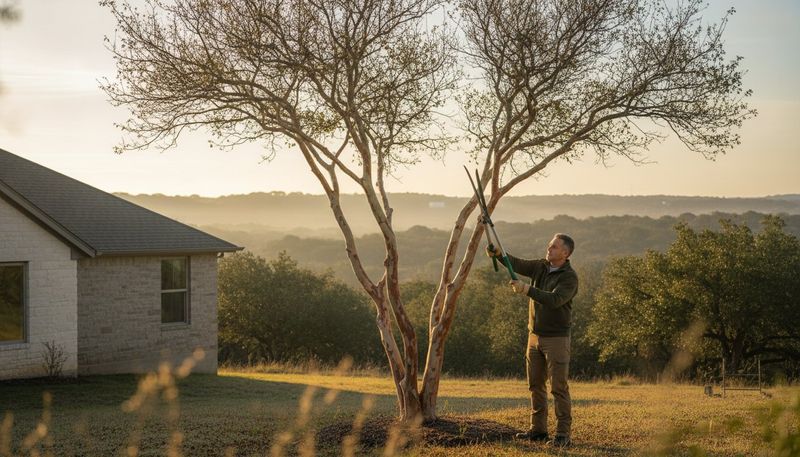
Every fall, Central Texas yards fill up with crape myrtles holding clusters of small, round seed pods long after the blooms are gone. A lot of homeowners wonder whether those pods need to come off before winter or whether leaving them will somehow hurt next year’s flowers.
The short answer is that you can almost always leave them alone, and no harm will come to the tree. Knowing when removal actually matters, and when it is just extra work, makes the whole decision much easier.
Most Central Texas crape myrtles can keep their winter pods
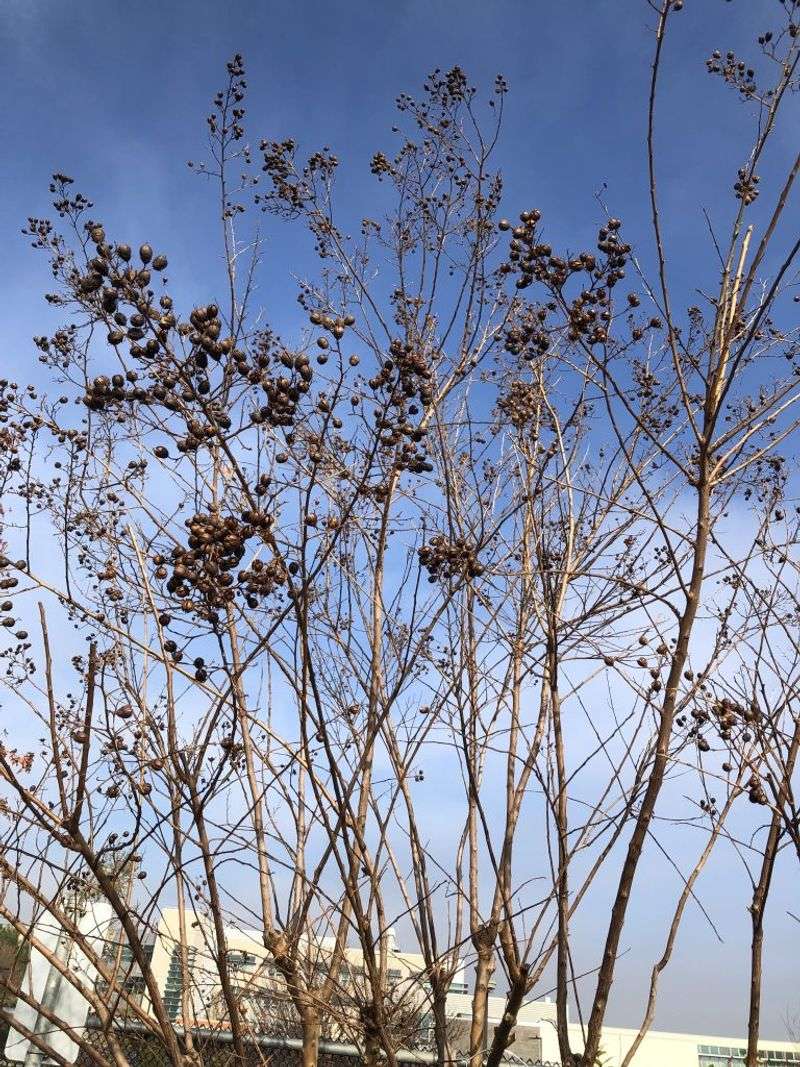
Crape myrtle seed pods hanging on the branches through fall and winter are not hurting anything. According to University of Florida IFAS guidance on crapemyrtle pruning, the pods are not harmful to the tree, and removing them is primarily a cosmetic choice rather than a horticultural one.
Wind, rain, and the push of new spring growth generally knock the capsules loose before the next growing season gets going in earnest.
Some homeowners actually appreciate the texture those dry clusters add to the winter silhouette of the tree. Mississippi State University Extension describes the seed capsules as an acceptable and sometimes attractive winter feature rather than a problem to solve.
So if the look does not bother you, there is simply nothing to do.
One concern that sometimes comes up is whether leaving pods will flood the yard with volunteer seedlings. Crape myrtle seeds are viable and can germinate under favorable conditions, as noted in the USDA plant guide for crape myrtle.
That said, a few seedlings popping up in a flower bed is not the same as an inevitable nuisance, and many Central Texas yards see no volunteers at all.
The key distinction to carry through every decision about these pods is this: cosmetic preference and horticultural need are two different things. Removing pods because you dislike how they look is a perfectly fine reason.
Removing them because you believe the tree requires it is not supported by the evidence.
Seed pods and spent flowers call for different timing
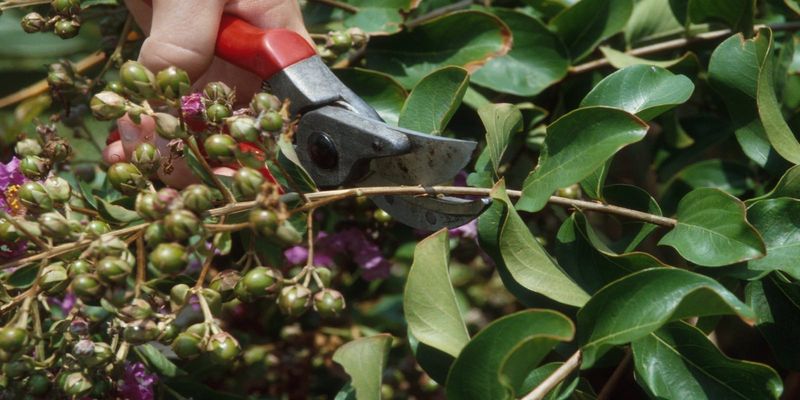
Two terms get mixed together in almost every conversation about crape myrtle cleanup, and sorting them out makes the rest of the decisions straightforward. Dry, brown seed capsules that cling to the branches from late summer through winter are one thing.
Spent flower clusters, the soft, fading blooms that have just finished their flush in June or July, are something else entirely.
Timing is what separates these two situations. University of Georgia Cooperative Extension guidance on crape myrtle culture explains that removing spent flower clusters promptly after an early- or mid-summer bloom can stimulate new shoots and sometimes encourage another round of flowers.
That window is narrow and depends on acting while the plant still has plenty of warm growing days ahead.
Dry winter pods have already passed that window by months. Cutting them off in December or January changes how the tree looks, but it does not recreate the growing-season stimulus that prompt deadheading provides.
IFAS pruning guidance is direct on this point: removing dry seedheads during winter is a cosmetic act, not a bloom-improvement technique.
Green capsules that have already formed are a middle case. They are past the spent-flower stage but have not fully dried yet.
Removing them may improve appearance or reduce seed drop, but treating that removal as a reliable path to another bloom flush goes further than the available evidence supports. Frame green-capsule removal as a seed-management or appearance choice, and leave the rebloom expectation to prompt summer deadheading.
Leaving winter seedheads will not stop next year’s flowers
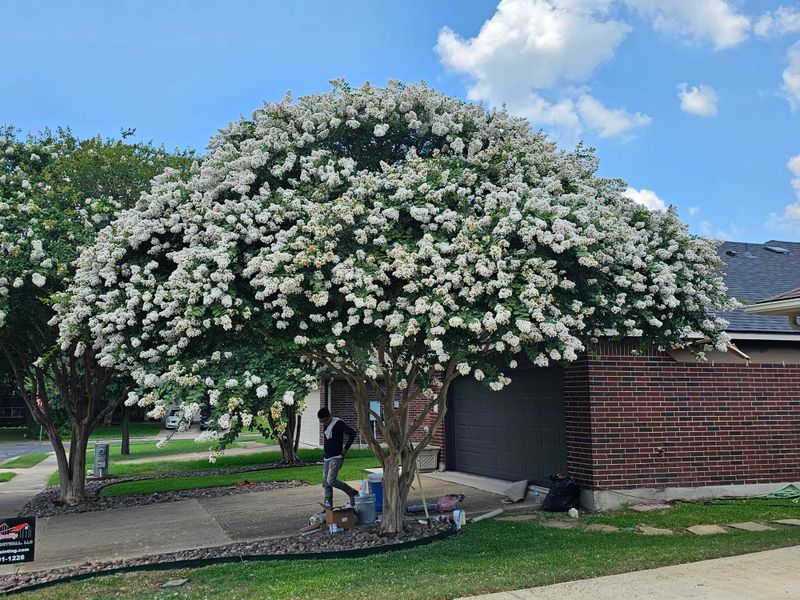
A persistent piece of yard folklore holds that crape myrtles need their old seed pods removed before they will bloom the following year. That idea is simply not accurate.
UGA Cooperative Extension explains the mechanism clearly: crape myrtles bloom on new growth produced during the current season. Next summer’s flowers will emerge from shoots the tree has not yet grown, not from wood that carried last year’s pods.
Old winter seedheads have no physical connection to that process. They sit on the ends of last year’s branches, and the new flowering shoots push out from buds below them as temperatures rise in spring.
Whether the pods are still attached or were removed in January makes no difference to where or how well those new shoots develop.
What this means practically is that a homeowner who skips winter pod removal entirely is not sacrificing any flowers. The tree will bloom on schedule, in proportion to the sunlight, water, and growing conditions it receives that season.
Pod removal in winter simply cannot deliver a bloom benefit because the blooming mechanism does not involve old seedheads at all.
Separating this fact from the rebloom question is worth doing carefully. Encouraging a second flush of flowers during the same growing season is a different idea, and it involves removing spent flower clusters promptly in summer, not clearing away dry pods in winter.
Those are two separate practices with two separate goals, and conflating them is where the confusion usually starts.
When prompt deadheading may be worth the effort
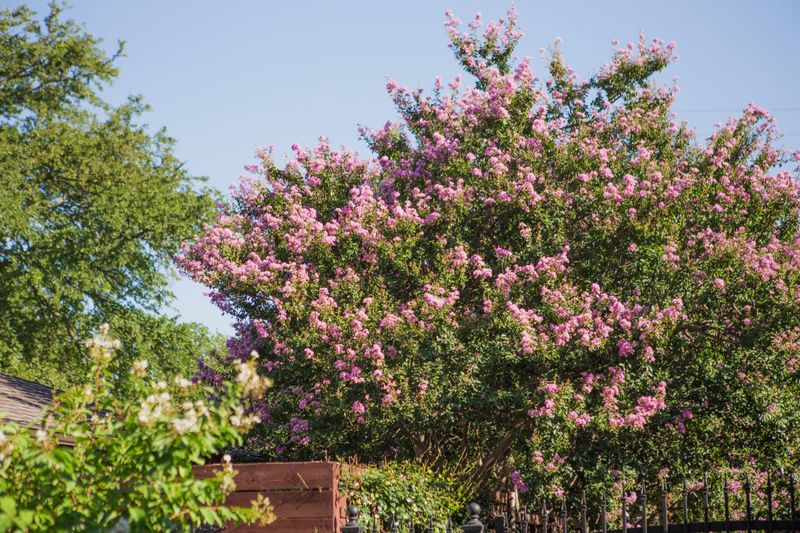
Prompt deadheading after an early bloom is the one situation where removing a flower cluster can actually influence what the tree does next. When spent blooms are cut back soon after a June or early July flush, the tree may respond by pushing new shoots that carry another round of flowers before the season ends.
UGA Cooperative Extension notes that this practice can stimulate new growth and sometimes produce another bloom flush, while also making clear that the result is not guaranteed.
Several factors shape whether a second flush actually happens. Cultivar matters a great deal: some varieties are naturally inclined to rebloom, while others complete their cycle and stop regardless of deadheading.
Bloom timing matters too, because a tree that finishes its first flush in late July or August simply may not have enough warm growing days left to push through another full round of flowers before cooler weather arrives in Central Texas.
Weather, sunlight, available water, and the overall vigor of the plant all play a role as well. A stressed tree growing in partial shade with inconsistent irrigation is less likely to respond with a strong second flush than a well-established tree in full sun with regular watering through summer.
Rebloom is possible, but it is the result of favorable conditions stacking up, not a predictable outcome from the act of cutting alone.
The practical takeaway is to act early if you want to try. Cut spent flower clusters back to just above a leaf junction or lateral bud as soon as the bloom fades, ideally before the end of June or in the first weeks of July.
Waiting until August to deadhead a tree that bloomed in June puts the timing too far out of reach for a meaningful second flush. If the first bloom runs late, skip the extra effort and let the tree rest.
Appearance, seedlings, and birds are secondary considerations
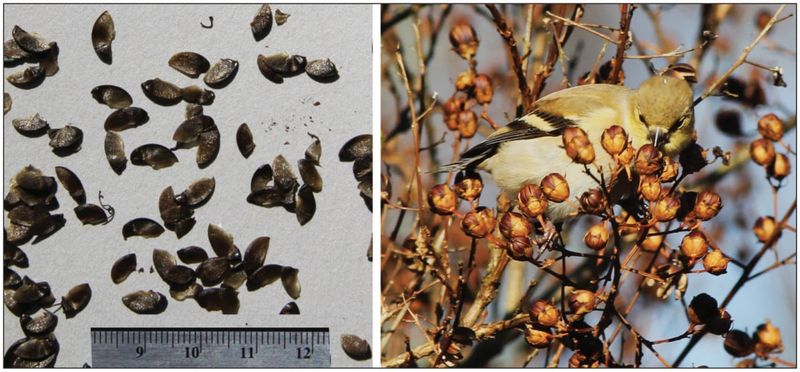
Beyond the flowering question, a few other reasons sometimes come up for removing crape myrtle pods. None of them are urgent, but they are legitimate depending on your yard and your preferences.
Appearance is the most common one. A smaller crape myrtle with reachable branches can look noticeably cleaner once the dry brown clusters are gone, especially against a light-colored fence or a tidy winter bed.
That is a fair reason to spend twenty minutes with a pair of pruners, as long as the tree is small enough to reach safely from the ground or a steady step stool.
Seed drop is another consideration. The USDA crape myrtle plant guide confirms that the seeds are viable and can germinate without any special pretreatment.
Under the right combination of moisture and bare soil, a few volunteers may sprout near the base of the tree or in adjacent beds. Removing pods before they drop reduces that chance, though volunteer seedlings are not a certainty and many yards never see them.
Birds occasionally feed on crape myrtle seeds, and a peer-reviewed study published through the Smithsonian Institution documented American goldfinches, dark-eyed juncos, and house finches eating the seeds. That finding is worth knowing, but the study was conducted in northern Virginia, and the Smithsonian’s own reporting notes that crape myrtle is not native to the United States.
The tree originated in Asia, as the NC Extension plant profile for Lagerstroemia indica confirms, and its role as a wildlife resource in Central Texas should not be overstated or used to argue that it replaces native Texas plants as habitat.
Keep pods if birds in your yard seem to visit them. Remove pods if the seedlings or appearance bother you.
Both choices are reasonable, and neither one makes or breaks the tree.
Make only small, reachable cuts
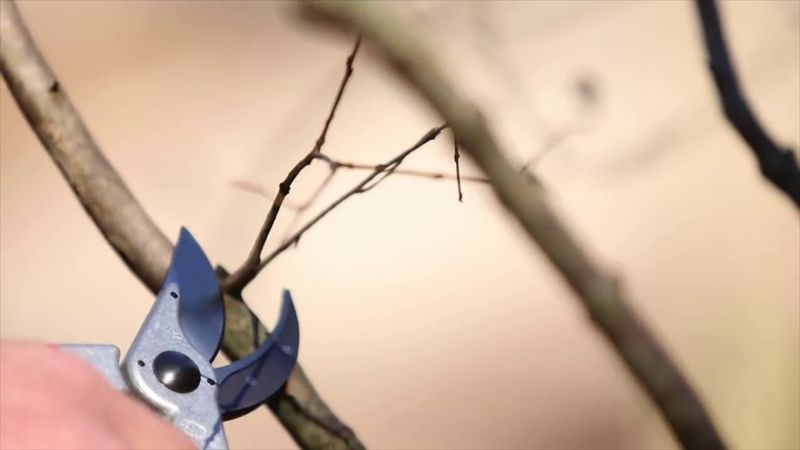
Sharp, clean bypass pruners are the right tool for this job. They make a precise cut without crushing the stem tissue, which matters when you are cutting at a leaf junction or just above a lateral bud.
Dull or anvil-style pruners can bruise the wood and leave a ragged edge that takes longer to heal, so if the blades have not been sharpened in a while, take a few minutes to sharpen them before you start.
The cut itself should go just above a leaf junction or a visible lateral bud rather than leaving a long stub of bare stem. UGA Cooperative Extension recommends this approach specifically for crape myrtle pod and spent-flower removal.
Cutting too far above a node leaves a stub that serves no purpose and may die back anyway.
Tool hygiene matters more than most homeowners realize, especially when moving between plants. University of Minnesota Extension guidance on cleaning and disinfecting gardening tools recommends wiping blades with a disinfectant solution when switching between plants, particularly if any tree shows signs of disease.
A quick wipe with diluted bleach or a ready-made tool disinfectant takes seconds and prevents spreading problems from one plant to another.
This kind of selective pod removal is not the same as the structural pruning Central Texas homeowners handle during the dormant season. Texas A&M AgriLife Extension’s pruning guide places summer-flowering trees like crape myrtles in the dormant-season pruning category for structural work, while selective removal of spent clusters or pods is a lighter growing-season task.
Keep the two jobs separate in your mind and your schedule, and pod cleanup stays simple.
Do not turn pod cleanup into severe pruning
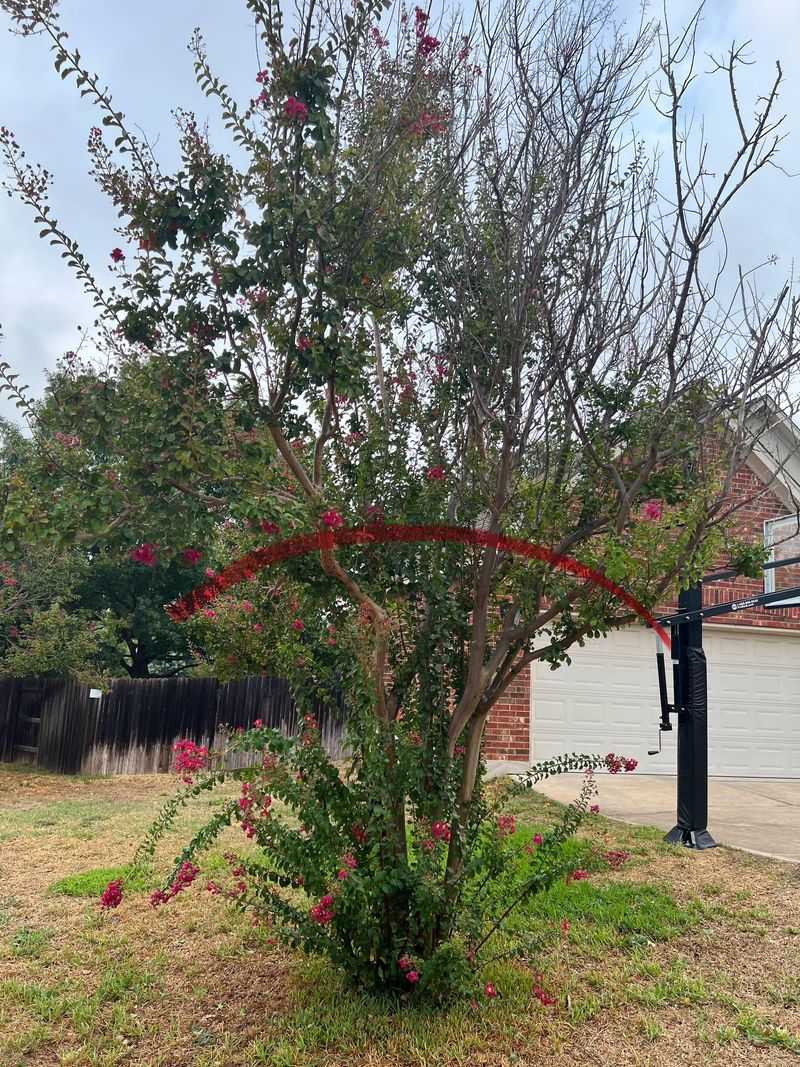
Pod removal is a light, selective task. It should never become a reason to cut large branches, shear the top of the canopy, or climb an unstable ladder to reach clusters that are eight or ten feet overhead.
IFAS crapemyrtle pruning guidance specifically warns against topping, which is the practice of cutting the upper canopy back to thick stubs. That approach, sometimes called crape murder, creates weak and densely packed regrowth, distorts the tree’s natural form, and does nothing useful for pod control.
If the seed pods on your tree are only reachable by climbing or making structural cuts, the honest answer is to leave them. A cosmetic preference is not worth an injury or a decision that damages the tree’s long-term health.
Texas A&M AgriLife Extension’s pruning guidance is clear that large or high canopy work falls outside simple cleanup and may require a qualified professional.
A crape myrtle that is routinely too tall or too wide for its location is not a pod problem. UGA Cooperative Extension notes that crape myrtles need little pruning when the cultivar is sized appropriately for the planting spot.
Repeated severe cuts to manage size signal a placement or cultivar mismatch, and the better long-term fix is selecting a compact variety that fits the space from the start.
Here is a simple decision rule to carry into every fall: leave pods that do not bother you, remove reachable pods with clean pruners if appearance or seed drop is a concern, and attempt prompt deadheading after an early summer bloom only when a possible second flush is worth the effort. The tree will take care of the rest.
Crape myrtles are tough, adaptable plants that have thrived in Central Texas yards for generations without needing much intervention from us.