
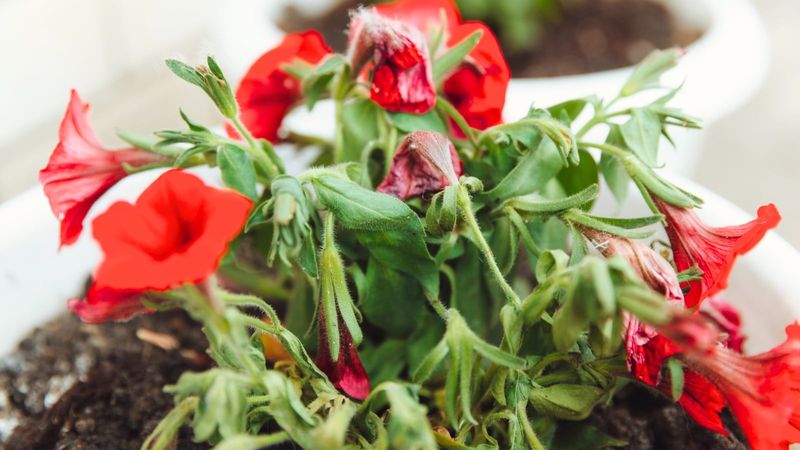
Petunias can put on a stunning show from spring through early summer, but by August many gardeners notice the flowers thinning out, stems stretching long and bare, and the whole plant looking worn. That slowdown happens for real reasons, and a good number of those reasons are correctable once you know what to look for.
A tired petunia display is not always the end of the season, but figuring out what is actually wrong comes before any attempt to fix it.
Late-summer decline is common, but it is not inevitable
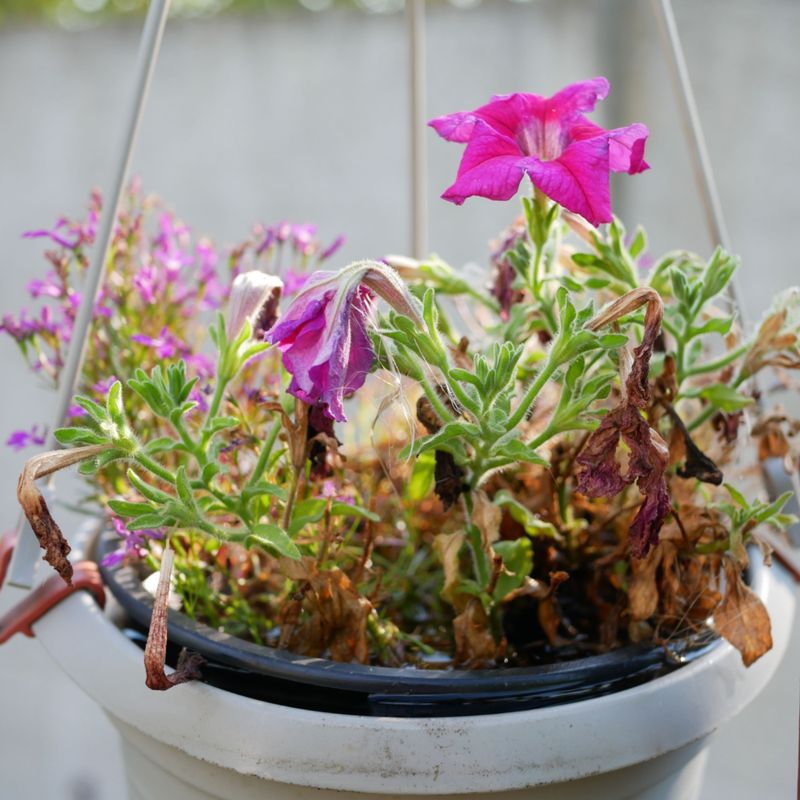
Plenty of petunias hit a rough patch in late summer, and most gardeners in warm climates like Florida and Texas have watched a container or bed that looked full in June start looking thin and stretched by August. That experience is real, but it does not mean the plant has run its course.
Several overlapping pressures tend to pile up at the same time: prolonged heat, uneven watering, nutrients depleted by weeks of container leaching, insufficient light reaching lower stems, and older growth that has simply outrun its own ability to produce new buds.
High temperatures can reduce flower quality in some cultivars. Controlled research on petunia flower development found that flowers produced at approximately 90/81 degrees Fahrenheit were about half the size of those produced at cooler temperatures, and separate production research found that sustained temperatures in the 95-104 degree Fahrenheit range reduced flowering in some cultivars.
Heat is a real contributor, but it is not the only one, and it does not affect every variety the same way.
Before reaching for a fertilizer bag or pruning shears, check the plant carefully. Soil moisture, drainage, stem condition, root health, and any signs of pests or disease all matter.
Some plants can be brought back with targeted corrections; others, especially those with crown rot, severe root damage, or advanced disease, may need to be removed and replaced rather than rescued. Penn State Extension’s petunia disease guide describes several conditions where the damage goes too deep for a cultural fix.
The guide that follows is built around diagnosis first, action second.
Read the plant before you intervene
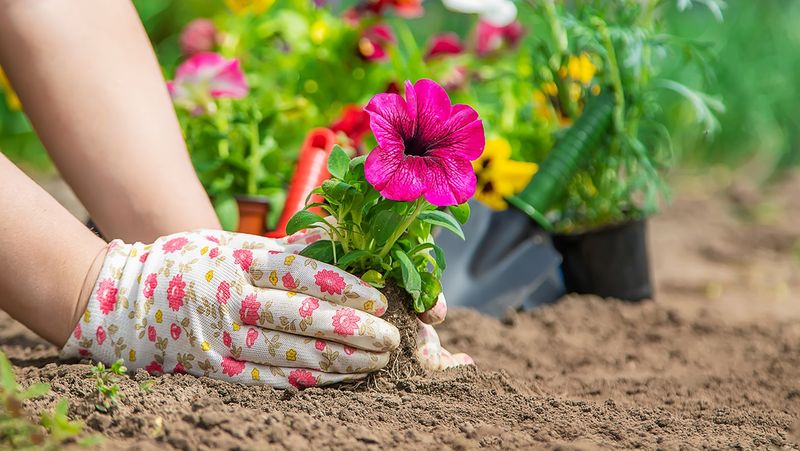
A quick triage walk-around can save you from treating the wrong problem. Start with light.
Illinois Extension notes that petunias perform best in full sun with moist, well-drained soil. A plant that has been gradually shaded out by neighboring growth, a fence, or an overhang may look heat-stressed even when temperatures are reasonable, because reduced light directly limits flowering.
Next, feel the soil rather than guessing from a calendar. Press two fingers an inch into the potting mix or bed soil.
Dry, powdery soil and wilting together suggest the plant needs water. Wet, heavy, or sour-smelling soil combined with wilting is a different situation entirely, one that points toward drainage failure or root damage rather than drought.
Colorado State University Extension’s plant pathology guidance explains that root rot can cause wilting even when soil is wet, and adding more water in that case makes the problem worse, not better.
Containers and hanging baskets behave differently from in-ground beds. A pot sitting in full sun on a concrete patio can dry out in hours during a heat wave, while the same mix in a shaded corner may stay wet for days.
UGA Extension’s guide to flowering annuals recommends checking the potting mix regularly and watering thoroughly when it is dry, rather than following a fixed daily schedule. After checking moisture and light, look at the stems and crown.
Firm, green stems with visible leaf nodes suggest a recoverable plant. Mushy or collapsed tissue at the base, dark discoloration at the crown, or roots that pull away from the soil easily are warning signs that a simple pruning-and-feeding rescue may not apply.
Heat and moisture can limit continued flowering
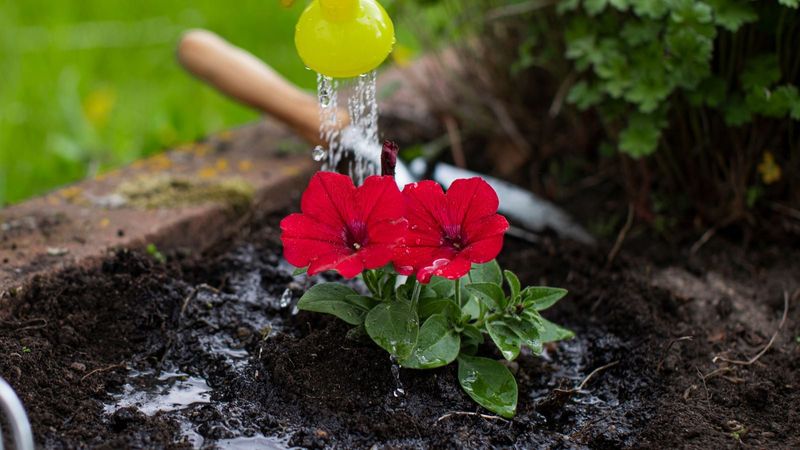
Petunias can survive hot Southern summers, but surviving heat and thriving through it are different things. The controlled studies cited above show that extreme temperatures can push a plant to produce smaller, shorter-lived flowers in some varieties.
What those studies cannot tell you is exactly when your specific plant will slow down, because cultivar, container size, sun exposure, soil health, pest pressure, and local humidity all interact. Treat heat as one strong possibility among several rather than the automatic explanation for every bare stem.
When drought stress is the actual problem, the correction is consistent, deep watering rather than frequent shallow sprinkling. UGA Extension gives flowering annuals a general baseline of roughly 1 to 1.5 inches of water per week, with more potentially needed during extreme heat.
They also recommend drip or trickle irrigation over overhead watering, because wet foliage during warm, humid nights raises the risk of fungal disease. Containers and hanging baskets may need water once or more per day during a heat wave, but the trigger should be the condition of the mix, not the clock.
Saturated soil and poor drainage require a completely different response. If the potting mix stays soggy even between waterings, or if an in-ground bed holds water after rain, roots may already be suffering.
Adding more water to a waterlogged container will not help. Check that drainage holes are open and unobstructed, and if the plant is wilting despite wet soil, suspect root damage.
Colorado State Extension’s guidance is direct on this point: additional watering applied to a root-damaged plant worsens the injury. Correct the drainage first, then assess whether the plant has enough healthy root tissue to recover.
Prune a healthy, leggy plant to rebuild its flowering framework
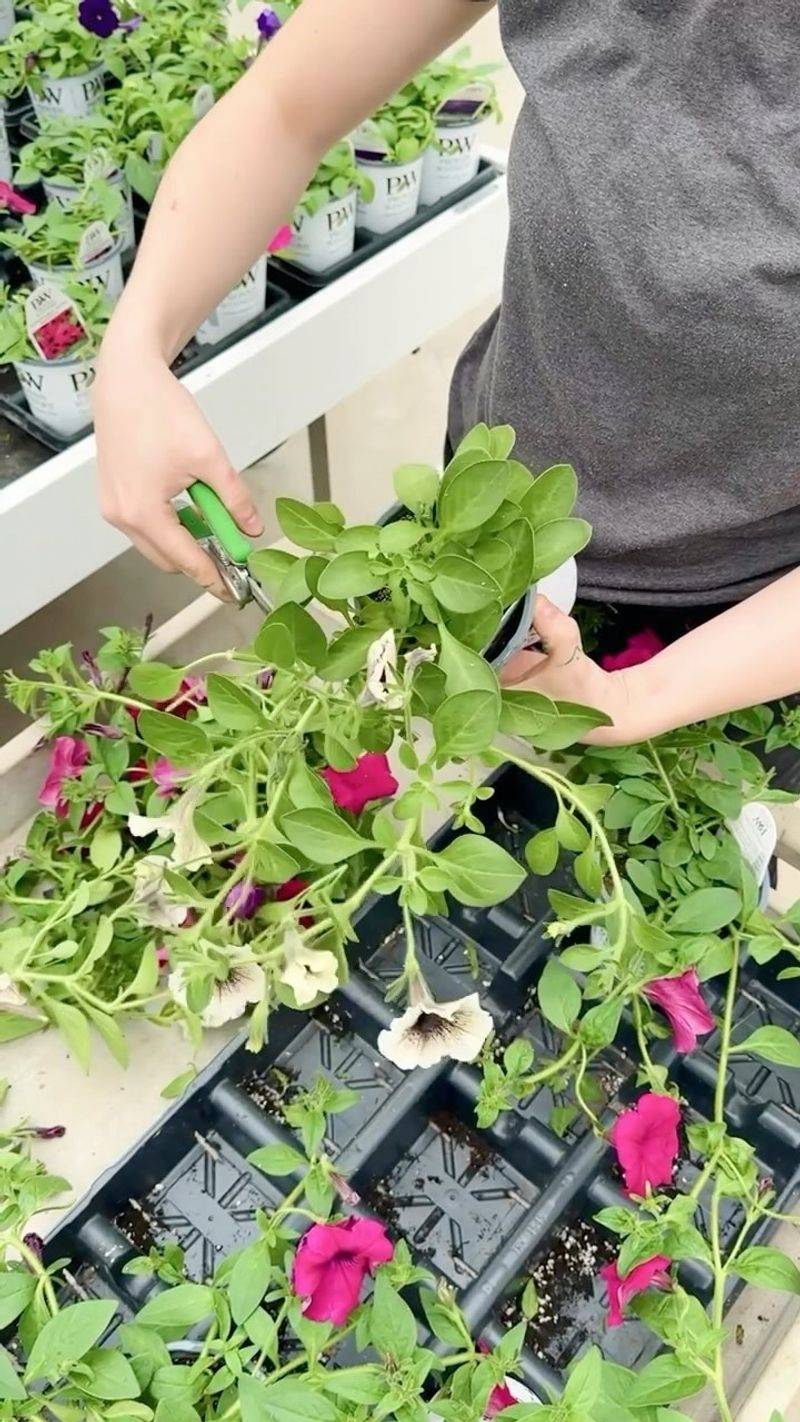
Removing a few spent blooms is not the same as giving a stretched plant what it actually needs. By late summer, many petunias have sent long, bare stems outward with flowers only at the tips, and light deadheading at those tips does little to encourage the plant to branch and fill back in.
A real cutback means shortening those stems significantly, and Penn State Extension advises cutting annuals back to roughly 3 to 5 inches, leaving several nodes or leaf axils where new growth can emerge. UGA Extension offers similar direction, noting that petunias can be cut back to within a few inches of the ground, then watered and lightly fertilized to encourage regrowth.
Deadheading serves a different, lighter purpose. Removing spent flowers before they set seed can redirect the plant’s energy toward producing new buds, and it keeps the display looking tidy.
However, cultivar type matters here. Oklahoma State Extension identifies Supertunia Vista Bubblegum as a self-cleaning type that drops its spent flowers on its own, though it still responds well to occasional light trimming for shape.
Many modern spreading and trailing petunias share this trait, while older grandiflora and multiflora types tend to look better with more regular deadheading.
The hard cutback is appropriate only for plants that are vigorous and leggy with firm, green stems and healthy roots. A plant showing crown collapse, mushy stems, or disease symptoms described in Penn State’s disease guide is not a candidate for aggressive pruning.
Cutting into diseased tissue can spread the problem and will not trigger the healthy regrowth you are hoping for. When in doubt about the stem and root condition, check before you cut.
Feed only after the plant can use the nutrients
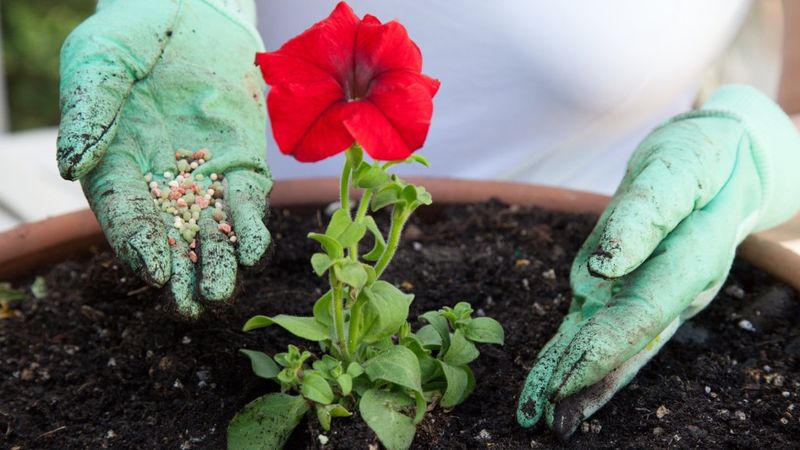
Containers and hanging baskets lose nutrients faster than in-ground beds because every watering pushes some of what you applied out through the drainage holes. By late summer, a petunia that has been watered frequently may be genuinely short on nitrogen or other nutrients even if you fertilized at planting time.
UGA Extension notes that general-purpose granular fertilizer may need replenishment during the season and that containers often require more frequent feeding because of this leaching effect. Slow-release fertilizer can reduce the risk of fertilizer burn and provides a steadier supply over several weeks.
Before feeding, confirm that the plant is stable enough to benefit. A petunia that is wilting from drought needs water first, not fertilizer applied to dry roots.
One that is wilting because of root rot or crown damage cannot absorb nutrients effectively, and adding fertilizer to an already stressed or damaged root system can worsen the injury. Correct the moisture and drainage situation first, then consider whether feeding is appropriate.
Skip the assumption that a high-phosphorus bloom booster is the automatic answer to a poor flower display. UMass Extension points out that many garden soils already contain adequate phosphorus, and NDSU Extension reports that high-phosphorus fertilizer does not reliably increase flower numbers where phosphorus is not actually deficient.
Feeding should address a real or likely nutrient gap, follow the product label, and account for what the plant has already received. When in doubt, a balanced fertilizer applied at the label rate after confirming good moisture is a safer starting point than a heavy dose of a specialty product.
Spots, holes, and collapse require a diagnosis
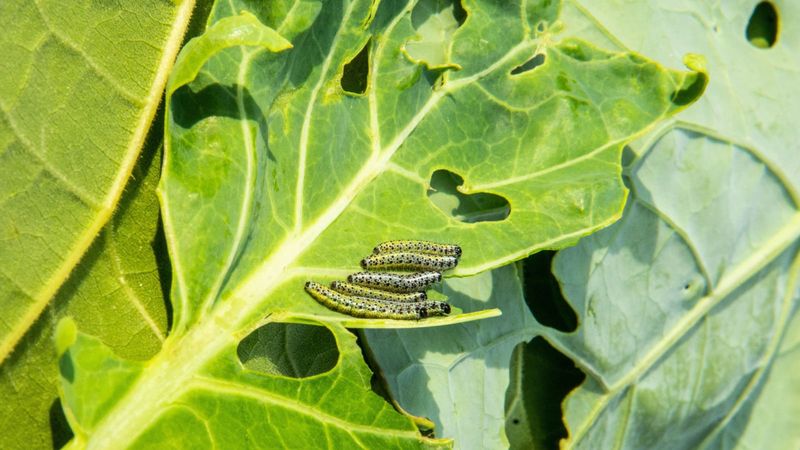
When ordinary heat stress or a watering imbalance does not fully explain what you are seeing, look more carefully at the plant’s buds, flowers, leaves, and crown. Certain symptoms point clearly toward pests or disease rather than cultural problems, and treating the wrong cause wastes time while the real one continues.
Tobacco budworm is a common late-summer petunia pest in much of the South. The larvae feed inside flower buds before they open, leaving behind small, dark droppings and ragged holes in buds and petals.
Minnesota Extension’s petunia diagnostic tool identifies budworm damage by those dark droppings and the pattern of bud destruction, which is different from simple flower aging or heat injury. Spotted cucumber beetles and cutworms can also damage petunia flowers, so look at the evidence carefully before deciding on a response.
Penn State Extension’s petunia disease reference describes several distinct conditions to watch for. Translucent or water-soaked spots on flower petals that turn brown and papery suggest Botrytis blight, which tends to worsen in humid conditions with poor air circulation.
Rapid wilting and collapse at the stem base, especially when soil is moist, can indicate crown rot or a soilborne pathogen rather than drought. Virus symptoms often appear as mottled, distorted, or discolored foliage and do not respond to cultural fixes at all.
Identifying the specific pest or disease before choosing a treatment matters because the responses differ. UGA Extension advises monitoring plants and avoiding unnecessary broad-spectrum insecticide applications where possible, since those products can harm beneficial insects alongside the target pest.
A plant with root or crown disease confirmed by Colorado State’s root rot guidance is not a candidate for the pruning-and-feeding rescue sequence. Removal and replacement is the more practical path when disease has reached the crown or root system.
Give a suitable plant several weeks to respond
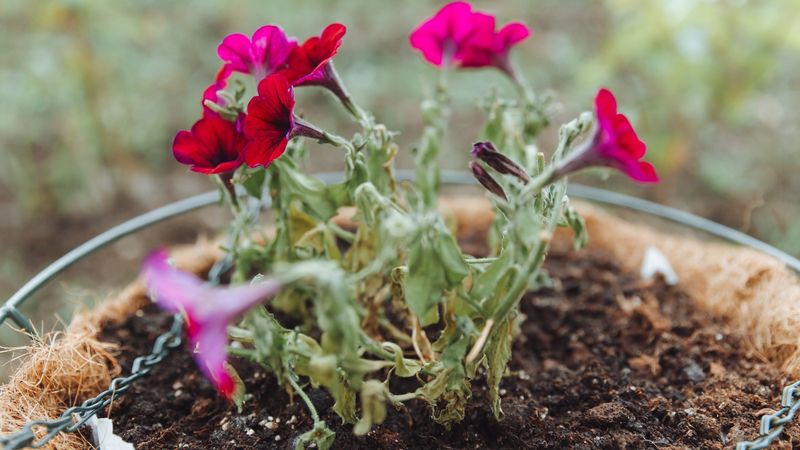
Once you have worked through the diagnosis, the action sequence is straightforward. Check light and confirm the plant is getting full sun.
Correct moisture first, whether that means watering a dry plant thoroughly or improving drainage on a waterlogged one. For a vigorous, leggy plant with healthy stems and roots, make the cutback, leaving several inches of stem with live nodes.
Deadhead according to what your cultivar actually needs, and hold off on fertilizer until the plant is stable and the soil moisture is right.
After a hard cutback, new growth takes time. UGA Extension describes renewed fullness appearing in a few weeks, and a UGA care calendar suggests that cutting back, watering, and lightly fertilizing can produce more blooms in roughly three weeks.
That is a reasonable expectation for a healthy plant under good conditions, not a guarantee for every situation. Watch for small new leaves emerging from the nodes you left, and look for bud formation as the stems extend.
Those are the signs that the plant is responding.
If collapse continues after corrections, if stems show no new growth at the nodes within a reasonable window, or if disease symptoms persist or spread, replacement is the sensible choice. A fresh plant installed in corrected conditions will outperform a struggling one that never fully recovers.
The goal is a good-looking display, and sometimes the most practical path to that is starting clean.