
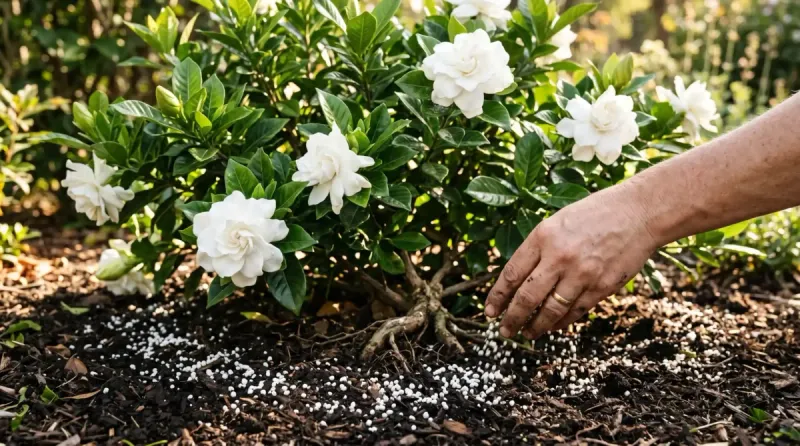
Gardenias are one of North Florida’s most rewarding landscape shrubs, but they do need the right care at the right time of year. September is a recognized fall feeding window for established gardenias in North Florida, alongside the spring application in March.
Knowing when and whether to feed your gardenia, and how to do it safely, makes a bigger difference than simply following a calendar date. This guide walks you through the real UF/IFAS-backed answer and gives you a practical checklist before you open a bag of fertilizer.
September is the second routine feeding window—not the most important one
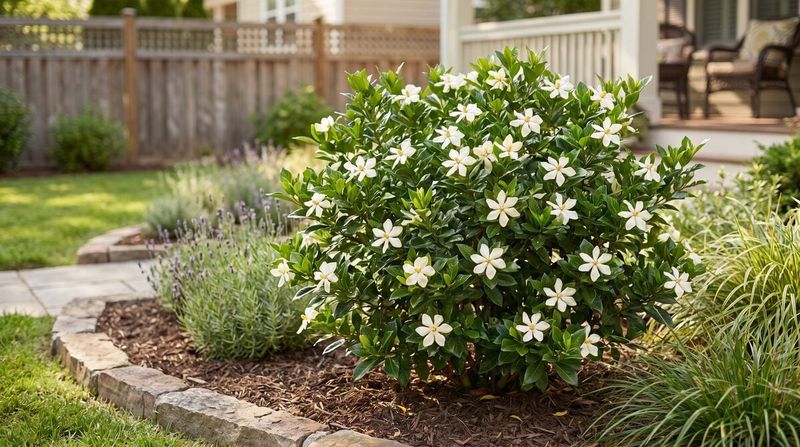
Gardenias in North Florida follow a two-application fertilizer schedule that most UF/IFAS guidance places around March and September, with an optional third application possible during summer. According to UF/IFAS Gardening Solutions on gardenias, established plants generally perform well with two or three fertilizer applications per year, and September is the recognized fall window for North Florida gardeners.
That makes September genuinely useful, but it does not make it the single most important feeding of the year. UF/IFAS presents March and September as the two standard applications and does not rank one above the other.
Treating September as more critical than the spring feeding is not supported by the available guidance, so gardeners can set aside that worry and focus on a simpler question: does this particular shrub need its routine fall application right now?
The September date is also a seasonal guideline, not a hard deadline. UF/IFAS “Gardenias at a Glance” makes clear that local weather, the plant’s active growth, its overall condition, and any municipal fertilizer restrictions can all affect the right timing.
North Florida is also a distinct region with its own schedule; South Florida gardeners generally follow a February and October pattern, so September timing should not be applied statewide.
The practical takeaway is straightforward. September opens the fall feeding window for North Florida gardenias, and that window matters.
Before reaching for the fertilizer, though, verify that your established gardenia is actively growing and that nothing else is limiting its health. A calendar date alone is never enough reason to feed a shrub.
Start with the plant, not the calendar
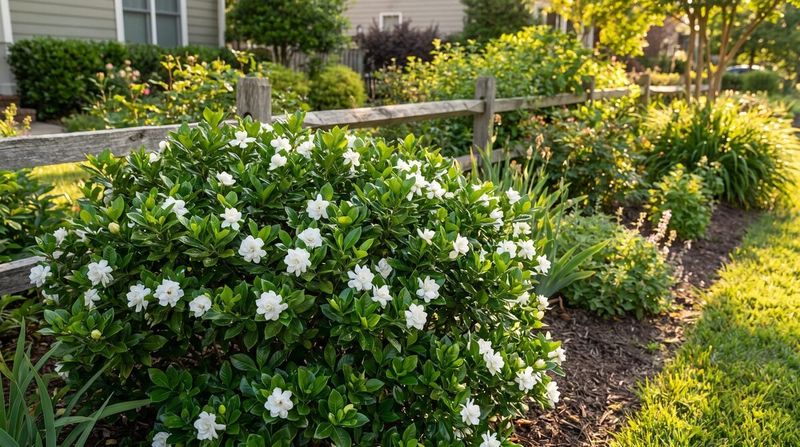
Before buying or applying any fertilizer, spend a few minutes looking at the plant itself. An established gardenia that is putting out new growth and looks generally healthy is a reasonable candidate for its routine September application.
A shrub that is wilting, has been recently transplanted, shows signs of root damage, or is sitting in standing water after heavy rain is not.
UF/IFAS Florida-Friendly Landscaping guidance recommends applying fertilizer only when plants are actively growing and using the minimum amount needed. That principle means fertilizer is a supplement to a healthy, functioning root system, not a rescue tool for a struggling one.
Feeding a stressed, dormant, diseased, flooded, or poorly rooted gardenia at any time of year can cause more harm than good.
Run through this quick pre-application checklist before September feeding. Check for new leaf growth as confirmation that the plant is actively growing.
Look at the overall structure for signs of dieback, wilting, or pest damage. Evaluate recent moisture conditions, because a shrub coming out of drought stress or sitting in waterlogged soil is not ready to use fertilizer efficiently.
Consider how long the plant has been in the ground, because recently transplanted gardenias have different needs than a well-established five-year-old shrub.
Young plants, container gardenias, and recently transplanted shrubs may need different management entirely, including adjusted timing or rates specific to their situation. “Gardenias at a Glance” notes that not every gardenia follows the same program, and UF/IFAS does not provide one universal application rate for all plant types and sizes. A routine feeding is exactly that, routine for a healthy, established shrub in normal growing condition, not a blanket prescription for every gardenia in the yard.
Choose a labeled fertilizer that fits gardenias
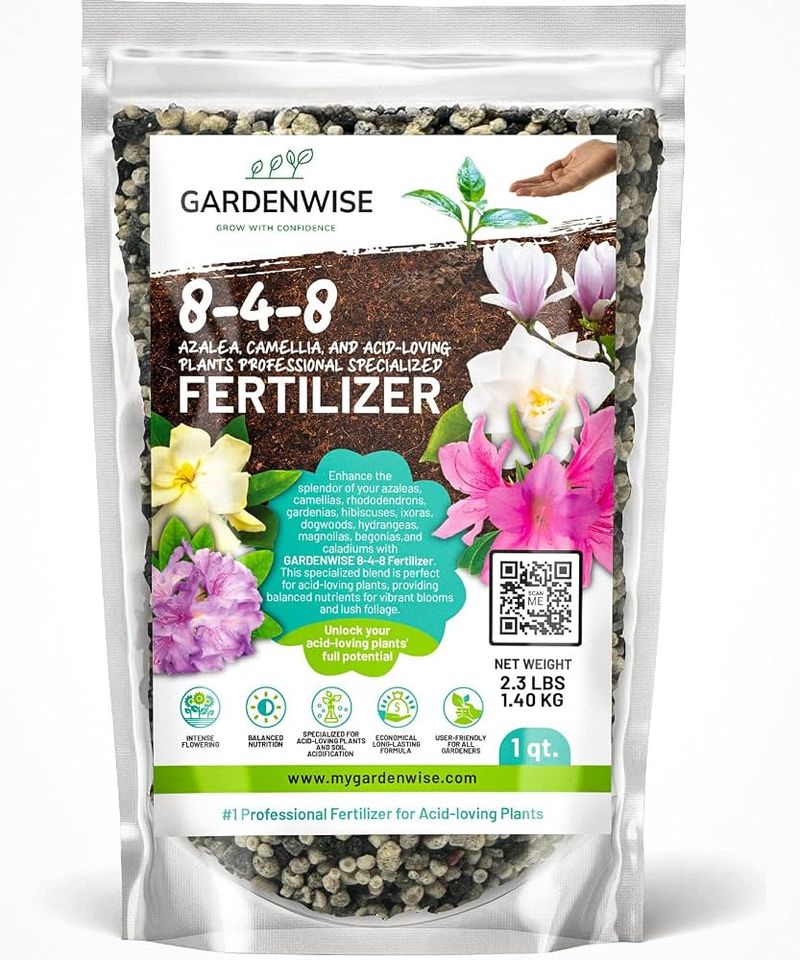
Product selection for gardenias does not require guesswork, but it does require reading the label. UF/IFAS recommends either a fertilizer formulated for landscape plants or an acid-forming product for gardenias.
Both categories are widely available at garden centers and home improvement stores, and both can work well when applied correctly.
One product-selection guideline worth knowing: UF/IFAS “Gardenias at a Glance” suggests looking for a product where ideally 30 to 50 percent of the nitrogen is slow-release. Slow-release nitrogen feeds the plant gradually and reduces the risk of nutrient runoff or fertilizer burn.
That percentage is a quality indicator when comparing products, not a reason to apply more fertilizer than the label directs.
Steer clear of bloom booster products with very high phosphorus ratios unless a soil test has confirmed a phosphorus deficiency. High-potassium formulas marketed as universal fertilizers are also not supported by UF/IFAS gardenia guidance for North Florida conditions specifically.
Adding nutrients the plant does not need can create imbalances, contribute to runoff, and in some cases increase the risk of bud drop.
The label on any registered fertilizer product is the authoritative source for how much to apply, how often, and under what conditions. Florida Department of Agriculture fertilizer labeling requirements ensure that registered products carry directions specific to their analysis and intended use.
Application rates depend on the product’s nitrogen concentration, the size of the plant, and site conditions, so no single cup or ounce measurement applies to every gardenia or every fertilizer. Following the label protects the plant, the soil, and nearby waterways.
Check soil pH before relying on fertilizer
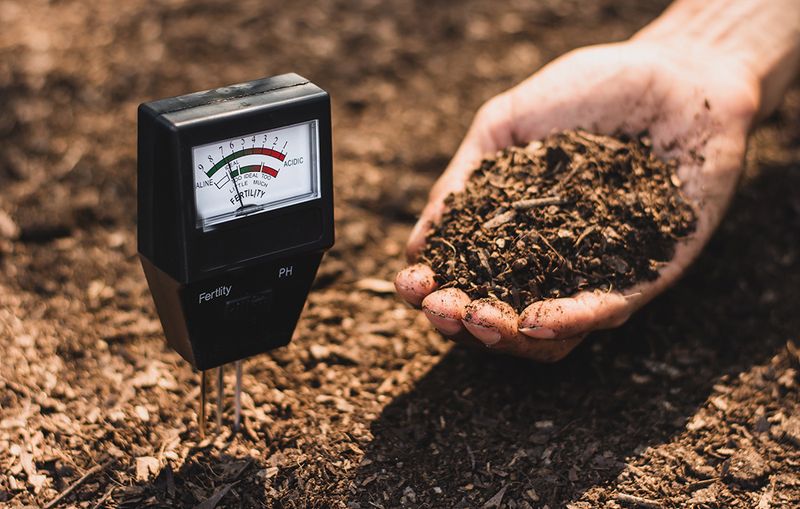
Fertilizer works best when the soil pH is in the right range for gardenias. Most gardenias prefer acidic conditions, and UF/IFAS Gardening Solutions identifies a target soil pH of approximately 5.0 to 6.5 for healthy gardenia performance.
When the pH climbs above that range, nutrients can become chemically unavailable to the plant even when fertilizer has been applied correctly and generously.
Yellow new leaves are a common sign that something is wrong, and iron availability is often the first explanation gardeners reach for. High soil pH does limit iron uptake, but that is not the only possible cause.
UF/IFAS “Gardenias at a Glance” cautions that yellow new growth may also stem from root-knot nematodes, root disease, or root dysfunction that has nothing to do with iron or pH. Applying iron fertilizer without diagnosing the actual cause may do little or nothing, and it does not address nematode damage or root rot.
A soil test is the most reliable way to know whether pH adjustment is needed and what nutrients are actually deficient. Adding lime, sulfur, or repeated acidifying fertilizers by guesswork can overshoot the target or create new imbalances.
Your local UF/IFAS Extension office can provide soil testing kits and help interpret the results before you spend money on amendments or specialty fertilizers.
When symptoms suggest a pH or nutrient problem, address that diagnosis before or alongside the September feeding decision. Correcting a pH problem may take several months to show results, so testing in September gives you useful information for the months ahead.
A gardenia growing in soil that is too alkaline will not respond to fertilizer the way a healthy plant in properly acidic soil will, and no amount of September feeding will substitute for getting the pH right.
Water and drainage affect whether feeding helps
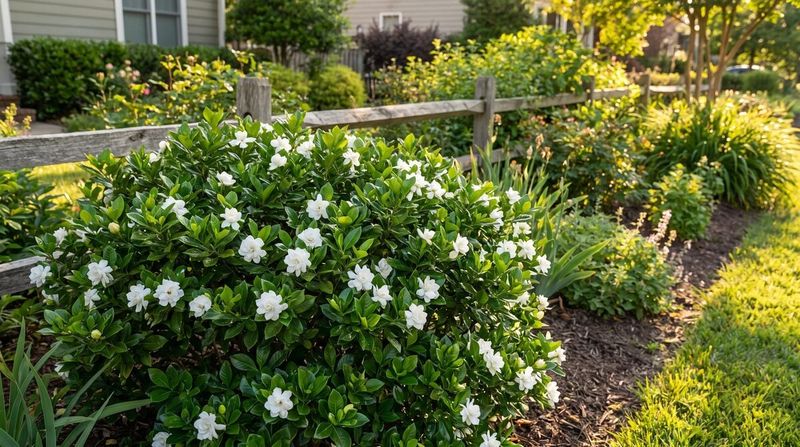
Fertilizer can only do its job when the root zone is functioning normally. Dry, hot conditions heading into September can leave roots stressed and unable to absorb nutrients efficiently, while poor drainage and waterlogged soil create an equally difficult situation from the opposite direction.
UF/IFAS “Gardenias at a Glance” identifies both inadequate moisture and poor drainage as contributors to bud drop, and neither problem is solved by applying fertilizer.
Before the September application, check that the shrub has been receiving adequate irrigation through summer and that the planting bed drains well after rain. A gardenia sitting in standing water after a late-summer storm is under significant root stress and should not receive fertilizer until drainage improves and the plant shows signs of recovery.
Applying nutrients to a waterlogged root zone can contribute to root burn and may worsen an already stressed plant.
Visible root decline is a signal to pause the feeding plan entirely. Dieback at branch tips, wilting despite moist soil, and a general failure to put out new growth can all point to root problems that fertilizer will not fix.
UF/IFAS gardenia guidance is consistent on this point: feed a plant that is actively growing and able to use the nutrients, not one that is struggling to maintain what it already has.
The September feeding window works best when basic moisture and drainage conditions are already in good shape. Correct any obvious irrigation gaps or drainage issues first, give the plant a few days to stabilize, and then evaluate whether it meets the active-growth standard before applying fertilizer.
Check local rules and protect next year’s buds
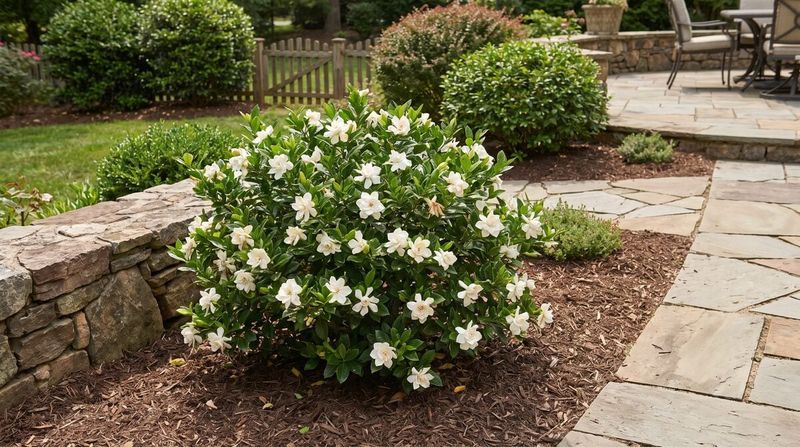
September fertilizer applications in North Florida are not automatically legal everywhere. Some municipalities have enacted rainy-season fertilizer restrictions that can extend into September, and applying fertilizer during a restricted period can result in fines regardless of what the product label says.
UF/IFAS North Florida Gardening Calendar guidance highlights that local ordinances vary and that gardeners should check their city or county rules before applying any landscape fertilizer. A quick call to your local extension office or a visit to your municipality’s website is the easiest way to confirm whether September is an open window in your area.
Gardenia fertilizer guidance is also separate from turfgrass fertilizer schedules. Florida lawn care recommendations have their own timing rules, and the common “last feeding” advice for warm-season grasses does not carry over to landscape shrubs like gardenias.
UF/IFAS best management practices for lawns cover a different set of plants under different guidelines, so keep those two schedules separate when planning September garden tasks.
Pruning timing is the other safeguard worth flagging in September. UF/IFAS “Gardenias at a Glance” recommends pruning gardenias after flowering and before October when possible, because hard pruning after October 1 can reduce the following year’s blooms.
The September feeding window and the pruning window overlap, which means a gardener who combines heavy pruning with a fertilizer application late in September or into October risks removing the buds that were already setting for next spring.
If your gardenia still needs significant shaping, do that first and do it promptly, before the October cutoff. Light cleanup pruning is generally less risky than hard structural cuts.
Fertilizer alone does not determine how many flowers a gardenia produces next year, and neither does pruning alone, but combining a late hard prune with a feeding will not make up for the lost bud wood.
The September decision is simple once the conditions line up
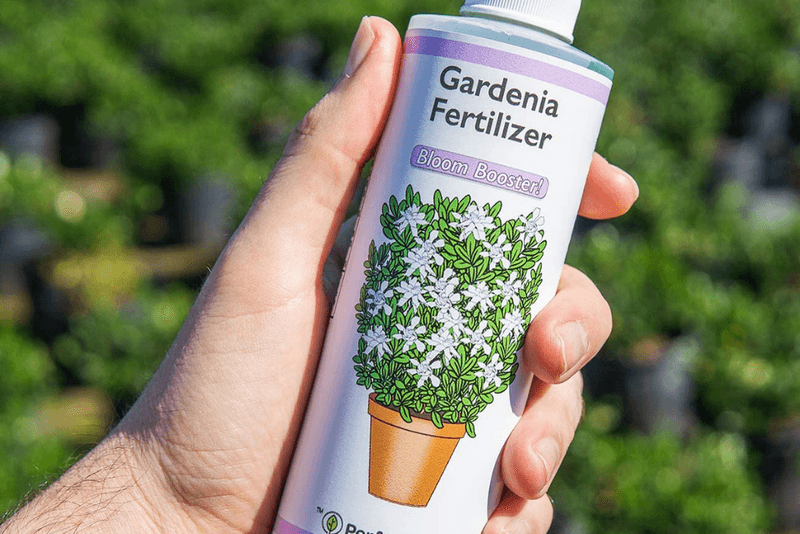
When everything lines up, the September feeding decision for an established North Florida gardenia is not complicated. Confirm you are in North Florida and that September falls within your local open fertilizer window.
Verify that the shrub is actively growing, looks healthy, and is not under unresolved stress from drought, flooding, pests, or root problems.
If soil symptoms or yellowing leaves suggest a pH or nutrient issue, test the soil before or alongside the feeding rather than guessing at an amendment. Select a landscape-plant fertilizer or an acid-forming product with ideally 30 to 50 percent slow-release nitrogen, and apply it strictly according to the product label.
UF/IFAS “Gardenias at a Glance” and UF/IFAS Gardening Solutions both support this approach for established North Florida gardenias.
September is the routine fall feeding window, not a guarantee of next year’s flowers and not a reason to fertilize every gardenia in the yard regardless of condition. Check local North Florida gardening calendar guidance if you are unsure whether municipal restrictions apply to your area.
A gardenia that gets the right feeding at the right time, in the right soil, with adequate water, is simply better positioned to do what gardenias do best.