

Brown seed pods on a crape myrtle can make an otherwise tidy yard look like it needs attention, and September is right when Florida gardeners start noticing them. Before you grab the pruners, though, the decision is simpler than most people expect.
Knowing what those pods actually do, and what removing them can and cannot accomplish, will save you work and keep your tree looking its best come spring.
September pods are usually an appearance decision
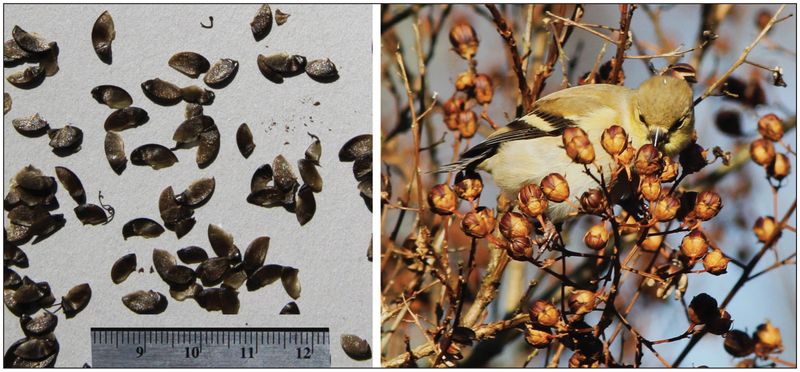
Mature brown crape myrtle seed capsules are a normal part of the tree’s year, not a warning sign. They form after the flowers finish, harden as summer winds down, and by September they are fully ripe.
Leaving them on the tree through fall and winter does not prevent the following season’s bloom, and UF/IFAS guidance on crapemyrtle pruning makes clear that tip pruning to remove mature capsules does not reduce flowering either.
Wind, rain, and the push of new spring growth usually knock the capsules off on their own schedule. So the practical question in September is not whether the pods are hurting the tree, because they are not.
The question is whether they bother you enough to remove the ones within easy reach.
Seed capsules are also worth a second look before you dismiss them entirely. UF/IFAS notes that tightly clustered capsules add unexpected winter interest to the leafless branches of a deciduous tree, similar to the way dried hydrangea flowers hold their shape and texture after blooming ends.
Some gardeners find the silhouette appealing; others want a cleaner look. Both are reasonable preferences.
Base the decision on three things: how the pods look to you, whether the clusters are within comfortable reach from the ground, and whether you can remove them without climbing or making aggressive cuts. If all three line up, a light cleanup is fine.
If the pods are high, plentiful, or require a ladder and extended reaching, leaving them alone is the better call for both safety and tree structure.
The color and timing of the seed head change the decision

Not every crape myrtle seed head is the same, and the difference between a green spent flower cluster and a brown mature capsule matters more than most homeowners realize. When a flower panicle finishes blooming, it passes through a green, soft stage before the capsules harden and turn brown.
Those two stages call for two different decisions.
Cutting a green, recently spent flower cluster is light deadheading. The goal is to remove the fading bloom before the seed capsule matures, which can encourage the branch to push new growth and possibly set another flower.
This is a growing-season move, and in September it may still be relevant for a Florida crape myrtle that finished a late flush of blooms and still has active growth underway. UF/IFAS confirms that removing spent flower heads or green seed heads during the growing season can stimulate new shoots, though the result depends on the cultivar and timing.
Removing brown, fully mature capsules is a different action with a different purpose. At that stage, the seed has already developed, and cutting the tip off will not trigger a meaningful growth response or another bloom cycle.
The only honest reason to remove mature brown capsules is appearance, and that is a perfectly valid reason as long as the work stays light and reachable.
September in Florida sits at a point where both stages can exist in the same yard, sometimes on the same tree. A cultivar that bloomed early may already have brown capsules, while a later-blooming variety might still be finishing its last green flower heads.
Knowing which stage you are looking at helps you decide whether a cut has any functional purpose or is purely cosmetic.
A late bloom remains possible, not promised
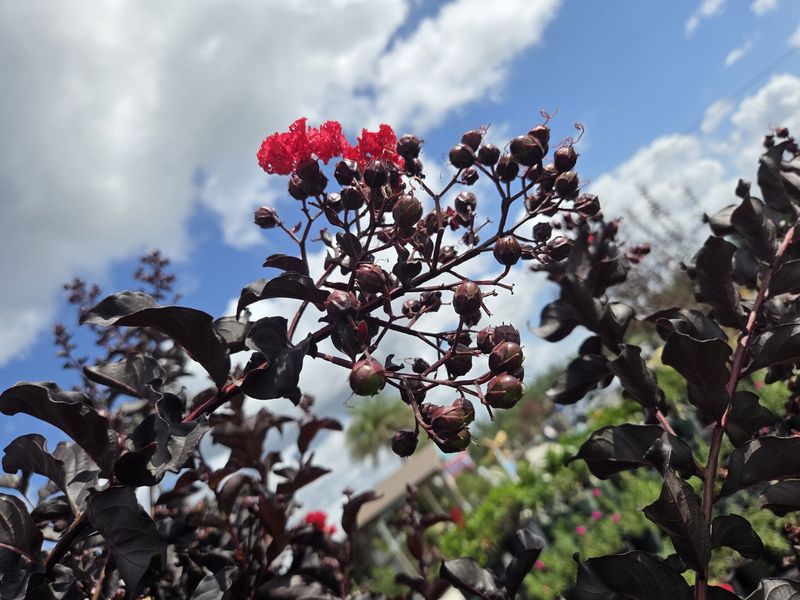
Cutting green spent flower clusters in September can encourage another round of blooms on some crape myrtles, but the word “can” carries real weight here. Whether a second flush actually appears depends heavily on the cultivar, how recently the flowers finished, and how much of the growing season remains.
UGA Cooperative Extension notes that a possible second bloom is cultivar- and timing-dependent, and that forcing a rebloom on plants that flowered after mid-July is difficult regardless of how carefully the deadheading is done.
Florida’s long warm season gives gardeners more opportunity than most regions, but that advantage has limits. A crape myrtle that finished blooming in early August and still has green, actively growing tips in September is a reasonable candidate for deadheading if another flush matters to you.
A tree that finished its main bloom cycle in July and whose branch tips have already slowed down is much less likely to respond with new flowers, even with a clean cut.
Newer cultivars bred for extended bloom periods are worth factoring in. Many of them push flowers through a long season on their own without needing repeated deadheading to keep going.
If your tree already blooms reliably into fall, a modest cut on reachable green clusters is a low-risk experiment. If it does not rebloom, that is not a pruning failure.
It simply means the cultivar or the timing was not in the right window for a second flush.
Approach September deadheading as an optional trial rather than a required task. The potential reward is real but modest, and the decision should match what you actually observe on the tree rather than a general rule about what crape myrtles are supposed to do.
Match the cut to the goal
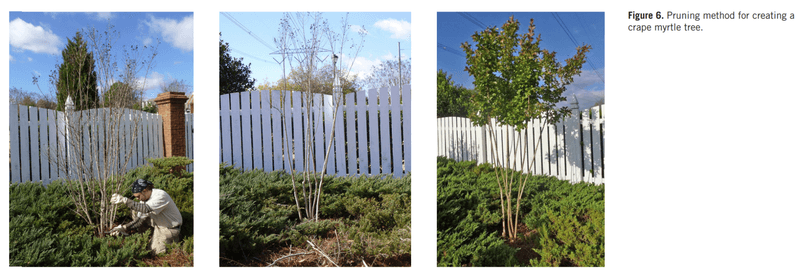
Two different goals call for two different cuts, and keeping them separate prevents unnecessary damage to the tree. For green, recently spent flower clusters, the right move is a light deadheading cut placed just above a leaf joint, a lateral bud, or a small side branch.
UGA Cooperative Extension recommends cutting back to a natural growth point rather than leaving a bare stub, because the bud or branch below the cut is what drives the new growth you are trying to encourage.
Use clean, sharp bypass pruners for this work. A clean cut heals faster and reduces the chance of introducing disease at the wound site.
Remove only the spent flower cluster and a small section of the stem above the chosen bud or branch. There is no need to cut deep into the canopy or reshape the branch structure to accomplish a deadheading goal.
For brown, mature capsules, the instructions are simpler and the ambition should be smaller. If the only goal is a tidier appearance, remove just the small twig tips that hold the capsule clusters, staying within easy reach from the ground.
UF/IFAS notes that this kind of optional cosmetic removal does not stimulate rebloom and should not be treated as a functional pruning step. Clip the tip, move to the next reachable cluster, and stop there.
Both tasks have a natural stopping point: when the work requires a ladder, extended overhead reaching, or cuts on branches thicker than a finger, the job has moved past light cleanup. Set the pruners down at that point.
Neither seed-pod removal nor deadheading requires reshaping the canopy, and neither goal is worth risking a fall or cutting into wood that should stay intact until dormancy.
A clean-looking tree is not worth topping
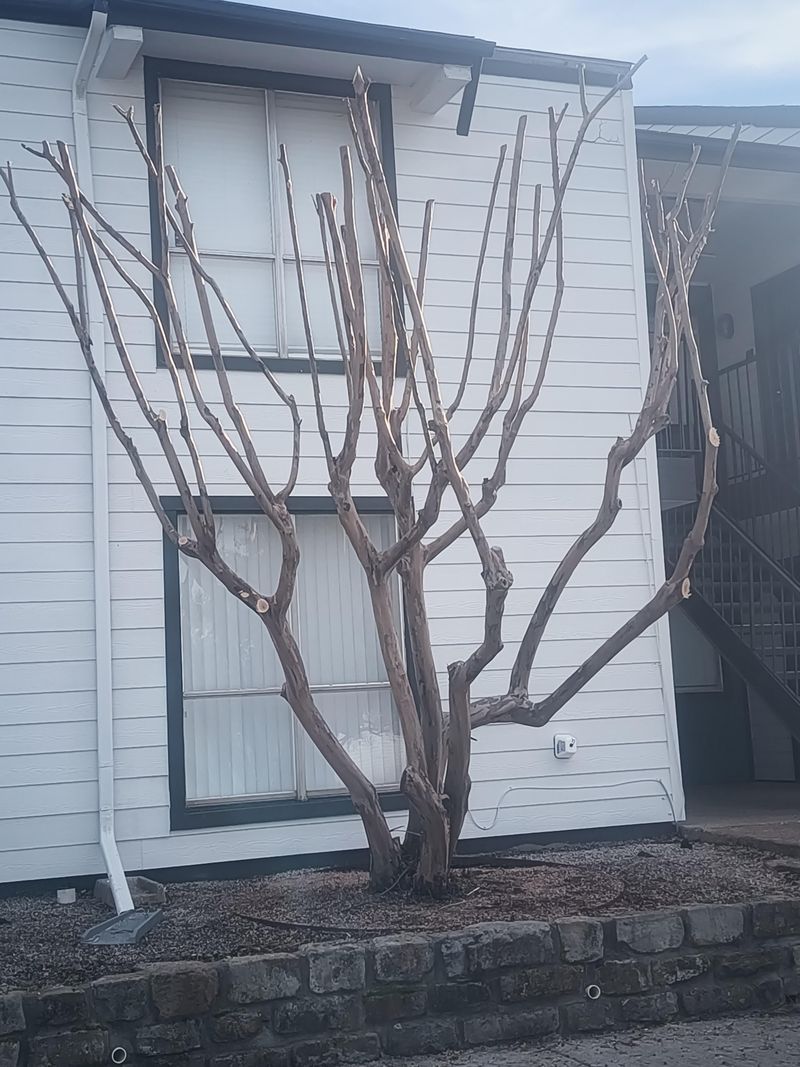
Removing a few small twig tips and cutting large limbs back to uniform stubs are not the same action, and treating them as if they are is where real tree damage begins. Topping, which means cutting the main scaffold branches back to heavy stubs regardless of where the cut falls, is one of the most common mistakes made on crape myrtles across Florida.
Brown seed pods are not a reason to do it, and the appearance payoff does not come close to justifying what the tree goes through afterward.
Published research on pruning method and crapemyrtle performance found that severe topping delayed flowering in tested cultivars, reduced flower performance in some cases, and produced a surge of vigorous but structurally weak sprouts from the cut sites. Those sprouts grow fast, crowd the canopy, and create exactly the kind of cluttered, twiggy look that prompts another round of cutting the following year.
Structural problems compound over time with repeated topping. Stubs that are cut year after year develop swollen knobs at the cut sites, the branch union weakens, and the tree becomes more vulnerable to wind damage, not less.
UF/IFAS does not recommend topping and neither do other cooperative extension programs. The practice is common enough that it has earned its own nickname in the industry.
None of the research findings about topping apply to light tip pruning or careful deadheading. The distinction matters: avoid generalizing “severe pruning causes problems” into “all pruning is harmful.” A well-placed cut on a small twig or spent flower cluster is a normal part of maintaining a crape myrtle.
Cutting large limbs back to stubs because the seed pods look untidy is a separate decision with consequences that last for years. Extension guidance from UGA describes the pattern clearly and recommends against it regardless of the season or the reason given for doing it.
Separate routine pruning from urgent branch removal
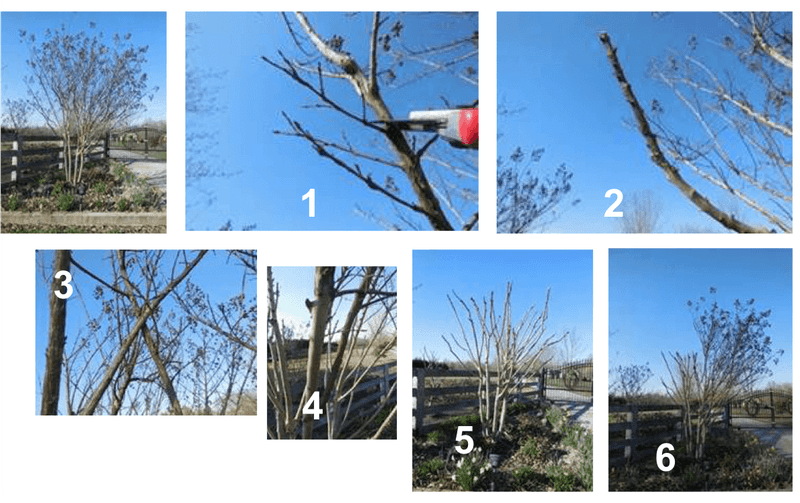
Seed-pod cleanup and routine structural pruning are two separate jobs, and mixing them up in September can lead to cuts the tree did not need yet. Crape myrtles flower on new growth, which means pruning done during the growing season removes some of the wood that would have carried flowers.
UF/IFAS recommends that routine pruning for shape, size, or major structure be done while the plant is leafless and dormant, typically December through February in Florida. Working during dormancy lets you see the branch structure clearly, make deliberate cuts, and position the tree for a full season of new growth and flowers once spring arrives.
Waiting for dormancy is a guideline for routine work, not an absolute rule that applies to every branch. Dead, diseased, damaged, crossing, or hazardous branches should be addressed when the problem becomes apparent, regardless of what month it is.
A branch that poses a safety risk in October does not need to wait until December to be removed. Structural cuts made for safety or tree health are in a separate category from cosmetic seed-pod removal or shape pruning.
The presence of seed pods does not change either of these timelines. Brown capsules in September are not a sign that the tree needs structural work, and they are not a trigger for moving up the dormant-season pruning schedule.
Handle the pods on their own terms, which is a light optional cleanup if appearance matters, and schedule any meaningful branch work for the right season or for when a real problem requires action.
An oversized tree needs a site solution, not a pod solution

For some Florida homeowners, the seed pods are not really the problem. The real issue is a crape myrtle that has grown taller or wider than the space it was planted in, and the pods are just the most visible symptom of a tree that has outgrown its spot.
Reaching the high clusters becomes harder every year, and the temptation to cut the whole canopy back grows along with the tree.
UF/IFAS points out that repeated severe pruning to manage an oversized crape myrtle is a maintenance cycle, not a solution, and that the tree will push new growth back to roughly the same size each season regardless of how hard it was cut. Climbing a tall tree to remove seed capsules adds physical risk for a cosmetic benefit that disappears within a single growing season.
The pods at the top of a mature tree can simply be left alone.
A more practical path starts with the cultivar. Crape myrtles are available in a wide range of mature sizes, from compact shrub types under four feet tall to large trees that reach thirty feet or more.
Choosing a cultivar matched to the planting site eliminates the size problem at the source. For a tree that has already outgrown its space and requires continual aggressive pruning just to fit, replacing it with a smaller cultivar suited to the site is often more practical than repeating the same cutting cycle year after year.
No homeowner should climb a mature crape myrtle to remove seed capsules. The cosmetic gain is temporary, the safety risk is real, and the tree does not require it.
Leave mature pods, or make only the cut your goal requires

Brown mature capsules in September can stay on the tree without affecting its health or next year’s flowers. UF/IFAS confirms that leaving mature capsules through winter does not prevent the following season’s bloom, and wind, rain, and spring growth will handle most of them on their own.
If appearance is the only concern, clip the reachable twig tips and stop there.
For green, recently spent flower clusters on a tree still actively growing, a careful deadheading cut placed just above a leaf joint or lateral bud is worth trying if another bloom flush matters to you. Keep expectations modest: the result depends on the cultivar and how much growing season remains.
UGA Cooperative Extension notes the outcome is inconsistent, and an absent rebloom simply means conditions were not right.
Routine shape or size pruning belongs in dormancy, December through February in Florida. Any cut made in September should match a specific, limited goal: appearance cleanup or a modest deadheading attempt, nothing more.
The response that serves the tree best is almost always determined by the timing and scale of the cut rather than by the simple presence of seed pods.