
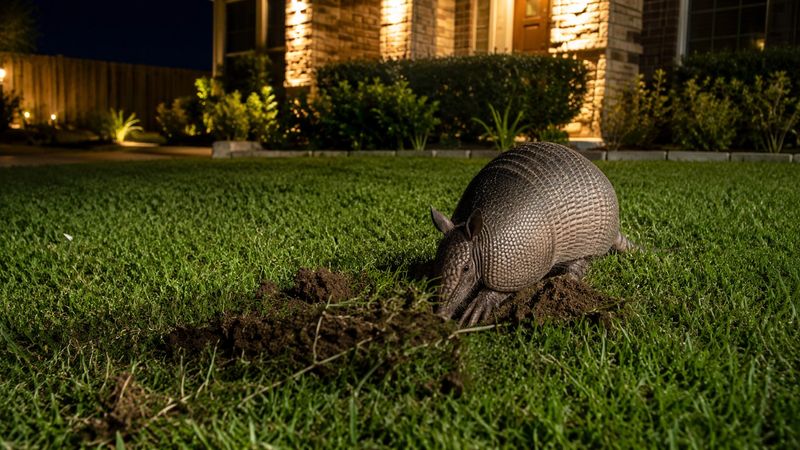
If you have stepped outside to find a patch of lawn looking like something went digging through it overnight, you are not imagining things. Nine-banded armadillos have expanded steadily across Texas and show up in suburban yards, garden beds, and irrigated turf with surprising regularity.
Understanding why they keep returning is the first step toward protecting the parts of your yard that matter most.
The digging is a feeding clue, not proof of one hidden lure
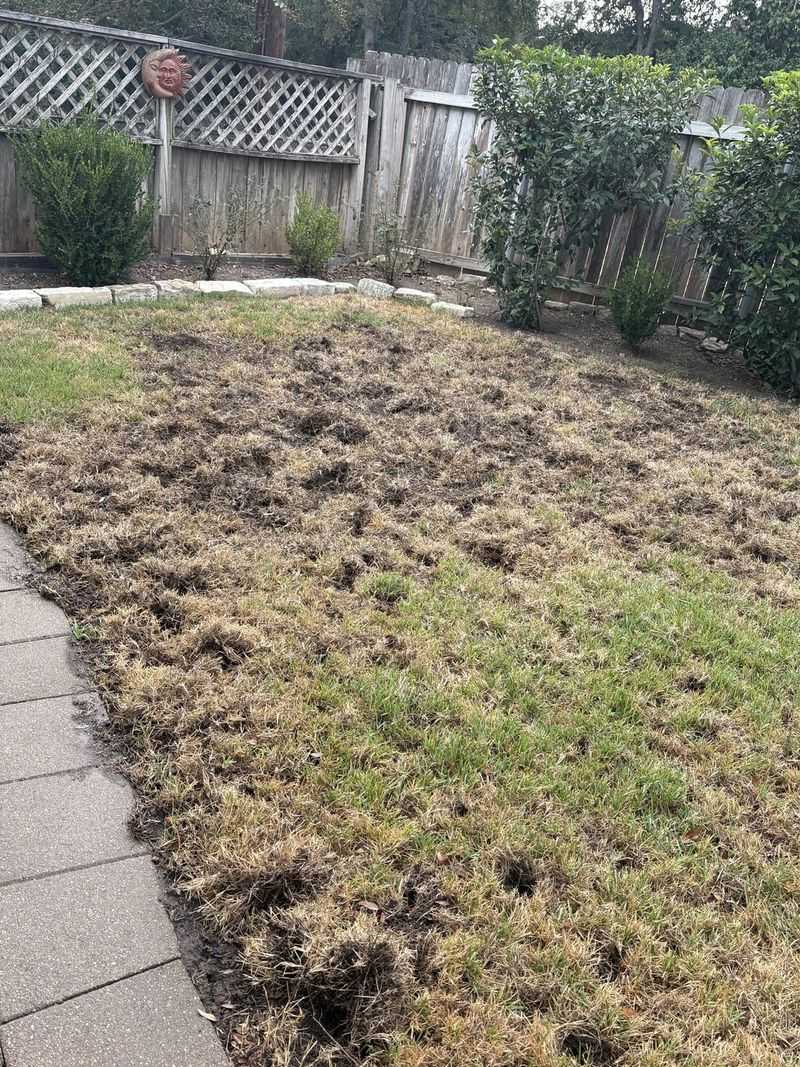
Scattered holes and uprooted ornamental plants are usually the first sign that a nine-banded armadillo has been working through your yard. The animal forages almost entirely by smell, pressing its snout into the soil and using powerful front claws to excavate whatever invertebrate prey it detects beneath the surface.
Texas Tech’s Mammals of Texas species account, drawing on stomach-content research, found that roughly 93 percent of the armadillo’s diet by volume was animal matter, chiefly insects and other invertebrates including scarab beetles, termites, ants, caterpillars, earthworms, millipedes, centipedes, and crayfish.
That wide-ranging menu matters because it means the digging is not always a signal of one specific problem in your soil. An armadillo working across a lawn may be after earthworms in one spot, beetle larvae in another, and ant colonies along the edge of a bed.
The holes are evidence of active foraging, but they do not by themselves tell you which prey triggered the visit.
Repeat damage is a sign that the yard continues to offer accessible food and workable soil, not necessarily that one lure has gone unaddressed. Texas Parks and Wildlife notes that armadillos use their keen sense of smell to locate prey and their sturdy claws to reach it, a combination that makes almost any soft, invertebrate-rich soil worth investigating.
Treating the yard as if one hidden cause explains every visit can lead to responses that miss the actual mix of conditions keeping the animal interested.
Why the same Texas yard stays worth revisiting
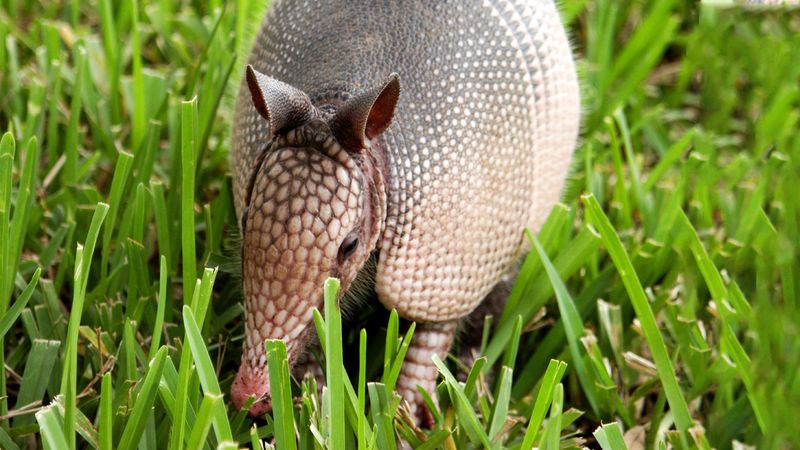
A yard does not need a single standout attractant to keep drawing armadillos back. Several overlapping conditions can make a property repeatedly usable, and when those conditions persist after one visit, there is little reason for the animal to stop returning.
UGA Cooperative Extension’s nine-banded armadillo natural history guide notes that foraging pits are often found in moist soil and that the species tends to prefer habitat near streams while avoiding extremes of wet or dry ground.
Irrigated Texas lawns and garden beds can mimic that preferred moisture range year-round. Frequent watering keeps soil softer and easier to excavate, and it supports healthy earthworm populations that armadillos actively seek.
A yard that runs sprinklers on a regular schedule may stay consistently appealing even during dry stretches when surrounding natural areas become harder to work.
Beyond moisture and prey, several other yard features may contribute. Fallen or overripe fruit left on the ground can attract insects that in turn attract armadillos.
Dense brush, thick ground cover, and overgrown foundation plantings provide the concealment the species prefers when moving through open areas or locating a burrow site. Stream-adjacent properties or those near drainage channels carry an additional edge because natural prey concentrations and soft alluvial soils are already present.
UGA Extension’s armadillo overview describes these as contributing habitat conditions rather than guaranteed triggers, and that framing is worth keeping. An armadillo that finds food on a first visit may return even after one of those conditions changes, because the others remain.
The Internet Center for Wildlife Damage Management reinforces this point by recommending that homeowners address multiple factors rather than expecting one change to end the problem.
Before changing the yard, confirm what made the holes
Rushing to apply pesticides or set up exclusion before confirming the animal responsible is one of the most common mistakes Texas homeowners make. Skunks produce small cone-shaped holes while probing for grubs, and raccoons can tear up turf in irregular patches that look surprisingly similar to armadillo foraging damage.
Acting on the wrong assumption wastes time and money and can create unnecessary pesticide exposure.
The wildlife damage identification guidance from the Internet Center for Wildlife Damage Management points out that turf damage can be difficult to distinguish between species and recommends looking at the full picture before drawing a conclusion. Armadillo foraging pits are typically shallow, roughly 1 to 3 inches deep and about 3 to 5 inches wide, though field measurements vary depending on soil type, prey depth, and individual animal behavior.
The holes tend to appear scattered across the yard or along bed edges rather than concentrated in one tight patch.
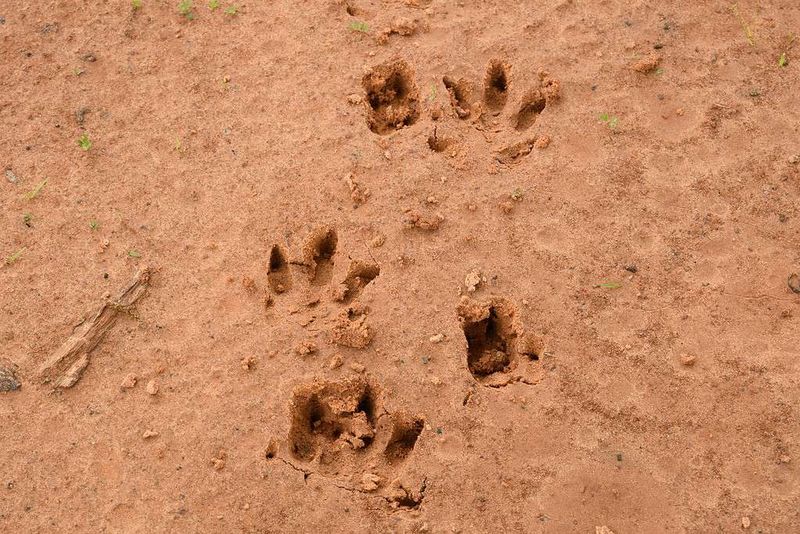
Tracks are one of the clearest confirmation tools. Armadillo prints show four toes on the front feet and five on the rear, with claw marks visible in soft soil.
Checking for a nearby burrow entrance, which is usually 7 to 8 inches wide and rounded at the top, adds another layer of confirmation. Timing matters too: armadillos forage primarily at night and during cooler parts of the day, so damage that appears overnight with no daytime sightings fits the pattern.
UGA Cooperative Extension also notes that direct sightings, even brief ones at dusk, can settle the question faster than any damage inspection alone.
A soil check comes before a grub treatment
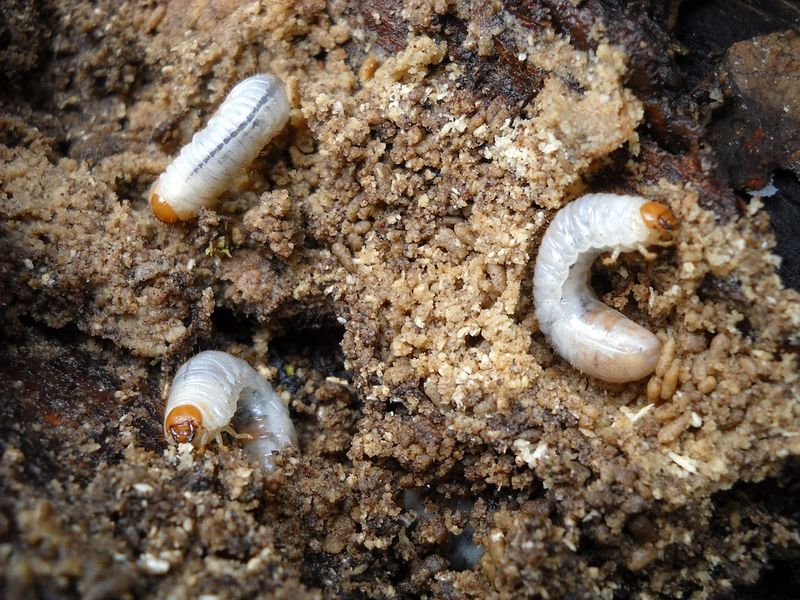
Once armadillo damage is confirmed, it is tempting to assume grubs are the reason and reach for an insecticide. That assumption skips a step that actually matters.
White grubs, the larval stage of various scarab beetles, are a real part of the armadillo’s diet, but earthworms, ants, termites, and other invertebrates are equally attractive. Applying a grub treatment when grubs are not actually present in significant numbers does nothing to reduce the animal’s food supply and adds unnecessary pesticide to the soil.
The practical first step is to cut a soil core or wedge about 3 inches deep in the areas showing the most activity and examine the soil directly. Purdue Extension’s guide to managing white grubs in turfgrass recommends this kind of monitoring before any treatment decision and notes that fewer than about five white grubs per square foot rarely warrants an insecticide application, though that threshold varies depending on grub species, the condition of the turf, and how the lawn is managed.
A lawn under drought stress or with shallow roots may show visible damage at lower grub densities than a well-established turf.
If the soil inspection does turn up a significant grub population, treatment may be worth considering as one part of a broader response. Any pesticide used must be legally registered for the intended use and applied strictly according to its label.
Early or poorly timed applications can fail to reach the target life stage, and blanket insecticide use is not a wildlife management tool on its own.
Reducing one food source through a well-timed, confirmed grub treatment may make the yard marginally less productive for an armadillo. However, earthworms, ants, and other soil invertebrates will still be present, and nearby habitat will remain accessible.
A confirmed grub problem is worth addressing on its own turf-health merits, but treating for grubs should not be framed as the solution to an armadillo problem.
Change the conditions that keep the yard usable
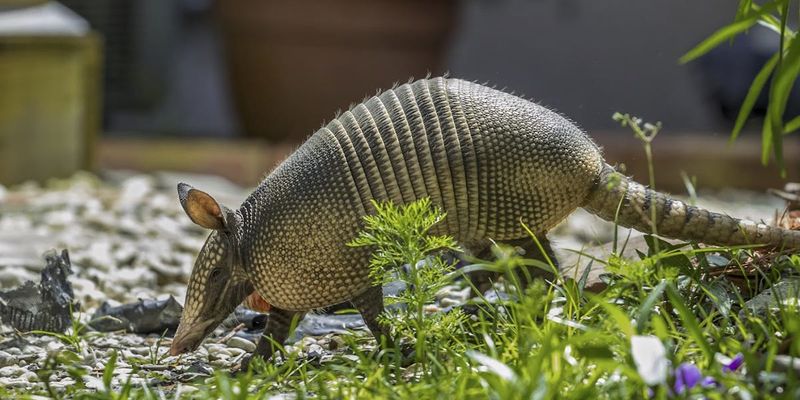
Habitat modification will not guarantee that armadillos stop visiting, but it can make a yard less consistently productive and therefore less worth the repeated effort. The goal is to reduce the overlap between what the animal needs and what the yard provides, without dismantling the landscape you have worked to build.
UGA Extension recommends watering sparingly and removing ripe or fallen fruit as practical starting points. Cutting back on unnecessary irrigation reduces soil moisture, which may make the turf slightly harder to excavate and less supportive of large earthworm populations.
This is not a guarantee that visits will stop, because armadillos also use naturally moist habitats and many soil types, but it removes one condition that may be making the yard more appealing than surrounding areas.
Fallen fruit deserves specific attention in Texas yards with pecan, fig, citrus, or persimmon trees. Overripe fruit draws insects, and insects draw armadillos.
Picking up fruit promptly or raking it away from the lawn reduces that secondary attractant without any chemical input.
Dense brush, thick ground cover along fences, and overgrown foundation plantings offer the concealment armadillos prefer when moving through a yard or choosing a burrow site. Thinning these areas where it fits the landscape, and where doing so does not remove beneficial habitat for other wildlife, can reduce the shelter value of the property.
The Internet Center for Wildlife Damage Management includes habitat modification among its recommended management approaches and notes that armadillos prefer burrow sites with cover nearby. Removing that cover does not move the animal out of the neighborhood, but it may shift where it chooses to spend its time.
Physical exclusion protects the places that matter most
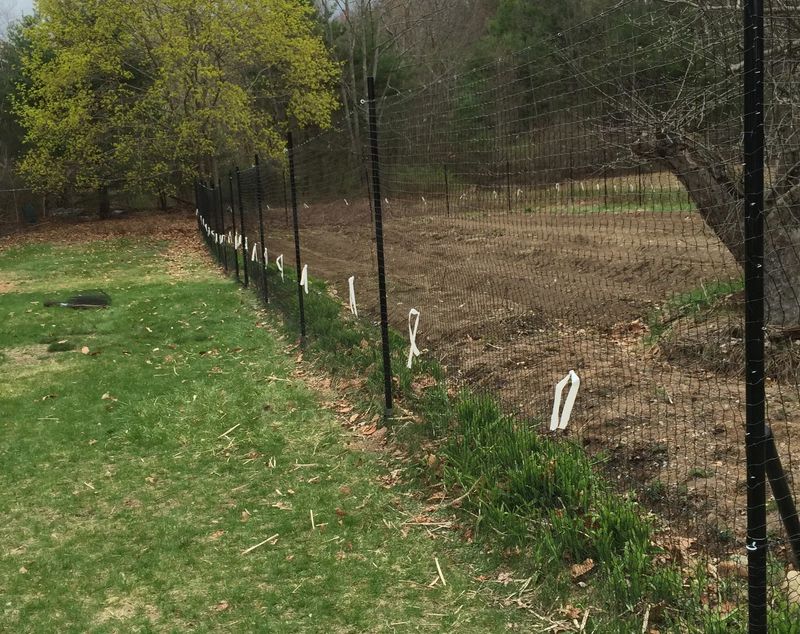
When a rose bed, a vegetable garden, or a newly planted ornamental area keeps getting torn up, habitat changes alone may not be enough. Physical exclusion is the most defensible option for protecting a defined, high-value space because it creates a direct mechanical barrier rather than relying on the animal to find the yard less appealing.
The Internet Center for Wildlife Damage Management recommends a fence at least 3 feet high, buried 12 to 18 inches deep, with the above-ground portion angled outward to discourage climbing or pushing through. A UGA source gives a lower minimum of about 2 feet high with 18 inches buried for sensitive areas.
These are design ranges rather than a single proven specification, and the right choice depends on the size of the space, the materials available, and how much pressure the area receives. Hardware cloth or welded wire with openings no larger than about 3 by 3 inches works well for most garden bed applications.
The outward angle is worth including when the fence encloses a small area, because armadillos that push against the barrier will find it deflecting them away rather than offering a surface to climb. For larger perimeter fencing, the buried portion matters most, since the animal tends to root along a fence line looking for a gap at ground level rather than going over the top.
A targeted barrier can protect a specific bed or section of yard even when armadillos continue to use the surrounding property. That is a realistic outcome and a useful one.
Expecting a fence around one garden bed to stop all yard visits misreads what exclusion does: it controls access to a defined space, not the broader neighborhood territory.
Repellents and frightening devices should not be treated as reliable alternatives. The wildlife damage management guidance is direct on this point: no registered repellents and no effective frightening devices are currently established for armadillo control.
Coffee grounds, mothballs, ammonia, hot pepper, predator urine, and ultrasonic devices fall into this category. Some improvised chemicals create hazards for people, pets, and groundwater that outweigh any uncertain benefit.
Burrows and wildlife rules change the response
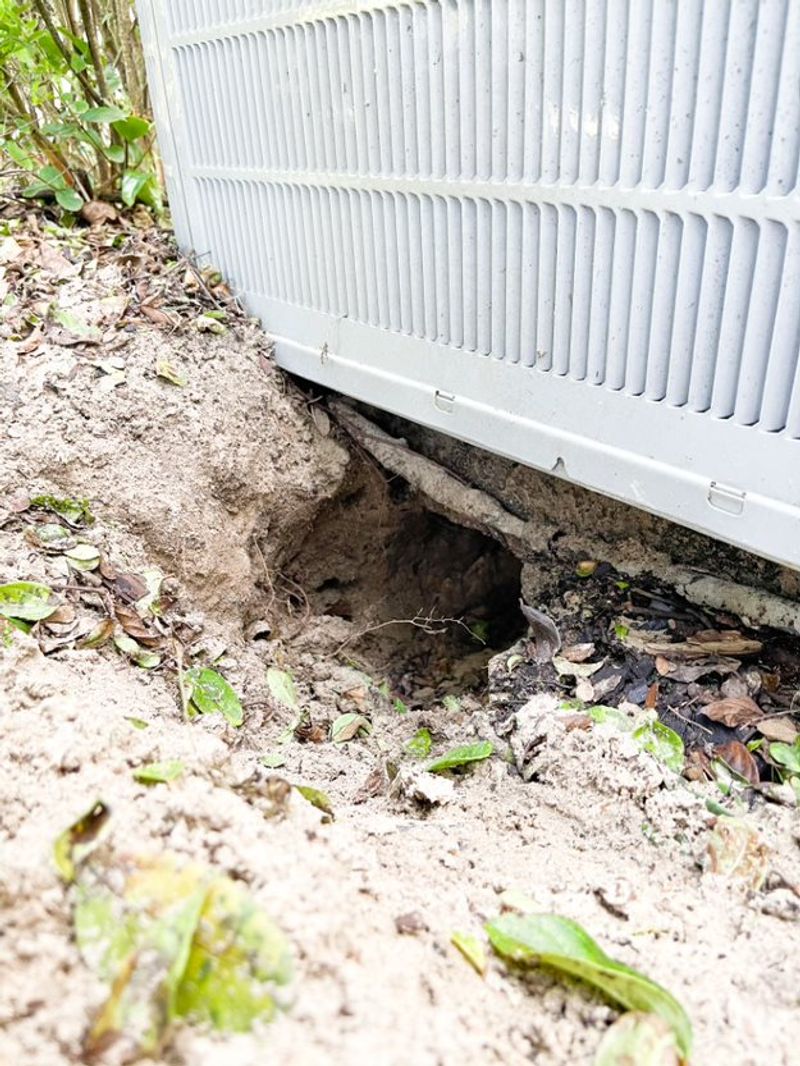
Finding a burrow entrance under a porch, slab, foundation, driveway, or pool changes the situation considerably. The instinct to block it immediately is understandable, but sealing an occupied burrow can trap the animal inside, create animal-welfare problems, and potentially leave a decomposing carcass in an inaccessible space.
The wildlife damage identification guidance from the Internet Center for Wildlife Damage Management notes that armadillos can excavate beneath foundations, slabs, driveways, and pools, and recommends determining occupancy before taking any action. A qualified wildlife-control professional can assess whether the burrow is active, whether young may be present, and what approach fits the structure and the situation.
Texas rules also shape what homeowners can legally do. Armadillos are classified as nongame animals in Texas, and Texas Parks and Wildlife nongame regulations require a hunting license for taking nongame species, with additional rules governing private-property take and restrictions on possession or sale.
For situations involving live capture, transport, or relocation, the nuisance fur-bearing animal regulations apply as well. Readers should check current state and local rules before trapping, killing, transporting, or relocating any armadillo, and use an authorized or licensed wildlife professional when the situation calls for it rather than attempting to move the animal themselves.
Disease risk is worth keeping in proportion. Armadillos in parts of the Southeast, including Texas, are documented carriers of Mycobacterium leprae, the bacterium associated with leprosy.
A study published in Emerging Infectious Diseases documents this association in the southeastern United States, but describes leprosy as rare and the risk from ordinary indirect environmental exposure as extremely low. Sensible precautions include wearing gloves when gardening in soil disturbed by armadillos or near a carcass, avoiding direct contact with the animal or its fluids, and seeking medical advice promptly after any bite or scratch.
The lasting fix is a change in access and conditions
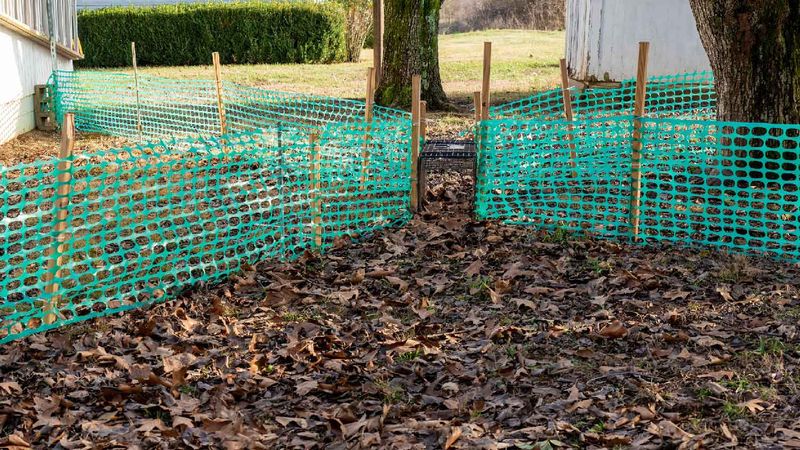
Working through armadillo damage productively comes down to a short sequence of steps. Confirm the animal is actually responsible by checking tracks, hole patterns, timing, and burrow signs before doing anything else.
Then inspect the soil in damaged areas for a meaningful grub population rather than assuming one is present. Adjust irrigation to avoid keeping soil consistently soft and moist beyond what the lawn or garden actually needs, pick up fallen fruit promptly, and thin dense cover where it fits the landscape.
For beds or areas that need reliable protection, a properly designed physical barrier is the most defensible tool available. The Internet Center for Wildlife Damage Management and Purdue Extension’s grub management guidance both reinforce that targeted, confirmed responses outperform blanket treatments.
When a burrow is near a structure or the legal situation is unclear, a qualified professional is the right call.
No single product or yard change will guarantee that armadillos never set foot on a Texas property again, especially when suitable habitat exists nearby. The realistic goal is to reduce what the yard continues to offer and to block access to the spaces that matter most.
An armadillo that finds a yard consistently less productive will eventually spend more time elsewhere – and that shift, not a permanent elimination, is what most Texas homeowners can reasonably achieve.