
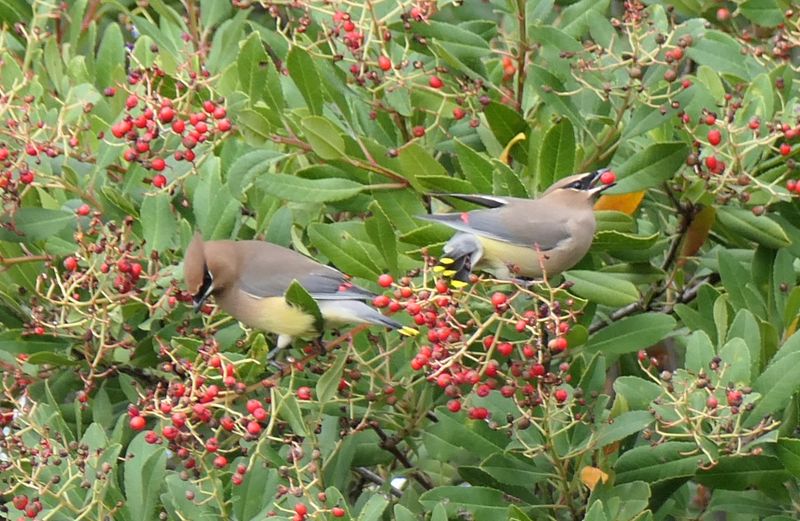
A single well-chosen shrub can do a lot of work in a California yard, and toyon is one of the best examples of that. Known by several names, including California Christmas berry and California holly, this evergreen native produces clusters of red fruits in late fall and winter while holding onto its dense, leafy branches all year long.
That combination makes it genuinely useful for birds at a time of year when food and shelter can be hard to find. If you have space and the right conditions, toyon is worth a serious look.
Toyon offers California birds fruit and evergreen structure
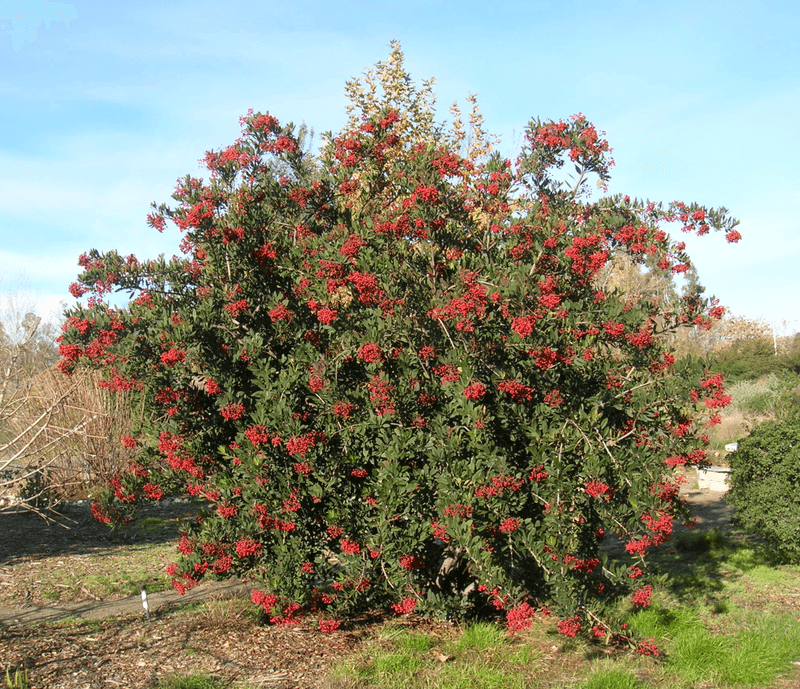
Toyon, known botanically as Heteromeles arbutifolia, is a California-native evergreen shrub that belongs to the rose family. Common names include California Christmas berry and California holly, both of which nod to the red berry clusters that appear on the plant in late fall and winter.
Gardeners and wildlife watchers sometimes assume the fruit is fully available throughout all of autumn, but the more accurate picture is that fruits develop in fall and often become most conspicuous or fully ripe in late fall and winter.
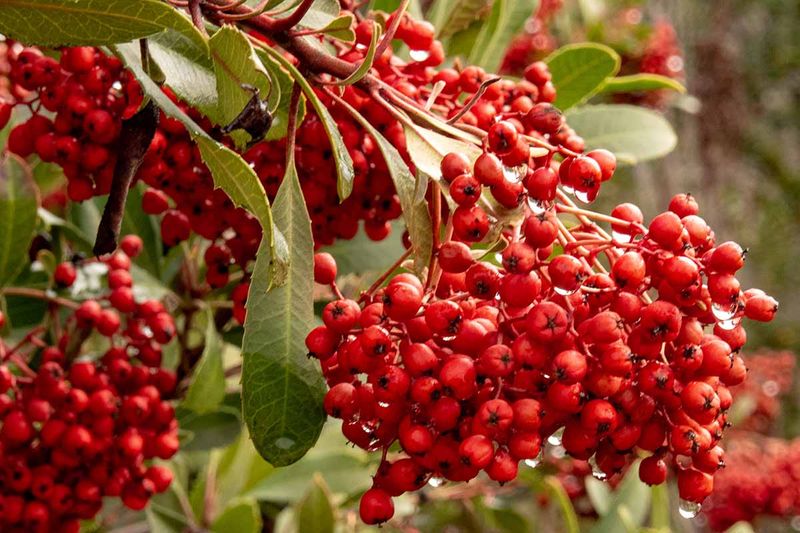
Recognizing toyon in a yard or on a hillside is fairly straightforward once you know what to look for. The leaves are glossy, leathery, and edged with small teeth, giving them a sturdy appearance that holds up through California’s dry summers.
In summer, the plant produces flat-topped clusters of small white flowers that later give way to the red or orange-red fruits that make the shrub so striking in the cooler months.
UC Agriculture and Natural Resources identifies toyon as suitable for screening, hedges, and dense shrub plantings, and notes that its berries serve as food for birds. The UC IPM toyon profile describes the shrub as having a dense, multi-branched form that retains foliage year-round.
That evergreen structure is the second part of toyon’s double value: even after birds have consumed the fruit display, the plant continues to offer layered branches and year-round cover.
Both benefits, the late-fall and winter food supply and the evergreen structural presence, are real contributions to a California yard. Neither one, however, operates as a guarantee.
A single toyon can add meaningful wildlife value, but how much birds use it depends on the surrounding landscape, local bird populations, and how well the shrub is sited and maintained.
Late-fall and winter fruit can feed visiting birds
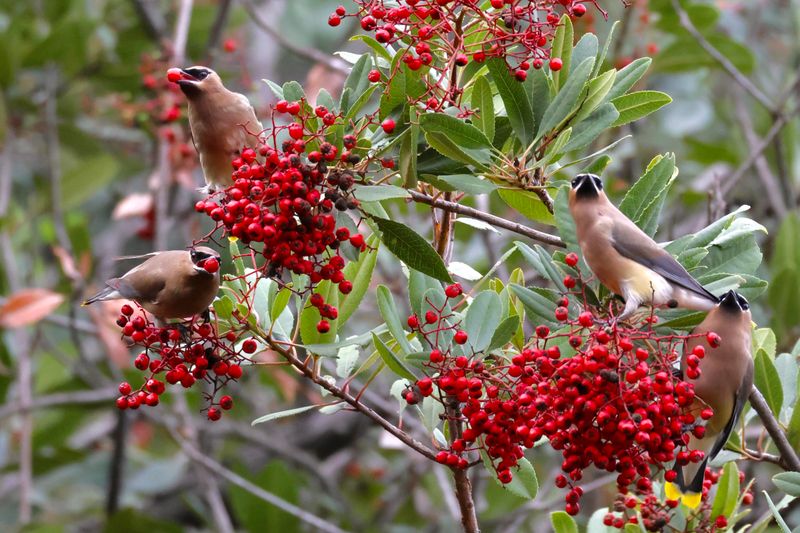
Timing matters when you are counting on a plant to feed wildlife. Toyon’s red fruits begin developing in fall, but many sources describe them as most conspicuous or fully ripe in late fall and into winter, which means the plant functions best as a late-season and cold-weather food source rather than an all-autumn buffet.
Conditions like heat, rainfall patterns, and local microclimate can shift when fruits reach peak ripeness from one yard to the next.
When the fruit is available, a range of fruit-eating birds will take advantage of it. UC ANR resources on toyon and Audubon’s California Christmas berry profile identify species such as American robins, cedar waxwings, mockingbirds, and finches as birds that eat the berries.
Cedar waxwings in particular are well known for arriving in flocks and stripping fruiting shrubs quickly, so a productive toyon can attract a lively and visible burst of activity.
That said, bird use is not predictable from year to year or from yard to yard. Fruit production can vary depending on how much sun the shrub receives, whether it was watered adequately during establishment, and how the previous season’s flowers fared.
A toyon planted in heavy shade may produce fewer berries than one in a sunnier spot, and a newly planted shrub will take a few years to develop a full fruit load.
Planting toyon gives you a reasonable opportunity to attract fruit-eating birds in late fall and winter, not a fixed schedule. Treat it as one reliable piece of a food-supply strategy rather than the only source your yard offers, and the birds that do arrive will reward the investment.
Dense foliage can add cover without guaranteeing safety
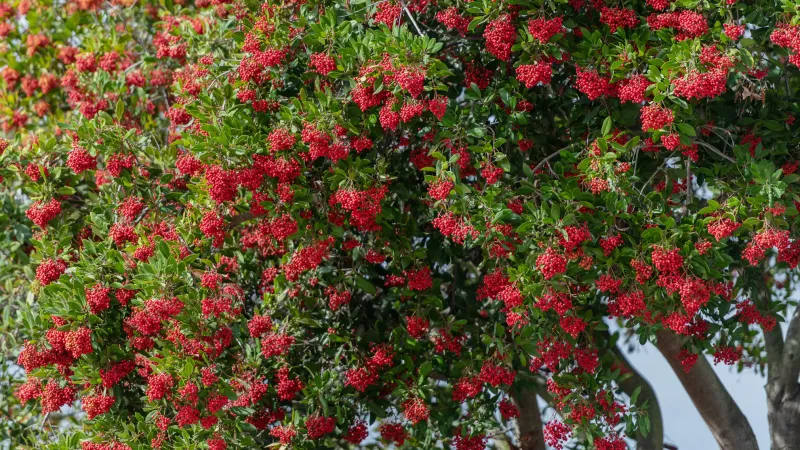
Food and shelter are separate needs, and toyon addresses both in different ways. The fruit supply is seasonal, but the evergreen foliage stays in place all year.
UC IPM describes toyon as having a dense, multi-branched growth habit, and the UC Master Gardeners of Sonoma County toyon page notes its usefulness as a screen and background planting. That same density is what makes the shrub structurally interesting to birds looking for a place to perch, move through, or wait out a cold, windy afternoon.
Audubon’s native shrub habitat guide explains that dense native shrubs can provide shelter from weather and predators. Toyon fits that description well: its branching starts relatively low, its canopy stays full through winter, and a mature plant offers enough interior space for small birds to move between branches while remaining partially concealed.
These qualities make it a useful addition to a yard that already has some habitat structure.
Useful is not the same as guaranteed, though. Whether birds choose to nest in or near a particular toyon depends on the species, the surrounding environment, the presence of predators, and what else the yard offers.
One shrub, however well-suited its form, does not function as a complete sanctuary. A toyon at the edge of an open lawn with no other plantings nearby provides far less cover value than the same shrub surrounded by other native plants at varying heights.
The evergreen structure continues to matter after the berry season ends. Birds that use the yard in spring and summer still benefit from a place to perch and move between feeding areas.
Thinking of toyon’s cover value as a year-round contribution, rather than a winter-only bonus, helps clarify why the shrub earns its space even in months when no fruit is visible.
Give this substantial shrub room, light, and drainage
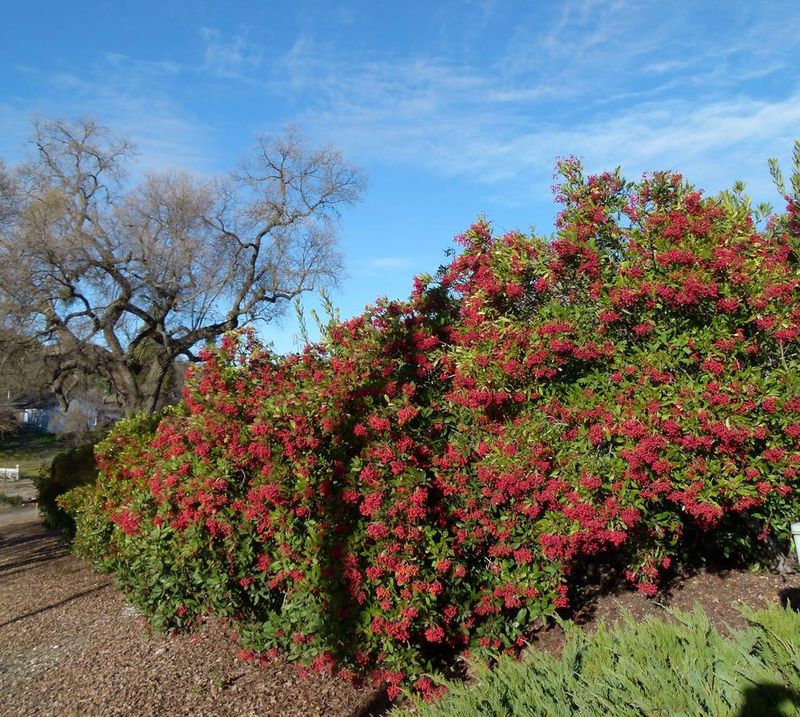
One of the most common mistakes with toyon is underestimating how large it gets. Home-garden specimens commonly reach roughly 8 to 15 feet tall and wide, and some plants grow larger still or take on a small-tree form with age.
The USDA plant guide for Heteromeles arbutifolia confirms that toyon can develop into a substantial multi-stemmed shrub or small tree, depending on site conditions and how it is managed. Planting one in a narrow foundation bed or tight fence line without a clear plan for its mature size creates a problem that gets harder to correct every year.
Before choosing a planting spot, measure the available space in both directions: height and width. A spot where the shrub can spread 12 to 15 feet in either direction without crowding a path, window, or neighboring plant is far better than a spot that looks adequate today but will require constant cutting to stay manageable.
If space is genuinely limited, check with a California native plant nursery about whether a more compact cultivar is available and appropriate for your conditions.
Light preference runs from full sun to light or partial shade, but sun exposure directly influences how well the plant flowers and fruits. Oregon State University’s landscape plant database notes that heavy shade tends to reduce flowering, which in turn reduces berry production.
If attracting fruit-eating birds is a priority, a spot with at least half a day of direct sun will serve the plant better than a shaded corner.
Drainage is the other non-negotiable. Toyon is adapted to California’s Mediterranean pattern of wet winters and dry summers, and it handles that cycle well in well-drained soil.
Poorly drained spots where water sits after winter rains can stress the roots and make the plant more vulnerable to disease. Raised beds, slopes, or amended planting areas can help where native soil drains slowly, but the easier answer is to match the plant to a site where drainage is naturally adequate.
Plant in fall, then manage water during establishment
Fall is a practical planting window for California natives when local site conditions are suitable. Cooler temperatures and the approach of the rainy season reduce transplant stress and give roots time to establish before the heat of summer arrives.
UC Master Gardener guidance on planting California natives identifies fall as a favorable time, provided the soil, drainage, and local conditions align with the plant’s needs.
The phrase “drought tolerant” is accurate for established toyon, but it misleads people about what a newly planted shrub actually needs. A toyon that goes into the ground in October still requires regular watering through its first dry season, typically the following summer, to develop a root system capable of sustaining it without supplemental water afterward.
Skipping establishment irrigation in the first year or two can stunt the plant or kill it outright, regardless of how drought-adapted the species is in the long run.
Once established, toyon can get by on California’s winter rainfall in most years, but occasional deep watering during the dry season can improve appearance, support stronger growth, and increase fruit production. The Water Wise Garden Planner profile for toyon and UC IPM’s toyon guidance both note that supplemental irrigation can benefit the plant even after establishment, particularly in hotter inland locations or during extended dry spells.
Apply a layer of organic mulch around the base of a newly planted toyon, keeping it a few inches away from the stem. Mulch slows moisture loss, moderates soil temperature, and reduces competition from weeds during the critical first growing season.
Good mulching practice at planting time reduces how much hand-watering a new shrub needs and sets it up for stronger long-term growth.
Maintain wildlife value while managing household risks
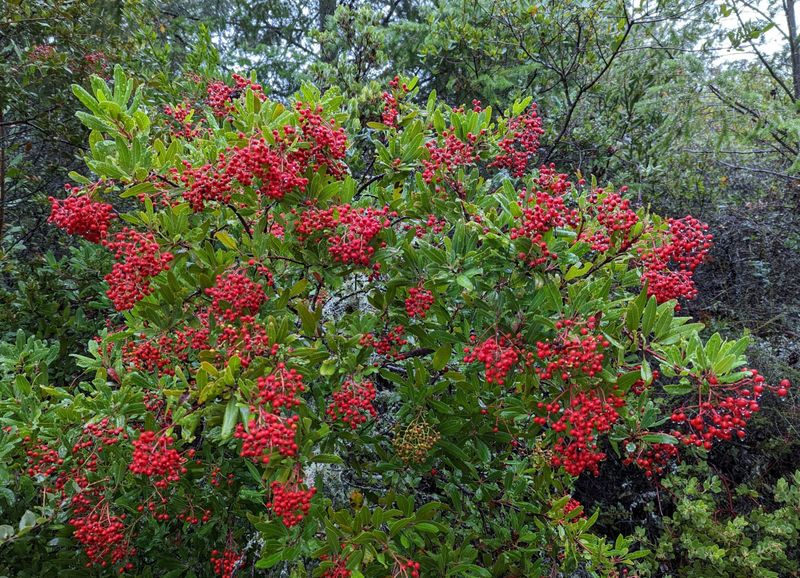
Toyon’s natural form, with multiple branches spreading from a low base and a rounded, layered canopy, is part of what makes it useful to birds. Heavy shearing that reduces the plant to a uniform box or ball removes that interior structure and can cut away the flowering and fruiting wood that birds and the shrub both depend on.
UC IPM’s guidance on toyon notes that selective pruning can stimulate new wood and improve fruit set, while routine heavy shearing works against the plant’s natural productivity. Use hand pruners or loppers to remove crossing, dead, or crowding branches rather than running a hedge trimmer across the entire canopy.
Wildfire risk is a real consideration for California homeowners, and nativeness or drought tolerance does not make any plant fireproof or automatically appropriate beside a structure. CAL FIRE and UC ANR both emphasize that defensible space requires removing dead vegetation, maintaining spacing between shrubs and trees, creating vertical separation between low plants and overhead canopy, and reducing combustible material close to the home.
CAL FIRE’s defensible-space guidance and UC ANR’s defensible-space resources outline zone-by-zone requirements that apply regardless of what species you plant. Slope, local ordinances, and proximity to structures all factor into where a large shrub like toyon belongs on a given property.
Berry safety is a separate issue that homeowners should handle directly. UC ANR’s plant-safety profile for toyon warns that unripe berries contain cyanogenic compounds and recommends avoiding consumption.
Children and pets should be supervised around the plant, and the practical household rule is straightforward: do not encourage anyone to eat the berries, ripe or unripe.
Managing toyon well means keeping its natural structure intact where wildlife value is the goal, clearing dead material and maintaining appropriate spacing where fire risk is a concern, and treating berry consumption as something to prevent rather than promote. These responsibilities are manageable, and none of them require removing a healthy, well-placed shrub from the yard.
Build a layered habitat around the toyon
Toyon earns its place by delivering two genuine contributions: late-fall and winter fruit for birds that eat it, and year-round evergreen structure that can add cover and perching space. What it cannot do on its own is replace a full habitat.
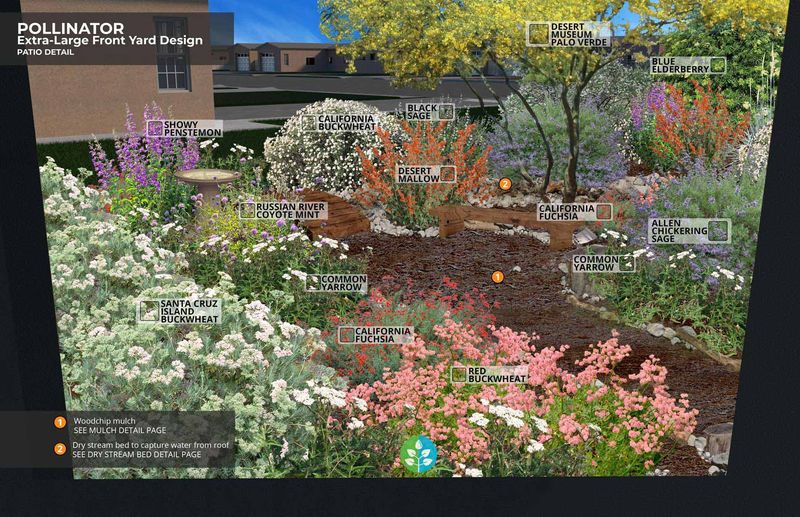
Birds that use a yard reliably tend to find it through a combination of resources, including shrubs at different heights, at least one canopy tree, groundcover for foraging, a water source, and plants that support the insects many birds feed their nestlings.
Audubon California’s lawn-to-habitat guide recommends layering native plants of varying heights to create the kind of structural diversity that different bird species need at different times of year. A toyon anchoring a mid-story layer works far better for birds when it is surrounded by lower native groundcovers and taller native trees than when it stands alone in an otherwise open yard.
The practical decision rule is straightforward. Choose toyon when your California site has room for a shrub that may reach 10 to 15 feet or more, when the spot gets enough sun to support flowering and fruiting, and when you can place it responsibly relative to structures and defensible-space requirements.
Then fill in around it. A birdbath nearby, a native groundcover at its feet, and a mix of other fruiting or insect-supporting natives nearby will turn a single good shrub into a yard that birds return to throughout the year.
Toyon does its part best when the rest of the yard meets it halfway.