
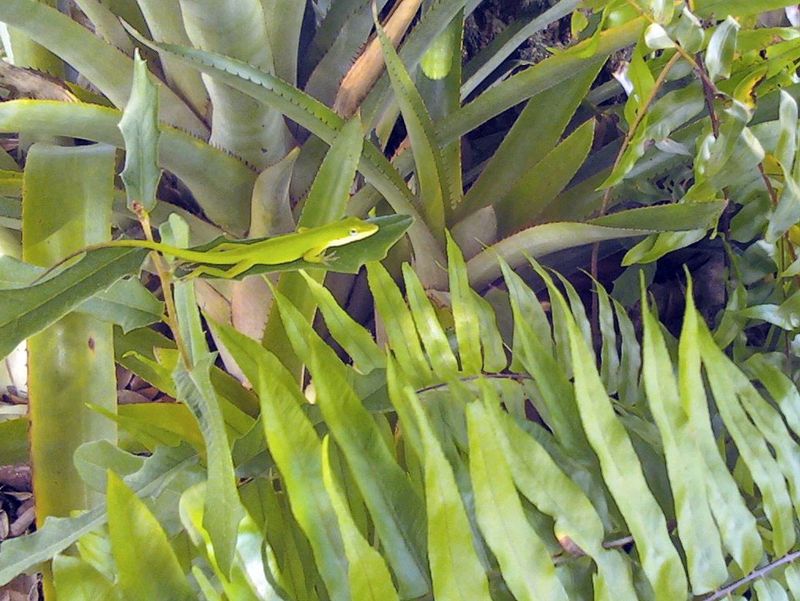
Spot a small green lizard clinging to your potted fern or perched on a container plant near the door, and it is hard not to wonder what drew it there. Green anoles are native North Carolina lizards, and porches with plants turn out to offer a surprisingly useful mix of warmth, structure, and small prey.
Understanding why the lizard showed up is more useful than assuming your plants are overrun with pests. A closer look at both the animal and the pot will tell you far more than the sighting alone.
A Green Anole on a Porch Plant Is a Clue, Not a Diagnosis
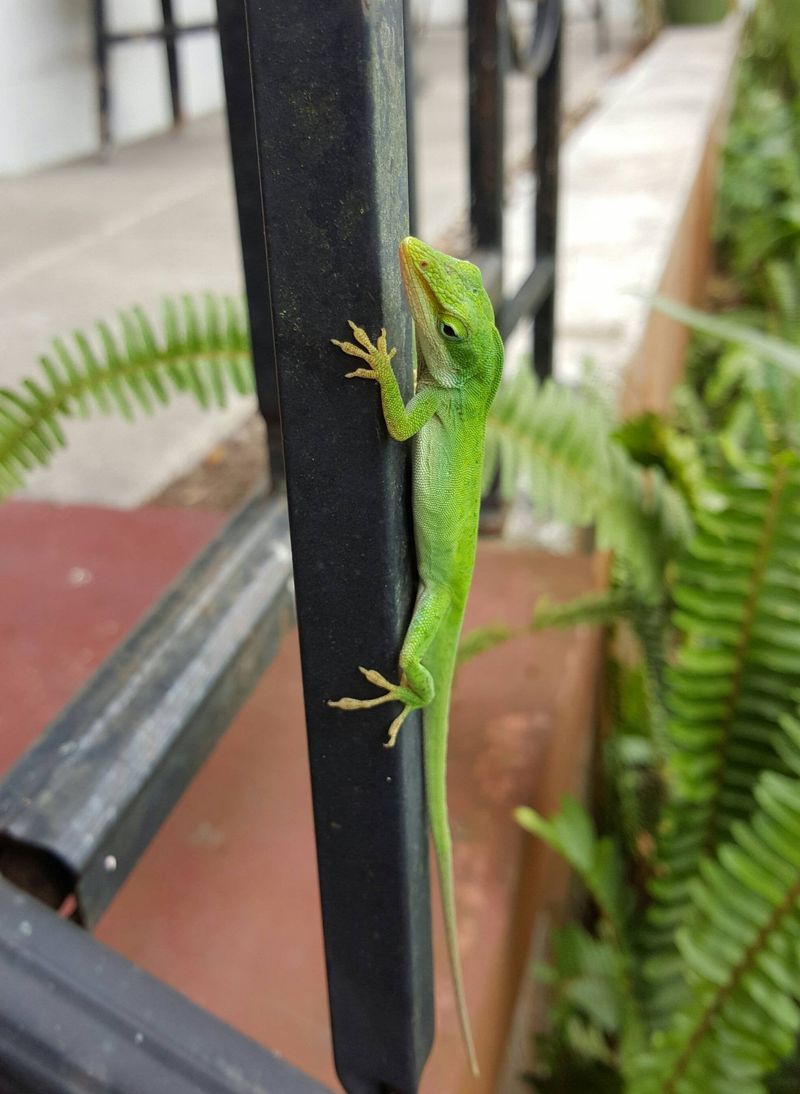
Catching sight of a small lizard tucked into a potted plant on the porch can feel like a clue that something is going on in that container. Sometimes it is, but the sighting by itself does not tell you what.
NC Wildlife Resources Commission records describe the green anole as a native North Carolina species commonly found around homes, fences, shrubs, and tall grasses, where it spends much of its day foraging and moving between perches. Harmless to people, it belongs in the suburban landscape as naturally as any backyard bird.
The lizard on your pot could be basking in the sun that heats the container surface, sheltering under the foliage while it waits out the midday heat, passing through the area on its way somewhere else, or actively hunting whatever small arthropods happen to be nearby. Its presence may reflect access to useful structure, warmth, cover, and locally available prey, but a single sighting does not confirm a pest infestation or tell you which insects are present.
Treat the anole as a prompt to look more carefully at the plant, not as a verdict about what is living in the soil or on the leaves.
One more thing worth knowing before you start inspecting: color alone cannot reliably tell you which anole species you are looking at. Published research on anole physiology confirms that green anoles shift between green, brown, and gray depending on temperature, stress, and social context.
A brown lizard on your porch is not automatically a brown anole. Species identification depends on body shape, pattern, dewlap color, and other features beyond a quick color check.
Why a Container Can Serve as a Convenient Perch
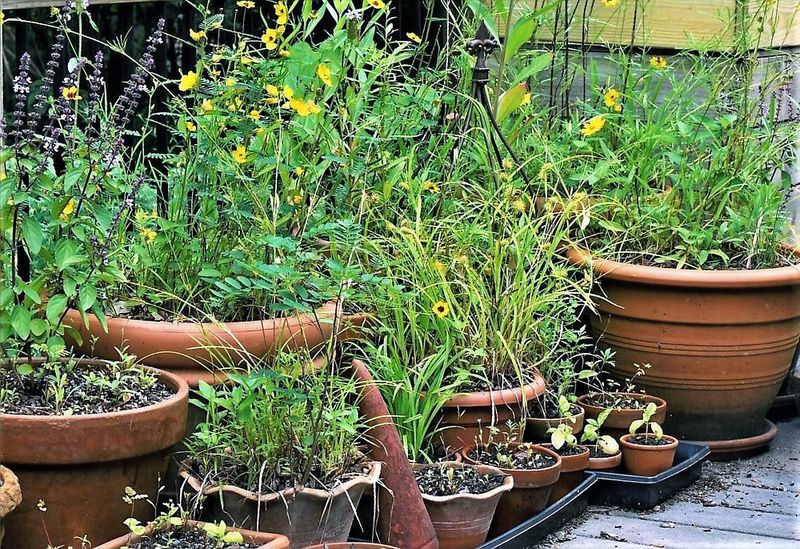
Porch containers pack a surprising amount of useful lizard habitat into a small space, and that is probably the most honest explanation for why an anole ends up there. Animal Diversity Web’s profile of Anolis carolinensis describes the species as primarily arboreal, spending the bulk of its active time in vegetation and on vertical surfaces where it can survey territory, regulate body temperature, and watch for prey or rivals.
A pot full of stems and leaves on a sunny porch edge fits that description well.
The physical structure of a container plant offers several things at once. Upright stems and layered leaves give the lizard places to grip and climb.
Open, sun-warmed pot edges and exposed foliage surfaces act as basking spots where the animal can raise its body temperature quickly after a cool night. Dense inner foliage and nearby walls or railings provide quick escape cover if a predator moves in.
NC State Extension’s guide to backyard reptiles and amphibians notes that green anoles are common around suburban structures precisely because these built environments offer vertical surfaces, sun exposure, and nearby vegetation in combination.
A UF/IFAS study on anole habitat use found that green anoles tend to occupy higher vegetation layers when habitat pressure increases, which suggests they are responsive to vertical structure wherever they find it. That is a reasonable ecological inference for why a container with tall stems and open sun access might attract a visiting lizard.
No evidence, however, ranks one common porch plant over another as a preferred anole destination, so the container’s appeal is better explained by its physical qualities than by any particular species of plant you happen to be growing.
Possible Prey Does Not Equal Reliable Pest Control
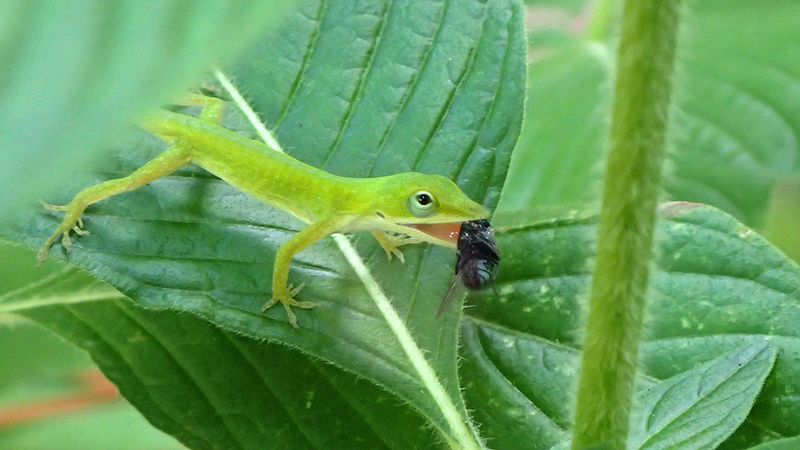
Green anoles eat a wide variety of small arthropods, and the list is broader than most homeowners expect. Documented prey items for Anolis carolinensis include beetles, flies, crickets, moths, ants, termites, spiders, and other small invertebrates.
The UF/IFAS extension profile of the green anole describes the species as an opportunistic forager that eats what is locally available rather than targeting a fixed menu.
That opportunistic habit is exactly why the idea of reliable pest control does not hold up. An anole moving through your potted hibiscus might snap up an aphid, or it might catch a harmless ground beetle, a parasitic wasp, or a spider that was already keeping other insects in check.
NC State Extension’s guidance on biological pest control cautions that natural predators do not selectively eliminate only the insects a gardener wants gone. No supplied evidence establishes that a porch anole dependably reduces aphids, whiteflies, caterpillars, or any other named plant pest to a level that matters for plant health.
Mosquito control is an even weaker case. Green anoles are capable of catching a small flying insect, but authoritative diet sources do not establish that they suppress mosquito populations around homes in any meaningful way.
Ticks are a separate concern entirely. Published research on lizard-tick interactions shows that green anoles can themselves host ticks infected with Borrelia burgdorferi, the bacterium associated with Lyme disease.
That does not mean a porch anole increases your household Lyme risk, but tick-host research makes clear that green anoles should not be counted on as a tick-control strategy. The lizard is a useful part of the local food web, not a targeted exterminator.
Inspect the Plant Before You Treat It

Before reaching for any spray bottle, spend five minutes actually looking at the plant. Start with the leaf undersides, which is where aphids, whiteflies, and scale insects tend to cluster because the surface is sheltered from rain and direct sun.
Work your way to the tender new growth at stem tips, where soft-bodied feeders often concentrate first, and then run your fingers lightly along the main stems looking for sticky residue, bumps, or webbing.
Move down to the soil surface and the saucer underneath the pot. Fungus gnats lay eggs in moist potting mix, and standing water in a saucer can support both pest development and mosquito breeding independently of any lizard activity.
Check nearby porch walls, railings, and the undersides of the pot rim as well. Ants trailing up a stem often signal honeydew-producing insects higher on the plant, and that trail is worth following.
UGA Extension’s summer pest guidance notes that correct identification of what you find matters as much as finding it, because treatment options differ significantly depending on the pest.
NC State Extension’s integrated pest management handbook points out that many plants can tolerate a modest level of insect feeding without lasting harm. Once you have identified what is present, assess whether the damage is actually spreading or threatening the plant before deciding that treatment is needed.
If you are unsure what you are looking at, the NC State Plant Disease and Insect Clinic offers identification support. The anole on the pot is not a reason to spray, and neither is a handful of insects you cannot yet name.
Do Not Mistake Warm Fall Activity for an Outbreak
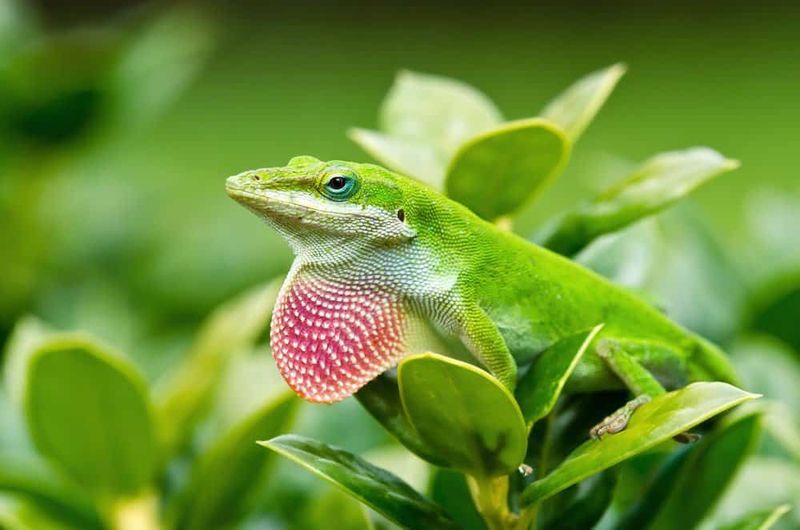
Seeing an anole on the porch in October or even on a mild December afternoon does not mean your plants suddenly have a pest problem. Green anoles are documented as remaining active during warm, sunny periods well into the cooler months, slowing down only when temperatures drop consistently.
They are cold-blooded, so a single warm afternoon is enough to bring one out to bask.
Field observations of North Carolina green anoles confirm occasional winter basking during mild weather, particularly on south-facing surfaces that collect and hold heat. A dark-colored pot or a sun-exposed railing can create a microclimate several degrees warmer than the surrounding air, and that warmth alone is enough to draw a lizard out for a few hours.
Research on anole thermal biology supports the idea that these lizards actively seek favorable microclimates when ambient temperatures fall.
The practical takeaway is to separate the timing of a lizard sighting from any judgment about pest pressure. If you want to know whether insects on a plant are increasing, compare what you see during a careful inspection now with what you noticed a week or two ago.
Actual pest numbers and visible plant damage over time are the right diagnostic tools. An anole appearing during a warm November afternoon is not evidence of a fall aphid surge; it is evidence that the sun warmed the porch enough to make basking worthwhile.
Use Integrated Pest Management Around the Lizard
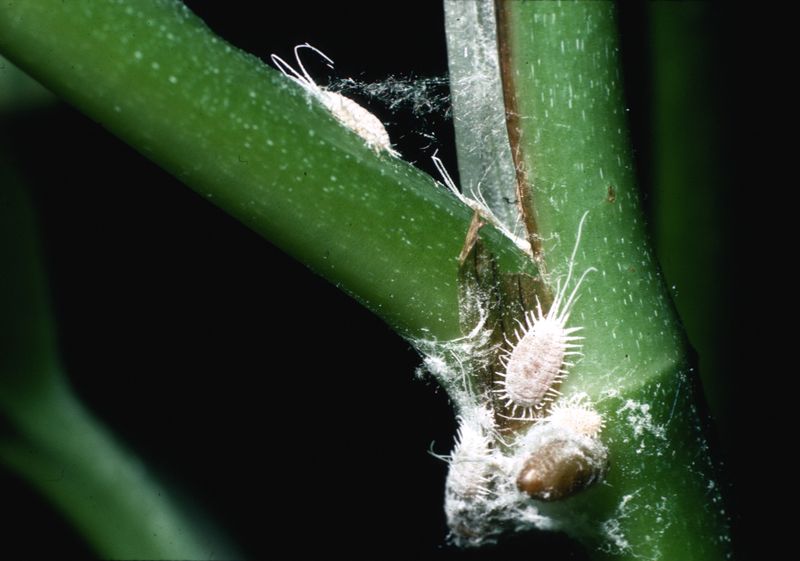
Once you have identified an actual pest problem through inspection, a step-by-step approach protects both your plants and the wildlife sharing the porch. NC State Extension’s integrated pest management framework outlines the sequence clearly: monitor regularly, identify what you find, decide whether the damage exceeds a level the plant cannot tolerate, use mechanical or cultural controls first where practical, and reserve pesticides for problems that genuinely justify them.
The goal is management, not total elimination of every insect on the porch.
Several low-impact steps work well as first responses. A strong stream of water from a hose or spray bottle knocks aphids and other soft-bodied insects off foliage without leaving any chemical residue.
Pruning a heavily infested stem or leaf removes a local population before it spreads. Improving air circulation around dense container plants reduces the humidity that favors fungal problems and some pest species.
Emptying and drying the saucer under each pot removes standing water that can support mosquito egg-laying independently of anything an anole does. UGA Extension summer pest guidance recommends these physical and cultural steps as the first line of response before any chemical treatment.
If a pesticide becomes necessary, select it for the pest and plant you have actually identified, treat only the area that needs it, and follow the label directions precisely. EPA guidance on protecting wildlife from pesticides advises applying products only when and where needed and avoiding treatment of non-target areas where wildlife may be active.
EPA pesticide safety tips add that “natural” or organic labels do not automatically make a product safe for reptiles or other non-target animals. If you reduce unnecessary nighttime lighting near the porch, that may limit the flying insects drawn to the area generally, though it will not change whether an anole chooses a particular container as a perch.
Support Native Anoles Without Handling Them
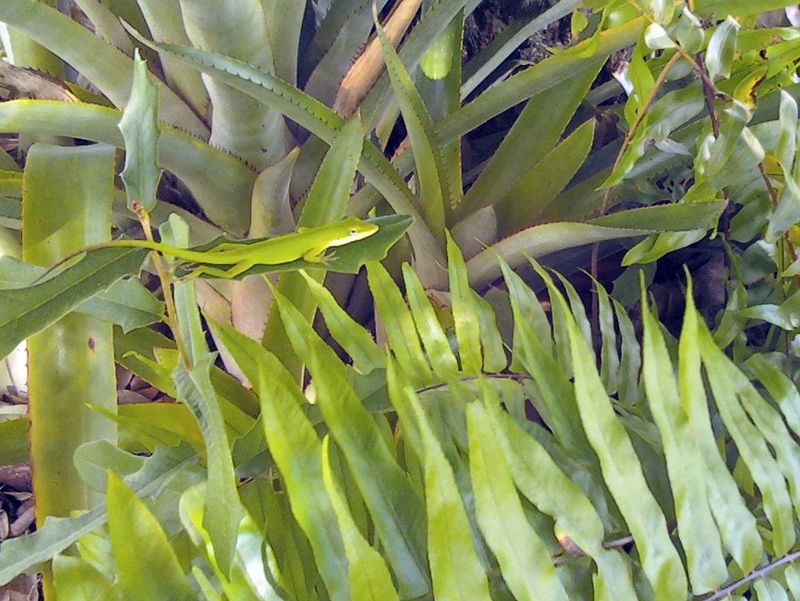
The most useful thing a homeowner can do for a porch anole is leave it alone. NC State Extension’s guide to backyard reptiles cautions that handling wild lizards can cause injury and that chemicals commonly found on human skin, including soap residue, sunscreen, lotion, and insect repellent, can harm reptiles through direct contact.
Picking up an anole to relocate it, feed it, or get a closer look is unnecessary and potentially harmful to the animal.
Keeping a wild anole as a pet is equally discouraged. These are free-ranging native animals that depend on a functioning outdoor environment for thermoregulation, foraging, and reproduction.
Removing one from the porch does not improve its situation or yours. NC State Extension’s native plant landscaping guidance and the Extension Gardener Wildlife Handbook both point toward supporting native wildlife through habitat rather than through direct interaction.
Regionally appropriate plants with varied vertical structure, layered foliage, and minimal pesticide exposure create conditions where anoles and other native species can move freely.
On a porch specifically, that might mean including a mix of container sizes and plant heights, avoiding broad-spectrum sprays that would eliminate the small arthropods the lizard actually depends on, and keeping the space as chemically simple as possible. NC State’s plant selection resources can help you choose container plants that suit your region without requiring heavy pesticide programs.
Observation from a comfortable distance is the right relationship with a wild porch anole, and it costs nothing.
Read the Lizard, Then Read the Plant
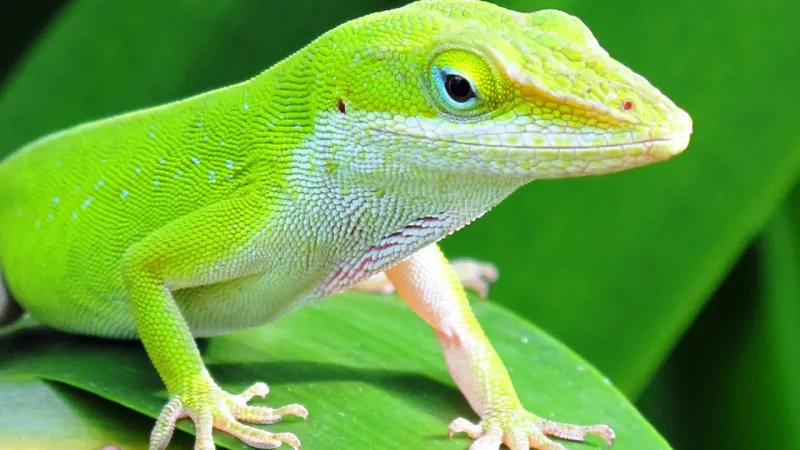
A green anole on a porch pot is most accurately read as a sign that the container offers something useful to the lizard, whether that is a warm surface, elevated cover, climbing structure, or access to whatever small arthropods happen to be nearby. NC State Extension and Animal Diversity Web’s species account both describe green anoles as opportunistic foragers that use suburban vegetation and structures as habitat, not as targeted hunters of any particular pest.
The right response to the sighting is a careful inspection of the plant, an honest assessment of whether any damage you find actually requires treatment, and a management plan built around what you identify rather than around the lizard’s presence. Skip the mosquito- and tick-control narratives; the evidence does not support them.
Leave the anole undisturbed, avoid unnecessary pesticide use near the pot, and let the animal move through on its own terms.
NC State’s IPM guidance puts it plainly: managing a garden means working with what is actually present, not reacting to what a visitor implies. A lizard on the pot is a limited ecological clue about local conditions, and the most useful thing it can prompt is a closer look at the plant itself.