
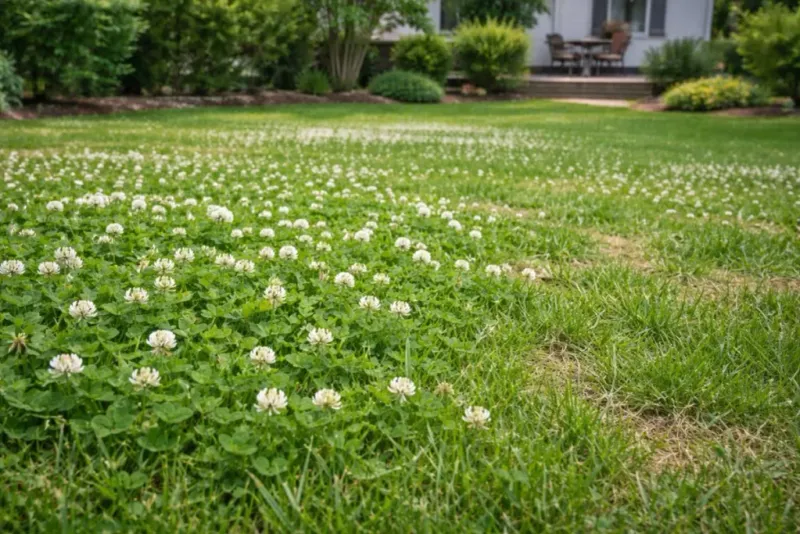
White clover creeping through your lawn is a signal worth paying attention to, but it rarely points to just one problem. Grass loses ground to clover when something in the growing environment tilts the odds against the turf, and that something can be different in different parts of the same yard.
Figuring out what your lawn is actually missing, whether it’s fertility, water balance, compaction relief, or simply more density, puts you in a much better position than reaching for fertilizer or a weed killer first.
Clover Signals Weakened Turf, Not One Certain Cause
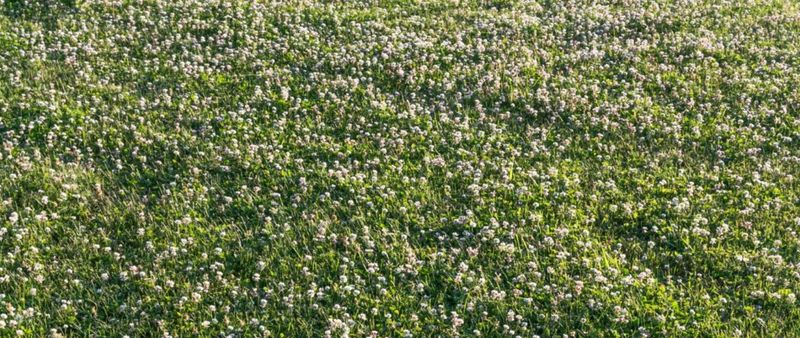
White clover tends to show up where grass has already lost its competitive footing. It tolerates close mowing, spreads through creeping stems that root wherever they touch soil, and fixes its own nitrogen through a partnership with soil bacteria, so it can hold ground even when conditions are rough.
That combination of traits lets it move into thin or stressed turf faster than most grasses can recover.
What clover does not do is prove that a single problem caused the outbreak. University of Minnesota Extension guidance on white clover describes it as a plant that exploits low-fertility conditions, but also notes it can establish wherever turf is sparse or stressed for other reasons.
Low available nitrogen is one possibility. Compaction, excess moisture, poor drainage, drought stress, heavy foot traffic, close mowing, shade, and simply thin turf density are others.
Different corners of the same lawn can have different causes. A shaded side yard and a well-worn footpath may both host clover patches, but the fix for each spot is not the same.
UF/IFAS research on weeds as soil indicators reinforces that weeds respond to a broad range of fertility and site conditions, not one universal deficiency. Diagnosing the specific conditions in each affected area before choosing a response is the step that makes the difference.
Confirm That the Plant Is White Clover
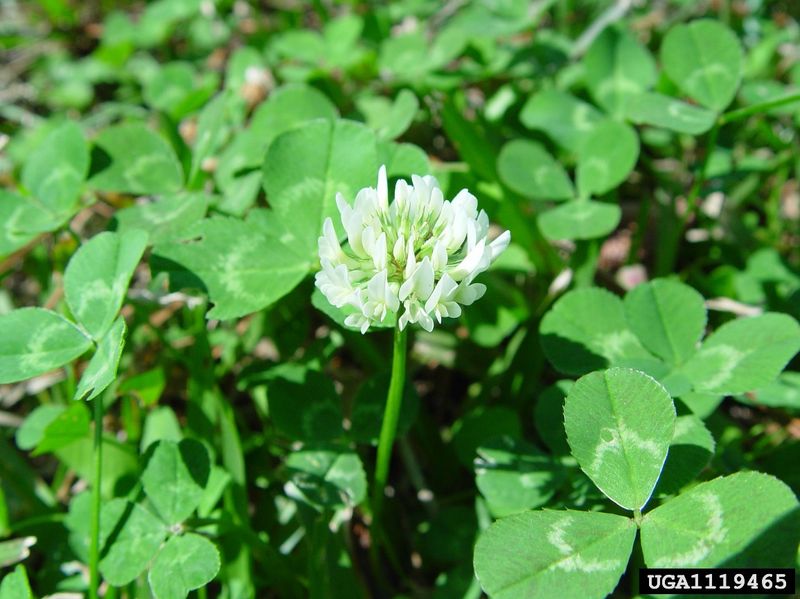
Before changing anything about how you manage your lawn, make sure what you are looking at is actually white clover. A confident ID saves you from treating the wrong plant, which can mean wasted product and a gap in the lawn that fills right back up with something else.
Minnesota Extension’s white clover profile describes the plant as having three rounded leaflets, often marked with a faint pale crescent or chevron, carried on creeping stems that root at the nodes as they travel across the soil. Flower heads are white to pinkish and round, rising on slender stalks above the leaf canopy.
The rooting stems are the detail that separates white clover from many look-alikes.
Black medic has three leaflets too, but its leaflets are more pointed and its flowers are yellow. Yellow woodsorrel also has three heart-shaped leaflets but folds them downward in bright light and produces small yellow blooms.
Lespedeza carries a similar three-leaflet shape but tends to grow more upright with a wiry stem. The University of Minnesota weed identification tool can help sort these apart if you are uncertain.
Once you have confirmed white clover, note where the patches are heaviest, because mapping those locations is the next useful step rather than treating the whole lawn at once.
Inspect What the Clover Pattern Reveals
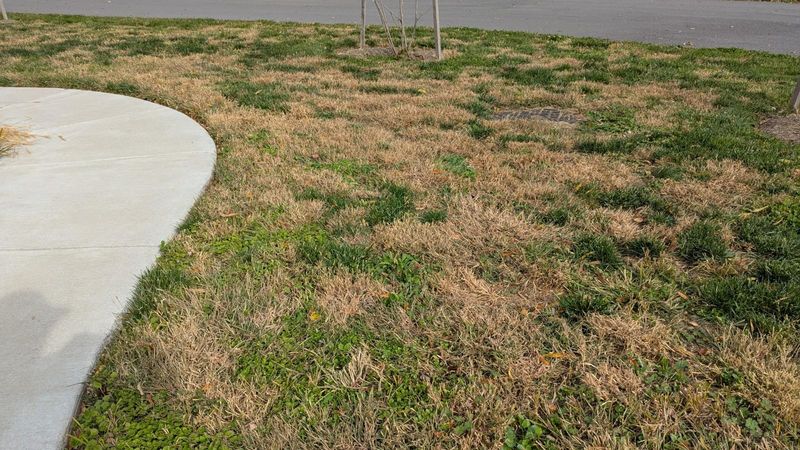
Walk the lawn slowly and compare areas where clover is thick against areas where the grass is holding up well. The pattern itself carries information.
Clover concentrated along a footpath or play zone usually points toward compaction from repeated traffic. A clover-heavy band under a tree or along a fence line often reflects shade or reduced air circulation rather than a fertility gap.
Extension guidance on white clover notes that the plant is associated with moist conditions, but drought stress and compaction can also leave turf thin enough for clover to move in. Those two scenarios look different on the ground.
Drought-stressed turf turns blue-gray, folds along the blade, wilts, or retains footprints for several seconds after you step on it. Wet or poorly drained areas may show moss, algae, or persistently soft soil that stays spongy well after rain stops.
University of Georgia Cooperative Extension’s overview of weed ecology emphasizes that weeds fill niches created by site conditions, which means the same lawn can have multiple distinct problems running in parallel. Check your irrigation heads for leaks, uneven spray, or coverage gaps.
Look for areas where sprinklers overlap too heavily and keep soil chronically wet. Note any low spots where water pools after rain.
Each of these observations narrows down which correction to make first and where.
Use a Soil Test to Evaluate Nutrient Needs

Low available nitrogen is one of the more common conditions associated with clover in lawns, and a soil test is the right way to find out whether fertility is actually part of the problem. Skipping the test and applying high-nitrogen fertilizer on suspicion can injure turf, contribute to nutrient runoff, and still leave the underlying cause untouched if compaction, drainage, or mowing height was the real issue.
UF/IFAS research on indicator weeds lists clovers among plants associated with low-nitrogen soils, and also notes that weeds can respond to a broad range of fertility conditions. Clover’s relationship with nitrogen is worth understanding on its own terms.
White clover fixes atmospheric nitrogen through a symbiosis with Rhizobium bacteria in root nodules. That ability lets it compete in low-fertility settings, but it also means established clover can contribute some nitrogen to the surrounding grass stand.
A 2014 Crop Science study on white clover within bermudagrass lawns documented nitrogen fixation and partial transfer to associated grass, showing the relationship is not simply competitive.
A soil test evaluates pH, phosphorus, potassium, and sometimes micronutrients alongside nitrogen indicators, giving you a fuller picture of what your soil is missing and what it already has. UF/IFAS guidance for bermudagrass in Florida and Texas A&M AgriLife Extension’s bermudagrass management calendar both recommend soil-test-based fertilization rather than guesswork.
Follow the test results and the recommendations for your specific turfgrass species. Never fertilize warm-season grass while it is dormant or severely heat- or drought-stressed, and stay within local application rules.
Correct the Weakness That the Site Actually Shows
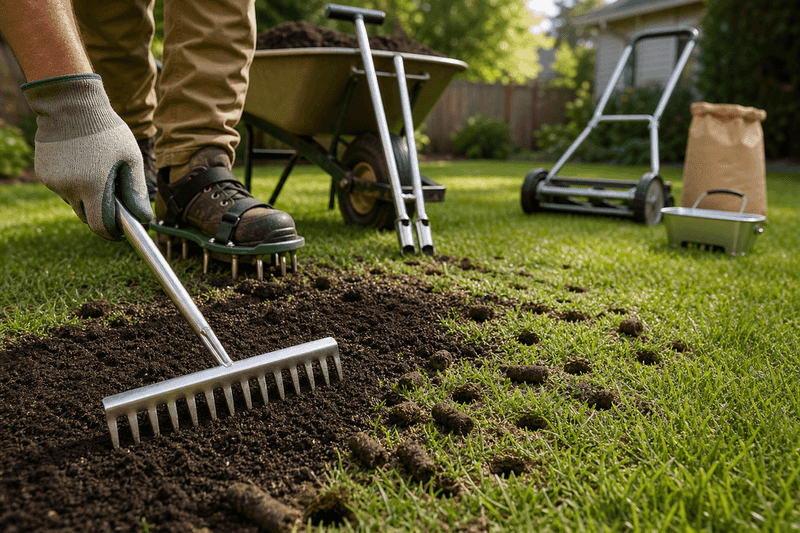
Once the inspection and soil test point toward a specific problem, the correction should match that problem rather than defaulting to a single remedy for the whole lawn. Fertilizer cannot fix drainage.
Aeration alone cannot fix a mowing habit that removes too much blade at once. Working through each issue on its own terms is what actually changes the balance between grass and clover over time.
For irrigation problems, repair any leaking heads, adjust uneven sprinkler coverage, and avoid watering schedules that keep soil chronically wet. Warm-season turf should be watered deeply enough to reach the root zone and only when the grass shows early stress signals, adjusted for rainfall and any local watering restrictions.
Extension clover management guidance connects clover with both moist conditions and drought stress, so the goal is balanced moisture rather than simply more or less water.
Core aeration helps where compaction is clearly present, typically in high-traffic areas where the soil resists a screwdriver or probe pushed six inches deep. Schedule it during active grass growth so the turf can fill in the cores.
UGA Extension’s weed ecology overview points out that persistent traffic may need a path, stepping stones, mulch, or another durable surface rather than repeated aeration cycles alone. For mowing, UF/IFAS Florida-Friendly Landscaping guidelines list species-appropriate height ranges and reinforce the one-third rule: never remove more than one-third of the blade in a single cut.
Staying within the correct range for your grass type reduces stress and keeps the canopy competitive.
Match the Prescription to Southern Turfgrass
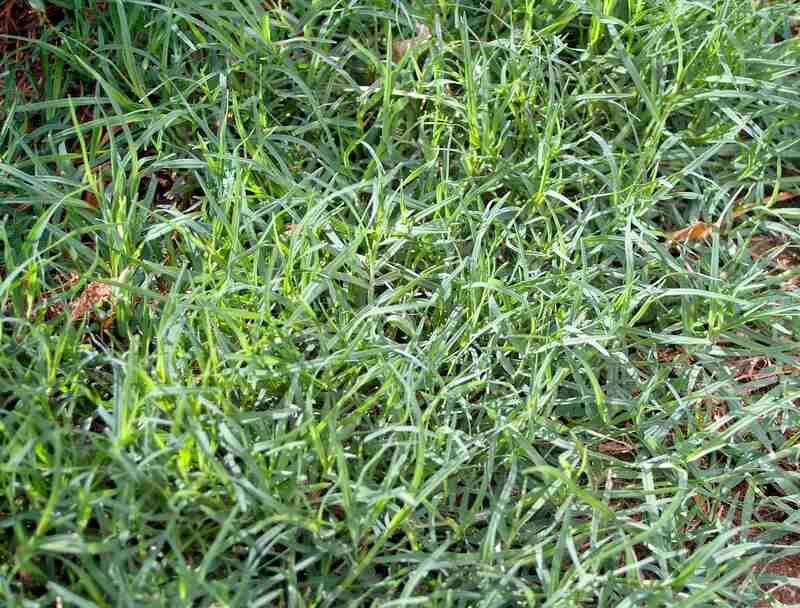
Florida and Texas lawns are not interchangeable, and the warm-season grasses grown across both states have different requirements that affect how you address a clover problem. Applying bermudagrass recommendations to St. Augustinegrass, centipedegrass, bahiagrass, or zoysiagrass can cause real damage, especially when it comes to fertilizer rates, mowing heights, and herbicide selection.
Texas A&M AgriLife Extension’s bermudagrass calendar and UF/IFAS bermudagrass guidance for Florida both suggest a typical application range of 0.5 to 1 pound of nitrogen per 1,000 square feet per application during the growing season, with the number of applications varying by region and conditions. Those figures apply to bermudagrass specifically.
Centipedegrass is notably sensitive to over-fertilization, and UF/IFAS centipedegrass guidance calls for much lower nitrogen inputs than bermudagrass receives.
Mowing height also varies by species and cultivar. UF/IFAS Florida-Friendly guidelines list approximate ranges of 0.5 to 1.5 inches for bermudagrass, 1.5 to 2 inches for centipedegrass, 2.5 to 4 inches for most St. Augustinegrass, 3 to 4 inches for bahiagrass, and 2 to 2.5 inches for coarse zoysiagrass.
Exact cultivar recommendations take priority over these general ranges. Active growth, dormancy timing, local conditions, and establishment history all matter when deciding what treatment to apply and when.
UF/IFAS guidance on establishing Florida lawns notes that incomplete establishment and early thin spots are directly linked to later weed pressure, which is why getting the species and site right from the start matters.
Rebuild Turf Density After Fixing the Cause
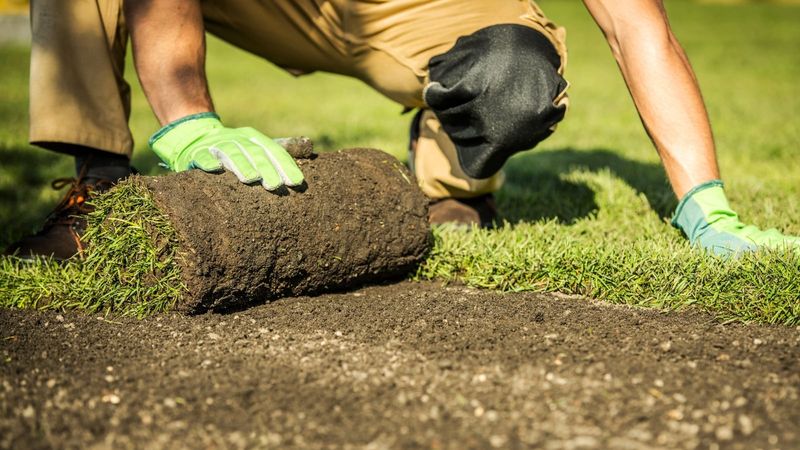
Pulling clover without closing the gap it leaves behind is one of the most common reasons a lawn invites it right back. Bare or thin soil is an open invitation for whatever seed or stolon reaches it first, and in warm Southern conditions that can happen quickly.
The repair step matters as much as the removal step.
After correcting the demonstrated soil, water, compaction, drainage, or mowing problem, reseed, resod, sprig, or plug the thin areas during the season appropriate for your grass species. Warm-season grasses generally establish best during active spring and summer growth rather than during dormancy or heat stress peaks.
UF/IFAS establishment guidance links incomplete early cover directly with later weed invasion, reinforcing that density is the lawn’s best long-term defense. Extension clover guidance identifies dense, healthy turf as the primary barrier against white clover moving in.
For small clover patches, hand removal is a reasonable first option before reaching for any product. The key is removing the rooted stolon sections, not just the leaves above the surface.
Pulling only the foliage leaves the creeping stems in the ground to regrow. University of Minnesota’s weed management resource supports hand removal as a practical early intervention for limited infestations.
After pulling, fill the exposed soil promptly with the appropriate sod, plugs, or seed so the space does not simply recolonize from the edges.
Choose Between Coexistence and Careful Removal
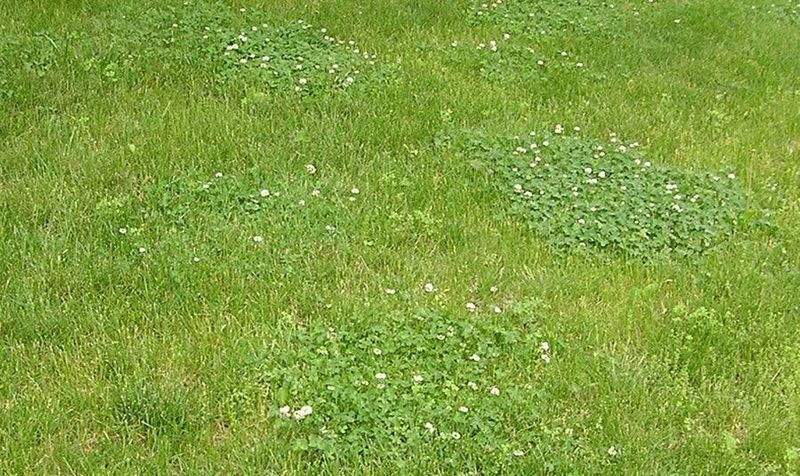
Not every homeowner needs to remove clover, and that is worth stating plainly. White clover provides nectar and pollen for bees and other pollinators, fixes atmospheric nitrogen that can benefit neighboring grass, and has been used deliberately in bee lawns, mixed turf systems, and low-input ground covers.
If a uniform ornamental lawn is not your goal, keeping some clover is a reasonable and wildlife-friendly choice. University of Minnesota Extension acknowledges clover’s role as a pollinator plant and notes that removal depends on the homeowner’s objective rather than a universal rule.
For homeowners who do want uniform turf, start with hand removal for small patches, as described in the previous section. If the infestation is too large for hand removal after cultural corrections have been made, a selective herbicide may be appropriate.
Product selection must match both the target weed and the specific turfgrass. Texas A&M AgriLife Extension notes that 2,4-D alone will not control clover effectively.
Some combination products containing dicamba, MCPP, quinclorac, or triclopyr may work on certain turf types, but quinclorac should not be applied to St. Augustinegrass, and triclopyr can injure bermudagrass when used alone.
Always read the current product label before purchase and before application. EPA pesticide safety guidance advises following label directions exactly, including any restrictions on application timing, temperature, and site.
Do not spray flowering clover when bees are actively foraging, and check whether the label specifically restricts treatment of blooming weeds. Some EPA label requirements include pollinator protection language that limits when and how certain products can be applied near flowering plants.
Diagnose the Weakness Before Chasing the Clover
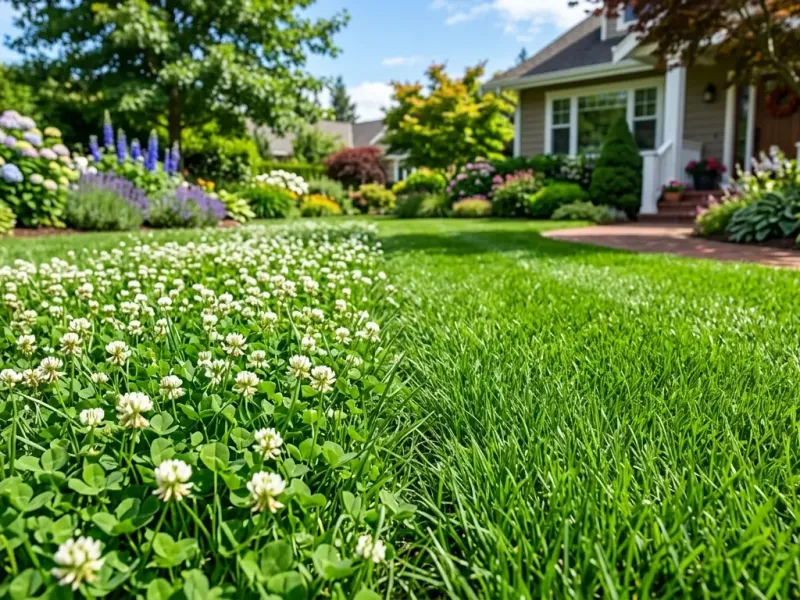
The sequence that produces lasting results goes in this order: confirm the plant is white clover, map where it is concentrated and what site conditions those spots share, test the soil to evaluate nutrient and pH needs, correct the specific weakness the site actually shows, rebuild grass density in thin areas, and then decide whether removal fits your goals. Skipping to fertilizer or a broadleaf herbicide without that sequence often means treating the symptom while the cause continues.
Extension guidance and UF/IFAS indicator weed research both point toward the same conclusion: dense, well-managed turf is the answer, and the path to it runs through diagnosis rather than around it.
Clover is telling you something useful. The lawn that listens to that signal and fixes the right problem will outcompete it.
The lawn that ignores the pattern will keep seeing it return.