
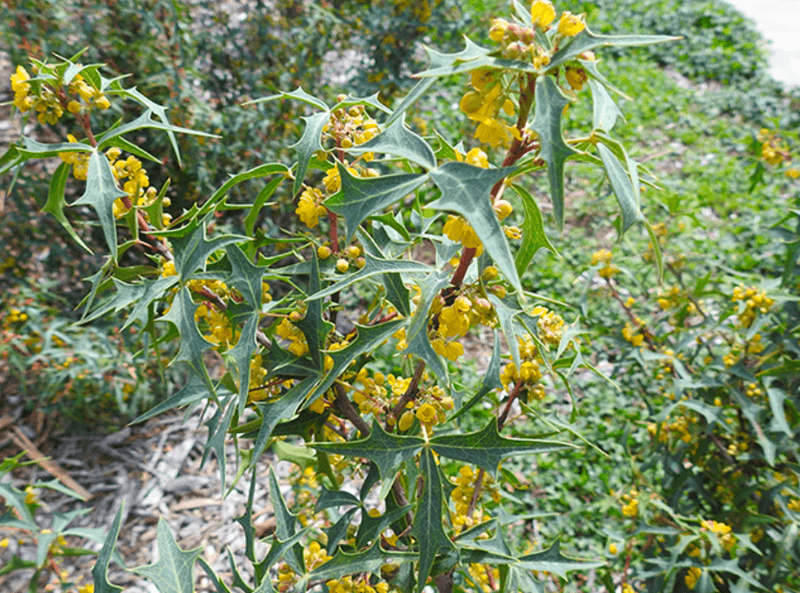
Agarita is a tough Texas native shrub with prickly leaves that stay green all year. Roadrunners are famous for eating scorpions, so it is tempting to link the two plants and pests together.
The real story is more useful than the myth. Here is what agarita can do for wildlife, what roadrunners actually eat, and what really helps keep scorpions out of your house.
Agarita offers evergreen cover in Central Texas
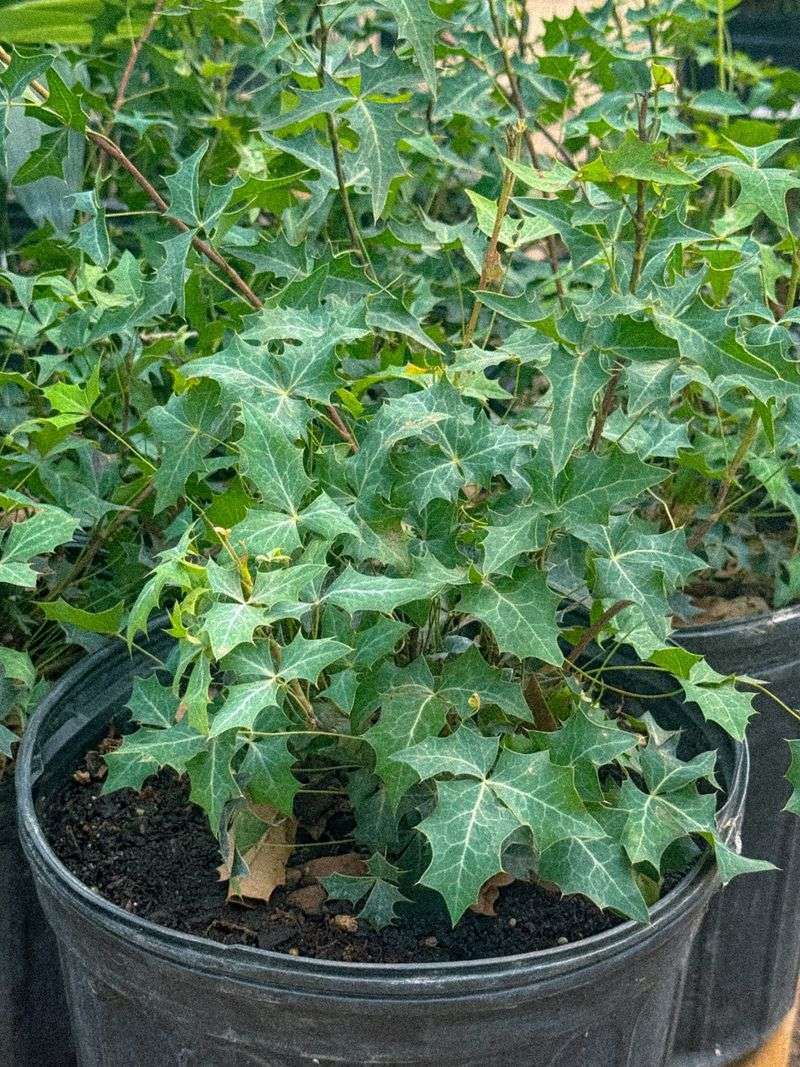
Few native shrubs handle a triple-digit Texas summer as calmly as agarita. It keeps its leaves all year, grows in sun to part shade, and needs very little water once established.
The City of Austin plant guide lists it at roughly 3 to 7 feet tall and 3 to 6 feet wide, so it fits many yards without much trimming.
Those stiff, spiny leaves are what make agarita interesting for wildlife. The city says it provides nesting cover for birds, and its prickly, thicket-forming habit can give small animals a place to hide.
That is a general bird and wildlife benefit. It is not a finding about roadrunners in particular.
Agarita is documented as a Texas native and a Central Texas landscape choice, according to the Native Plant Society of Texas. You may see it listed as Berberis trifoliolata or Mahonia trifoliolata, so check both names at the nursery.
This recommendation is meant for Texas, especially the central part of the state, and should not be stretched to other regions without local advice.
Placement matters because the foliage is sharp. Think of agarita as a shrub to plant on purpose in a spot you will not brush past.
Later sections cover exactly where that spot should be.
Plant it because it suits your soil, your water budget, and your wish to support wildlife. Do not plant it expecting it to summon any one bird.
Roadrunners use open ground and scattered cover
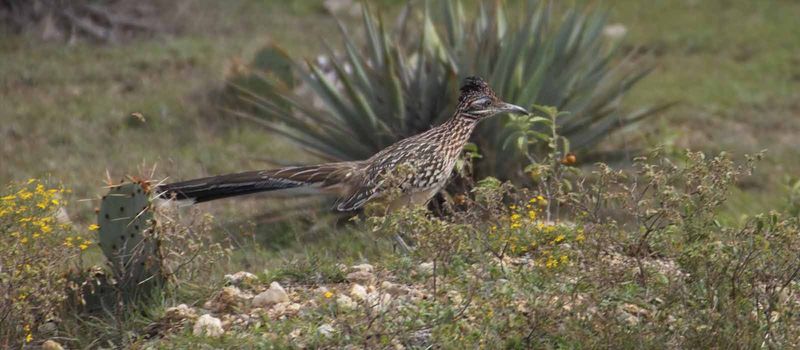
Picture a roadrunner and you probably see it sprinting across open dirt. That image is accurate.
Texas Parks and Wildlife describes their foraging habitat as bare ground with scattered trees and bushes, and notes that they live in varied Texas habitats, including Hill Country brush.
The same source says roadrunner nests may be hidden in a thorny bush, cactus, or tree. Thorny cover gives a bird a protected spot, which is why a prickly evergreen shrub sounds appealing.
Even so, nothing shows that roadrunners choose agarita over other cover, or that one shrub will bring a roadrunner to a particular yard.
The key lesson is the mix. Roadrunners need room to run and hunt, plus some low cover nearby.
A yard planted wall to wall with dense brush would take away the open ground they use.
If you want to support wildlife, think in patches. A few agarita in a back corner, some bare or sparsely covered ground, and other native plants around them create the kind of layered edge that many birds use.
Whether a roadrunner ever passes through depends on your neighborhood, nearby habitat, and plenty of luck. Treat any visit as a bonus, not a result you can order up with a shrub.
Scorpions are one part of a varied diet
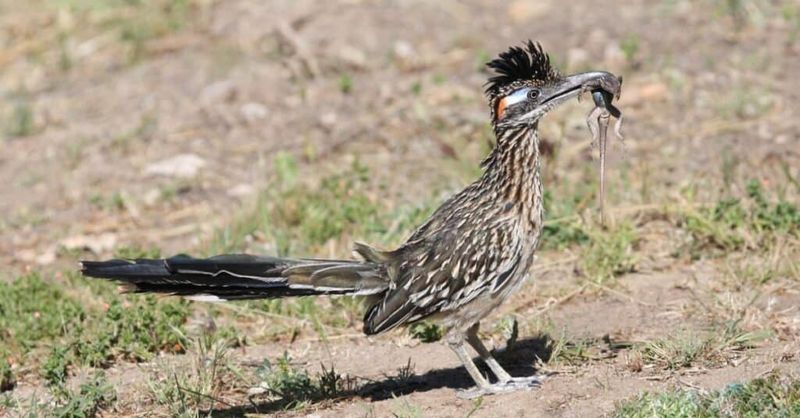
Yes, roadrunners eat scorpions. Yes, that makes a good story.
But a bird that eats scorpions is not the same as a bird that clears them from your house.
Consider the numbers from a Texas Parks and Wildlife study of roadrunner diets in South Texas. Researchers found scorpion remains in the overall stomach sample.
Grasshoppers, though, turned up in more than 93 percent of the stomachs they examined. Scorpions were one item on a long menu.
The study’s limits matter too. It took place at one wildlife management area, in spring and summer, during 1997 and 1998.
That is a narrow slice of place and time, so it cannot tell us how often a roadrunner in a Central Texas backyard eats scorpions today.
It also says nothing about pest control at homes. Scorpions that get indoors often come through gaps around doors, pipes, and eaves, and a bird outside the wall cannot fix those openings.
So enjoy the fact that roadrunners are skilled hunters of many small animals. Just keep that admiration separate from your plan for a scorpion-free bedroom.
Site prickly shrubs away from paths and the house
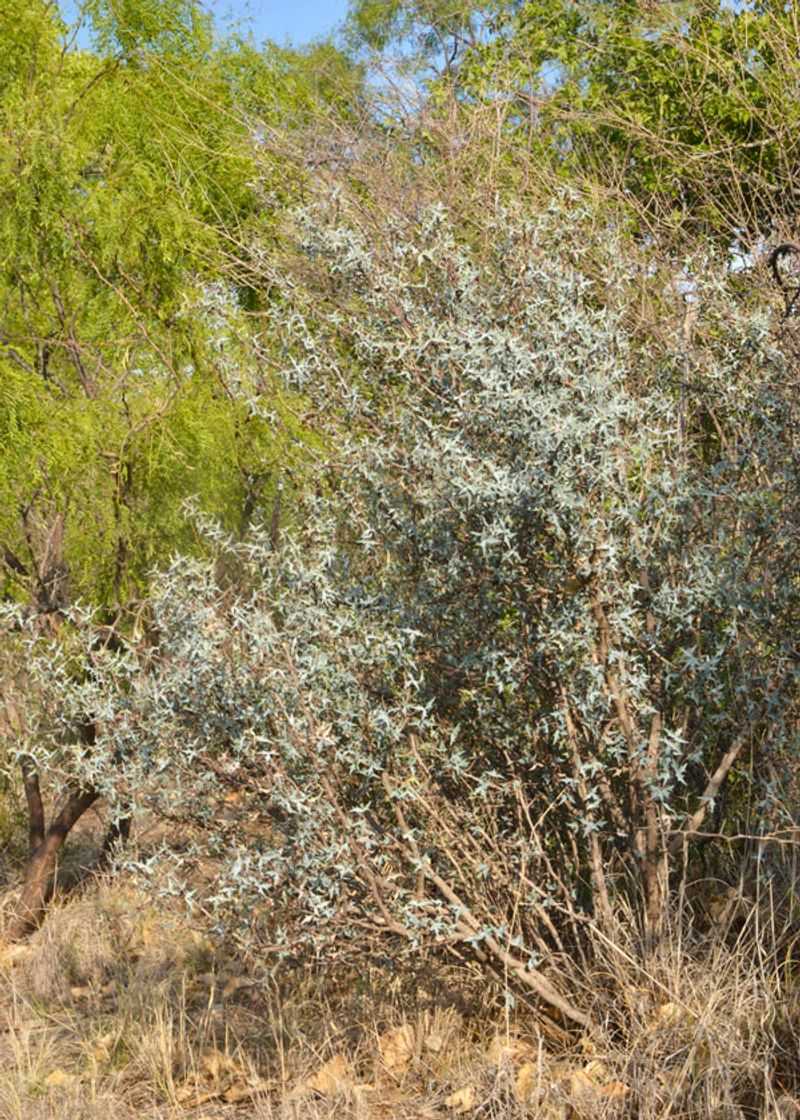
Agarita earns its spot with sharp leaves, and those leaves do not care who walks by. Place it where nobody will brush against it, which rules out spots beside walkways, doorways, gates, or play areas.
Pets that run along a fence line can get scratched too.
Size is the next planning detail. With a mature width of about 3 to 6 feet, according to the City of Austin, an agarita needs elbow room.
Give it space so it does not creep over a path as it fills out.
Now the part that surprises many wildlife gardeners. Texas A&M AgriLife scorpion guidance recommends keeping loose boards, stones, debris, and excess mulch away from the structure, and avoiding shrub or branch contact with the building.
Dense plantings hugging the foundation can shelter scorpions and give them a way in.
The compromise is simple. Put agarita in a back corner, along a far fence, or in a habitat patch well away from the house.
Keep the strip right around the foundation tidy and uncluttered.
That layout gives birds and other wildlife some cover while keeping people, pets, and the house perimeter clear.
Use exclusion and perimeter management to reduce indoor entry
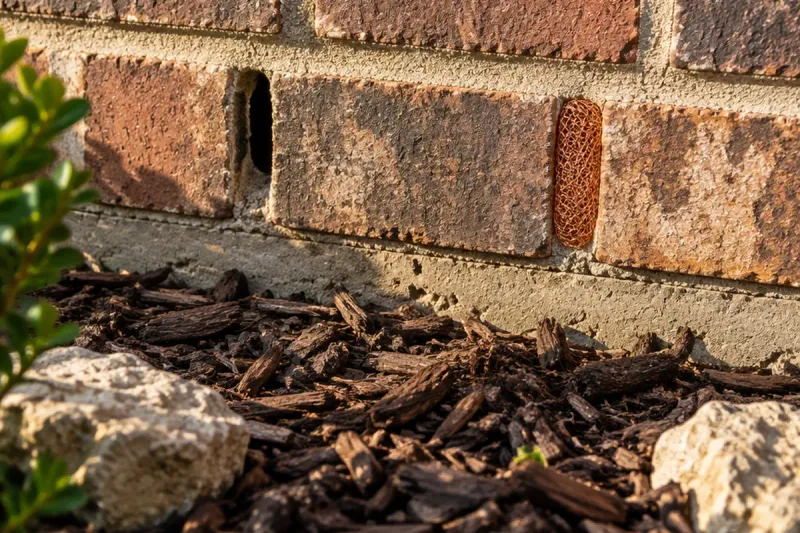
Keeping scorpions out of the house is a building job. Texas A&M AgriLife lists the basics in its scorpion fact sheet: fit door sweeps and weather-stripping, repair damaged screens, and seal cracks and gaps around pipes, eaves, and other openings.
Weep holes in brick walls should have suitable screening as well.
Start with a walk around the house at dusk with a flashlight. Look for daylight under doors, gaps where pipes enter the wall, torn window screens, and loose trim.
Seal what you find, then check again after a few weeks.
Housekeeping outside counts too. Move firewood, loose boards, stones, and debris away from the walls.
Keep mulch thin near the foundation, and trim shrubs and branches so they do not touch the building.
What about pesticides? Texas A&M school IPM guidance says treatments may suppress scorpions but should not be the only control method.
If you use any product, read and follow the label. If you keep seeing scorpions, call a pest-management professional.
Also, never pick up a scorpion by hand. Texas A&M notes that stings usually cause moderate reactions in most people, but reactions vary and allergic reactions are possible.
Seek medical care for persistent pain or swelling, or any trouble breathing.
Treat habitat gardening and scorpion control as separate goals
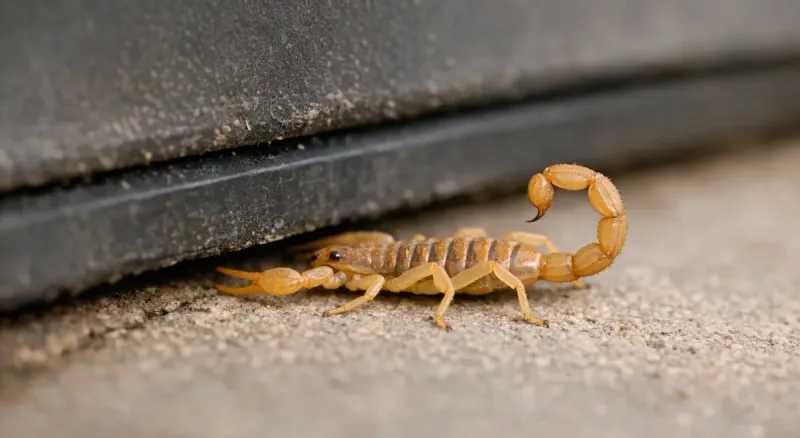
Two goals, two toolkits. Plant agarita where its prickly form and Texas roots make sense, and pair it with open ground and low cover, the mix Texas Parks and Wildlife describes for roadrunner foraging.
For the house, rely on sealed gaps, door sweeps, a tidy perimeter, and label-following pest products as part of the integrated approach Texas A&M recommends. Neither agarita nor roadrunners are proven scorpion control for a home.
A shrub can shelter wildlife, but only a sealed wall keeps a scorpion off the bedroom floor.