
You filled the feeder, hung it by the porch, and waited, but the hummingbirds flew right past it. Most of the time, the problem is not the feeder or the yard.
It is what went into the nectar and how it was mixed. Fix a few simple habits, and your Southern backyard can become a regular stop for these tiny, flashy visitors.
1. Using the Wrong Sugar-to-Water Ratio
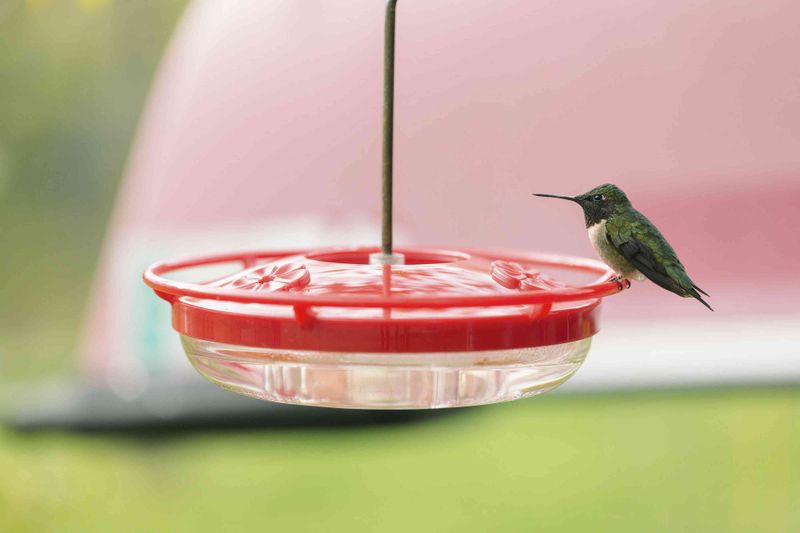
Picture a hummingbird zipping up to your feeder, taking one sip, and zooming off for good. A mix that is too weak often causes exactly that reaction.
Birds burn energy fast, and a watery drink may not seem worth the stop.
The standard recipe is one part plain white sugar to four parts water. That ratio closely matches the sucrose level found in many of the flowers hummingbirds visit, like coral honeysuckle and firebush.
Going stronger than that is not a bonus either, because overly thick syrup can be harder for birds to process and spoils more quickly in heat.
Eyeballing the sugar is where most people slip. A scoop here and a splash there can drift far from the target.
Use real measuring cups every time, even if you have made nectar a hundred times before.
A simple batch looks like this:
1 cup white sugar plus 4 cups water. Stir until fully clear.
If your feeder is small, halve it: half a cup of sugar to two cups of water. Keeping the ratio steady gives visiting birds a reliable, familiar taste, which can encourage them to add your yard to their daily route through the summer.
2. Adding Red Dye to the Mix
Store shelves are packed with bright red nectar, so it is easy to assume color matters. Here is the good news: it does not.
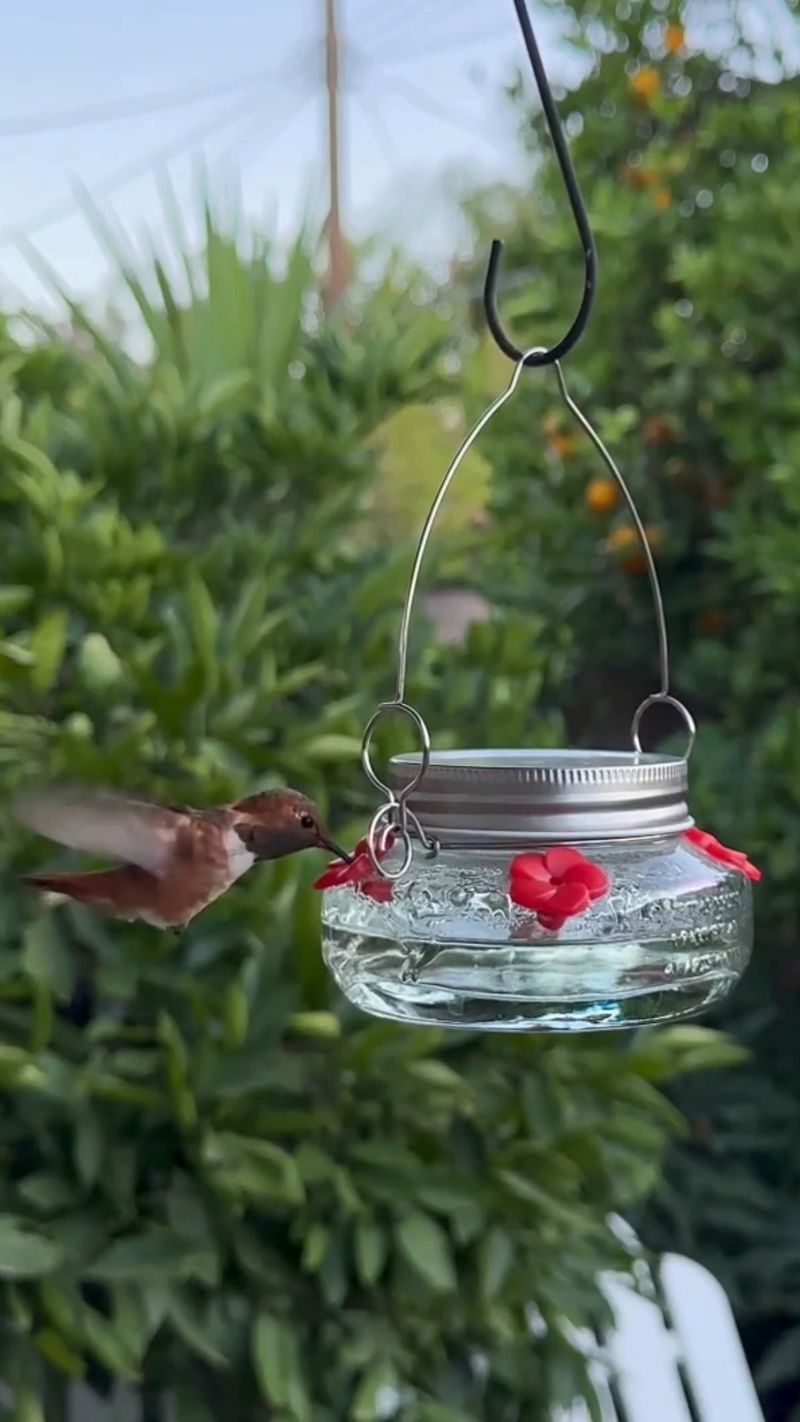
Hummingbirds are drawn to red, but the red parts of your feeder already do that job.
Artificial dye adds nothing the birds need. Many bird groups and wildlife experts recommend skipping it, since there is no nutritional value and some folks worry about possible effects on such tiny bodies.
Research on long-term harm is limited, but when the benefit is zero, leaving it out is the easy call.
Clear nectar has a practical perk too. You can actually see when it starts turning cloudy, which is a key warning sign of spoilage.
Dyed nectar hides that change, so you might leave bad syrup out longer without realizing it.
Want more red to catch attention? Try these instead:
Tie a red ribbon near the feeder. Choose a feeder with red ports or a red base.
Plant red salvia, Turk’s cap, or firespike nearby, which thrive in Texas and Florida heat.
Those touches may pull birds in just as well, and the nectar stays pure and easy to check.
3. Swapping in Honey or Brown Sugar
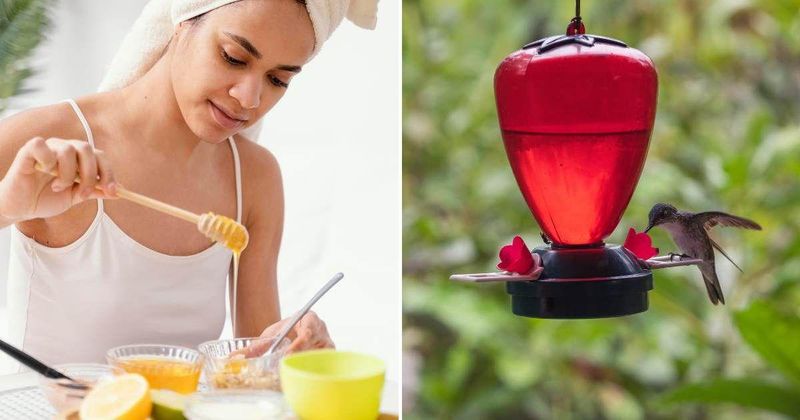
Honey feels wholesome. Brown sugar and raw sugar feel natural.
For people, maybe, but for hummingbirds, these swaps can cause real trouble.
Honey ferments quickly once diluted, and it can grow a fungus that may harm a bird’s tongue and throat. Brown, raw, and turbinado sugars contain molasses, which carries extra iron.
Hummingbirds are thought to be sensitive to iron buildup, so these darker sugars are usually discouraged.
Artificial sweeteners are an even bigger miss. They have no calories at all, and a hummingbird needs every bit of energy it can grab.
A bird filling up on zero-calorie syrup is basically running on empty.
Powdered sugar is another sneaky one. Most brands include cornstarch to stop clumping, and that starch is not something birds should be sipping.
The winner is boring but reliable: plain white granulated cane or beet sugar. It is pure sucrose, very close to what flowers make.
It is also cheap and easy to find at any grocery store from Houston to Tampa.
When the pantry runs low, wait for a store run rather than grabbing a substitute. A day with no nectar is better than a day with the wrong kind.
4. Skipping the Full Dissolve
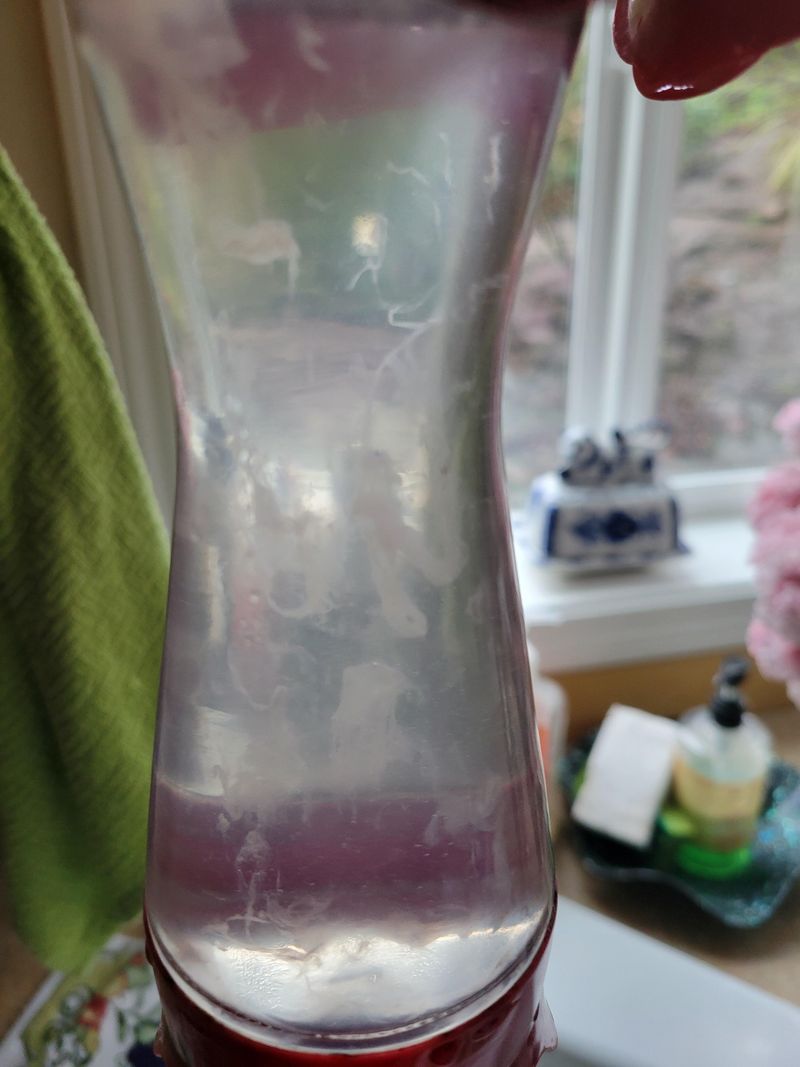
Grainy sugar sitting at the bottom of your pitcher is a small detail with a big effect. When crystals do not dissolve, the top of the mix ends up weaker than planned, while the bottom turns into thick sludge.
That uneven mix means birds get a thin drink first and a syrupy one later. Undissolved sugar can also cling to feeder ports and parts, giving mold a head start.
You have two easy fixes. Many people warm the water first, stir in the sugar, and let it cool.
Others simply use warm tap water and stir until every grain disappears. Both usually work fine, as long as the liquid looks completely clear.
A quick check helps:
Hold the pitcher up to the light. Look for any sparkle or cloud near the bottom.
Keep stirring if you see even a little.
Some folks also like boiling briefly to help the syrup keep a bit longer, though fresh feeder changes matter far more than boiling. Whatever method you pick, patience at this step makes the rest easier.
A smooth, even solution tastes the same from the first sip to the last, which keeps birds coming back without surprises.
5. Pouring Hot Nectar Straight Into the Feeder
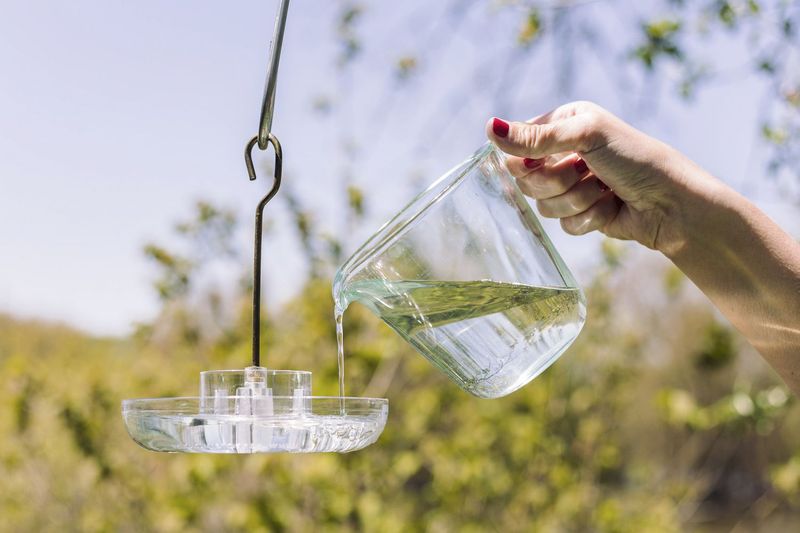
Impatience strikes right after the stove. The syrup is ready, the birds are buzzing outside, and it feels natural to pour it in right away.
Hold on for a bit.
Hot nectar can warp plastic feeders, crack some glass, and loosen seals, which leads to drips. Leaking feeders often attract ants and bees, and those crowds can push hummingbirds away.
Warm syrup set out in a sunny Southern afternoon may also spoil sooner.
There is a comfort side too. Nobody knows exactly how hummingbirds react to a very warm drink, but room-temperature nectar is closer to what they get from flowers.
Keeping things natural is a safe bet.
Here is an easy routine:
Let the pan cool on the counter for 20 to 30 minutes. Test the side of the pitcher with your hand.
Fill the feeder only when it feels room temperature.
Making a double batch saves time here. Once the extra has cooled, store it in a clean, covered jar in the fridge.
Many sources say it keeps about a week that way. Next refill, just let the chilled nectar warm up slightly on the counter, and you are ready to go without waiting on the stove.
6. Mixing in a Dirty Container
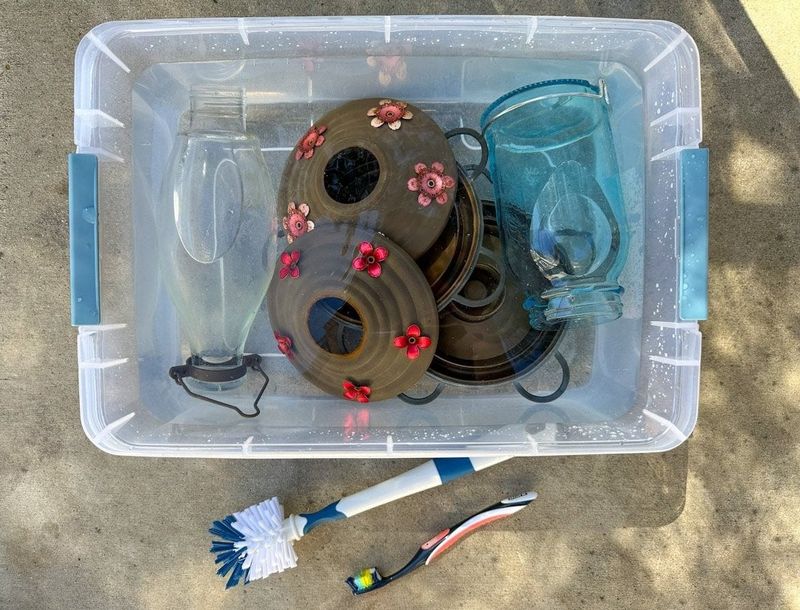
A spotless recipe can still fail in a grimy pitcher. Leftover soap, old juice, or last week’s syrup film can carry bacteria and odd flavors into a brand-new batch.
Hummingbirds seem to notice. Many backyard watchers report birds ignoring feeders that smell or taste off, even when the nectar is fresh.
You cannot always spot the problem, but a thin layer of residue is often enough to speed up fermentation.
Keep one pitcher, spoon, and funnel just for nectar. Wash them in hot water after every use.
If you use dish soap, rinse several times so no scent remains, since strong soap smells may turn birds off.
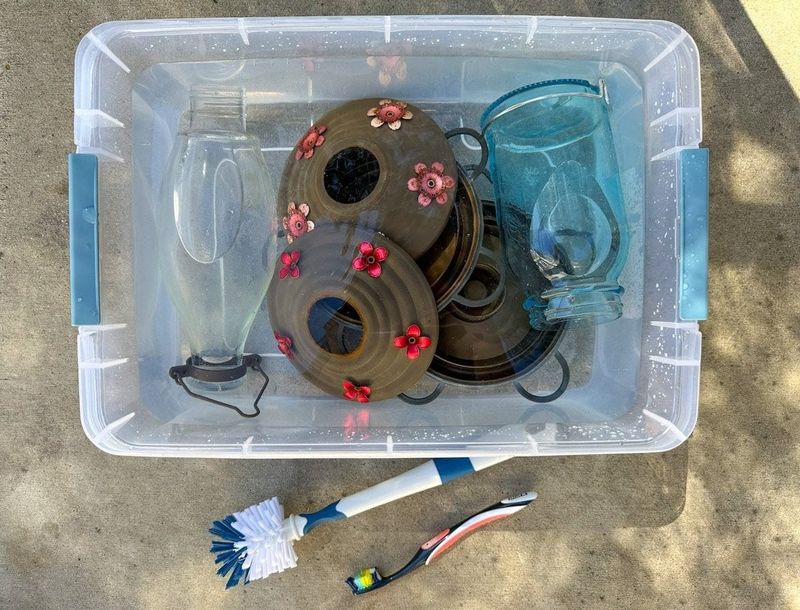
For deeper cleaning, a mix of one part white vinegar to four parts water works well on both tools and feeders. Soak, scrub with a bottle brush, then rinse thoroughly.
Watch for these trouble spots:
Black specks inside ports or seams. Cloudy film on glass.
Sticky rings around lids.
Any of those mean it is time to scrub. Clean gear takes just a few minutes, yet it can make a noticeable difference in how long nectar stays fresh on a hot patio in Florida or Texas.
7. Topping Off Old Nectar
Grandma’s old trick of adding fresh syrup to a half-full feeder sounds thrifty. Sadly, it tends to backfire.
Old nectar already carries yeast and bacteria, and fresh sugar just feeds them.
Within hours, the whole feeder can start fermenting. Cloudy liquid, floating strands, or a sour smell are clear red flags.
Birds may take one taste and move on, and spoiled syrup is not something you want them drinking.
The better habit is simple: empty, rinse, then refill. Every single time.
If you often toss out lots of nectar, fill the feeder only partway. Hummingbirds drink small amounts, so a quarter-full feeder changed often usually beats a full one left too long.
That saves sugar and cuts waste.
Refresh timing in the South depends on heat. A rough guide many birders use:
Above 90 degrees, change every 1 to 2 days. 80s, every 2 to 3 days. 70s, every 3 to 4 days.
Florida and Texas summers push those numbers to the short end, and shaded feeders may last a little longer. Treat each refill as a fresh start, and your feeder stays inviting all season.
8. Using Heavily Treated or Softened Water
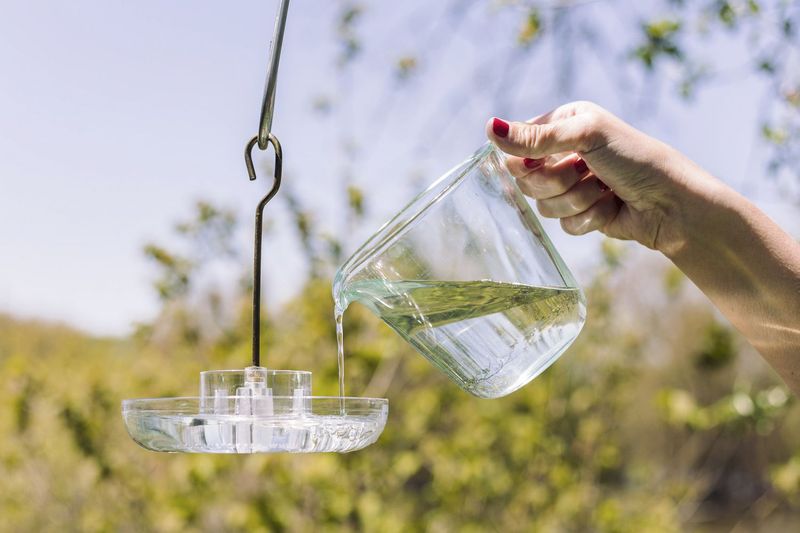
Water gets overlooked because it seems so ordinary. Yet it makes up about 80 percent of your nectar, so its quality matters.
Most municipal tap water is perfectly fine. The concern comes with water softeners, which often swap minerals for sodium.
Birds do not need extra salt, and some experts suggest avoiding softened water when possible. Well water with a strong sulfur or iron smell may also change the taste.
Heavy chlorine odor can be another small issue. Many homeowners find that letting tap water sit out for a few hours, or using a basic filter pitcher, removes that sharp scent.
Should you buy distilled water? Not usually.
Regular clean tap water is what most bird groups recommend, and it keeps nectar-making cheap and simple.
Quick ways to check your supply:
Smell it. Taste it.
Find out whether your home has a softener tied to the kitchen tap.
If your house has a softener, many systems leave an unsoftened line for outdoor spigots or drinking. Using that source, or a filter pitcher, may help your nectar taste closer to flower sweetness.
It is a small tweak, but it removes one more reason for birds to skip your feeder.
9. Adding Extras Like Vitamins or Electrolytes
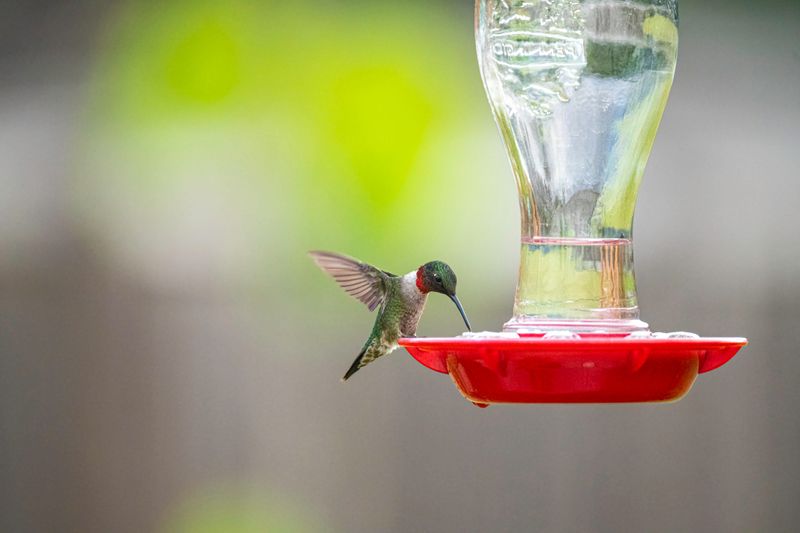
Kind hearts sometimes cause the biggest mix-ups. Some people add vitamins, electrolyte powder, juice, or even a pinch of salt, hoping to give birds a health boost.
Hummingbirds do not need that help from a feeder. They get protein, vitamins, and minerals by eating tiny insects and spiders, sometimes hundreds a day.
Nectar is simply their fuel. Adding supplements may upset the balance or speed up spoilage, and there is little evidence the extras do any good.
Fun fact: a hummingbird’s heart can beat over 1,000 times a minute during flight. That engine runs mainly on sugar, which is why plain syrup works so well.
So what can you offer for better health? Support the bug buffet.
Skip broad pesticides where you can, and let a few native plants host insects.
Great Southern picks include:
Coral honeysuckle, firebush, Turk’s cap, and native salvias.
Those plants provide real nectar and attract the small insects birds rely on. Pair them with a simple sugar-water feeder, and your yard offers a full meal.
Keep the recipe plain, keep it fresh, and let nature handle the rest of the menu.