
A driveway border can look tidy without becoming another weekly chore. The trick is to choose Florida natives that stay low, grow in clumps, or keep a predictable shape.
Match each plant to your sun and drainage, and you can spend less time cutting back leaves that reach the pavement. These seven picks offer different looks, from crisp green foliage to flowers and soft grasses.
1. Coontie
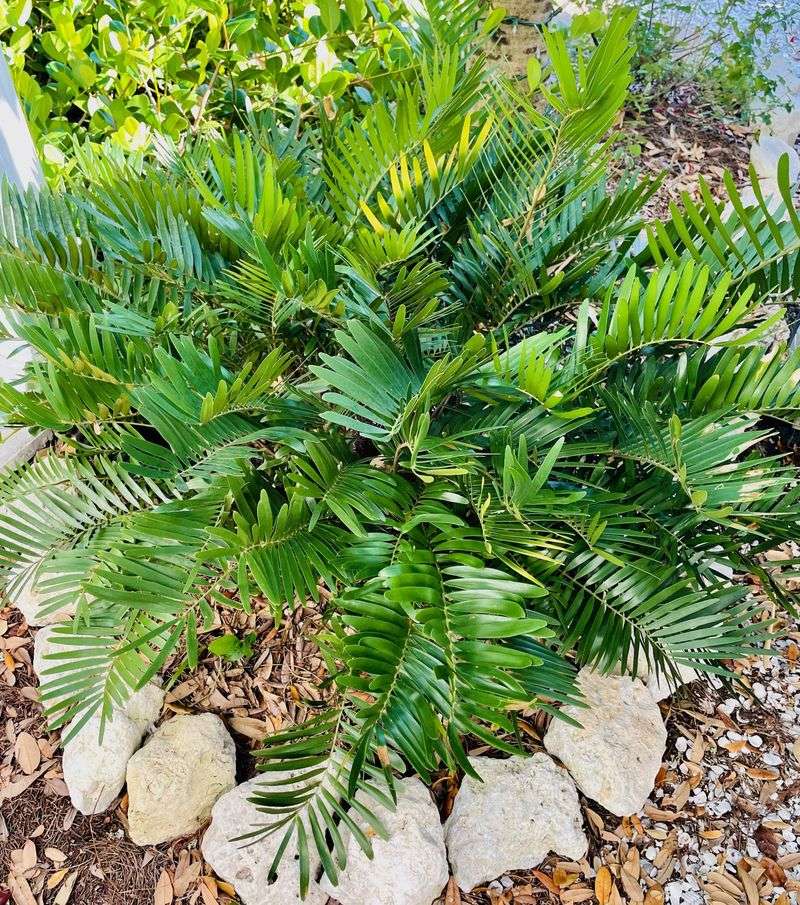
Want a border that looks put together even when nothing is blooming? Coontie brings a steady, deep-green shape to the driveway.
Its stiff, arching leaves form a rounded mound rather than long stems that flop across the concrete.
Give each plant room for its mature spread, often around 3 to 4 feet, and set the center well back from the pavement. Coontie grows slowly, so it is a better choice for a generous bed than a narrow strip beside a car door.
It handles Florida heat and sandy, well-drained soil once established, and it can grow in sun or part shade.
There is no weekly haircut to schedule. Remove an old or damaged frond near its base when needed, but leave the natural mound intact.
Coontie is also a host plant for the atala butterfly, giving this tidy evergreen a wildlife benefit. Its seeds are toxic if eaten, so consider placement carefully if pets or small children use the driveway edge.
2. Muhly Grass
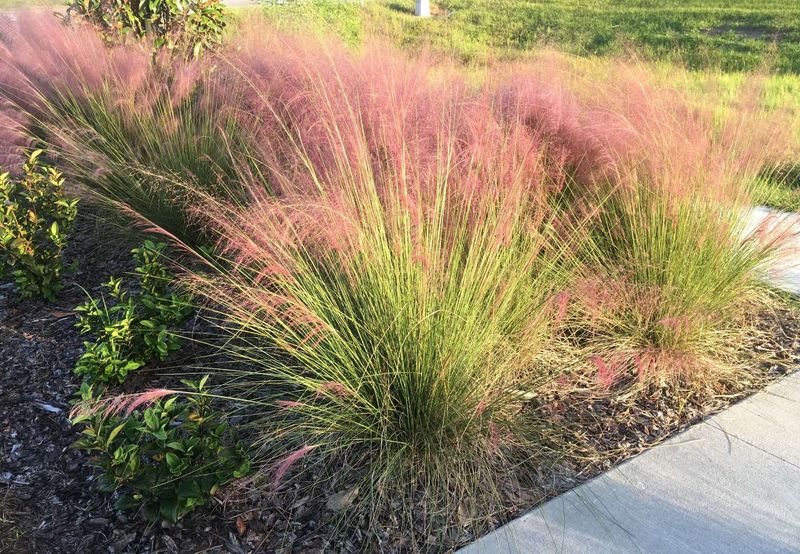
In fall, muhly grass can turn an ordinary driveway into a soft pink welcome. Its airy flower heads float above tidy clumps of fine leaves, adding color without a line of shrubs to shear.
Even after the flowers fade, the clumps give the border a clear, repeated shape.
Plant muhly in full sun and soil that drains well. It suits a sunny Florida driveway where reflected heat can be tough on less adapted plants.
Expect a mature clump to reach roughly 2 to 3 feet across, so leave space between plants and keep them back from the driving surface. A narrow planting strip will not show muhly at its best.
Maintenance is usually a seasonal decision, not a weekly one. If the foliage looks tired, cut the clump back in late winter before fresh growth begins.
Avoid frequent trimming during the growing season, which can spoil its rounded form and remove the fall display. For a clean edge, give each clump its own patch of mulch rather than squeezing several together.
3. Twinflower
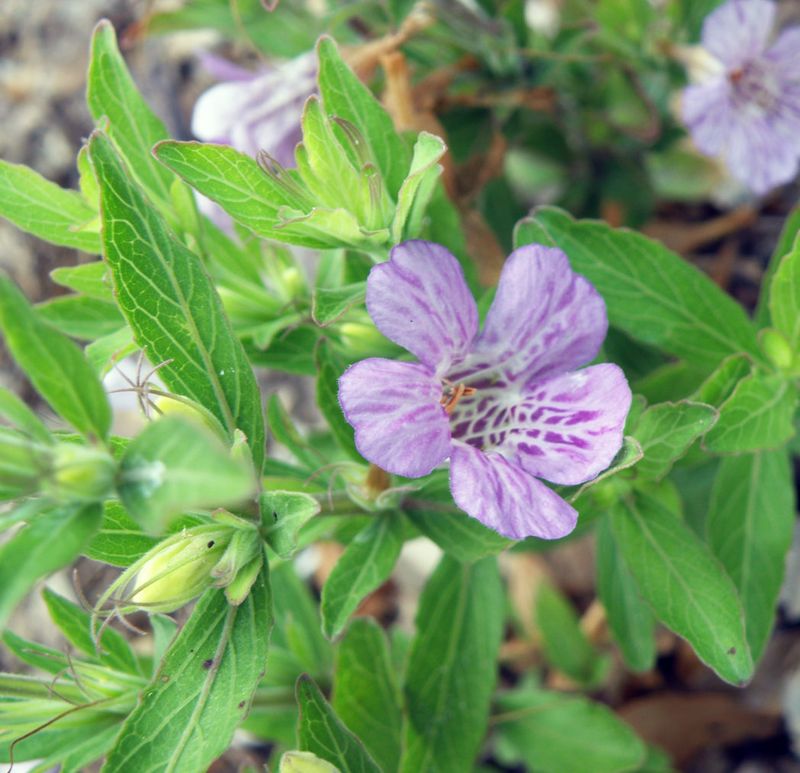
A little purple near the ground can make a driveway feel more welcoming without hiding the edge. Twinflower, Dyschoriste oblongifolia, stays much lower than the grasses on this list and bears small, lavender-purple blooms.
It is useful where you want living greenery beneath taller plants or along a walkway connected to the drive.
Choose a spot with part shade to sun and give it soil that does not stay soggy. Twinflower grows outward into a low mat, so it works best in a defined bed rather than a tiny gap between concrete slabs.
Its spreading habit helps cover bare soil, but it also means you should leave room between the planting and the pavement.
Check the edge occasionally for stems reaching onto the driveway, especially while the planting fills in. Snipping a stray stem is different from trimming an entire hedge every weekend.
A clear concrete or metal boundary makes the job easier. In a spot too small for coontie or muhly grass, twinflower offers a softer, flower-speckled option.
4. Blue-Eyed Grass
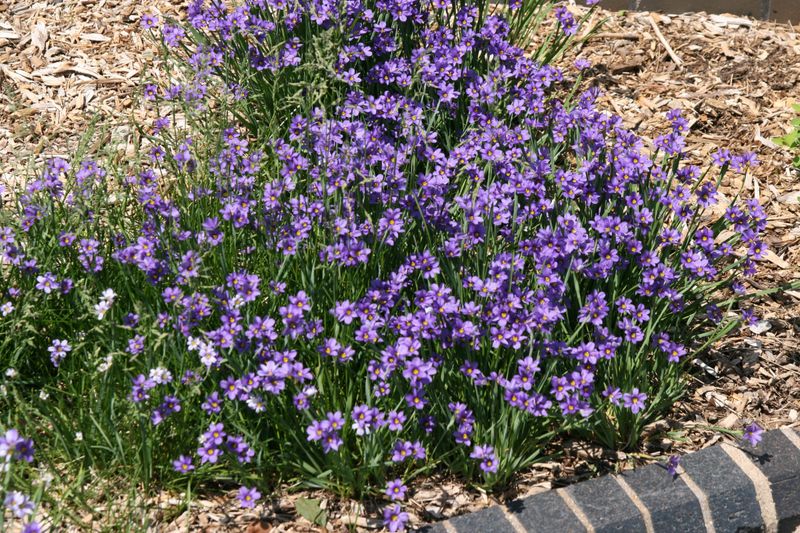
Blue-eyed grass has a small surprise for anyone walking from the car to the front door: tiny blue-violet flowers held above grasslike leaves. Despite its common name, it is not a true grass.
Its fine texture gives a driveway border a lighter look than a row of broad-leaved plants.
Use it toward the front of a sunny bed, where its small blooms will not disappear behind larger neighbors. Blue-eyed grass generally prefers soil that drains well and gets some moisture; a bone-dry strip beside hot pavement may need more attention than a better-protected bed.
In Florida, site conditions matter, so watch a new planting through its first warm season and water while roots establish.
Its modest clumps do not call for routine shaping. Remove spent or untidy leaves by hand if you want a sharper look, and let the plant keep its natural form.
Because it is a smaller-scale pick, blue-eyed grass works well beside a pedestrian path or a driveway with a wider planted edge where flowers can be seen up close.
5. Purple Lovegrass
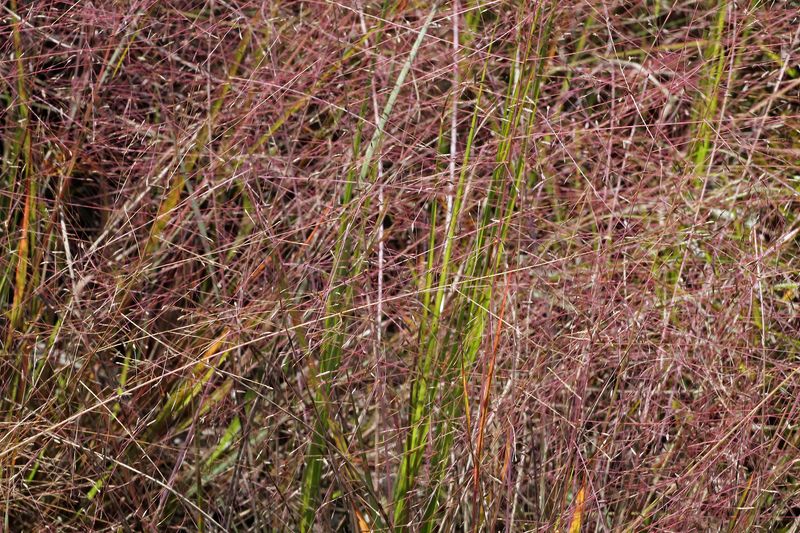
Some driveway borders need a plant that seems to catch the light rather than block the view. Purple lovegrass does that with wispy, purple-tinted flower and seed heads above a low clump of leaves.
The effect is especially pretty when several plants repeat along a sunny drive.
This Florida native suits full sun and sandy, fast-draining ground. It tolerates dry conditions once established, making it worth considering where irrigation is limited.
Leave room for the airy flowering stems: the plant may be low at its base, but its seasonal display spreads beyond the leaf clump. Planting too close to the tire path will make those stems look messy instead of graceful.
Rather than giving it constant touch-ups, let the seasonal display run its course. Cut away old growth when it looks spent, typically in late winter before new growth, and pull any unwanted seedlings that appear outside the bed.
Purple lovegrass is a good fit if you like a relaxed, natural edge but still want the pavement kept clear.
6. Wiregrass
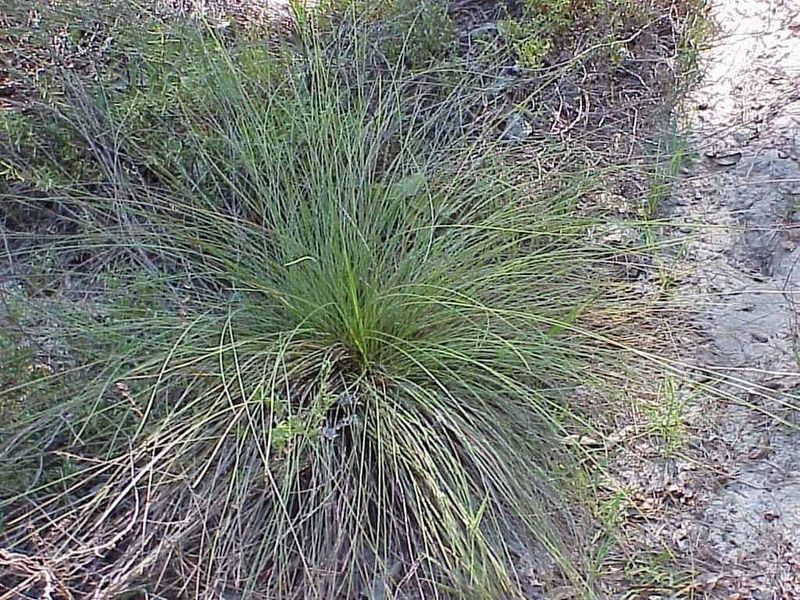
For a driveway beside a natural-looking Florida yard, wiregrass feels right at home. This native bunchgrass has narrow, upright leaves and a restrained shape that pairs well with pine straw, coontie, and other plants suited to sandy ground.
It adds texture without a wall of foliage beside the car.
Wiregrass is best for a sunny, well-drained site with enough bed width to show off separate clumps. It is not the pick for a wet swale or a shaded strip beneath a dense tree canopy.
Establishment can be slow, so keep the planting free of competing weeds and water new plants as needed while their roots settle in.
Once established in a suitable spot, wiregrass does not need weekly clipping to stay recognizable as a clump. Take out dead material only when it affects the look you want, and avoid cutting repeatedly just to force a lawnlike shape.
Ask a local native-plant nursery for stock suited to your part of Florida, since plants sold under the name wiregrass may be labeled with different Aristida species.
7. Frogfruit
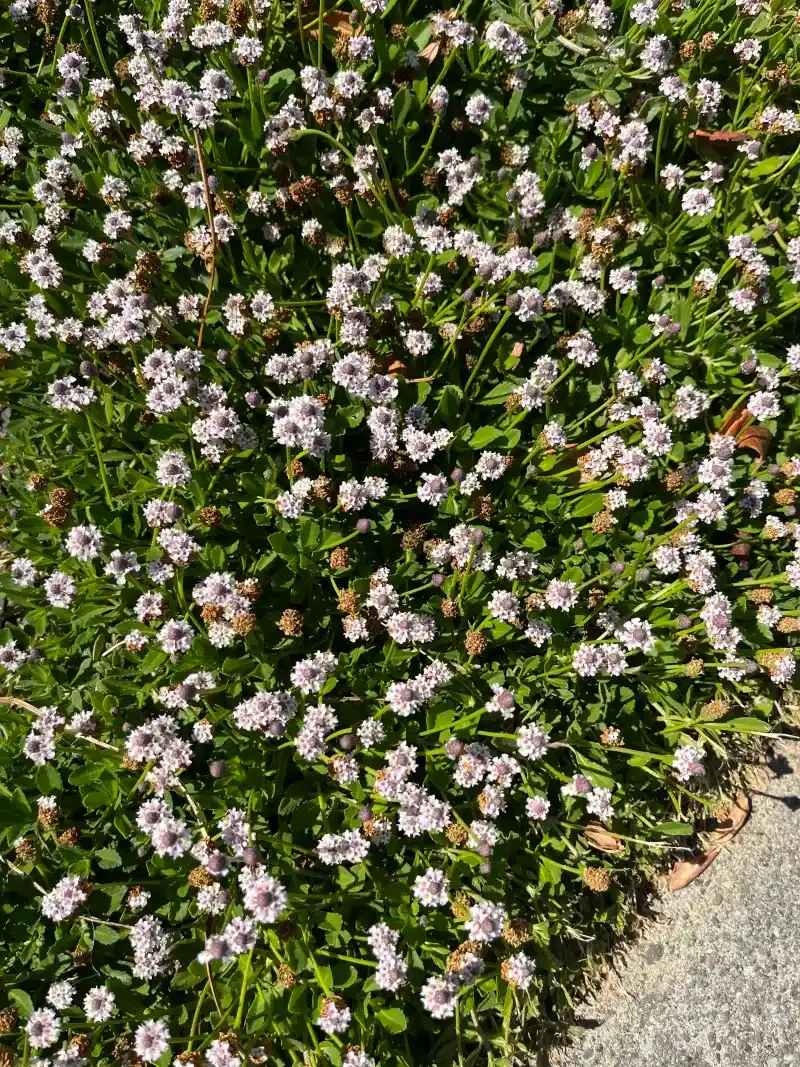
Where a strip of bare sand keeps washing or blowing toward the driveway, frogfruit can turn it into a low green carpet. Its small flower clusters attract pollinators, and its leaves stay close to the ground.
That makes it a different choice from the upright grasses and rounded coontie on this list.
Frogfruit spreads by creeping stems, so the best place for it is a bed with a firm boundary, not a border you expect to stay perfectly still. It can handle sun and some part shade, though growth and flowering vary with the site.
Give it room to fill in, and water new plants until they are established. Avoid planting it where runoff regularly leaves the roots submerged.
Expect to check the concrete edge now and then and pull or clip runners that cross it. A curb or sturdy edging keeps that quick task manageable, but frogfruit is not a zero-maintenance plant.
Choose it when you want groundcover and pollinator visits more than a sharply sculpted line. For a set-and-forget look, the clumping picks above are easier to contain.