
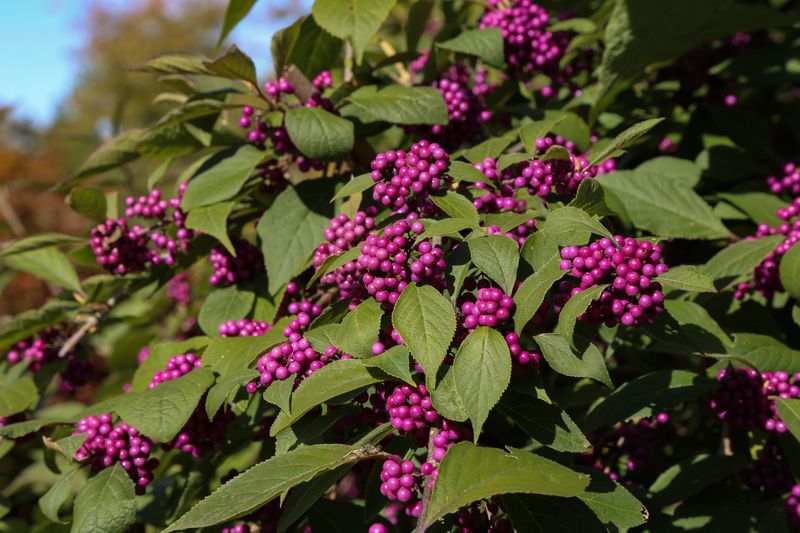
Few shrubs put on a show like American beautyberry in fall. Its branches fill with clusters of bright purple berries that birds may come to eat.
This Southern native can add real food value to a Texas yard, but it is a spreading shrub, not a small one. Here is how to decide whether it fits your space and how to grow it well.
Purple fall fruit can feed more than one kind of bird
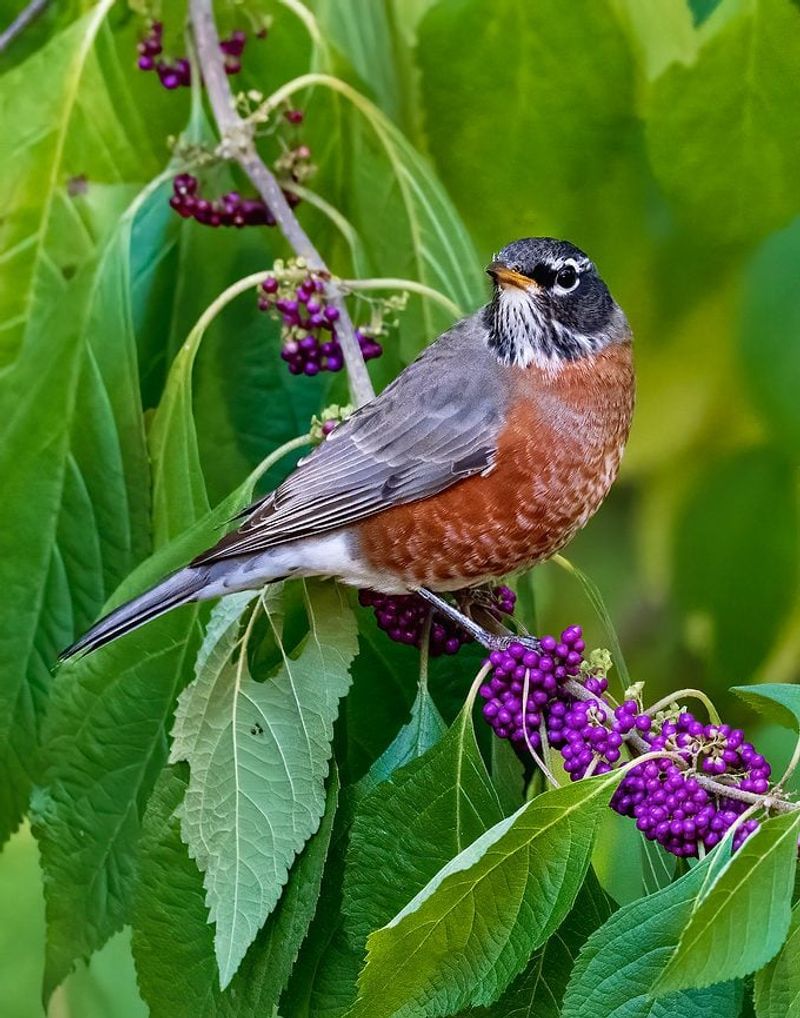
Walk past a beautyberry in early fall and the berries stop you cold. They sit in tight, glossy purple rings around the stems, like beads strung at every leaf joint.
NC State Extension’s plant profile lists the fruiting period as roughly August through October, and says the berries may hang on into early winter.
Birds are the reason wildlife gardeners plant it. Northern Mockingbirds, American Robins, and Northern Cardinals are among the species documented eating the fruit, along with Brown Thrashers, Gray Catbirds, and towhees.
A University of Georgia Extension newsletter highlights it as a berry plant for winter birds, and Texas Parks and Wildlife’s Eye on Nature covers its value to Texas wildlife.
Think of those birds as possible visitors, not a guaranteed lineup. Which species show up, and when, depends on your neighborhood, nearby cover, and what else is fruiting around you.
Fruit may disappear in a few weeks in a busy area, or linger longer where fewer birds are feeding.
A good habit is to check the shrub every few days from late summer on. Notice when berries color up, which birds stop by, and how long the crop lasts.
Those notes will tell you far more about your own yard than any general timeline.
Is American beautyberry suited to your part of the South?
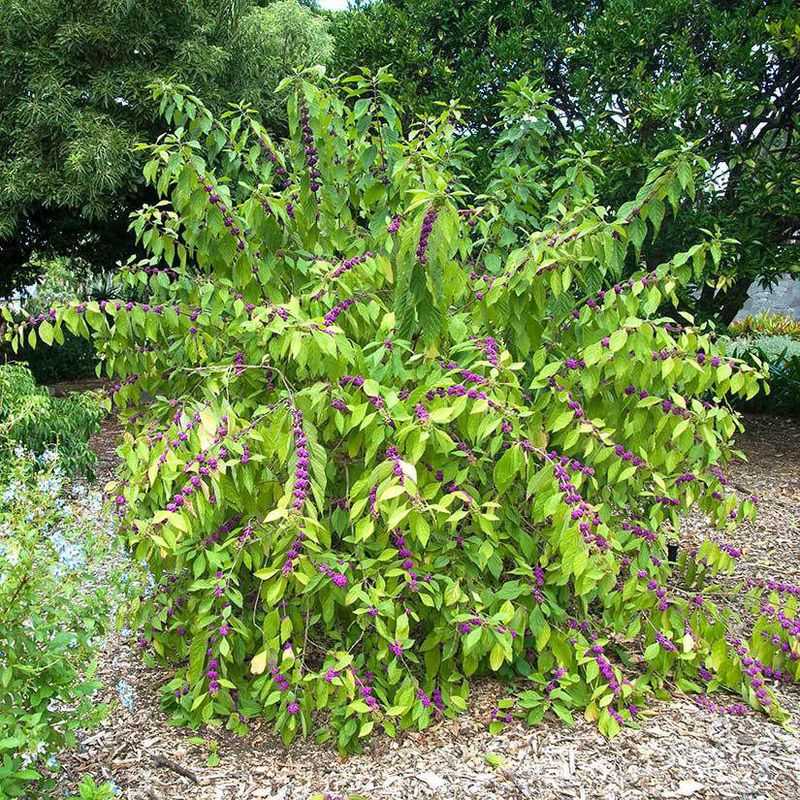
Plant shopping gets tricky here, because several beautyberries exist. The one this article covers is the American species, Callicarpa americana.
It is native to the southeastern United States, including Texas, according to the USDA Agricultural Research Service GRIN record.
Other Callicarpa species come from Asia, and some are sold as cultivars with similar purple fruit. They may look alike on a shelf, but they are not the same plant and may not offer the same native-plant benefits.
Read the tag for the scientific name, and ask the nursery staff if the label only says beautyberry.
Texas is a big state, and the shrub is not equally at home everywhere. The Native Plant Society of Texas lists it for a range of ecoregions, not the whole map.
Conditions in East Texas, the Hill Country, and the Gulf Coast differ a lot in rainfall and soil.
Before buying, look at what grows wild near you. A local native plant society chapter, county extension office, or native plant nursery can tell you whether beautyberry does well in your soil and rainfall.
If your site is very dry or shallow-soiled, ask about other native fruiting shrubs too.
How much room does a beautyberry really need?
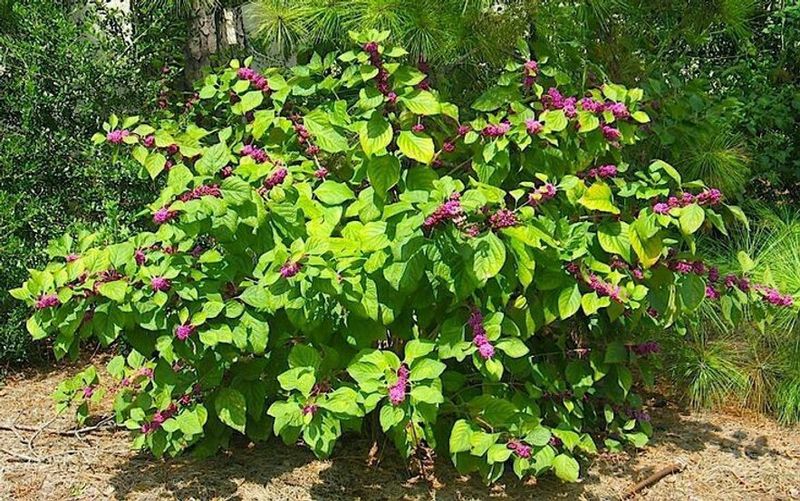
Here is the honest size story: American beautyberry is not a compact shrub. Published estimates run from roughly 3 to 8 feet tall and 3 to 6 feet wide, and the NC State Extension profile gives a range in that neighborhood.
Different sources land in different places, so plan for the larger end.
The shape is loose and arching, with long stems that lean outward as they get heavy with fruit. UF/IFAS describes the habit as large and sprawling, and says it needs ample space or regular pruning to control its size.
To test your bed, measure it. A spot with about 6 feet of width and room to spare above is a reasonable fit.
A narrow strip beside a walkway, a tight foundation bed, or a patch under a low eave may leave you cutting the shrub back constantly.
Pruning helps manage size, but it does not turn a large shrub into a small one. If the bed is smaller than the plant’s mature footprint, consider a looser spot at the edge of a yard, a corner border, or a woodland-style planting where arching branches have room to wander.
Sun and dependable moisture support a healthy planting
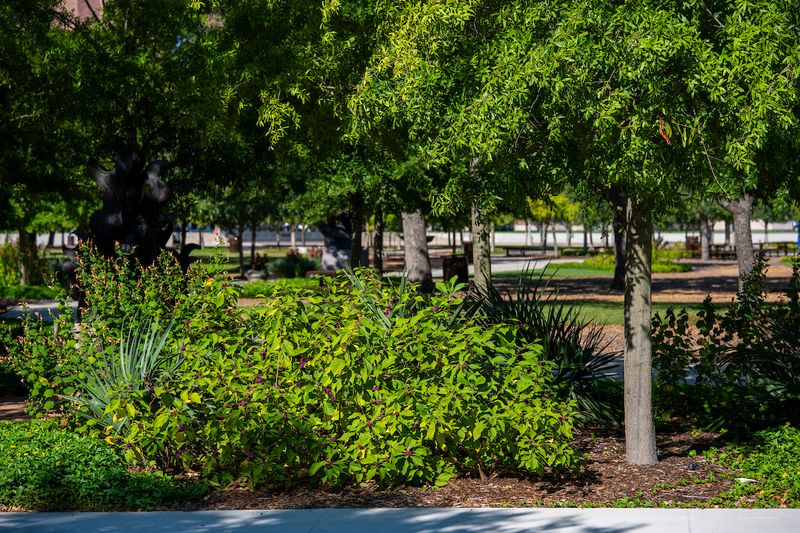
Beautyberry is flexible about light. According to UF/IFAS, it grows in full sun through light or dappled shade, and it tolerates a range of soils.
Many gardeners find that a spot with morning sun and some afternoon relief works well in hot Texas summers.
Adaptable does not mean drought-proof, though. The City of Austin plant guide says it prefers dependable moisture and deep soil.
That is worth taking seriously in a state with triple-digit stretches and watering rules.
A few practical checks before planting:
Look for a spot where water collects a bit after rain, such as the base of a slope or a low corner, rather than a thin, rocky ledge. Mix compost into the planting area to help the soil hold moisture.
Spread mulch around the root zone to slow evaporation.
In the first year, water regularly while roots settle in. If a dry summer wilts the leaves, a deep soak usually helps more than frequent sprinkles.
If your yard faces strict water limits or has very shallow soil, this may not be the best shrub for that spot, and a plant better matched to dry conditions could serve you better.
Late-winter pruning can control size, but cannot guarantee a lasting footprint
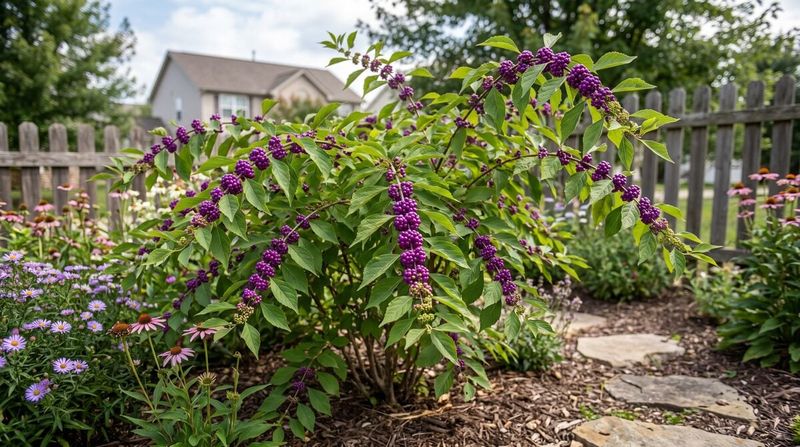
Beautyberry sets flowers and fruit on new growth. That is why Clemson Cooperative Extension points to late winter or early spring, before new growth starts, as the time to prune.
One option is renewal pruning, cutting the whole shrub back to about a foot. It is optional, not a yearly chore.
Pruning is not needed for the plant to fruit, so a shrub left alone will still produce berries.
Hard pruning is tolerated and tends to push out vigorous new shoots, which can make a leggy plant look fresh again. Those shoots fill in fast, though.
The cut manages size for a season, but it does not change the plant’s natural spreading habit, and it does not promise a lasting footprint. UF/IFAS notes the shrub needs ample space or regular pruning to control its size.
If you want to try it, wait until the berries have been eaten or have faded, and the worst cold has passed. Cut stems back, clear the debris, and add fresh mulch.
A lighter option is trimming only the longest, wildest stems and leaving the rest.
A window-side bird view needs collision protection
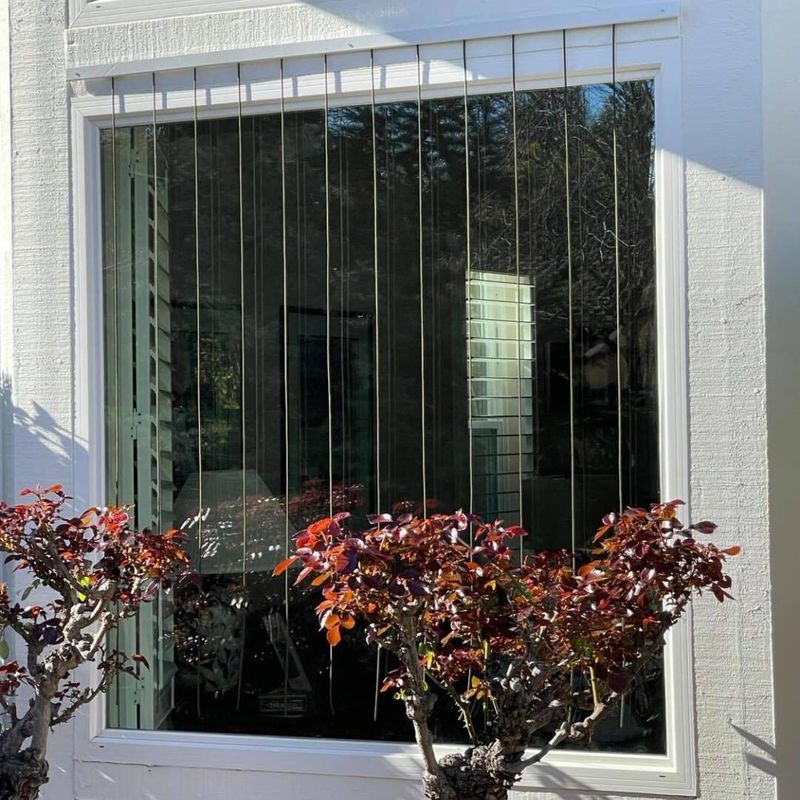
Planting near a window sounds ideal for bird watching, and it can be. The catch is that glass can reflect leaves and sky, and birds may fly toward the reflection.
The Cornell Lab of Ornithology explains how reflected vegetation contributes to collisions.
So if you plant a berry-laden shrub in view of the house, treat window protection as part of the project. Choose deterrents that are clearly visible from outside and spread across the glass, not a few stickers placed here and there.
The Cornell Lab’s Bird Academy discussion stresses that coverage matters.
Practical options include closely spaced patterns applied to the outside of the glass, tape strips, or exterior screens and netting installed a few inches from the window. Put them on before the berries ripen, not after a bird strikes.
Remember, too, that no planting can promise birds at one particular window. Some yards get steady traffic, and others see birds on the far side of the house.
A spot that is safe for birds is worth more than a perfect view.
Berries are one part of a bird-friendly yard
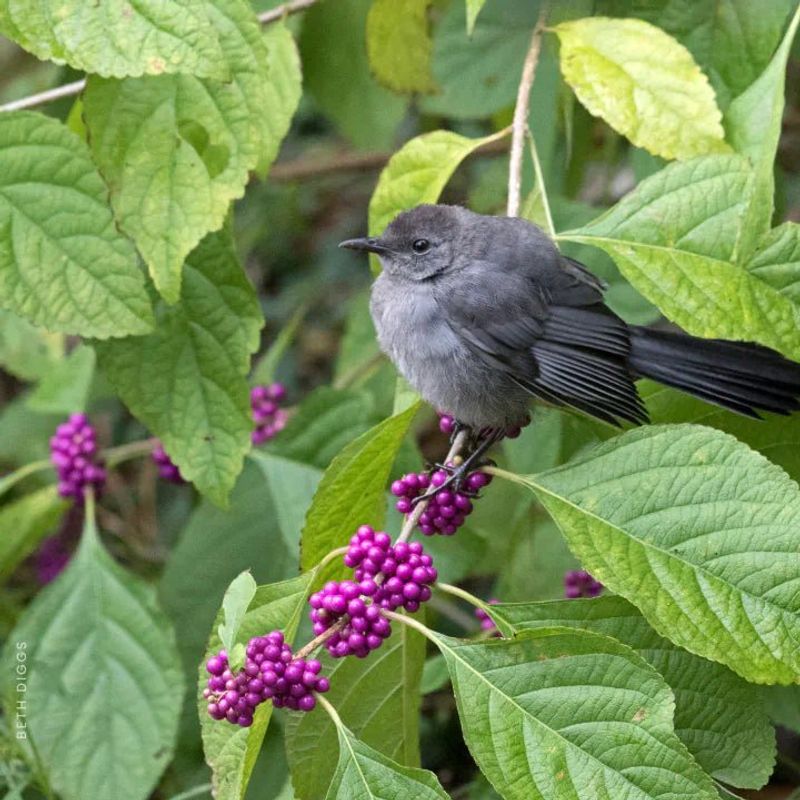
Beautyberry can add seasonal food, but fruit alone does not make a full habitat. University of Georgia Extension’s bird-attraction guidance also emphasizes water, cover, and other habitat elements.
Pair the shrub with a shallow bird bath kept clean and filled, plus dense shrubs or small trees where birds can duck out of sight. Then walk through your decision: pick a site with room for the mature size, give it dependable moisture, prune only when you need to, and protect nearby windows.
A fall bush loaded with purple berries is a lovely start, and the rest of the yard decides who stays.