
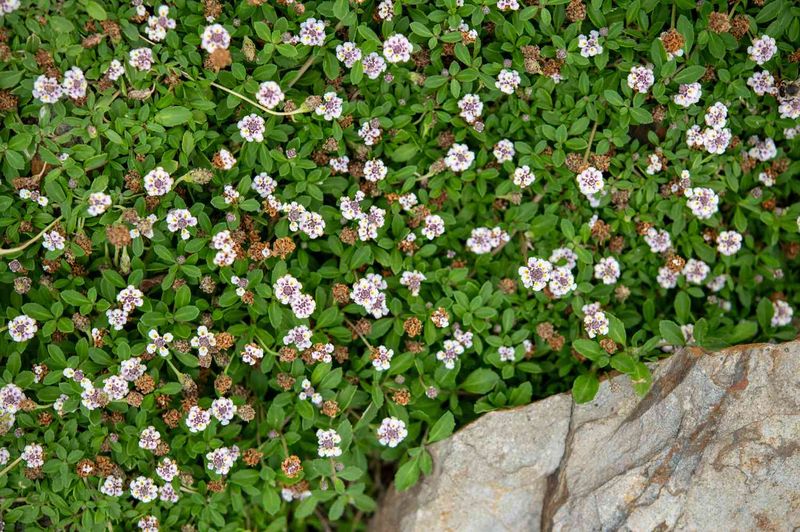
Plant a low, leafy native by the back door, and toads will show up to eat your roaches. It is a tidy story, and plenty of Texas gardeners would love for it to be true.
Texas frogfruit is a genuinely useful native groundcover, but the toad-and-roach part does not hold up. Here is what frogfruit really offers, where to put it, and how to handle roaches the way that works.
What the toad-and-roach promise gets wrong
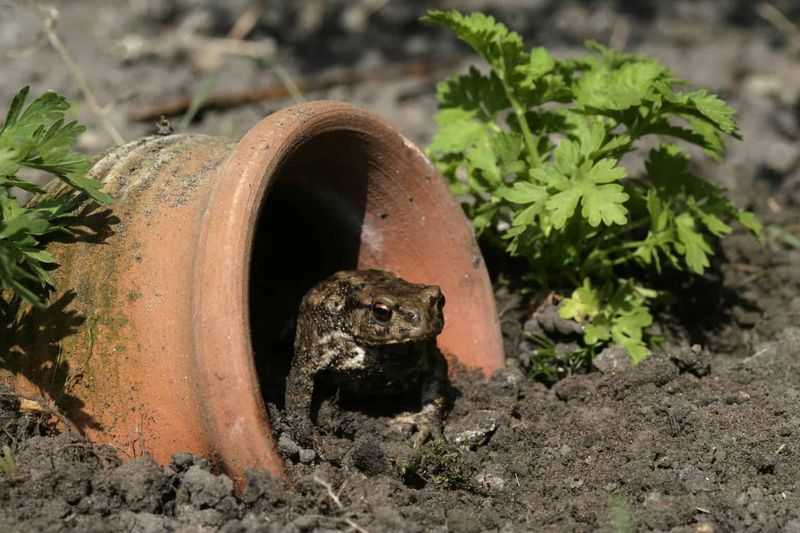
Nothing in the sources we reviewed shows that frogfruit draws toads to a back door. Nothing shows that native Texas toads reliably cut down roaches inside a home, either.
The catchy version of this idea skips past both gaps.
Frogs and toads do eat insects and other small prey, and Texas Parks and Wildlife amphibian materials say as much. That is a general feeding habit.
It does not mean one toad under a porch light will clear out the roaches around your house.
The roach evidence comes from far away. A study of invasive cane toads in Hawai‘i found cockroaches in the toads’ diet.
That tells us what those toads ate on a volcanic landscape. It says nothing about native Texas toads, frogfruit plantings, or changes in roach numbers inside a house.
So a toad may snack on a roach it happens to meet, and that is a nice bonus. Counting on it for pest control is a bet the evidence does not back up.
The rest of this article separates what frogfruit does well from what it only gets credit for in the folklore.
Frogfruit offers a low-growing Texas-native groundcover
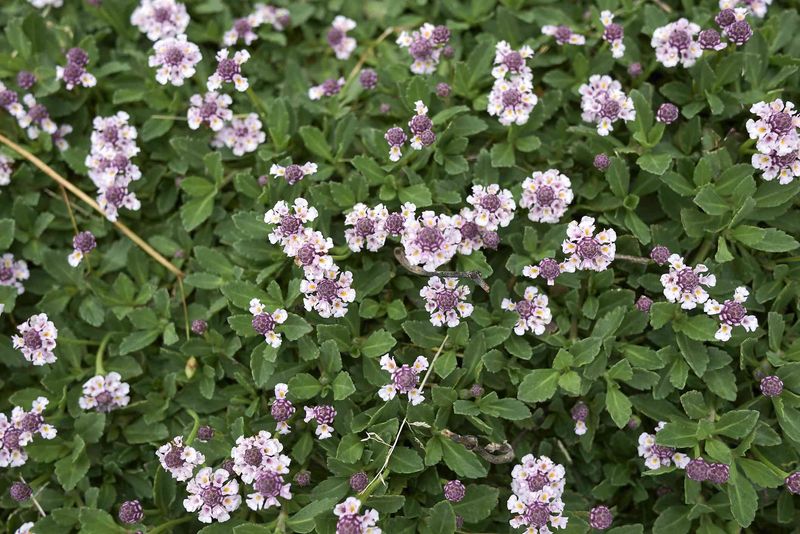
Frogfruit, Phyla nodiflora, has real credentials as a landscape plant. It is native to Texas and spreads across the ground, which is exactly what you want from a groundcover.
Texas SmartScape lists it as a Texas native with a spreading habit.
Height is modest. Austin’s plant guide gives a typical height of about 6 to 8 inches and says it suits sun or part shade.
The same guide notes it spreads rapidly, tolerates poor drainage, and can be cut back to about 3 inches in winter.
That makes it a sensible pick for a bare strip, a lawn edge, or a spot where taller plants would block a view. Its quick spread means you may want to give it room and trim the edges as it fills in.
Notice what is missing from that list. Nothing there says it attracts toads or repels roaches.
Choose frogfruit because it fits your sun, soil, and space. Anything extra it does for wildlife is a bonus, not a promise.
Support wildlife with a range of habitat features
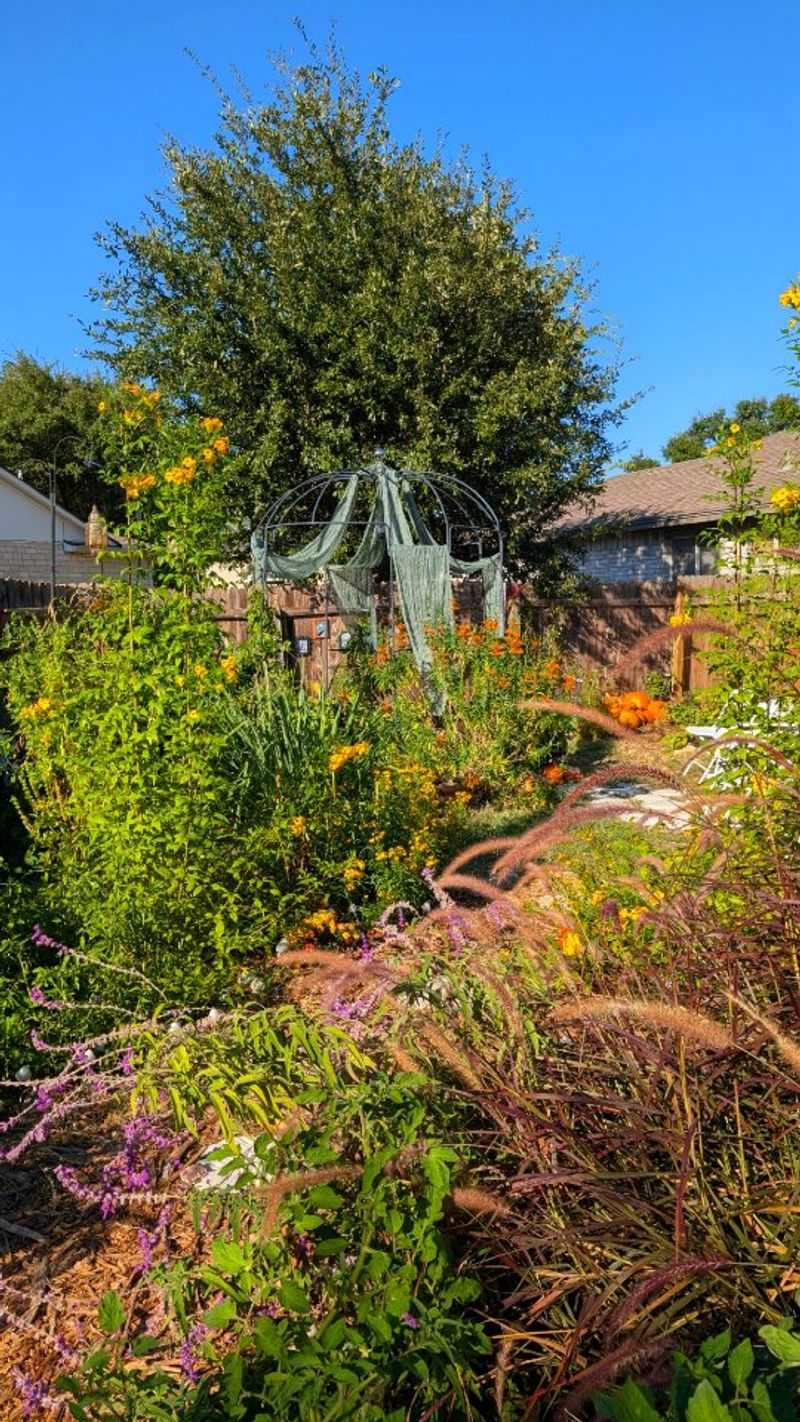
If you want toads and other small wildlife in your yard, think habitat, not a single plant. Texas Parks and Wildlife wildscape tips point to a mix of features: native vegetation, shelter, and water.
Shelter can be simple. Logs, rock piles, and overturned pots all give small animals a place to tuck away.
Shallow water that animals can reach easily rounds out the setup.
Keep in mind that this is general wildlife guidance. It does not prove frogfruit or any one feature will bring toads to your yard.
Think of it as improving the odds of a livelier garden, with no guarantee about which animals move in.
Water needs upkeep. Containers should be refilled regularly and cleaned so they stay fresh through hot Texas weeks, when a dish can go dry or turn murky quickly.
Frogfruit can be one of the native plants in this mix. Just plan the whole habitat as a space of its own, which the next section explains how to place.
Keep dense habitat away from the foundation and doors
Here is where the back-door idea backfires. Texas A&M AgriLife Extension lists groundcover plants, mulch, and other damp outdoor spots as places roaches can hide.
A thick mat of anything right at the door gives them cover close to where you walk in.
Guidance from University of Georgia Extension says the same about exterior vegetation, mulch, and irrigation, and advises keeping them away from foundations and doors.
The fix is separation. Put your wildlife area out in the yard, a good distance from the house, and keep the strip right along the foundation and beside doors open and drier.
A band of bare soil or gravel works well for that.
Treat this as a sensible precaution, not a roach cure. Separation will not guarantee a roach-free house, but it avoids handing them a shady hideout next to the entry.
If you love frogfruit, plant it in a bed away from the walls, along a path or a sunny border, rather than tucked against the back step.
Manage household roaches with inspection and exclusion
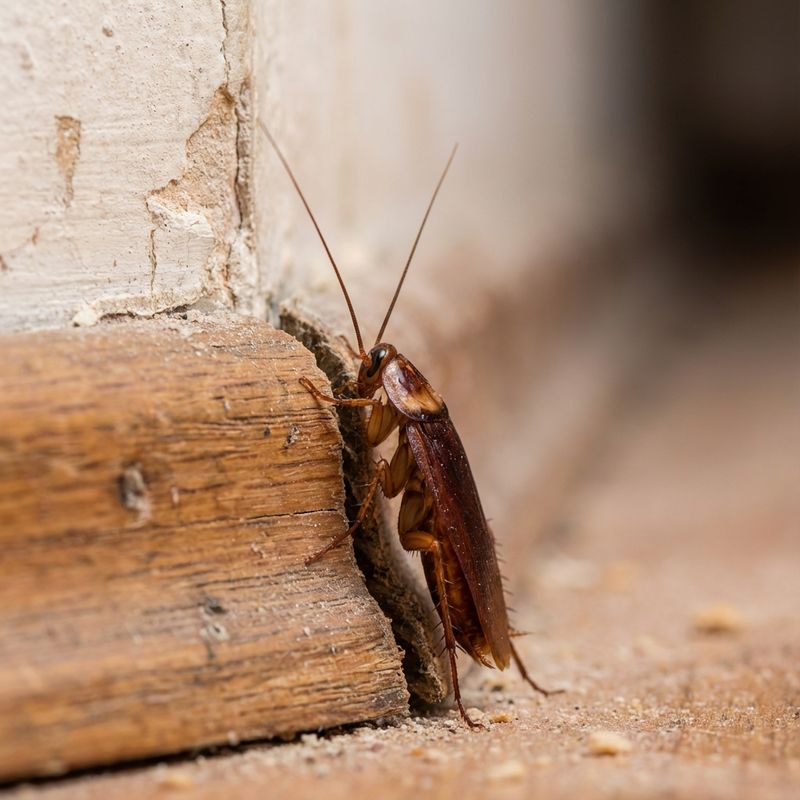
Roaches are handled at the house, not in the flower bed. Texas A&M’s roach guidance starts with finding how they get in, then cutting off what draws them: food, water, and clutter.
Walk the outside and inside with a flashlight. Look at door sweeps, gaps around pipes, and cracks in the walls.
Seal what you find. Larger outdoor species can slip in through poorly sealed doors, roof soffits, or floor drains, so check those too.
Sticky traps help you monitor. Place them along walls and near entry points, then check them over a few days to see what shows up and where.
One roach is not proof of an infestation. Some big Texas cockroaches live outdoors and wander in.
That is an entry problem, solved by sealing and sanitation. An established indoor population looks different: repeated catches, roaches of various sizes, and activity in kitchens or bathrooms.
Try to identify the species before deciding what you face. And remember that frogfruit, toads, or any wildlife planting does not stand in for these steps.
Protect amphibians and pets when managing the yard
Spraying for pests near a toad-friendly spot carries a cost. Texas Parks and Wildlife warns that amphibians can absorb pesticides through their sensitive skin or through the insects they eat.
Routine insecticide use around habitat is not harmless to them.
That is one more reason to keep the wildlife area separate from the house. Pest work near the foundation then stays away from the places toads shelter and drink.
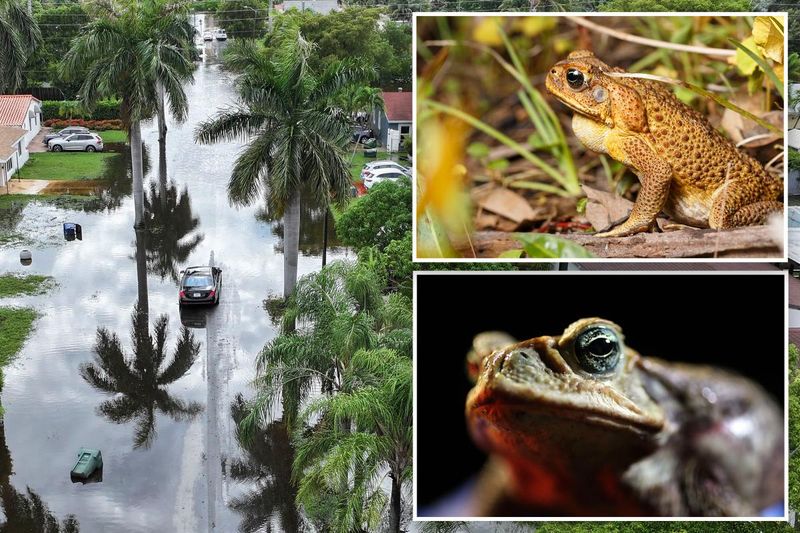
Florida readers have an added concern. Invasive cane toads live in central and south Florida, and they can be toxic to pets.
They are also easy to mistake for native toads.
Before you act, confirm what you have. Follow Florida Fish and Wildlife Conservation Commission guidance on identification.
Do not relocate a captured cane toad, and keep pets away from any toad you cannot identify.
In Texas, the same habit applies: look closely before handling any toad, and keep dogs from mouthing them.
Choose frogfruit for its landscape value, not pest control
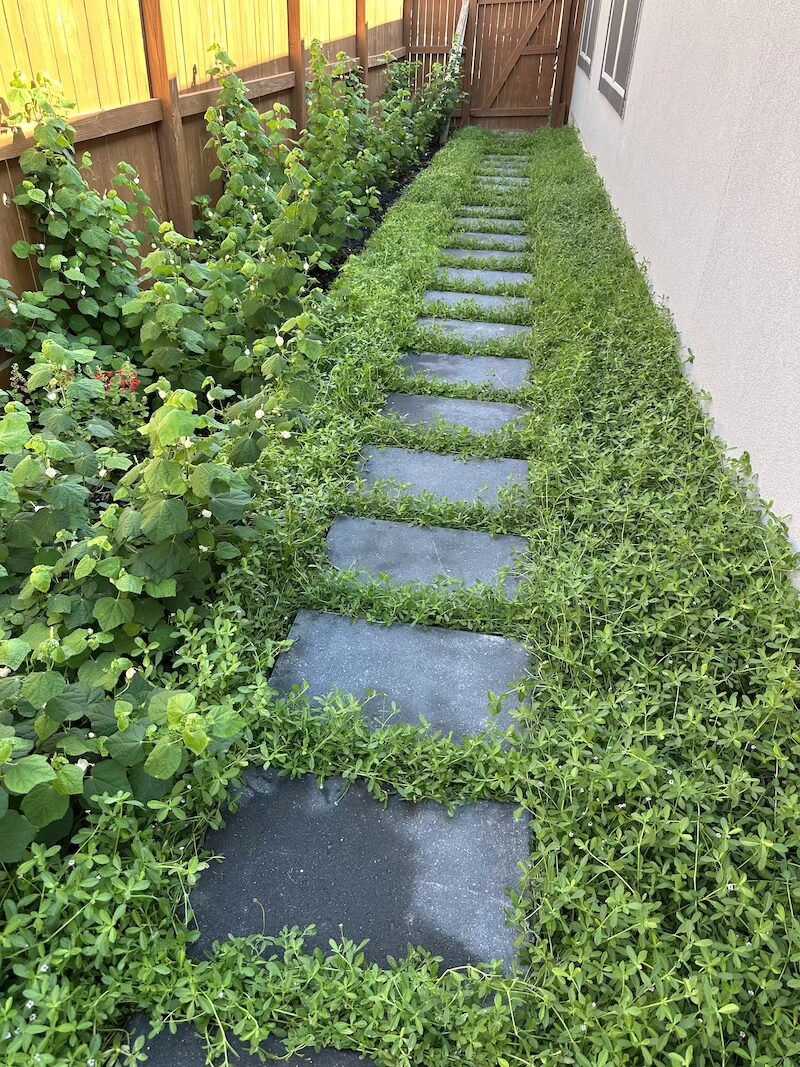
Plant frogfruit if you like a low, spreading Texas native for sun or part shade. Set it in a bed away from the walls, and leave the strip by the doors open.
For roaches, rely on inspection, sealing, sanitation, and trapping, as Texas A&M advises.
A good groundcover earns its spot by looking right, not by doing a pest job it was never shown to do.