
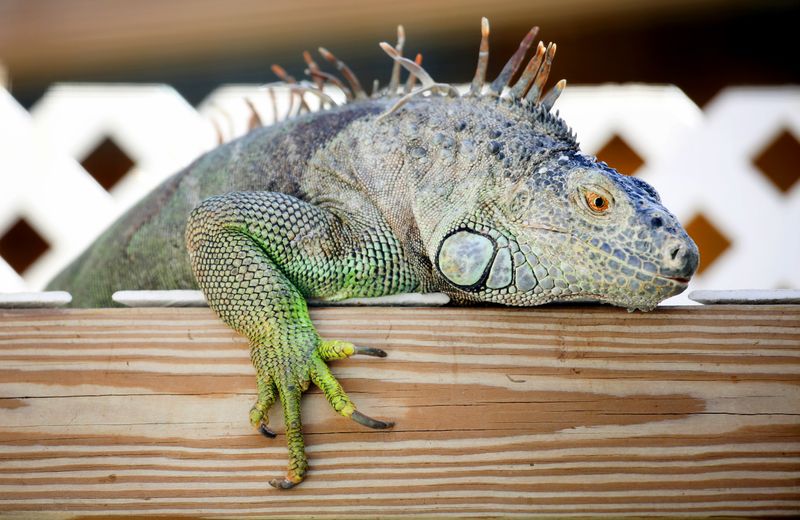
Spotting a big green lizard on your fence or in your hibiscus can be a shock. In parts of South Florida, green iguanas are a regular sight, and they may show up for reasons that have to do with what your yard offers.
Knowing what draws them can help you protect your plants and decide what to do next. Here is what is known, what is not, and how to respond safely.
Identify the visitor and understand the geographic scope
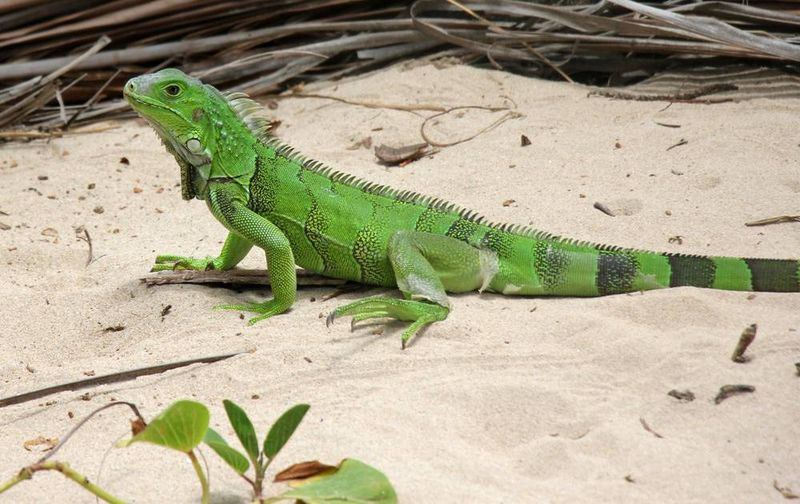
Not every large lizard in a Florida yard is a green iguana. Brown anoles are small, and Cuban knight anoles and some other lizards are much smaller than an adult iguana.
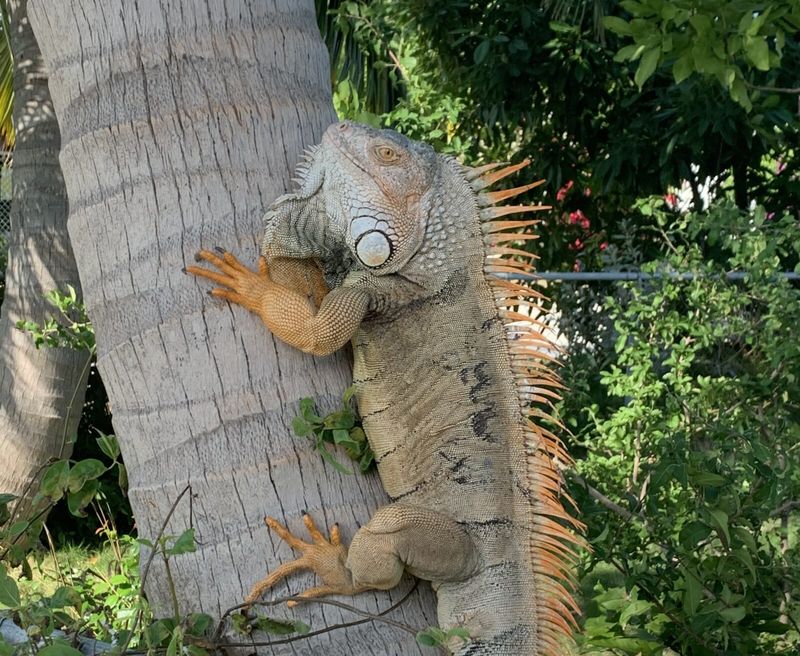
Green iguanas are big, with a row of spines along the back and neck and a long tail that is often banded.
Location matters too. FWC reports established green iguana populations along parts of South Florida’s Atlantic and Gulf coasts.
That does not mean they are equally common in every Florida county, so a sighting in North Florida or the Panhandle is a different situation from one in Miami-Dade or Broward.
More than one iguana species occurs in South Florida, according to UF/IFAS guidance on iguanas in the South Florida landscape. Because the advice differs by species and by place, take a clear photo and note where you saw the animal.
If you are unsure, your county extension office can help. This article covers green iguanas and South Florida yards only.
A yard may offer food, sun, and shelter
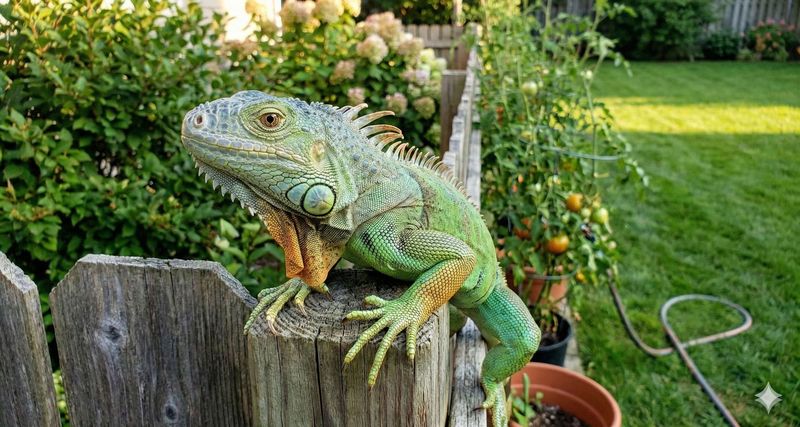
Picture what a green iguana needs on an ordinary day. These animals are active in daylight and spend time basking in the sun.
UF/IFAS notes they eat flowers, fruit, tender shoots and ornamental plants, and they use burrows and human-made hiding places such as drainage pipes, culverts and debris piles.
Now look at a typical South Florida yard. A flowering hedge, a vegetable bed or a fruit tree can be food.
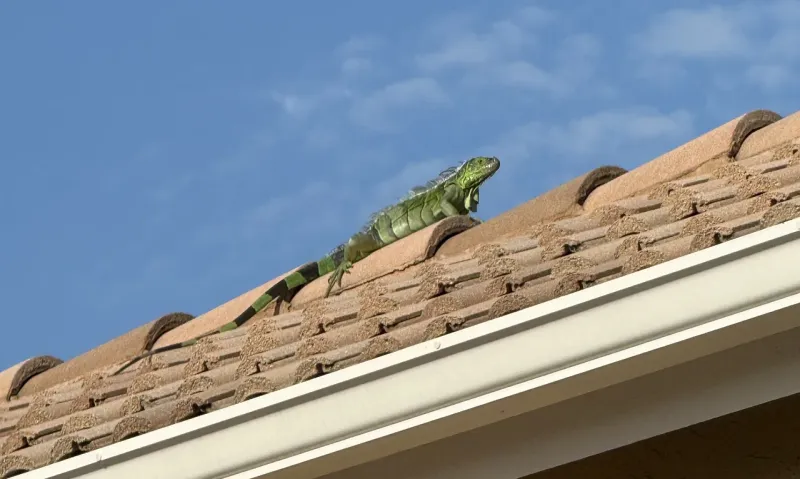
A sunny seawall, roof edge, fence top or paved patio can be a basking spot. A brush pile, dense thicket, drainage opening or burrow can be shelter.
Those are resources an area may offer, and they fit what iguanas are known to use. They do not explain why one particular iguana showed up at your house.
The animal may simply be passing through, or it may be using several yards in the neighborhood.
Extension sources describe these animals in more detail in a UF/IFAS profile of the green iguana. A quick walk around your property with this list in mind can show which of the three resources, food, sun or cover, is most available.
Repeated visits are possible, but not certain
Many homeowners wonder if the iguana they saw yesterday is the one on the patio today. The research gives a partial answer.
A South Florida movement study at two sites, summarized by UF/IFAS, found that the iguanas did not move far.
That makes repeated use of a suitable local area plausible. An iguana that finds food, sun and cover nearby may stay in the same general neighborhood instead of wandering widely.
Plausible is the key word, though. The study does not show that the same animal will come back to your particular yard.
It also does not show whether removing one iguana will keep others from arriving, since another one could use the same resources.
For you, the practical meaning is simple. If iguanas are around, expect that more visits could happen, and focus on the features you can control rather than on any single animal.
Keep notes on the time of day, the spots where you see them and the plants they use. Those clues will guide the changes in the next sections.
Reduce the yard’s appeal where practical
Start with the easiest rule: do not feed iguanas. UF/IFAS advises against feeding them and suggests removing preferred food sources where that is practical.
Its South Florida landscape guide lists hibiscus, orchids, pink pentas, roses, vegetables, squashes, melons, fruit and tender new growth among the foods they favor.
You do not have to rip out your garden. Try picking fallen fruit promptly, and consider moving a favorite container plant to a screened porch.
Harvest ripe vegetables early instead of leaving them on the vine.
Next, look at cover. Dense thickets and piles of landscape materials give iguanas places to hide.
Trimming back a tangle or hauling off a brush pile removes some of that shelter.
You can also make basking spots less comfortable. UF/IFAS describes spraying a basking iguana with a hose or making loud noises to discourage it.
Try this from a distance, and never approach the animal.
None of these steps promises lasting exclusion. Think of them as a way to make your yard a little less useful to an iguana, which may shift where it spends its time.
Protect vulnerable plants and specific areas
When one plant keeps getting nibbled, a targeted barrier often works better than changing the whole yard. UF/IFAS describes cages or screened enclosures around individual plants.
A wire cage over a young hibiscus or a screened frame over a vegetable bed are examples.
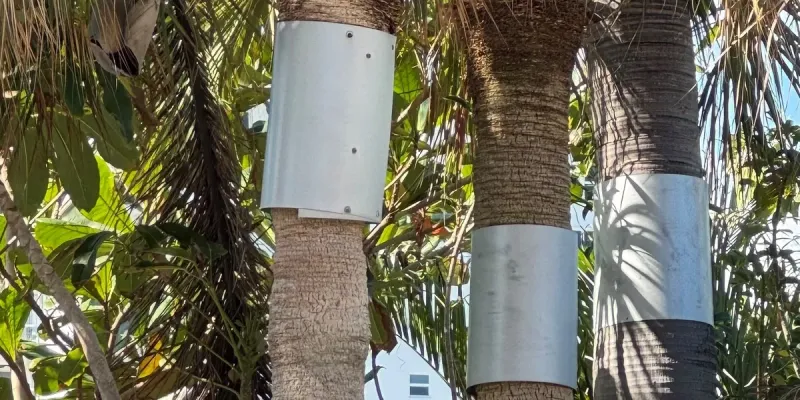
For climbing, the same guide describes sheet-metal guards on trees, palms or dock pilings so iguanas cannot get a grip. Wrap the guard smoothly around the trunk or piling, well above the ground.
For digging, an L-shaped wire barrier can impede burrowing in protected areas. The bottom of the L lies flat on the ground and outward, which makes digging down along the edge harder.
Plant choice can help, but only a little. UF/IFAS lists citrus, some crotons, some pentas and tough, thick-leaved plants as resistant.
Resistant means less appealing, not immune, and a hungry iguana may still sample them, especially young growth.
All of these are measures for specific plants and places. They will not make a yard iguana-proof, so protect your most valued plants first and watch what happens over a few weeks.
Choose a safe and legal removal option
If an iguana is damaging property and you cannot safely manage removal yourself, FWC recommends using a professional nuisance-wildlife trapper. That is usually the safest route for most homeowners.
The rules separate a few things. FWC says green iguanas can be humanely killed on private property with the landowner’s permission.
Live possession and transport, on the other hand, are regulated.
Captured iguanas cannot simply be released somewhere else in Florida. So do not trap one and drive it to a park or a friend’s property.
Poisons are also off the table, since UF/IFAS says none are registered or legal for iguanas or other reptiles in Florida.
Rules can change, so check FWC’s current rules before you act, and ask any trapper about how they handle the animal.
You may hear about cold snaps, when iguanas become stunned and fall from trees. FWC issued a temporary exception allowing live collection during a cold-weather event on February 1 and 2, 2026.
That exception was limited to those dates and is not standing guidance, so do not treat a stunned iguana as a routine removal opportunity.
Keep your distance and handle droppings carefully
Even a calm-looking iguana can react fast. According to UF/IFAS Gardening Solutions, a threatened green iguana may bite, scratch or strike with its tail.
Give it space, never corner it, and do not try to pick it up.
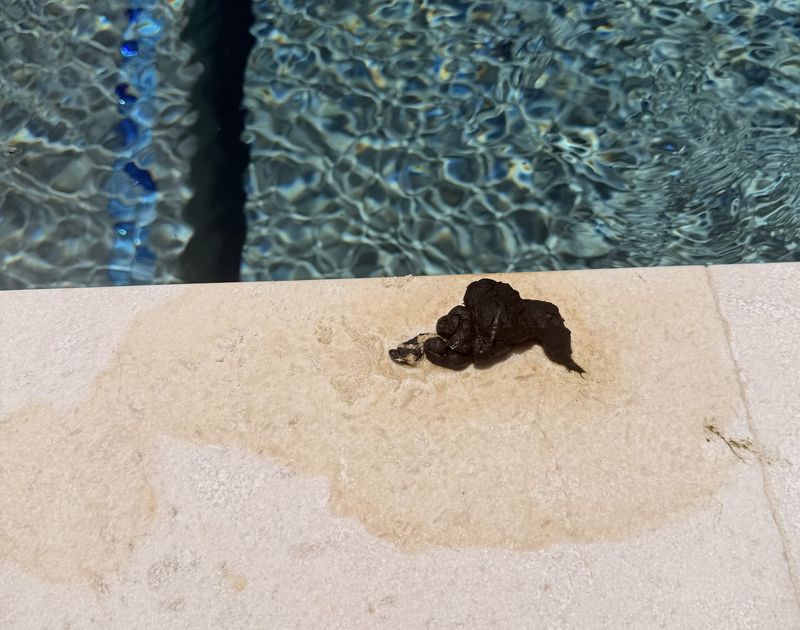
Droppings need care too. Reptiles can carry Salmonella in their droppings, and CDC guidance on reptile-associated Salmonella advises extra care around reptiles for young children and people at increased risk of serious illness.
When you find droppings on a patio, dock or pool deck, wear disposable gloves and pick up the waste with paper towels. Bag it and put it in the trash.
Clean the surface, then wash your hands well with soap and water, even if you wore gloves.
Keep children and pets away from the area until it is cleaned, and do not use the same sponge or tools for kitchen tasks. Wash contaminated cloths separately.
Yard changes can ease the problem, but they cannot guarantee an iguana will stay away. The best plan is a steady one: adjust, protect, watch and keep your distance.