
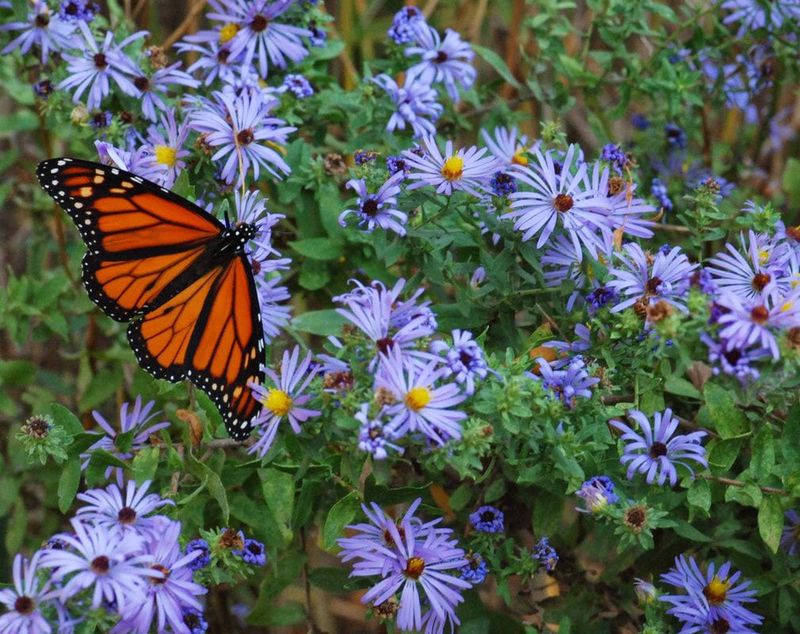
By October, many North Carolina flower beds have gone quiet. Monarch butterflies heading south may still look for nectar along the way.
A native perennial called aromatic aster keeps blooming late, and it can help fill that gap in your yard. Here is how to decide if it belongs in your garden.
Why late-season nectar can matter to migrating monarchs
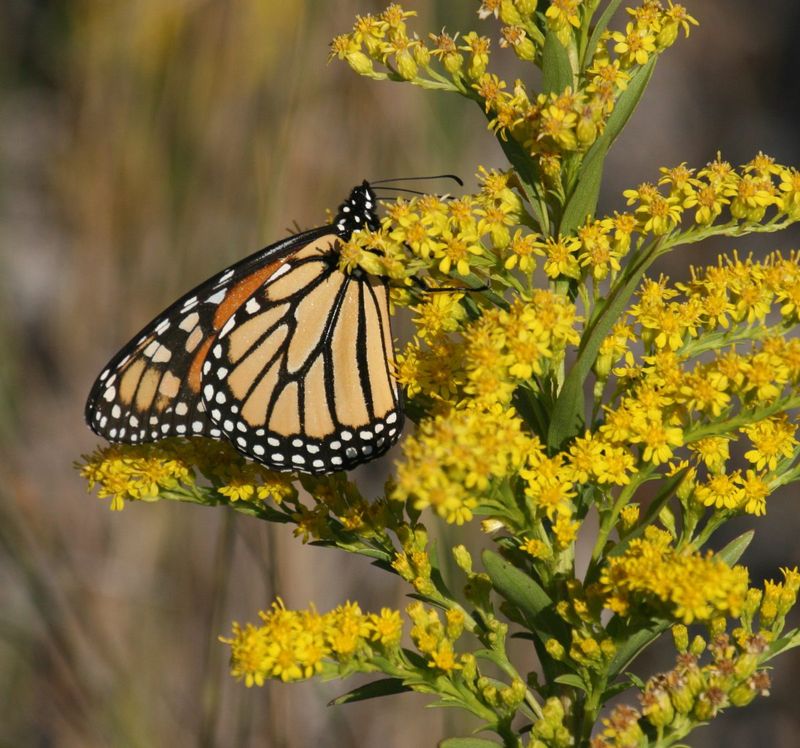
Fall is travel season for monarchs. The Butterflies of North Carolina record describes September and October monarchs as often migrating, and says adults may be found through most of November.
Flowers that are still open during those weeks can offer nectar if monarchs happen to pass through.
The key words are “if” and “happen.” Monarch numbers vary from place to place, and the same record notes that monarchs may be absent from some counties during parts of their flight period. Your yard may see a steady stream of visitors, a few, or none at all.
Planting for them is a bet on good habitat, not a guarantee.
It also helps to know that adult monarchs and caterpillars eat different things. Caterpillars feed only on milkweed leaves.
Adults sip nectar from many flowers, and the U.S. Fish and Wildlife Service notes that migrating monarchs need nectar flowers to fuel their long trip.
That is where a late bloom schedule comes in. By October, many popular ornamentals have finished for the year.
Native perennials that flower into fall can keep a little fuel on the table in the Coastal Plain, the Piedmont, and the Mountains alike.
Think of it as a modest, useful upgrade to your yard. You are not saving a species with one bed.
You are adding a late nectar source that also feeds native bees and other pollinators, which makes the effort worthwhile even in years when monarchs skip your street.
Aromatic aster offers a late-season bloom

Aromatic aster (Symphyotrichum oblongifolium) is a native perennial that wakes up when much of the garden is winding down. NC State Extension says it blooms from late summer until the first frost.
It lists the plant as native across the Coastal Plain, Piedmont, and Mountains, so it has statewide reach.
The flowers are lavender-purple daisies with yellow centers. They open in fall, when the color in many beds fades to brown and green.
That timing is the main reason to consider it.
Asters in general are good nectar plants for monarchs. The Butterflies of North Carolina monarch account lists them among the flowers adults visit.
That supports using asters as part of a fall planting.
Still, keep the claims modest. Nothing in these sources shows that monarchs prefer aromatic aster over other asters or goldenrods.
It is also not the last flower standing. Goldenrod and ironweed can bloom into October too, and the exact timing shifts with species, location, weather, and frost.
So treat aromatic aster as one dependable late-blooming native, not a magic fix. If monarchs pass through your neighborhood, an open aster patch gives them a place to stop.
If they do not, bees and other insects will still use it.
Check whether aromatic aster fits your yard

Before buying plants, walk your yard in the afternoon and look for sun. NC State’s plant profile describes aromatic aster as a perennial that reaches about three feet.
It does best in sunny spots with well-drained soil.
The same profile notes that it tolerates drought and coastal conditions. That makes it a reasonable pick for sandy Coastal Plain yards, dry Piedmont slopes, and sunny mountain borders.
A soggy low spot or a shady corner is a poor match.
Plan for its spread. Aromatic aster can spread by stolons, which are runners that send up new shoots nearby.
Give it elbow room, and avoid tucking it right against a small, tidy plant that could get crowded.
A few practical checks help. Pick a place where three feet of height will not block a window or path.
Leave space around the clump so new shoots have somewhere to go. Put it where you can see it, since fall flowers are more fun when you can watch the visitors.
Performance will not be identical in every yard. Soil, rainfall, and your local microclimate all change how a plant grows, so start with a small group and watch how it behaves for a season or two before expanding.
Fall planting prepares the bed for future seasons

Gardeners often ask whether they can plant now and get flowers right away. The honest answer is no, at least not a full show.
A young perennial put in the ground in October is preparing for future seasons, not offering a mature nectar stop this same fall.
Still, autumn is a good time to plant. N.C.
Cooperative Extension in Lee County describes fall as one of the best times to get many perennials and trees into the ground. Cooler air and the chance of rain give roots time to settle in before the next growing season.
That makes this a good moment to plan. Choose the spot, mark it, and decide what else will bloom nearby.
You can also buy plants now so the bed is ready for next year’s fall.
Planting dates and care vary across the state. The Mountains see frost far earlier than the coast, so check with your local county Extension office for timing that fits your area.
They can also tell you how to water new plants during the first months.
If you want something blooming this October, look for fall-flowering plants already established in nearby gardens or natural areas, and take notes on what is feeding insects there.
Pair asters with other native fall flowers

No single plant should carry your whole fall garden. The NC State Extension Gardener Handbook recommends having several native species blooming across the growing season.
Its fall-blooming list includes goldenrod, calico aster, Joe-Pye weed, narrow-leaf sunflower, and New York ironweed, all native in the Coastal Plain, Piedmont, and Mountains.
Mixing them spreads out the bloom time. NC State’s backyard butterfly guide points to goldenrod and ironweed as late-season nectar sources.
Pairing them with aromatic aster gives you overlapping color rather than one short burst.
Be specific about goldenrod, because it is not one plant. NC State lists several goldenrod species, and each has its own habits.
Rough-leaf goldenrod (Solidago rugosa), for example, flowers in September and suits moist to wet soils in sun to light shade. That is a different job than aromatic aster’s dry, sunny spot.
Size matters too. The handbook warns that some native plants, including tall goldenrod, spread vigorously and fit larger plantings better than small beds.
Check the species name on the tag before you buy.
A simple plan: put aromatic aster in the dry, sunny bed, rough-leaf goldenrod in a damp low area, and Joe-Pye weed or ironweed where soil stays moist. Each plant then gets the conditions it likes, and the yard stays in bloom longer.
Reduce pesticide risks in the nectar patch

A nectar patch works best when it is not sprayed. If you can, skip insecticides in areas where you hope to see monarchs and other pollinators.
Even products aimed at pests can reach butterflies that are feeding or laying eggs nearby.
Plant sourcing deserves a quick question at the garden center. The Xerces Society notes that systemic insecticides can move through plant tissues, including leaves and nectar, and that some neonicotinoids are toxic to monarch caterpillars.
Ask whether the plants you are buying received systemic treatments. If the staff does not know, that is useful information too.
The concern is real but should be kept in proportion. How much a butterfly is exposed depends on the product, the timing, and the plant.
Asking questions and reducing sprays is a sensible step, not a reason for alarm.
Remember that nectar flowers are only half the picture. The U.S.
Fish and Wildlife Service explains that caterpillars rely on milkweed while adults use nectar. Asters and goldenrods complement milkweed but do not replace it.
If you add milkweed, choose regionally native species. Xerces warns that tropical milkweed can persist in mild climates and may allow winter breeding, so it is not a good North Carolina solution.
Plan for a longer fall bloom

Start small. Pick a sunny, well-drained spot, give aromatic aster room to spread, and surround it with natives that peak at other times, as NC State’s native plant guidance suggests.
If monarchs pass through, their fall migration may cross your bed.
Even on quiet days, you will have a yard that stays alive into October.