
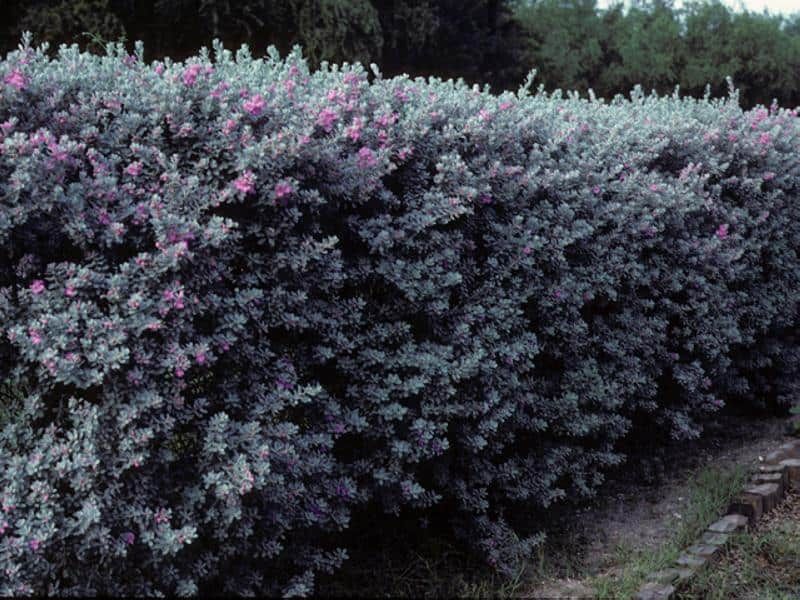
Looking for a living wall between your yard and the neighbor’s? Cenizo, also called Texas sage, is a tough evergreen shrub that handles Texas heat and dry spells once it settles in.
It can make a handsome screen, but it grows on its own schedule and needs room to spread. Here is what to know about timing, spacing, and care before you buy a single plant.
Cenizo offers steady cover, not a fast privacy fix
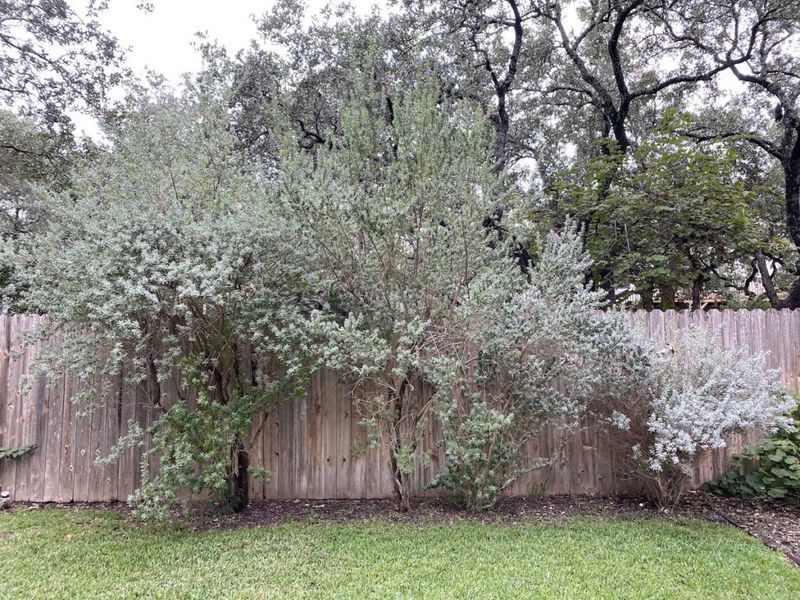
Cenizo (Leucophyllum frutescens), also known as Texas sage or Texas silverleaf, is an evergreen shrub with soft silvery foliage. It can work well as a screen, but the timeline matters.
NC State Extension rates its growth as medium, which means it is not a race car.
Local guidance puts numbers on that. Travis County Master Gardeners estimate that irrigated Green Cloud cenizo may take 3 to 5 years to reach 6 to 8 feet.
The same guidance says plants set 5 to 8 feet apart probably will not form a hedge quickly.
There are two separate milestones here. One is when each shrub reaches its mature height.
The other is when neighboring shrubs grow wide enough to touch and close the gaps. The second one often takes longer, so you may see through your screen for a while.
Size also varies. A recent AgriLife Extension article notes that some plants may reach 10 feet tall and 6 feet wide.
If you need privacy right now, pair young cenizo with a temporary fence panel or lattice while the shrubs fill in.
Where does cenizo count as native?
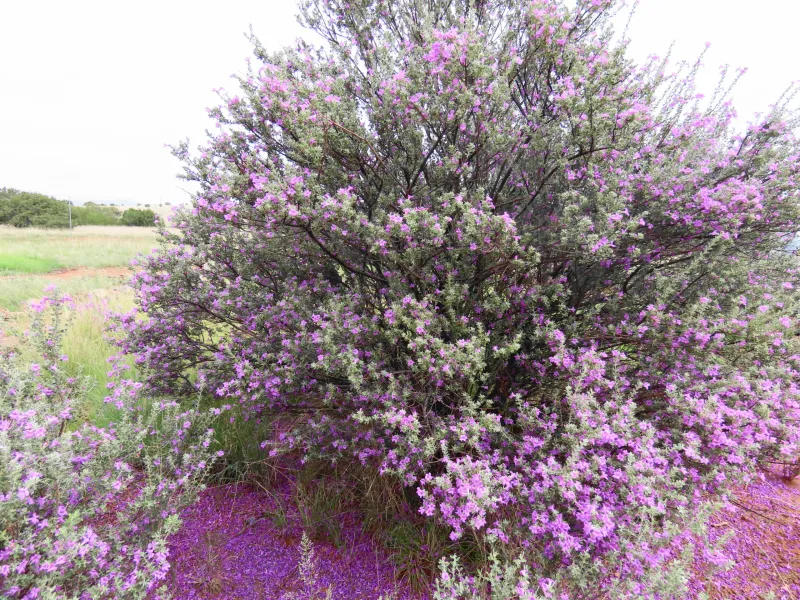
Cenizo is a Texas native, but that label does not fit every yard in Central Texas. Texas A&M’s Plants of Texas Rangelands documents it in several ecological regions of the state, including the Edwards Plateau.
It is described on rocky limestone and caliche terrain.
Local guidance tells a more careful story. Austin’s plant guide says it is not native to the Edwards Plateau or the Blackland Prairie.
So two respected sources seem to disagree, and the practical answer is that local fit varies.
What should you do with that? Treat cenizo as a Texas native that may or may not be historically at home on your lot.
Check your ecoregion, look at what grows naturally in nearby open land, and ask a local nursery or your county Extension office.
Native range tells you about origins. It does not tell you about your soil, sun, or drainage, which come next.
Sun, drainage, and mature width shape the planting plan
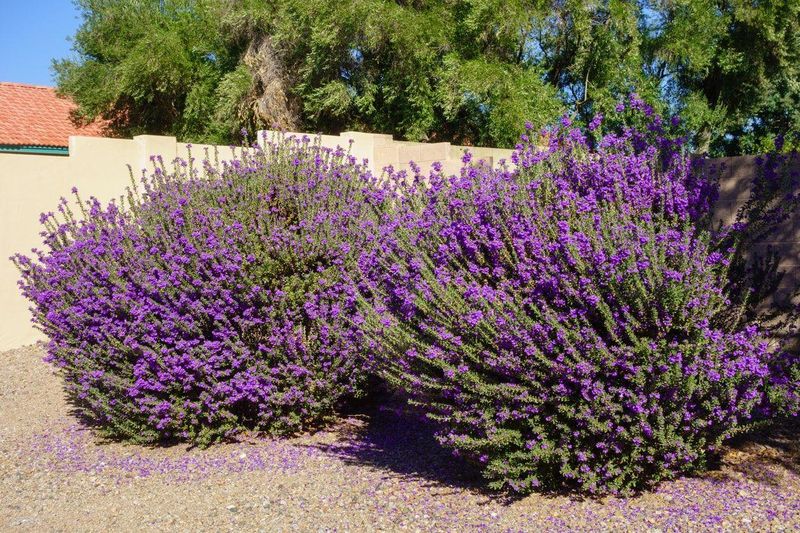
Start with the site. Cenizo wants full sun and well-drained soil.
Texas A&M says it does well in poor but well-drained ground, and its rangeland profile describes rocky limestone and caliche settings. Heavy clay that holds water after rain is a red flag, because poor drainage and overwatering can lead to root rot.
If your fence line stays soggy or shady, consider a different shrub or build a raised, gravelly bed. Austin’s plant guide also leans toward dry, sunny spots, so a neighbor’s shady side yard is probably not the place for it.
Next, plan for width. Size varies by cultivar, and AgriLife Extension says some plants reach 10 feet tall and 6 feet wide.
Read the plant tag for the cultivar’s expected spread before you decide on a spacing.
One Travis County answer estimates that plants expected to reach 8 feet wide would need to be about 4 feet apart for their edges to eventually touch. That guidance applies to that size estimate only, not to every cultivar.
Closer spacing means faster closure but more crowding and pruning later. Wider spacing gives each shrub room but leaves gaps longer.
Also leave space between the screen and the property line so you can reach the plants and keep branches off your neighbor’s side.
New plantings need water before drought tolerance pays off

A cenizo in a one-gallon pot is not yet the drought-proof shrub you see on rocky hillsides. Its roots have to grow out into your native soil first.
Until then, the plant depends on you.
Texas A&M’s Earth-Kind watering guidance says new plants need more frequent watering until they are well rooted. Water thoroughly after planting, then gradually cut back how often you water as the shrub establishes.
There is no magic calendar here. Check the soil with a finger or small trowel, and look at the plant.
Wilting or dry soil several inches down says it needs a drink. Soggy soil says wait.
That last point matters for cenizo, since constant wetness invites root problems. Deep, less frequent soaks beat daily sprinkles.
Do not assume that watering gets you a finished screen by winter. Establishment is about roots, and it takes however long it takes in your soil and weather.
Keep monitoring through hot, dry stretches in the first seasons.
Established cenizo needs less water, not no attention
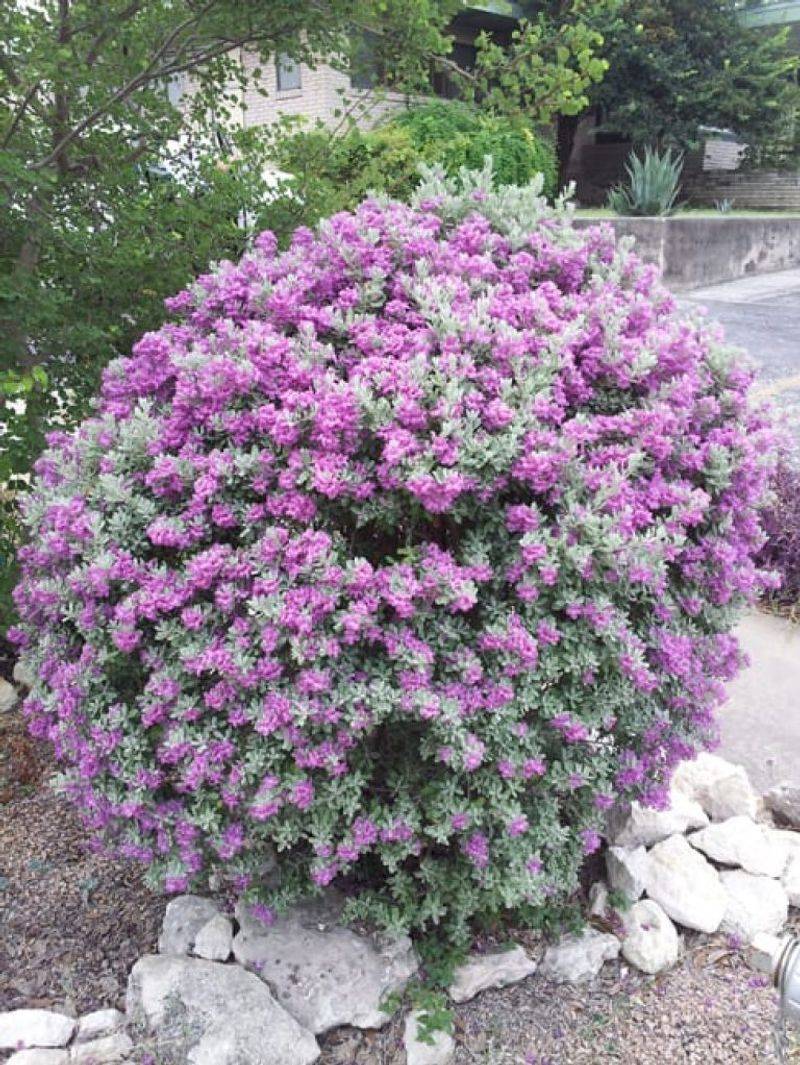
Here is the payoff for your patience. Once established, cenizo is drought tolerant and needs little maintenance, according to AgriLife Extension.
In a Texas summer with triple-digit heat and watering limits, that is a real advantage over thirstier screening shrubs.
Low maintenance does not mean none. Walk the screen every so often.
Look for dieback, yellowing, or sagging branches during long dry spells, and give a deep soak if a prolonged drought is stressing plants.
Skip the routine fertilizer. AgriLife advises against feeding cenizo unless a soil test documents a deficiency.
Extra nutrients can push soft growth and do little for a plant adapted to lean soil.
Overwatering is the more common way to cause trouble. Drip lines and lawn sprinklers that hit the shrub every few days can undo what drought tolerance gives you.
The Earth-Kind guidance on reducing frequency still applies: let the soil dry between waterings.
Keep an eye on drainage after heavy rains, too. A shrub standing in wet soil for days is a warning sign worth acting on.
Selective pruning preserves a natural form and flowering
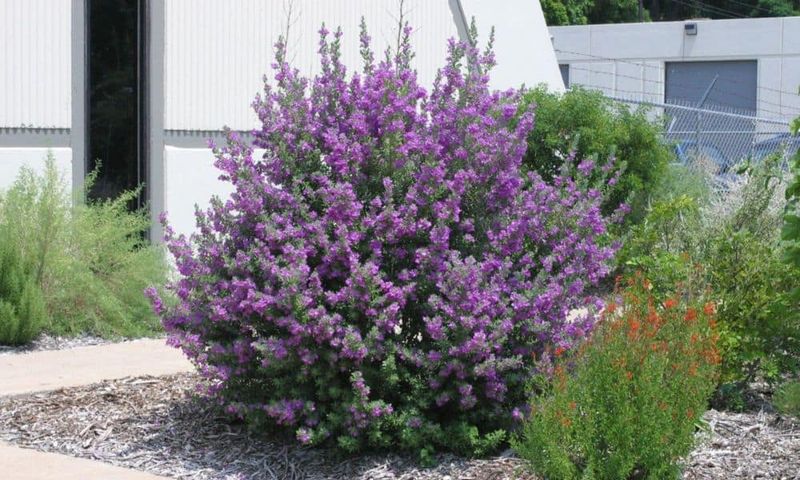
Grab hand pruners, not hedge shears. Light, selective cuts let cenizo keep its loose, rounded shape.
You can remove a few long branches or shorten stray growth without turning the shrub into a green box.
AgriLife says cenizo can be sheared, but repeated topiary-style pruning reduces flowering. Those purple blooms are a big part of its appeal, so tight shearing has a price.
Austin’s plant guide goes further and recommends a natural look, saying not to shear or hedge. If you want a formal, clipped wall, cenizo is probably the wrong choice.
Pruning also cannot replace space. If a shrub is planted two feet from a fence or a walkway and its mature width is six feet, you will be cutting it back again and again.
That can become a major pruning job or even a removal.
Give each plant its room, then use selective cuts to manage height and keep branches from crossing the property line.
Choose cenizo for a lasting screen, not an instant one
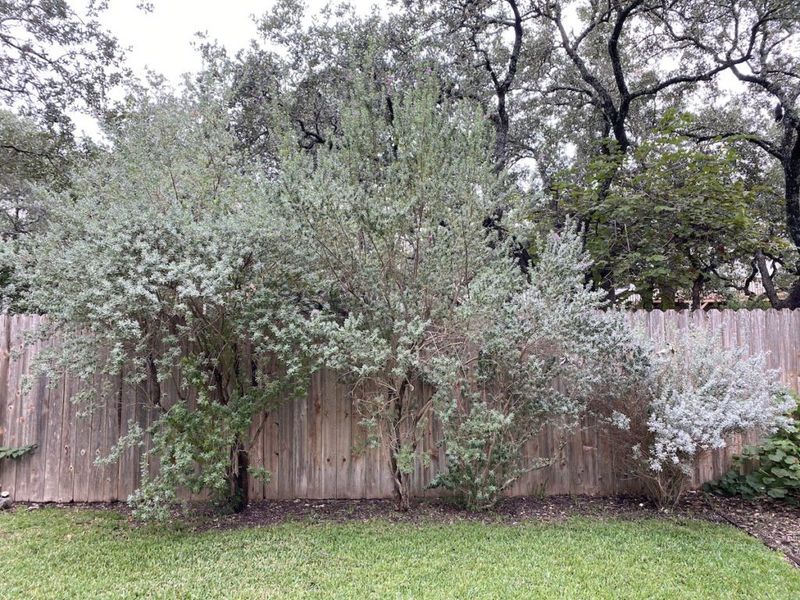
Cenizo may suit you if you have full sun, well-drained soil, room for plants that can reach 8 feet or more, and the patience to water new plants carefully. It also helps if you can live with gaps while shrubs grow together, a process local estimates put at several years.
If you need privacy now, or your yard is shady or soggy, look elsewhere. A well-placed cenizo screen is a slow bargain, and a crowded one becomes a chore.