
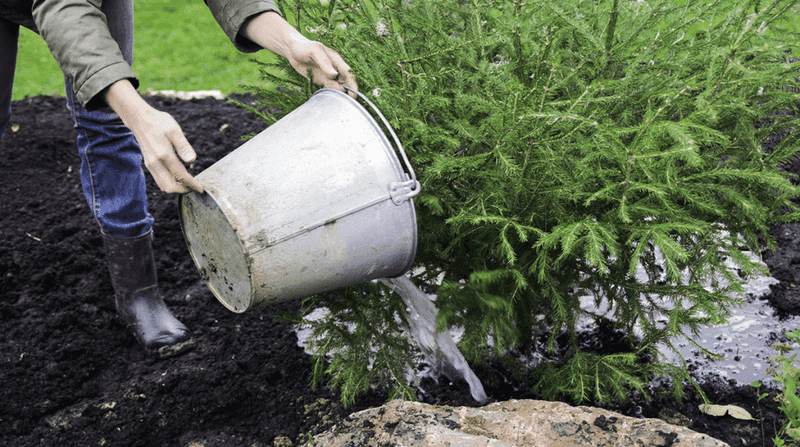
A Texas tree can look fine in October and still be running low on soil moisture. When a hard freeze hits a tree that has been stressed by drought, the damage can be worse.
Watering will not guarantee your tree survives, but it may help it head into winter in better shape. Here is how to figure out what your trees actually need, without guessing at a gallon count.
Why fall watering still matters in Texas
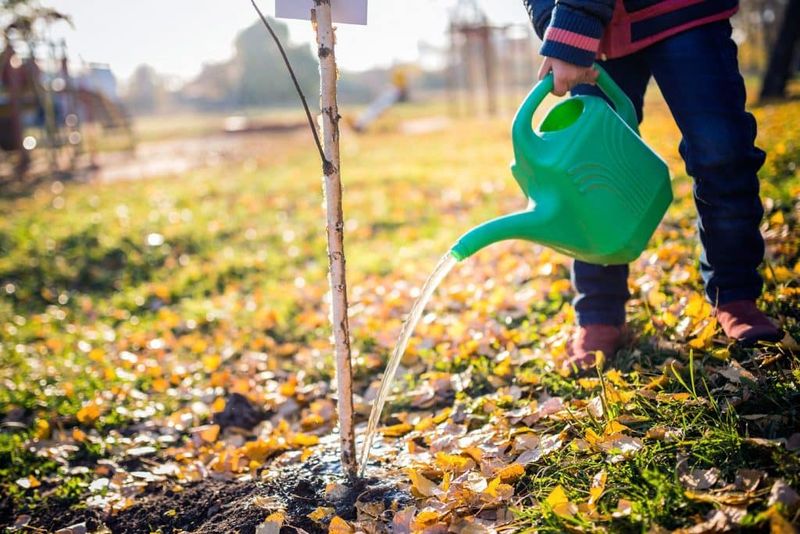
Dry soil going into a freeze adds one more problem for a tree that is already worn down. Texas A&M Forest Service explains that drought can damage a tree’s fine feeder roots and leave it stressed long after rain returns.
A tree in that condition has less to work with when cold arrives.
Soil moisture also plays a role in how cold the ground gets. The Forest Service notes that moist soil stays warmer than dry soil, and that watering can reduce drought stress and a tree’s susceptibility to freeze damage.
That is a helpful edge, but it is not a shield.
Be clear about the limits. Watering cannot promise that roots or a tree will survive a freeze, and it cannot undo severe drought damage that has already happened.
Cold hardiness, how long the freeze lasts, and the tree’s overall health all matter too.
So the practical takeaway is simple. Cooler weather is not an automatic signal to put the hose away.
Keep checking the soil through fall, especially after a long dry stretch, and water when it is actually dry rather than when the calendar says so.
How much water is enough?
No single number works for every tree. A set gallon total or one universal soak ignores the things that really decide how much a tree needs.
Rainfall, soil type, drainage, tree age, and local conditions all change the answer.
A better starting point is the soil itself. Texas A&M Forest Service suggests a screwdriver test.
If you cannot push the screwdriver easily 6 to 8 inches into the ground, the tree may need more water.
Think of that as a moisture check, not a target depth. It tells you whether the soil is dry, and it does not mean every tree in every yard needs water to reach exactly that far.
Species and site conditions vary a lot across Texas.
Try the test in a few spots under the canopy, since sunny and shaded sides can differ. Compare what you find after a good rain with what you find after two dry weeks.
Clay soils may hold moisture longer and drain slowly, while sandy soils dry out faster.
If the screwdriver slides in easily, skip watering and check again later. If it resists, water slowly and test again another day.
Water slowly across the root zone

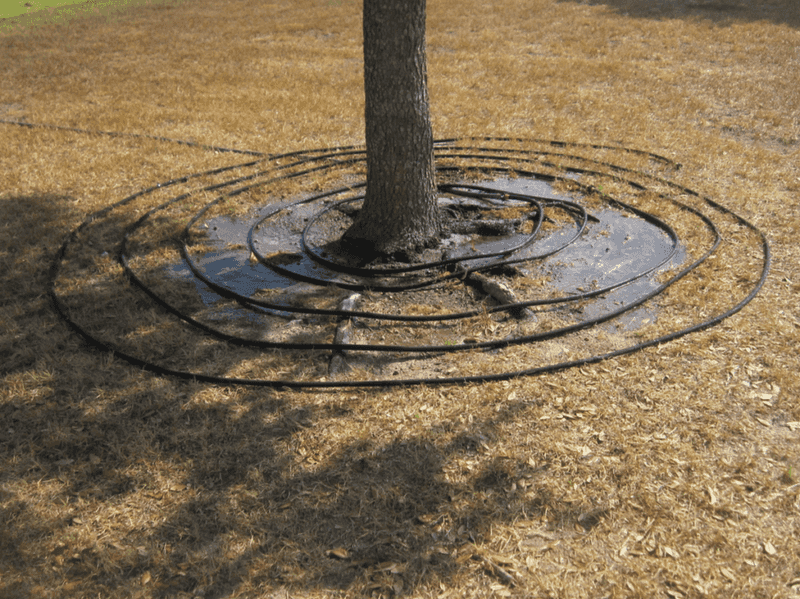
Slow and wide beats fast and narrow. Texas A&M Forest Service recommends a hose or soaker hose for large yard trees, applied slowly so water can soak in instead of running off.
Aim for the root area, not the trunk. Roots commonly reach to the edge of the canopy and beyond, so a wet circle right at the trunk misses most of the roots that take up water.
Move the hose or soaker around under the branches over time.
For general background, a Utah State University Extension guide places most roots in the upper 1 to 2 feet of soil. Treat that as broad guidance, not a Texas rule, since our soils and sites vary from caliche hills to Gulf Coast clay.
Deep watering here simply means a slow application that moistens the root area. It does not mean forcing water down to a set depth.
Skip the idea of digging holes around the tree to push water deeper. The Forest Service warns that this can dry out the root zone instead of helping it.
New trees need a separate plan
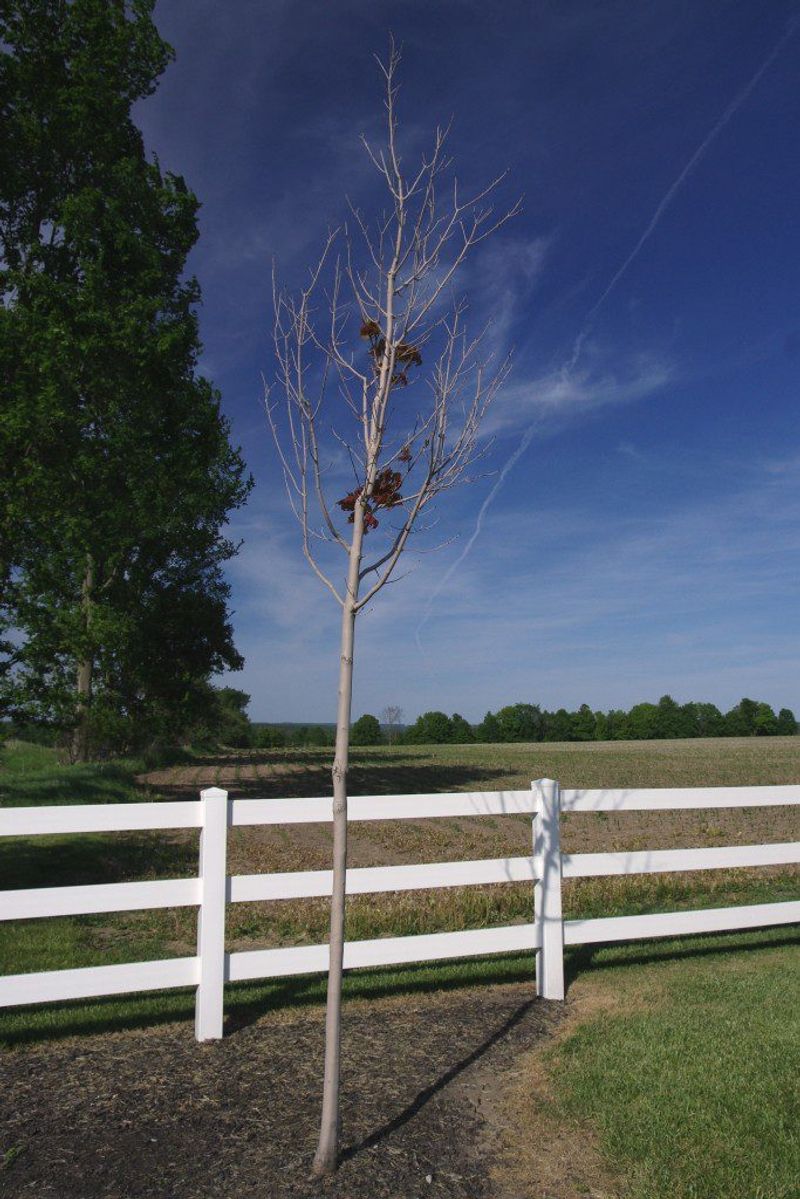
Young trees play by different rules. A tree planted in the last year or two has a smaller, shallower root system, so it uses soil moisture less effectively than an established tree.
It can run short of water sooner.
That makes new trees the first ones to check. Texas A&M Forest Service recommends continued establishment watering that is deep and infrequent, with the schedule and amount changing by season and conditions.
There is no fixed winter frequency to memorize here. Rain, temperature, and soil drainage all shift what a young tree needs from one month to the next.
A sapling in sandy soil may need attention long before one in heavy clay.
The Forest Service also points to young trees when it talks about cold weather care, listing them as a priority when soil is dry ahead of a freeze.
An established mature tree should not get the same treatment automatically. Use the screwdriver check on both, and let the soil tell you who needs a drink.
When should you water before a freeze?
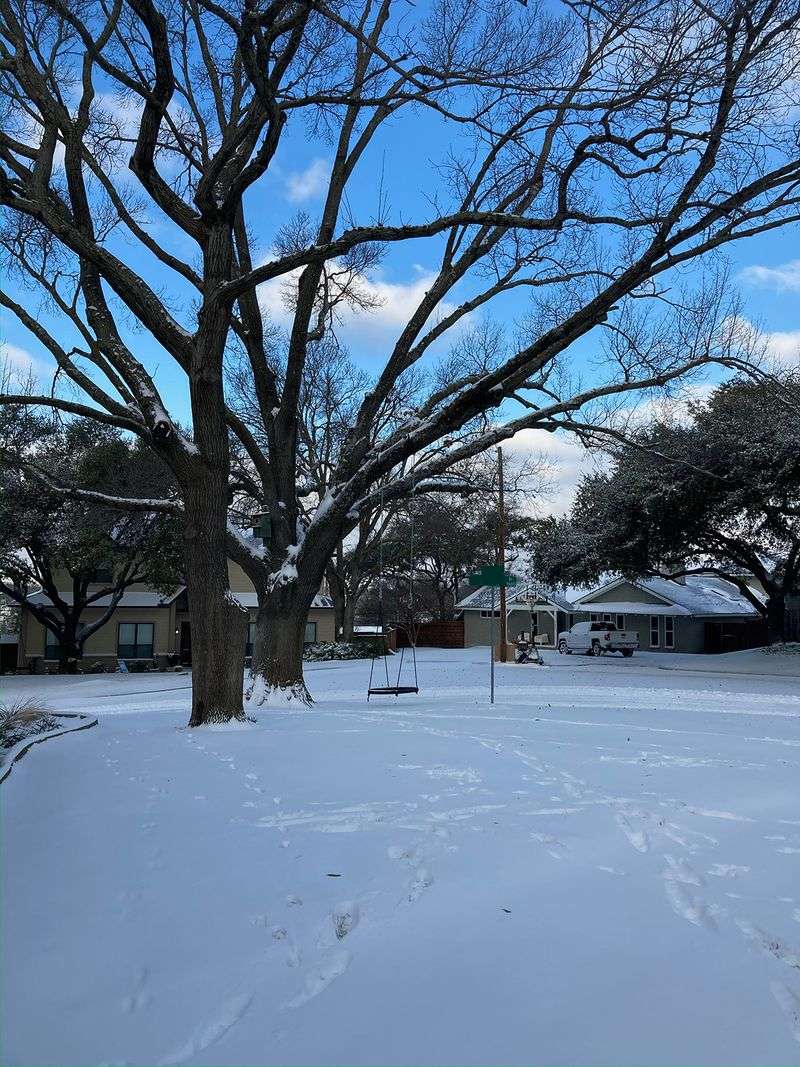
Timing follows the weather more than the calendar. Texas A&M Forest Service advises generally continuing your regional watering schedule through October and early November, rather than quitting the moment temperatures dip.
Once trees go dormant, needs drop. Dormant hardwoods may need water only once or twice a month in winter, depending on rainfall.
In a wet winter, they may need none at all.
When a hard freeze shows up in the forecast, check the soil. If it is dry, water early on the day before the freeze.
That gives the moisture time to soak in before nighttime temperatures fall.
Skip it if the ground is already damp. Extra water on soggy soil does nothing useful.
The September 17, 2026 Forest Service drought report is a good example of why local conditions matter. It described premature dormancy and stress in some East and Central Texas trees, and it does not apply to the whole state.
It also cautioned that a tree’s look alone may not tell dormancy from serious damage.
Mulch helps, but saturated soil does not
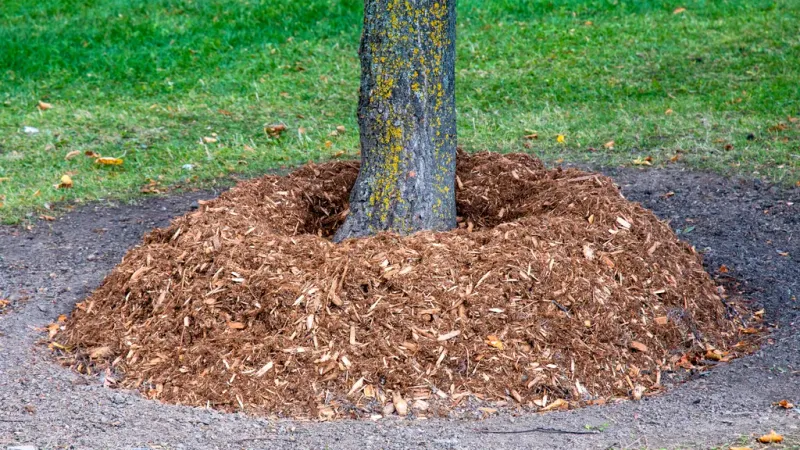
Mulch is the easy win. The Forest Service recommends 2 to 3 inches over the root zone.
It reduces moisture loss and helps buffer roots from low winter temperatures.
Keep it off the trunk. Pull the mulch back a few inches so the bark stays dry, and spread it wide rather than piling it into a volcano shape.
Next, check the rules. During drought, many Texas cities and water providers limit outdoor watering days or hours.
Texas A&M Forest Service specifically advises homeowners to consult their city or water provider. Soaker hoses and drip lines are often treated differently from sprinklers, so look up yours.
Finally, remember that more is not better. Roots need air as well as water, and overwatering can harm them.
If the soil is soggy or puddling, hold off.
A simple clue: if a screwdriver slides in easily and the soil feels wet, the tree is fine for now.
Keep checking, rather than following a final-soak rule
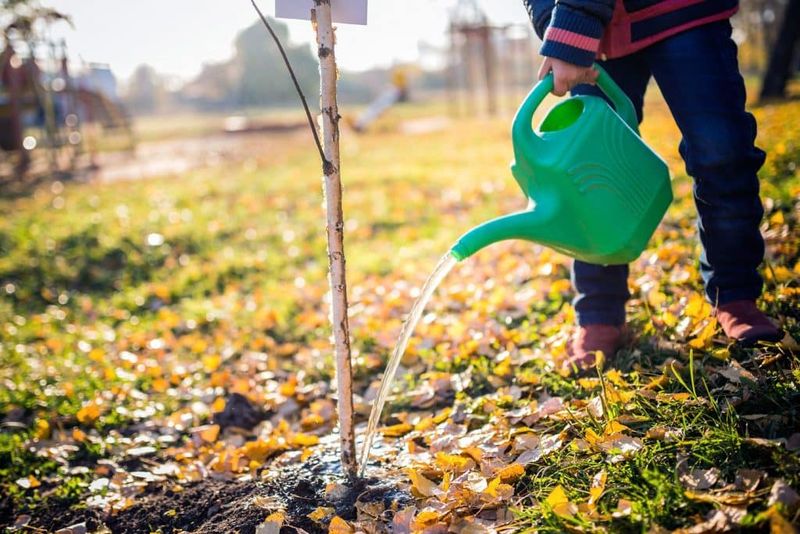
Think of it as a short loop. Check the soil, account for recent rain and local restrictions, and water dry root areas slowly.
Give young trees their own look. Then check again, since Forest Service guidance ties every decision to conditions.
Watering may reduce drought stress, but it cannot promise a tree gets through a freeze. A tree’s best protection is steady attention, not one big soak.