
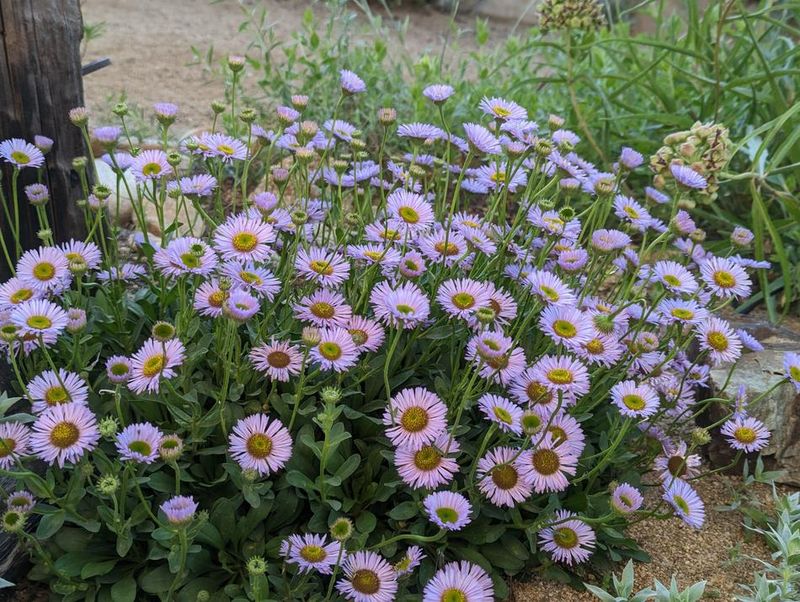
That bright green lawn looks great in April, but by August it often turns crunchy and brown no matter how much you water. In California, long dry summers and water rules make a thirsty lawn a tough fight to win.
The good news is that many tough, low groundcovers stay green or blooming with far less water, and lots of them feed bees, butterflies, and birds too. Here are nine smart picks that can give your yard a fresh look all year.
1. Creeping Wild Rye (Elymus triticoides ‘Glaucous Form’)
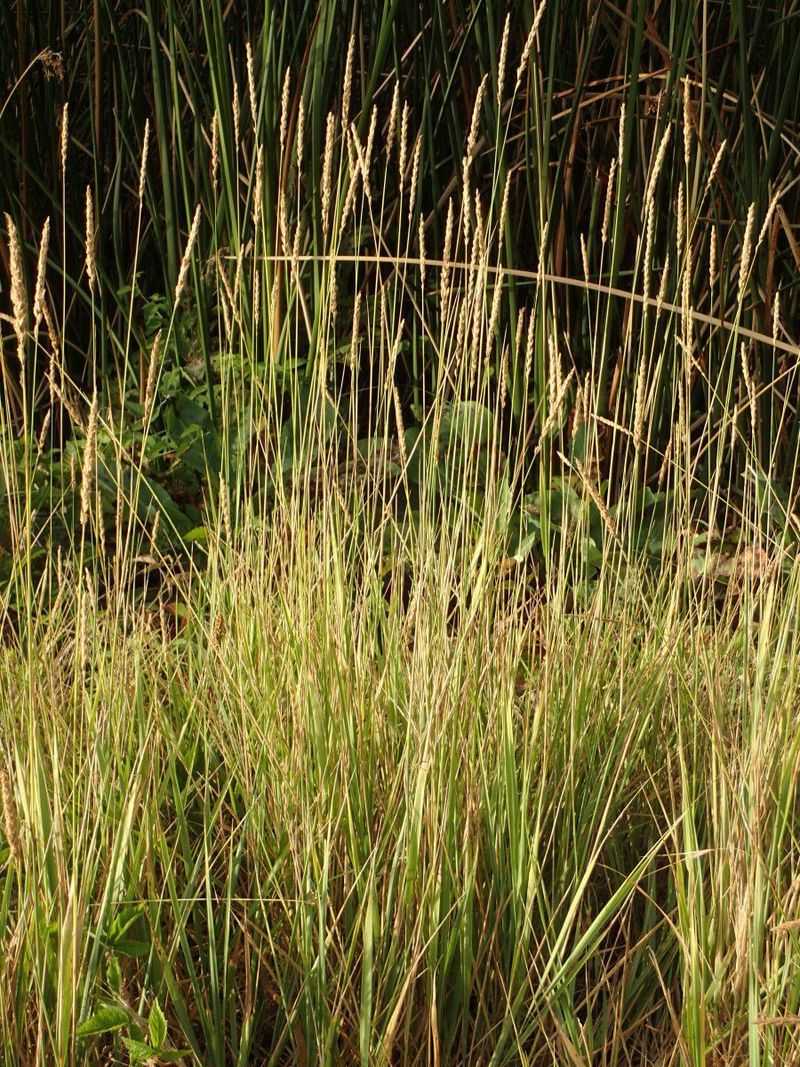
If you still want something that feels like a lawn under bare feet, start here. Creeping wild rye is a California native grass that spreads by underground runners and forms a loose, blue-green carpet.
Leave it unmowed for a flowing meadow look, or trim it a few times a year for a tidier feel. Once established, it can get by on deep watering every couple of weeks in summer, far less than typical turf.
It handles clay soil, sun, and light foot traffic well. Native grasses like this can also give shelter to ground-nesting insects and small birds that a mowed lawn tends to push out.
2. Carex pansa (California Meadow Sedge)
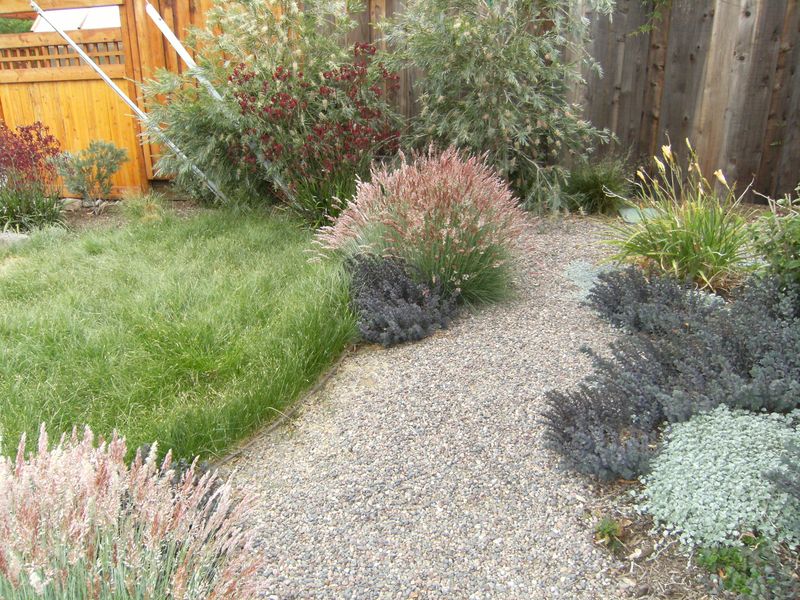
Picture a lawn that never needs weekly mowing and still looks soft and green. California meadow sedge comes close to that dream, which is why so many turf-replacement projects across the state lean on it.
It grows about four to six inches tall and spreads slowly into a thick mat. You can mow it two or three times a year, or simply let it flop into a relaxed, wavy texture.
Sedge does use a bit more water than some groundcovers on this list, especially in hot inland valleys. Still, it typically needs far less than cool-season turf, and it tolerates part shade where many grasses sulk.
3. Yerba Buena (Clinopodium douglasii)
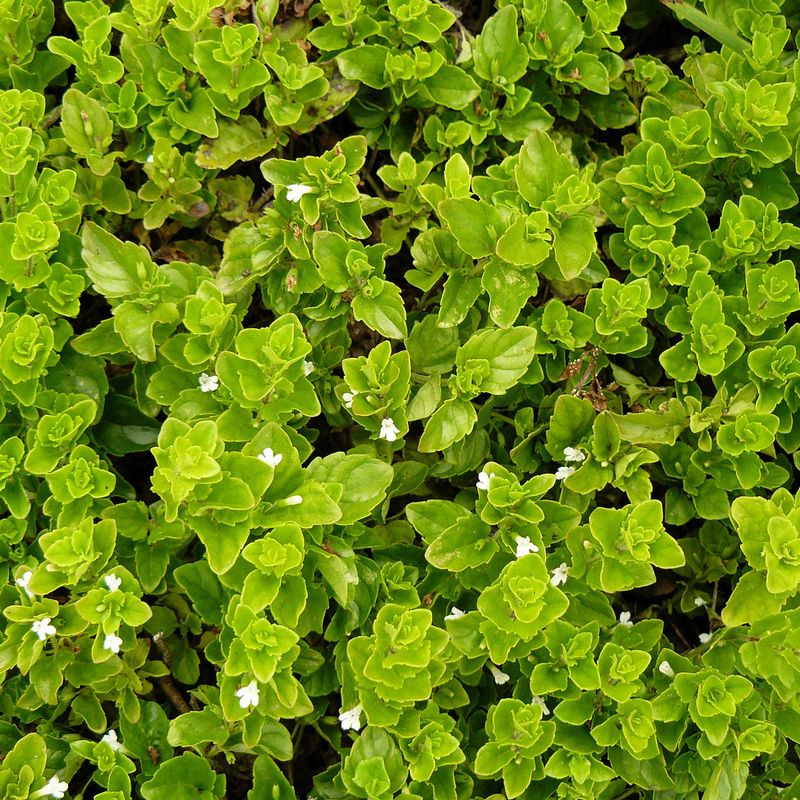
Brush your hand across yerba buena and you get a burst of minty fragrance. Early Spanish settlers valued this little native so much that San Francisco’s original name, Yerba Buena, came from it.
It trails along the ground with small rounded leaves and tiny white summer flowers. It shines in dappled shade under oaks or along a north-facing walk, places where lawn usually goes thin and patchy.
Give it occasional summer water in hot areas, and it may go a bit dormant in the driest stretch. Many gardeners also steep a few leaves for a gentle tea.
4. Creeping Sage (Salvia sonomensis)
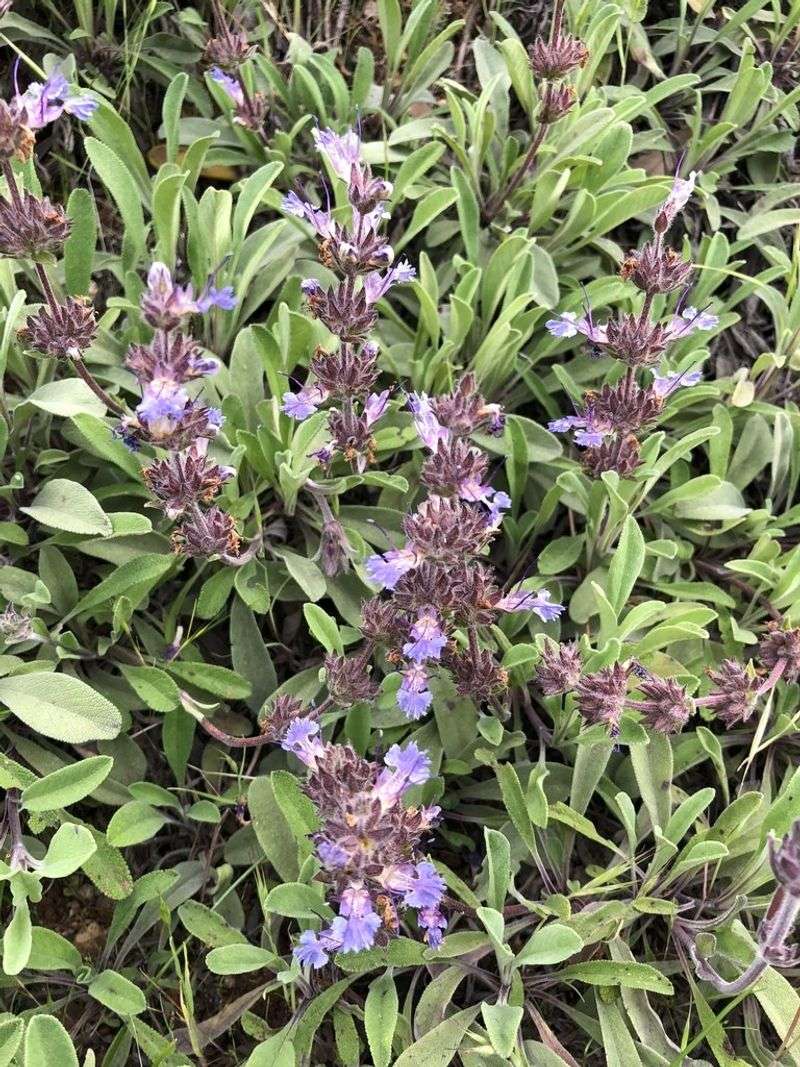
Bees go wild for this one. In spring, creeping sage sends up lavender-blue flower spikes that can hum with native bees for weeks.
It hugs the ground with gray-green, fragrant leaves and spreads into a wide, weed-smothering mat. Sunny slopes and hot, well-drained spots suit it best.
Once rooted, it often needs little or no summer water near the coast, and only occasional soaks inland. Avoid overwatering, since soggy soil in summer heat can rot it fast.
5. Dwarf Coyote Brush (Baccharis pilularis ‘Pigeon Point’)
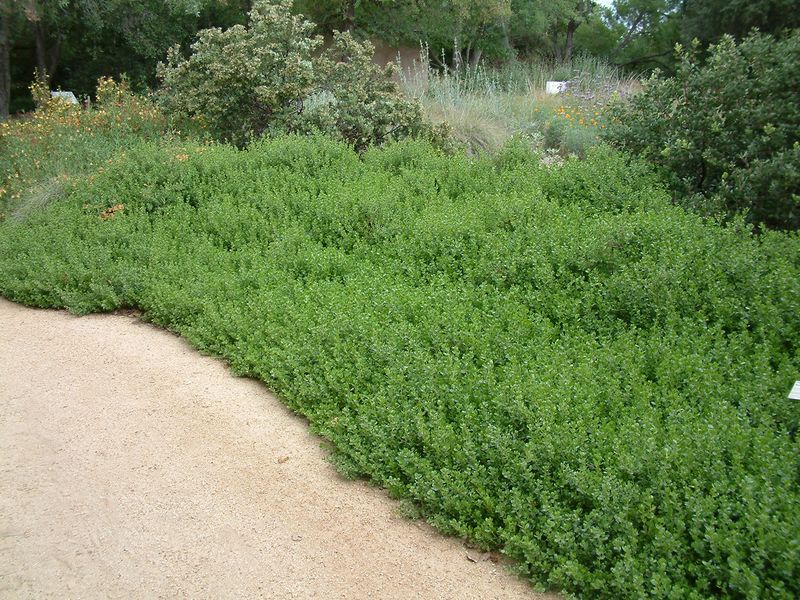
Some plants are flashy. Dwarf coyote brush is the dependable workhorse that quietly covers big areas and asks almost nothing in return.
Low forms like ‘Pigeon Point’ stay one to two feet tall and spread several feet wide, making them a favorite for banks and large lawn removals. The bright green foliage stays fresh through summer with very little water.
It holds soil on slopes and may offer cover for lizards and beneficial insects. Shear it every few years to keep it dense and tidy.
6. California Aster (Symphyotrichum chilense)
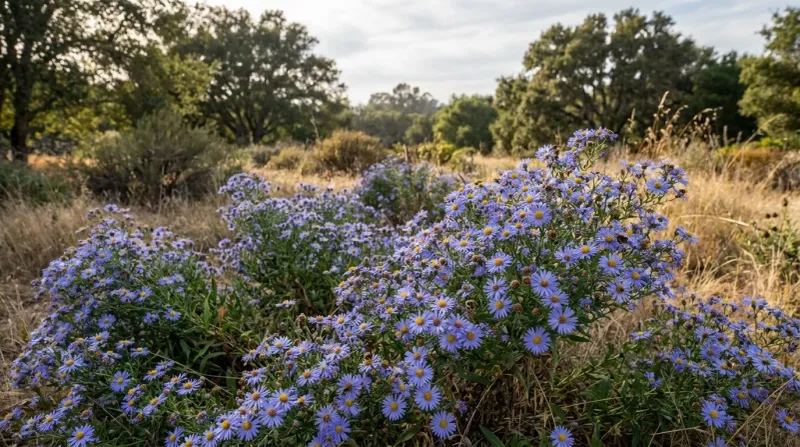
Late summer is when most California yards look tired. California aster flips that script by opening clouds of pale lavender daisies right when butterflies and late bees need food most.
It spreads by runners into a loose groundcover, filling gaps between grasses or stepping stones. Cut it back in fall and it returns fresh after winter rains.
It can roam a bit, so give it room or edge it in. Light summer water keeps it blooming longer.
7. Prostrate Manzanita (Arctostaphylos ‘Emerald Carpet’)
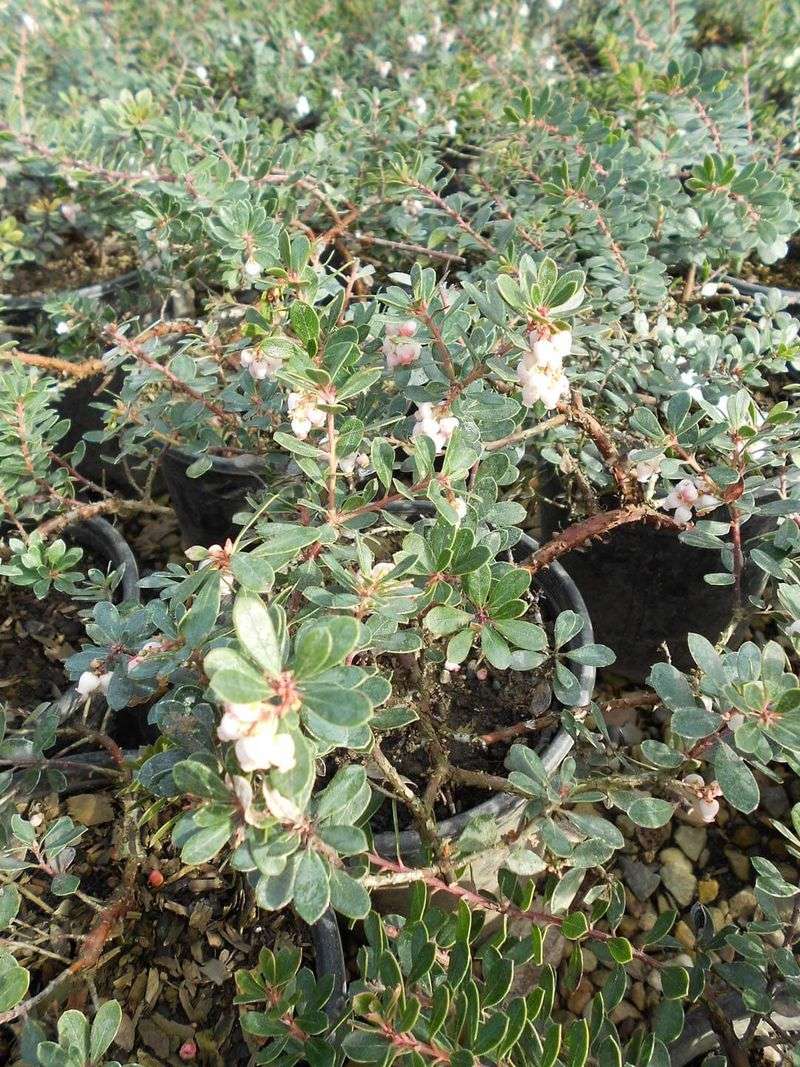
Glossy, dark green, and almost polished looking, ‘Emerald Carpet’ manzanita gives a refined finish to a front yard. In late winter, tiny pink bell flowers feed early hummingbirds and bees.
It grows slowly, so plant closer together and mulch between plants while it fills in. Good drainage and some afternoon shade inland help it thrive.
After the first couple of years, it typically needs only infrequent summer water. Fussing with it too much is the most common way people lose it.
8. Seaside Daisy (Erigeron glaucus)
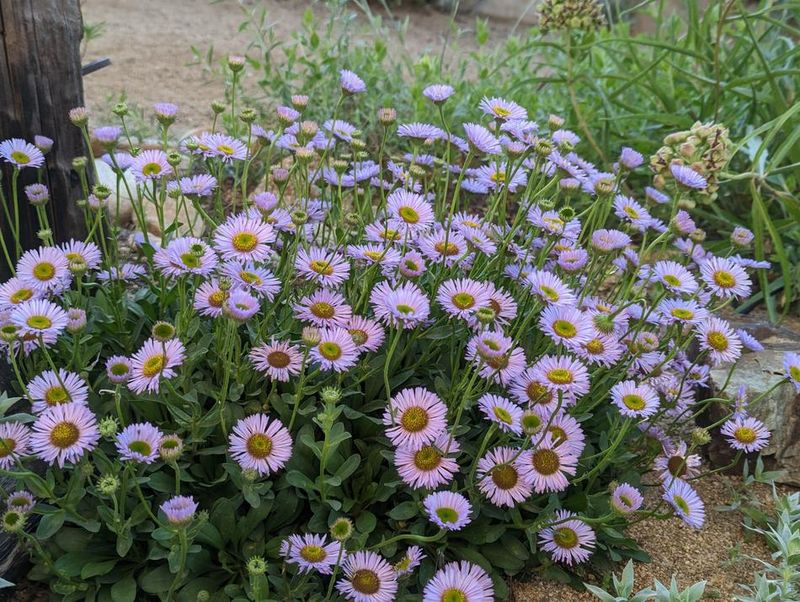
Coastal gardeners, this cheerful little daisy is your friend. Native to the bluffs of California, seaside daisy laughs off salty wind and foggy mornings.
It forms low mounds covered in pink to lavender flowers with sunny yellow centers for much of the year. Plant it in drifts along paths or as a lawn edge, and deadhead for more blooms.
Inland, it appreciates some afternoon shade and a little extra water. Butterflies and small native bees often visit the open flowers.
9. Dymondia (Dymondia margaretae)
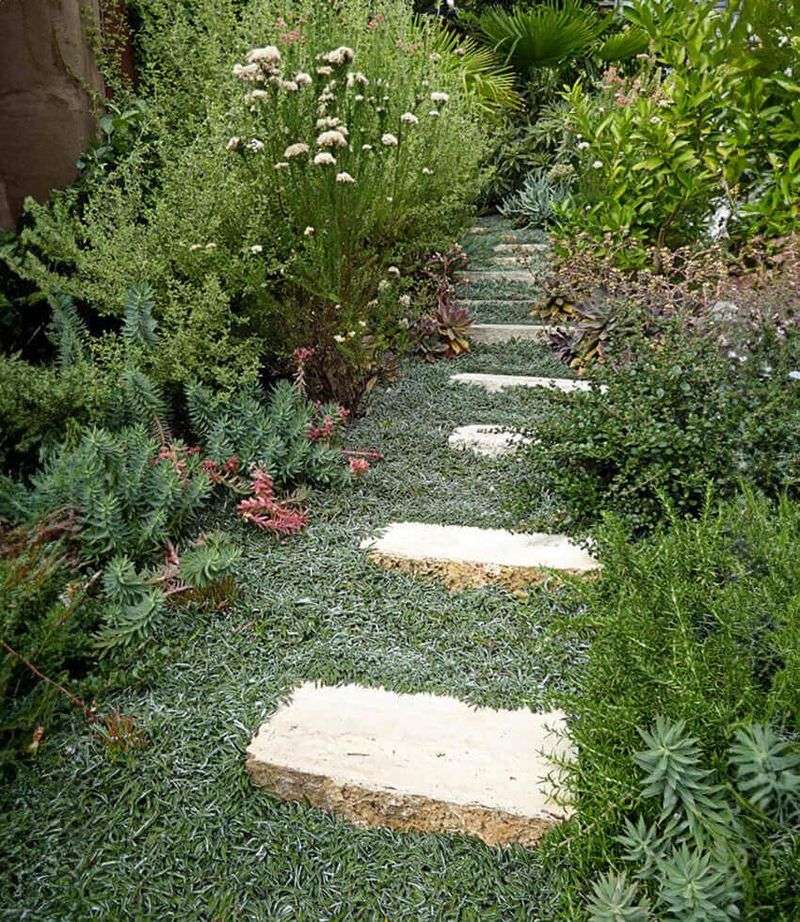
Not every pick needs to be native to earn a spot. Dymondia, from South Africa, fills a job many natives struggle with: growing tightly between pavers where people walk.
Its silvery, crinkled leaves form a flat mat barely two inches tall, with small yellow flowers in summer. It handles moderate foot traffic and stays green with modest water once settled.
Pair it with natives elsewhere for wildlife value. Low, well-watered groundcovers near the house may also fit fire-smart planning better than dry turf, though check your local defensible-space rules.