
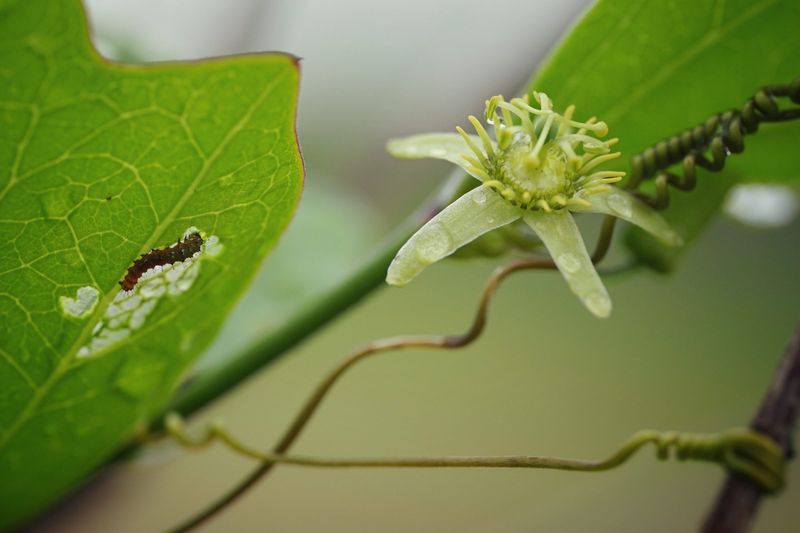
Some of the most useful plants in a Florida yard are the ones you could walk right past. Corkystem passionflower is a slim native vine with tiny greenish flowers and leaves that hungry caterpillars love.
It has a real job in a wildlife-friendly garden, but it is not quite the plant some headlines make it out to be. Here is what it does well, what it does not do, and how to grow it.
Identify the understated Florida native
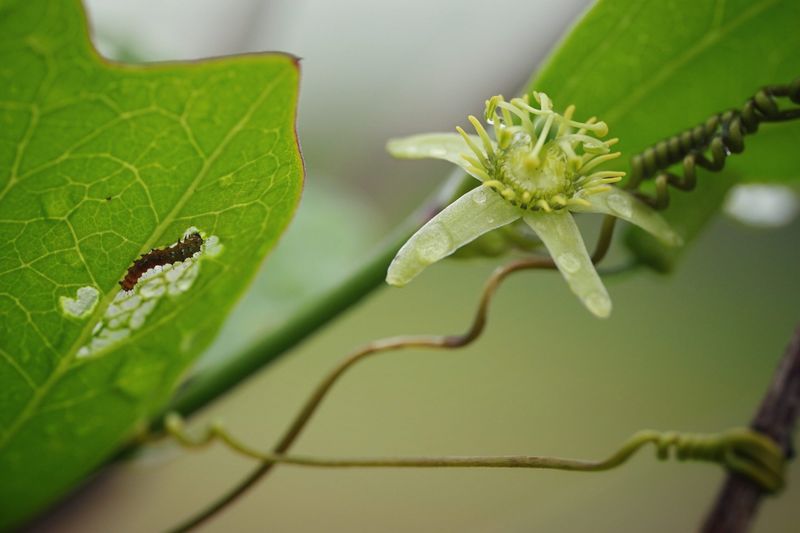
Corkystem passionflower, known scientifically as Passiflora suberosa, is a slender vine that climbs or sprawls across the ground. The Florida Wildflower Foundation lists its native range as peninsular Florida, so it is native within that range rather than across the entire state.
The leaves are the best clue for identifying it. They vary quite a bit, with some left unlobed and others cut into three lobes, sometimes on the same plant.
Look for small tendrils reaching out to grab nearby stems, fences, or shrubs.
The flowers are tiny and greenish, nothing like the large purple blooms many people picture when they hear the word passionflower. According to the Florida Museum of Natural History, older stems turn tan and woody, and they can look corky or winged.
That texture gives the plant its common name.
Because the blooms are so small, the vine is easy to overlook, even when it is growing along a fence line or at the edge of a planting bed. Take a slow walk along your property edges and check low, tangled growth, since that is where it often shows up.
Florida references describe flowering through the year. Treat that as a report from Florida sources and not a promise.
A plant in your yard may bloom heavily in some months and barely at all in others. The Florida Native Plant Society profile even gives a narrower late spring to summer bloom window in one entry, which is another reason to expect variation.
Its charm is in the foliage and its wildlife job, not in a flashy flower show.
Its clearest wildlife role is feeding caterpillars
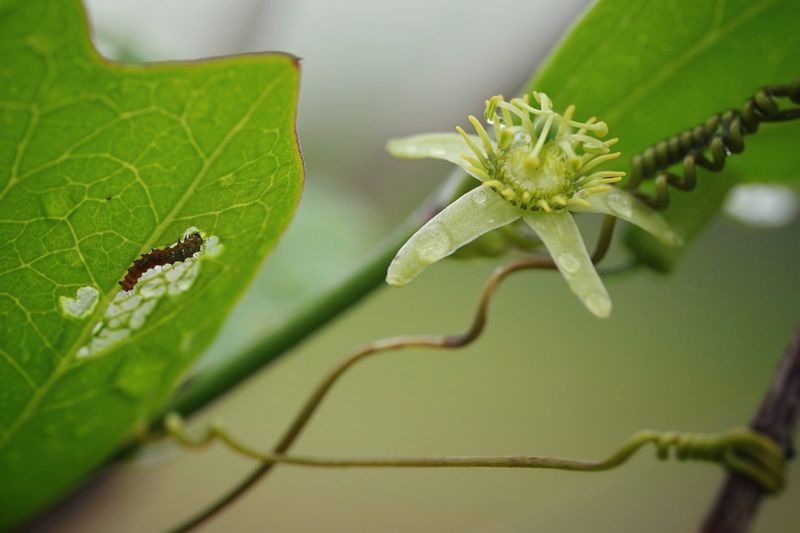
Where this vine really earns its spot is as a larval host plant. That means butterfly caterpillars eat its leaves.
UF/IFAS butterfly gardening guidance lists passionflowers as hosts for zebra longwings and gulf fritillaries, two of Florida’s most recognizable butterflies.
Florida references also list the Julia butterfly among its users. The Florida Museum and the Florida Native Plant Society both include it in their host lists, as the museum’s plant profile shows.
Notice the wording here. Host plant means a place for eggs to be laid and for young caterpillars to eat.
It does not mean the vine is a nectar source for adult butterflies. UF/IFAS lists adult food, such as flower nectar and, for zebra longwings, pollen, as a separate need.
Nothing in those listings says adults get that food from this particular vine.
If you want adults in the yard, plant nectar-rich flowers nearby and let the vine handle the caterpillar side of the job.
Also keep expectations realistic. Planting a host vine gives caterpillars an opportunity, but it does not guarantee any will arrive.
Butterflies have to find your yard, and that depends on your neighborhood, the season, and what else grows nearby.
One practical habit helps: check the leaves every week or two. Tiny eggs and small striped or spiny caterpillars are easy to miss, and finding them is half the fun of growing this plant.
The hummingbird claim belongs to a different passionflower
You may have seen this vine described as a hummingbird plant. The sources reviewed for this article do not establish that for corkystem passionflower.
The Florida Museum and the Florida Native Plant Society describe its flowers as attracting bees and other pollinators.
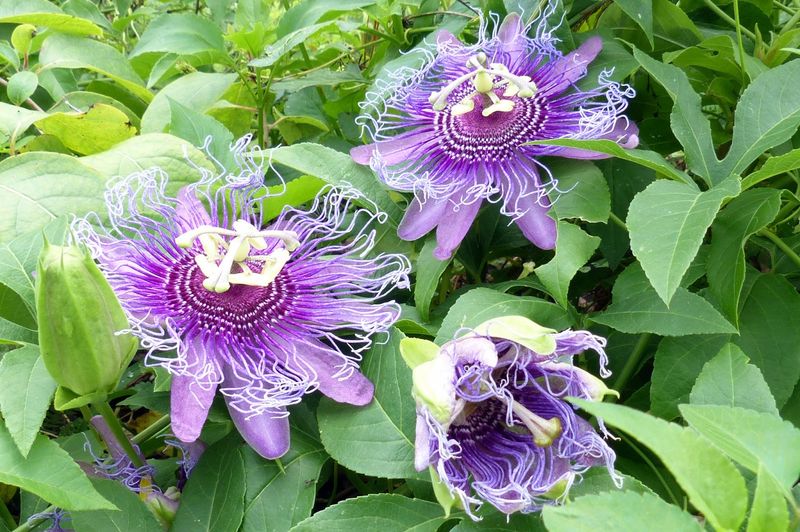
The mix-up likely comes from a different species. UF/IFAS Gardening Solutions says Passiflora incarnata, often called maypop, attracts hummingbirds.
It has big, showy flowers, which is a very different plant from the small-flowered Passiflora suberosa.
Passionflower species share a family and some looks, but they do not share every wildlife benefit. Check the scientific name on any plant tag before you count on a particular visitor.
None of this means a hummingbird could never stop by. It simply means that hummingbird use is not documented for this species, so it should not be the reason you plant it.
If hummingbirds are your goal, pair this vine with plants that are known for them and enjoy the caterpillars as a bonus.
Choose a planting spot with suitable light and soil
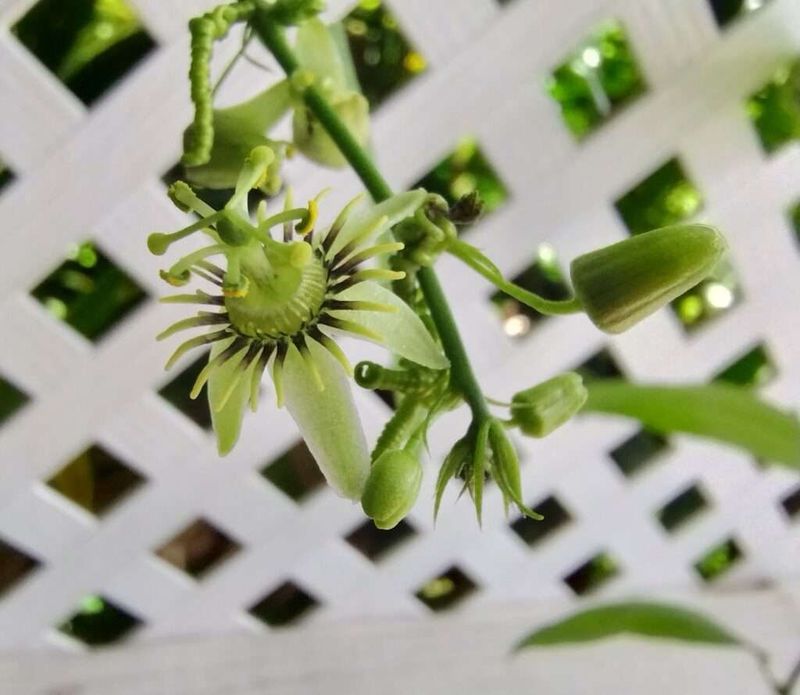
You have some flexibility with where this vine goes. The Florida Museum notes it can be grown as a groundcover or trained up a trellis or a tree.
That makes it handy for a sunny border edge, a fence line, or a corner where you want something soft and green.
Aim for full sun to partial shade. Well-drained soil is the other key piece of advice, and that suits many Florida yards, especially those with sandy ground that drains quickly.
Avoid low spots where water pools after summer storms.
Water regularly while the plant is getting established. Young vines have small root systems, so they need steady moisture through the first weeks and months in the ground.
UF/IFAS Extension in Osceola County also says passionflowers need well-drained soil and regular irrigation in Central Florida landscapes.
After that, the picture changes. The Florida Wildflower Foundation says the plant tolerates dry soil and is drought tolerant, but that applies once it is established, not to a new transplant.
A simple plan works well: pick a bright spot, loosen the soil if needed, plant, and water on a schedule until new growth shows. Then taper off and let it settle in.
Keep in mind that its native range is peninsular Florida, so gardeners elsewhere should confirm local suitability first.
Make room for growth and caterpillar feeding
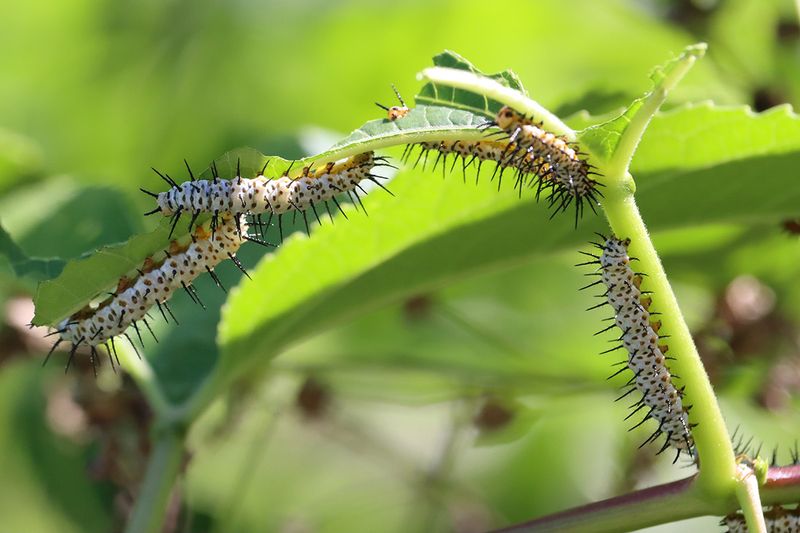
Give this vine room. The Florida Museum says it can spread 10 feet or more, and it may need pruning in small spaces.
A sturdy trellis, a fence, or an open stretch of ground gives it somewhere to go.
UF/IFAS also advises giving passionflower vines a suitable trellis and space to grow. Plan placement so the vine will not smother nearby small plants, and trim it back when it starts reaching beyond its spot.
Expect chewed leaves. That is the plant doing its job as a host.
A few ragged edges or even a thinned patch usually mean caterpillars are feeding, not that something has gone wrong. Before you react, take a closer look and see who is eating.
Pesticides are not routine care for this vine. UF/IFAS Extension in Osceola County advises avoiding pesticides while passionflowers are blooming, to protect pollinators.
Spraying nearby plants can also drift onto the vine and harm the caterpillars you planted it for.
This is not a maintenance-free plant. It asks for a bit of pruning, some support, and a tolerance for imperfect leaves.
In return, it gives caterpillars a place to feed.
Plant it for its documented value
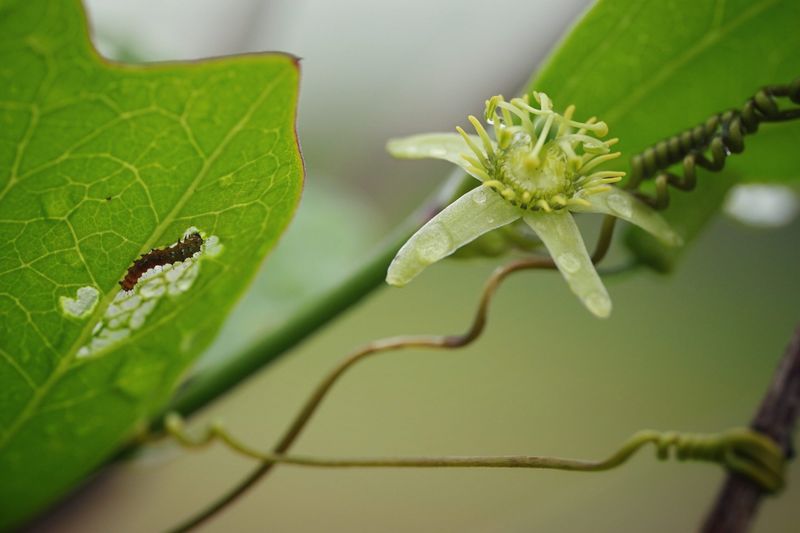
Corkystem passionflower is a modest Florida native with a clear job: its leaves feed caterpillars, as UF/IFAS butterfly gardening guidance lists for zebra longwings and gulf fritillaries. Florida references report small flowers appearing through the year, though not in every yard.
Hummingbird support is not established for this species, so plan for butterflies and bees, and match the vine’s spread to your space.
It will never be the loudest plant in the garden, and that is part of its appeal.