
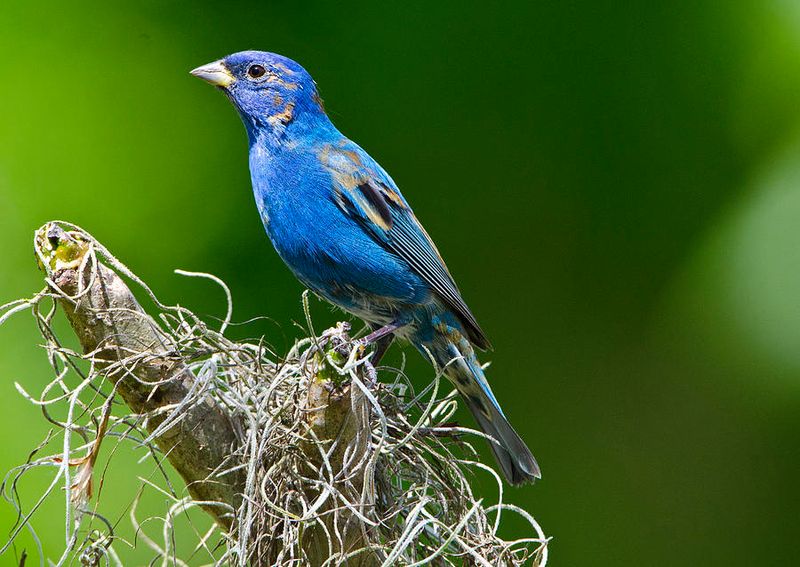
A flash of deep blue at the edge of a Florida yard can stop anyone mid-step. Indigo Buntings do pass through and sometimes stay in the state, but a visit is never a sure thing.
A small, clean feeder is one practical way to offer food to a bird that happens to be nearby. Here is what you can do, and what you should not count on.
Do Indigo Buntings reliably winter in Florida yards?
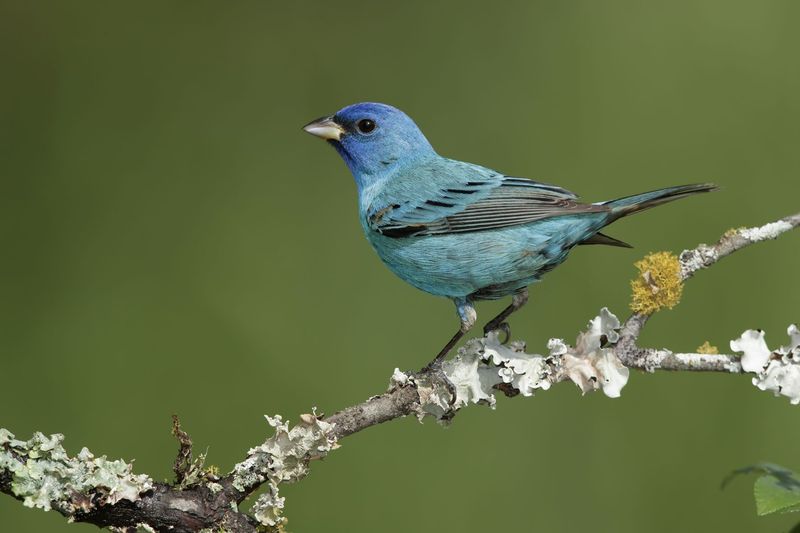
Short answer: no, a Florida yard cannot count on a yearly Indigo Bunting visit. These birds are long-distance migrants, and a banding account from Environment and Climate Change Canada describes the group that winters in the United States as small.
Most spend the cold months south of the country. Only a small number winter in Florida and Texas.
Winter records in Florida do exist. At Gainesville’s 2019 Christmas Bird Count, observers tallied nine Indigo Buntings, twice the previous record, and the Florida Museum described the species as unusual in that count.
That tells us the bird can turn up in winter. It does not tell us that any one yard will see one, or see one again next year.
Location matters too, because Florida is a long state. A south Florida study found that range maps disagree about whether the species overwinters there, and it noted just one Christmas Bird Count record in the 2001 to 2015 data it reviewed.
Wintering looks occasional and local, mostly in the south, rather than routine across the whole state.
One more mix-up is worth clearing up. Painted Buntings are a different species, and Florida has a documented Painted Bunting population that breeds and winters here.
Their pattern says nothing about Indigo Buntings, so stories about colorful winter buntings in Florida yards may be about the other bird.
October falls within fall migration
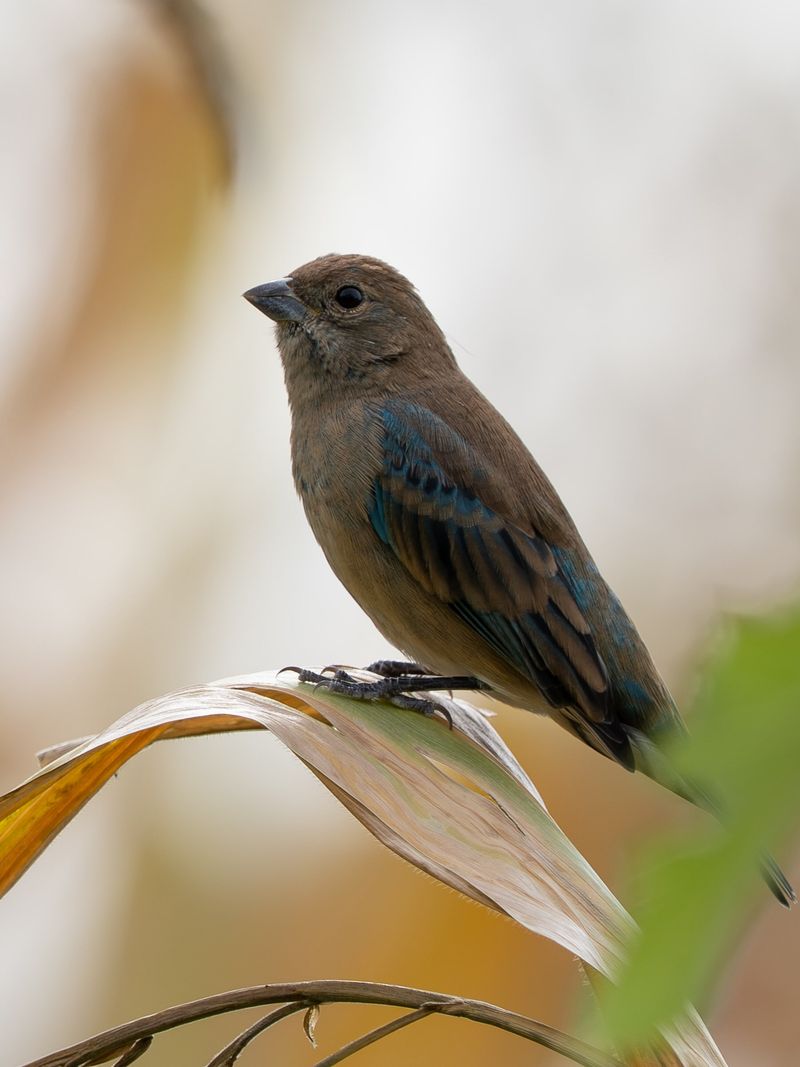
Early October puts Florida squarely in migration season for this bird. Cornell’s eBird model places the post-breeding migration window from August 16 to November 15, with the nonbreeding season starting November 22 and running to March 15.
Those dates describe broad seasonal patterns across the whole range. They are not a forecast of birds settling into Florida yards.
A bunting moving through in October may be headed well south of the state.
On the move and over the winter, Indigo Buntings forage in fields, lawns, grasslands, shrubs, and trees, and they may feed in flocks. Think of an edge where a lawn meets weedy growth or shrubs, which is the kind of spot a hungry traveler might notice.
That leads to the practical question of what a yard can offer. The next sections cover food, safety, and habitat, with no promise of a sighting attached.
A nyjer feeder offers food, not a summons
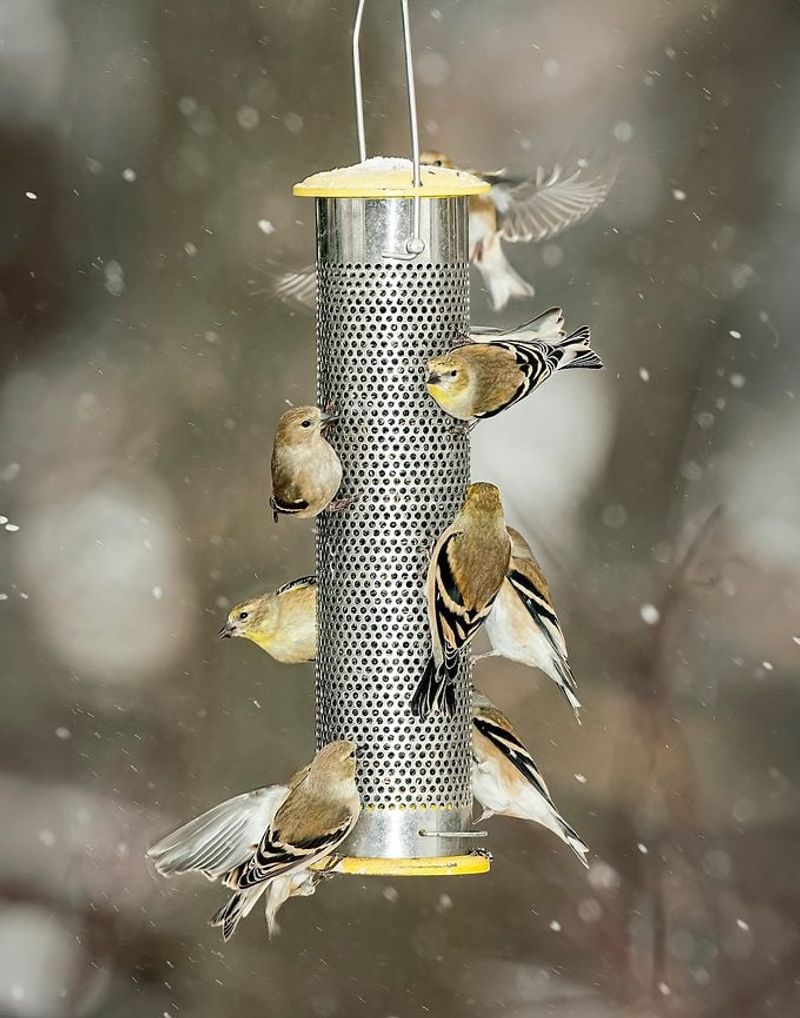
Picture a small tube feeder filled with nyjer seed, hanging where you can watch it from a window. Cornell lists Indigo Buntings among the birds that may use nyjer feeders, which makes it a sensible, species-relevant option.
The bird’s natural menu is wider than that. Indigo Buntings eat small seeds, berries, buds, and insects, according to Cornell’s life history account, so a feeder is one snack among many in the landscape.
Here is the honest limit. A feeder offers food to a bird that is already passing through or living nearby.
It does not steer a migration route, and it cannot promise a stop. Other seed-eating birds, such as goldfinches, may take the seed instead.
If a bunting does show up, a feeder gives it a small, steady option. If none does, you still get to enjoy whichever birds find it.
Start with a small feeder and limited seed
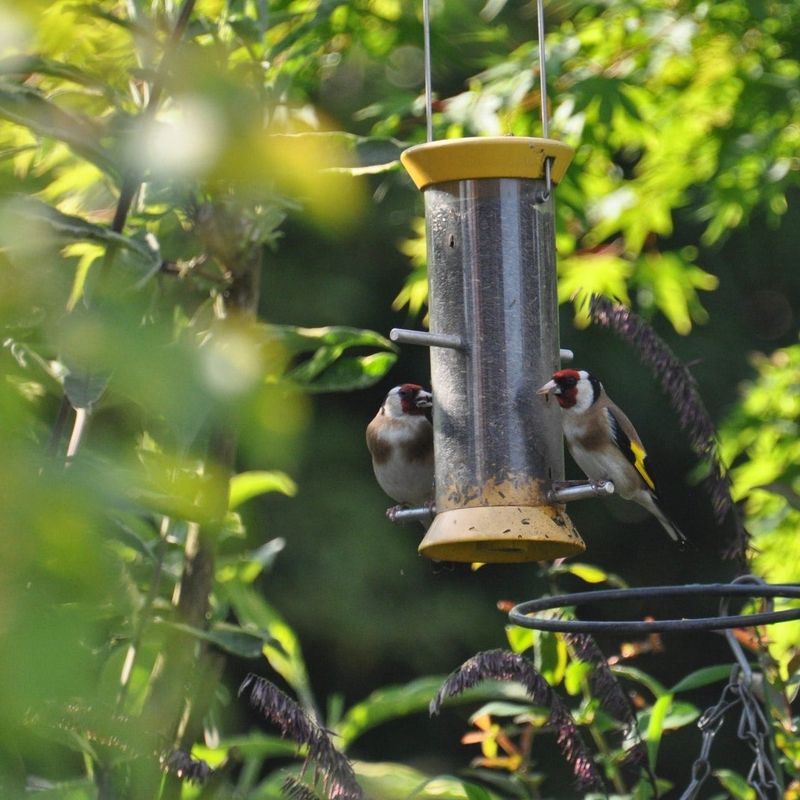
Low commitment is the smart way to begin. Cornell advises starting with a small feeder and a limited amount of seed, since a feeder can get little use at first.
Cost is a good reason to go slow. Nyjer is comparatively expensive, so a big bag that sits unused is money wasted.
A small amount also stays fresher.
Florida rain is another factor. Mesh feeders can get wet in a downpour, and soggy seed spoils fast.
Pick a spot with some cover and check the feeder after storms.
Treat the first few weeks as a test. Watch who visits, how quickly the seed disappears, and whether the feeder stays dry.
If local finches and other seed eaters take to it, you have a working setup. Buying more gear in hopes of drawing in one particular bird is where plans tend to go wrong.
Keep feeding clean and reduce hazards
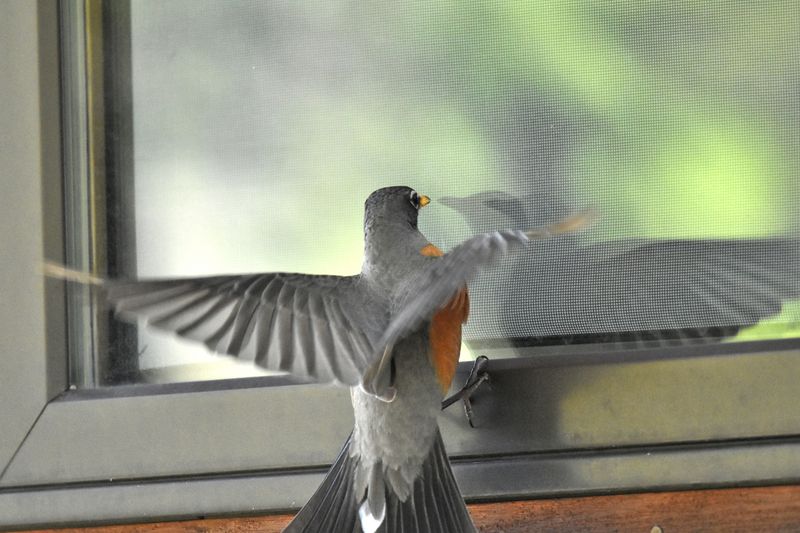
A feeder is only a good idea if it is kept clean. Cornell says to clean seed feeders about every two weeks, and more often in wet weather or when use is heavy.
Scrub, rinse thoroughly, and let it dry.
Toss any moldy seed right away, and clean the ground beneath the feeder too. Damp Florida weather makes spoiled seed a real risk, and dirty feeders can spread disease.
Placement matters for safety. Put the feeder within 3 feet of a window or more than 30 feet away, as Cornell’s window-collision guidance explains.
Add visible deterrents to glass where birds tend to strike.
Cats are the other hazard. Audubon advises keeping cats indoors or otherwise preventing them from hunting birds.
A feeder that draws birds into reach of a cat does more harm than good.
Build a bird-friendly yard beyond the feeder
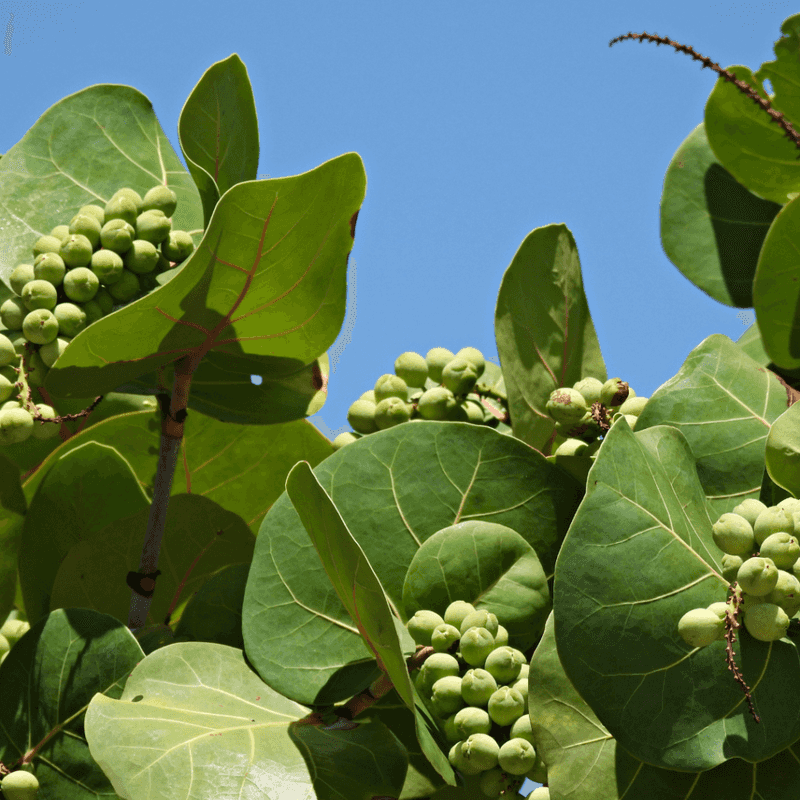
Plants can do more for birds over time than any feeder. UF/IFAS recommends native fruit-bearing plants such as Chickasaw plum, wax myrtle, native persimmon, and seagrape.
They suit Florida conditions and give birds food and cover.
Treat these as general bird-friendly choices, not an Indigo Bunting lure. The sources reviewed do not show that these plants bring the species to Florida yards.
Compare that with how the bird lives. Cornell’s species account says Indigo Buntings use shrubby, weedy habitat, and that populations grow as such habitat expands.
That is a landscape pattern, not a backyard guarantee.
A low-effort plan is to add one native shrub this fall, leave a small corner a bit wilder, and keep your feeder routine. Your yard will help many birds, whether or not a bunting ever drops in.
Treat a visit as a bonus
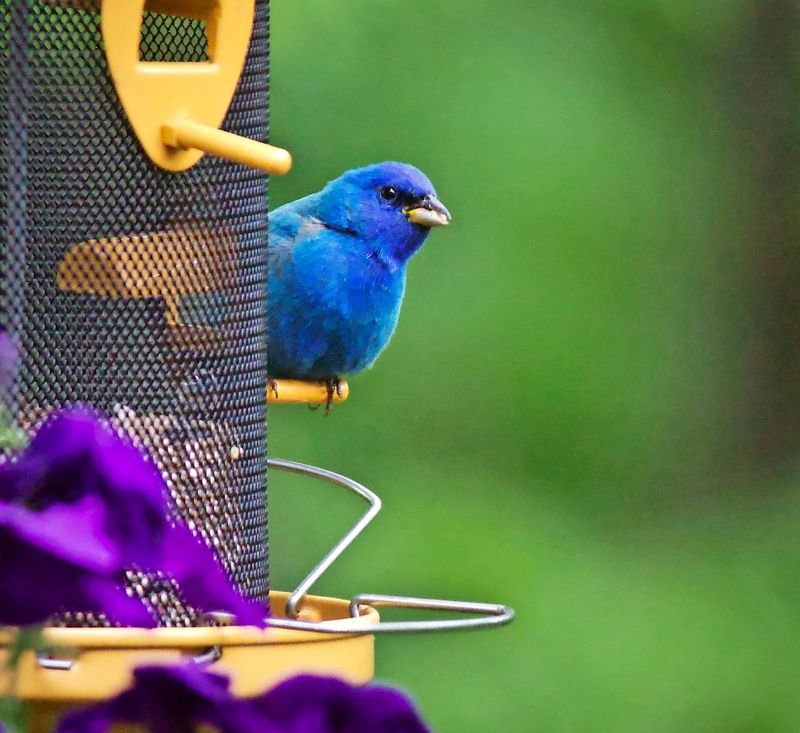
Try a small amount of nyjer in a small feeder, keep it clean and placed safely, and add bird-friendly plants over time. Those steps can offer food and habitat, but they cannot guarantee an Indigo Bunting visit or a yearly return.
The best outcome is a yard that serves birds well all year. A blue flash in October is a bonus if it happens.