
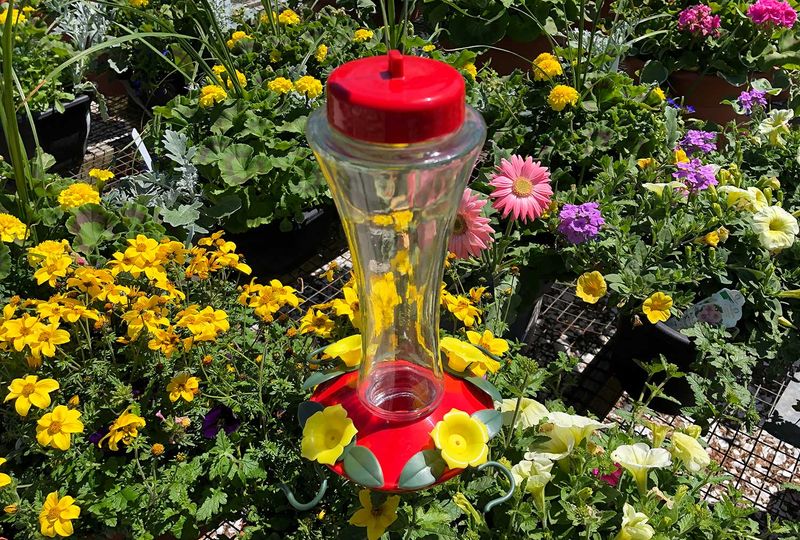
A feeder full of nectar and no hummingbirds in sight can leave you scratching your head. Where you hang it is one thing you can change, and it may or may not make a difference.
This guide walks through how to pick a visible, sheltered spot, keep birds safe near glass, and look at other reasons your feeder may stay quiet.
A full feeder does not reveal the cause
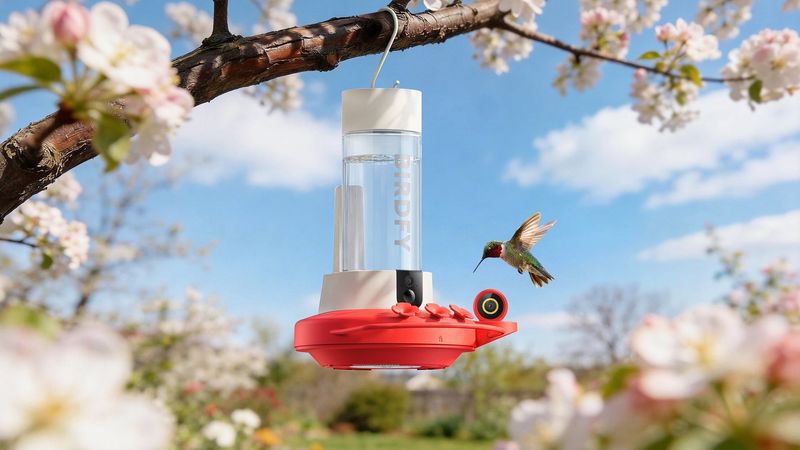
A feeder that stays full is a clue, but it does not tell you why. Hummingbirds may simply not have found it yet, and Cornell Lab guidance on feeder traffic notes that birds can take time to discover a new feeder.
Abundant wildflowers can also pull visits away from feeders for a while.
Placement is still a reasonable thing to test, because it is free and easy to change. Hummingbirds need to be able to spot the feeder and approach it comfortably, and Cornell’s feeder placement advice offers a practical starting point.
Think of a move as an experiment, not a fix. Give the new spot a couple of weeks, keep the nectar fresh, and note whether anything changes.
If nothing does, you have learned something useful and can look at other causes.
Offer a visible, sheltered approach
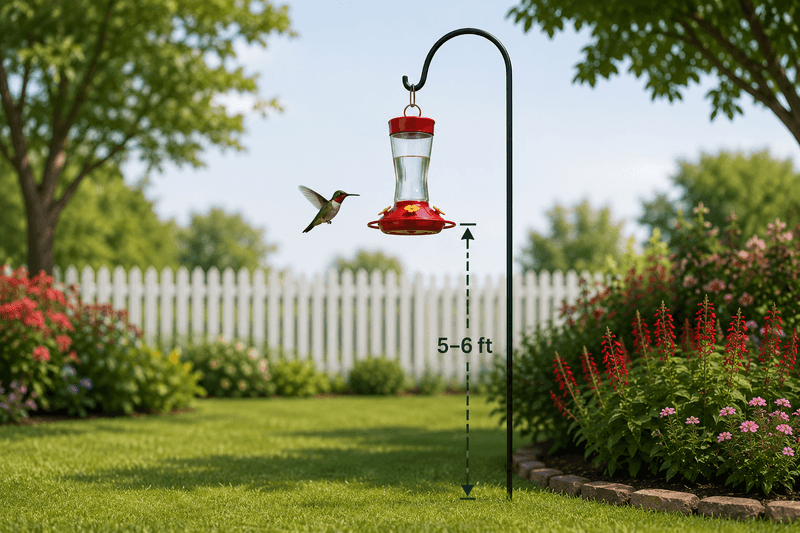
Aim for a spot where hummingbirds can see the feeder from a distance and fly in without obstacles. Protection from strong wind helps too, since a swinging feeder is harder to use.
A nearby branch or shrub gives birds a place to perch and retreat.
It is a balance, not a formula. Cornell notes that natural shelter nearby is useful, but cover can also hide predators or give squirrels a launch point.
So skip the thick tangle of foliage that swallows the feeder. There is no magic distance from shrubs, no required height, and no single best exposure for every yard.
Pick a spot that looks open and approachable from where a hummingbird would be flying, then adjust from there.
Shade may preserve nectar, but it may not increase visits
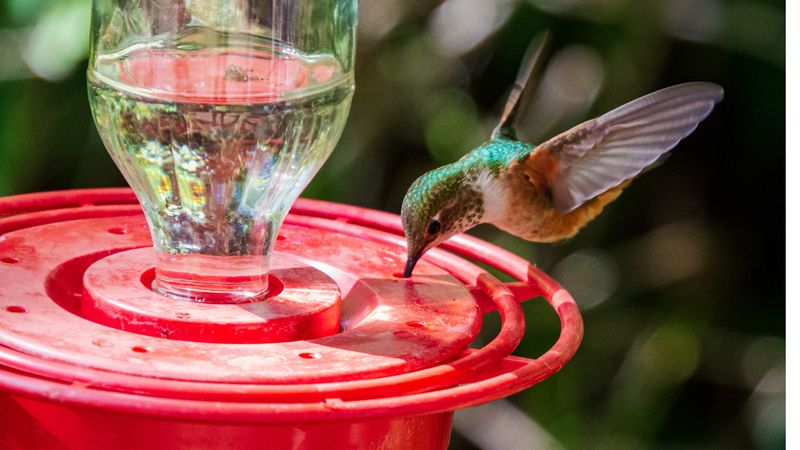
Shade has a clear practical job: it can help nectar spoil more slowly in Southern heat. That is why many guides, including Cornell’s, suggest a mostly shaded spot.
Whether shade brings more birds is a separate question. In a study of Anna’s hummingbirds, sunny feeders got more visits than shady ones, even during very hot trials.
That study looked at one species in a particular California setting, so it cannot tell you what is best for every species or every Florida or Texas yard. Treat shade as a way to protect nectar, not a promise of more visitors.
Shade also does not let you skip upkeep. Audubon’s yard guidance still calls for regular cleaning and fresh nectar.
Keep feeder placement window-safe
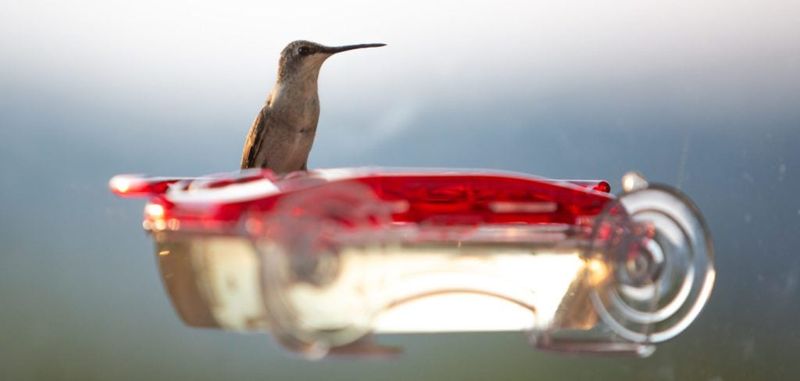
Before you settle on a new spot, check the distance to your windows. Cornell recommends placing a feeder within 3 feet of a window or farther than 30 feet away.
The middle zone is the problem. Birds leaving a feeder there can build up speed before they reach the glass, which raises the chance of a strike.
If your yard layout makes the safe zones awkward, pick the side of the house with fewer large panes and measure with a tape before hanging.
Keep nectar fresh and the feeder clean
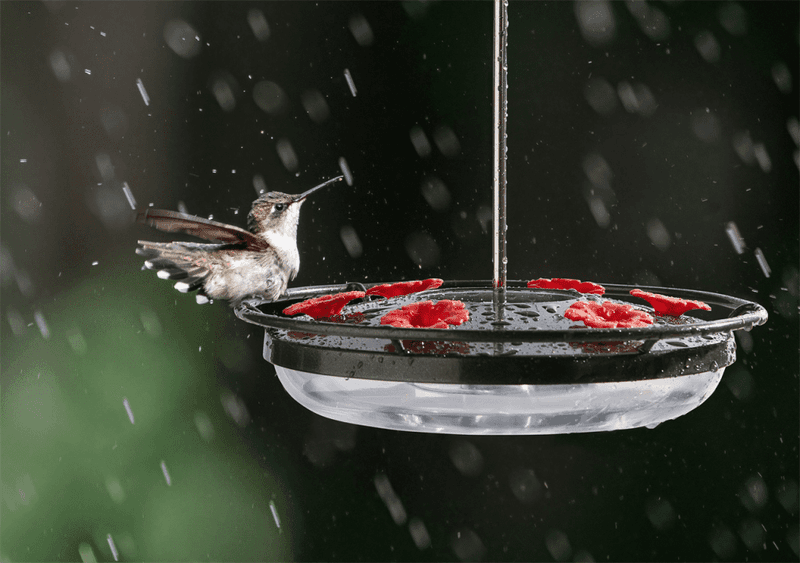
Moving the feeder does not replace regular care. Audubon advises cleaning hummingbird feeders every two to three days, or daily when it is particularly hot.
If the nectar turns cloudy, pour it out and clean the feeder before refilling. That goes for shaded feeders too, since shade slows spoilage but does not stop it.
For the mix itself, Texas Parks and Wildlife suggests one part sugar to four parts water. Food coloring is unnecessary, so leave it out.
If visits stay low, consider other causes
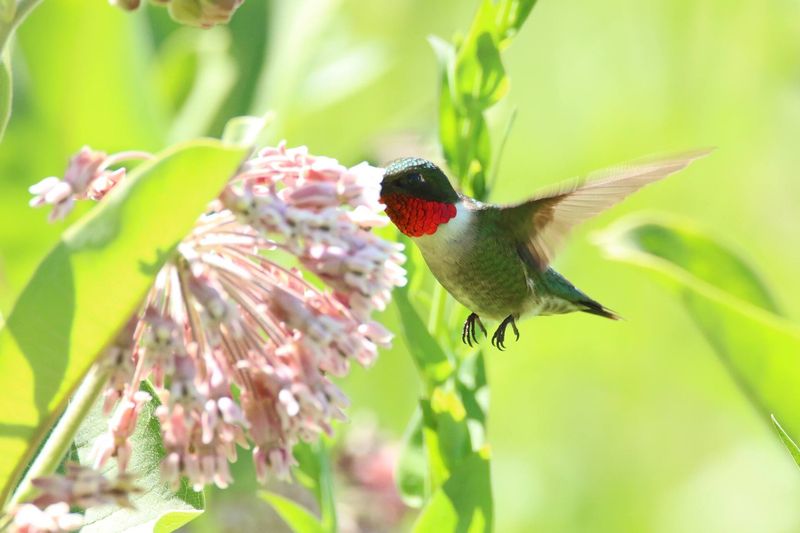
Sometimes a well-placed feeder is quiet anyway. Hummingbirds may be elsewhere, passing through on migration, or feeding on abundant natural nectar.
In Texas, ruby-throated hummingbirds migrate through the state and can be territorial. That detail fits Texas and should not be assumed for every Southern yard.
A territorial bird can guard a feeder and keep others away. Audubon suggests placing multiple feeders far enough apart that hummingbirds cannot see one another.
A new location is a fair test, not a guarantee. Sometimes the answer is just patience.