
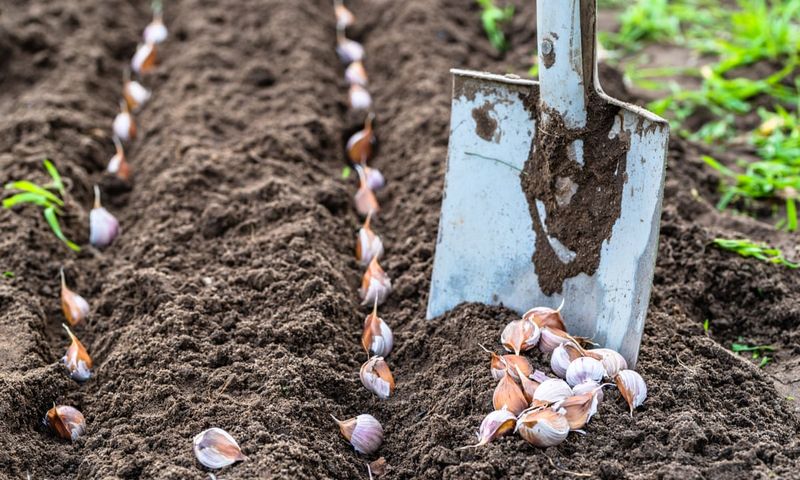
Garlic is one of the easiest crops to tuck into a Southern bed, but the calendar trips up a lot of gardeners. Plant too early or too late for your area and the bulbs may come out small.
The right week depends on whether you garden in Georgia, Central Texas, or Florida. Here is how to match your planting to your own winter and still pull plump bulbs next summer.
When should Southern gardeners plant garlic?
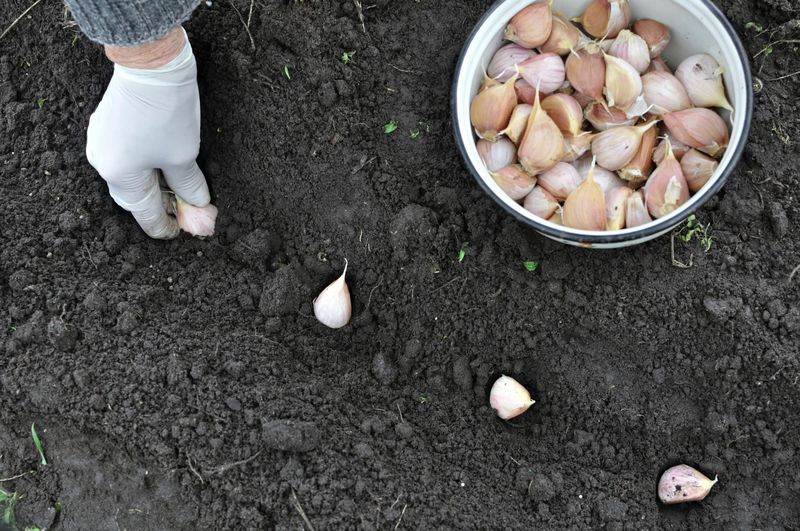
Garlic does not have one Southern-wide deadline, and October is not the magic month everywhere. University of Georgia guidance gives a window from late September through November for Georgia gardens.
Central Texas runs a little later. A Texas A&M AgriLife guide points to mid-October through early December for that part of the state.
Florida gardeners have the latest start. UF/IFAS says garlic goes in during late fall through early winter, so planting in early October could be too soon there.
So October fits some yards well and may be early for others. Check the window for your own area, then plan your planting day around it instead of rushing.
Fall planting gives garlic more time to establish
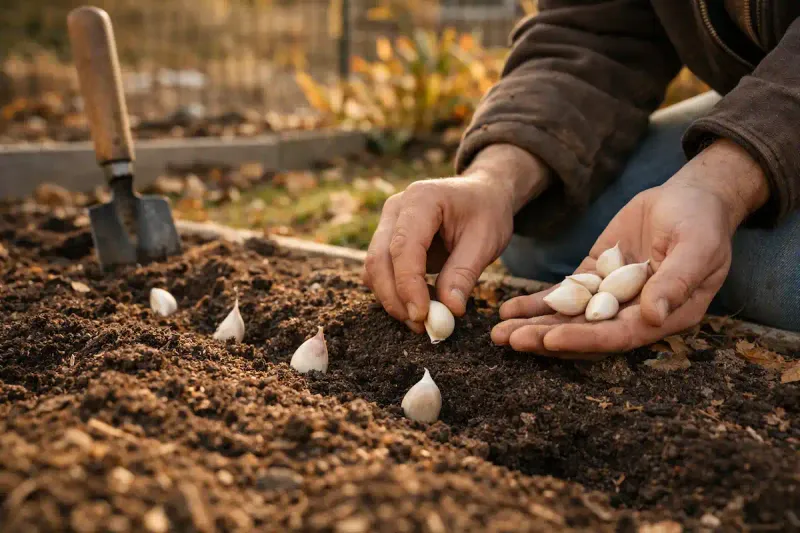
Cloves planted in fall have months to send down roots and push up leaves while the weather is cool. In Georgia, UGA Extension says fall planting allows fuller leaf development before bulbing begins.
More leaves generally means more energy for the bulb.
Spring is a tougher road in that state. The same guidance warns that spring-planted garlic may run out of time before heat arrives and may not bulb up satisfactorily.
That does not mean spring planting fails. A southwest Missouri study found fall planting generally better, yet spring-planted garlic still gave a crop.
Missouri is outside the Deep South, so treat those results as a hint rather than a forecast for your yard. If you missed fall, a spring planting is still worth a try, just with modest expectations.
Choose garlic suited to your winter
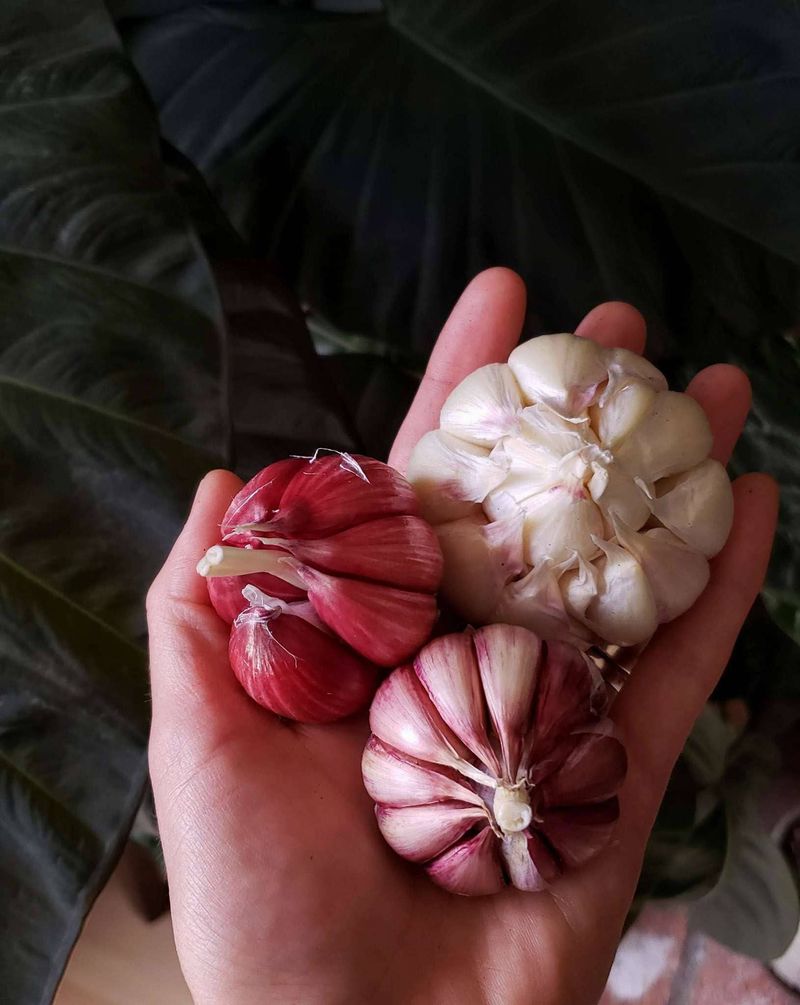
Not every garlic variety handles every winter the same way. Florida gardens do best with softneck types, and UF/IFAS recommends Artichoke or Creole softnecks.
Central Texas guidance leans the same way. Texas A&M AgriLife favors softnecks for mild winters and lists California Early, Lorz, Inchelium Red, Creole Red, Cuban Purple, and Texas Rose.
Georgia is cooler, and its advice reflects that. UGA describes 6 to 8 weeks below 40°F as a cold requirement, but that applies to the garlic covered in its Georgia recommendations, not to every type.
Ask a local nursery or your county Extension office which varieties do well nearby. No single variety is guaranteed to perform equally well from Atlanta to Tampa.
Plant sound cloves in a sunny, well-drained bed
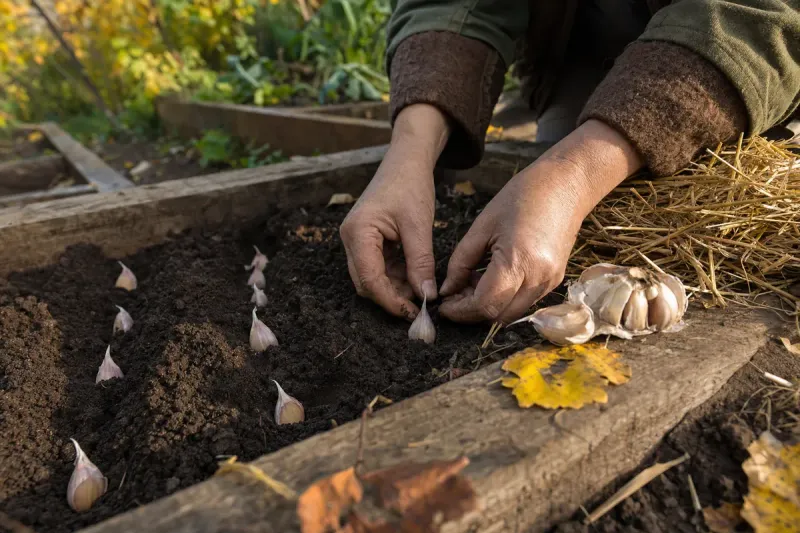
Pick a spot with full sun and soil that drains well. Start with firm, healthy cloves, preferably from disease-free planting bulbs.
Break the bulb apart shortly before planting and leave the papery skins on. UGA suggests using the larger outer cloves, setting them pointed end up, 1 to 3 inches deep and 6 inches apart.
Florida’s numbers differ a bit. UF/IFAS Pasco County gives 1 to 2 inches deep and 4 to 6 inches apart, so follow the guidance for your state.
Grocery-store garlic is tempting, but it is not always a good bet. Illinois Extension notes the variety and storage may not suit local bulb formation, so fresh planting bulbs are the safer choice.
Keep soil moist but avoid persistent sogginess
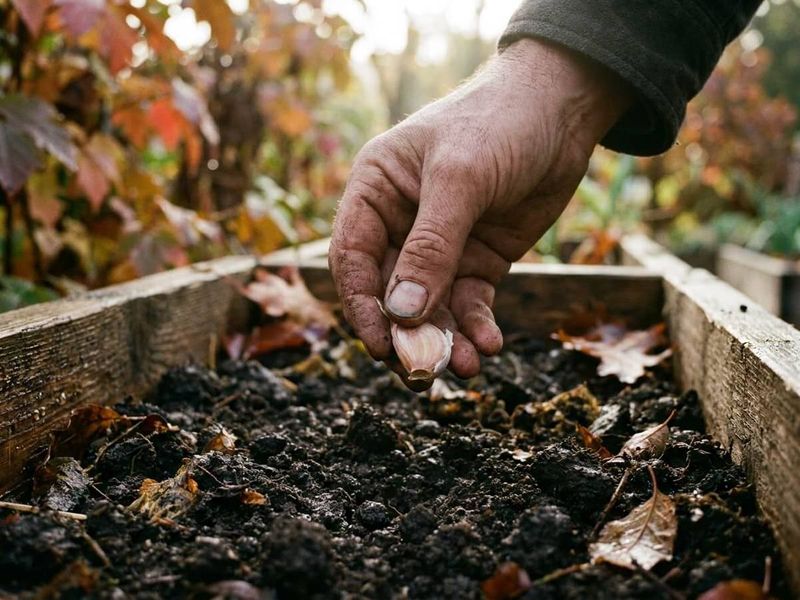
Garlic likes steady moisture, especially while roots and leaves are growing. UF/IFAS Pasco County advises regular watering for Florida beds.
Too much water is the bigger danger. Soil that stays soggy is linked to bulb rot, according to UGA guidance.
Drainage matters more than any schedule. A raised bed or a bed amended with compost can help water move through.
Skip a fixed watering calendar. Push a finger into the soil, and if the top inch is dry, water.
If it feels wet after a rain, wait. Sandy Florida soil and heavy Texas clay will need different habits.
Use leaf yellowing as an approximate harvest cue
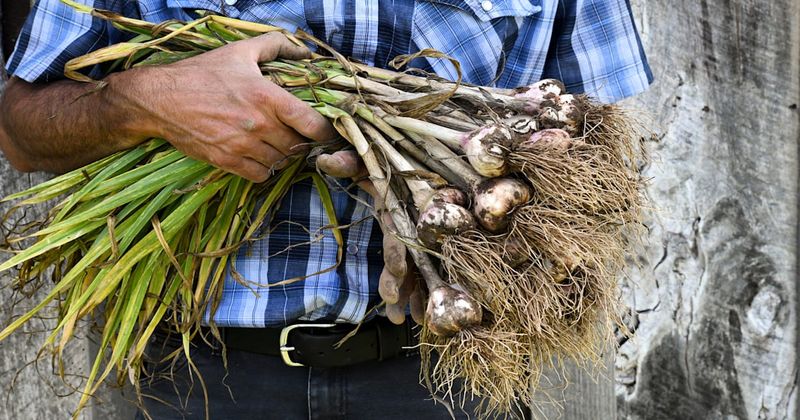
Garlic tells you when it is close to ready, and the leaves are the clue. UF/IFAS Pasco County says to harvest when roughly 40 to 60 percent of the leaves have yellowed and dried.
UF’s general garlic page describes it a little differently, with about half the leaves dried and bent down. That guidance fits the same picture.
Both are approximate. Weather, variety, and planting date shift the timing, so there is no single harvest date for the South.
Check your plants every few days as the tops start to fade, and loosen the soil before pulling. A late-spring bulb dug at the right moment tastes like it was worth the wait.