
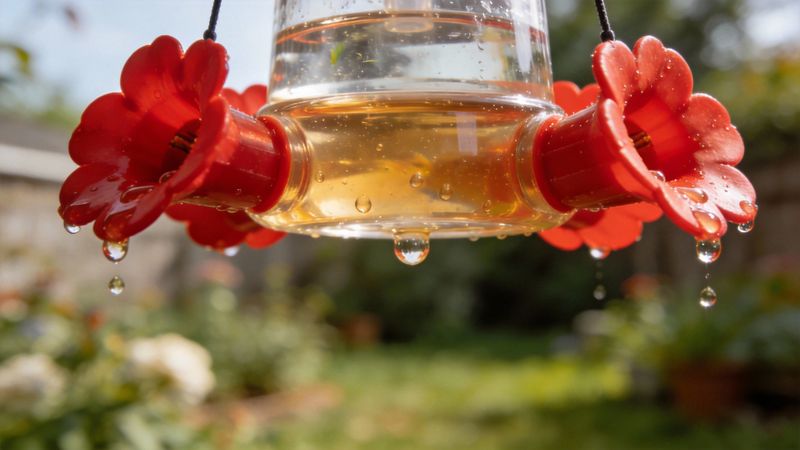
A sticky puddle under your hummingbird feeder is more than a messy nuisance. Spilled nectar invites ants, bees, and wasps, and it can leave the feeder dirty before the week is over.
The cause is not always the same from feeder to feeder, but a few simple checks can usually point you in the right direction. Here is how to trace the drip and pick a fix that fits your feeder.
Start by finding where the nectar escapes
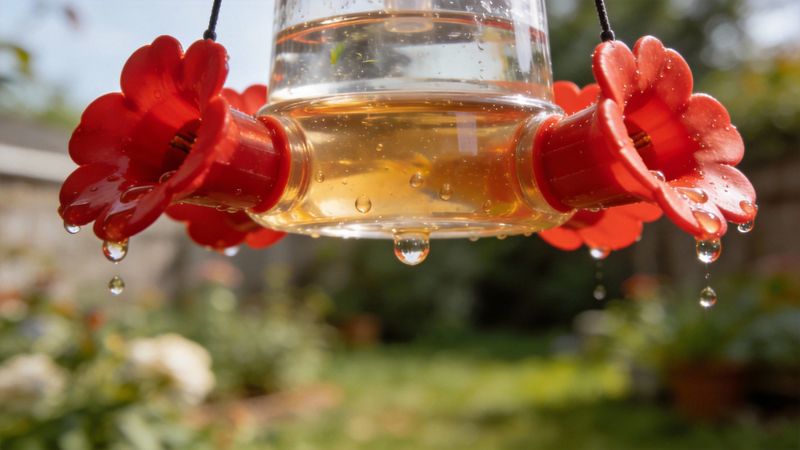
Before you change anything, watch the feeder for a day. Note exactly where the nectar shows up.
Is it beading at the feeding ports, or is it seeping where the bottle meets the base?
Next, notice the timing. If the drips start after the feeder has sat in hot, direct sun, that fits the pattern Cornell Cooperative Extension describes for bottle-style feeders, which tend to leak in the sun.
If the drips happen in shade or at any time of day, the cause is probably something else.
Also check the design. A bottle that flips upside down on a base behaves differently from a saucer-style feeder.
Check your feeder’s instructions, and see the Perky-Pet FAQ for tightening guidance on top-fill models. The next sections follow these clues one at a time, so you can test a single change before trying another.
Why shade may help a sun-related drip
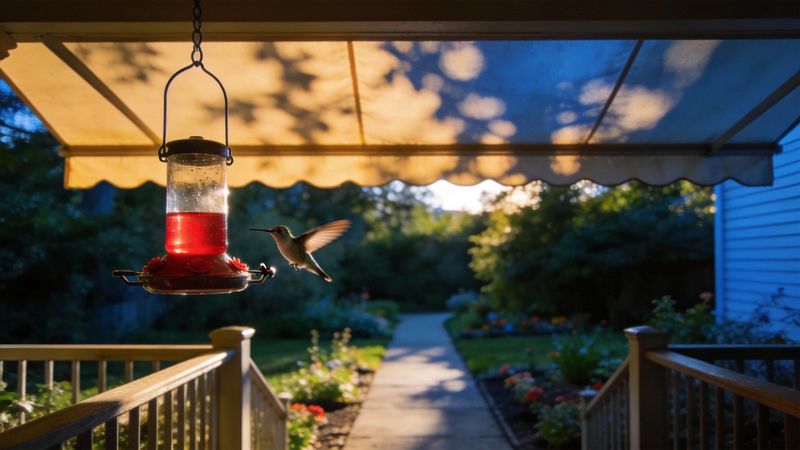
Sunlight can warm the air trapped inside an upside-down bottle feeder. As that air expands, it can push nectar out through the ports.
Cornell Cooperative Extension notes that bottle feeders tend to leak in the sun, while saucer feeders are less prone to it.
That makes a move to shade a sensible first test. Hang the feeder where it gets morning light but is covered during the hot afternoon, such as under a porch roof or the edge of a tree canopy.
Then watch for a day or two to see if the dripping stops.
In Florida and Texas, where summer afternoons bake everything, this can make a real difference. Still, treat it as a test and not a promise.
If the feeder keeps dripping in full shade, the cause is likely a seal, an assembly problem, or the way it hangs, and the next sections cover those.
Check the reservoir joint and model-specific seal
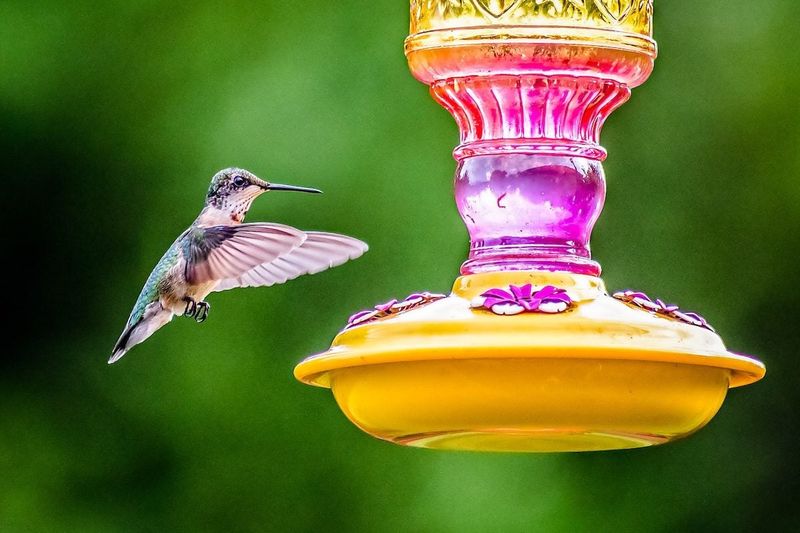
A leak at the joint between the bottle and the base is a different problem from a drip at the ports. Start by reading the directions that came with your feeder.
Make sure every part is seated properly and tightened as instructed, since Perky-Pet advises screwing a top-fill feeder’s bottle snugly onto its base.
Some models also use an O-ring or gasket. Perky-Pet’s cleaning guidance notes that on certain models this ring must be put back correctly after washing.
A ring that is twisted, pinched, or missing can let nectar creep out.
If a ring is damaged, look for a part made for your exact feeder. Replacement gaskets are model-specific, as the Nature’s Way glass feeder lid gasket listing shows.
One generic gasket will not fit every feeder, so check the maker’s guidance before buying.
Check whether the feeder needs to hang upright
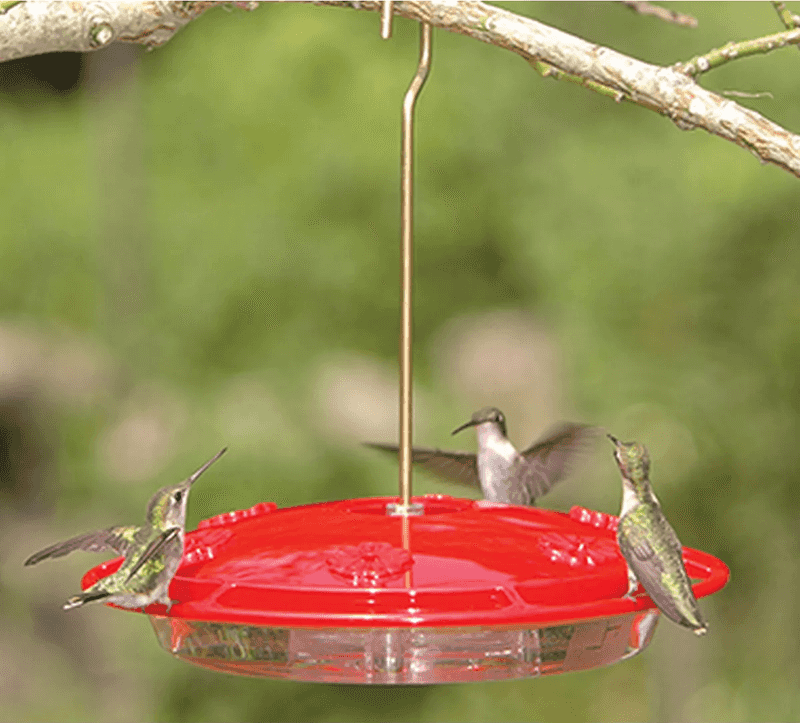
Some feeders can release nectar when they hang at an angle. A breeze, a lopsided hook, or a perch that bends the feeder sideways can all tip it.
This is a possibility for certain designs, not a rule for every feeder.
As one example, Birdfy’s leakage troubleshooting explains that its own feeder’s openings may let nectar out if it stays tilted. That advice applies to that model, so use it as a clue and not as a general fix.
Look at how yours hangs. Does it sit level, or does it lean?
Does it swing wildly in wind? Follow your feeder’s instructions for hanging, and consider a shorter hook or a more sheltered spot if it sways.
If it hangs correctly and still drips, go back to the seal and sun checks.
Sugar spills can attract unwanted visitors
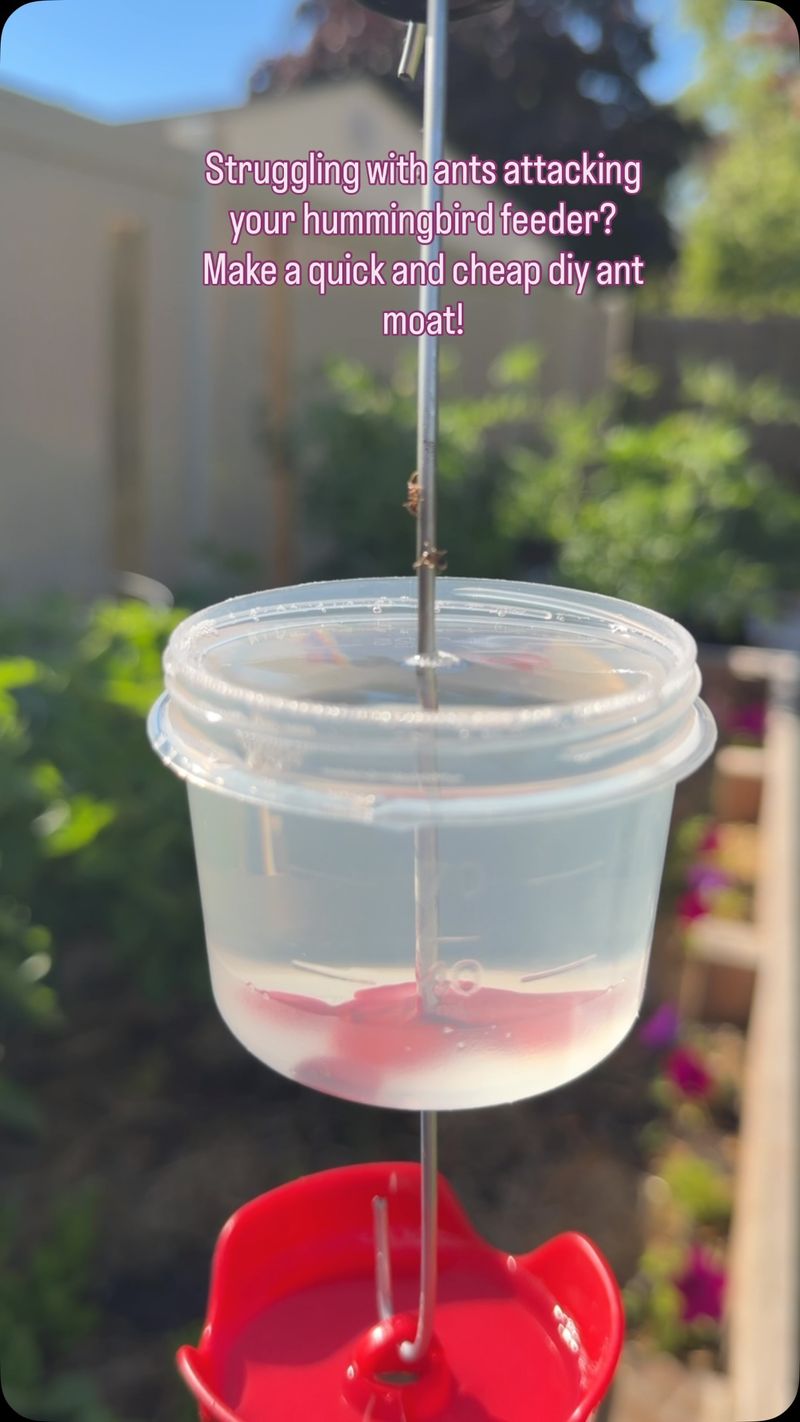
Even a small drip can start a parade. Ants, bees, and wasps are drawn to sugar solution, and Cornell Cooperative Extension says they can steal or contaminate the food and may discourage hummingbirds from visiting.
Mold is a different matter, and it is a sign to clean, not the thing that brings insects in.
A water-filled ant moat is a good barrier. Cornell’s newsletter guidance suggests one, and you hang it above the feeder so ants must cross water to reach the nectar.
Keep it topped up in hot weather, because it dries out fast.
Skip pesticides near the feeder. UF/IFAS advises against them for feeder ants.
Oil and grease barriers are risky too, since Cornell warns that oil or grease reaching a support can mat birds’ feathers. Wipe up drips so there is less to attract visitors.
Keep nectar fresh as a separate task
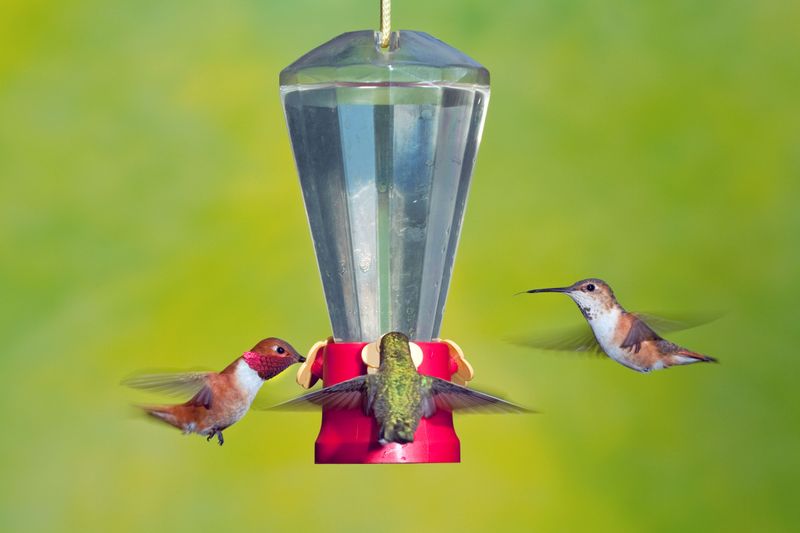
Cleaning will not fix a leaking seal or a sun-heated bottle. It keeps the nectar and feeder healthy, which is its own job.
Treat leak repair and freshness as two separate to-do items.
In hot weather, Audubon advises emptying and cleaning the feeder daily or every other day. Act right away if you see mold or insects getting into the feeder.
Throw out any nectar that looks cloudy or moldy, then wash the feeder before refilling.
You may see a slower schedule elsewhere. UF/IFAS gives a general four-to-five-day guideline.
In Florida and Texas summers, the more frequent Audubon schedule is the cautious choice.
A feeder that stays shaded, sealed, and clean is one hummingbirds can trust.