
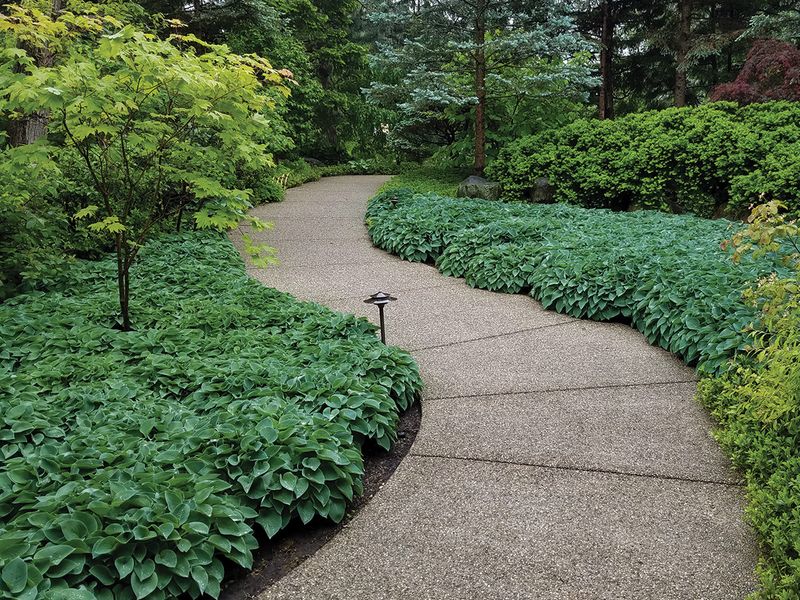
Bare, weedy ground under a shade tree is a common headache in North Carolina yards. Many people reach for vinca minor, but it is listed as invasive in our state.
Green-and-gold is a low native groundcover that may be a better fit for the right spot. Here is how to find out if it suits your yard and how to plant it without hurting your tree.
Green-and-gold makes a low, spreading shade groundcover
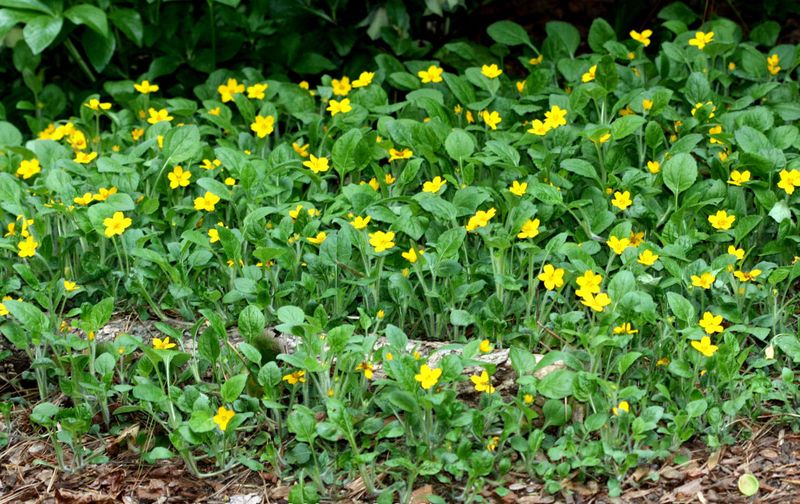
Green-and-gold goes by the botanical name Chrysogonum virginianum, and some references list it as Chrysogonum repens. If you shop for it, keep both names in mind so you can spot it on a nursery tag.
According to the NC State Extension Plant Toolbox, it is a low, semi-evergreen, spreading plant for part to full shade. Its foliage forms a mat about 2 inches tall, and plants can spread 18 inches or more.
Growth rate is listed as moderate to rapid, and it may also self-seed.
That mix of traits is why it makes a good candidate for bare ground beneath trees. A low mat of leaves can cover soil that would otherwise be open to weeds, and the small yellow flowers add color in the shade.
Some honest limits are worth knowing up front. Semi-evergreen means the plant may hold some leaves through winter, but how green it looks depends on your site and the season.
Moderate to rapid growth also does not mean instant. Plan on a few growing seasons for plants to knit together, and do not expect a weed-free carpet on day one.
Think of green-and-gold as a promising native option to test in a suitable spot, rather than a guaranteed fix for every patch of bare ground.
Check whether green-and-gold is native to your part of North Carolina
A plant called native to North Carolina is not always native to every corner of the state. Green-and-gold is a good example of why that matters.
The state flora, Vascular Plants of North Carolina, describes northern green-and-gold as common in the Piedmont and upper Coastal Plain. It is absent from much of the Mountains and Coastal Plain, including the Sandhills proper.
The same account notes that current taxonomy recognizes two Chrysogonum species in our state.
Other references map it a little differently, and botanical names have shifted over time. You can see that in resources such as the NC State native plants chapter and the NC Native Plant Society groundcover list.
Reading all of them together tells you the picture is not perfectly tidy.
So read the botanical label before you buy. Look for Chrysogonum virginianum or Chrysogonum repens, and ask where the plants were grown or sourced.
Then call a native-plant nursery or your county Extension office. Ask whether this plant and its provenance make sense for your part of North Carolina.
A Piedmont homeowner may get an easy yes, while someone in the Mountains or Sandhills should ask more questions first.
Shade helps, but soil moisture still matters
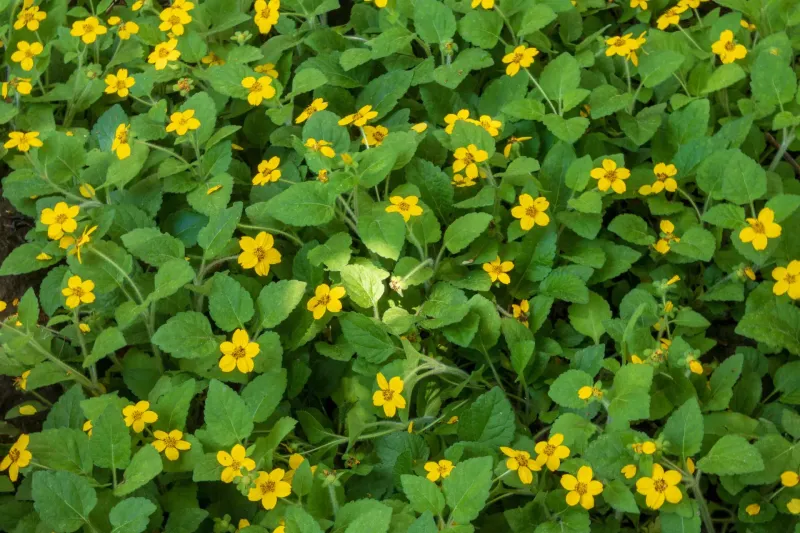
Plenty of shade does not guarantee a happy plant. Green-and-gold fits part to full shade, but its soil needs are just as important.
NC State Extension says it prefers moist, acidic, humus-rich soil and sun-dappled shade. It tolerates full sun only if the soil stays consistently moist.
Shade tolerance and drought tolerance are two different things.
That is the catch under big trees. A mature maple or oak can pull up a lot of water and fill the ground with roots, so a shady bed may be dry and stubborn even when it looks perfect for a woodland plant.
Do a quick check before buying plants. Push a trowel or screwdriver a few inches into the soil a day or two after rain.
Dark, crumbly soil with leaf litter is a good sign. Hard, dusty, or root-packed ground is a warning.
If your site is on the dry side, expect to water more, or consider a different plant. Soil rich in leaf mold along a tree-lined slope or a spot that catches runoff is a better bet than a dry strip near the trunk.
The yellow flowers and appeal to bees and butterflies are nice extras. Songbirds also eat the seeds.
Treat those as bonuses after the site passes the moisture test.
Vinca’s fast spread carries a different risk
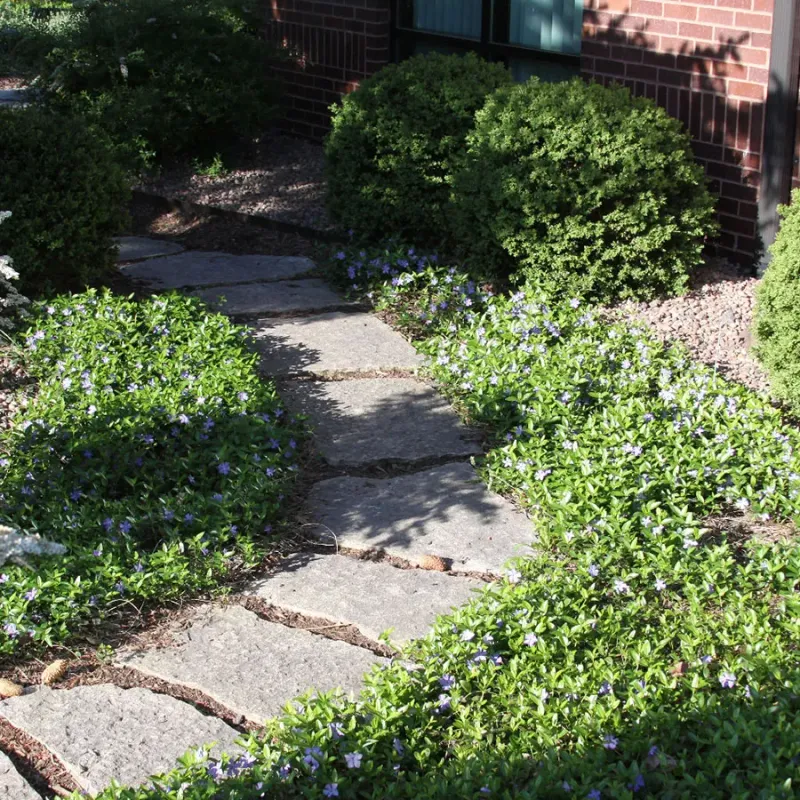
Vinca minor earns its popularity because it grows quickly and covers ground. That same habit is the problem.
NC State Extension reports that vinca minor is European and Caucasian in origin and grows rapidly. It can spread into nearby lawns, gardens, and natural areas, and the NC Invasive Plant Council classifies it as invasive.
Those findings apply to vinca minor specifically, so do not assume they describe every vinca.
Green-and-gold offers a different profile. It is a regional native, and the NC State page for it lists a moderate-to-rapid growth rate, with a semi-evergreen mat of foliage.
If you want a native alternative to try, it is worth a look.
Still, keep your expectations honest. Vinca is described as rapid, and green-and-gold as moderate to rapid.
Nothing says they cover ground in the same amount of time, so green-and-gold may take longer to fill a bed.
It also is not a plant that stays put forever. It spreads by rhizomes and may self-seed.
Spreading is not the same as invading, but expect it to wander a bit beyond where you first plant it.
Practical step: if you already have vinca, check your county Extension office for advice on removal, and replace it gradually.
Plant lightly around tree roots
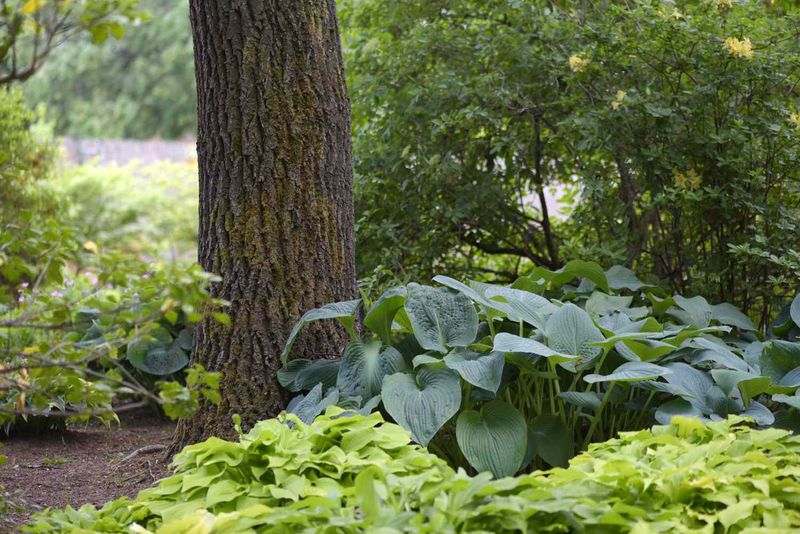
Established trees do not like surprises at their feet. Roots near the surface take up water and nutrients, and they also make planting tricky.
Guidance from Penn State Extension on underplanting trees is a good model here. Use small planting holes and hand tools so you can feel for roots and stop before you injure them.
A trowel works better than a shovel or tiller.
If you hit a large root, move over a few inches and try another spot. Do not chop through big roots just to plant faster or get coverage sooner.
Avoid piling soil over roots or against the root flare, the wider area where the trunk meets the ground. Keep any added soil or compost to no more than 2 inches.
Also keep it pulled away from the trunk itself.
No raised beds, no deep soil additions, and no burying roots to make a nicer planting surface. Those moves can harm the tree you are trying to landscape under.
After planting, water consistently while the plants establish. Tree roots compete for moisture, so new green-and-gold will likely need more help than you expect.
Check the soil often during dry spells, and water deeply enough to reach the new roots.
A few plants set in carefully, spaced across the bed, are better than a rushed planting that stresses the tree.
A filled mat may help with weeds, but establishment takes care
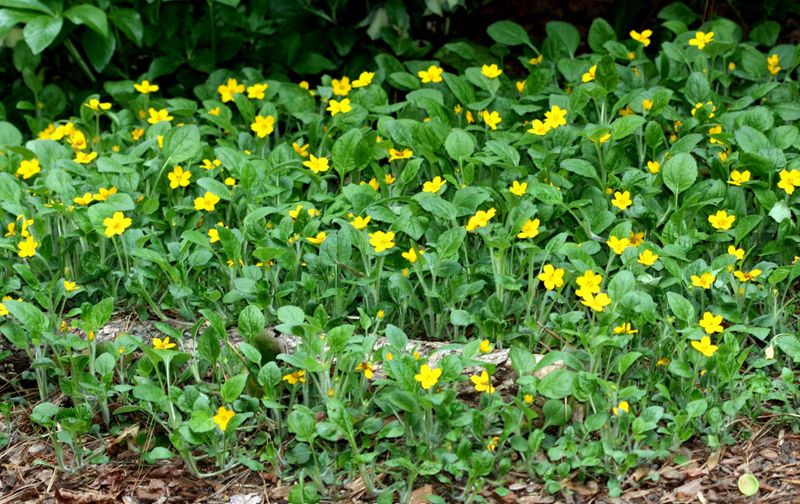
Once a groundcover fills in, it can occupy the soil and leave less room for weeds. That is the hope with green-and-gold, and it is a reasonable one.
The catch is the word once. NC State’s plant description talks about a spreading foliage mat.
It does not promise a weed-free bed, and nothing in it shows that green-and-gold beats vinca at keeping weeds out.
Early on, plants are small and there is a lot of open ground between them. Weeds will happily fill the gaps.
Pull existing weeds before planting, including roots where you can, using hand tools so you do not disturb tree roots.
Then keep an eye on the bed. A quick weekly walk-through to pull seedlings is much easier than fighting a bed that has gone to weeds.
Moisture ties into this too. Plants in dry, root-filled soil grow slowly, and slow growth means a longer window for weeds.
Watering during establishment helps the mat form sooner.
Because timing depends on your site, there is no set schedule for when it will close up. Judge by what you see.
When leaves touch and bare soil disappears, weeding gets easier. Even then, expect an occasional weed to poke through.
Choose it for a suitable site, not a guaranteed swap
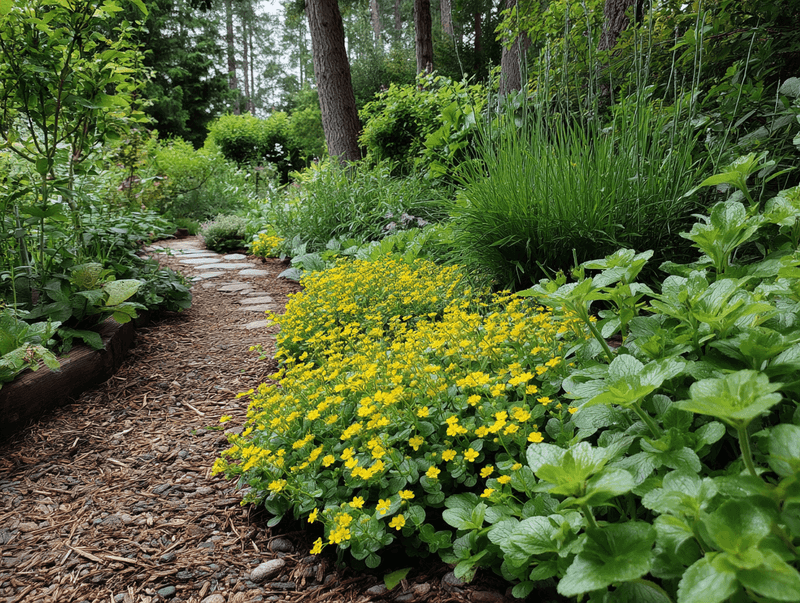
Start with provenance: check the botanical label and confirm with a nursery or Extension office that the plant suits your area, using the state flora account as a guide. Next, make sure the bed holds enough moisture, plant by hand around roots, and keep pulling weeds while green-and-gold fills in.
It is a native alternative worth trying, not a proven match for vinca’s speed or a promise it will stay in its bed. In the right shady spot, patience may be its best selling point.