

A black-eyed Susan that looks ragged by fall can leave you wondering if it is finished. Before you grab a shovel or pruners, it helps to know which kind of Rudbeckia you are growing.
Some are short-lived and rely on seed, while others are clumping perennials that sometimes need dividing. A quick look at your plant can point you toward a realistic next step for your Southern garden.
Identify the Rudbeckia before choosing a fall task
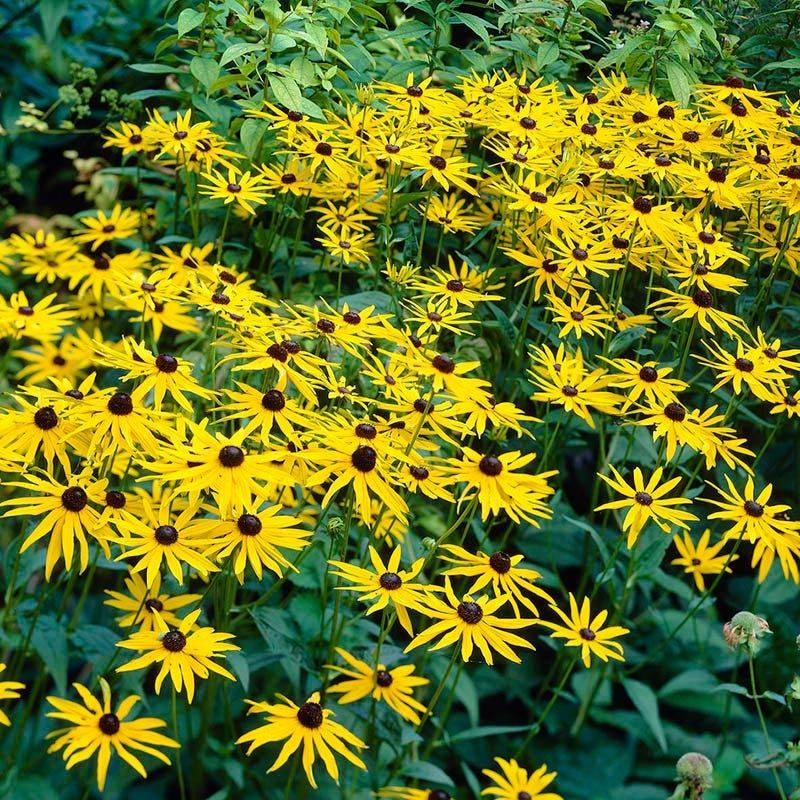
Gardeners use the name black-eyed Susan for several Rudbeckia plants, and they do not all live the same way. UF/IFAS describes Rudbeckia hirta as an annual, biennial, or perennial, and says perennial types can be propagated by division.
So the first step is a little detective work, not a fall chore.
Start with the plant tag or your purchase record if you still have it. If you do not, think about how the plant has behaved.
Rudbeckia hirta is often short-lived but reseeds readily, according to UF/IFAS Extension in Marion County. Rudbeckia fulgida, including the popular Goldsturm, is a clumping perennial that can benefit from division when it gets crowded or loses vigor.
Here is why this matters. A tired R. hirta may simply be near the end of its life, and dividing it would not help much.
A thick, established clump of R. fulgida is a different story. Once you know which one you have, you can choose between leaving seedheads and dividing, without guessing.
A worn finish does not diagnose a crowded plant
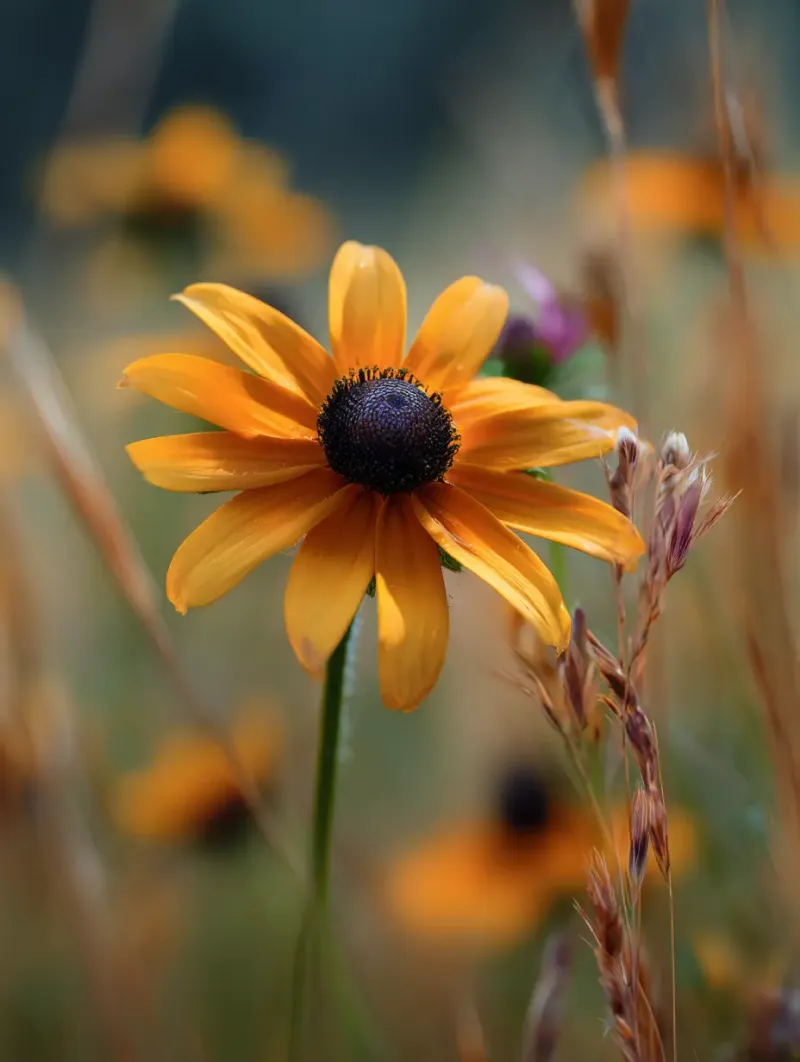
Ragged leaves and faded petals in fall are normal, and they do not prove anything is wrong with the roots. Plenty of gardeners see a tired plant and assume it needs dividing.
That jump can lead to extra work without solving anything.
Spotted or mottled leaves are a good example. Illinois Extension describes Septoria leaf spot on Rudbeckia fulgida as primarily cosmetic.
Better spacing and air movement may help limit fungal problems, but spots alone do not tell you the clump is crowded.
Age is another possibility. As noted by UF/IFAS in Marion County, Rudbeckia hirta is often short-lived, so a plant that fades after a season or two may be doing what it normally does.
Instead of judging the leaves, look at the whole clump. Is it packed tightly, with stems competing for space?
Are blooms fewer or smaller than in past years? Those clues matter far more than late-season wear.
Leave healthy seedheads for reseeding or birds
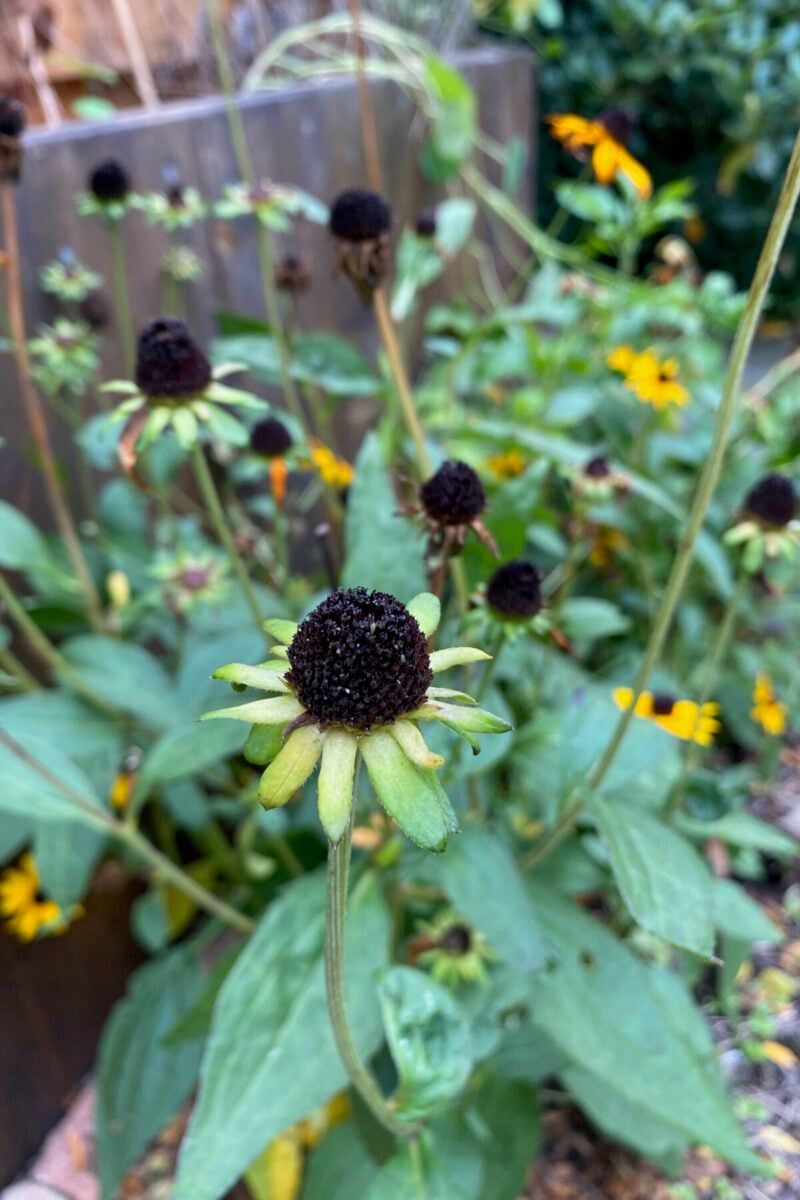
Those dark, spent cones are not just clutter. If you grow Rudbeckia hirta and want it to reseed, Wisconsin Extension advises leaving late-season heads in place so seed can drop or feed birds.
Birds are a real bonus. NC State Extension lists R. fulgida as a bird-food plant and suggests waiting until early spring to cut back such perennials.
Goldfinches and other seed-eaters may visit through the cooler months.
Keep expectations honest, though. Leaving seedheads gives plants a chance to reseed, but it does not guarantee a fuller display next summer.
Seedlings may be few, or they may pop up in odd spots.
One caution: healthy does not mean every stem. If leaves or stems are visibly diseased, clear that material rather than leaving it standing.
A practical compromise is to keep the sound seedheads and remove spotted, mushy, or infected debris.
Divide only a perennial clump showing real decline
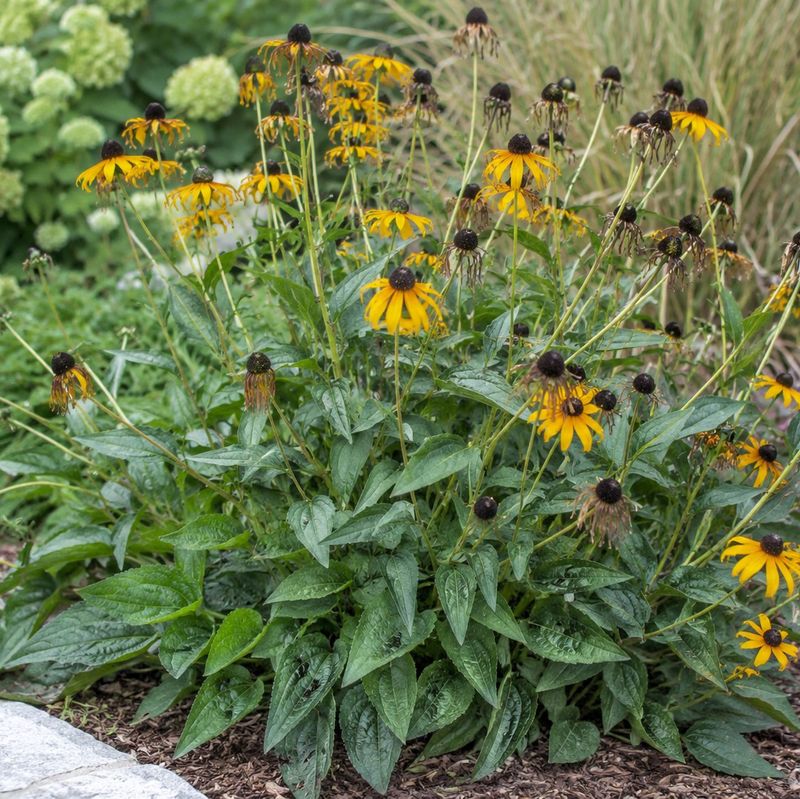
Division is a tool for a specific problem, not a fix for every tired plant. It makes sense for an established perennial clump that has grown crowded or is losing vigor.
Look for a dying or hollow center, stems packed tightly together, or fewer and smaller blooms than before.
Illinois Extension notes that R. fulgida may need division every three to four years to keep it vigorous and control its spread. That is a general guide, not a rule for your yard.
The goal is easing crowding. University of Minnesota Extension explains that dividing can rejuvenate overcrowded perennials by giving roots more room.
Set realistic limits. Division does not cure disease, drought stress, or tired foliage, and it will not extend the life of a short-lived plant.
If your clump is young and blooming well, leaving it alone is a perfectly good choice.
Divide a suitable clump while it is not flowering
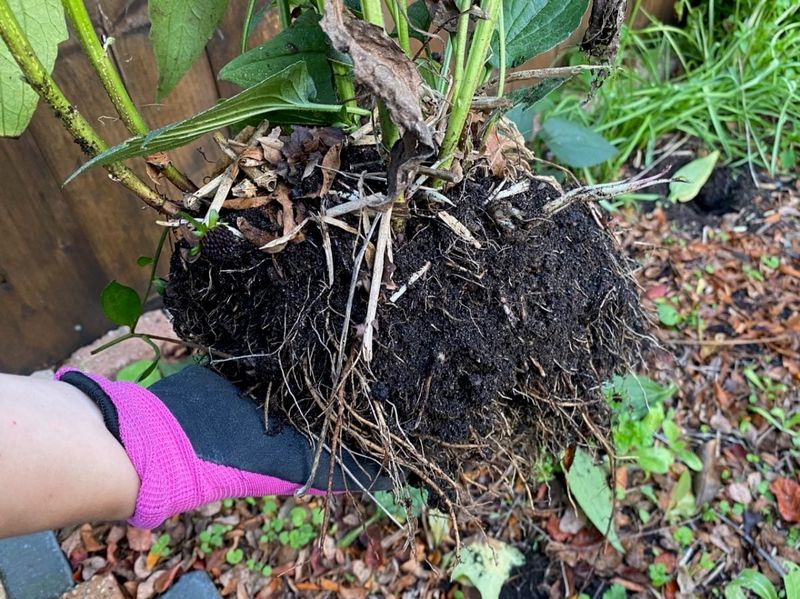
Once you have decided a clump qualifies, the process is fairly simple. These are general perennial-division steps from University of Minnesota Extension, and they work best when the plant is not flowering.
Dig around the clump and lift it out of the ground. Then separate it by hand, or use a clean spade or knife for tough sections.
Make sure each piece keeps healthy roots along with its shoots.
Work fast with the pieces. Keep divisions shaded and moist until you replant them, since exposed roots dry out quickly, especially in Southern heat.
Replant at a similar depth, then water each one in well.
Discard any sections that look woody, dead, or diseased. A few extra divisions can be shared with neighbors.
Do not expect instant blooms, though. Divisions often spend time settling in first, and results vary by plant and conditions.
Follow local guidance for fall timing
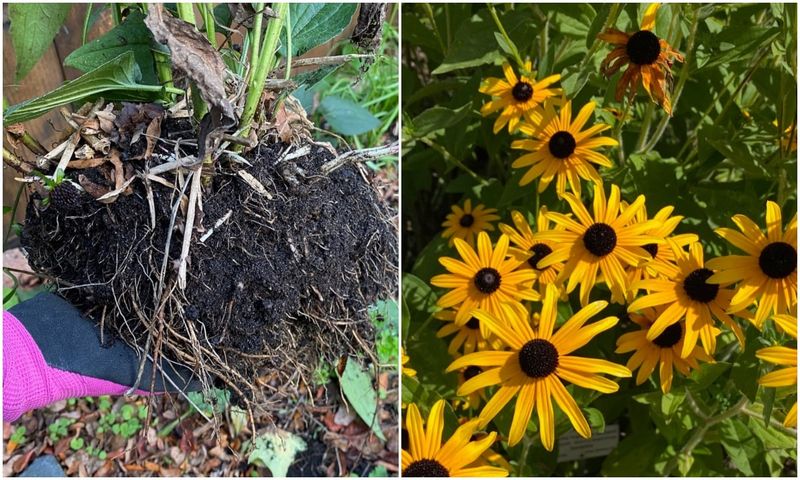
No single calendar date works across the South. UF/IFAS Extension in Santa Rosa County lists black-eyed Susan among perennials to divide in fall and advises watering divisions after replanting.
That is Florida Panhandle guidance, not a schedule for all of Florida or Texas.
Broader advice points the same direction. General guidance often favors fall division for spring- and summer-blooming perennials, while fall bloomers are usually divided in spring, as University of Minnesota Extension explains.
Illinois Extension also has a piece on why fall suits some perennials.
A south Texas yard, a Gulf Coast bed, and a north Florida garden can all behave differently. Your county extension office can tell you what timing fits your area and which Rudbeckia does well there.
When in doubt, check the plant first, then check local advice. A slow, informed choice beats a rushed shovel.