
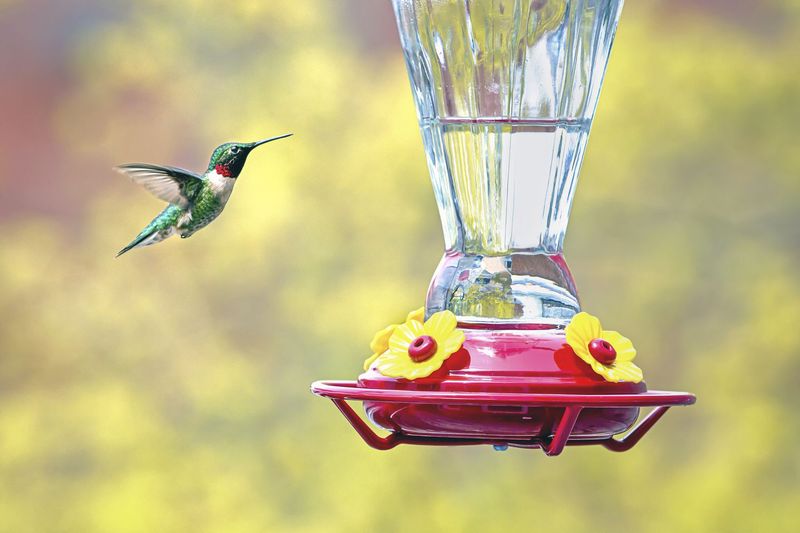
A hummingbird feeder can look fine from the patio and still have sticky film tucked into its tiny ports. Fall is a good time to take a closer look, because many Southern yards see extra hummingbird traffic as birds pass through.
The good news is that you do not need a special fall project. A steady routine with fresh nectar and a solid scrub keeps things simple.
Treat fall as a reminder to continue routine feeder care
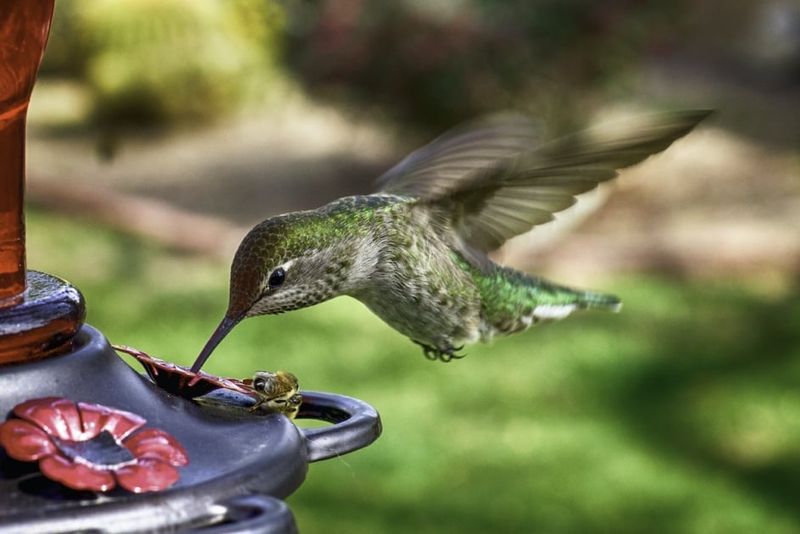
Autumn does not bring a new cleaning deadline. Feeder care matters from the first warm days of spring through the last visitors of the year, and in Florida and Texas the warm stretch often runs well into fall.
Heat and the feeder’s condition are better guides than the calendar. Cornell Lab guidance recommends cleaning hummingbird feeders at least weekly and changing nectar every 3 to 5 days, more often in hot weather.
UF/IFAS Extension gives a similar 4 to 5 day interval.
So think of fall as a nudge to keep doing what you already do. Pick up the feeder, look closely at the ports and the base, and see whether any film or dark residue has built up.
If it has, empty it and clean it. Nothing here suggests that hidden mold is lurking in every feeder, only that a quick look is easy and worthwhile.
What microbial growth does—and does not—tell us
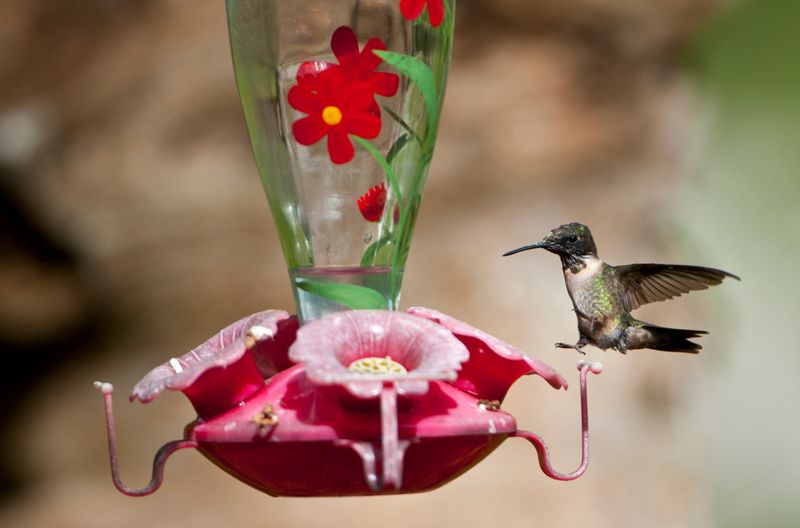
Sugar water is a friendly place for microbes, and researchers have confirmed it. A UC Davis summary of a peer-reviewed study reported high microbial densities in feeders but few microbes tied to hummingbird disease.
The researchers said the work did not determine health outcomes for the birds.
Disease concerns do exist. A USGS wildlife health report described one broad-tailed hummingbird with presumptive Candida stomatitis, meaning the diagnosis was likely but not definitive.
The report also called disease in wild birds infrequent, and it does not show that a feeder caused that bird’s illness.
Two limits are worth keeping in mind. Nobody can tell what a dark spot is just by looking at it, so treat it as a reason to clean rather than a diagnosis.
And the sources reviewed do not show that residue pushes migrating hummingbirds out of a yard.
Set a nectar and cleaning routine for the weather
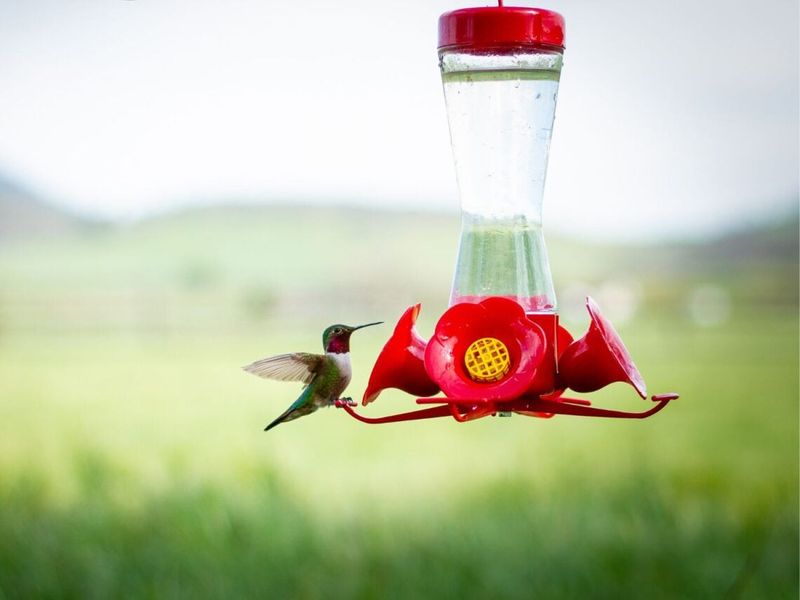
Nectar spoils faster than most people expect, especially on a humid Gulf Coast afternoon. Plan to replace it every 3 to 5 days, and sooner when temperatures climb.
If the liquid looks cloudy or you see anything floating or fuzzy, pour it out and clean the feeder instead of topping it off.
Sources give slightly different cleaning schedules. Cornell recommends cleaning at least weekly, while UF/IFAS advises changing the solution and cleaning every 4 to 5 days.
Neither number is a universal rule, so let the weather and the feeder guide you. In a shady, cooler spell, the longer end of the range may work.
During a hot spell, check the feeder every day or two. A feeder in full afternoon sun is a good candidate for the shorter interval.
Scrub the ports and crevices, not just the reservoir
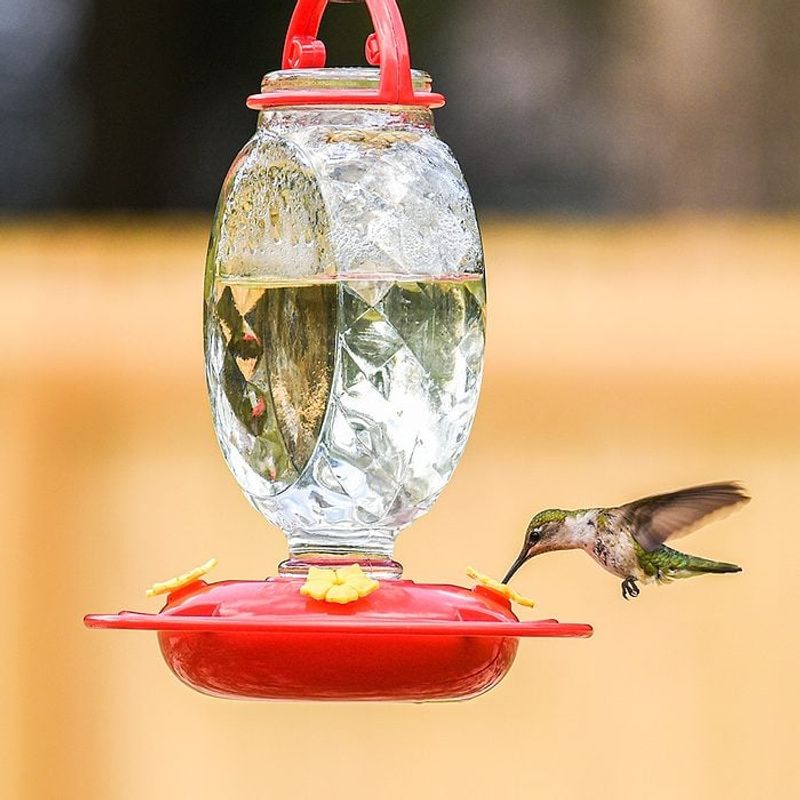
Rinsing the big bottle is the easy part. Residue tends to hang on in the places a quick swish misses, so a proper cleaning means taking the feeder apart.
Start by emptying it and disassembling it the way the design allows. Then scrub the reservoir, base, feeding ports, and every seam with hot water and brushes sized to fit.
Cornell suggests a bottle brush and hot water for routine cleaning. A small port brush or even a pipe cleaner can reach tiny openings.
Rinse everything thoroughly, then let every part dry completely before you refill. Damp pieces can keep a feeder from staying fresh.
If you spot dark or slimy buildup in a crevice, you do not need to name it. Just keep scrubbing until the surface looks and feels clean.
Handle stubborn buildup with care
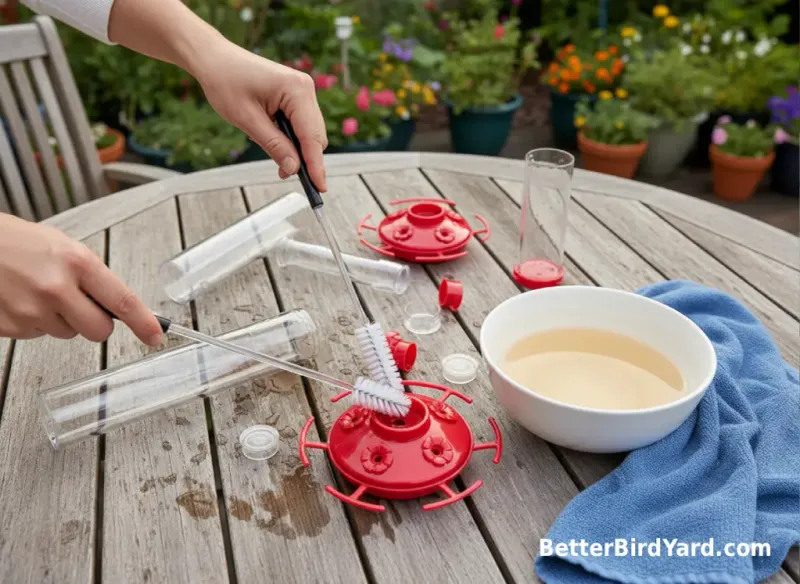
Sometimes hot water and a brush leave a stubborn film behind. Before reaching for a cleaner, know that reputable sources disagree on soap.
Cornell and the U.S. Fish and Wildlife Service advise against soap or detergent, while UF/IFAS allows hot water with a little soap and a thorough rinse.
A cautious approach is to lead with hot water and firm brushing, then check the instructions that came with your feeder. The maker knows which plastics and finishes can handle which products.
For persistent grime or disinfection, a dilute bleach solution may be appropriate for some feeders. Follow the feeder’s directions, never mix bleach with other chemicals, and skip strong mixtures.
Rinse very thoroughly and let every part dry completely, so no smell or residue reaches the nectar.
Keep feeders available as fall hummingbirds pass through
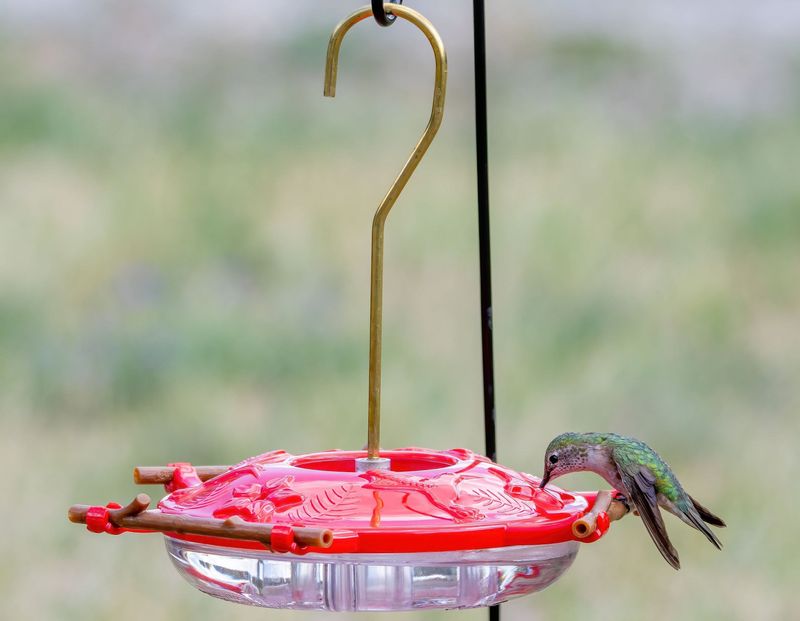
Some people take feeders down early, thinking it will nudge hummingbirds south. Texas Parks and Wildlife says feeders do not stall migration.
It suggests leaving one up for about two weeks after your last local sighting, in case another bird comes through.
Timing varies a lot. Along the Texas coast, ruby-throated hummingbirds pass through in large numbers in fall, and the TPWD species page describes their range.
But dates shift by place and by year, so a yard in Houston, Tampa, or the Panhandle may not match another.
A clean feeder with fresh nectar is simply there if a traveler stops by. It cannot promise visitors or hold them.
Keep watching, keep the routine going, and retire the feeder when the birds are clearly gone.