
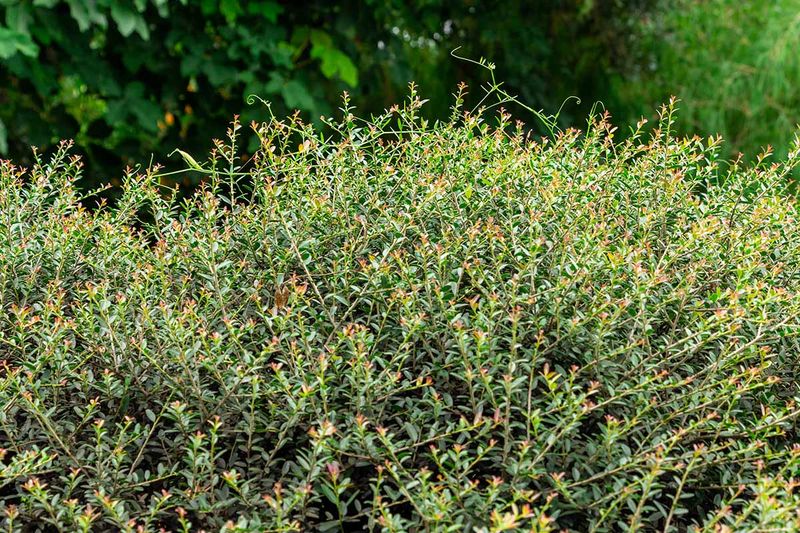
A privacy hedge should hide the view, not create a new yard problem. Some commonly planted ligustrums can spread beyond the garden, but Florida has native shrubs that make useful screens.
The trick is choosing one that fits your space, soil, and part of the state. These seven give you options for everything from a narrow front-yard border to a salty coastal lot.
1. Simpson’s Stopper
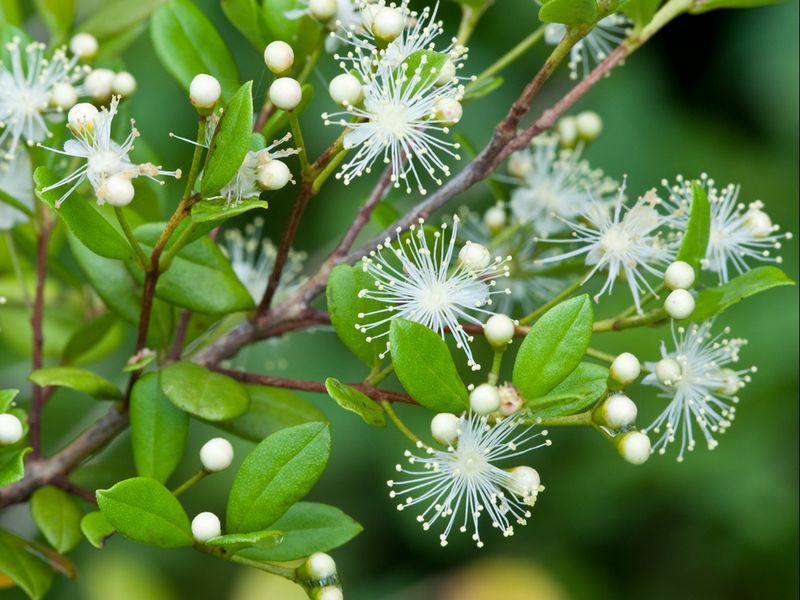
Need a screen that looks tidy without looking stiff? Simpson’s stopper has small, glossy leaves that form a close-textured hedge.
Its fragrant white flowers are a bonus near a patio or walkway, followed by bright berries that attract birds. Unlike a plain green wall, it gives you something to notice at several points in the year.
It is especially useful in Central and South Florida, where it can grow into a substantial shrub in full sun or partial shade. Give it room to reach its natural size, or trim it lightly to keep a more formal outline.
Plants grown with some sun generally make a fuller screen than ones tucked into deep shade. In colder parts of North Florida, ask a local nursery whether it is reliable at your site before planting a whole boundary.
For a hedge, set plants according to their expected mature spread rather than crowding them for an instant wall. Water regularly while roots establish, then ease back; established plants tolerate dry spells better than a new planting.
Use mulch to help sandy soil hold moisture, but keep it away from the stems. Simpson’s stopper is a strong pick when your main goals are privacy, neat curb appeal, and a little bird activity outside the window.
2. Walter’s Viburnum
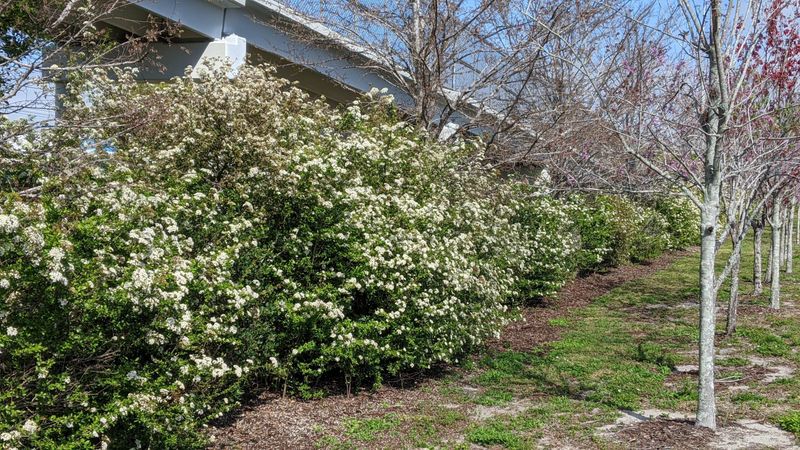
A bare fence can look much softer once Walter’s viburnum fills in front of it. This Florida native has small leaves, dense branching, and clusters of white flowers that make the hedge feel like part of the garden.
It is a good choice when you want a broad, leafy screen rather than a narrow line of tightly clipped plants.
The detail to check before buying is the plant’s mature size. Walter’s viburnum is sold in forms that range from compact mounds to much larger shrubs, and a low-growing selection will not hide a neighbor’s window.
Ask the nursery for the exact cultivar and expected height. Place taller forms where they can spread without blocking a path, driveway sight line, or air-conditioning unit.
Full sun to partial shade works well, though growth and density can change with light and moisture.
In much of Florida, this is a practical hedge for an informal property edge or backyard seating area. Water during establishment, especially in fast-draining sand, and check the soil before assuming rain has soaked the root zone.
After flowering, trim selectively if needed instead of shearing every new shoot. That approach keeps the screen useful while leaving more of the plant’s natural shape and seasonal blooms intact.
3. Yaupon Holly
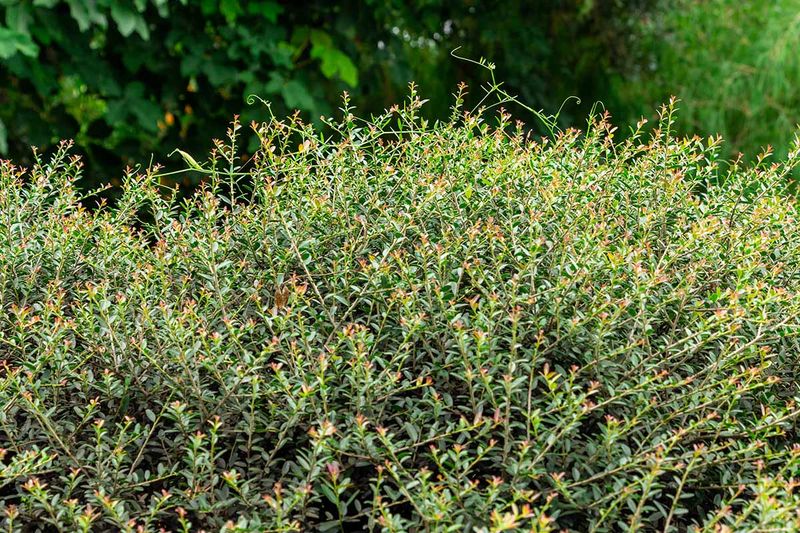
For a dependable green backdrop, yaupon holly earns its space. Its fine-textured leaves stay on the plant year-round, and it takes pruning well, so you can make a fairly orderly hedge without giving up a Florida native.
It is particularly handy in North and Central Florida yards where a screen must handle both summer heat and occasional cold snaps.
Choose a full-size yaupon for privacy, not a dwarf cultivar meant for foundation beds. Unpruned plants can become small trees, which makes mature height and overhead space worth checking before you dig.
Full sun usually helps produce a denser hedge, although yaupon also grows in partial shade. Once established, it handles periods of drought, but young plants still need regular water while their roots move into the surrounding soil.
If red berries are part of the appeal, buy female plants and make sure a compatible male yaupon is nearby for pollination. Birds can use the fruit, while the evergreen branches give them cover.
For homeowners, the biggest payoff is flexibility: prune a row to screen a street, or let it grow more loosely along a back fence. Either way, plan enough space that routine trimming stays a manageable job.
4. Cocoplum
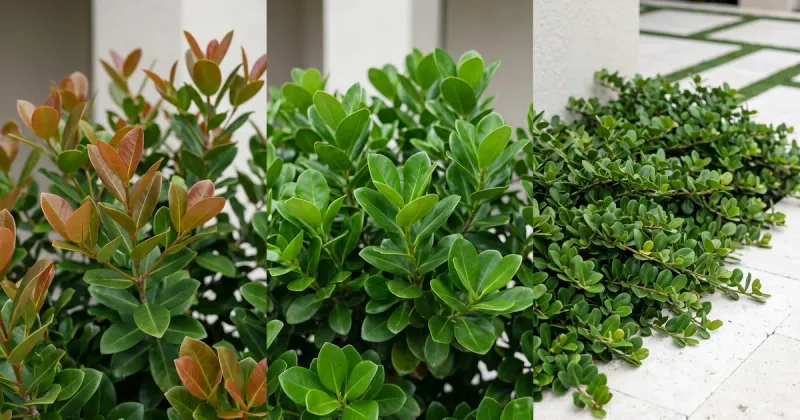
South Florida yards often need a hedge that can take bright sun and still look lush beside a driveway or pool. Cocoplum fits that job with thick, rounded leaves and a naturally substantial shape.
Its fruit is an extra bit of interest, but the everyday benefit is the leafy barrier between your outdoor space and the street.
Use cocoplum where winters are mild, especially in South Florida and other suitably warm locations. It is not the safe default for a frost-prone North Florida yard.
Plants can grow into large shrubs, so check the mature size of the selection you buy and leave room between the hedge and walkways. A sunny position encourages sturdy, full growth; coastal gardeners will also appreciate its tolerance of salt exposure once established.
Planting in sand does not mean you can skip watering on day one. Keep the root area evenly moist during establishment, then adjust as the plants settle in and the weather changes.
Rather than cutting a young row into a tiny box, let branches fill out before shaping the top and sides. That early patience can give you better coverage lower down, where privacy hedges so often develop gaps.
Cocoplum makes the most sense when you have space for a broad screen in a warm Florida yard.
5. Wax Myrtle
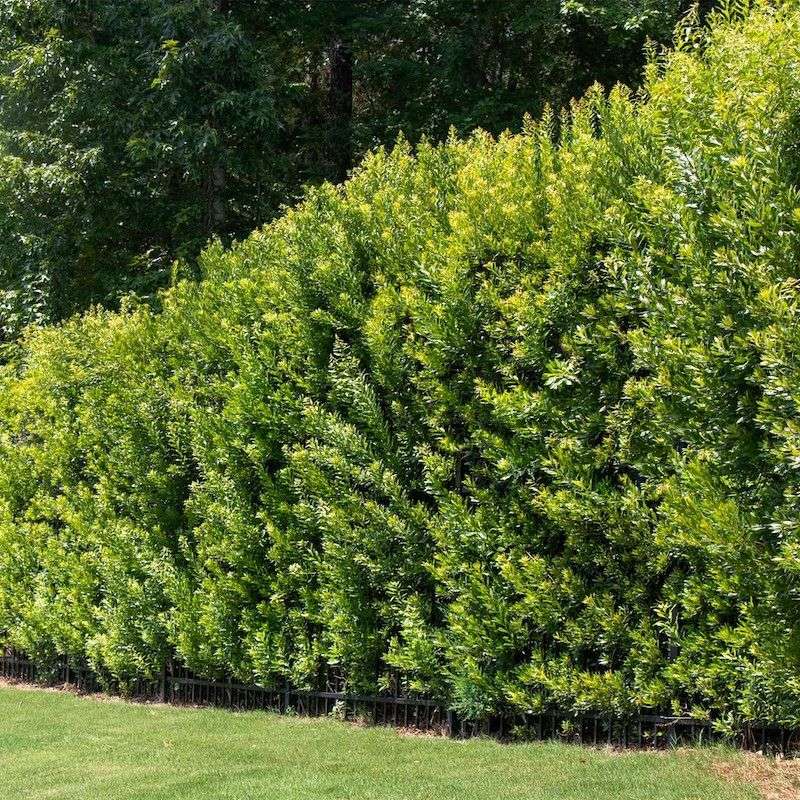
Some yards call for privacy fast, and wax myrtle is worth a look when there is room to grow. This native grows relatively quickly and can form a tall, informal screen along a back property line.
Its foliage has a pleasant scent when crushed, and female plants can produce waxy berries used by birds.
Size is the catch. Wax myrtle may reach small-tree proportions, so it belongs beside an open fence line, not squeezed into a narrow strip under windows.
It grows in full sun or partial shade and tolerates a range of soil moisture conditions once established. In colder areas of Florida, it can look less reliably leafy during winter than it does farther south, so check local conditions if year-round opacity is essential.
Give the row space to spread and use selective pruning to keep branches where you want them. Repeatedly shearing only the outside can leave a dense shell with sparse growth inside.
In hurricane-prone yards, keep a tall hedge away from utility lines and maintain sound branching rather than letting it become top-heavy. Wax myrtle is the pick for a relaxed, wildlife-friendly boundary where a little movement and natural shape look better than a perfectly flat green wall.
6. Florida Privet
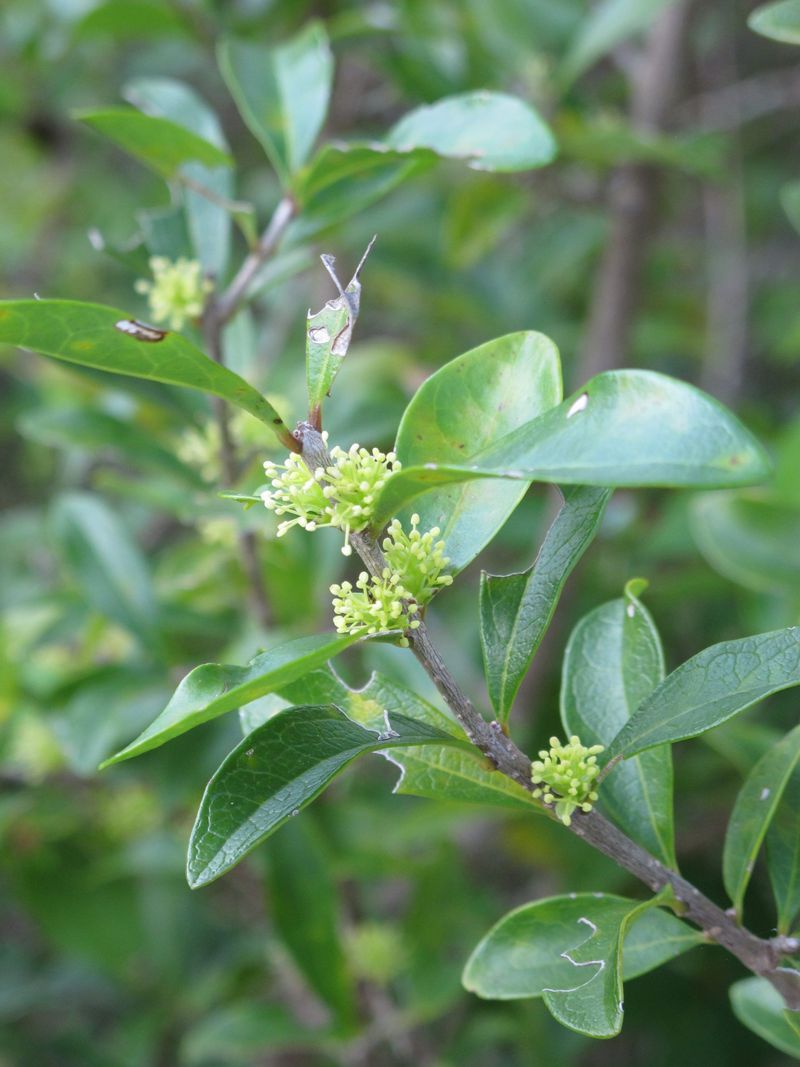
The name may raise an eyebrow, but Florida privet is not the commonly planted ligustrum you are trying to replace. Forestiera segregata is a Florida native with small leaves and fine branching that can make an attractive hedge.
For gardeners who like the familiar, clipped-hedge look, it offers a way to keep that style while choosing a plant that belongs here.
Florida privet suits sunny to partly shaded spots and is especially useful where sandy, well-drained soil makes thirstier plants a chore. It tolerates pruning, though it can also look good as a looser screen.
Check mature size before planting: it needs enough width to grow sturdy branches rather than becoming a thin strip pressed against a fence. Its small flowers are not flashy, so think of it as a hardworking green backdrop instead of a floral showpiece.
Ask for the botanical name when shopping, since common names can cause confusion. Water the hedge consistently until it establishes, then reduce watering based on rainfall and soil conditions.
Trim lightly and often enough to encourage branching low on the plant, especially while the row is young. If your main complaint about ligustrum is that it spreads beyond the yard, this native is a particularly satisfying swap, provided you buy the right plant.
7. Buttonwood
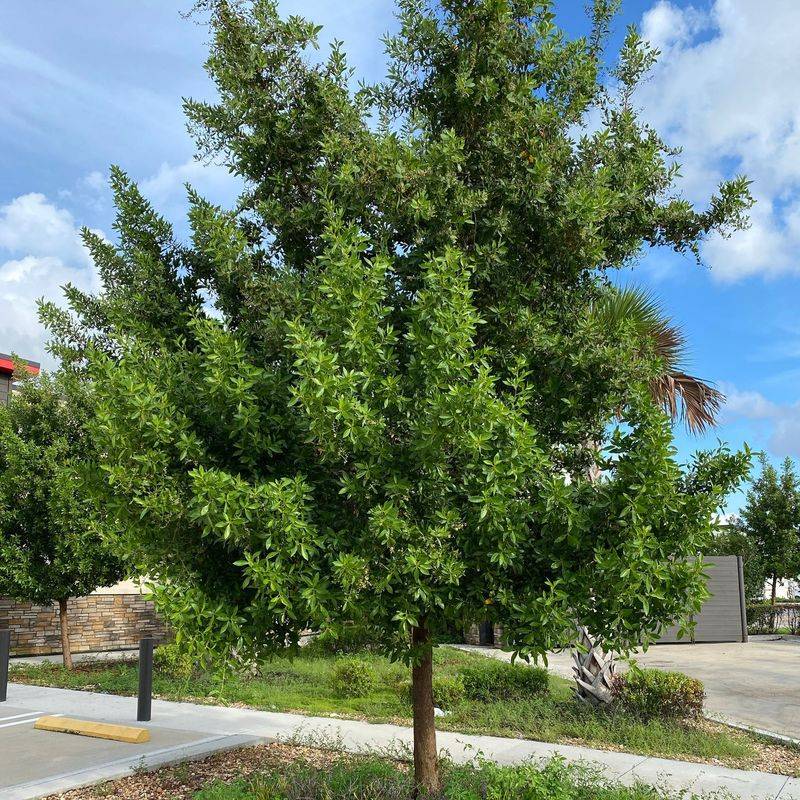
Salt spray changes the hedge-shopping list. A shrub that looks fine inland may struggle on an exposed coastal lot, while green buttonwood is well suited to many South Florida shore-side landscapes.
It can be shaped into a thick screen that gives a patio or boundary some shelter without looking out of place near the coast.
Buttonwood can grow into a small tree if left alone, so choose it only where you can allow a substantial hedge or keep up with pruning. Full sun suits it well.
It handles salt and, once established, periods of dry weather, but drainage and local conditions still matter. Check with a local nursery before using it in frost-prone parts of the state; this is a warm-region choice, not an all-Florida solution.
For privacy, start shaping young plants so they branch from low down instead of developing bare trunks beneath a high canopy. Leave enough space from buildings and paths for their eventual width, and avoid planting directly beneath power lines.
Water regularly during establishment even if the mature plant is tough. Where sea breezes, sandy ground, and a long warm season rule the yard, buttonwood offers a practical alternative to a ligustrum hedge that might be poorly matched to the site.