
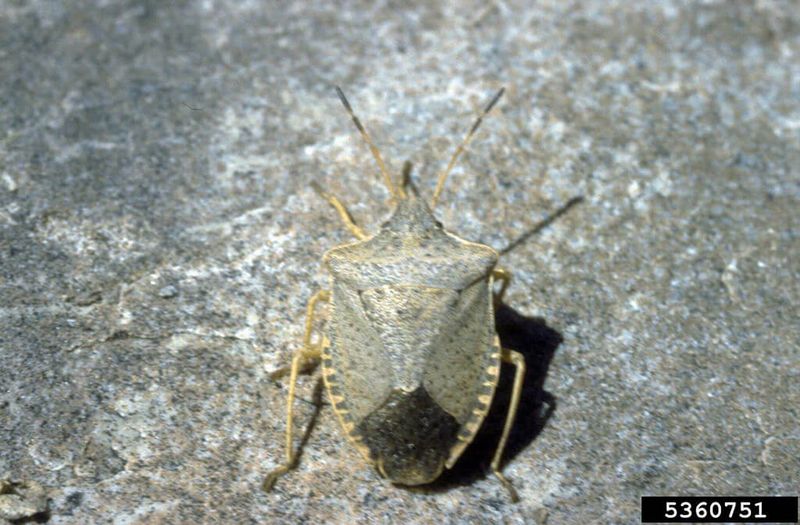
Spotting pale, spongy patches on a ripe tomato or pepper is frustrating, especially when you have babied the plant all season. Stink bugs are one possible cause, and you may have heard that a single herb planted nearby chases them off.
The truth is more limited than that claim, but you still have practical options. A little inspection now can save your late harvest and keep you from wasting effort on the wrong fix.
Stink bugs can blemish tomatoes and peppers
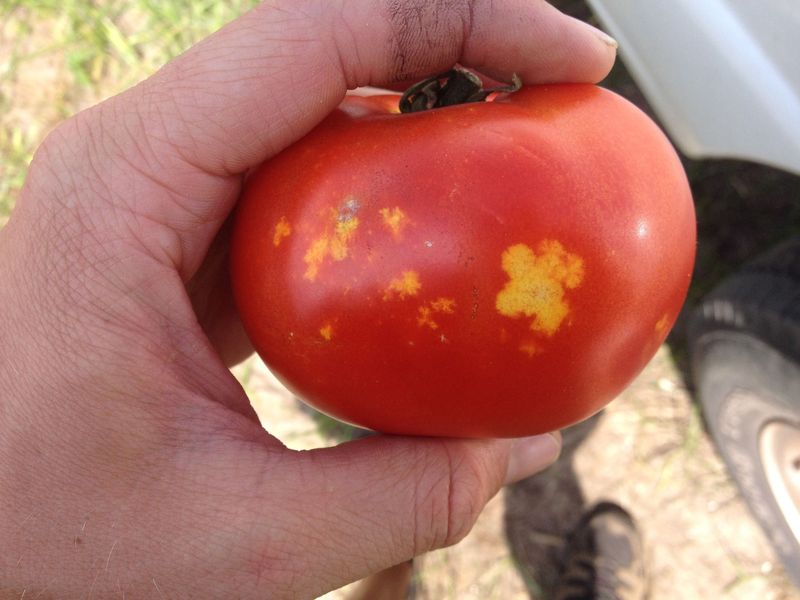
Stink bugs feed by piercing fruit with a needle-like mouthpart. On tomatoes and peppers, that can leave pale or yellow scars, tiny pinpricks, and sometimes firm, spongy tissue under the skin, as described in Virginia Cooperative Extension’s guide to stink bug injury.
Those signs can point toward stink bugs, but they do not prove it. Other true bugs can cause similar-looking injury, and UF/IFAS Extension notes that Florida has several pest species, including the southern green stink bug.
Here is some reassurance. According to NC State Extension, plant vigor is rarely affected, even though the fruit itself may be ruined.
So the plant is usually not dying, but the harvest can suffer.
Before you reach for a spray or a new plant, take a slow walk through the bed and look closely at the fruit and leaves. Finding the actual insect is the step that tells you what you are dealing with.
Identify the insect before choosing a response
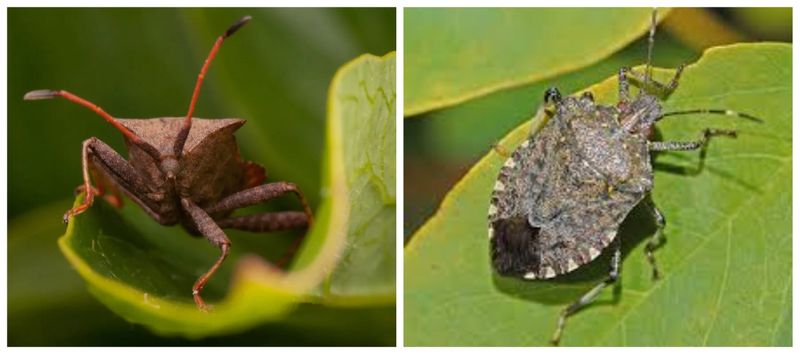
Grab a flashlight or just go out in the cool of the morning, when bugs are slower. Check the fruit, the stems, the foliage, and especially the undersides of leaves, where eggs and young bugs often hide.
Seeing a bug on the plant is not the same as catching it feeding, so look for several clues together.
Not every shield-shaped insect is a crop pest. The spined soldier bug, for example, is a predator that eats other insects, and University of Maryland Extension describes beneficial stink bugs that work in crops.
Squashing or spraying them can remove helpers you want around.
Species matter too. The Florida guidance in this UF/IFAS publication covers pests common there, while other Southern states, such as Texas, may see different mixes.
A photo of the bug sent to your county extension office can settle the question, and a guide like the Virginia one on diagnosing injury can help you compare symptoms.
Does planting mint nearby keep stink bugs away?
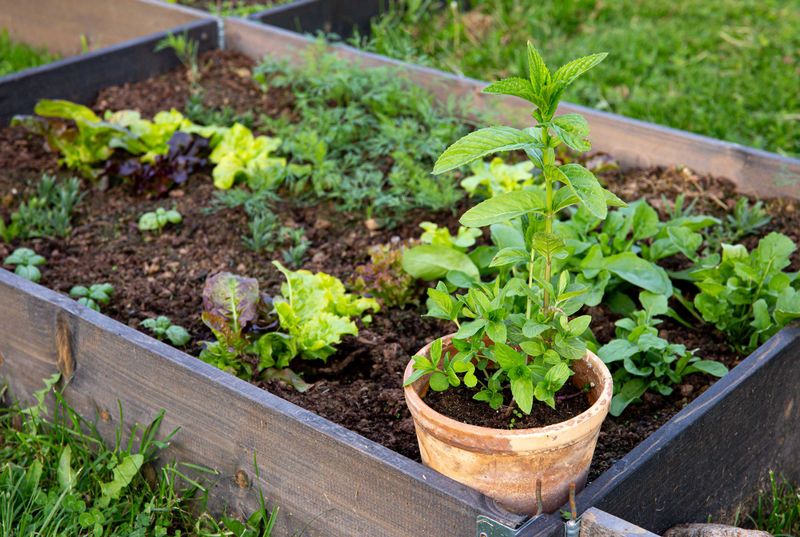
Short answer: nobody has shown that a living herb planted beside your tomatoes or peppers drives stink bugs off. The claim sounds neat, but the proof is missing.
The research behind it is narrow. A study on essential oils as spatial repellents found that spearmint oil reduced brown marmorated stink bugs’ response to baited traps.
It did not test living mint plants, companion planting, or protection of tomato and pepper fruit. It also focused on one species, so it cannot be stretched to every stink bug in Southern gardens.
Mint still has real uses. It is great in tea, desserts, and as a fragrant plant, just not as a proven pest shield.
It also spreads aggressively, and Iowa State University Extension notes it can overrun a bed, so keep it in a pot or another container.
Hand-pick small numbers and remove egg masses
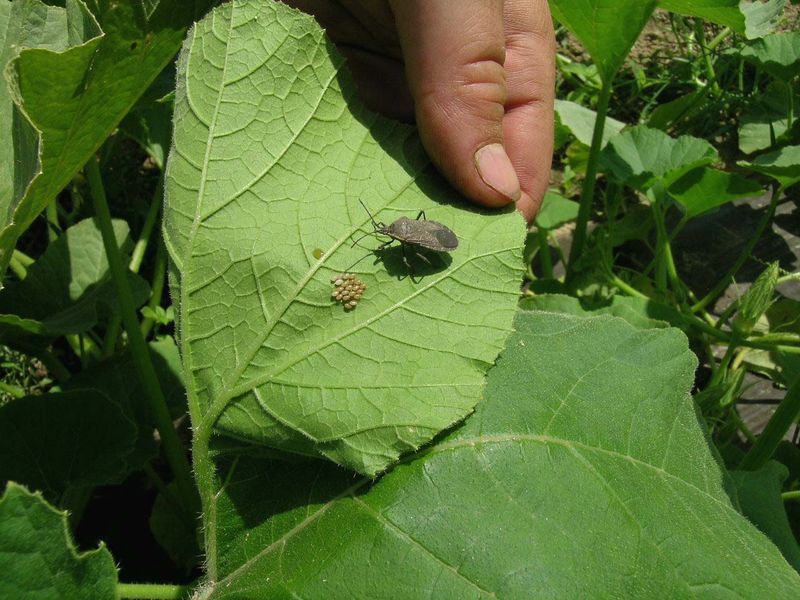
If you have confirmed stink bugs and only a few of them, hands-on work can make a dent. Drop the bugs into a bucket or jar of soapy water.
The UC Statewide IPM Program lists this as an option for home landscapes, along with removing egg masses.
Flip leaves and look underneath. Egg masses are small clusters of barrel-shaped eggs, and scraping or pinching off a cluster stops a whole batch of future feeders.
Stink bugs may drop or hide when disturbed, so approach slowly and hold your container beneath the bug before you touch it. Check foliage and fruit clusters carefully, including the shady side of the plant.
Think of this as small-scale management. It can lower numbers, but new bugs may fly in from nearby weeds or neighboring yards, so plan to repeat the check every few days.
Use row covers with timing and tradeoffs in mind
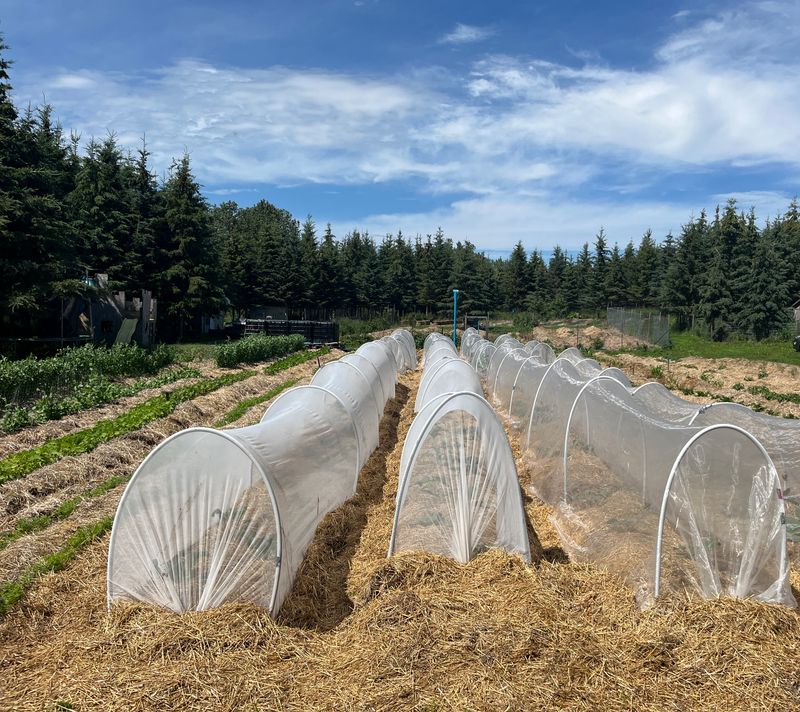
Row covers or fine netting work as a physical barrier: if the bugs cannot reach the plants, they cannot pierce the fruit. The catch is timing.
Covers need to be installed and sealed before fruiting, and gaps along the edges let bugs walk right in.
There are tradeoffs. Covers can restrict pollinators, which matters for tomatoes and peppers that need flowers pollinated, and heat buildup can be a concern in hot conditions.
Both the UC IPM page and University of Kentucky Entomology discuss barriers as a home-garden tool.
Ask yourself a few practical questions. Are the plants small enough to cover easily?
Will afternoon heat cook them under fabric? Can you check inside regularly?
In a hot Southern fall, a lightweight cover on a few young plants may suit you better than a heavy cover on a big bed. Covers may help, but they will not give complete protection.
Follow the label if you consider a pesticide
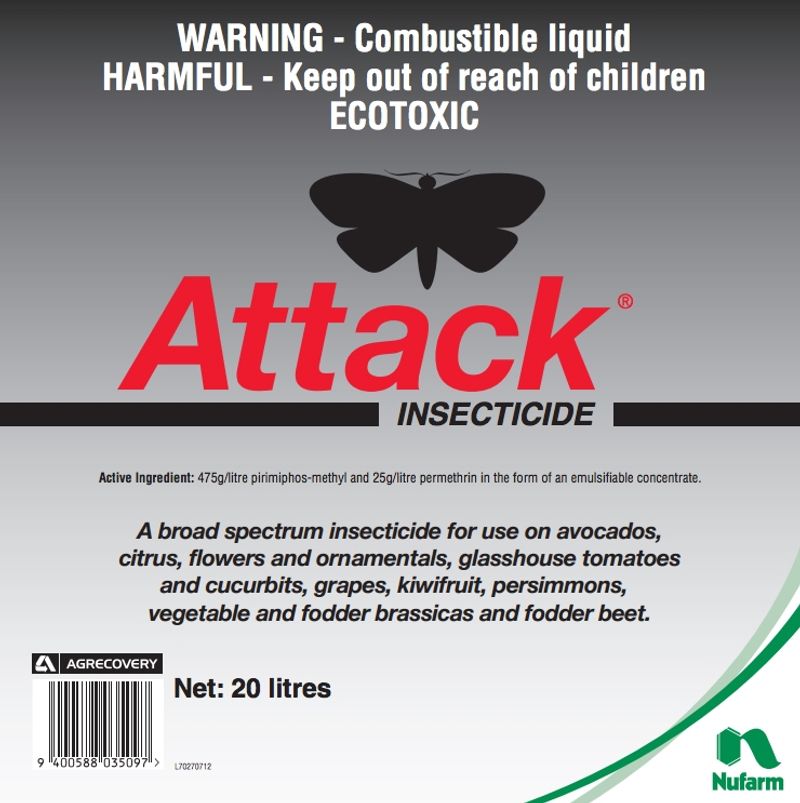
Spraying should come after you have found and identified the pest, not before. If you decide to treat, use only a product labeled for the crop and the target pest.
Follow the directions and the harvest restrictions, which tell you how long to wait before picking. The EPA’s pesticide labeling Q&A explains why the label is the rule.
Be careful with numbers you find online. A commercial scouting threshold, like those in Florida’s vegetable guidance, is not automatically the right trigger for a small home garden.
Skip homemade essential-oil sprays too. The trap experiment in the spearmint oil study does not give a safe or effective recipe for edible plants.
Start with a good look, a solid identification, and the simple steps first. Your tomatoes will tell you a lot if you take the time to read them.