
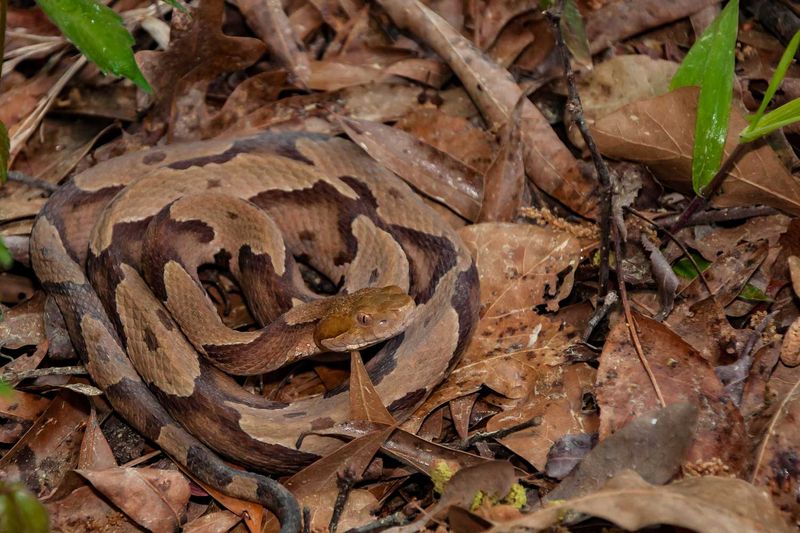
Raking leaves and stacking firewood feel like simple fall chores. Yet a snake that wants to stay out of sight can be tucked under cover you are about to touch.
Copperheads live across North Carolina, and mild autumn days can keep them moving. A few smart habits let you finish your cleanup and leave the snake alone.
Mild fall weather does not mean copperheads are gone
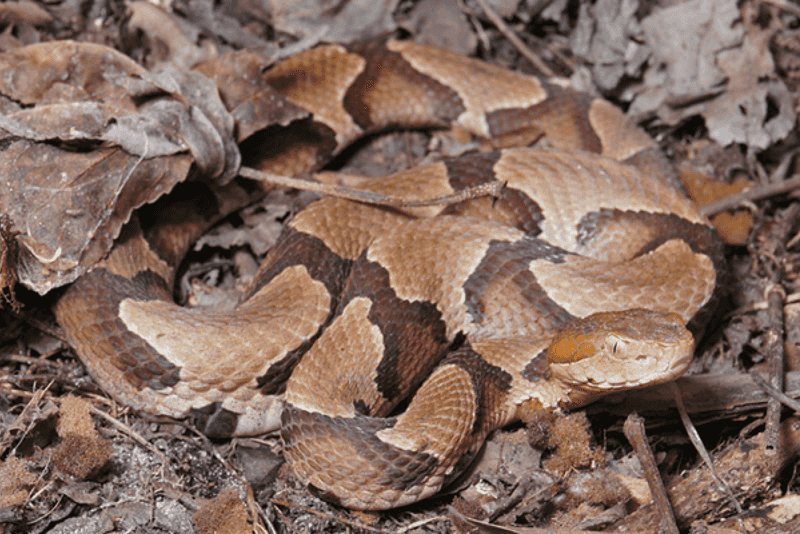
A warm October afternoon can feel like the snake season is over, but that is not how copperheads work. According to the North Carolina Wildlife Resources Commission, copperheads mate in both spring and fall, and females give birth from late summer into early fall.
So fall is still a busy time in a copperhead’s year.
Temperature matters too. The agency’s wildlife profile notes that copperheads use artificial cover to regulate their body temperature, and they do this particularly successfully in spring and fall.
A University of Georgia Cooperative Extension natural history account also describes daytime activity during cooler spring and autumn weather.
What does that mean for your weekend chores? It means a mild day is a good reason to stay alert, not a reason to worry.
Nothing here says fall is the peak season for bites, and nothing says your yard has a snake in it. Most yards will never have a problem.
Think of it like driving through a school zone. You are not expecting a crisis, but you slow down and pay attention.
The same habit works with a rake in your hand: look first, move steadily, and keep your hands and feet where you can see them.
A first cool snap or a certain date on the calendar does not prove a yard is snake-free either. Weather changes from day to day across the Piedmont, the mountains, and the coastal plain.
Let the conditions guide your care, and treat every cleanup the same way.
Think about cover, not a list of guaranteed hiding spots
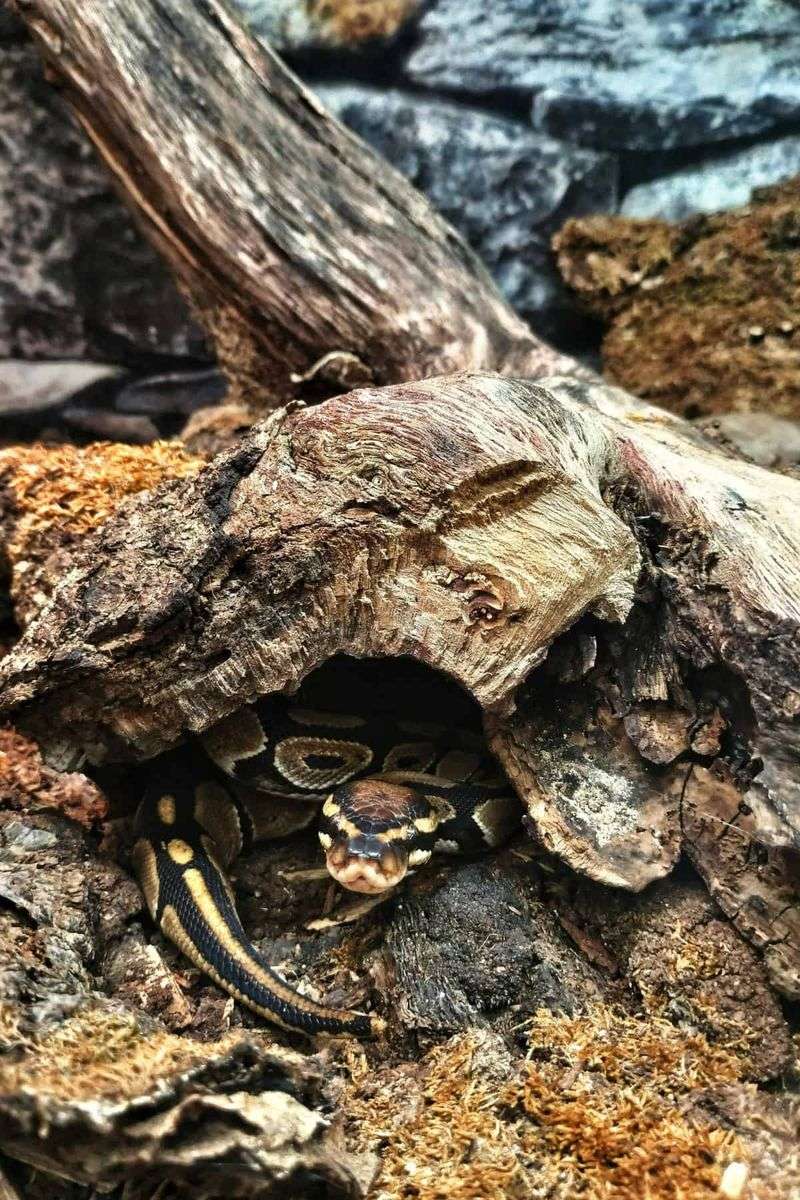
Snakes look for cover, which is any place that lets them stay hidden and keep a steady temperature. The NCWRC wildlife profile places copperheads in woodlands, brushy areas, rocky slopes, and spots like old sawdust or slab piles.
The agency also says they hide beneath objects, and it lists rock fissures and stump holes as winter shelter.
That is a description of habitat, not a map of your yard. Hiding under an object for a while is different from building a nest or settling into a den.
Nothing in these sources says copperheads routinely live in ordinary leaf piles or residential woodpiles.
General safety advice is a little broader. North Carolina Poison Control warns that snakes can hide in yard debris and overgrown brush, and Poison Control suggests care around leaves, rocks, logs, and debris.
So where does that leave a leaf pile or a decorative stone border? Treat them as places to approach with caution, not as known hotspots.
The sources do not single out stone edging as a favorite hideout, and a pile of leaves is far more likely to hold toads and beetles than a snake.
A good rule is to notice any spot that is dark, tucked in, and undisturbed for weeks. Those spots deserve a slower pace and a clear view before your hands or feet go near them.
Identify from a safe distance—or do not identify at all
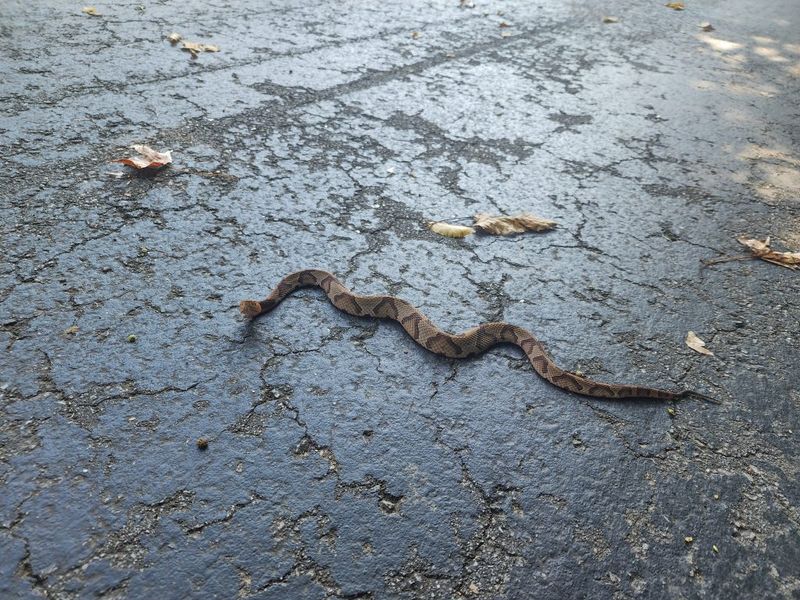
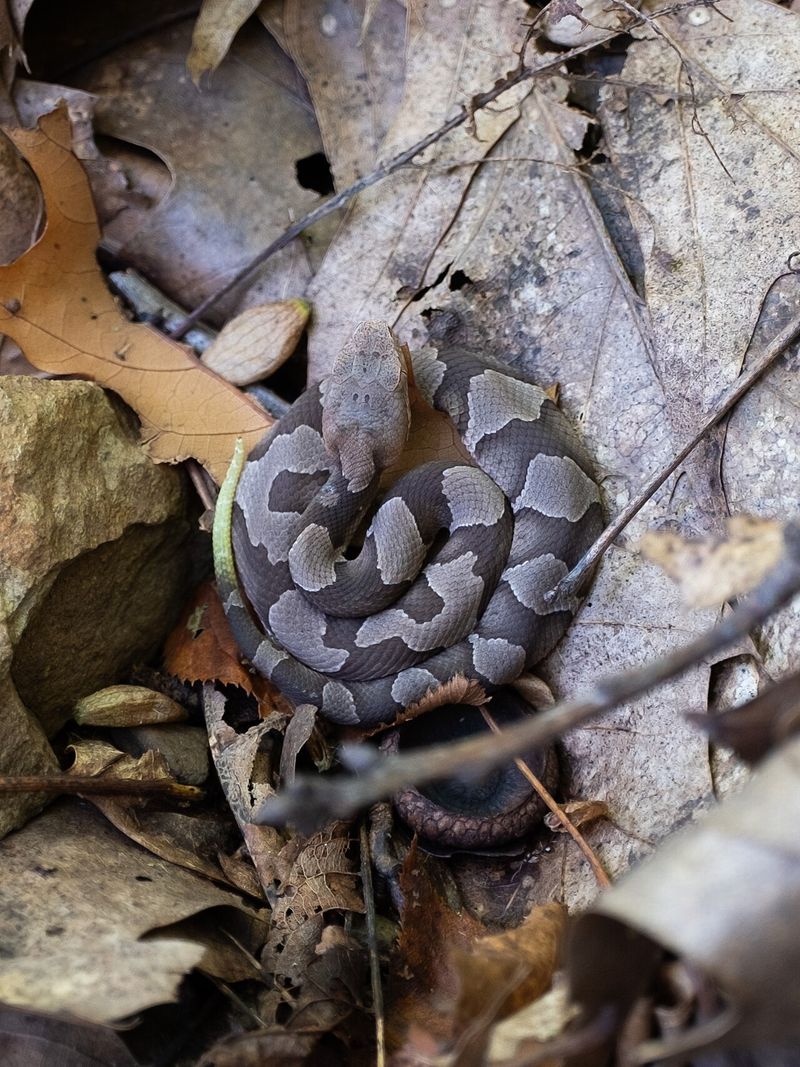
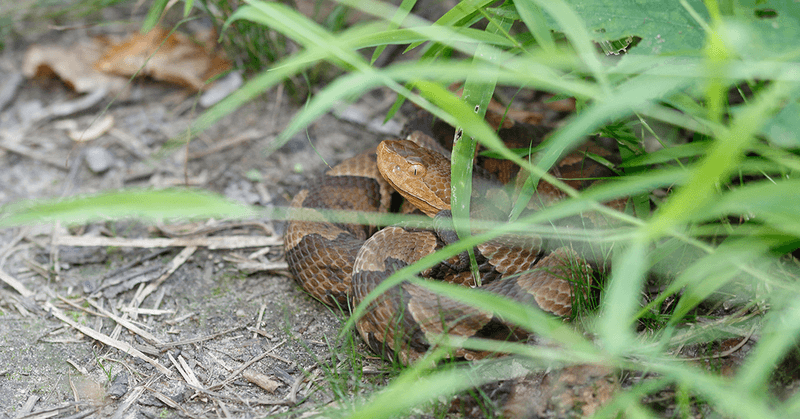
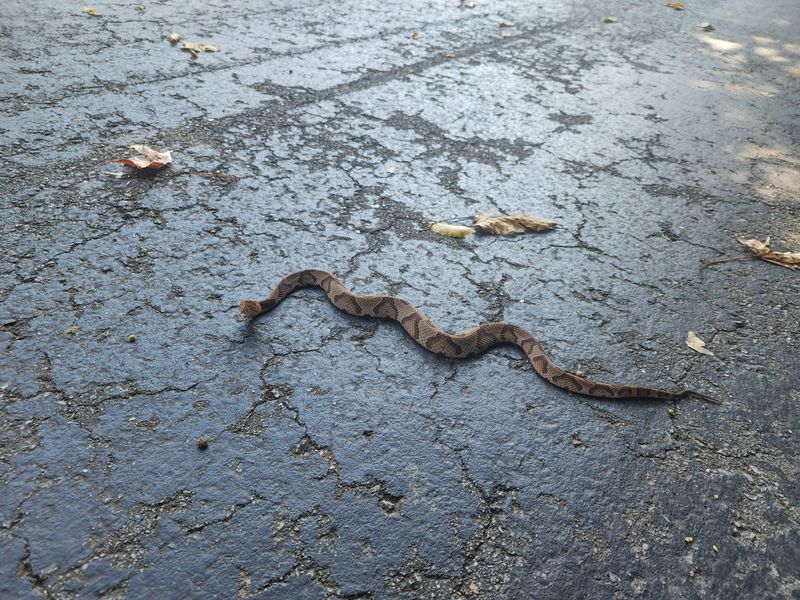
Copperheads are well camouflaged, which is part of why people rarely notice them. The NCWRC describes a tan-to-copper body with darker, hourglass-shaped bands.
Still, the agency notes that patterns vary, so no single look is a sure sign.
Poison Control gives similar descriptions and also reminds readers that snake markings can be confusing. Color can shift with age, lighting, and the leaves around the animal.
Even experienced people can misjudge a snake at a glance.
Because of that, the safest plan is simple. If you see a snake you cannot name, treat it as one to avoid.
Skip the closer look, the photo from two feet away, and the nudge with a rake handle.
Bending down to check the pattern puts your face and hands within easy reach. Moving debris to get a better view does the same thing.
Distance does more for you than any field guide knowledge.
It also helps to be honest about what you cannot see. A snake that is hidden under cover stays hidden, and no trick will reliably reveal it before you reach in.
That is why your habits matter more than your identification skills.
If you want to know what species you saw, take a photo from far away with a zoom lens, or describe it later to local wildlife staff.
Prepare before moving leaves, logs, or firewood
Good gear is the easiest upgrade you can make. NC State Extension advises wearing sturdy footwear and heavy work gloves when you clear debris.
Closed-toe boots that cover the ankle beat sandals or sneakers every time.
Next comes how you move. Watch where each hand and foot lands, and look carefully before you reach into or beneath undisturbed debris.
Pick up logs and branches from the side you can see, and use a long-handled rake or tongs to pull material toward you instead of reaching into it.
Obstacles deserve a pause as well. Do not step over a log, board, or stack unless you can see the other side.
Walk around it, or step onto it only when the ground beyond is clear.
North Carolina Poison Control gives similar general advice about care around leaves, rocks, and debris. Good light helps too, so start in the morning or bring a flashlight for shady corners.
The goal is to avoid startling or touching a snake you cannot see. It is not to hunt for one.
Do not probe or flip piles on purpose, and do not poke under debris with your hands.
Work at a steady pace, keep children and pets out of the cleanup zone, and take breaks so you stay alert. Careful chores are also faster chores, because nobody has to stop for an injury.
If you see a snake, back away and leave it alone
Spotting a snake is a startle, but the right response is quiet and boring. Stop moving, then back away slowly and give the animal room.
Call children and pets away from the area.
The NCWRC explains that copperheads bite in self-defense. They are not looking for people.
The agency also reports that many bites happen when someone tries to capture, kill, or handle one.
That is why the plan has no hero moves. Do not swing a shovel, pin it with a tool, or pick it up.
Do not try to relocate it either, because every step closer raises the chance of a bite.
NC State Extension and North Carolina Poison Control both advise leaving snakes alone and not trying to kill them.
After you back off, go finish a different job. Come back later and look at the area from a distance before you start work again, and stay aware of where the snake was.
If it is somewhere you truly cannot avoid, such as right beside a door, you can call a local wildlife professional for advice.
Treat the sighting as useful information about your yard. Remember where it happened, and plan to work more slowly there.
Reduce available cover without promising a snake-proof yard

A tidier yard gives snakes fewer places to tuck in. NC State Extension points out that debris can provide shelter and may also attract the small animals that snakes eat.
Fewer piles can mean fewer reasons for wildlife to linger near your house.
Start with the simple jobs. Clear out unneeded boards, old pots, and scrap material, and trim vegetation that touches buildings.
North Carolina Poison Control also recommends keeping yards free of clutter.
You can stack firewood off the ground and away from the house, and keep brush piles at the back edge of your property, not beside doors or patios. Doing this work in daylight, with the same careful habits, keeps the job safe.
Be realistic about the payoff. Yard care can reduce the amount of cover available, but it cannot promise that snakes will stay away.
Copperheads also use woodlands and rocky areas nearby, so a perfect yard does not make a snake-free one.
The good news is that these steps help in other ways. A neat yard is easier to walk, easier to scan, and less likely to hide mice.
You can also leave native plants and wooded borders in place, since the aim is less clutter, not less wildlife habitat.
Get expert guidance after a bite
If a copperhead bites someone, treat it seriously. The NCWRC says the bite is painful and deserves care.
It is not harmless, and it does not mean the worst outcome either.
Move away from the snake first, so no one is bitten twice. Then call North Carolina Poison Control at 1-800-222-1222 for guidance.
The line connects you with experts who can tell you what to do next.
Call 911 right away if symptoms are severe. North Carolina Poison Control lists trouble breathing, chest pain, facial swelling, and loss of consciousness as signs that need emergency help.
Some old advice does more harm than good. Do not cut the wound, do not try to suck out venom, do not put ice on it, and do not use a tourniquet.
Keep the person calm and still while you wait for guidance.
Do not try to catch or kill the snake to show a doctor. A clear description, or a photo taken from a safe distance, is plenty.
A calm phone call is the best tool in any yard.