
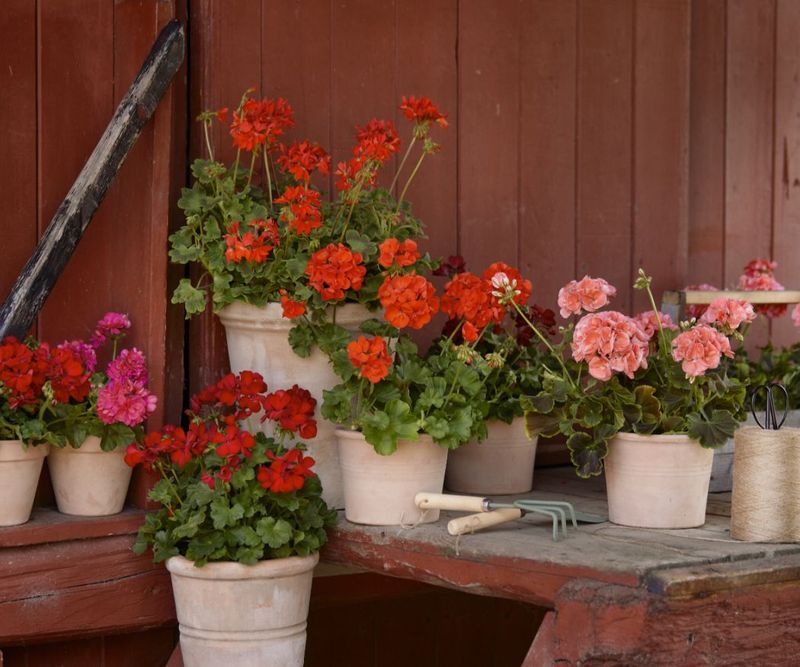
You bought a geranium for bright color, but all you get is big green leaves and a flower here and there. Feeding is one thing that can tip the balance, though it is rarely the only thing.
Too much fertilizer can push leaves instead of blooms, and the wrong product can add to the trouble. Here is how to sort out what your plant may need, whether it grows in a bed or a pot in Florida, Texas, or anywhere across the South.
Overfertilizing can favor leaves over flowers
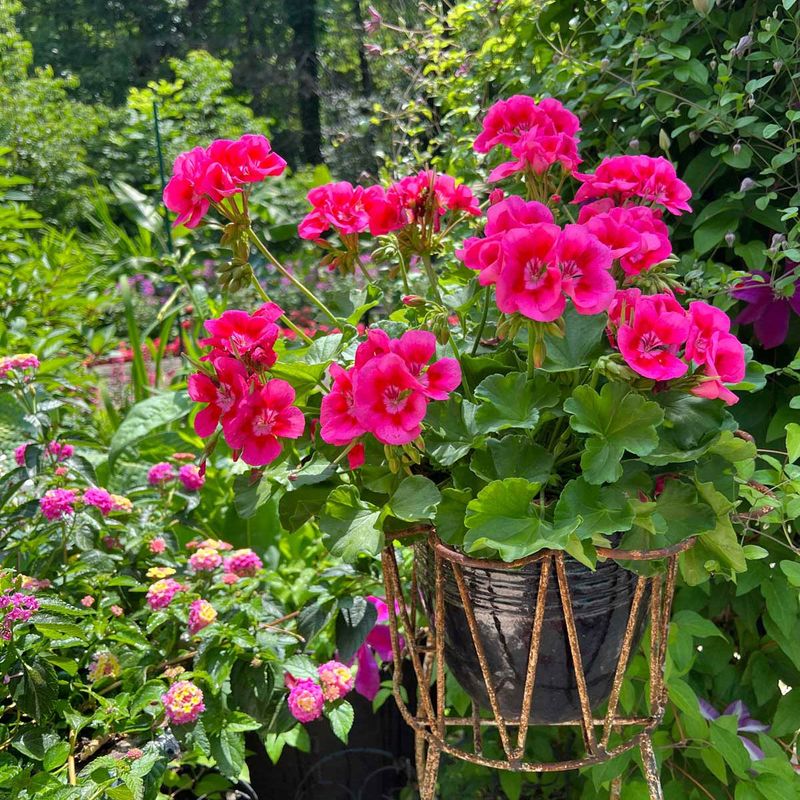
Picture a geranium with thick, deep green leaves and barely a flower. Feeding is one possible reason.
Texas A&M AgriLife Extension warns that overfertilizing can produce excess foliage and few flowers.
That does not mean every leafy plant was fed wrong. Poor flowering has other possible causes.
Iowa State guidance says geraniums in partial shade may not bloom well, and UF/IFAS notes that Florida heat and humidity can make them perform poorly in summer.
This guide covers common bedding geraniums in the genus Pelargonium, not hardy cranesbills. Before you reach for more fertilizer, think back over what you have been giving the plant.
Extra feeding on top of a pot mix that already contains fertilizer, for example, can push growth in the wrong direction. Adding more without checking the plant’s situation may make things worse.
A bloom booster is not the default fix
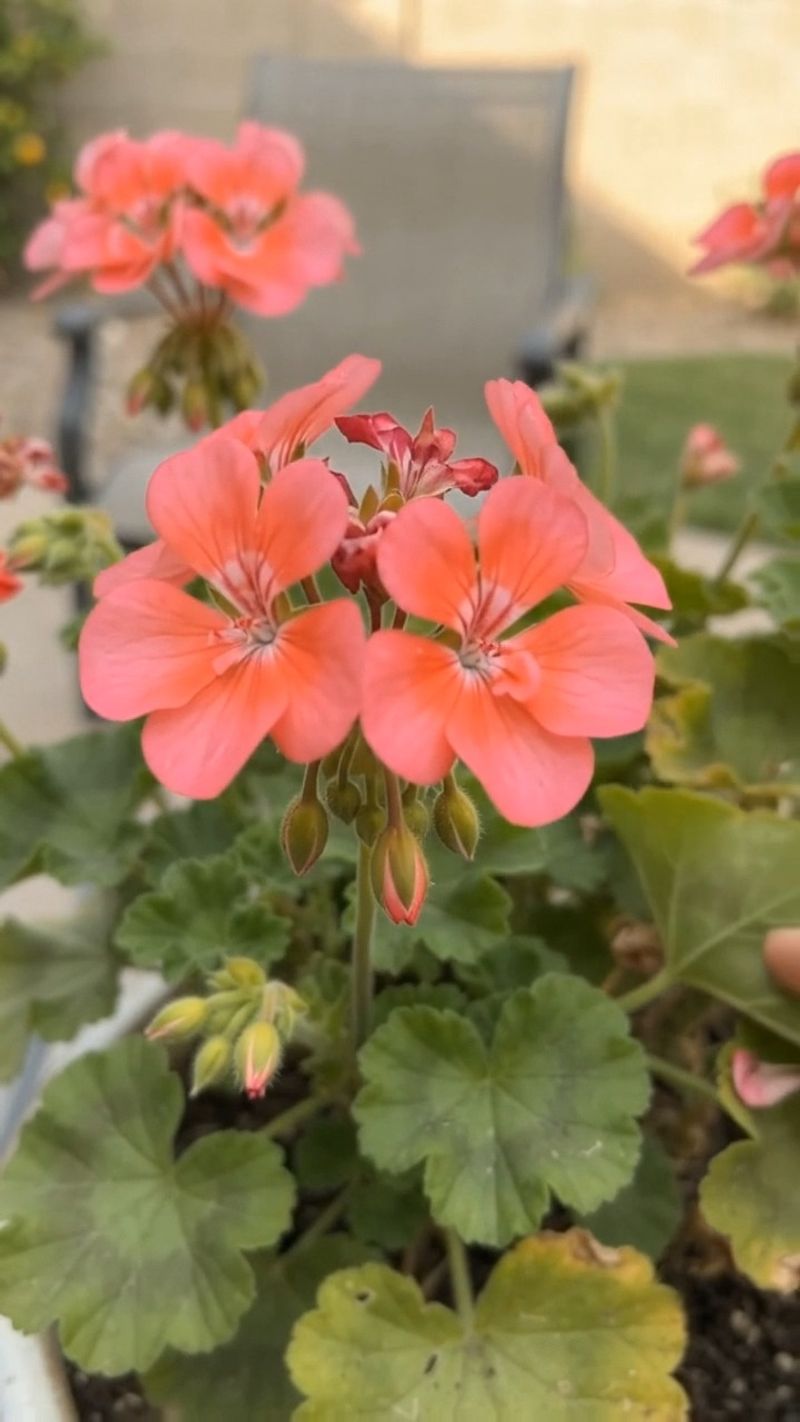
Sparse flowers make a high-phosphorus bloom booster look like the obvious answer. It is a tempting shortcut, but it is not a dependable one.
NDSU Extension says high phosphorus does not necessarily increase flower numbers and recommends a soil test before adding any.
So skip the habit of adding phosphorus just because a plant is not blooming. If the soil already has plenty, extra gives you nothing but wasted money.
A better plan is to pick a suitable fertilizer for flowering plants and follow the label on rate and frequency. Think of fertilizer as one factor that can support flowering, not a switch that guarantees it.
If a bloom booster is already in your cart, read the label closely and treat it like any other product, with no extra scoops for good measure.
Beds and containers call for different feeding rhythms
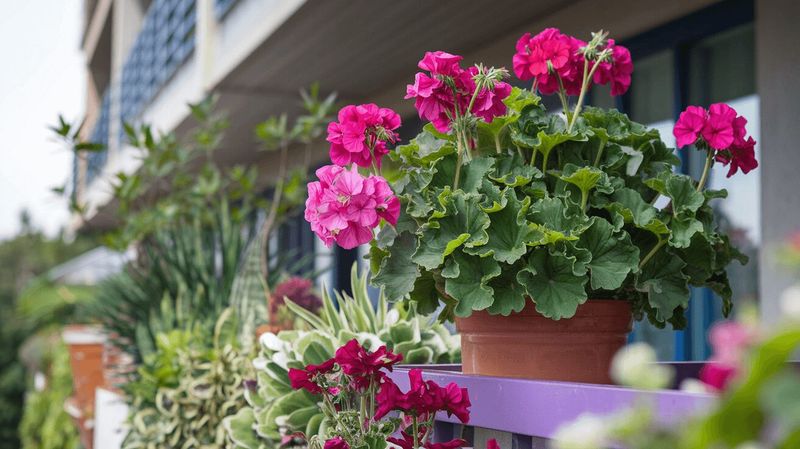
Where a geranium grows changes how often it may need a meal. For garden beds, UGA Extension suggests fertilizing every 4 to 6 weeks.
It also says slow-release fertilizer reduces how often feeding is needed.
Pots are different. Iowa State suggests dilute fertilizer about every two weeks for container plants, since frequent watering moves nutrients through the mix.
Treat both as regional examples, not one universal schedule. Your product label comes first.
Check it for the rate and timing, and look at your potting mix too. Many bagged mixes already contain fertilizer, which can cover the first weeks of growth, so feeding on top right away may be too much.
If the plant looks healthy but flowers are few, hold your current routine steady rather than feeding more.
Apply fertilizer carefully and prevent salt buildup
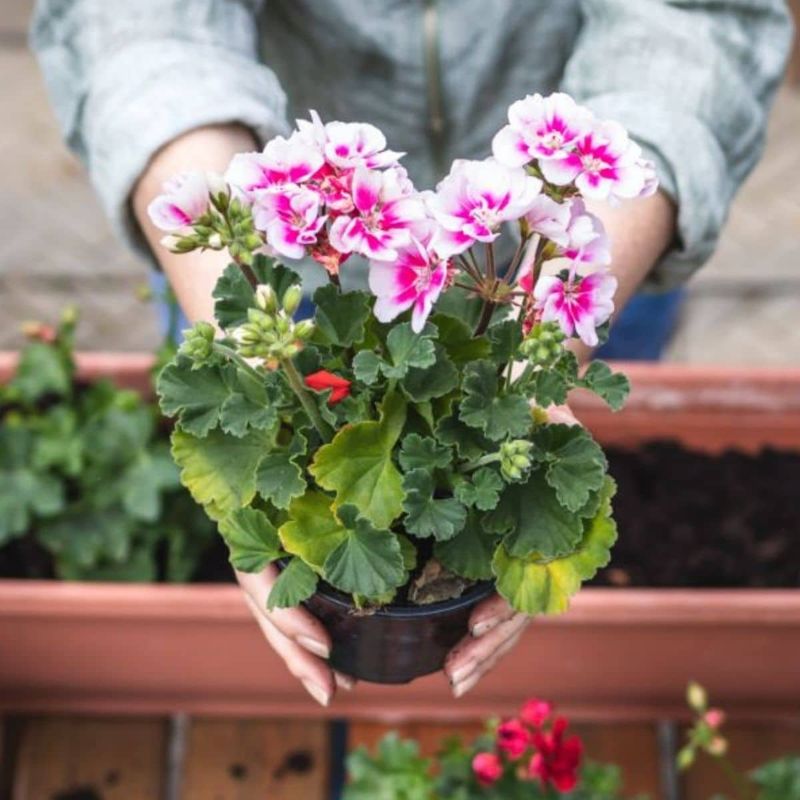
How you apply fertilizer matters as much as how much. In beds, UGA advises spreading it around the plants, keeping it off leaves and stems, and watering it into the soil.
That helps limit soluble-salt injury.
For pots, drainage is the safeguard. Make sure water runs freely from the bottom holes so salts do not pile up.
UMass greenhouse guidance notes that geraniums are intolerant of high soluble salts and that fertilizer buildup can check growth. That page is written for commercial growers, so use it only as a caution, not for home rates.
In Florida, read the label and check local ordinances before applying. UF/IFAS advises applying only what plants can use, and its landscape fertilizer guide warns that excess can injure plants and add to runoff.
Rules differ by city and county.
Fall care depends on where you garden
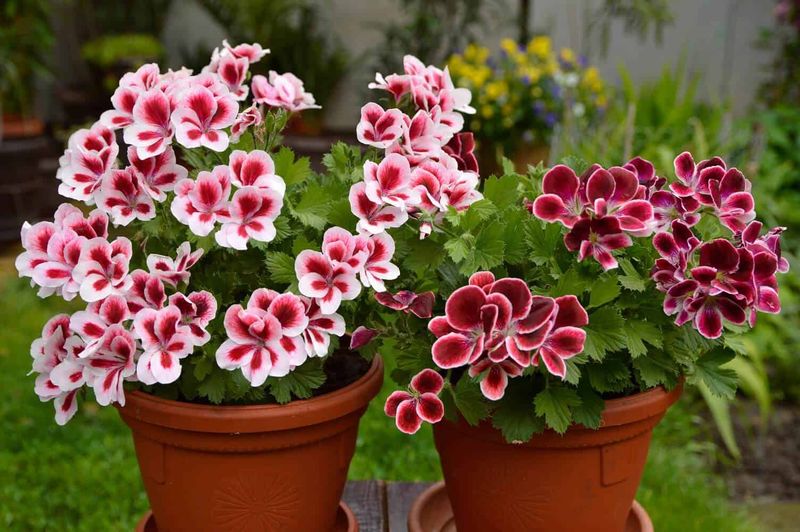
No single fall rule fits the whole South. In North Florida, UF/IFAS recommends cutting plants back and fertilizing in early fall to stimulate new growth.
Farther south, the story changes. UF/IFAS Gardening Solutions describes South and Central Florida geraniums as winter annuals, generally planted October through March.
Flowering there often fades by mid to late summer, so the plant is not on the same calendar as one in Tallahassee.
Texas varies too. Texas A&M’s Bexar County guidance treats common geraniums as cool-season annuals for San Antonio, apart from named varieties.
Timing and performance can differ across the state and by variety.
Start with your local conditions and your plant type, then adjust. Ask your county extension office if you are unsure.
Check sunlight and seasonal stress before feeding more
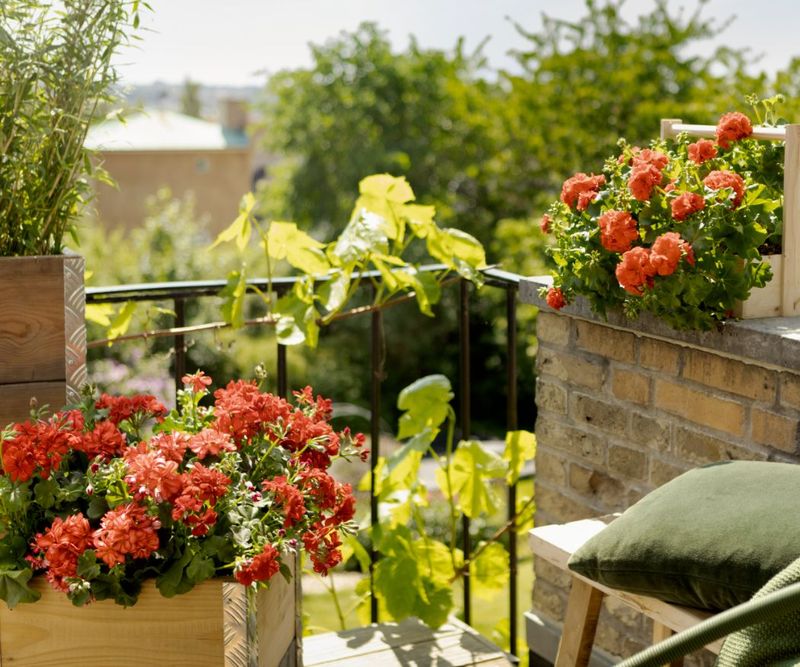
Light is a quiet bloom limiter. Iowa State says geraniums in partial shade may not bloom well and recommends at least six hours of direct sun for optimum flowering.
Walk your yard at midday and count the sunny hours before blaming the fertilizer.
Deadheading helps too. Pinch off spent flower clusters so the plant keeps making new ones instead of setting seed.
Heat is the other big factor in the South. UF/IFAS notes that Florida heat and humidity can make these plants perform poorly in summer.
A tired plant in July may simply be stressed, so expect a rest, not a full show.
Run through your list before changing the feeding routine: sun, season, drainage, and what the label says. Fertilizer cannot guarantee blooms when another factor is holding them back, and sometimes the best fix is a sunnier spot and a little patience.