

Fall raking puts your tools right where small, secretive animals sometimes shelter. The spotted salamander is a native North Carolina amphibian that spends much of its life hidden in forests and underground.
Nobody can promise one is under your leaf pile, but a few gentle habits cost you almost nothing. Here is what is known, what is not, and how to keep your yard tidy while giving wildlife some room.
Spotted salamanders occupy specific North Carolina habitats

Spotted salamanders are native to North Carolina, but they are not equally common everywhere. The NC Biodiversity Project species account describes them as most common in the eastern Piedmont, rare in the Coastal Plain, and scattered through the western Piedmont and lower-elevation Blue Ridge.
Their habitat matters just as much as the map. They are tied to bottomland forests and to forests near suitable breeding sites, especially seasonal pools.
The same account notes that habitat fragmentation and the loss of seasonal wetlands threaten local populations.
For homeowners, that adds up to a useful sense of scale. If your property backs up to woods, a floodplain, or a wet-weather pool in the eastern Piedmont, a salamander in the neighborhood is more believable.
A tidy lawn far from forest and wetlands is a much less likely place to meet one. Knowing your surroundings helps you decide how careful to be, without turning every rake stroke into a worry.
Does leaf litter mean a salamander is under your pile?
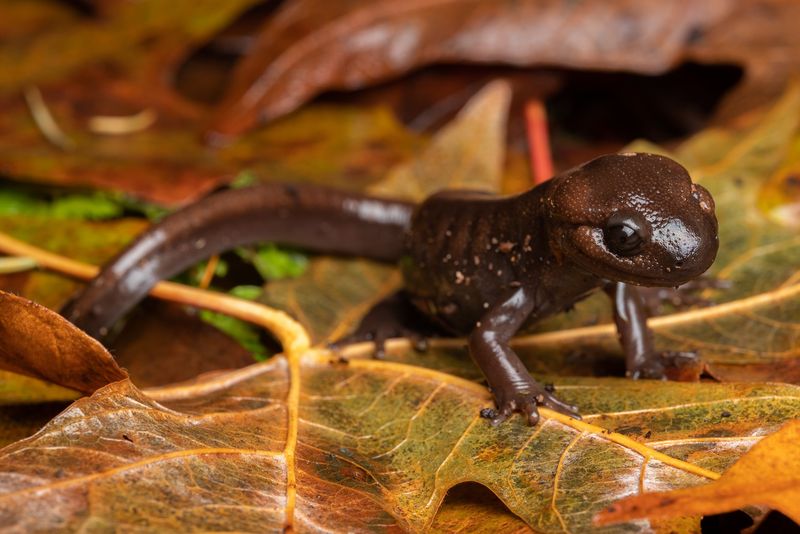
Picture a pile of fall leaves and a salamander curled up inside, fast asleep. It is a charming image, but it goes further than the facts do.
Connecticut’s wildlife agency, Connecticut DEEP, reports that spotted salamanders hide under moist leaf litter and spend winter dormant underground.
That is about natural leaf litter on a forest floor and about underground refuges. It does not tell us that a pile you raked into a corner is occupied, and it says nothing about typical North Carolina yards.
North Carolina’s species account focuses on forests and breeding wetlands rather than residential leaf piles.
A better word than sleeping is secretive. These animals use cover, burrows, and damp ground, and they stay out of sight.
A raked pile is a different thing from an undisturbed layer of leaves on the ground.
So the practical takeaway is modest. Damp leaf litter can shelter small wildlife, so a little care is reasonable, especially near woods.
Gentle raking is a precaution, not a sign that every pass will cause harm.
North Carolina’s best-known salamander migrations happen in spring
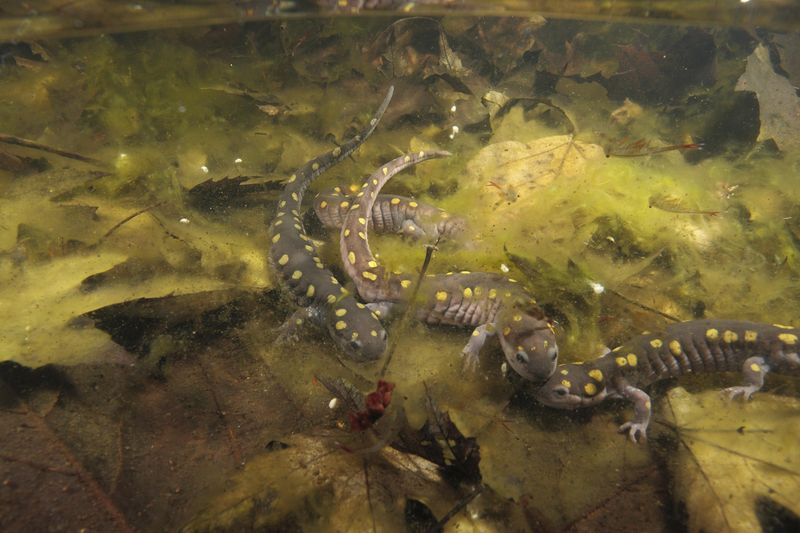
Ask a biologist when spotted salamanders are on the move in North Carolina, and the answer points to spring, not fall. The state species account describes adults migrating to breeding ponds in late winter and early spring, often on rainy nights.
Their destination is just as specific. Fish-free seasonal pools are important breeding habitat, because fish would eat the eggs and larvae.
Those pools often dry out later in the year, which is part of why they work.
This is the established seasonal movement for North Carolina. A fall migration or fall dormancy in leaf piles is not documented here, so it is best not to describe autumn raking as disturbing a migration or a hibernating animal.
One example from Connecticut shows why timing details should stay local. Connecticut DEEP reports newly transformed young leaving wetlands in late summer or early fall, but that is its own population, not a North Carolina schedule.
If you live near a seasonal pool, a rainy night in late winter is when a crossing salamander is most plausible.
Where should you keep fall leaves?
You do not need to choose between a neat yard and a wildlife-friendly one. N.C.
Cooperative Extension offices recommend a strategic approach, and New Hanover County Extension explains that leaf litter helps pollinators and builds soil.
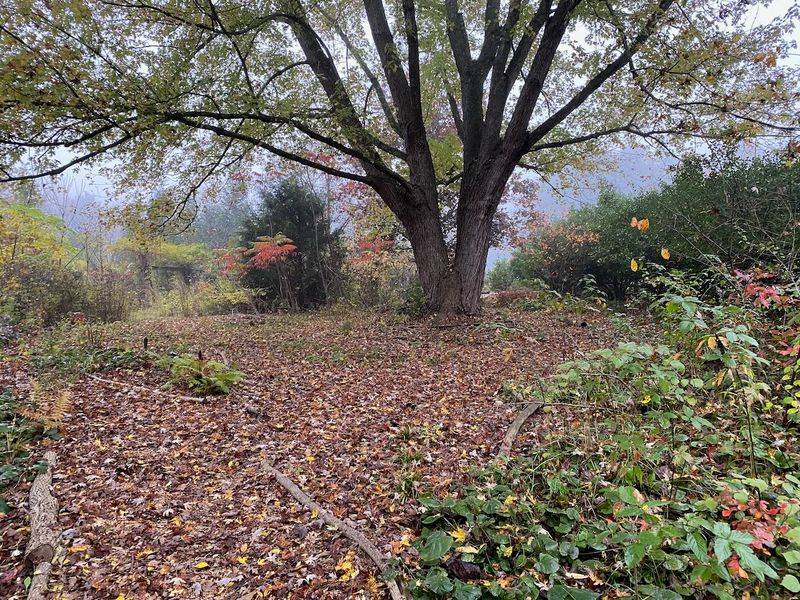
Good spots to keep leaves include the ground under trees and shrubs, and a quiet corner along the yard edge. Those areas rarely need to look manicured, and the leaves slowly break down into soil nutrients.
A retained patch offers general habitat value, though it is not a promise that spotted salamanders will use it.
Leaves still need managing where they cause trouble. Burke County Extension notes that a thick layer can smother turf.
Move extra leaves off the lawn and clear walkways and drains.
Excess leaves can go into garden beds, a compost bin, or a mulch ring around trees. Try a simple split: clear the grass and paths, then keep a loose layer where plants already grow.
If cleanup exposes a salamander, leave it in place
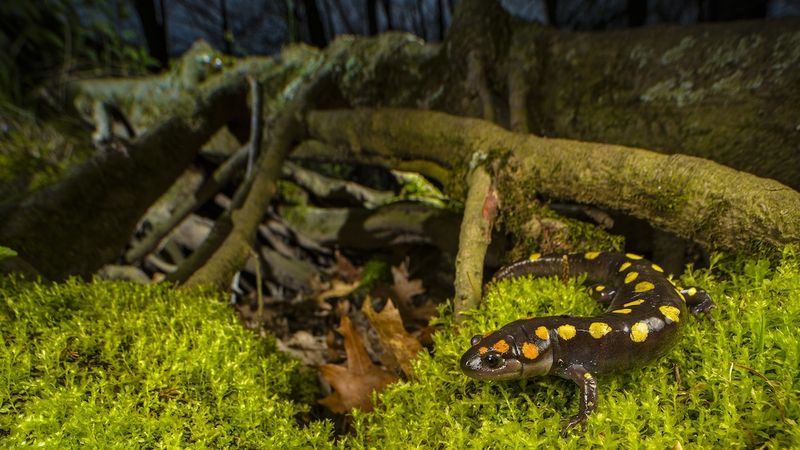
Sooner or later, a rake may pull back some leaves and reveal a dark, spotted animal. Stop what you are doing.
Set the tool down and step back.
Connecticut DEEP’s species guidance says to leave wild spotted salamanders in place and take photographs only. That is the whole plan.
Do not pick the animal up, and do not dig around it or lift nearby logs and debris to look for more.
If you want a record, take a photo from a comfortable distance. Then work somewhere else in the yard for the day and leave the spot as it is.
Skin on amphibians is delicate, and the animal knows its surroundings better than we do. Moving it can cause more trouble than a short pause in your raking.
Balance careful cleanup with a usable yard
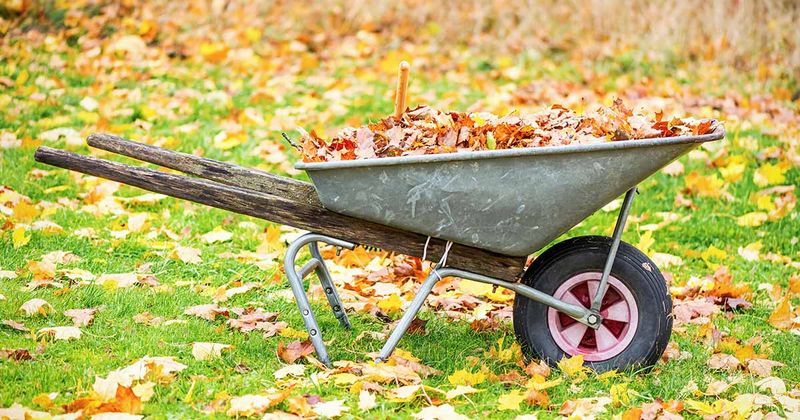
A workable fall routine is simple. Keep turf, paths, and drains clear, and let some leaves stay under trees, shrubs, or along a quiet edge.
Rake with a light hand, especially near woods or wet spots, and skip the digging.
You can still get the yard done. You are just choosing where to be thorough and where to be easy-going.
A calm approach turns out to be good for the lawn and for whatever lives beneath it. The best cleanup leaves your yard useful and a little wild at the edges.