
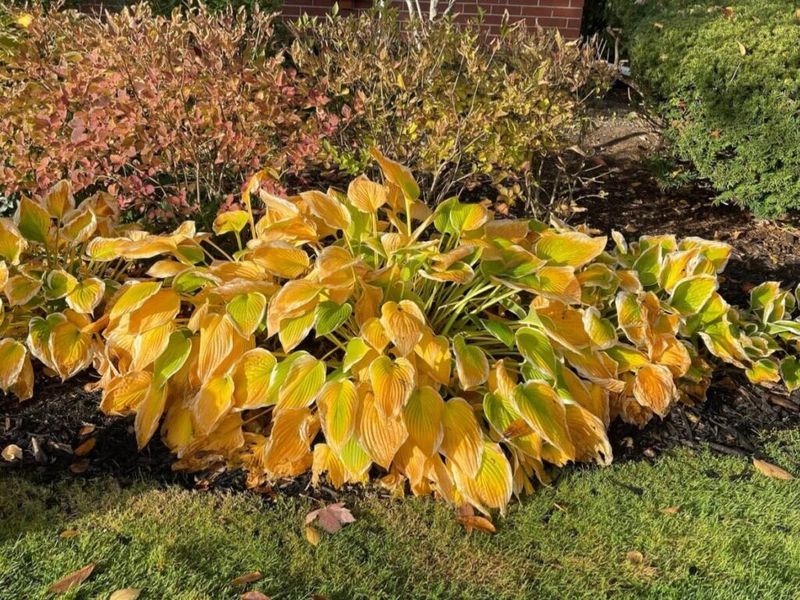
Your hostas may look tired and yellow right now, and that can feel alarming. Most of the time, the plant is simply winding down for the season.
Knowing what is normal and what is a real problem helps you spend your effort where it counts. A few well-timed steps can support the plant, though no fall chore can promise how full it will look next spring.
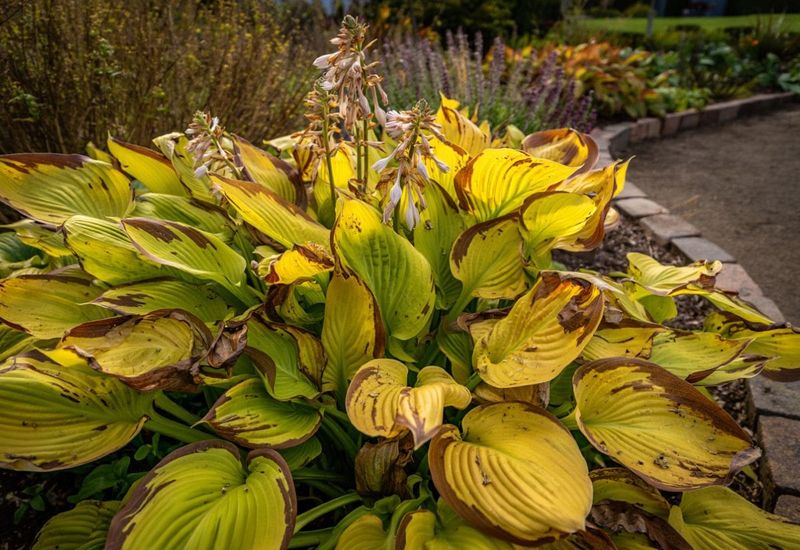
Fall yellowing often marks the hosta’s seasonal decline
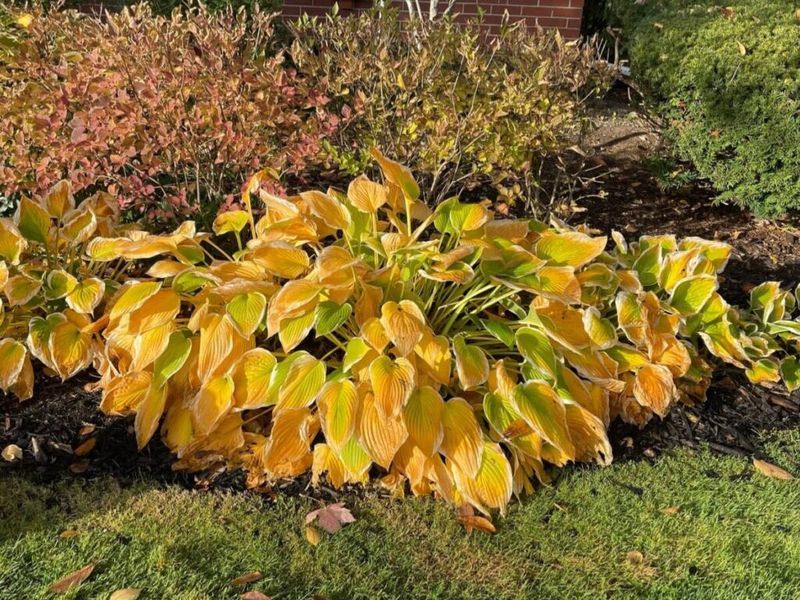
Walk out in fall and see the whole clump turning yellow? Relax.
When color change spreads across the entire plant as the season advances, it is usually normal dieback, and the plant is heading toward dormancy. Illinois Extension describes hostas as declining naturally in fall, with cleanup coming after the color fades.
Timing is your best clue. Yellowing that shows up in the middle of the growing season deserves a closer look.
So do streaks between the veins, odd mottling, puckered leaves, or soft rot at the crown or leaf stalks. Penn State Extension lists foliar nematodes, virus, and crown or petiole rots among the possible causes of those patterns.
So ask two questions before you worry. When did the color change start, and what does the pattern look like?
Fall-wide fading across the plant is likely seasonal. A single odd symptom out of season is the one to investigate further, and leaf color alone does not tell you which situation you have.
Read the clues in ragged leaves before you act
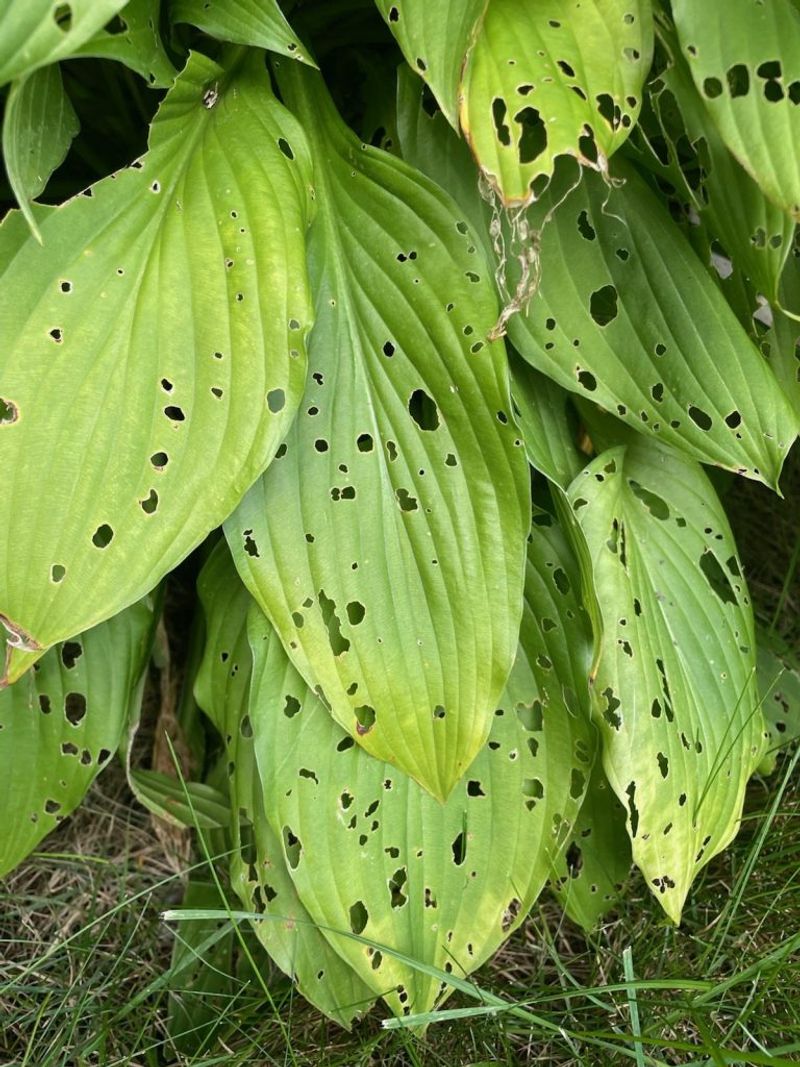
Ragged edges and holes tell a story, but they do not give a final answer. Large, irregular holes, sometimes with shiny slime trails nearby, are consistent with slug or snail feeding, as described by University of Maryland Extension.
Check the leaves in the evening or early morning, when these pests tend to be active.
Look at what is left behind, too. If whole leaves or large sections vanish and bare leaf stalks remain, animal feeding is a better suspect than slugs.
The University of Minnesota Extension diagnostic page also points to hail as a cause when torn, ragged holes appear after a storm.
Treat all of this as a set of clues. A tattered clump from a hailstorm or a hungry visitor is not a sign that the plant needs digging up.
Ragged leaves alone are not a reason to divide, so match your next step to what you actually find.
Wait for foliage to fade, then clean up spent leaves
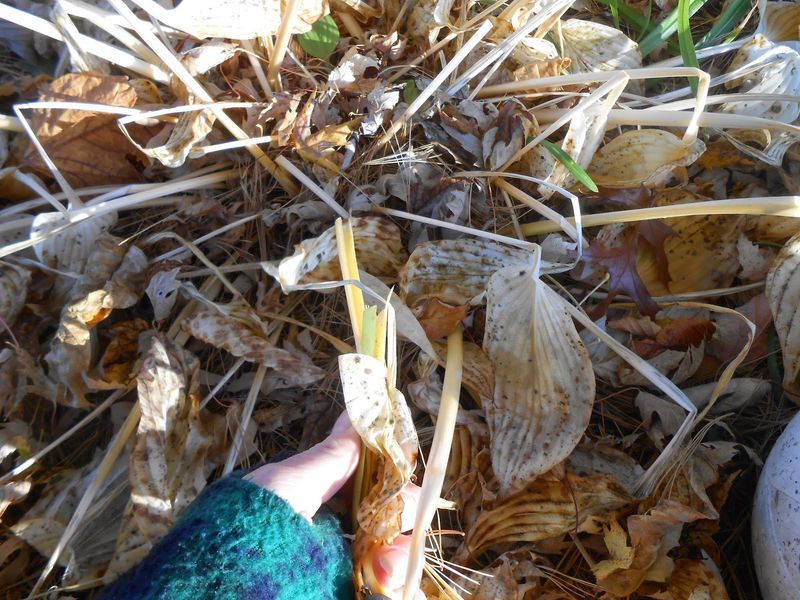
Put the pruners down while the leaves are still green. The calendar alone is not a reason to cut a healthy hosta, and Illinois Extension advises waiting until fall color has subsided.
Once the foliage has yellowed, browned, and gone limp, routine cleanup makes sense.
Gently pull or cut the spent leaves and clear debris sitting around the crown. This matters most if slugs or leaf disease bothered the plant this year.
Clemson recommends fall cleanup for that reason, and Penn State advises discarding diseased material rather than adding it to home compost.
Cleanup may reduce hiding places for slugs, but it will not wipe them out. Iowa State notes that slugs shelter in damp debris, among other conditions.
Keep the job targeted to dead hosta foliage and nearby clutter, and leave the rest of your garden leaves and organic matter alone rather than stripping beds bare.
Keep roots moist without leaving soil waterlogged
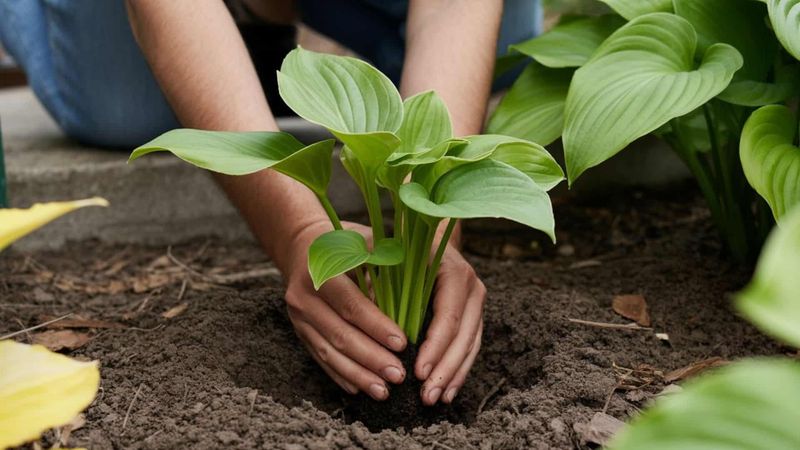
Skip the fixed schedule and use your finger instead. Hostas like moist, well-drained soil, and they do not like to sit in soggy ground, as Clemson and the University of Georgia both describe.
Push a finger a couple of inches into the soil. If it feels damp, wait.
If it is dry, water slowly at the base. Well-established hostas in decent soil do not need routine fall watering just because it is fall, and a dry spell is what should prompt a drink.
New plants are the exception. Hostas that were planted or divided recently have small root systems, so give them water when the soil dries, up to the time the ground freezes, as UVM Extension advises.
In warm Southern fall weather, soil may stay dry longer, so keep checking. Soil that stays wet and heavy calls for less water, not more.
Divide a crowded clump only when it needs it
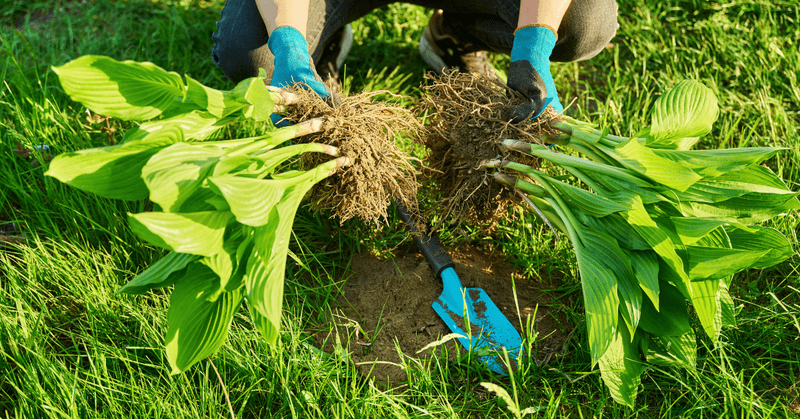
Division is a fix for a specific problem, not a yearly chore. Crowded clumps and ones with a dead center are good candidates.
Iowa State notes that older hostas can die out in the middle and recommends dividing them. A ragged or yellow plant that is otherwise healthy does not need it.
Timing advice varies. Clemson allows early fall or spring before leaves unfold, while Iowa State and Oklahoma State favor early spring, when the foliage is easier to handle.
If you divide in fall, do it several weeks before the ground freezes, as UConn and similar guidance suggest. Replant promptly at the original depth, water in well, and keep the pieces hydrated as needed.
UVM notes that newly divided plants may benefit from keeping their leaves on. Expect each division to take time to grow into a full clump.
Adjust hosta expectations for Southern climates
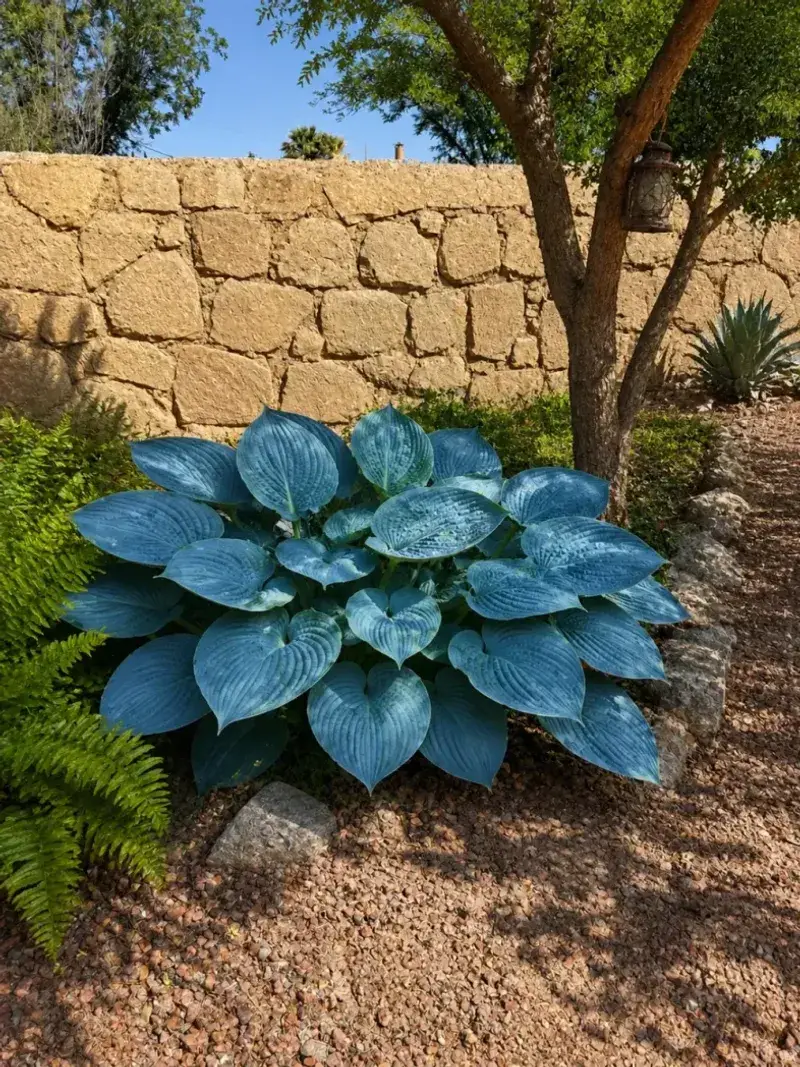
Most hosta advice was written for cooler regions, so Southern gardeners need to adjust it. Hostas generally favor shade and moist, well-drained soil, but how they perform depends on cultivar and climate.
North Carolina Extension says southern plantings do best in full or dappled shade and that hostas need winter dormancy.
Florida is where the limits show. UF/IFAS guidance for northwest Florida says ordinary hostas can struggle in zones 9 and 10 because winter chill needs vary by variety.
One UF/IFAS Charlotte County article describes SunHosta as an exception, which does not mean ordinary hostas will thrive across the state.
Texas is not one climate either. A hosta in a cooler, wetter part of East Texas faces different conditions than one in the dry heat of the west or the mild Gulf coast.
Choose varieties suited to your area, give them shade, and judge your own fall timing by local conditions rather than a single schedule.
Skip late fertilizer and set a realistic spring goal
Fertilizer in fall will not buy you a fuller clump. Missouri Extension cautions against feeding hostas after mid-July, since late growth can interfere with winter hardening.
If you want to feed, Clemson recommends a light, balanced fertilizer once growth begins in spring.
Hostas regrow from their crowns and roots, and Iowa State points out that divisions take time to grow in. Fall care supports plant health and handles particular problems like debris, dry soil, or a hollow center.
It cannot promise a bigger clump.
So let the leaves fade, tidy what needs tidying, and wait for spring to show you what the crown has in store.