
Most people picture a fire-safe yard as bare dirt and gravel, but California fire experts tell a different story. CAL FIRE and local fire safe councils point out that the right trees, kept watered and well spaced, can actually help slow embers and shade out dry brush.
The surprise is which trees make the list and which popular ones quietly raise your risk. Here are eight smart picks, plus the care habits that make them work in a dry California summer.
1. California Coast Live Oak
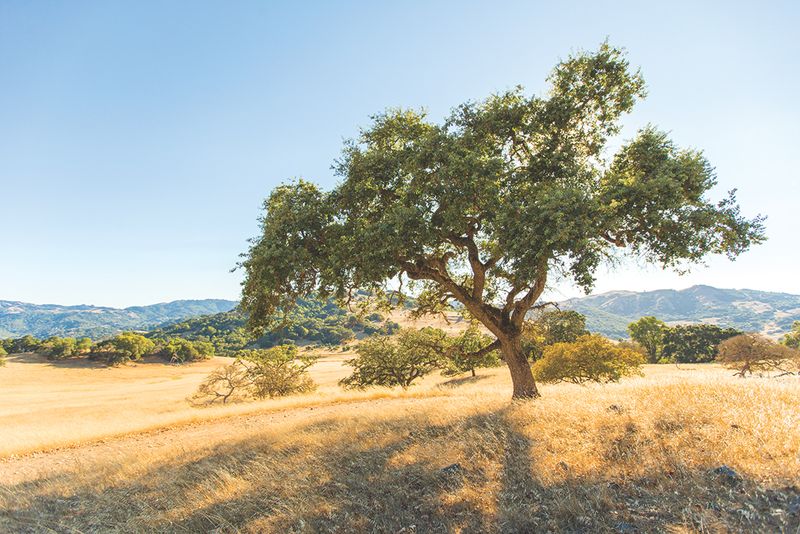
Ask an old-time hillside resident what survived the last big fire, and you will often hear the same answer: the oaks. Coast live oak leaves hold a good amount of moisture, and the thick bark can help protect the trunk from quick, low-intensity flames.
The catch is placement and grooming. Fire agencies generally suggest keeping tree canopies at least 10 feet from your roof and chimney, and pruning lower limbs up to about 6 feet off the ground so flames on the ground cannot climb into the crown.
Rake up dry leaf litter near the house each summer, but leave a light layer farther out where it can feed soil life. Oaks also support hundreds of native insect species, so you get a wildlife haven and a calmer fire profile in one tree.
2. Toyon
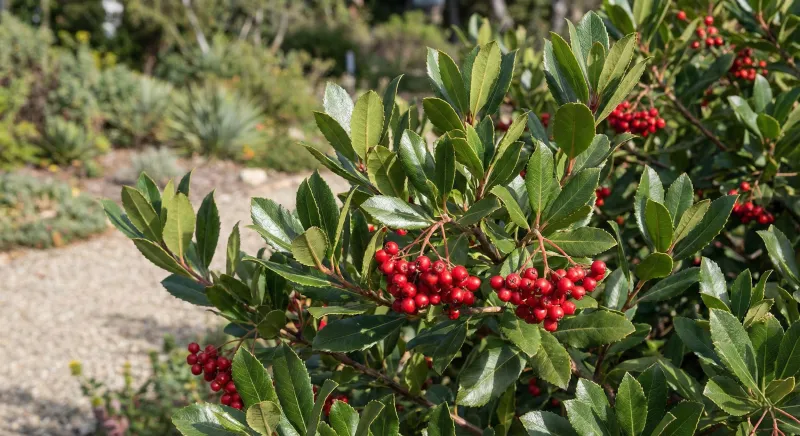
Here is a native that many homeowners rip out, assuming all chaparral plants are fuel. Toyon tends to stay greener and less oily than chamise or sagebrush, which is why it shows up on several California fire-wise plant lists.
Grown as a small multi-trunk tree, toyon reaches roughly 15 feet and asks for very little summer water once established. Birds like cedar waxwings and robins flock to its red berries in winter, so it feeds wildlife when little else does.
Keep it trimmed of dead twigs and give it a deep soak once or twice a month during the driest stretch. A watered toyon can be much harder to ignite than a neglected one.
3. Western Redbud
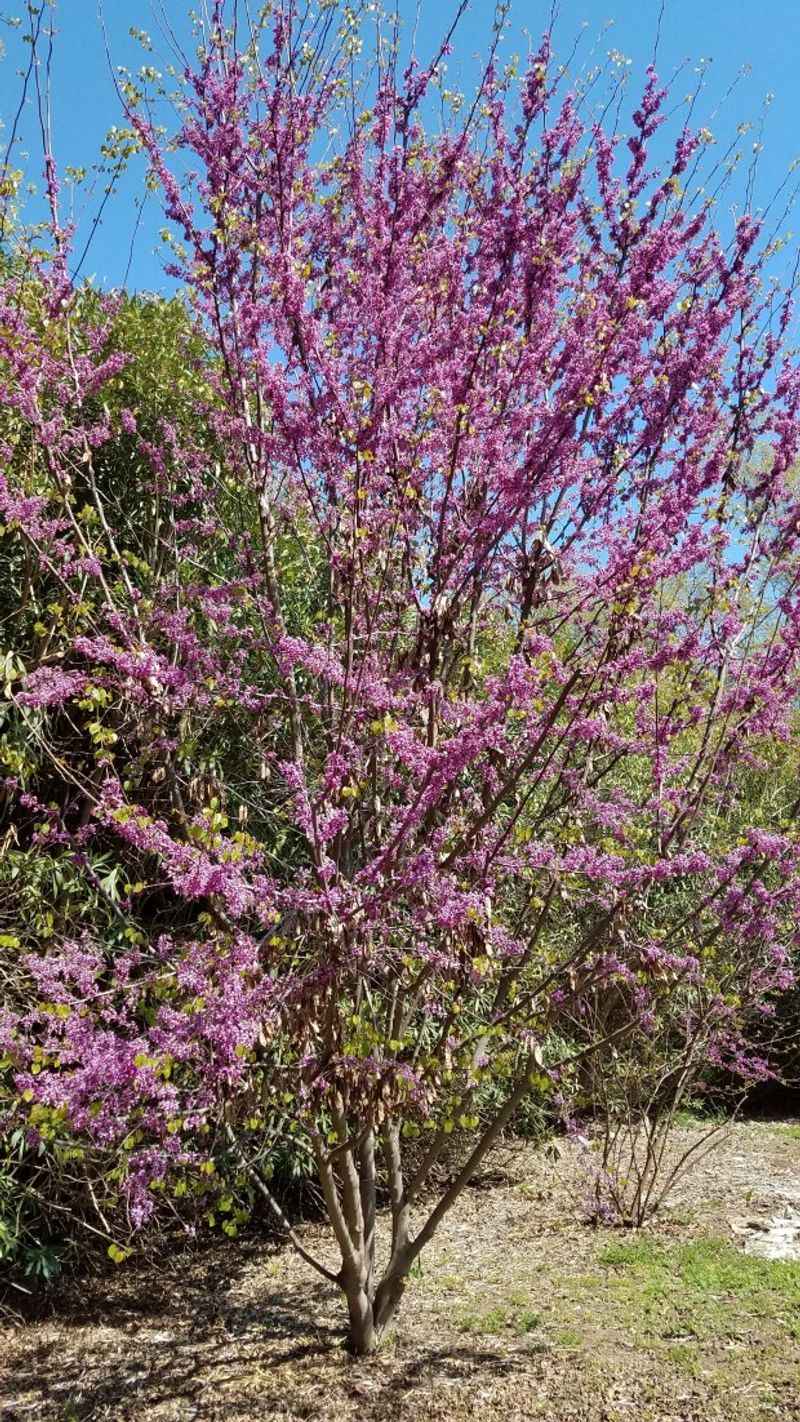
Few trees announce spring in California louder than a redbud in full magenta bloom. What surprises people is that this showy ornamental also lands on fire-smart lists, thanks to its broad, moisture-rich leaves and low resin content.
Western redbud is deciduous, so it drops leaves in fall. That sounds like a fire problem, but the leaves are thin and break down fast, and you can simply clear them from within the first 5 feet of the house.
Native bees love the early flowers, giving pollinators a meal before most gardens wake up. At 10 to 20 feet tall, it fits nicely along a driveway or patio edge where a big oak would crowd things.
4. Catalina Cherry
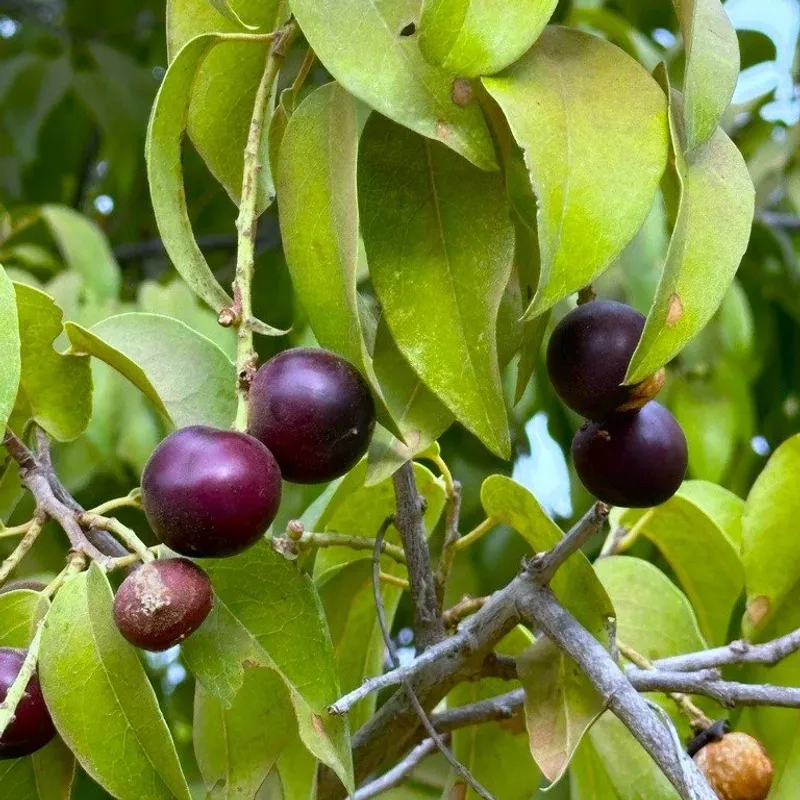
Need privacy but worried about planting a wall of fuel? Catalina cherry is a solid answer that many gardeners overlook.
Its leathery, glossy leaves hold water well, and the tree stays evergreen without the waxy, flammable buildup found in junipers. Fire safe councils in Southern California often suggest it as a screening tree, as long as you space plants so their canopies do not form one continuous green wall.
Birds eat the dark fruit in summer, and the tree handles drought once settled. Think of it as the native swap for that hedge you may already be regretting.
5. Fruit and Citrus Trees
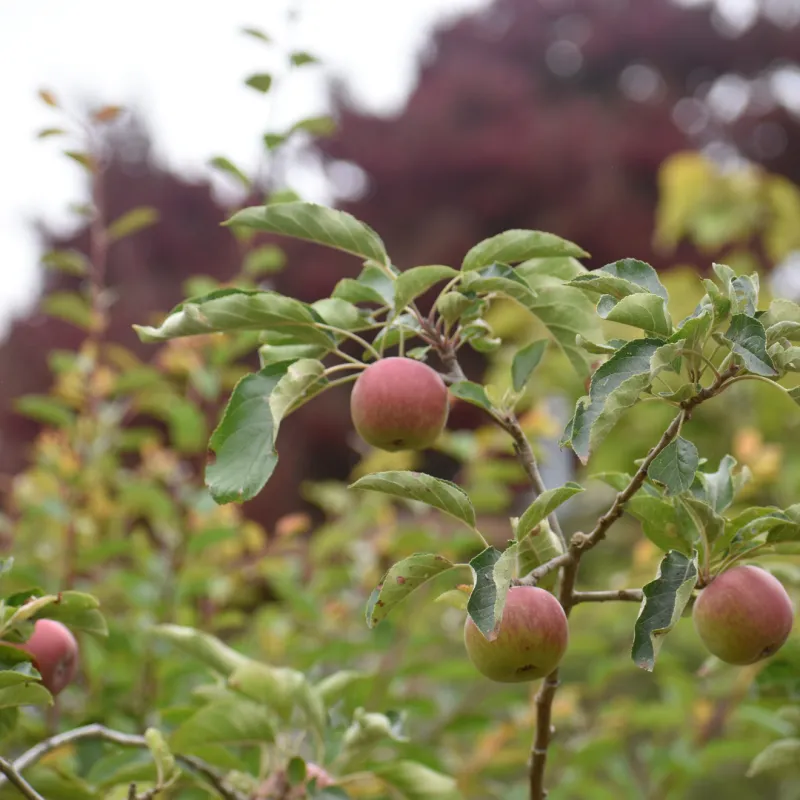
Grandma’s backyard lemon may be one of the safest trees on your property. Irrigated orchard trees like citrus, apple, and stone fruit carry high moisture in their leaves, and fire crews have long noted that watered orchards can slow a fire’s advance.
The secret is the water. Because these trees already get regular irrigation for fruit, they naturally stay green through the summer when native hillsides dry out.
Pick up fallen fruit and dead leaves, keep branches off the roof, and you get a harvest plus a greener buffer. Few fire-safety upgrades come with free lemonade.
6. Bigleaf Maple
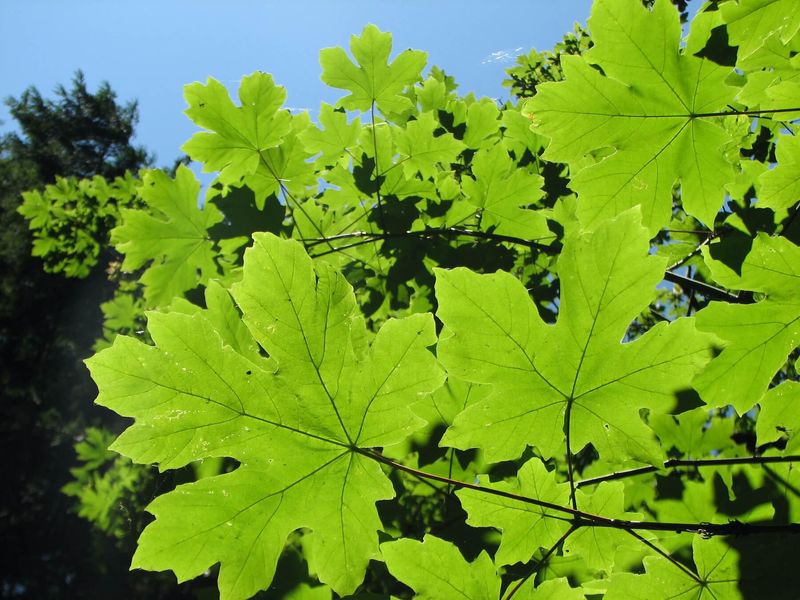
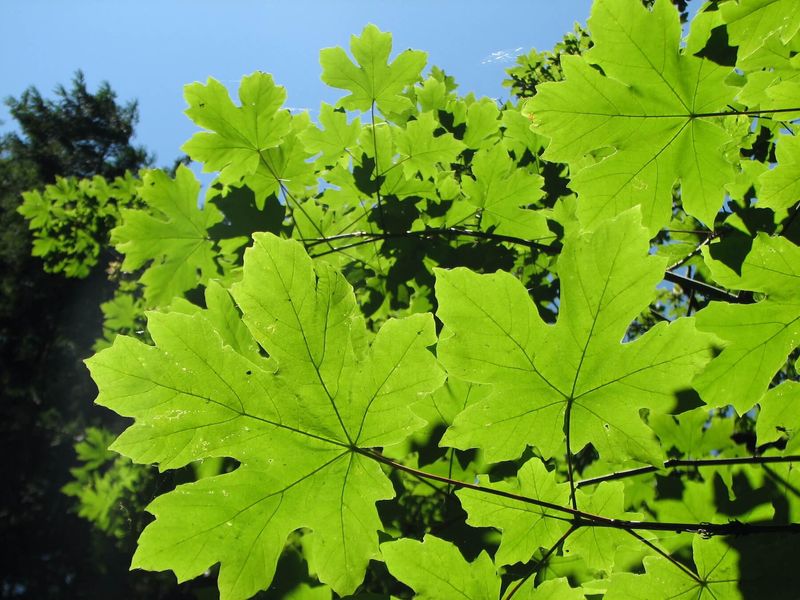
Northern California homeowners near creeks have a natural ally in the bigleaf maple. Those dinner-plate leaves are thin, juicy, and low in oils, which makes them slow to catch.
Bigleaf maple is a tree for wetter spots, so it fits best in shady canyons, creek banks, or yards with steady irrigation. In a hot, dry inland lot it can struggle, and a stressed tree is not a fire-safe tree.
Give it room since it grows large, and keep it well away from the roofline. Planted in the right place, it shades your yard and can help keep the ground beneath cooler and moister.
7. Strawberry Tree
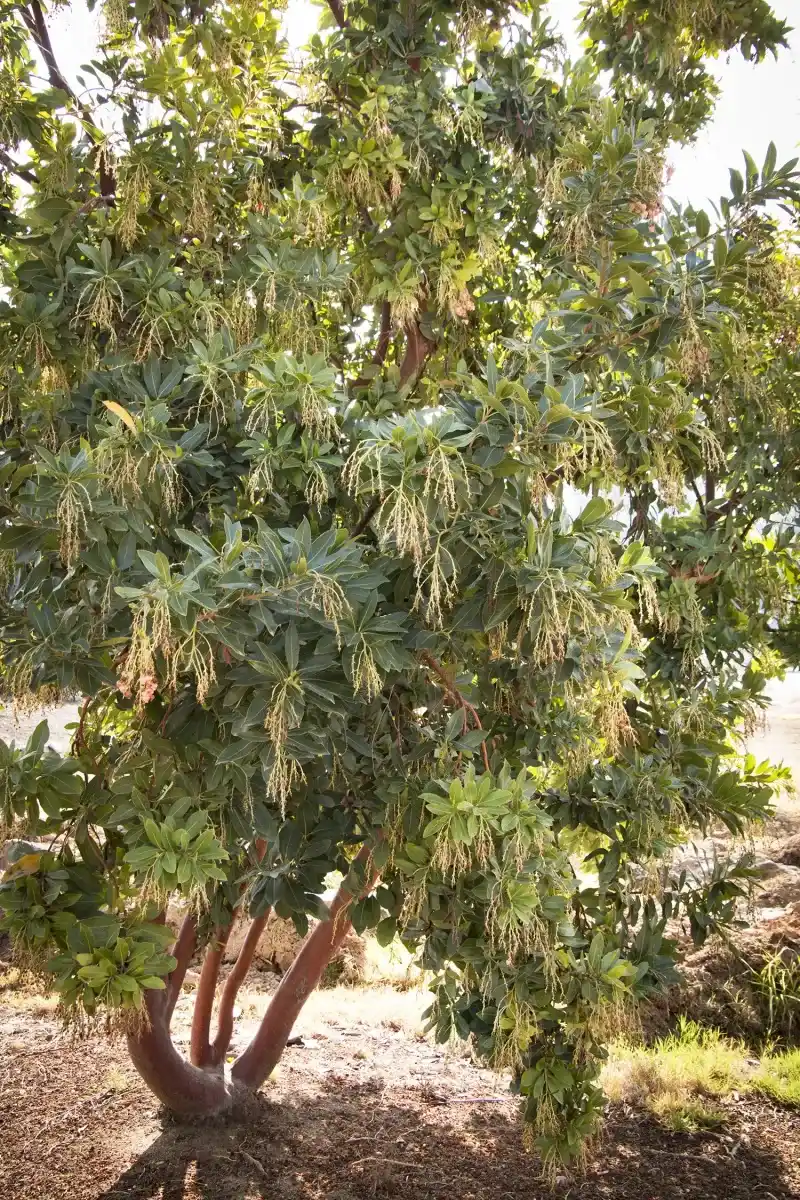
Peeling cinnamon bark, pink bell flowers, and little red fruits all at once make Arbutus a real conversation starter. It is also a favorite on many California water-wise and fire-smart plant lists.
The Marina variety handles coastal and inland conditions, uses modest water, and keeps dense, leathery leaves that resist drying out. Hummingbirds and bees visit the flowers in fall and winter, filling a gap in the pollinator calendar.
Plant it in the outer part of your defensible space, beyond 5 feet from the house. Sweep up dropped fruit so it does not turn into dry litter.
8. Carob
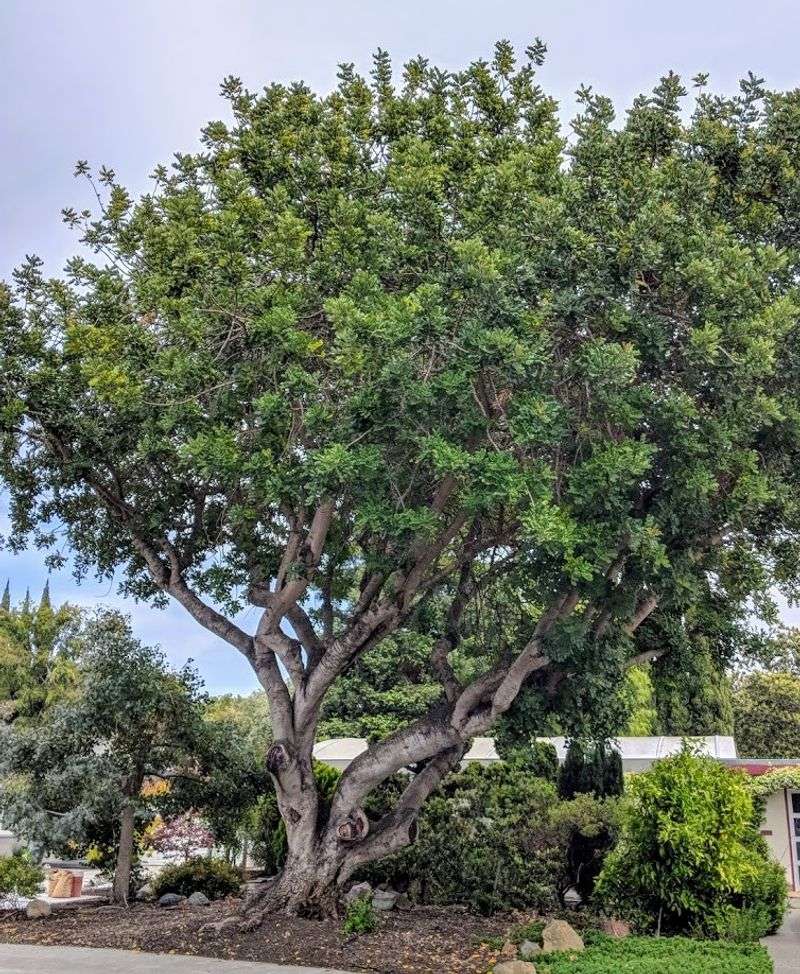
After the 1993 Laguna Beach fires, observers noted that some carob trees stood green while neighboring plants burned. That story helped earn carob a spot on several fire-resistant plant lists in Southern California.
The thick, waxy-free leaves stay moist and the tree tolerates heat and drought well. Its dense canopy shades out weedy grasses beneath, which can reduce fine fuel near your home.
There is a tradeoff: carob is not native, and its pods can be messy. Use it as a shade tree on hot inland lots, and sweep pods regularly so your fire-smart choice does not become a cleanup chore.