
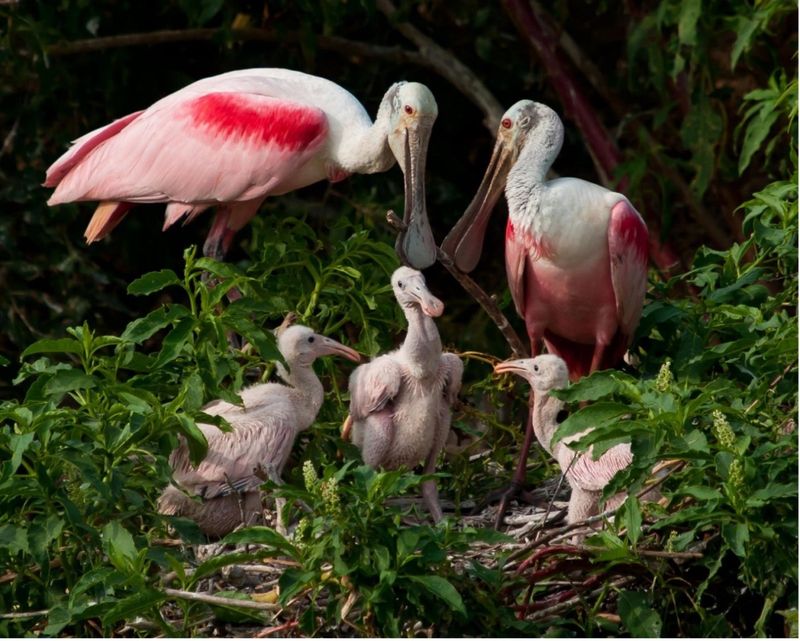
A flash of bright pink in a nearby pond or canal is hard to miss, and roseate spoonbills are turning up in more Florida views than many people expect. It is tempting to read that sighting as a verdict on the water.
The truth is more useful and a bit more modest. Here is what the bird can tell you, what it cannot, and what you can do around your own yard.
A spoonbill sighting points to nearby feeding habitat
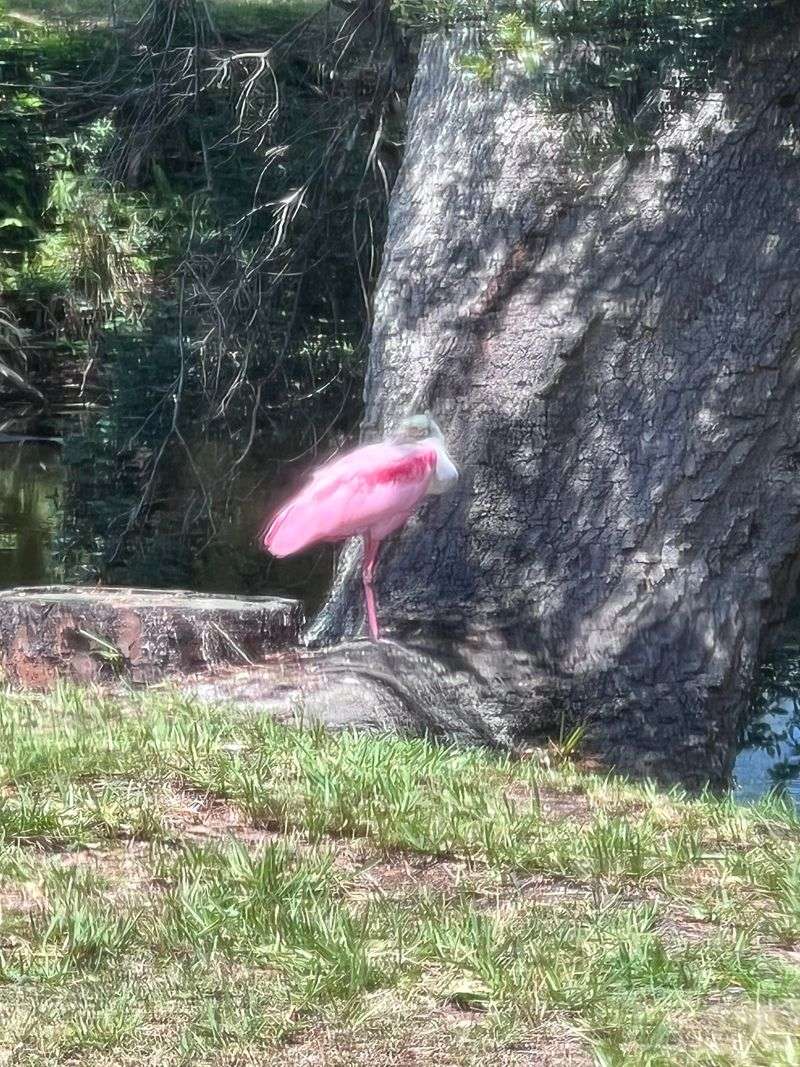
Seeing a spoonbill nearby suggests the bird found a place where food is within reach. It is not grading your water.
It is simply hunting, and shallow water with small animals is what it needs.
Spoonbills are not picky about salt content. FWC’s species profile notes they use fresh, brackish, and salt water, and Cornell Lab’s overview describes them feeding in shallow wetlands and coastal areas.
So a pond, ditch, marsh edge, or canal bank can all qualify.
Keep in mind that a bird seen near your property may be feeding somewhere close by rather than in your yard. It may have flown over from a retention pond down the street, a wet field, or a tidal flat.
Watching where it lands and where it leaves can teach you a lot about the water features around you.
Fall timing deserves a careful read too. Spoonbills live in Florida year-round, as a federal habitat account reports, though numbers can shift with the seasons.
Seeing one in October does not prove it just migrated in. Fall may simply be a good time for you to notice birds as the weather cools and you spend more time outside.
Think of the sighting as a nudge to look around. Which nearby water edges are shallow?
Where does the water come from? Those questions are worth asking, even though the bird will not answer them for you.
Shallow water makes prey easier to reach
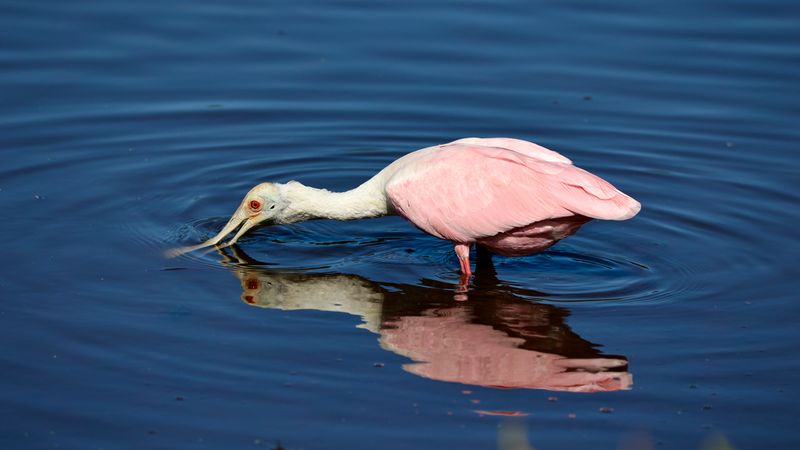
Watch a spoonbill feed and you will see a slow, steady sweep. The bird walks forward with its bill in the water, swinging it side to side.
Its bill is sensitive to touch, so it can find prey it cannot even see.
According to FWC, the diet includes small fish and crustaceans. Cornell Lab adds details about the bill sweep and the birds’ wading habits.
Depth matters because a wading bird can only reach what is within its legs and bill. If water is too deep, the prey stays out of range.
If the water is gone, the prey goes with it. Water levels and prey access are tied together.
Researchers in Florida Bay have put a number on this. The 2026 South Florida Environmental Report describes optimum foraging at water depths of 13 cm or less in that study area.
That figure comes from a specific bay study. It is not a recommended depth for a backyard pond or a rain garden, and nobody should use it to design one.
It simply shows how closely these birds depend on shallow conditions in the wild.
Can a spoonbill tell you whether the water is clean?
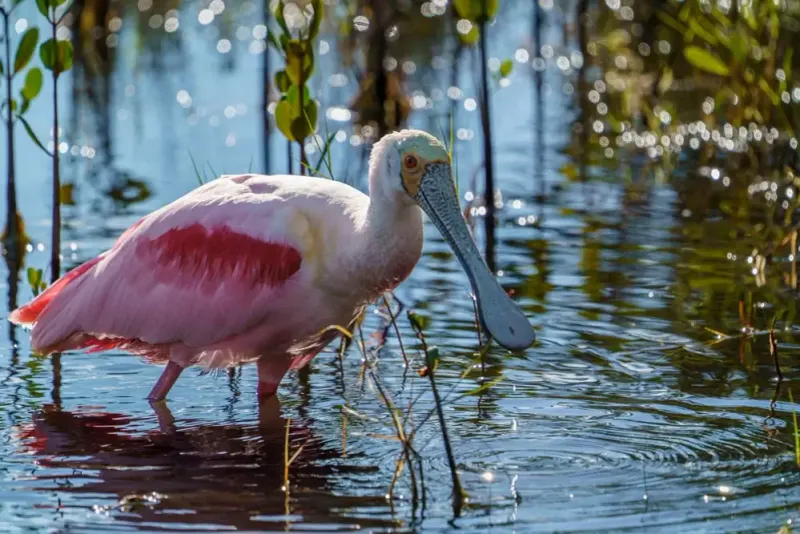
No. A spoonbill on a pond does not mean the water is clean, and it does not mean the water is polluted. A single bird tells you about habitat, not chemistry.
Scientists do track spoonbills in Florida Bay, and the South Florida Water Management District’s report links nesting and foraging patterns to conditions such as water levels and prey availability. That is ecosystem-scale work across a large area over many years.
It cannot be shrunk down to judge one neighborhood pond.
It helps to separate three ideas. Water quantity is how much water is there and how deep.
Habitat is whether prey and shallow edges exist. Water quality is about what is in the water, from nutrients to bacteria to algae.
The first two can look fine while the third is a question mark.
Judging quality takes monitoring and testing. Florida DEP publishes water quality report cards built from monitoring data, which is a far better starting point than wildlife sightings.
You can still do your part at home. UF/IFAS explains the common pollutants in stormwater runoff, such as fertilizer and yard debris, and what homeowners can do about them.
So enjoy the bird, then look to official data when you want answers about water.
A neighborhood pond may be part of a larger drainage system
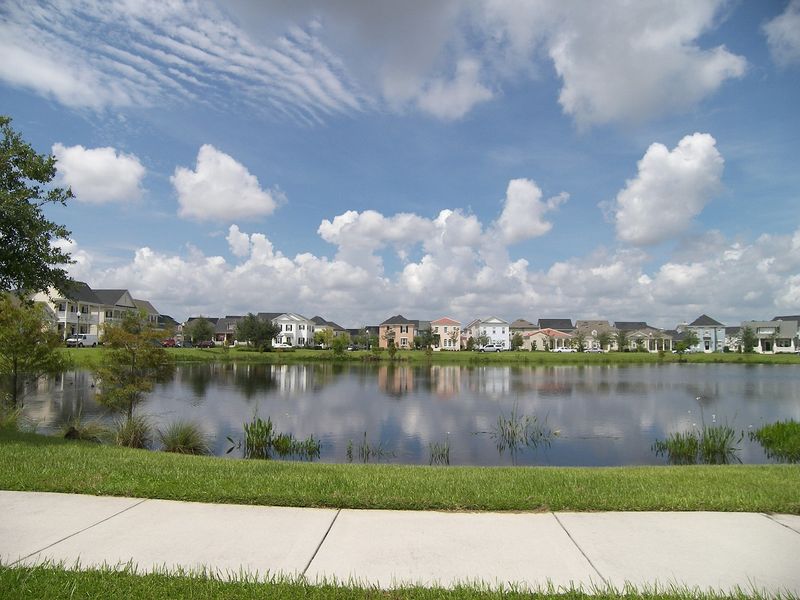
That pretty pond behind the houses may not be a pond in the natural sense. In many Florida neighborhoods, these are stormwater features built to hold and slow runoff after heavy rain.
UF/IFAS’s guide to stormwater wet ponds explains that these ponds are designed as part of a managed system. They often connect to pipes, ditches, or canals that carry water well beyond your property line.
This means water you see today may have come from streets and yards several blocks away. Water leaving the pond may end up in a larger waterway.
The boundary of the system rarely matches the boundary of your lot.
It also means the way a pond looks tells you little. Clear water, green banks, and wading birds do not reveal where the water flows or what it contains.
A spoonbill using the edge says only that it found a place to feed.
A practical step is to learn how your local feature works. Ask your homeowners association, city, or county stormwater office who maintains the pond, where it drains, and what the rules are for its banks.
Knowing that makes your yard choices more meaningful, because what washes off your lawn may travel farther than you think.
Everyday yard choices can reduce runoff pollution
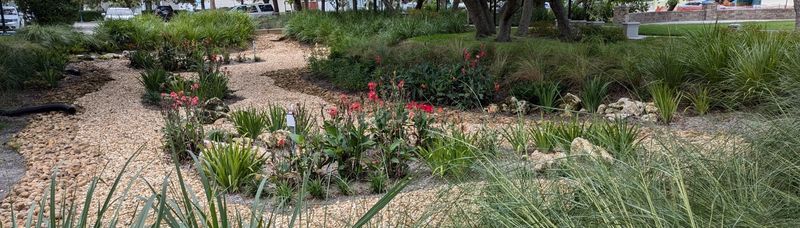
Your lawn and beds drain somewhere, so small habits add up. UF/IFAS lists steps that keep pollutants out of storm drains and ponds, and most are simple.
Use fertilizer only when your lawn needs it, and follow UF/IFAS-recommended rates. Skip applications before rain, since a downpour on sandy Florida soil can carry nutrients straight off.
Sweep any granules off driveways and sidewalks, and keep them away from the water’s edge. Check your local fertilizer ordinance too, because some counties and cities restrict timing or products.
Grass clippings, leaves, and other debris matter as well. UF/IFAS describes how these materials release nutrients as they break down in water.
Sweep them away from storm drains and ponds, and put them back on the lawn or in a compost pile.
Planted areas can help too. UF/IFAS Gardening Solutions explains that a rain garden or well-planted landscape area can capture some runoff and help it soak into the ground.
These features need to match your site’s drainage and be planted appropriately. They are not a cure-all for water problems, and they are not a recipe for drawing in spoonbills.
Think of them as one useful tool among several for keeping rain where it falls.
When water looks unusual, use official guidance
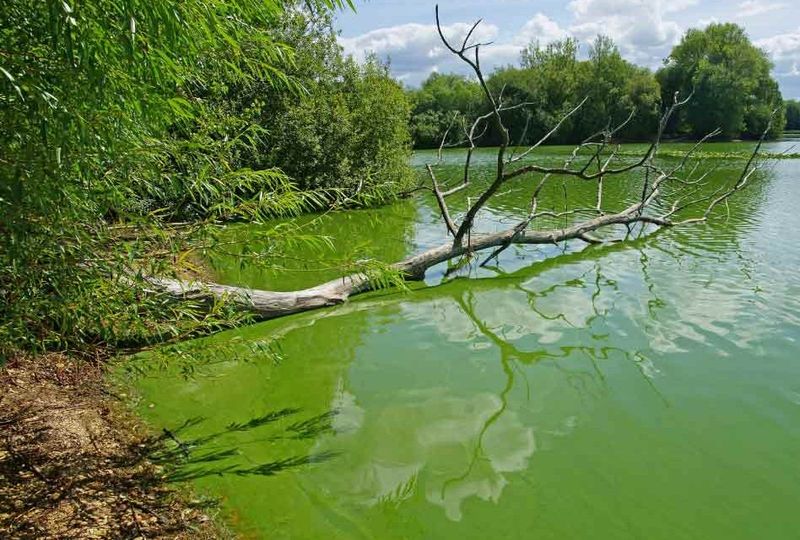
Sometimes water simply looks wrong. It may be streaked with green, oddly colored, or covered in a film.
A bird feeding nearby does not make it safe, so the bird should not factor into your decision.
Noticing a possible problem is different from confirming one. Nobody can diagnose an algal bloom by sight, and guessing can lead you astray in either direction.
Treat what you see as a reason to check, not a conclusion.
Florida DEP is the place to start. Its page on algal bloom sampling results shows what has been tested, and DEP’s weekly updates and subscription page lets you follow conditions and report concerns.
Until you know more, follow DEP’s advice. Stay out of water with visible algae or unusual discoloration.
Keep pets away from the water and from shoreline material, since dogs tend to sniff, lick, and wade.
Write down where and when you saw the water, and take a photo from the bank if you can do so safely. That gives officials something concrete to work with, and it keeps you out of the guesswork.
Let the sighting guide your attention, not your verdict
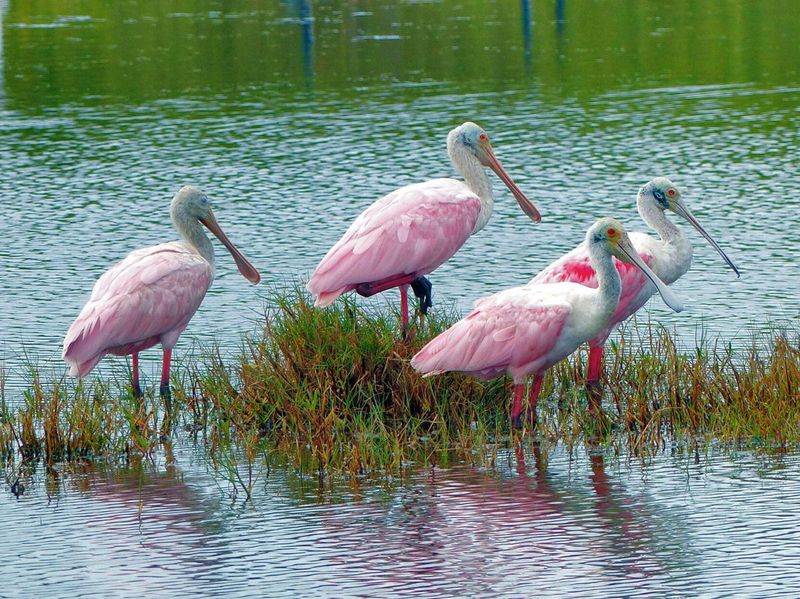
A spoonbill is a good reason to look closely at the water around you. Notice where shallow edges are, and take sensible steps to keep fertilizer and debris out of runoff.
When you want to judge water quality, look to official monitoring, not the bird.
Give the birds room. FWC lists the roseate spoonbill as state-threatened and protected, and its wildlife tips for visitors advise watching from a distance.
Do not feed or flush them.
Skip the idea of building a shallow pool to lure them in. The National Park Service describes spoonbills in natural wetland and coastal settings, and UF/IFAS mosquito guidance warns that standing water can breed mosquitoes.
Sometimes the best thing a pink bird can do is make you pay attention.