
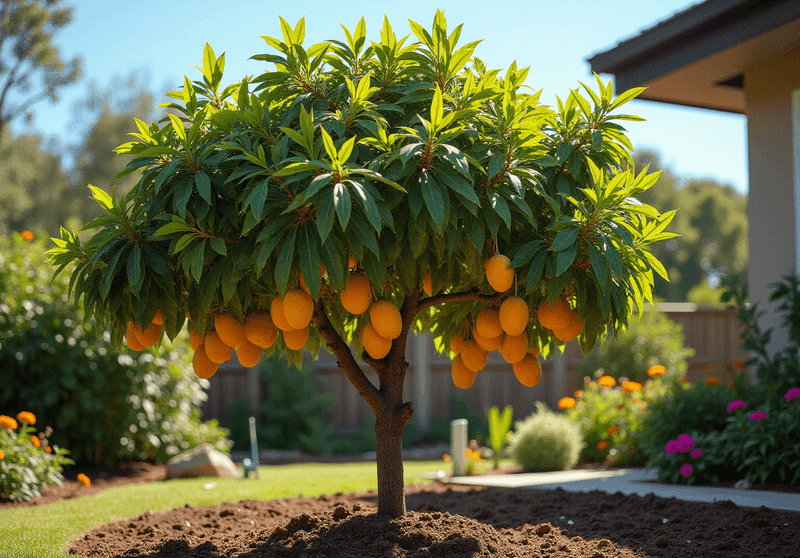
A little mango sapling looks harmless in a nursery pot, but it can grow into one of the biggest trees in a Florida yard. Where you plant it decides how much space it has, how easy it is to care for, and how close its branches get to your house.
A few smart questions before you dig can save you from expensive tree work later. Here is how to weigh the sweet fruit against roof, root, and storm concerns.
Plan for the mango’s mature size
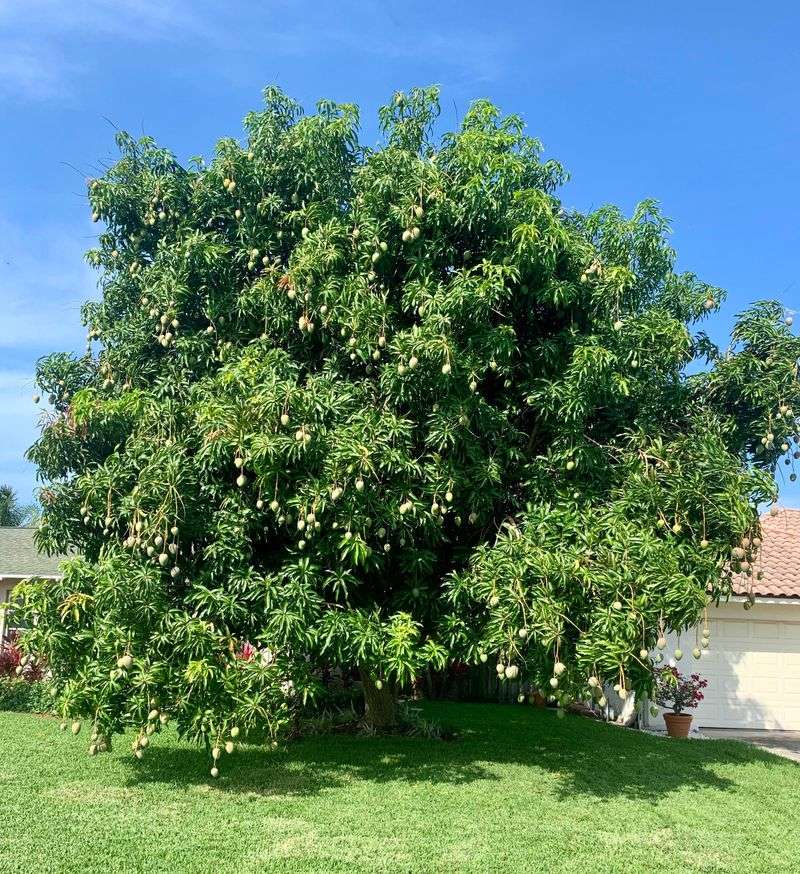
A mango in a one-gallon pot tells you almost nothing about the tree it will become. UF/IFAS lists mango at roughly 30 to 60 feet tall with a spread of 30 to 50 feet.
That is wider than many Florida lots are deep.
The canopy is dense and the tree grows fast, especially in warm, wet summers with decent soil. A tree that looks tidy at three years old can fill the space above a patio or driveway surprisingly soon after.
That is why the planting spot should be judged by the full-grown footprint, not the sapling.
Size is not identical for every tree. Some varieties are less vigorous than others, and regular pruning can keep a mango smaller than its natural size.
A compact, well-trained tree and a neglected, sprawling one can behave very differently in the same yard.
Try a simple exercise before buying. Measure the distance from the planned spot to the nearest wall, roofline, fence, and power line.
Then picture a circle 30 to 50 feet across centered on that spot, and see what it covers.
If that circle swallows part of your house, you have learned something useful for free. You can move the tree, choose a less vigorous variety, or commit to a regular pruning plan from the start.
None of these choices guarantees a problem-free tree, but they give you room to manage it.
Branches can reach a roof; litter is a separate nuisance
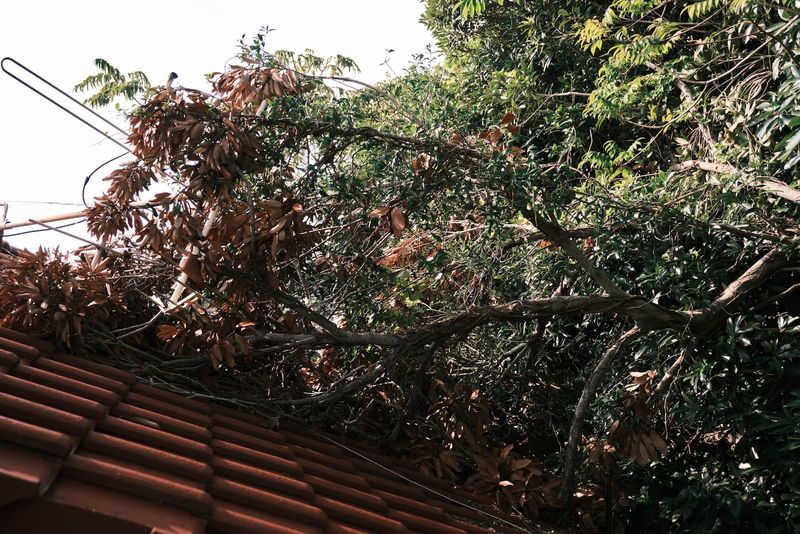
Two different issues get lumped together here, and they deserve separate thinking. The first is branches.
As a mango matures, its canopy can grow out far enough to reach or touch a nearby roof, and UF/IFAS notes that mango branches are prone to breaking, especially in severe windstorms.
A branch resting on shingles can rub them in breezes, and a broken limb can land on the roof during a storm. Not every mango near a house will do this.
It depends on the tree’s size, health, and how it has been pruned.
The second issue is litter. Leaves, flowers, twigs, and fruit drop on a regular schedule, and ripe mangoes can be messy on walkways, pool decks, and gutters.
That is a cleanup chore, not a structural threat to your roof.
Keeping those two ideas apart helps you plan. Litter calls for gutter cleaning, a rake, and maybe keeping the tree away from the pool.
Branch contact calls for spacing and pruning to keep limbs from hanging over the house.
UF/IFAS hurricane guidance also suggests professional pruning to shorten low branches near roofs and to check tree structure. If limbs already hang over your roofline, a certified arborist can tell you what is reasonable to do.
Roots extend beyond the canopy, but that does not prove foundation damage
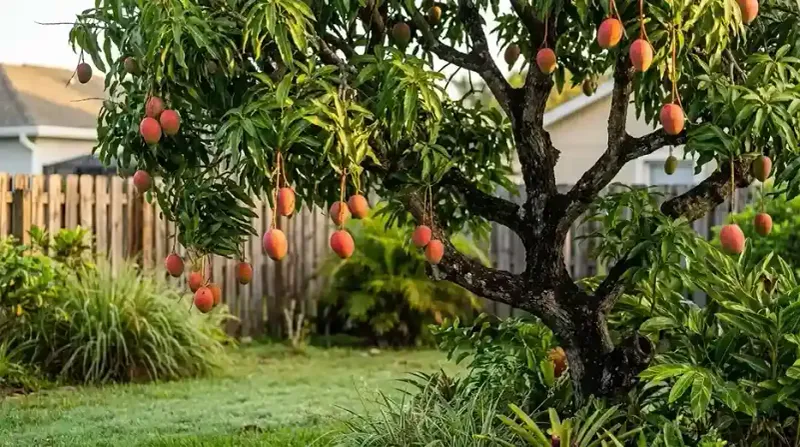
Mango roots are out of sight, so they tend to get blamed for everything. The UF/IFAS mango growing guide says roots of a mature tree extend beyond the canopy’s drip line.
That tells you roots can travel past the edge of the leaves.
It does not give a fixed maximum distance, and it does not say roots stop at the drip line. It also does not say mango roots routinely crack foundations.
UF/IFAS’s mango profile even lists roots as not a problem.
So think of roots as a site factor to assess, not a prediction. Roots grow where conditions favor them, meaning where there is moisture, nutrients, and loose soil.
UF/IFAS Extension explains that roots do not hunt for pipes. They can grow well in a spot like a drain field because conditions there suit them.
Utilities follow the same logic. UF/IFAS guidance on suitable trees notes that roots generally do not penetrate well-designed, properly installed pipes that do not leak.
A cracked or leaking line is a different story, since escaping water is an inviting place for roots.
A practical step is to locate your septic system, drain field, irrigation lines, and sewer laterals before choosing a spot. If any are old or leaky, fix them or plant farther away.
That is a sensible precaution, not a sign that the tree will cause harm.
Choose the setback for the tree you will maintain
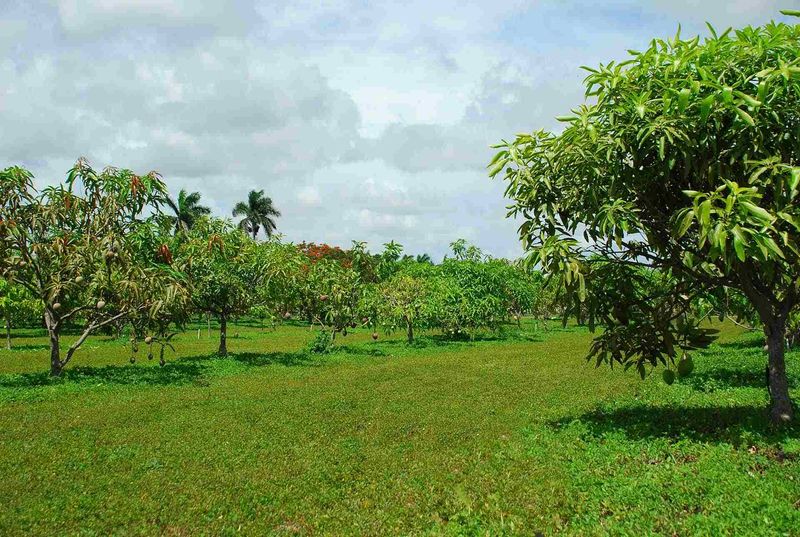
Spacing is where all this planning turns into a decision. For vigorous varieties, or any mango that will not be pruned regularly, UF/IFAS recommends 25 to 30 feet or more from buildings, power lines, and other trees.
A separate UF/IFAS hurricane guide also suggests 25 feet or more for potentially large, not-regularly-pruned mangoes and other tropical fruit trees.
There is a shorter option, but it comes with strings attached. UF/IFAS gives 12 to 15 feet for less vigorous varieties when annual training and pruning will hold the size down.
If you will not commit to that yearly work, the longer distance is the better guide.
Be careful about how you read these numbers. They are planning recommendations, not a root-damage threshold, and no distance guarantees a tree will never affect your home.
A mango at 30 feet with poor care can still drop limbs, and a well-managed one at 15 feet may stay out of trouble.
Ask yourself two honest questions. Which variety am I planting, and how vigorous is it?
And will I actually pay for pruning every year?
If the answers are uncertain, choose the generous setback. A yard with room to spare forgives a lot of mistakes.
Assess the site, not just the species or distance
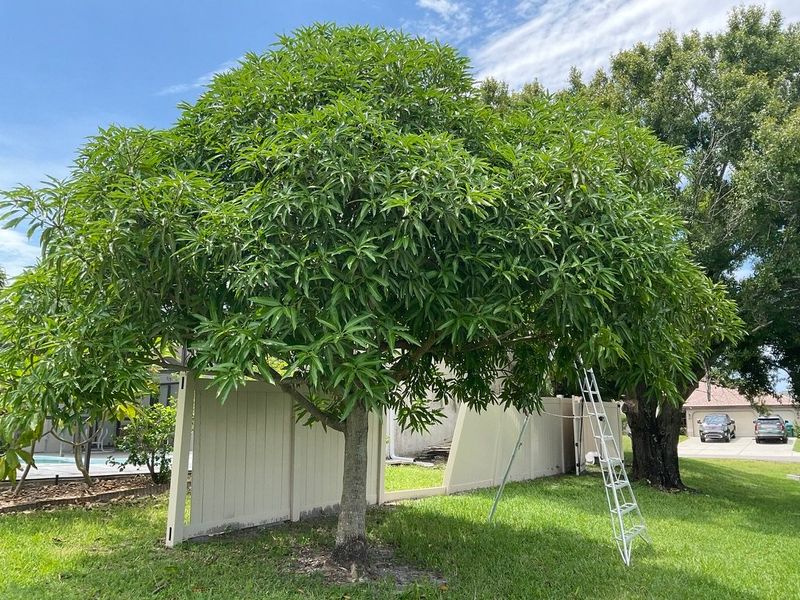
Two mangoes the same distance from two houses can face very different odds in a hurricane. Species and spacing are only part of the picture.
UF/IFAS hurricane guidance points to root damage, poor growing conditions, restricted rooting space, disease, and insect problems as factors that can raise the chance of a tree toppling.
Think about what that looks like in a Florida yard. A mango squeezed between a driveway and a wall has limited room for roots.
A tree sitting in soggy ground, or one with trunk decay or a pest infestation, has weaknesses that distance alone will not fix.
This is why treating every mango as equally dangerous misses the point. UF/IFAS Extension in Duval County makes the same case: no tree is risk-free, and looking at the actual tree and site tells you more than guessing from the species.
Use a few clues when you look at your own tree or planting spot. Check for dead branches, cracks, leaning, fungus on the trunk, and damaged or cut roots from nearby construction.
Notice whether water pools around the base after heavy rain.
If something looks off, or the tree is large and close to your home, ask a certified arborist for a site-specific evaluation. That visit can give you a clearer answer than any rule of thumb.
Make pruning part of the long-term plan
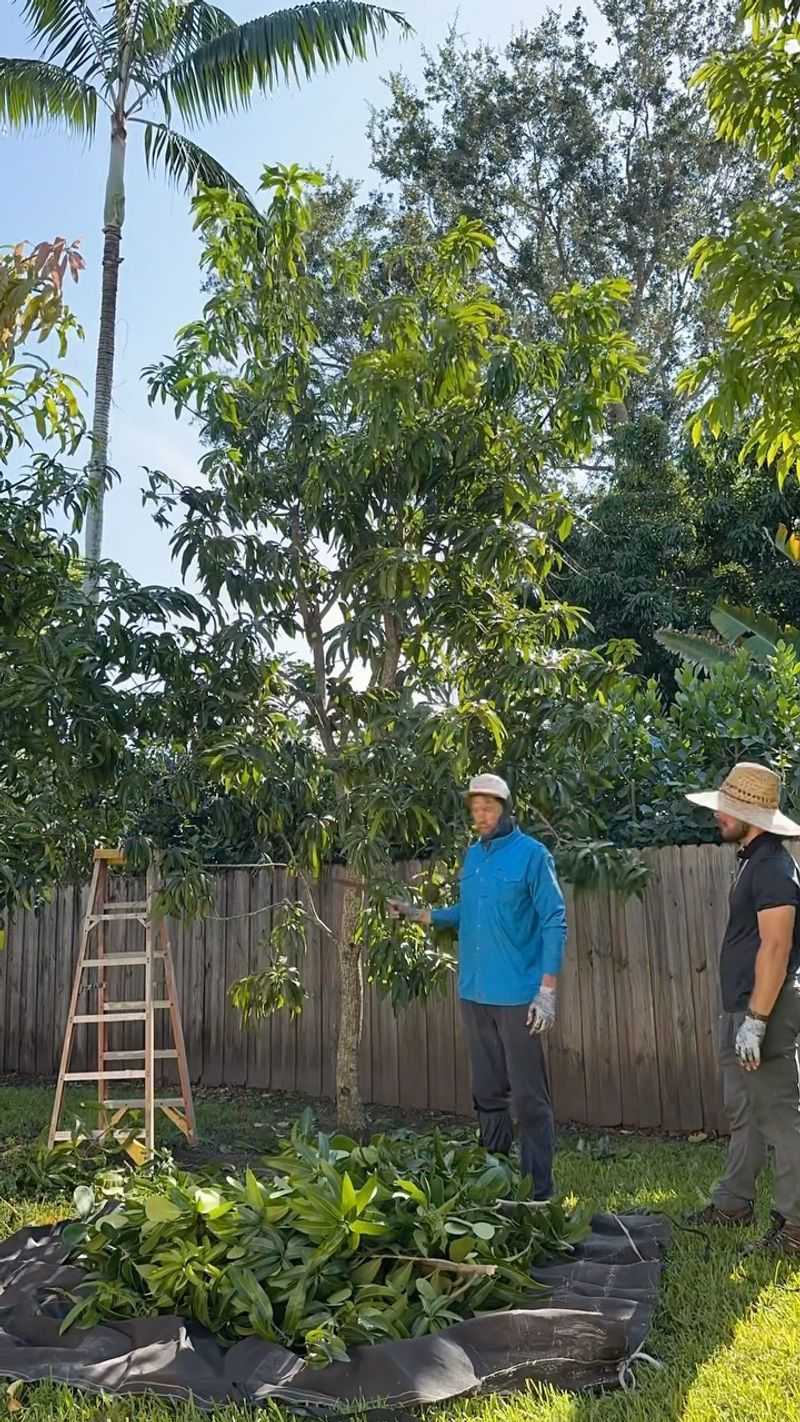
Pruning is how a mango stays suited to its spot. UF/IFAS recommends pruning mangoes soon after harvest, which fits Florida’s summer fruiting season and gives the tree time to regrow before the next cycle.
Selective pruning can also reduce storm damage.
Start young. Training a mango’s structure while it is small is far easier than fixing a sprawling giant later.
Annual shaping is also what makes the shorter 12 to 15 foot spacing even a possibility.
Large trees are another matter. UF/IFAS cautions that pruning trees 25 to 30 feet or taller is dangerous and advises hiring licensed, insured arborists.
For trees taller than about 15 feet, the recommendation is a certified arborist.
That means no climbing a mature mango with a saw, and no topping it to keep it off the roof. Topping and heavy cutting stress the tree and can leave weak regrowth.
Indiscriminate thinning is also a mistake. Newer UF/IFAS hurricane guidance warns against overthinning the interior or removing large lower limbs without reason.
It favors structural pruning and reduction cuts instead.
When you hire help, ask what cuts they plan to make and why. A good arborist can explain how the work shortens limbs near the roof while keeping the tree’s structure sound.
Decide before planting
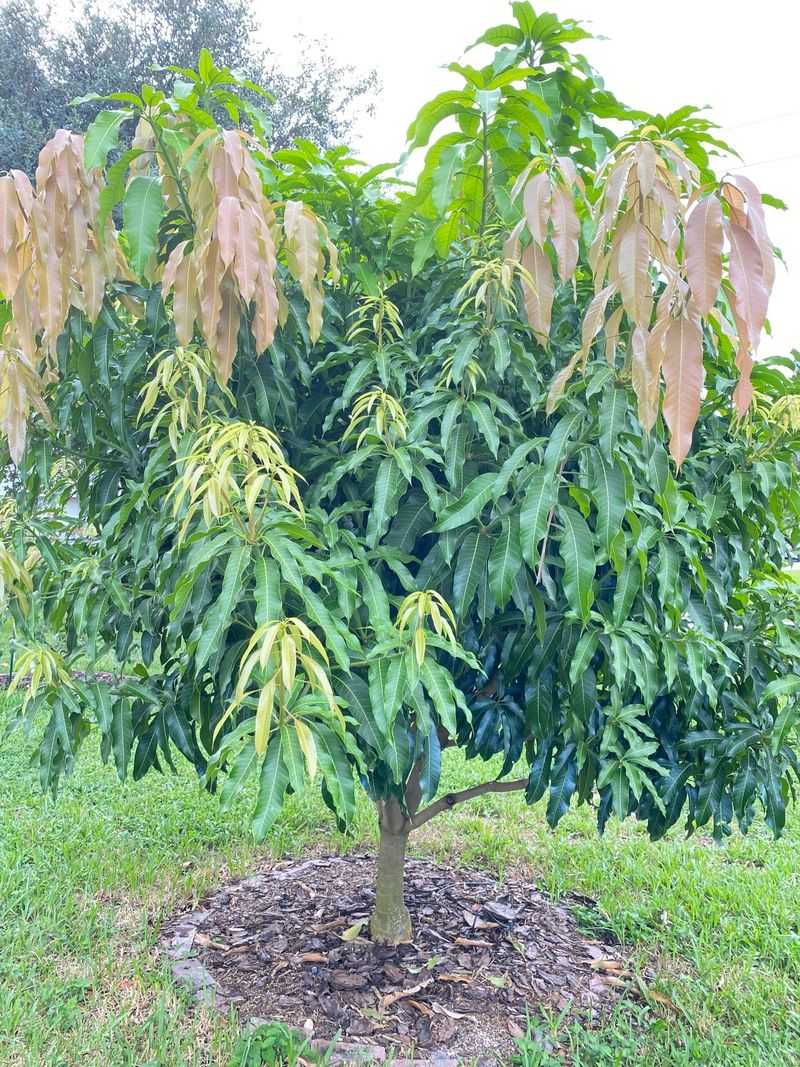
Start with the numbers: compare your open space with a canopy that may reach 30 to 50 feet wide. Then match the spacing to your variety and your pruning habits, using UF/IFAS’s 25 to 30 feet or more for vigorous or unpruned trees and 12 to 15 feet only for less vigorous trees you will prune every year.
Factor in storms and budget for professional care, since hurricane guidance for tropical fruit trees favors arborists for large trees. Spacing cuts down on avoidable conflicts, but it cannot promise a tree will never affect your home.
A mango planted with room to grow is a tree you can enjoy rather than manage around.