
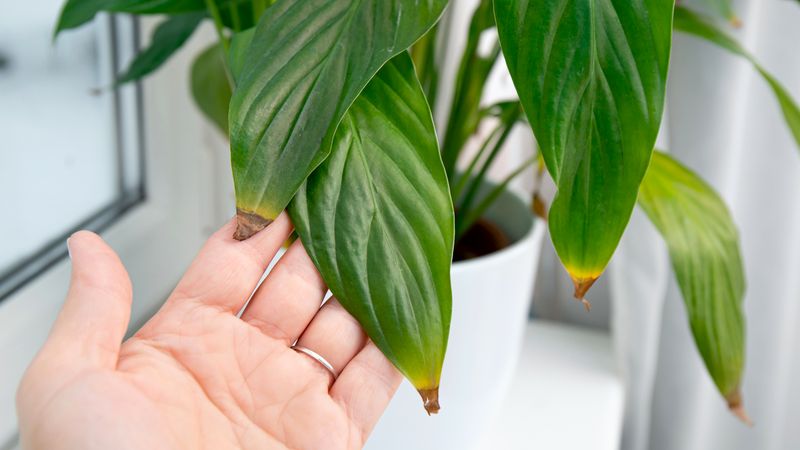
Brown tips on a peace lily can make you want to grab the watering can or put it away for good. Neither move is always right.
A quick check of the potting mix tells you far more than the leaf tips do. Here is how to read the soil, pick the right next step, and look at other causes if the browning keeps coming.
Brown tips are a clue, not a watering diagnosis
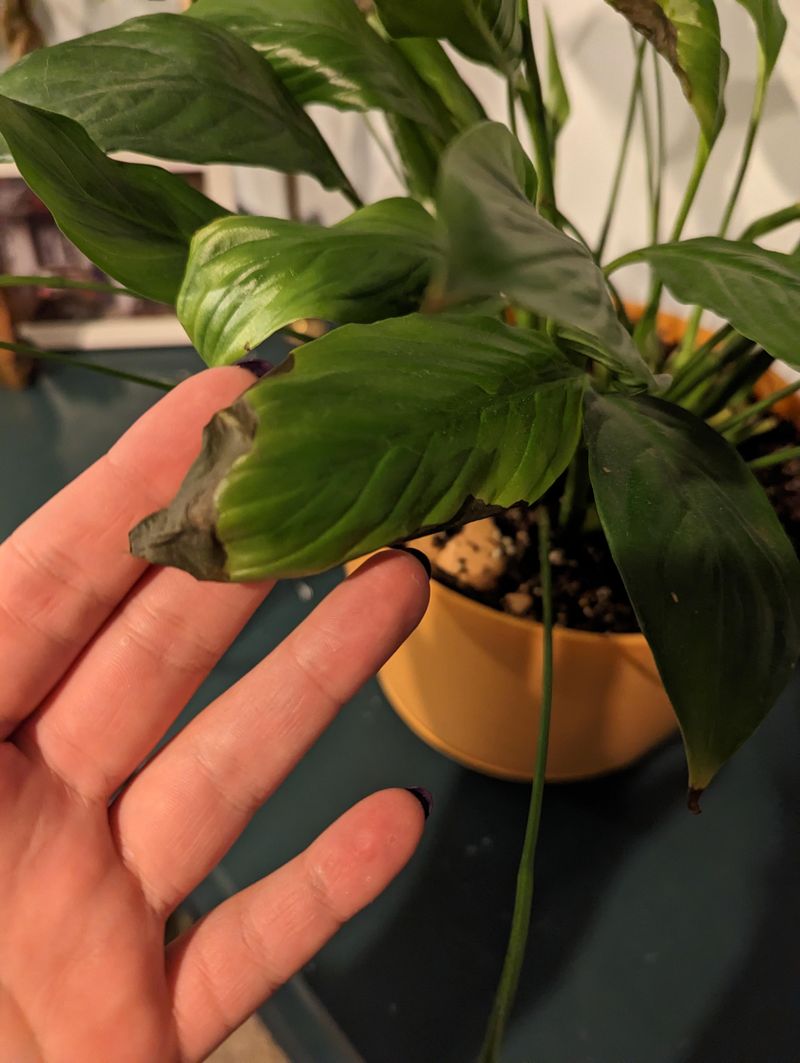
Brown tips look like a plea for help, but they do not say which way to adjust your watering. According to UC integrated pest management guidance, overwatering and underwatering can produce similar symptoms, so the leaves alone cannot settle the question.
Soggy mix can contribute to browning. So can mix that dries out too far.
Add in fertilizer salts, low humidity, or too much sun, and you can see why guessing often backfires.
That is why Iowa State Extension treats brown tips as one symptom with several possible causes. Before you change anything, put a finger into the potting mix.
What you feel there is your first real clue, and it decides what happens next.
Overwatering means soil stays too wet
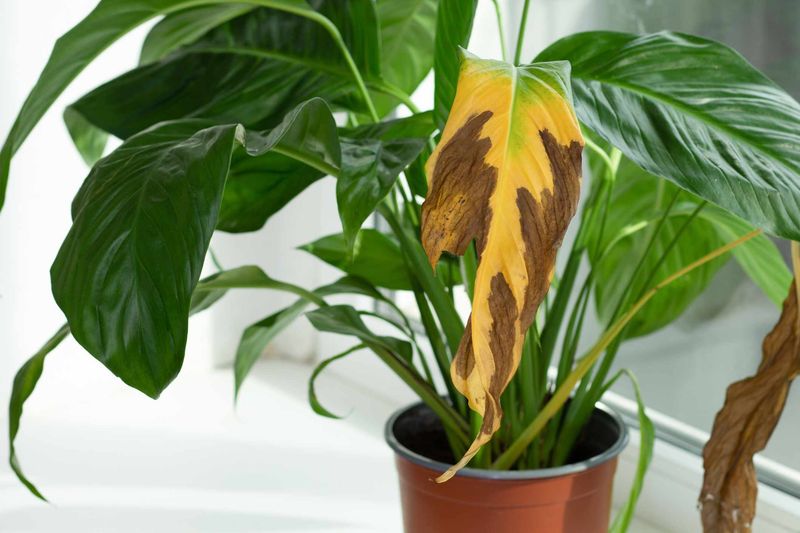
Giving your plant a good, full drink is not overwatering. The trouble starts when the mix stays saturated for days.
Common reasons include watering too often, a pot with no drainage, or runoff left sitting in the saucer.
Roots need air as well as water. University of Connecticut Extension explains that long saturation squeezes out oxygen around the roots, which can damage them.
Damaged roots then struggle to take up water, so a plant can wilt even though the soil is wet.
Still, a brown tip does not prove this is happening. An Ask Extension peace lily answer points readers toward keeping the mix moist but not waterlogged, which means checking the pot rather than assuming.
Check the top of the soil before watering
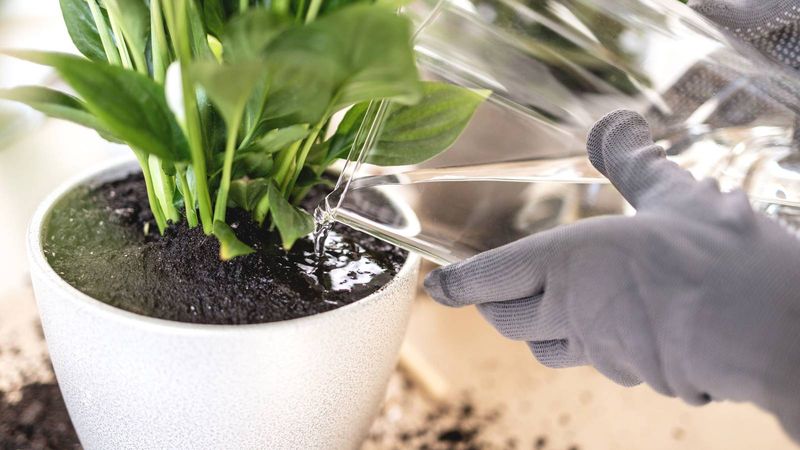
Skip the calendar. Houseplants in a Florida sunroom and a Texas apartment with the air conditioner running will dry out at very different speeds.
Your finger is a better guide than a schedule.
Push it into the mix up to the second knuckle, about 1 to 2 inches. UF/IFAS advises keeping a peace lily’s mix moist without letting the plant sit in water, and the Ask Extension response suggests watering when that top layer feels dry.
The goal is somewhat moist, never waterlogged. Dry at that depth?
Move to the next section. Damp or wet?
Skip ahead to the section on pausing.
When the mix is dry, water thoroughly and drain it
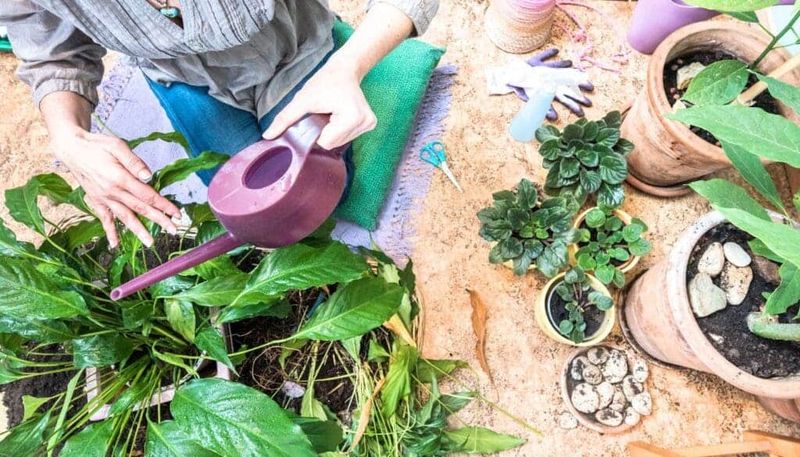
If the top inches are dry, the plant likely wants a drink, brown tips or not. Letting a dry plant go thirstier will not clear up the browning and may add stress.
Water slowly until the whole root ball is wet and water runs out of the drainage holes. Extension experts recommend a pot with drainage so excess can escape.
A kitchen sink works well for this.
Let it drip for a few minutes, then return it to its spot. Empty any water left in the saucer or decorative outer pot, since UConn Extension notes that roots sitting in runoff stay saturated.
A deep soak followed by drainage is healthy. A pot left standing in water is the problem.
When the mix is wet, pause before watering again
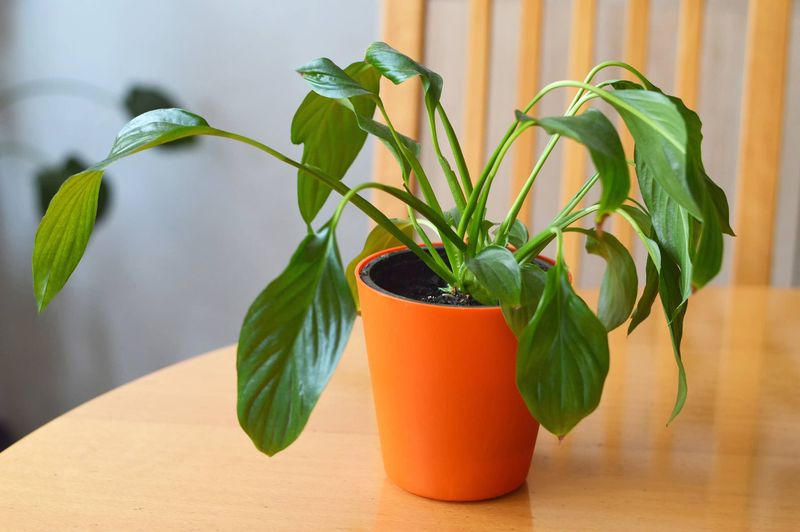
Mix that still feels wet at 1 to 2 inches down needs no more water yet. Wait and test again in a day or two.
Then look at the setup. Lift the pot and see whether water is pooled in the saucer or decorative cover pot, and pour it out.
Check that the drainage holes are open and not plugged with roots or compacted mix.
Wilting in wet soil should not be read as thirst, a point UC IPM makes about look-alike symptoms. Commercial growing guidance from UF/IFAS also stresses well-drained media.
If the pot drains poorly, a pot with holes or fresher, looser mix may help, as UConn Extension suggests for watering problems.
Water is only one possible cause
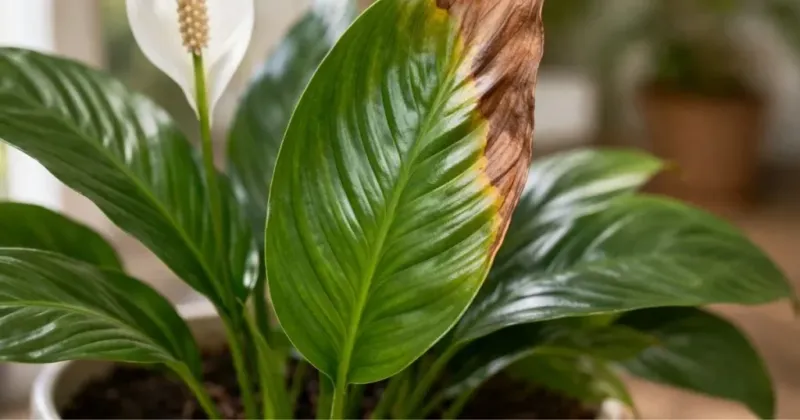
If your soil routine is solid and tips still brown, look wider. Several things can contribute, and none is a sure answer.
Fertilizer or salt buildup is one. A white crust on the soil or pot rim can be a hint.
University of Missouri Extension names brown tips as a typical sign of fluoride toxicity in peace lilies, so water chemistry may matter for some plants. That does not mean all tap water is harmful, and switching water will not necessarily fix things.
Dry indoor air, common with winter heating and summer air conditioning, may also play a part, as Iowa State Extension describes.
Light and heat count too. UF/IFAS recommends bright, indirect light with no direct sun, and notes peace lilies are not salt-tolerant.
A hot, sunny Texas window may be worth moving away from. Change one thing at a time so you can tell what helps, and see UC IPM for more houseplant problem clues.
Trim brown edges, then watch for new browning
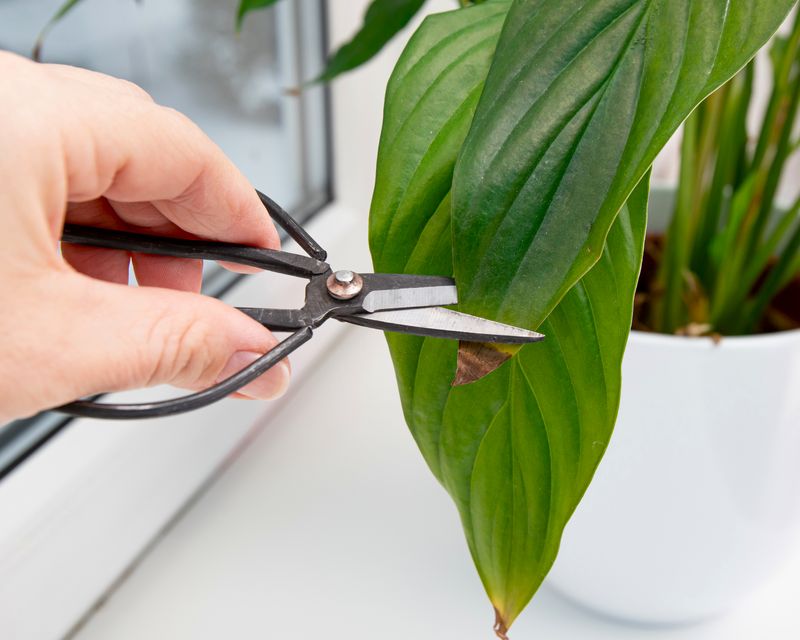
Brown tissue will not turn green again, as Iowa State Extension points out. Clean scissors can snip off the damaged edges and tidy the look, but trimming does not fix the cause.
After a trim, keep checking the top inches of mix before each watering. Then watch the newest leaves.
Fresh growth without browning is a good sign your changes are working, while new brown tips mean it is time to look at another possible contributor.